Significance of Tulsidas Jayanti
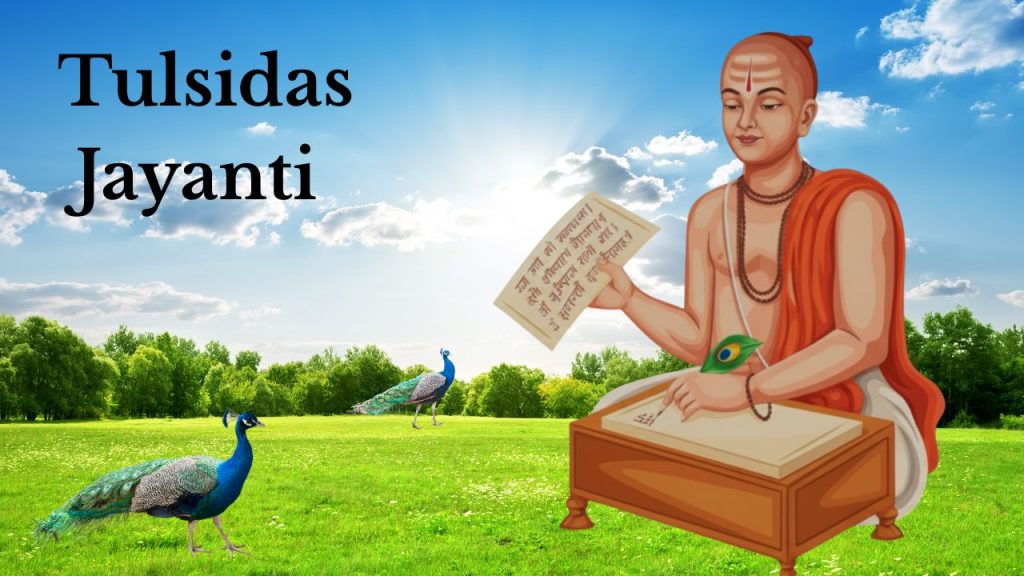
Tulsidas Jayanti is more than just a date on the Hindu calendar; it’s a sacred celebration that marks the birth anniversary (Jayanti) of one of India’s most revered poet-saints, Goswami Tulsidas. The word “Jayanti” itself holds deep spiritual weight; it’s a remembrance, a reverence, and a moment of divine gratitude.
Goswami Tulsidas wasn’t just a poet; he was a spiritual visionary who brought Lord Rama’s teachings into the hearts and homes of ordinary people. His works aren’t merely literary compositions; they are scriptures filled with devotion, guidance, and the essence of bhakti (devotion).
Tulsidas Jayanti typically falls in the auspicious month of Shravana, a spiritually rich time in the Hindu calendar. Depending on regional and lunar calculations, this occasion is observed on Shravana Shukla Saptami or Ashtami tithi. These dates carry special energetic significance, aligned with growth, purification, and devotion.
The purpose of this celebration goes beyond mere tradition. It is an invitation to remember the values that Tulsidas lived by: faith, simplicity, humility, and unwavering love for Lord Rama. It’s a time when devotees reconnect with his teachings, sing his verses, and immerse themselves in the glory of Ramcharitmanas and Hanuman Chalisa. This day inspires a more profound devotion and commitment to righteousness (dharma), reminding everyone of the timeless power of pure-hearted service and poetry born from the soul.
Life and Legacy of Tulsidas
Tulsidas’ life is one of profound transformation, unwavering devotion, and extraordinary contribution to Indian spirituality. Born in Rajapur (now in Chitrakoot District, Uttar Pradesh), his early life was marked by hardship. Separated from his parents shortly after birth, he was raised by a compassionate ascetic. Though his beginnings were humble and marked by suffering, they were also deeply spiritual. As he grew, a shift began, one that would shape the history of devotional literature. Tulsidas renounced worldly pleasures early in life and walked the path of sannyasa (renunciation), dedicating himself to the spiritual journey of serving Lord Rama.
His life’s mission became clear: to spread Rama bhakti (devotion to Rama) in the most accessible way possible. He used his poetic gift not for fame or recognition but as a service to humanity. He sought to bring the lofty ideals of dharma, righteousness, and divine love to ordinary people who were previously distanced from Sanskrit texts.
Guided by the blessings of his guru, Narharidas, and divinely inspired encounters with Lord Hanuman, Tulsidas’ spiritual experiences infused every line of his poetry with grace and energy. He wasn’t just a poet or preacher; he was a unifier, blending Sanskritic traditions with folk spirituality, bridging gaps between scholars and villagers, kings and beggars. His life reminds everyone that devotion knows no caste, class, or language.
Literary Contributions of Tulsidas
Tulsidas’ literary genius is both monumental and spiritual. His most celebrated work, the Ramcharitmanas, composed in Awadhi, is more than a retelling of the Ramayana; it’s a heartfelt devotional epic that opened the doors of spiritual understanding to countless ordinary people. At a time when Sanskrit was the exclusive domain of scholars, Tulsidas chose the language of the masses.
The Ramcharitmanas brought the story of Rama into village homes, temples, and marketplaces, making divine wisdom part of everyday life. But that wasn’t all. He also composed influential devotional works, such as the Hanuman Chalisa, a 40-verse ode to Lord Hanuman that remains one of the most widely recited prayers in India. Its rhythmic structure and profound meaning make it a spiritual powerhouse for protection and inner strength. Other gems from his pen include the Vinay Patrika, a soulful set of humble petitions to Lord Rama; the Kavitavali, rich in metaphoric depth; and the Dohavali, filled with philosophical couplets and moral teachings.
Tulsidas’ gift was not just his language; it was his ability to transform faith into poetry, elevate devotion into art, and make the divine tangible and emotionally resonant. His works don’t just educate; they uplift, comfort, and ignite a deep love for the divine in the heart of every reader.
Spiritual Philosophy and Teachings
Tulsidas was a true bhakti yogi. His entire philosophy centered around devotion (bhakti) as the supreme path to God. He taught that God isn’t reached through dry rituals or scholarly debates but through the tears of longing, the humility of surrender, and the constant remembrance of the divine name.
For Tulsidas, Rama wasn’t just a hero. He was the Supreme Being, the formless truth manifested in a form full of compassion and righteousness. This vision helped people see divinity in everyday life, in their duties, in relationships, and in their moral conduct.
He also achieved something rare, a harmony between Advaita’s non-dualism and Dvaita’s dualism. His poetry reflects unity with God while also cherishing the sweetness of separation and longing. This balance made his teachings accessible to seekers of all temperaments.
A unique thread in his philosophy is his elevation of Hanuman as the perfect devotee. Tulsidas saw Hanuman not just as a servant but as a spiritual bridge between the soul and Rama. Through Hanuman, he taught the values of strength through humility, service with love, and loyalty without ego. His teachings remain a beacon for spiritual aspirants, guiding them to live with simplicity, faith, and heart-centered devotion in a complex world.
Tulsidas Jayanti Rituals and Observances
Tulsidas Jayanti is celebrated with heartfelt reverence throughout India, especially in spiritual centers such as Varanasi and Chitrakoot. Devotees gather in temples and homes, turning the day into a soulful symphony of love and devotion. Temple celebrations begin early with special pujas and the ceremonial reading of the Ramcharitmanas. The atmosphere resonates with the sound of bells, chants, and bhajans dedicated to Lord Rama, as well as Tulsidas’ compositions.
One of the most cherished observances is reciting the Hanuman Chalisa. This simple yet powerful prayer is believed to bestow courage, remove fear, and deepen one’s connection with both Hanuman and Rama. Devotees also participate in katha (spiritual storytelling) sessions that recount Tulsidas’ life, struggles, miracles, and profound devotion.
Bhajans and satsangs create an environment filled with divine vibrations, where people from all walks of life sing together in unison. Some communities organize discourses or dramas based on episodes from Ramcharitmanas. The celebration often ends with the distribution of prasad (blessed food), reflecting the spirit of sharing and community that Tulsidas embodied. It’s not just a ritual; it’s a reminder of unity, love, and faith.
Importance in the Month of Shravana
Shravana is a month soaked in divine energy, rain-washed purity, and spiritual awakening. It’s when nature, mind, and soul align to embrace devotion. Tulsidas Jayanti’s placement in Shravana isn’t coincidental; it’s cosmically symbolic. Shravana is traditionally known for fasting, prayer, and deep worship, particularly of Lord Shiva. Interestingly, Tulsidas himself held great reverence for Shiva, often acknowledging him in his works as the one who directs seekers toward Rama. This highlights the unity in the Shaiva and Vaishnava paths.
Devotees often undertake spiritual practices, such as reading the Ramcharitmanas, especially during the month of Shravana. Its lyrical verses bring calm, hope, and divine connection, much like the cooling rains that soothe the summer-scorched earth. Tulsidas Jayanti this month aligns beautifully with other significant festivals, such as Nag Panchami and Raksha Bandhan, which also emphasize protection, familial love, and cosmic balance. Together, they create a harmonious symphony of dharma and devotion. Observing the Jayanti this month isn’t just about ritual; it’s a powerful spiritual opportunity to rekindle personal devotion, refresh ethical values, and realign with a higher purpose.
Cultural and Regional Impact
Tulsidas’ influence extends far beyond the boundaries of religious philosophy; his work has left an immense cultural and regional imprint that continues to shape Indian society to this day. His version of the Ramayana, the Ramcharitmanas, became the cultural backbone of Northern India, transforming not only the spiritual landscape but also the literary and performing arts traditions.
In regions such as Uttar Pradesh, Bihar, and Madhya Pradesh, Tulsidas Jayanti is observed with great reverence. His verses are recited in local temples, village gatherings, and community halls, strengthening spiritual values and social harmony. The poet-saint’s contribution wasn’t just religious; it was social, emotional, and artistic.
His influence is most visible in the tradition of Ramlila, a form of folk theatre dramatizing the life of Lord Rama. Rooted in the Ramcharitmanas, these performances are not only devotional events but cultural celebrations that bring entire communities together. Families attend them generation after generation, absorbing life lessons, ethics, and inspiration through the power of storytelling.
Beyond theatre, folk music and bhajans inspired by Tulsidas have become part of the everyday rhythm of life in many households. His language and style sparked a vernacular literary renaissance, in which poets began composing in regional languages rather than just in Sanskrit, thereby democratizing spirituality and literary expression.
Tulsidas Jayanti is not merely a religious date; it’s a celebration of an eternal legacy that preserves the moral, spiritual, and emotional fabric of Indian life. His work bridged the gap between the learned and the illiterate, between tradition and accessibility, and between the divine and the human.
Tulsidas and the Bhakti Movement
Tulsidas was one of the towering pillars of the Bhakti movement, a powerful devotional wave that swept through India from the 7th to the 17th century. This movement emphasized direct connection with the Divine through love and devotion, rather than through rituals, caste hierarchies, or scholarly prowess.
In this spiritual revolution, Tulsidas stood shoulder to shoulder with saint poets like Kabir, Surdas, and Mirabai. While each had a unique expression, what united them was the unwavering belief that God is accessible to all, regardless of birth, gender, or social status.
What set Tulsidas apart was his ability to blend profound philosophical truths with heartfelt poetry, making them relatable to ordinary people. Through his writings, he bridged the gap between elite Sanskrit scriptures and everyday village dialects, making divine knowledge accessible and relatable.
His impact on social unity was profound. In a time marked by rigid caste systems and spiritual elitism, he declared through his verses that true devotion lies not in rituals but in the purity of the heart. He dismantled barriers, not by protest, but through poetry soaked in love and wisdom.
Tulsidas’s embodiment of bhakti over ritualism continues to resonate even today. He empowered the voiceless with the strength of song, turning even the humblest homes into temples of devotion. His contributions remind everyone that faith is not about entitlement; it’s about surrender, love, and inner transformation.
Relevance of Tulsidas in Contemporary Times
Tulsidas’s teachings and legacy are more relevant than ever. His words don’t just echo ancient devotion; they offer modern solutions to the spiritual emptiness, stress, and ethical dilemmas that many face today. His philosophy emphasizes humility, selfless service, and unwavering faith, qualities that bring peace not only to the individual but also to society as a whole. At a time when many seek meaning beyond material success, Tulsidas’s poetry reminds us that the greatest joy comes from inner connection and moral living.
For families, the Ramcharitmanas is more than a scripture; it’s a code of ethics, a moral compass that teaches respect, discipline, love, and courage. For youth, Tulsidas is not just a poet of the past but an inspiration to pursue creative expression, truth, and purpose in a world filled with distractions. His works, like the Hanuman Chalisa, continue to offer spiritual strength. They are recited not just by saints but also by students, professionals, and homemakers seeking solace in times of fear and uncertainty.
Above all, his life story is a powerful example of transformation through devotion, from abandonment to enlightenment, from worldly attachment to divine surrender. Tulsidas demonstrates that regardless of one’s starting point, faith can transform suffering into strength and mundane existence into divine service. In essence, his timeless legacy offers a blueprint for living with integrity, grace, and inner peace in an increasingly fragmented world.
Reflections to be learnt
Tulsidas Jayanti is not just a date; it’s a spiritual invitation. It calls everyone to pause, reflect, and reconnect with the divine wisdom that Tulsidas left behind. His life, poetry, and philosophy offer not just religious insights but universal truths about love, humility, and the transformative power of devotion.
As the world races forward, it becomes even more important to preserve such legacies. Tulsidas didn’t just write stories; he gave generations a mirror to see their divine potential. His teachings continue to light the path for those seeking meaning in a world full of noise.
This Jayanti, let it be more than a celebration. Let it be a moment of personal reflection and spiritual renewal. Encourage young minds to explore the Ramcharitmanas, not just as a book but as a journey. Let families come together in bhajan, not just as a tradition but as a celebration of divine unity. Tulsidas remains a shining symbol of how faith can elevate even the most ordinary life into something extraordinary. His legacy reminds us that transformation begins not in temples or scriptures, but in the heart. May this Tulsidas Jayanti be a celebration of devotion, a return to values, and a recommitment to walking the path of truth and love.