Masi Magam is one of the most revered festivals in Tamil culture. It is a day filled with rituals, devotion, and deep spiritual significance. Celebrated predominantly in Tamil Nadu and other parts of the Tamil diaspora, it symbolizes purity, reflection, and renewal. Masi Magam falls on the full moon day of the Tamil month Masi, typically between February and March. This timing coincides with the Magam Nakshatra, a powerful and auspicious star with special importance in astrology and religious worship.
The festival is considered an opportunity for devotees to cleanse themselves of past sins, seek blessings for their well-being, and align their lives with divine grace. The roots of Masi Magam go deep into Tamil traditions and Hindu religious practices, with significant associations with Lord Vishnu and Lord Shiva. Over the centuries, Masi Magam has grown beyond a simple religious observance to encompass a cultural celebration, attracting thousands of pilgrims to temples and sacred rivers across the region.
From its earliest origins, the festival has held a unique place in the hearts of Tamil people, deeply rooted in rituals that celebrate devotion, spirituality, and charity. Whether you’re a devotee seeking spiritual renewal or someone keen to explore Tamil culture, Masi Magam offers a remarkable blend of traditions, devotion, and community that transcends generations.
Historical Origins of Masi Magam
Masi Magam’s origins are centuries old and steeped in Tamil folklore and religious history. Although the festival has evolved, its core meaning and rituals have remained largely intact, serving as a testament to the enduring spirit of Tamil culture.
Ancient Roots of the Festival
The exact historical origins of Masi Magam are intertwined with ancient Tamil customs and Vedic traditions. It is believed that the festival was first observed in the Tamil-speaking regions of Southern India to honor the divine energies associated with the Magam Nakshatra (a lunar mansion in Vedic astrology). The Nakshatra is said to have a powerful cosmic influence on spiritual practices, making it an ideal time for purification and devotion. In Tamil Nadu, the festival was likely first observed in the temples dedicated to Lord Vishnu and Lord Shiva, where the full moon’s brightness was celebrated as a symbol of spiritual enlightenment. Kings, priests, and ordinary people would have practiced these early traditions to deepen their connection with the divine.
Mythological Stories and Deities Associated
Masi Magam is heavily influenced by Hindu mythological tales, particularly those involving Lord Vishnu and Lord Shiva. One such story is the legend of Lord Vishnu’s visit to the ocean during the Magam Nakshatra, which signifies the cosmic cleansing of the earth. This event is said to bring prosperity and peace to the world. Additionally, there are stories about Lord Shiva blessing his devotees on this day. These myths often describe the purifying power of rituals performed on Masi Magam, with devotees seeking to be absolved of past sins and receive divine grace. In some accounts, the holy river Ganga descends from the heavens to cleanse the devotees of their sins on this day.
Influence of South Indian Traditions
Ancient Dravidian customs and practices have significantly shaped the festival’s traditions. From the Tamil Sangam period (c. 300 BCE to 300 CE), when South Indian kingdoms flourished, we can see the early formation of religious practices preserved and passed down through generations. The integration of astrology, celestial movements, and devotion to deities reflects the region’s rich spiritual and cultural heritage. During this period, the Tamil people placed great importance on nature, astrology, and the alignment of celestial bodies, which still hold relevance today. The strong connection between the human experience and cosmic forces is a cornerstone of Tamil Hindu festivals like Masi Magam.
Evolution Over Centuries
As centuries passed, Masi Magam continued to evolve. The festival transformed from a localized observance to a more widespread celebration, with regional variations appearing. The role of temples, particularly those on riverbanks, grew increasingly significant in the observances, with grand rituals such as the ceremonial procession of deities becoming a central part of the celebration.
Masi Magam and its Astrological Significance
In Tamil culture and Hinduism, astrology is often seen as a guiding force that shapes spiritual and daily life. Masi Magam is no exception, and its celebration is deeply intertwined with astrological beliefs. The date and timing of Masi Magam are closely linked to the movements of the stars and planets, specifically the full moon in the month of Masi, when the Magam Nakshatra reaches its peak.
The Importance of the Magam Nakshatra
The Magam Nakshatra is one of the twenty-seven constellations or lunar mansions in Vedic astrology, and it holds great significance on this particular full moon day. People believe that the alignment of the moon and this Nakshatra creates a unique energy that enhances spiritual practices. Devotees view it as a time to connect with the divine more quickly, making Masi Magam a spiritually potent day for rituals, prayers, and offerings. The energy of the Magam Nakshatra represents growth, wisdom, and divine blessings. This alignment is considered auspicious for personal and collective transformation, so the festival is often seen as a moment for cleansing one’s soul and preparing for new beginnings.
Influence of the Masi Month in Tamil Astrology
Masi, the Tamil month in which Masi Magam occurs, is an essential period in Tamil astrology. It corresponds to the period when the Sun enters the zodiac sign of Aquarius, an astrological sign associated with renewal and spiritual awakening. According to Tamil astrological texts, Masi is a month when the alignment of celestial bodies supports heightened consciousness and a stronger connection to divine forces. During Masi, the days are considered particularly auspicious for worship and spiritual practices such as meditation, fasting, and prayer. Masi Magam, therefore, marks the peak of these energies, making it the most spiritually charged day of the month. That is why many people perform elaborate rituals, pilgrimages, and acts of charity during Masi Magam.
Role of Planetary Positions
Aside from the specific influence of the moon and the Magam Nakshatra, planetary positions play an important role in determining the timing and energy of Masi Magam. During this time, the position of planets such as Jupiter and Saturn is believed to enhance the effectiveness of prayers and spiritual efforts. Astrologers often recommend that devotees observe specific rituals based on their astrological charts. For example, some may engage in sacred bathing rituals at particular holy sites or offer specific prayers to deities based on the celestial influences of that year. This individual approach helps deepen the spiritual impact of the festival.
The Alignment of the Sun and Moon
The alignment of the Sun and the Moon during the full moon of Masi creates a cosmic balance that amplifies the day’s significance. The moment when the full moon rises is believed to be a time of heightened divine presence, and the rituals performed during this time are thought to yield greater spiritual rewards. The connection between the moon’s phases and water-related rituals, especially bathing in holy rivers, holds deep spiritual meaning, as water is a purifier.
Religious Significance
Masi Magam isn’t just a celebration festival, deeply rooted in Tamil Hinduism’s religious practices. This day’s religious importance is heightened by its connection to Lord Vishnu, Lord Shiva, and the divine energies on the Magam Nakshatra.
Connection with Lord Vishnu and Lord Shiva
Masi Magam is considered an auspicious day to honor Lord Vishnu and Lord Shiva, two of the most important deities in Hinduism. Worshipping these deities on this day is believed to help devotees secure their blessings and protection from negative influences. Lord Vishnu is often associated with preserving the cosmic balance, while Lord Shiva embodies destruction and regeneration. Worshipping these two gods during Masi Magam is believed to create a harmonious balance in one’s life and help remove negative karmas.
Celebrating Lord Shiva’s Grace
For many devotees, Masi Magam is a day to honor Lord Shiva’s divine grace and to seek forgiveness for past misdeeds. In temples across Tamil Nadu, special prayers are offered to Lord Shiva, seeking his blessings for peace, prosperity, and protection. One of the most significant aspects of Masi Magam is the ritual of “Pradhakshina,” or circumambulating the Shiva temple. This practice helps devotees align themselves with the divine and seek Lord Shiva’s purifying blessings. The importance of Shiva’s grace cannot be overstated today; the deity’s divine energy is believed to uplift the soul and remove obstacles from one’s path.
Rituals of Cleansing and Purification
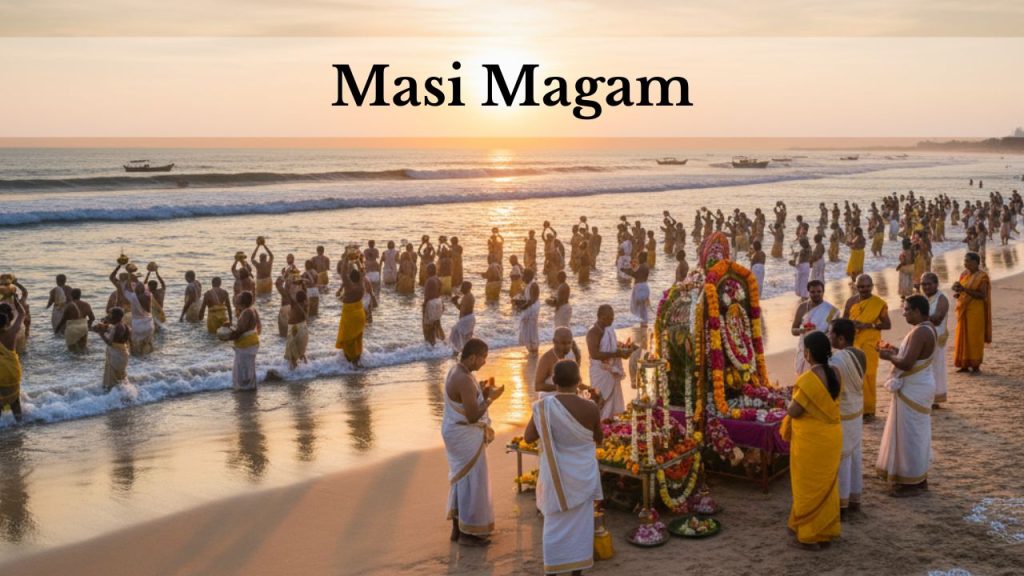
Masi Magam is a time when cleansing and purification rituals are paramount. The most significant of these rituals is the sacred bath in holy rivers or oceans, a custom observed by millions of people during the festival. Water is considered the purest element, and by immersing oneself in these sacred waters, devotees believe they can rid themselves of sin and impurities. In addition to bathing, other acts of purification, such as fasting and prayer, are performed every day during Masi Magam. These practices are not just about physical purification but are meant to cleanse the mind and spirit, enabling devotees to achieve a closer connection to the divine.
Spiritual Importance for Devotees
The spiritual significance of Masi Magam cannot be overstated. The day allows devotees to reflect on their actions, ask for forgiveness, and begin anew. For many, it is a time to release past burdens, let go of negative emotions, and prepare for a future of spiritual growth and personal transformation. Sure! Let’s continue with the following sections:
Rituals and Traditions of Masi Magam
Masi Magam is rich in rituals that are deeply woven into Tamil religious and cultural practices. These rituals honor the divine and foster community and devotion among participants. Let’s explore the key rituals and traditions that define this festival.
Early Morning Temple Visits and Prayers
Masi Magam begins early in the morning when devotees gather at temples to offer their prayers. The day starts with temple bells ringing in harmony, marking the arrival of a sacred day. Devotees, often dressed in new clothes or traditional attire, go to the temples at dawn. The day’s first prayers are dedicated to Lord Vishnu and Lord Shiva, where hymns and mantras are chanted to invoke their blessings. The rituals performed during these temple visits include light offerings, flower offerings, and prayers for the well-being of family members.
The temples are often beautifully decorated with intricate kolams (rangolis) and a vibrant atmosphere of devotion. The priests perform sacred rituals, including offering fruits, coconut, and ghee, accompanied by lighting lamps. The morning prayers and rituals are crucial for the spiritual aspect of the festival. Devotees believe that starting Masi Magam with these sacred offerings sets the tone for the rest of the day and ensures divine blessings and protection.
Taking Ritual Baths in Sacred Rivers
One of Masi Magam’s most iconic rituals is the ritual bath in sacred waters. It is believed that on this day, bathing in rivers, seas, or lakes has the power to purify the body and soul. Many devotees travel to prominent riverbanks or coastal areas, where the water is thought to possess spiritual cleansing properties. The Kaveri River, the Palar River, and the beaches along the Tamil Nadu coast are among the most popular locations for this ritual. Ritual bathing symbolizes washing away one’s sins and impurities.
Devotees immerse themselves in holy water, offering prayers to Lord Vishnu or Lord Shiva and asking for their blessings. This act is a physical and spiritual cleansing, preparing the soul for further devotion and reflection. Devotees gather in large groups to bathe in some places, creating a sense of unity and shared spirituality. This communal aspect of Masi Magam reinforces the idea of collective purification and the power of group devotion.
Special Prayers and Offerings
Alongside the early morning temple prayers and ritual bathing, Masi Magam is also a day for making special prayers and offerings. In many temples, devotees participate in elaborate pujas (ceremonial prayers), where priests perform rituals that involve fire, flowers, and incense. The most common offerings during Masi Magam include fruits, coconuts, flowers, and special food items prepared for the occasion. These offerings are presented to the deities as a token of gratitude and devotion. In some temples, large feasts (Annadhanam) are organized where devotees are invited to partake in a free meal, symbolizing the spirit of charity and community.
Devotees also make vows during Masi Magam, promising to donate to temples or charitable causes and seeking divine grace in return. This practice of giving back to the community is a central theme of the festival, underscoring the significance of charity.
Lighting Lamps and Decorating Temples
Lighting lamps is another significant part of Masi Magam rituals. It is believed that lighting oil lamps during this auspicious day helps dispel darkness and ignorance, allowing divine light to enter the devotee’s life. These lamps are often placed in temples, homes, and other sacred spaces, which are believed to attract positive energy and blessings from the divine. The temples are adorned with garlands, flowers, and decorative lights, adding a festive atmosphere to the spiritual observances. Many devotees decorate their homes with lamps and kolams, creating a vibrant and inviting environment for worship and celebration.
Masi Magam Temples in Tamil Nadu
The temples of Tamil Nadu play a central role in the Masi Magam festival. They are the epicenters of worship, rituals, and community celebrations. Across the state, several temples are renowned for their grand celebrations, which attract thousands of devotees every year. Let’s explore some of the most famous temples where Masi Magam is celebrated with great devotion and grandeur.
Famous Temples in Tamil Nadu
Among the most famous temples observed in Masi Magam are the Chidambaram Nataraja Temple, the Kanchipuram Kamakshi Temple, and the Ramanathaswamy Temple in Rameswaram. Each temple has a unique history, architecture, and spiritual significance, making it a key pilgrimage site during the festival.
- Chidambaram Nataraja Temple: Located in the heart of Tamil Nadu, Chidambaram is one of the holiest places for Shaivite worship. The temple is dedicated to Lord Nataraja, the cosmic dancer. During Masi Magam, special processions and rituals take place. The temple’s association with Masi Magam draws many pilgrims who seek Lord Shiva’s blessings for spiritual growth.
- Kanchipuram Kamakshi Temple: Kanchipuram is renowned for its ancient temples, and the Kamakshi Amman Temple is one of the most important ones during Masi Magam. Here, the focus is on the worship of Goddess Kamakshi, a form of the divine mother. The temple hosts a grand procession where the deity is carried in a decorated chariot, accompanied by chanting, dancing, and music.
- Ramanathaswamy Temple: Situated on the island of Rameswaram, this temple is dedicated to Lord Rama and is an essential site for purification rituals during Masi Magam. Devotees from all over Tamil Nadu flock to this sacred temple, taking ritual baths in the temple’s holy tanks, which are said to purify the soul.
Unique Rituals Performed at These Temples
Each temple follows its own unique set of rituals during Masi Magam. The Chidambaram Temple, for instance, witnesses the grand procession of Lord Nataraja, in which the deity is carried through the temple complex in a chariot. Devotees chant Vedic hymns and perform abhisheka (ritualistic bathing of the deity with milk, honey, and water). At the Ramanathaswamy Temple, devotees take a sacred bath in the holy water tanks, which are believed to wash away sins and purify the mind and body. Some temples even organize special events like mass prayers, cultural performances, and charitable activities, making Masi Magam a spiritual occasion and communal celebration.
The Role of Temple Priests in the Ceremonies
Temple priests play a crucial role in ensuring that the rituals and ceremonies of Masi Magam are performed accurately and reverently. They lead the prayers, chants, and offerings and bless the devotees. The priests’ role is not limited to simply performing the rituals—they also educate the public on the spiritual significance of Masi Magam, helping to preserve the rich cultural heritage.
Devotional Importance of Temple Visits
For many devotees, visiting temples during Masi Magam is not just about the rituals—it’s a profoundly personal journey. It’s a time to connect with the divine, seek blessings, and ask for forgiveness. Temple visits during Masi Magam hold a special significance, as devotees believe that the presence of the deities is at its peak during this sacred time. This connection with the divine makes the temple experience transformative, spiritually fulfilling, and profoundly uplifting.
The Procession on Masi Magam
One of the most striking features of Masi Magam is the procession in many temples across Tamil Nadu. These processions symbolize the divine’s journey through the earthly realm and are a central part of the festivities.
Significance of the Procession in Temples
The procession is a grand ceremonial event in which the deity is taken from the temple and paraded through the streets. It is a ritual with deep spiritual significance, representing that the divine, typically confined to the temple, is now making its presence known to the larger community. The procession is seen as a moment when the deity blesses the entire town, city, or village. The procession is accompanied by colorful decorations, musical performances, and cultural dances in many places. Devotees follow the procession, chanting prayers and singing devotional songs, reinforcing their spiritual connection with the divine. The procession serves as a public display of faith, where the community comes together to celebrate the divine and partake in the collective energy of devotion.
The Journey of Deities on Chariots
During Masi Magam, deities are often carried on elaborately decorated chariots or palanquins. These chariots, drawn by devotees, are often adorned with flowers, fabrics, and lights, making them a sight to behold. The chariots represent a mobile temple, allowing the deities to bless the people who might not be able to visit the temple themselves. Chariot processions are ceremonial and have immense spiritual significance. Devotees believe that the deities’ divine presence during the procession will bring prosperity, remove obstacles, and guide them toward spiritual enlightenment.
Devotees’ Involvement in the Procession
The procession is a collective event, and devotees are actively involved. Many take part in carrying the chariots, while others walk alongside the procession, chanting prayers or offering flowers and incense. The sense of community during the procession is an integral part of the festival, reinforcing the idea of collective worship and devotion. This procession is not just a physical journey for the devotees but a spiritual pilgrimage. Whether they participate directly or watch from the sidelines, being part of it allows them to feel the divine energy and experience Masi Magam’s sacredness. Certainly! Let’s continue with the remaining sections:
Pilgrimage Sites for Masi Magam
Masi Magam is when pilgrims from all over Tamil Nadu and beyond travel to sacred locations with immense religious significance. These pilgrimage sites, often located near holy rivers or seas, are seen as exceptional destinations where spiritual purification and divine blessings can be attained. The pilgrimage aspect of the festival is an essential part of the celebration, as it strengthens the connection between the devotees and the sacred forces that govern the universe.
Key Pilgrimage Locations
- Kaveri River: The Kaveri River is one of the most revered pilgrimage destinations during Masi Magam. A bath in this holy river on Masi Magam day is believed to cleanse one of all sins and bring peace and prosperity. Thanjavur and Srirangam, located along the Kaveri, are bustling with devotees during this time. The Kaveri is considered especially sacred for those seeking spiritual renewal.
- Rameswaram: The island town of Rameswaram, with its famous Ramanathaswamy Temple, is another important pilgrimage site during Masi Magam. The temple, dedicated to Lord Rama, is where many take a ritual bath in the temple’s sacred tanks. This act is believed to purify the soul and grant divine blessings.
- Kanchipuram: Known as the “City of Thousand Temples,” Kanchipuram is another key pilgrimage site during Masi Magam. The Kamakshi Amman Temple and the Ekambareswarar Temple, located in Kanchipuram, draw thousands of pilgrims annually. Devotees come here to worship the deities, perform rituals, and seek forgiveness for their sins.
- Pondicherry: The coastal city of Pondicherry, with its mix of French colonial influence and traditional Tamil culture, also becomes a hotspot during Masi Magam. The beaches here are a significant part of the celebrations, as many devotees take ritual dips in the sea to purify themselves.
The Spiritual Journey of Pilgrims
For pilgrims, the journey to these sacred sites is as important as the rituals they perform. Often, the pilgrimage is undertaken with deep devotion and a desire to seek divine intervention in their lives. The long distances traveled, and the hardships endured are seen as acts of penance that make the worship even more meaningful. The sense of community during these pilgrimages further deepens the devotees’ connection to the divine. The experience of visiting sacred sites during Masi Magam is transformative. Pilgrims walk through the hallowed grounds of temples, offer prayers, and immerse themselves in the divine presence. This pilgrimage is not just a physical journey; it is seen as a soul’s journey toward spiritual awakening and purification.
Masi Magam and Social Charity
Charity and social welfare are deeply ingrained in the fabric of Masi Magam. While the festival is primarily a religious observance, it also strongly calls for social responsibility and giving. Many devotees and temple authorities organize charity events during Masi Magam, aligning their spiritual practices with acts of kindness and service.
Importance of Charity During Masi Magam
The practice of charity during Masi Magam stems from the belief that giving back to society is as important as seeking divine blessings. In Hindu philosophy, the concept of “Dharma” (moral duty) often involves helping others, and Masi Magam serves as an annual reminder of this duty.
- Annadhanam (Free Meal Distribution): One of the most common forms of charity during Masi Magam is Annadhanam, which distributes free meals to the poor and needy. Many temples and communities unite to provide meals to hundreds or even thousands of people, symbolizing selflessness and compassion. The belief is that offering food to others on this sacred day enhances one’s spiritual merit and attracts divine blessings.
- Donations to Temples: During Masi Magam, devotees donate money, clothes, and other items to temples. They do this not only to seek the blessings of the deities but also to support the temple’s upkeep and spiritual practices.
- Donations to Charitable Causes: Beyond temples, many people use this day to support various charitable causes, including providing for the education of underprivileged children, funding medical treatments for people experiencing poverty, or donating to disaster relief funds. These acts of kindness align one’s actions with the divine principles of compassion and selflessness.
The Spiritual Benefits of Charity
Charity, especially during Masi Magam, accumulates “Punya” (spiritual merit) and purifies the soul. Devotees believe they are earning divine favor by helping others, which will be repaid with blessings, peace, and prosperity. In addition, acts of charity are believed to foster inner peace, cultivate compassion, and enhance one’s connection with the divine. Many devotees view charity as a form of worship. Giving transcends the ego and material desires, focusing instead on the collective good. Through charity, Masi Magam’s spiritual benefits extend beyond personal worship, reaching out to the community and fostering a sense of unity and shared responsibility.
Cultural Celebrations During Masi Magam
While Masi Magam is primarily a religious festival, it is also a time of cultural celebration. The vibrant rituals and devotional practices are often accompanied by various cultural performances, dances, music, and community gatherings. These celebrations are a testament to Tamil Nadu’s rich traditions and an opportunity for people to come together and enjoy the festive spirit.
Traditional Dance and Music Performances
One of the highlights of Masi Magam celebrations is the cultural performances in temples and public spaces. Devotees often perform traditional Tamil dance forms, such as Bharatanatyam, in honor of the deities. These dances are characterized by intricate footwork, graceful gestures, and devotional expressions, conveying a deep sense of spirituality and reverence. Alongside dance, traditional music performances are also a key part of Masi Magam. Devotional music, including Carnatic and bhajans (devotional songs), fills the air, enhancing the festive atmosphere. The sound of mridangam (a traditional drum), veena (a string instrument), and flute creates a divine symphony that invites the blessings of the gods. These performances are both a form of worship and an expression of cultural pride.
Kolams (Rangolis) and Decorations
In Tamil Nadu, during Masi Magam, it’s customary to create beautiful kolams (intricate patterns made with rice flour) in front of homes and temples. These kolams symbolize prosperity, good luck, and purity. They are often adorned with vibrant colors and flower petals, making the surroundings festive and inviting. Drawing kolams is not just decorative but also a spiritual practice. It is believed that drawing these patterns brings prosperity to the household and pleases the deities. In temples, the whole complex is decorated with flowers, lights, and festive banners, creating an atmosphere of celebration and reverence.
Community Gatherings and Celebrations
Masi Magam is also a time for family and community gatherings. People come together to share meals, exchange gifts, and celebrate the spirit of togetherness. In rural areas, people gather in large numbers, and there are often processions, communal prayers, and even fairs with games, food stalls, and cultural performances. Unity and shared joy make Masi Magam a religious occasion for strengthening social bonds and fostering a collective sense of spirituality. Families often celebrate the day together, participating in rituals, prayers, and cultural activities to reinforce their spiritual connection and cultural identity.
The Enduring Legacy of Masi Magam
Masi Magam is a celebration that transcends the boundaries of religion, culture, and geography. It is a time for reflection, devotion, and renewal, allowing individuals to seek spiritual purification and reconnect with the divine. Whether observing the rituals at a temple, participating in the grand processions, or simply engaging in the spirit of charity and community, Masi Magam offers a profoundly enriching experience. The festival’s historical, astrological, and religious significance reminds us of the deep spiritual roots embedded in Tamil culture.
Through its customs, rituals, and celebrations, Masi Magam continues to inspire generations, preserving the timeless values of faith, charity, and devotion. The festival’s enduring legacy speaks to the power of spiritual practices in bringing people together, fostering compassion, and enhancing one’s connection to the divine. As we celebrate Masi Magam year after year, we are reminded that the pursuit of spiritual growth, the practice of kindness, and the celebration of community are at the heart of this beautiful festival.
Masi Magam is more than just a festival; it is a celebration of life, faith, and the profound connection that binds us together. We’ve covered quite a bit already, but let’s continue by finishing the rest of the content. I’ll conclude the final sections with thoughts on Masi Magam’s cultural and spiritual impact.
The Global Recognition of Masi Magam
While Masi Magam is predominantly celebrated in Tamil Nadu, its spiritual and cultural significance has spread worldwide, especially within Tamil diaspora communities. The festival has symbolized unity, spirituality, and cultural pride for Tamils worldwide in recent years.
Global Celebrations in the Tamil Diaspora
Across the globe, Tamil communities, especially those in countries like Singapore, Malaysia, Sri Lanka, and Mauritius, as well as in Western nations like the United States, Canada, and the UK, enthusiastically celebrate Masi Magam. These celebrations have been adapted to suit the local contexts but retain their spiritual core. The streets come alive with processions, devotional music, and public prayers, making it a significant event for the community. Similarly, in Sri Lanka, Masi Magam is celebrated with much reverence, especially in areas with large Tamil populations, such as the Jaffna Peninsula. Temples here hold special poojas (ritual prayers), and devotees participate in charity drives, just as they would in Tamil Nadu.
Promoting Unity Through the Festival
For Tamil diaspora communities, Masi Magam represents a time to reconnect with their roots. It offers a sense of belonging and reinforces their cultural identity, even in far-off lands. The festival serves as an avenue for younger generations to learn about their heritage, ensuring that the traditions of their ancestors are passed down. In countries where Tamil people live far apart, Masi Magam provides an opportunity for community gatherings. It serves as a bridge connecting generations and helps strengthen communal bonds. The festival’s shared devotion and observances create an inclusive space where individuals unite in their shared spiritual and cultural heritage.
Environmental Aspects of Masi Magam Celebrations
There has been a growing awareness of religious festivals’ environmental impact in recent years, and Masi Magam is no exception. While the festival is a time for spiritual rejuvenation and community engagement, it is also essential to consider how the celebrations can align with sustainable practices to protect the environment.
Environmental Challenges
Many traditional rituals during Masi Magam involve large-scale gatherings, processions, and materials like flowers, coconuts, and decorative items. Additionally, ritual bathing in rivers, lakes, and the sea can sometimes lead to issues like pollution and water contamination. Immersing idols or ceremonial materials in water bodies has raised concerns about environmental impact. In some cases, non-biodegradable materials are used for decorations and offerings, which can contribute to waste. With millions of devotees participating in the festival, these practices, if not appropriately managed, can negatively impact natural resources.
Promoting Sustainable Practices
Many temples and communities have made Masi Magam celebrations more eco-friendly to mitigate the environmental impact. For instance:
- Use of biodegradable materials: Many temples now encourage using eco-friendly materials for rituals, such as flowers, leaves, and clay idols, instead of plastic or synthetic items.
- Water conservation: Temples and community groups are trying to clean the water bodies before and after the ritual baths, ensuring that sacred rivers and seas are not polluted during the festivities.
- Awareness campaigns: Various organizations and temples have initiated programs to raise awareness about Masi Magam’s environmental impact. These initiatives often encourage devotees to avoid littering and dispose of their offerings in designated areas.
By integrating sustainable practices into the celebrations, Masi Magam can continue to be a spiritually enriching experience while preserving the natural world for future generations.
Masi Magam’s Influence on Art, Literature, and Culture
Masi Magam has also profoundly influenced Tamil art, literature, and culture. Over the centuries, the festival has inspired countless poems, songs, visual art, and performances. It is a religious observance and a source of artistic expression and cultural pride.
Masi Magam in Tamil Literature and Poetry
The festival has inspired numerous works of literature, especially in Tamil poetry, where Masi Magam is often celebrated as a time of devotion and renewal. Poets and writers have long celebrated the day’s significance, using it as a metaphor for spiritual awakening, the cleansing of the soul, and the triumph of good over evil. Works by Saints of the Tamil Bhakti Movement, such as Thiruvalluvar, Tirunavukkarasar (Tiru Jnana Sambandar), and Manickavasagar, often allude to the spiritual importance of festivals like Masi Magam. Their devotional poems and songs, many of which are recited during Masi Magam, have become integral to the religious and cultural landscape of Tamil Nadu.
The Role of Visual Arts
The rich visual culture associated with Masi Magam can be seen in the beautiful decorations of temples and homes and the traditional kolams (intricate floor patterns) created for the occasion. These art forms express devotion and creativity, combining aesthetic beauty and religious significance. Additionally, the grand processions during Masi Magam are a visual spectacle. The deities are paraded in ornate chariots or palanquins, often adorned with elaborate fabrics, jewels, and flowers. These processions, accompanied by dances, music, and chanting, are a spiritual act and a celebration of Tamil visual art and craftsmanship.
Dance, Drama, and Music
As we’ve seen, traditional music and dance forms like Bharatanatyam and Carnatic music are integral to Masi Magam celebrations. The festivals inspire many artistic performances, in which musicians and dancers pay homage to the deities with skill and devotion. In recent times, Masi Magam has also served as a backdrop for contemporary plays, theatrical performances, and music concerts. These cultural celebrations are a powerful way to connect with younger generations and keep the festival relevant in an evolving cultural landscape.
Masi Magam: A Time for Personal Reflection and Renewal
At its heart, Masi Magam is about personal transformation. It’s not just a communal event but an opportunity for individuals to seek inner peace, release negative emotions, and renew their commitment to spiritual growth. The festival’s spiritual significance encourages people to reflect on their lives, make amends for past mistakes, and commit to being better individuals.
Inner Purification
The practices associated with Masi Magam, including prayer, fasting, charity, and self-reflection, all promote the idea of inner purification. The day provides a sacred space for individuals to connect with their inner selves, let go of past hurts, and prepare for a future filled with peace and positivity.
Spiritual Rebirth
For many devotees, Masi Magam is a time of spiritual rebirth. Just as nature renews itself during the changing seasons, Masi Magam offers individuals the chance to cleanse their spirits and start anew. It reminds them that no matter their challenges or obstacles, there is always an opportunity for personal transformation and spiritual growth. By participating in the rituals, devotees reaffirm their commitment to leading a life aligned with spiritual values, compassion, and service to others. Masi Magam is a festival of external observances and a deep, introspective journey toward becoming the best version of oneself.
Embracing the Divine Energy of Masi Magam
Masi Magam is much more than a festival. It’s a time of divine connection, a moment to reflect on one’s life, and an opportunity to participate in a more significant spiritual journey. Masi Magam invites us to engage deeply with our faith, community, and inner selves through prayers, pilgrimages, charitable acts, and cultural celebrations. As you observe Masi Magam this year, take a moment to reflect on the divine presence in your life. Allow the festival to cleanse your mind, body, and soul while offering a chance to connect with the broader community.
This sacred celebration reminds us of the importance of faith, compassion, and the unyielding power of transformation. It seems we’ve covered a comprehensive exploration of Masi Magam across various aspects—spiritual, cultural, charitable, and global, along with the sustainable efforts and the rich artistic and literary influences. However, you may want more insight or a deeper dive into specific points. Here’s how we can enhance the content further:
Personal Stories: Devotees’ Experiences During Masi Magam
One of the most touching aspects of any festival, including Masi Magam, is the deeply personal connection that devotees have with the occasion. Many people share personal stories of transformation, hope, and spiritual growth that have taken place during this sacred time. These stories help us see the true power of Masi Magam as more than a series of rituals—it becomes a transformative experience for those who actively participate in its spiritual atmosphere.
A Journey of Redemption
For many devotees, Masi Magam represents an opportunity for redemption. Take, for example, the story of Srinivasan, a man from a small village near the Kaveri River. He had been dealing with personal struggles—health issues and family difficulties—and felt disconnected from his spiritual life. However, on the occasion of Masi Magam, he decided to go on a pilgrimage to the Kaveri River, a site considered to have purifying powers. After bathing in the river and participating in the prayers, he reported feeling a deep sense of peace and renewal. “It was as if all the weight I had been carrying for years was lifted off me,” he says. This personal experience is just one of many that highlight the powerful emotional and spiritual renewal that Masi Magam offers.
Community Connections
In addition to personal renewal, many people feel a profound connection to their communities during Masi Magam. Take Anjali, who lives in Pondicherry, for example. For her, the festival is more about the sense of togetherness than the individual acts of worship. “We come together as one family—whether it’s the temple prayer group or friends helping to distribute food at the local community hall. The festival brings out a spirit of compassion and unity,” she shares. These stories show how Masi Magam fosters a unique spiritual and social bonding experience that enhances personal growth and collective unity.
The Role of Youth in Keeping Masi Magam Alive
While Masi Magam has been celebrated for centuries, its continued relevance in modern times is primarily due to the younger generations, who actively observe it. The youth are not just passive participants; they play a vital role in preserving and reshaping the traditions and celebrations of Masi Magam.
Involvement in Charitable Activities
Many young people have taken it upon themselves to carry forward the charitable traditions of the festival, recognizing the importance of giving back to the community. Organizations led by young volunteers work tirelessly during Masi Magam to ensure that food, clothing, and medical supplies reach those in need. For instance, in Chennai, a group of college students launched a campaign during Masi Magam to raise awareness about environmental sustainability. They encouraged people to reduce waste and make eco-friendly offerings. During the festival, they also organized blood donation drives and distributed essentials to underprivileged communities, embodying the spirit of “service to humanity.”
Innovative Ways to Celebrate
Technology has entered Masi Magam celebrations, thanks to younger devotees who leverage social media and digital platforms. From live-streaming temple ceremonies to organizing virtual prayer groups, young people are helping to bring Masi Magam to a broader audience. Social media campaigns highlighting the cultural and religious significance of Masi Magam, as well as tips on eco-friendly practices, are helping to raise awareness globally. These modern methods of celebration ensure that Masi Magam continues to be relevant and accessible, making it more inclusive and adaptable to contemporary lifestyles.
Preserving Cultural Heritage
Youth involvement also extends to preserving traditional arts and culture associated with Masi Magam. Young dancers, musicians, and artists increasingly participate in cultural performances during the festival, often in collaboration with temples or community centers. Their dedication to learning and presenting traditional forms like Bharatanatyam, Kuchipudi, and Carnatic music helps ensure the survival of these art forms while simultaneously honoring the divine.
Masi Magam and the Interconnection Between Religion and Nature
One of the most profound aspects of Masi Magam is its emphasis on the relationship between the divine and nature. The festival is deeply rooted in the belief that nature—rivers, lakes, trees, or the earth—is sacred and deserves reverence. Masi Magam provides an occasion for devotees to reflect on their place in the natural world and their responsibilities toward it.
The Sacredness of Water
Water plays a central role in Masi Magam, both symbolically and practically. Bathing in holy rivers like the Kaveri or the seas represents purification and removing sins. This sacred connection to water underscores the spiritual belief that water is a divine gift that must be cherished and preserved. In recent years, awareness of the importance of safeguarding water bodies has been growing. Many temples and communities have worked together to organize clean-up drives along the banks of the Kaveri River and other water bodies, ensuring they remain pure and untouched by pollution.
Environmental Stewardship as Spiritual Duty
A significant shift in the way Masi Magam is observed today is the growing emphasis on environmental stewardship. As part of spiritual responsibility, devotees are urged to reflect on their relationship with nature. The practice of offering flowers and leaves to deities is being re-evaluated to ensure that biodegradable materials are used, reducing the festival’s ecological footprint. Some temples now organize “green” celebrations, during which participants are encouraged to plant trees, clean the surroundings, and reduce their use of plastics. This emphasis on protecting the natural world is becoming integral to the Masi Magam experience, reflecting a broader awareness of the world’s environmental challenges.
Masi Magam as a Spiritual Rebirth
Masi Magam is a time for introspection, renewal, and spiritual growth. It is a religious festival and a moment for personal and collective transformation. The festival’s significance extends beyond rituals and prayers—it provides an opportunity to cleanse the mind, heal the heart, and reconnect with a higher purpose. Whether through charity, pilgrimage, community service, or environmental consciousness, Masi Magam offers each of us a chance to embrace the divine significantly. It reminds us that we are all connected to nature and the divine. The true spirit of Masi Magam lies in this connection—a bond that transcends time and space, bringing us closer to one another and the universe around us. As you celebrate Masi Magam, let it inspire you to embrace spiritual renewal and commit to living a life of compassion, service, and mindfulness. May this festival be a time of personal rebirth and growth, allowing you to shed past burdens and move forward with a heart full of peace, love, and divine blessings.