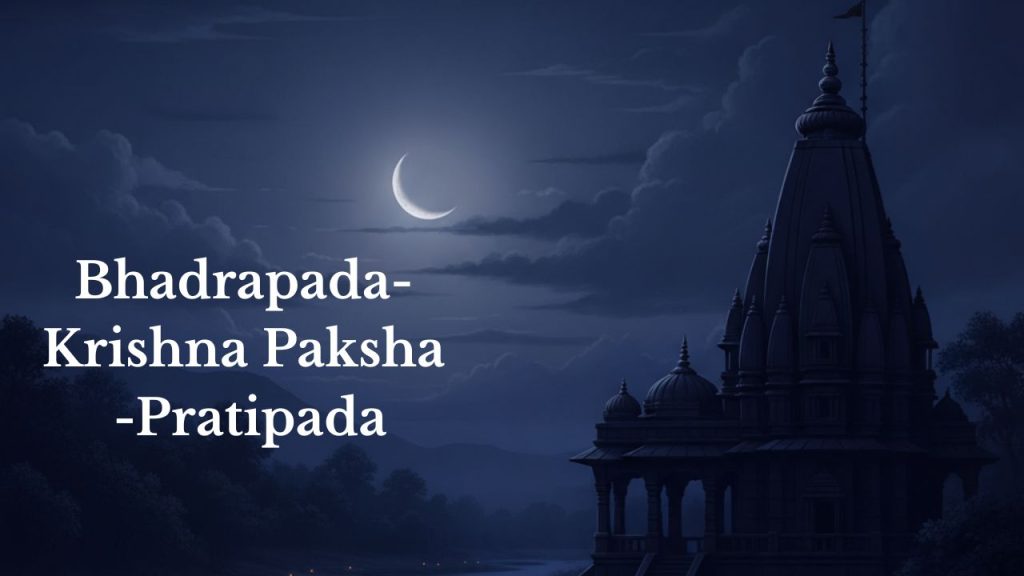
Significance of Bhadrapada Krishna Paksha Pratipada
The day immediately following the radiant glow of Purnima marks an important transition — Pratipada, the first day of Krishna Paksha. It’s like a quiet breath after a grand exhale, setting the tone for the waning phase of the moon.
In the Hindu lunar calendar, every month is split into two fortnights — Shukla Paksha (the waxing or bright half) and Krishna Paksha (the waning or dark half). Pratipada of Krishna Paksha follows Purnima and is considered a significant turning point in the lunar calendar. It’s when the moon begins its journey back toward Amavasya, slowly shedding light, day by day. This journey isn’t just about the moon — it mirrors the human experience of letting go, reflecting inward, and preparing for renewal.
The month of Bhadrapada, typically falling in August or September, holds immense spiritual and seasonal significance. Known for its overlapping of monsoon retreat and religious intensity, Bhadrapada is rich with observances like Ganesh Chaturthi, Rishi Panchami, and Pitru Paksha. The Krishna Paksha, which begins with Pratipada, carries a unique energy — introspective, calming, and deeply symbolic of detachment and spiritual surrender.
More than just a tithi, Bhadrapada Krishna Pratipada opens the door to deeper practices. It offers a sacred space to shift focus from outer celebrations to inner peace. As the festivities of Shukla Paksha fade, Pratipada invites a quieter wisdom — one that encourages humility, contemplation, and respect for life’s inevitable transitions.
Scriptural Significance
The roots of Krishna Paksha Pratipada go deep into the sacred soil of Hindu scriptures. Ancient texts, such as the Puranas, Smritis, and Dharma Shastras, have acknowledged the spiritual significance carried by each tithi, and Pratipada holds a unique place as a divine marker in the cosmic calendar.
Mention of Pratipada in Puranas and Dharma Shastras
The Bhavishya Purana, Vishnu Dharma Sutra, and Manu Smriti have all described the importance of tithis, including Pratipada. In these scriptures, time isn’t just linear — it’s sacred. Every day carries a vibration, and Pratipada, being the first of the dark fortnight, is linked to new beginnings that arise after fulfillment. Where Shukla Paksha builds up energy toward completion, Krishna Paksha reverses that cycle, teaching the wisdom of dissolving ego and embracing simplicity.
Role in the Calculation of Rituals and Fasts
Hindu ritual calendars, or Panchangs, rely heavily on tithis to plan fasts, festivals, and rites. Pratipada often determines the starting point for major observances. Even subtle shifts in moonrise or sunset can affect the alignment of spiritual duties. For example, the onset of Pitru Paksha is often marked by this very tithi, making it an essential date for family rituals and karmic balancing.
Association with Ancestral Rites and Beginning of Pitru Paksha (in some years)
Depending on lunar alignments, Bhadrapada Krishna Pratipada may mark the onset of Pitru Paksha, 16 days devoted to honoring one’s ancestors. This is not just a ritual — it’s a profound expression of gratitude and a symbol of continuity. When Pratipada marks this beginning, it becomes a spiritual doorway through which blessings from past generations are invoked.
Time Marker in Lunar-Based Dharma Practices
For spiritual seekers, ascetics, and householders alike, this tithi acts as a time anchor. The lunar cycle is used to time penances, recitations, and other practices. Aligning life with the moon isn’t superstition — it’s science wrapped in spirituality. Just like tides follow the moon, so does human consciousness, and Pratipada marks a low tide — ideal for deep reflection.
Beginning of Pitru Paksha (When Applicable)
In certain years, Bhadrapada Krishna Paksha Pratipada becomes even more significant — it marks the start of Pitru Paksha, a 16-day sacred stretch dedicated to the remembrance and honoring of ancestors.
Pratipada as the Start of the 16-day Shraddha Period
Pitru Paksha begins right after the full moon, symbolizing the shift from light to shadow, from celebration to reverence. When Pratipada marks this beginning, it takes on the role of a spiritual threshold — a gateway between the visible and the invisible, the living and the departed. Families all across India, regardless of caste or sect, begin their Shraddha rites with deep devotion and sincerity.
Paying Homage to Ancestors
This isn’t about rituals alone — it’s about connection. Offering tarpan (ritual water offerings) and pinda daan (food offerings) is seen as an act of returning love, care, and remembrance to those who paved the way for our existence. The belief is simple yet profound — honoring ancestors brings peace to their souls and blessings to the living.
Spiritual Benefit of Performing Tarpan and Shraddha
Tarpan isn’t just a ritual; it’s a gesture of completion. When you offer water or food while chanting names of ancestors, you’re not just going through the motions — you’re healing intergenerational bonds. Many believe that performing Shraddha on Pratipada helps in releasing karmic baggage, not just for the departed, but also for the living lineage. It’s seen as an act of dharma and seva rolled into one.
Link to Moksha (Liberation) of Departed Souls
The ultimate goal of these rites is liberation — moksha. Scriptures assure that when Shraddha is performed with a pure heart, ancestors find peace and begin their journey toward higher realms. Pratipada, being the first step in this journey, adds to its spiritual magnitude. The soul’s release from the cycle of birth and death is deeply tied to how the living remember and honor their duties during this time.
Observance of Religious Rituals
Krishna Paksha Pratipada isn’t just another calendar date — it’s a call to action for the heart and spirit. Across homes, temples, and pilgrimage sites, this tithi is marked by the quiet hum of rituals, offerings, and heartfelt prayers.
Performing Daan (Charity) and Tarpan for Ancestors
The energy of Pratipada is subtle, somber, and grounded. It’s perfect for selfless giving. Daan (charitable giving), especially of food, clothes, or essentials, is considered highly meritorious. Tarpan is offered by standing facing south, the direction symbolizing the realm of ancestors. The act may seem simple, but the intent behind it shapes its power.
Lighting of Diya and Recitation of Mantras
In many homes, a diya (oil lamp) is lit in honor of forefathers. Mantras are chanted to invoke peace and blessings for the departed. The sound vibrations created by chanting have an uplifting energy, believed to purify the environment and elevate subtle energies. It’s a sacred ambiance where spiritual emotion deepens.
Avoidance of Auspicious Tasks During Krishna Paksha
As a rule, auspicious ceremonies like marriages, new ventures, or housewarmings are avoided during Krishna Paksha — especially from Pratipada to Amavasya. The focus here is not on external achievement, but internal reflection. It’s not about fear; it’s about alignment — matching the energy of the cosmos with personal intent.
Emphasis on Introspection, Humility, and Gratitude
Pratipada sets a gentle tone of humility. The soul is encouraged to pause, reflect, and step back from ego-driven pursuits. It’s a beautiful time to realign — to express gratitude not only to ancestors but to life itself. Observances during this time help quiet the mind and open the heart to subtler truths.
Tithi Influence on Human Psychology and Energy
Every tithi is like a heartbeat of the moon, and just as the moon affects the tides, it’s believed to affect human emotions and mental states. Pratipada, the first day of the waning phase, carries a distinct vibration that subtly alters one’s feelings, thoughts, and behavior.
Belief in Lowered Sattva (Purity) and Higher Tamasic (Inertia) Energy
As the moon begins to wane, a subtle decline in energy is often felt. Traditionally, this period is considered lower in Sattva — the quality of clarity, purity, and enthusiasm — and higher in Tamas — the quality of inertia, confusion, and stillness. That doesn’t mean it’s negative. This Tamasic energy, if channeled right, supports rest, recovery, and deeper contemplation.
Importance of Spiritual Discipline and Inner Purification
When external brightness fades, internal light must be nurtured. That’s why spiritual discipline becomes important during Krishna Paksha. Simple acts, such as waking up early, maintaining silence, avoiding gossip, and eating lightly, can significantly purify the mind. Pratipada is an excellent day to begin this cycle of discipline, not out of obligation, but with mindful intention.
Suitable Day for Meditation, Scriptural Reading, and Silence
The natural mood of Pratipada supports solitude and silence. It’s a perfect day to sit in quiet meditation, reflect on sacred texts, or be still. There’s a kind of divine grace in these moments — something that can’t be explained but deeply felt. Even reading a few verses from the Bhagavad Gita, Upanishads, or Ramayana can shift the emotional climate within.
Role in Aligning One’s Activities with Natural Lunar Rhythms
Living in sync with the moon is not just an ancient idea — it’s a holistic way of life. By observing Pratipada consciously, one learns to flow with natural energies rather than fight them. This helps reduce stress, build resilience, and enhance emotional intelligence. It’s like resetting the soul’s compass toward balance.
Agricultural and Seasonal Transition
The Hindu calendar isn’t just spiritual—it’s ecological. Each tithi carries clues about nature’s rhythm, and Bhadrapada Krishna Paksha Pratipada is a beautiful example of that synergy. As the rains begin to ease and the skies slowly clear, this tithi marks a powerful transition in the agricultural calendar.
End of Monsoon and Start of Post-Monsoon
In India, the Bhadrapada month lies at the intersection of two seasons. The monsoon, having quenched the thirst of the earth, begins to withdraw. There’s a noticeable shift in the air—cooler breezes, clearer skies, and the subtle scent of drying soil. This natural transformation isn’t random; it’s deeply symbolic. Just like the moon begins to wane after its fullness, nature begins to slow down and prepare for the next cycle. Farmers watch these changes closely. The beginning of Krishna Paksha serves as a signal, indicating that it’s time to plan, slow down their pace, and prepare for the months ahead.
Preparations for Autumn Sowing
With the monsoon retreating, farmers begin to gear up for Rabi crops—grains like wheat, mustard, and barley. As the soil starts to dry, it becomes suitable for tilling and aeration. Seeds are chosen. Fields are cleared. And while modern farming relies on tools and machines, many still consult the Panchang to select the most auspicious day for sowing. Pratipada, being the first day of a new moon phase, is often respected as a day to make initial preparations or conduct pujas for farm tools and seeds.
Rituals Seeking Divine Blessings for Crops
In agrarian communities, it’s not uncommon to find villagers offering prayers to Bhumi Devi (Mother Earth), Surya (Sun God), and local deities. Rituals may include placing turmeric-smeared tools near a tulsi plant or lighting lamps in the fields before the first tilling. These acts may appear simple, but they carry profound meaning. They represent a heartfelt plea to nature—to protect the coming crops, to bless the land, and to shield the harvest from disease or disaster. Bhadrapada Pratipada holds spiritual energy that sanctifies these intentions.
Gratitude Towards Natural Forces for Harvest and Fertility
After months of monsoon rains, the earth has transformed. Seeds have taken root. Rivers have swelled. Nature has done its part. Now, as the lunar calendar turns to Krishna Paksha, there’s a moment of pause—a chance to say thank you. For those who live close to the land, this gratitude is not a formality. It’s a way of life. Ceremonies performed on Pratipada are filled with reverence for the rains, the winds, the sun, and the soil. This tithi serves as a spiritual handshake between humans and nature, sealing their partnership in the cycle of life.
Role in Vratas and Fasting Practices
Fasting in Hinduism isn’t about deprivation—it’s about discipline, balance, and cleansing. And Krishna Paksha Pratipada, being the start of the waning phase, provides the ideal energetic backdrop for it.
Pratipada Observed by Certain Communities for Special Fasts
In various parts of India, people observe vratas (vows of fasting or spiritual practice) specifically on Pratipada. These vratas vary from region to region but are often associated with purification and spiritual rejuvenation. Some households mark this day with silence, reduced meals, or even complete fasting. For many, it’s a time to recalibrate—not just physically, but mentally and emotionally. By choosing to abstain from indulgence on this day, the mind begins to sharpen, and the soul feels lighter.
Fasting for Purification of Mind and Body
The body, like the moon, follows cycles. Following the heightened activity of full moon rituals and festive gatherings, Pratipada provides a calm space for detoxification. Many spiritual texts describe this phase as ideal for internal purification. Fasting on Pratipada is believed to flush out physical toxins, but it also clears emotional clutter. Emotions often peak around Purnima; fasting afterward helps individuals regain their mental clarity and focus. Light meals, herbal teas, and satvik food (pure, vegetarian, and calming) are recommended.
Women Observe Pratipada for Family Harmony and Well-being
In traditional families, women often play a central role in observing vratas. On Krishna Paksha Pratipada, many women observe fasts or perform rituals for the well-being of their families. These include prayers for harmony in relationships, good health for children, and peace for departed loved ones. In some parts of India, women also participate in special pujas dedicated to the Goddess Durga or local deities that represent protection and fertility. Their prayers are full of emotion, carrying the weight of love, hope, and spiritual commitment.
Ideal for Simple Satvik Meals and Prayer
Even for those not undertaking a complete fast, Pratipada is a day for simplicity. Meals are often light, cooked without garlic or onion, and taken only once or twice a day. This reduces the body’s workload and helps the mind stay alert. Alongside food simplicity, people also reduce sensory overload by talking less, making less noise, and engaging in less activity. Prayers are recited with focus, bhajans are sung softly, and the household adopts a quieter rhythm. This simplicity is deeply nourishing—not just for the body, but for the soul as well.
Astrological and Lunar Importance
The moon has fascinated sages, scientists, and spiritualists alike. In Vedic astrology, each lunar day, or tithi, is believed to emit a specific energy that influences not only nature but also human life. Bhadrapada Krishna Paksha Pratipada is a prime example of this cosmic intelligence in action.
Lunar Energy Begins Its Waning Phase – Suitable for Letting Go
The full moon represents culmination, celebration, and outward expression. But once it starts waning—from Pratipada onward—the energy turns inward. This shift is subtle yet powerful. It encourages the release of expectations, stress, and attachments. Astrologers often recommend using this tithi to release what no longer serves. Whether it’s toxic habits, unresolved emotions, or material clutter, this day supports letting go with grace.
Astrologers Consider This Tithi for Analyzing Post-Purnima Effects
Just like tides follow the moon, human destinies are believed to align with lunar phases. After Purnima, astrologers look to Pratipada to understand how energies will play out in the coming fortnight. Will the next few days be turbulent or smooth? Is this a good time to travel, begin a vow, or rest? The tithi provides a glimpse into the energetic landscape ahead. Many even consult horoscopes and muhurats (auspicious timings) based on this shift.
People Seek Remedies for Lunar Afflictions or Pitru Dosha
Pratipada, especially in Bhadrapada, is associated with ancestral energies. In astrology, afflictions like Pitru Dosha (ancestral imbalance in the horoscope) can manifest in challenges related to health, relationships, or finances. Remedies often involve performing tarpan, offering food to Brahmins, or conducting Pitra Shanti Homas (fire rituals). These rituals are usually scheduled from or on Pratipada, making it a key date for spiritual correction and healing.
Ideal Time for Planetary Peace Rituals (Graha Shanti)
Just like ancestors, planets also influence human life. When someone’s horoscope indicates disharmony with planets like Saturn, the Moon, or Rahu, Pratipada becomes a favorable day to perform Graha Shanti (planetary peace) rituals. It’s a day meant for resolving, not pushing forward. Fire offerings, chants, and donations are made to pacify negative influences. These actions don’t just change planetary karma—they realign the mind with cosmic flow.
Cultural Practices and Regional Beliefs
India’s cultural fabric is as diverse as its landscapes. And while Pratipada may hold common spiritual themes, the local expressions and regional customs surrounding it are uniquely vibrant and colorful.
Regional Differences in Observing Krishna Pratipada
In North India, Pratipada is generally regarded as the beginning of a more solemn phase, primarily when associated with Pitru Paksha. However, as one moves towards Maharashtra and parts of South India, the atmosphere takes on a different tone. Here, Pratipada is often associated with Gauri Visarjan (immersion of Goddess Gauri idols) after Ganesh Chaturthi. The community comes together with devotion and joy to bid farewell to the Goddess, praying for her return with blessings.
In Maharashtra and South India, it is linked to Gauri Visarjan.
In cities like Pune and Mumbai, Krishna Paksha Pratipada marks the day when married women conclude their worship of Gauri Mata, the embodiment of prosperity and purity. After a couple of days of hosting the Goddess at home (just like Ganesha), she is lovingly immersed in water. Songs, prayers, and family gatherings accompany this ritual, making it both emotional and celebratory in nature. The symbolism is profound — letting go of what is divine, with the faith that it will return.
Folk Rituals and Oral Traditions Specific to This Tithi
Villages across Odisha, Chhattisgarh, and Tamil Nadu have their own folk stories tied to Pratipada. Grandmothers narrate tales of how this tithi helped sages overcome demons, or how performing a simple prayer on this day once cured a king of illness. These stories keep culture alive — they make the moon relatable and the calendar sacred. Folk dances, bhajans, and small community rituals ensure that spirituality remains an integral part of everyday life.
Connection to Local Deities and Seasonal Festivals
Different regions honor different deities. In coastal Karnataka, Pratipada is linked with Nagadevata (Serpent God) worship, while in Bengal, it may overlap with local observances before the grand Durga Puja. The essence remains the same — respect for nature, ancestors, and the cosmic order. Even seasonal harvest festivals in tribal belts align with this phase of the moon, proving once again that lunar rhythms are at the heart of Indian culture.
Symbolism and Spiritual Interpretation
At its core, Bhadrapada Krishna Paksha Pratipada isn’t just about moon phases or rituals. It’s about what they symbolize—the more profound spiritual truths of life.
Represents Beginnings After Fullness (Purnima → Pratipada)
Every ending carries within it the seed of a new beginning. As Purnima reaches its zenith and fades, Pratipada arises silently, gentle, humble, and new. It teaches that no matter how grand a moment might be, life always flows forward. There’s always more to learn, more to grow, and more to surrender. It’s a gentle invitation to start again, with greater awareness this time.
Symbolic of Humility After Celebration (Post-Festival Calm)
After the lights, sounds, and festivities of Shukla Paksha Pratipada, calm prevails. It’s like the quiet after a beautiful symphony—still humming in the heart, yet asking for silence. Spiritually, this shift is essential. It reminds us that joy must be followed by reflection, and success by humility. It teaches balance.
Encourages Letting Go of Ego and Embracing Simplicity
In spiritual practice, the ego is often seen as the root of suffering. Pratipada, marking the beginning of the waning phase, mirrors the ego’s journey—shrinking, dissolving, and ultimately disappearing. Observing this day with simplicity—light food, quiet rituals, gentle prayers—helps cultivate a lifestyle that’s content, connected, and deeply fulfilling.
Metaphor for Life’s Cycles of Growth, Decay, and Rebirth
The moon is a teacher. From new moon to full, and back again—it shows the cycle of birth, growth, decay, and renewal. Pratipada marks the moment when fullness begins to give way to emptiness. It reminds us that nothing stays forever—not success, not failure, not even pain. Everything is part of a larger dance. Recognizing this brings peace and deep spiritual maturity.