Understanding of Pratipada and Shukla Paksha in Shravana
Definition of Pratipada: The first lunar day of the fortnight
Pratipada marks the very first day of the lunar fortnight in the Hindu calendar. It follows Amavasya (the new moon) and opens the gateway for a new cycle of time, bringing with it hope, clarity, and a fresh spiritual vibration. This tithi, or lunar date, signifies beginnings, a new spiritual chapter that enables the seeker to reset their intentions and realign with dharma (righteousness). In essence, Pratipada holds a special place as a symbolic ‘restart button’ in the cosmic cycle, offering a powerful opportunity for reflection and spiritual progress.
Shukla Paksha: The waxing phase of the moon leading up to Purnima
The lunar month is divided into two halves: Shukla Paksha and Krishna Paksha. Shukla Paksha, starting with Pratipada, is the waxing phase of the moon, leading to the full moon (Purnima). This phase is deeply symbolic of growth, clarity, and the illumination of inner wisdom. As the moon grows brighter with each passing day, so too does the opportunity for expanding consciousness. Shukla Paksha is considered auspicious in Sanatan Dharma, making Pratipada an especially significant day to initiate spiritual and righteous practices.
Importance of the Shravana month in Sanatan Dharma
Shravana is one of the most sacred months in the Vedic calendar. It’s devoted to deep spiritual practices, fasting, and devotion, especially to Lord Shiva. The entire month is charged with divine energy, which is amplified further during the Shukla Paksha. The rains of Shravana symbolize inner cleansing, while the lush earth reflects renewal and devotion. Every tithi in Shravana has its value, but Pratipada stands out as the threshold, the first step into the sacred lunar ascent.
Objective of the blog: Understanding the spiritual, religious, and cultural relevance of this tithi
The purpose of this discussion is to dive deep into what makes Pratipada in Shukla Paksha of Shravana so spiritually powerful. Whether seeking to begin a new vrat, recommit to inner goals, or understand its Puranic background, this tithi offers layers of wisdom. By exploring the religious and yogic significance, associated rituals, and modern relevance of this concept, one gains practical and spiritual clarity to align life with cosmic rhythms.
Astronomical and Calendrical Significance
How Pratipada is calculated in the lunar calendar
In the Hindu lunar calendar, each tithi is defined by the angular distance between the sun and the moon. Pratipada is the day when this distance ranges from 0° to 12°. It follows Amavasya, and its appearance marks the beginning of the Shukla Paksha. Astrologically, the moon begins to gain light after the complete darkness of Amavasya. This increase in lunar light is not just astronomical; it’s energetically significant in Vedic philosophy.
Position of Pratipada as a fresh beginning after Amavasya
Amavasya symbolizes endings, letting go, and introspection. As it ends, Pratipada rises, ushering in the first light. It’s the cosmic dawn after a night. This tithi is the ideal time to set new intentions, begin prayers, and start new spiritual or personal resolutions. The movement from darkness to light is not just metaphorical; it’s energetic. The subtle body, or sukshma sharira, is believed to respond to these shifts, making this day highly conducive to spiritual practices.
Link between Shukla Paksha and rising spiritual energies
Just as the moon gains light, spiritual energy is believed to rise progressively during Shukla Paksha. Pratipada is the ignition point of this energetic climb. From a yogic perspective, it marks the beginning of an inward ascent. Each waxing day builds upon the energy of the previous one, culminating in Purnima, which represents the fullness of awareness. Aligning oneself with this rhythm can lead to significant personal transformation.
Alignment with seasonal transitions in Shravana
Shravana typically coincides with the monsoon season in India, a time of natural cleansing, fertility, and vibrancy. The moisture in the air symbolizes emotional openness, and the earth feels alive with spiritual energy. Pratipada, aligning with this rejuvenated earth and a waxing moon, forms a synergy that makes it the perfect time for renewal and spiritual pursuits. It marks not just a new lunar cycle, but a shift in nature itself.
Spiritual Symbolism of Pratipada
Represents new beginnings and the renewal of consciousness
In Sanatan Dharma, beginnings are deeply spiritual. Pratipada represents more than the start of a month; it symbolizes the rebirth of awareness. After the closure brought by Amavasya, Pratipada opens the door to higher possibilities. The soul gets a chance to pause, reset, and embark again on its journey toward truth (satya). The significance of this day lies in its capacity to reconnect us with the cosmic order.
Ideal day for spiritual resolve and introspection
Pratipada provides the ideal psychological and spiritual space to form sankalpa (sacred resolution). It’s a moment of stillness, ripe for introspection. Setting intentions on this day gives them momentum as the moon waxes. It’s a favorable time to observe silence (maun), engage in scriptural reading, or begin meditation routines. What begins today has the potential to mature by Purnima.
Associated with purity and clarity of thought
The light of the moon is closely tied to the mind (manas) in Vedic thought. As the moon begins its waxing phase, the clarity of thought naturally increases. Pratipada’s association with light, both literal and symbolic, makes it a powerful day to cleanse negative thoughts and cultivate sattva, the quality of peace, harmony, and clarity.
A time to plant seeds of devotion and discipline
This day acts like spiritual soil, ready to receive seeds of devotion, prayer, and inner discipline. Any vow or practice started on Pratipada gains support from nature’s rhythm. Whether chanting mantras, adopting healthier routines, or embarking on a new path of self-inquiry, this is the day when those efforts are most likely to be blessed and bear fruit.
Pratipada in Vedic and Puranic Literature
Mention of Pratipada in key scriptures like the Skanda Purana and the Vishnu Purana
Pratipada finds reference in numerous scriptures. In Skanda Purana, it’s considered a holy day ideal for beginning fasts and penance. Vishnu Purana acknowledges it as a favorable time for initiating worship and observing dharma. These mentions are not just symbolic; they highlight how deeply embedded this tithi is in Sanatan rituals.
Stories of divine births or events occurring on Pratipada
Many mythological events are associated with Pratipada. For instance, in certain traditions, Lord Vishnu is said to have taken forms on this tithi to restore cosmic balance. Some regions also associate it with the first day of creation cycles or the rising of Adi Shakti. These stories amplify the importance of the day as a time when divine actions are initiated.
References to rituals prescribed on this day in the Kalpa Sutras
Kalpa Sutras guide karmakanda (ritual practices). According to these, Pratipada is recommended for light worship (alpa pooja), initiation of new disciplines, and offering oblations to ancestors or deities. It’s seen as a doorway between the mundane and the sacred. Simple rituals performed on this day are believed to have a multiplied impact.
Puranic symbolism of the moon’s waxing and its spiritual counterpart
The moon’s growth symbolizes the expansion of chitta, the mind-field. In the Puranas, this waxing moon is portrayed as the return of spiritual light, the revival of dharma, and the cleansing of ignorance. Pratipada is the spark that starts this inner illumination.
Rituals and Observances on Pratipada
Early morning bath (Snana) and sankalpa
Ritual purity begins with an early morning bath, often taken in sacred rivers or with a mentally purified heart at home. This physical cleansing is symbolic of washing away past karma. After snana, devotees take a sankalpa, a conscious vow to uphold specific spiritual or moral commitments during the fortnight or month.
Offering prayers to deities like Lord Vishnu, Shiva, or Ganesha
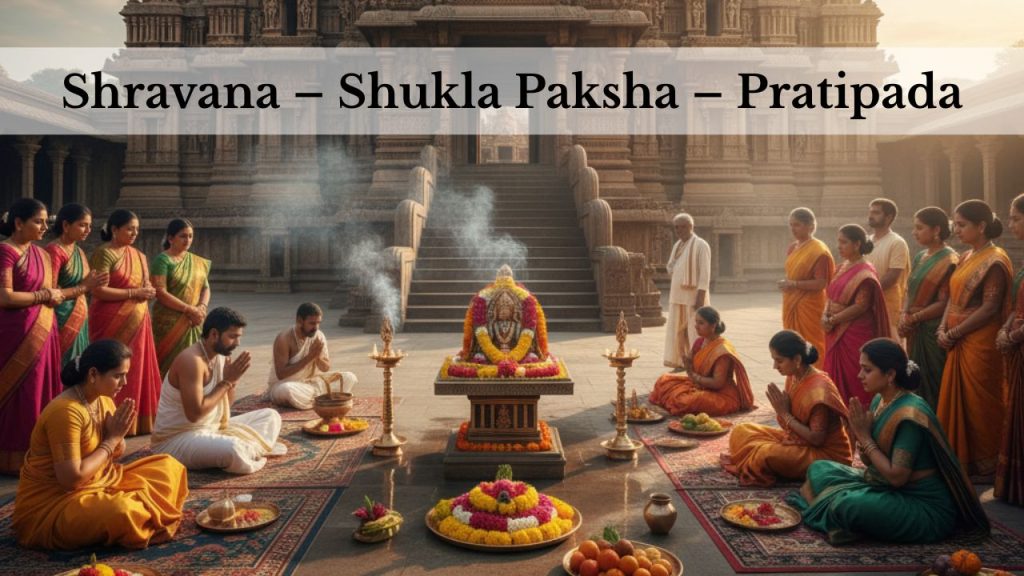
Depending on the family or regional tradition, Pratipada may involve worship of different deities. In Shravana, Lord Shiva is often the primary focus. Lord Vishnu and Lord Ganesha are also revered for removing obstacles and granting clarity. Flowers, incense, lamps, and simple offerings, such as fruits, are presented during pooja.
Recitation of mantras like Gayatri or Vishnu Sahasranama
The resonance of mantras enhances the vibration of the day. Chanting the Gayatri mantra, Vishnu Sahasranama, or Shiva’s Panchakshari mantra (Om Namah Shivaya) is believed to cleanse the aura and sharpen spiritual awareness. Many use this tithi to begin mantra-sadhana or to continue a previously decided-upon spiritual vow.
Distribution of satvik food and offerings
After prayers, satvik (pure and balanced) food is prepared and shared as prasadam. Feeding people experiencing poverty, offering food to animals, or distributing fruits to neighbors are acts of seva that align with the selfless spirit of this day. These simple gestures create inner joy and help dissolve ego.
Association with Auspicious Beginnings
Commencing vrat, sadhana, or mantra chanting cycles
Due to its clean, energetic nature, Pratipada is ideal for initiating long-term spiritual practices. Many begin vrat (fasts), mantra japa, or meditation routines on this day. The waxing energy of the moon supports the growth and momentum of these efforts.
Ideal time for starting spiritual studies or pilgrimages
For seekers wanting to begin scriptural studies, such as the Bhagavad Gita, Upanishads, or Ramayana, Pratipada is the ideal starting point. It’s also an auspicious day to embark on spiritual pilgrimages to temples or holy sites. Such journeys undertaken now are said to carry the full force of divine blessings.
Griha Pravesh or minor family pujas often begin on this day
Families often choose Pratipada for initiating home rituals, such as Griha Pravesh (house entry ceremony), installing deities, or performing simple pujas. The day’s positive energy makes it favorable for such milestones, ensuring auspiciousness and prosperity.
Symbolizes growth and accumulation of spiritual merit
Each action performed on Pratipada, be it a small prayer or a full-fledged ritual, yields increased spiritual merit (punya). The momentum gained here can uplift the entire month, both for individuals and families. It’s a time to sow positive karmic seeds for the future.
Pratipada and the Worship of Deities
Some regions associate Shukla Pratipada with Shakti worship
Shakti, the divine feminine force, is central to Sanatan Dharma. In several regions of India, Shukla Pratipada, especially in auspicious months like Shravana, is considered the ideal day to invoke the Devi in her various forms, such as Durga, Parvati, or Lakshmi. Prayers, kumari puja (worship of young girls symbolizing goddess energy), and Devi stotrams (hymns) are recited. This day represents a reawakening of inner Shakti or spiritual power, symbolizing the return of divine strength and grace in one’s life.
Ganesha puja and invoking divine blessings for new ventures
Lord Ganesha is widely known as Vighnaharta (remover of obstacles) and the deity of beginnings. Hence, Pratipada is a popular time for performing Ganesha Puja, especially before embarking on any new endeavor, whether it be a job, a new study, a marriage plan, or even a spiritual commitment. Worship involves offering modak, durva grass, and chanting the Ganapati Atharvasirsha. The intention is to seek his blessings to begin any journey with success, clarity, and without hindrances.
In Shravana, the worship of Shiva and Parvati gains special emphasis.
The month of Shravana is synonymous with Lord Shiva. Mondays are especially sacred, but the entire lunar cycle resonates with Shiva’s energy. Pratipada of Shukla Paksha during Shravana is a time when both Shiva and Parvati are worshipped together, symbolizing divine union, balance, and the merging of energies. Devotees offer bel patra, water, and milk over the Shivalinga and chant Om Namah Shivaya. Parvati is honored as Shubha, the auspicious force that complements Shiva’s stillness.
Connection with lunar energy and Soma (Moon God)
The moon is not just a planet in Hindu cosmology; it’s a deity. Chandra Dev (Soma) symbolizes the mind, emotions, and subtle nourishment. As the moon begins its ascent on Pratipada, offering prayers to Soma can help bring mental peace, emotional clarity, and rejuvenation. Some chant the Chandra Gayatri or perform moon-focused meditations. This harmonizes emotional energies and strengthens manas shakti (mental power), especially beneficial during Shravana.
Regional and Cultural Variations in Observance
Variations in how different states/regions honor Pratipada
India’s spiritual landscape is richly diverse. In North India, Pratipada might involve pujas to Ganesha or Devi, while in the South, families initiate vrats dedicated to Shiva or Murugan. Eastern states like Bengal associate this tithi with community Devi worship or ritualistic storytelling (katha path). Western India often treats it as the start of new economic cycles or small business prayers. These differences showcase the shared reverence for Pratipada while allowing for cultural individuality.
Folk traditions and local legends specific to Shravana Pratipada
In Maharashtra, it’s common to hear folk tales of saints like Sant Tukaram or Dnyaneshwar, who began their sadhana during the month of Shravana. In Rajasthan, folk women sing bhajans during Pratipada evenings, invoking goddesses and praying for the welfare of their families. In parts of Odisha, tribal communities celebrate the lunar rising with drum dances and traditional worship of nature. These traditions, while localized, all align with the more profound message of renewal and reverence.
Ritual baths in sacred rivers like the Ganga or the Godavari
Rivers hold immense spiritual value in Sanatan Dharma. During Pratipada, many devotees take ritual baths (snana) in holy rivers, especially during the month of Shravana. The confluence of clean waters and the waxing moon is believed to cleanse sins (papa) and amplify punya. In cities like Varanasi, Haridwar, or Nashik (on the Godavari), collective bathing rituals are conducted, especially when Pratipada aligns with special nakshatras (stars).
Community-level observances in temples and homes
Temples often organize satsangs, group chantings, or special morning aartis on Shukla Pratipada of the Shravana month. Community kitchens prepare and distribute prasadam. Families perform minor home-based pujas, invite relatives, and start shared vrat practices. This spirit of togetherness magnifies the sacredness of the day, transforming Pratipada into a collective celebration of dharma.
Psychological and Yogic Perspectives
Symbol of renewal and rebalancing the inner self
From a psychological viewpoint, Pratipada functions like a reset button for the mind. The closure of Amavasya represents letting go of mental clutter, and Pratipada symbolizes a fresh state, clean, light, and receptive. This is the time to practice mental hygiene. Reflecting on intentions, journaling, or visualizing inner goals can be highly effective now. It’s the lunar mind’s moment of balance before activity begins.
Beginning the month with mindfulness and dharma
Dharma, living in alignment with truth and one’s higher nature, needs deliberate effort. Pratipada provides the stillness to realign with that effort. Observing this tithi with mindfulness, even in small ways, such as starting the day in silence, offering gratitude, or performing a simple puja, sets a spiritual tone for the rest of the month. It’s a chance to begin anew, with clarity and purpose.
Role of moon phase in influencing mind and emotions (Chandra Tattva)
In yogic philosophy, the moon governs manas tattva, the mental element. A waxing moon helps in enhancing focus, creativity, and stability. Since Pratipada marks the beginning of this cycle, it serves as an anchor point. Practicing pranayama (breath control), the moon salutation (chandra namaskar), or gentle mindfulness exercises on this day aligns the subtle body with the cosmic flow, making one mentally resilient and emotionally grounded.
Pratipada is a yogic checkpoint for awareness and discipline.
Spiritual progress is rarely linear. That’s why Pratipada is like a spiritual checkpoint, a chance to assess one’s standing in awareness and self-discipline. Is the sadhana on track? Is the mind aligned with the heart? This day offers a pause and a restart, blessed by lunar energy. When used mindfully, it strengthens resolve and deepens commitment toward the inner journey.
Modern Relevance and Observance
How to incorporate Pratipada rituals in daily life today
Rituals don’t have to be elaborate to be meaningful. A simple morning bath with intention, lighting a lamp, offering flowers, and sitting quietly in reflection can be transformative. One can even begin digital journaling, chanting softly during a commute, or doing gratitude affirmations before work. The key is to treat this day as sacred, however subtly.
Simple practices for householders and working professionals
Not everyone can take hours off for rituals, but everyone can pause for five minutes. Starting the day with five minutes of breath awareness, offering a fruit to a deity’s picture, or simply chanting “Om Namah Shivaya” 11 times can help align your energy with divine rhythms. Professionals can plan their to-do list after this pause, using the clarity Pratipada brings to make better choices.
Preserving ancient traditions amidst a modern lifestyle
Traditions thrive when adapted. Observing Pratipada doesn’t always mean copying old rituals verbatim; it means embodying their essence. A family can read a short shloka together, or cook satvik food and share it. Schools and offices can hold brief morning reflections. Digital platforms can share knowledge and host online satsangs. These adaptations keep the tithi alive in contemporary hearts.
Importance of aligning with lunar cycles for holistic wellness
Ancient wisdom often advised aligning daily routines with the sun and monthly practices with the moon. Observing Pratipada brings that wisdom back into practice. It encourages a pause for emotional health, spiritual intention, and relational awareness. Just as physical detox is vital, so is lunar synchronization. Pratipada is the ideal day to initiate it. In the broader context of life, tuning into this rhythm can enhance mental clarity, emotional balance, and even informed decision-making.