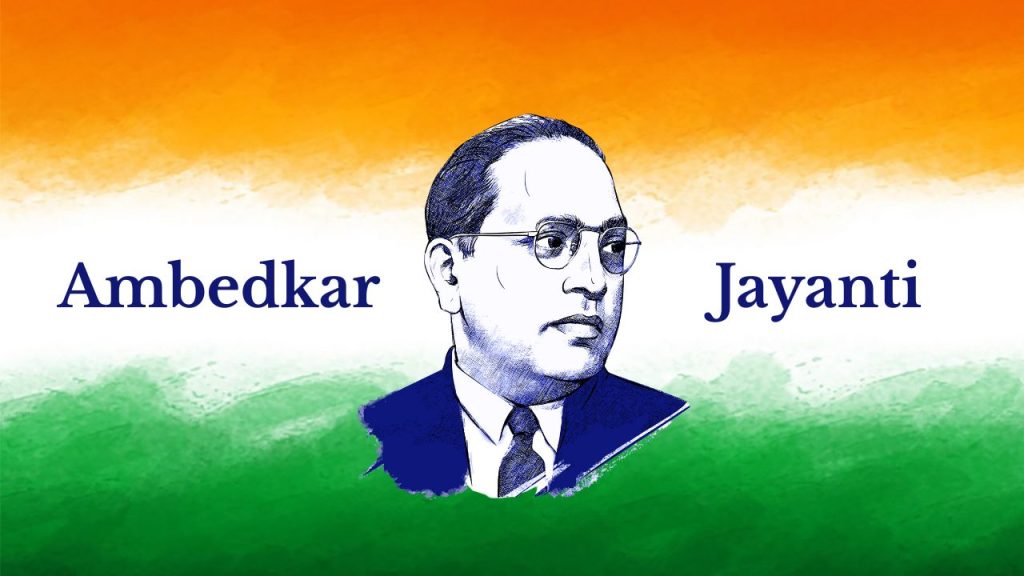
Understanding the Significance of Ambedkar Jayanti
Every year on April 14th, millions of people worldwide come together to honor the birth anniversary of Dr. Bhimrao Ramji Ambedkar, fondly known as Babasaheb. This day, widely celebrated as Ambedkar Jayanti, is more than just a remembrance of a great leader; it’s a reaffirmation of our collective commitment to justice, equality, and human dignity.
For many, Ambedkar Jayanti is a day of celebration. For others, it serves as a powerful reminder of the fight against social inequality and the need to continue advocating for a more inclusive world. This day stands out because it cuts across geographical, cultural, and political boundaries. From bustling cities in India to distant corners where the Indian diaspora resides, Ambedkar Jayanti is observed worldwide, demonstrating that Dr. Ambedkar’s legacy extends beyond borders.
A Recognized Public Holiday
In India, several states, including Maharashtra, Uttar Pradesh, Tamil Nadu, and Karnataka, mark Ambedkar Jayanti as an official public holiday. Government offices, educational institutions, and public sectors remain closed in observance of the holiday. However, what makes this day so vibrant is not the closure of offices, but rather the spirit of remembrance, reflection, and respect evident in street processions, seminars, debates, and cultural programs across communities.
A Global Tribute
Thanks to the widespread Indian diaspora, Ambedkar Jayanti is now a global phenomenon. Whether it’s London, New York, Tokyo, or Nairobi, Indians abroad organize gatherings, hold panel discussions, and share Dr. Ambedkar’s ideas with international audiences. These observances underscore how deeply his principles of liberty, equality, and fraternity resonate with people everywhere.
Relevance in Today’s Times
Dr. Ambedkar’s teachings have become even more significant in our current social and political context. As we navigate conversations about social justice, caste discrimination, gender inequality, and the need for constitutional values, Ambedkar Jayanti reminds us to pause and think: Are we living up to the vision he laid out for us? Whether you celebrate the day with reverence or are just learning about it, Ambedkar Jayanti invites us all to reflect on our responsibilities as citizens in building a fair, inclusive, and humane society.
Life and Legacy of Dr. B.R. Ambedkar
The Journey of an Icon: From Humble Beginnings to National Reverence
Dr. Bhimrao Ramji Ambedkar’s life is not just a historical account; it’s an emotional and inspiring story of resilience, brilliance, and boundless courage. His journey from being born into a marginalized Dalit family to becoming the chief architect of India’s Constitution reflects his unyielding will to transform his life and the future of millions.
Early Life and Education
Born on April 14, 1891, in the small town of Mhow (now in Madhya Pradesh), Dr. Ambedkar was the 14th and youngest child in his family. His early life was filled with hardships, poverty, and systemic discrimination due to his caste. Imagine being denied entry into temples or schools simply because of your birth. This was the painful reality Ambedkar faced every day.
Despite the odds, he pursued education relentlessly. Supported by a scholarship from the Maharaja of Baroda, Ambedkar studied at Columbia University in New York and later at the London School of Economics. He earned multiple doctorates in law, economics, and political science, achievements almost unimaginable for someone from his background at the time.
Relentless Fight Against Caste Discrimination
Dr. Ambedkar’s education was not just academic; it shaped his worldview. He saw the caste system as a deep-rooted social evil and made it his life’s mission to uproot it. He never accepted the idea of ‘destiny’ or ‘karma’ as a cause of one’s suffering; instead, he held the system accountable and sought to change it through law, activism, and education.
In protest, he publicly burned the Manusmriti, a text that institutionalized caste hierarchy. His leadership in movements like the Mahad Satyagraha (fighting for Dalits’ right to access public water) and the Temple Entry Movement demonstrated his courage and strategic thinking in challenging societal norms.
Academic and Legal Brilliance
Dr. Ambedkar wasn’t just a reformer; he was a prolific scholar and one of the sharpest legal minds India has ever produced. His writings on economics, law, and social justice were groundbreaking. His doctoral thesis at Columbia focused on the rupee problem, reflecting his in-depth understanding of monetary policy, a topic still relevant today. He used his knowledge not to hoard prestige but to empower the voiceless. His legal acumen was instrumental in advocating for equal rights, land reforms, and fair labor policies.
Champion of Women’s Rights and Labor Laws
Many people are unaware that Dr. Ambedkar also strongly advocated for women’s rights. He worked tirelessly to include provisions for equal pay, maternity leave, and inheritance rights in early drafts of Indian law. His efforts in labor reforms gave voice to India’s working class, ensuring they were treated with dignity and fairness. In every sense, Dr. Ambedkar’s legacy is that of a visionary who dreamed big, fought hard, and left behind a path for us to follow.
Architect of the Indian Constitution
Crafting the Foundation of Modern India
When India gained independence in 1947, we had the freedom, but not yet the framework, to build a just and inclusive nation. Dr. B.R. Ambedkar, appointed chairman of the Drafting Committee of the Constituent Assembly, was responsible for creating a Constitution that would define the very soul of India. What followed was a masterclass in visionary leadership, democratic ethics, and deep-rooted social justice.
Chairmanship of the Drafting Committee
In August 1947, the Constituent Assembly entrusted Dr. Ambedkar with one of the most critical tasks in nation-building: leading the team to draft the Constitution of India. This wasn’t just a legal document; it was to be the voice of a new India shaped by centuries of struggle, inequality, and aspiration.
Despite resistance from various quarters, Dr. Ambedkar remained composed, meticulous, and focused. He spent hours researching other constitutions, understanding global democratic models, and ensuring the Indian Constitution was not unique but deeply rooted in Indian reality.
His Vision Reflected in Constitutional Principles
Every line, every clause, every article in the Indian Constitution bears his intellectual and moral imprint. Liberty, Equality, and Fraternity weren’t just words to him; they were the pillars on which he envisioned India’s future. His dedication ensured the Constitution offered:
- Universal adult suffrage (every adult gets the right to vote)
- Protection of fundamental rights (speech, religion, equality)
- Checks and balances between the judiciary, the legislature, and the executive
- Safeguards for minorities and marginalized communities
Advocacy for Fundamental Rights and Social Justice
Dr. Ambedkar believed that the Constitution must protect every citizen, especially those who had long been silenced by caste, gender, or class. His legal and ethical compass always pointed toward justice in courts, classrooms, workplaces, and daily life.
He fiercely advocated for affirmative action, reservations in education and jobs for Scheduled Castes and Scheduled Tribes, so those who had historically been left behind could finally step forward with dignity.
Emphasis on Equality and Fraternity
Dr. Ambedkar often said, “Political democracy cannot last unless there lies at the base of it social democracy.” His emphasis on fraternity, the sense of brotherhood among citizens, was not an afterthought but a core requirement. He knew that laws alone couldn’t erase centuries of discrimination. Only human connection, mutual respect, and compassion could do that.
His Legacy in Indian Governance Today
More than seven decades later, the Indian Constitution remains one of the most progressive and comprehensive in the world. From guaranteeing free speech to safeguarding minorities, much of what defines modern Indian governance, its structure, spirit, and sense of justice, comes from Dr. Ambedkar’s vision. Every time we exercise our rights, we walk the path he carved. His legacy is not frozen in statues or speeches; it lives on every day we choose equality over exclusion.
Symbol of Social Equality and Justice
The Unshakable Voice of the Voiceless
Dr. B.R. Ambedkar wasn’t just a scholar or a legal expert. He was a relentless warrior for social justice, a voice that rose above the noise to speak for the silenced. To understand Ambedkar is to understand the fight for human dignity in its rawest, most courageous form. He gave millions the courage to stand tall, even when the world tried to push them down.
A Lifelong Voice for Dalits and the Marginalized
For centuries, Dalits, previously known as “untouchables”, were subjected to systemic discrimination, violence, and social exclusion. Dr. Ambedkar was the first national leader to champion their cause unapologetically, not from a distance but as one among them.
He gave Dalits a new identity, not of shame, but of pride. He told them, “You are not inferior. You are not cursed. You are not forgotten.” Through speeches, books, and movements, he fought tirelessly to eradicate caste-based humiliation and oppression.
Campaign Against Untouchability and Caste Discrimination
Dr. Ambedkar led several groundbreaking movements to confront casteism directly. The Mahad Satyagraha (1927) was one such pivotal moment. When Dalits were denied access to public water tanks, Ambedkar mobilized thousands to assert their right to use the same water tank as others.
He also organized temple entry movements, defying social norms that barred Dalits from entering places of worship. These weren’t just protests; they were declarations that everyone deserves equal rights, regardless of birth.
Establishment of the Bahishkrit Hitakarini Sabha
In 1924, Ambedkar founded the Bahishkrit Hitakarini Sabha, an organization that aimed to uplift and empower the ‘depressed classes’ through education, healthcare, and legal awareness. This institution laid the groundwork for Dalit mobilization and became a hub for social reform.
It focused on:
- Providing scholarships and schools for Dalit students
- Offering legal assistance against caste violence
- Advocating for civic rights and employment opportunities
This was grassroots activism led by a man who believed change must begin where injustice resides.
Vision of an Inclusive and Egalitarian Society
Dr. Ambedkar didn’t want a society where Dalits merely “survived,” he envisioned a country where everyone thrived together. He imagined an India where one’s worth wasn’t measured by one’s surname but by one’s character and capabilities. His idea of nation-building wasn’t complete without social equality at its heart.
He firmly believed that caste is not a division of labor, it’s a division of laborers. He wanted to replace that with a merit-based, dignity-driven structure where everyone had equal opportunities to succeed.
Impact on Future Social Justice Movements
Dr. Ambedkar laid the philosophical and legal groundwork for future activists, thinkers, and reformers. His ideas inspired movements such as:
- Dalit Panthers in the 1970s
- The rise of Dalit literature and art
- Legal reforms against caste atrocities
- Contemporary Dalit rights advocacy in India and abroad
To this day, every protest against caste discrimination, every voice demanding equity, carries the essence of Dr. Ambedkar’s dream.
Political Contributions and Vision
Building a Democratic India Through Bold Leadership
While we often celebrate Dr. Ambedkar’s intellectual and social contributions, his political vision was equally profound. He didn’t just theorize justice, he legislated it. He didn’t just dream of democracy, he built it brick by brick. Through his political journey, Ambedkar sought to empower those India’s systems had systematically ignored.
Founding of the Independent Labour Party
In 1936, Ambedkar founded the Independent Labour Party (ILP), one of India’s earliest political movements to focus on labor rights, caste equality, and economic justice. It wasn’t just a political outfit; it was a voice for the working class and marginalized communities.
The ILP contested and won 15 out of 17 seats in the Bombay Legislative Assembly elections in 1937, demonstrating the deep trust the oppressed masses had in Dr. Ambedkar’s leadership. The party fought against oppressive landlordism, unfair labor practices, and caste tyranny.
Role in the Constituent Assembly Debates
Dr. Ambedkar’s participation in the Constituent Assembly debates wasn’t just symbolic; it was strategic, bold, and transformative. He often faced heated opposition, but his arguments, backed by facts, logic, and moral conviction, often turned the tide.
He stood firm on:
- Equality before the law
- Abolition of untouchability
- Minority rights and religious freedom
- Federal structure with strong civil liberties
His words during these debates still echo through the halls of Indian democracy.
Tenure as India’s First Law Minister
In 1947, Ambedkar became India’s first Law and Justice Minister. In this role, he spearheaded several revolutionary reforms, including:
- Drafting of the Hindu Code Bill (aimed at granting women equal property and divorce rights)
- Reforms in civil and criminal jurisprudence
- Strengthening of legal institutions and access to justice for all
His tenure was short but impactful. He eventually resigned due to the Parliament’s delay in passing the Hindu Code Bill, a testimony to his uncompromising stance on justice for all, especially women.
Creation of the Scheduled Castes Federation
Recognizing the limitations of traditional political platforms, Ambedkar later formed the Scheduled Castes Federation (SCF) in 1942, a political party focused solely on Dalit representation and upliftment. The SCF provided marginalized communities with a structured and influential voice in electoral politics.
This move laid the foundation for many future Dalit-led political organizations and helped solidify the idea that representation matters in a functioning democracy.
Vision of a Strong, Secular, Democratic Republic
Dr. Ambedkar’s India was not one of narrow nationalism or divisive politics. He dreamed of a strong, secular, and democratic republic where every citizen was treated equally under the law. He emphasized, “Democracy is not a form of government, but a way of life.”
His political philosophy teaches that true nation-building begins with inclusion, where no one is left behind and everyone has a seat at the table.
Educational Reformer and Advocate of Learning
Knowledge as the Greatest Equalizer
If there was one weapon Dr. B.R. Ambedkar believed in more than any other, it was education. To him, education wasn’t just about textbooks or degrees; it was freedom, dignity, and empowerment. He understood that centuries of oppression could only be dismantled if the oppressed were equipped with knowledge and empowerment.
Importance of Education in Ambedkar’s Philosophy
Dr. Ambedkar often said that education was the key to social mobility. He believed that true empowerment came not from charity or sympathy but from the ability to think critically, act independently, and rise on one’s own merit. His most iconic quote, “Educate, Agitate, Organize”, powerfully captures this philosophy.
- Educate: Gain knowledge to understand oppression.
- Agitate: Challenge unjust systems peacefully and purposefully.
- Organize: Build collective strength to drive change.
Scholarships and Institutions Founded in His Name
Today, thousands of scholarships, research chairs, fellowships, and academic awards bear Ambedkar’s name, helping underprivileged students access opportunities that were once denied to them. Institutions such as:
- Dr. B.R. Ambedkar University (Delhi & Lucknow)
- Dr. Ambedkar Institute of Technology
- Ambedkar Chair in Social Justice studies in various universities
Serve as reminders of his legacy in democratizing education.
Contributions to Higher Education for Marginalized Groups
Ambedkar wasn’t satisfied just talking about education; he worked to institutionalize access. As Law Minister and public intellectual, he advocated for:
- Reservations in educational institutions
- Hostels and support systems for Dalit students
- Adult literacy and vocational training for the marginalized
Thanks to his groundwork, generations of students from oppressed communities stepped into classrooms, boardrooms, and parliaments.
Personal Academic Achievements as Inspiration
Dr. Ambedkar’s academic journey is legendary. Despite financial hardship and social discrimination, he earned:
- A Ph.D. from Columbia University
- A D.Sc. from the London School of Economics
- Legal training from Gray’s Inn, London
- Proficiency in multiple languages, including Sanskrit, Pali, Persian, and French
He proved that talent is universal, but opportunity is not. He devoted his life to correcting that imbalance.
Religious Conversion and Dalit Empowerment
A Spiritual Revolution Against Caste Tyranny
In 1956, Dr. Ambedkar made a historic decision, not as an act of rebellion but as a conscious act of liberation. He embraced Buddhism, marking a profound moment in Indian history when religion became a tool for social justice.
Reasons for Embracing Buddhism
Ambedkar had long studied the oppressive nature of caste-based Hinduism, which he believed was beyond reform. He declared, “I was born a Hindu, but I will not die a Hindu,” highlighting his rejection of a religion that sanctioned untouchability.
He chose Buddhism because:
- It was egalitarian and rejected caste hierarchy
- It emphasized reason, compassion, and personal growth
- It aligned with his rationalist and ethical worldview
Mass Conversion Movement of 1956
On 14 October 1956, in Nagpur, Dr. Ambedkar converted to Buddhism, accompanied by over half a million followers, in one of the largest religious conversions in history. This was not just a spiritual shift; it was a civil rights movement in the form of a spiritual renaissance. It symbolized the final rejection of caste humiliation and the embracing of dignity and self-respect.
Core Teachings of Buddhism He Promoted
Dr. Ambedkar’s version of Buddhism was rooted in the original teachings of the Buddha, focusing on:
- The Four Noble Truths and the Eightfold Path
- Compassion, mindfulness, and ethical conduct
- Equality, self-respect, and non-violence
He believed Buddhism was “a religion of principles, not rituals.” It was meant to elevate the mind, not trap it in dogma.
Socio-Political Impact of His Conversion
The conversion galvanized the Dalit community:
- Self-identity transformed, no longer “untouchables,” they became proud Navayana Buddhists
- Inspired by Dalit art, literature, festivals, and institutions
- Triggered policy shifts, especially in Maharashtra and other regions with Buddhist populations
This wasn’t just about religion; it was about reclaiming human dignity. Thanks to Ambedkar, Buddhism found new life in modern India. Millions of Dalits across the country now follow the movement he began. Temples, viharas, and study centers continue to spread the Dhamma as a path of peace, power, and liberation.
Ambedkar Jayanti as a Day of Reflection and Action
Every 14th April, India pauses to remember a man and a movement. Ambedkar Jayanti isn’t just a day for garlands and speeches; it’s a reminder of unfinished work and the values we still need to uphold.
Celebrations and Events Held Nationwide
From Parliament to small villages, Ambedkar Jayanti is marked by:
- Processions and cultural programs
- Seminars, essay competitions, and debates
- Community service and Dalit empowerment drives
- Floral tributes at his statues and portraits
It’s a day of unity and resistance, celebrating a leader who gave a voice to millions.
Importance of Revisiting His Ideals Annually
Ambedkar Jayanti isn’t just a time for homage; it’s also a time for self-reflection. It’s a time to ask:
- Have we fulfilled the promises of the Constitution?
- Are we upholding equality in schools, offices, and homes?
- Are we challenging injustice in our daily lives?
By revisiting his life, we remind ourselves of the work still ahead.
Role of Schools, Colleges, and Civil Societies
Educational institutions play a critical role by:
- Teaching his contributions beyond textbooks
- Hosting debates, plays, and reading sessions on his philosophy
- Encouraging civic engagement and social responsibility
Civil societies use the occasion to mobilize change, from caste-awareness workshops to voter education drives.
Mobilization of Youth and Activists
Dr. Ambedkar’s message resonates deeply with today’s youth, those demanding equality, justice, and accountability. His life story inspires:
- Student movements for equitable education
- Grassroots campaigns against caste and gender violence
- Digital activism to spread awareness and demand reforms
Ambedkar Jayanti has become a launchpad for change, especially among the young and restless.
How Individuals Can Contribute to His Vision
Anyone can honor Ambedkar, not just on Jayanti, but every day, by:
- Standing up against discrimination, big or small
- Reading and sharing his writings
- Supporting policies and initiatives for social justice
- Treating every person with dignity and empathy
“Ambedkarism” isn’t a theory; it’s a way of living with conscience.
Global Recognition and Relevance
Dr. Ambedkar’s legacy isn’t limited to India; his message of justice and human dignity has global resonance. Around the world, activists, scholars, and reformers continue to study and celebrate his life.
Observance by International Communities
Ambedkar Jayanti is now observed in countries like:
- United States
- United Kingdom
- Canada
- Japan
- South Africa
Indian diaspora and human rights groups across these nations conduct marches, seminars, and interfaith gatherings in his honor.
Relevance in Global Movements Against Inequality
From Black Lives Matter to Indigenous rights, Ambedkar’s ideas offer valuable insights on:
- Systemic discrimination
- Economic oppression
- Social mobility and representation
His call for “liberty, equality, fraternity” continues to inspire global social justice movements.
Statues and Memorials Outside India
Dr. Ambedkar’s statues can be found in:
- Columbia University, New York (where he earned his Ph.D.)
- London, outside the house where he lived as a student
- Mauritius, Japan, and other countries with Buddhist and Ambedkarite communities
Each one stands as a symbol of resilience and equality.
Academic Studies on Ambedkar’s Philosophy Worldwide
Top global universities now include Ambedkar studies in their curricula. His work is being analyzed not just as Indian political thought but as a universal philosophy on rights and dignity.
Journals, documentaries, and conferences explore:
- Ambedkar and Western liberalism
- Comparisons with Martin Luther King Jr., Mandela, and Marx
- Relevance in post-colonial studies
Lessons for Emerging Democracies
Countries transitioning to democracy can learn from Ambedkar’s model of:
- Constitutionalism over charisma
- Legal safeguards for minorities
- Balancing unity with diversity
His blueprint for a just, inclusive society remains as relevant today as it was in 1950.
Continuing Ambedkar’s Mission Today
A Legacy That Lives and Breathes Through Us
Ambedkar Jayanti is not a ritual. It is a renewal of our social contract to stand for justice, uplift the unheard, and carry forward the torch lit by one of India’s greatest minds. Because caste discrimination still exists. Because inequality persists. Because millions still wait to be seen, heard, and respected. Ambedkar Jayanti reminds us that freedom without equality is hollow and that true democracy is still a work in progress.
Challenges Still Faced by Marginalized Communities
- Caste-based violence and exclusion
- Unequal access to education and healthcare
- Underrepresentation in leadership and policy
- Every day, microaggressions and systemic biases
We cannot truly celebrate Ambedkar if we ignore these realities. Dr. Ambedkar’s democracy is not just about voting. It’s about dignity in every sphere, social, economic, cultural, and personal, and about ensuring no one is left behind.
Uphold Constitutional Values
Each of us carries a duty to protect the Constitution. We must:
- Speak up against injustice
- Educate ourselves and others
- Demand accountability
- Build inclusive communities
This is Ambedkar’s mission, and it’s our mission now. Let every child learn not only who Ambedkar was, but also why he matters. Let every young person know that they, too, can fight, learn, and lead. Let Ambedkar Jayanti be the day we commit, not just celebrate.