Importance of Pratipada in Shukla Paksha in Pausha
Pratipada holds a special place in the Hindu lunar calendar as it marks the first day of the lunar fortnight. In Shukla Paksha, which represents the waxing phase of the moon, Pratipada signifies new beginnings and growth. The term “Pratipada” literally means “first” or “beginning,” emphasizing its role as a starting point for various spiritual, social, and religious activities. This day is not merely a date on the calendar but a symbol of fresh opportunities, hope, and positive energy, particularly when it falls in Pausha, which typically spans December to January.
Shukla Paksha Pratipada follows Amavasya, the new moon day, making it the first glimmer of light after darkness. This transition from the darkest night to the waxing moon phase represents spiritual awakening, the triumph of positivity, and the readiness to initiate auspicious activities. The day is also deeply embedded in cultural and spiritual practices, serving as a reference point for festivals, rituals, and religious observances throughout India.
The spiritual importance of Pratipada cannot be overstated. It encourages individuals to set intentions, seek divine blessings, and align themselves with the natural rhythms of the lunar calendar. On a cultural level, communities celebrate the day with specific customs and traditional practices that strengthen social bonds and promote collective well-being. Understanding Pratipada in Shukla Paksha is essential for anyone seeking to connect with the deeper meanings of the Hindu calendar, offering a pathway to mindfulness, prosperity, and harmonious living.
Definition of Pratipada in the Hindu lunar calendar
Pratipada is the first tithi or lunar day in a fortnight, making it a foundational element in Hindu timekeeping. Each lunar month is divided into two halves: Shukla Paksha (waxing moon) and Krishna Paksha (waning moon). Pratipada begins immediately after the completion of Amavasya or Purnima, depending on the fortnight. It is a day that sets the tone for the remaining days of the lunar phase, making it ideal for initiating new activities, spiritual practices, or personal goals.
Meaning of Shukla Paksha (waxing moon phase)
Shukla Paksha is the bright half of the lunar month, during which the moon gradually increases in size. Symbolically, this phase represents growth, expansion, prosperity, and enlightenment. Engaging in spiritual or social activities during Shukla Paksha is considered highly auspicious because it aligns personal efforts with the natural flow of cosmic energy, encouraging success and positive outcomes.
Position of Pratipada in the month of Pausha (December–January)
In the month of Pausha, Pratipada occurs immediately after the new moon, marking the beginning of the Shukla Paksha. Pausha is a spiritually significant month associated with introspection, penance, and preparation for the upcoming festivals like Magha Purnima. Observing Pratipada during this month adds extra spiritual benefits, enhancing meditation, ritual practices, and personal reflection.
Significance of the first day after Amavasya (new moon)
The day following Amavasya is especially potent because it symbolizes the shift from darkness to light, ignorance to knowledge, and inactivity to action. Spiritual practices performed on this day, such as prayers, chanting, or meditation, are believed to yield amplified positive results, fostering inner clarity and harmony.
Brief overview of its spiritual and cultural importance
Pratipada is celebrated not only as a day of ritual significance but also as a marker of social and communal engagement. Festivals, fasting, pujas, and charitable acts are commonly performed to honor this day. It encourages individuals to align with cosmic rhythms, promote personal growth, and strengthen their connection to tradition, family, and community.
Understanding Shukla Paksha
Shukla Paksha, the waxing phase of the moon, spans approximately 15 days and plays a crucial role in Hindu spiritual and cultural life. Each day of this phase holds unique significance, but the first day—Pratipada—stands out for its auspiciousness. The waxing moon is associated with expansion, positivity, and new beginnings, making it an ideal time to start ventures, observe rituals, and engage in spiritual practices.
Definition and duration of Shukla Paksha
Shukla Paksha begins immediately after Amavasya and continues until Purnima, the full moon. This period symbolizes growth and illumination, both literally, as the moon gradually becomes visible, and metaphorically, as spiritual energy and consciousness expand. Understanding the duration of Shukla Paksha helps in planning religious observances, ceremonies, and personal development activities aligned with cosmic timing.
Difference between Shukla Paksha and Krishna Paksha
While Shukla Paksha represents the waxing moon and is linked with growth and positivity, Krishna Paksha marks the waning phase and symbolizes introspection, letting go, and spiritual cleansing. Shukla Paksha is ideal for initiating actions, building new habits, and engaging in outwardly focused activities, whereas Krishna Paksha is best suited for reflection, penance, and spiritual detachment.
Importance of the waxing moon in Hindu rituals
Many Hindu rituals and festivals are timed according to the Shukla Paksha because of its auspicious energy. Activities such as weddings, housewarmings, and planting crops are often scheduled during this period to maximize success and prosperity. The waxing moon’s energy supports growth and harmony in both spiritual and material realms.
Symbolism of growth, prosperity, and positivity
The waxing moon symbolizes abundance, clarity, and increasing energy. Observing rituals or beginning new endeavors during Shukla Paksha aligns personal efforts with these cosmic forces, ensuring greater effectiveness and spiritual fulfillment. This symbolism underscores why Pratipada is particularly revered—it marks the start of this favorable lunar phase.
Connection with daily and seasonal religious observances
Shukla Paksha is closely tied to daily rituals like morning prayers, fasting, and temple visits, as well as seasonal observances like festivals in Pausha and Magha months. The alignment with natural cycles encourages mindfulness, strengthens cultural ties, and promotes spiritual continuity across generations.
Historical and Scriptural Significance
Pratipada has been referenced extensively in ancient Hindu scriptures, emphasizing its spiritual and cultural importance. The Puranas and Dharmashastras highlight their role as a starting point for rituals, fasts, and festivals. Its observance has been a vital part of Hindu life for centuries, guided by sages and religious leaders who underscored the power of lunar timing in achieving spiritual and worldly benefits.
References of Pratipada in ancient Hindu texts (Puranas & Dharmashastras)
Ancient scriptures like the Skanda Purana, Vishnu Purana, and Manu Smriti provide detailed guidelines on observing Pratipada. These texts describe specific rituals, fasting practices, and offerings, emphasizing the day’s ability to generate positive karma and spiritual merit. By following these guidelines, practitioners align themselves with divine rhythms, fostering balance and prosperity.
Stories and legends associated with Pratipada
Legends often depict Pratipada as a day when deities like Lord Vishnu, Goddess Lakshmi, and Lord Ganesha bestow blessings on devotees who perform rituals with devotion. Many mythological tales emphasize that starting new ventures or spiritual practices on Pratipada attracts divine support, ensures success, and protects against obstacles.
Importance of Pausha month rituals and festivals
In Pausha, Pratipada is especially significant because it falls during a spiritually potent period marked by penance and preparation for upcoming festivals. Rituals like Sankranti Puja, early morning prayers, and charity work are performed to maximize the blessings of this lunar day. The day acts as a spiritual anchor, connecting individual practices with broader festival cycles.
Role of sages and saints in propagating Pratipada observances
Historical accounts highlight how sages and saints emphasized observing Pratipada for spiritual growth. Their teachings underline the importance of timing, ritual purity, and devotion. Following these practices today continues a long-standing tradition of mindful living aligned with the natural lunar rhythm.
Traditional practices mentioned in the scriptures
Scriptures describe practices such as fasting, meditation, worship of deities, offering food to the needy, and conducting elaborate rituals at home and temples. These practices not only honor tradition but also enhance spiritual well-being, foster discipline, and cultivate inner peace.
Spiritual Importance of Pratipada
Pratipada in Shukla Paksha is a day brimming with spiritual potential. It represents new beginnings, making it the perfect time for initiating spiritual practices, engaging in meditation, and observing fasting. The day encourages mindfulness, inner reflection, and aligning oneself with the cosmic flow.
Starting new ventures or spiritual practices on Pratipada
Beginning a spiritual or personal venture on Pratipada is believed to yield enhanced results. This can include learning a new skill, starting a meditation regimen, or setting intentions for personal growth. The energy of the waxing moon amplifies efforts, helping individuals establish a strong foundation for long-term success.
Significance of fasting and prayers
Fasting on Pratipada purifies the mind and body, enhances self-discipline, and fosters spiritual focus. Coupled with prayers and chanting, fasting strengthens devotion and aligns personal energies with divine forces. Devotees often report increased clarity, calmness, and motivation after observing Pratipada fasts.
Meditation and chanting during Shukla Paksha Pratipada
The first day of the waxing moon is ideal for meditation and chanting. The serene energy of Pratipada aids concentration, deepens spiritual experiences, and facilitates the absorption of divine wisdom. Regular meditation on this day is believed to clear negative energies and cultivate inner harmony.
Enhancing positivity and spiritual growth
Observing Pratipada rituals enhances optimism, encourages goal-setting, and fosters personal development. The combined power of fasting, prayer, and meditation during Shukla Paksha creates an atmosphere conducive to spiritual growth, helping individuals align with higher consciousness.
Role in cleansing the mind and body
Pratipada offers an opportunity to cleanse both physically and mentally. Fasting, prayer, and mindful reflection help remove negative habits, emotional stress, and distractions, promoting holistic wellness and spiritual vitality.
Festivals and Rituals on Pratipada in Pausha
Pratipada in Pausha is not only spiritually significant but also culturally vibrant. Various festivals and rituals are observed on this day, reflecting regional diversity and traditional heritage. Homes and temples come alive with ceremonies that promote devotion, community bonding, and personal reflection.
Overview of key festivals observed on this day
Several regional and pan-Indian festivals coincide with Pratipada in Pausha. For instance, Paushya Sankranti and other local observances mark this day with pujas, fasting, and cultural events. These festivals reinforce community engagement, gratitude, and spiritual awareness.
Rituals and ceremonies are conducted in homes and temples.
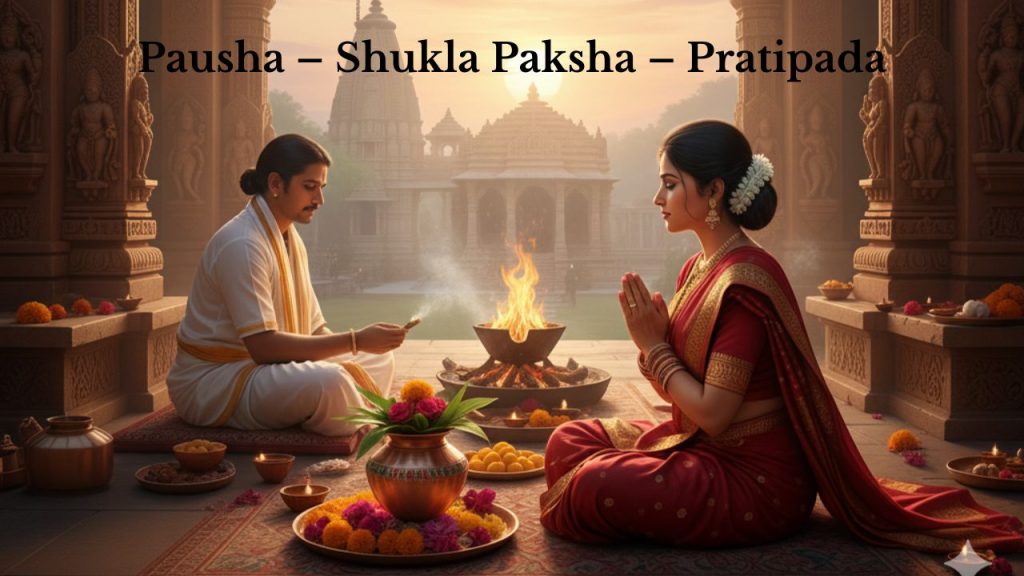
Rituals often include early morning prayers, lighting of lamps, chanting of mantras, and offering flowers, fruits, and sweets to deities. Temples may host special ceremonies, and families perform traditional poojas to honor the divine and invoke blessings.
Role of community prayers and gatherings
Community prayers, satsangs, and gatherings foster social cohesion and spiritual solidarity. Devotees collectively engage in chanting, devotional singing, and charitable acts, creating a sense of shared purpose and belonging.
Special offerings and pujas
Special offerings during Pratipada may include grains, milk, fruits, and sweets, symbolizing prosperity and devotion. Puja rituals vary by region but commonly involve invoking deities for blessings, performing aarti, and reciting sacred texts.
Regional variations in celebration
Celebrations of Pratipada differ across India. In some regions, elaborate processions and cultural performances accompany temple rituals, while in others, simple home-based prayers and fasting are emphasized. Despite these variations, the essence remains the same: honoring the day as a time of spiritual renewal, prosperity, and community connection.
Observing Fast (Upvas) on Pratipada
Fasting on Pratipada is an ancient practice that combines discipline, devotion, and mindfulness. Devotees believe that abstaining from certain foods and focusing on spiritual activities on this day helps cleanse both the body and mind. Pratipada fasting is not just a ritual but a tool to foster inner clarity, self-control, and alignment with the natural rhythms of the moon. In Shukla Paksha, this practice is considered especially potent because it coincides with the energy of growth, positivity, and spiritual awakening.
Benefits of fasting on the first day of Shukla Paksha
Fasting on Pratipada helps detoxify the body, regulate metabolism, and enhance mental focus. Spiritually, it fosters discipline, patience, and resilience. Practitioners often report a sense of renewed energy, clarity of thought, and heightened sensitivity to spiritual vibrations. This combination of physical and mental purification amplifies the positive effects of prayers and rituals performed on this day.
Types of fasts commonly observed
Fasts on Pratipada can vary based on tradition and personal preference. Some devotees observe a complete fast, consuming only water or milk, while others follow a partial fast, abstaining from grains or specific foods. Regional variations exist, with particular rituals and offerings complementing the fasting practice. Regardless of type, the fast is observed with devotion and mindfulness, enhancing its spiritual impact.
Rules and spiritual significance
Strict adherence to fasting rules—such as abstaining from specific foods, avoiding negative thoughts, and dedicating time to prayer or meditation—elevates spiritual merit. Pratipada fasts are believed to remove negative karma, invite divine blessings, and foster overall well-being. Devotees also engage in charity during this time, amplifying the spiritual benefits.
Fasting as a means to attain mental clarity and discipline
Observing a fast provides a break from routine indulgences, promoting mental clarity and focus. It encourages introspection and aligns daily habits with spiritual goals. By cultivating discipline through fasting, individuals strengthen their ability to achieve personal and spiritual objectives, creating a holistic sense of balance.
Timing and duration of Pratipada fast
The fast usually begins at sunrise and concludes the following morning or after performing evening prayers. Observing the fast in alignment with the tithi and lunar timing enhances its potency. For maximum spiritual benefit, devotees are encouraged to engage in meditation, chanting, or temple visits during the fasting period.
Religious Ceremonies and Worship
Pratipada in Shukla Paksha is a day of intense spiritual activity and devotion. Worship practices performed on this day hold special significance, as they are believed to attract divine blessings and create a positive atmosphere in homes and communities. Both individual and communal observances are common, ensuring spiritual growth while strengthening social bonds.
Worship of deities like Lord Ganesha and Goddess Lakshmi
Many devotees begin the day by offering prayers to Lord Ganesha for wisdom and the removal of obstacles. Goddess Lakshmi, representing prosperity, is also worshipped to invoke abundance and well-being. These practices reinforce faith, gratitude, and alignment with cosmic energies. Devotional songs and mantras amplify the spiritual atmosphere, encouraging inner reflection and calmness.
Conducting pujas at home and in temples
Pratipada pujas often involve elaborate rituals, including lighting lamps, offering flowers and fruits, and reciting sacred texts. Homes are cleaned and decorated to create a conducive environment for worship. Temples may host community prayers and special ceremonies to ensure participation from devotees of all ages, enhancing collective spiritual energy.
Chanting mantras and reciting prayers
Devotees chant mantras or recite shlokas that are associated explicitly with Pratipada. This practice is believed to purify the mind, remove negative energies, and invite divine blessings. Chanting creates a rhythmic, meditative state that deepens spiritual engagement and fosters emotional stability.
Offering food, flowers, and incense
Offering symbolic items such as food, flowers, and incense represents devotion, humility, and gratitude. These offerings are a way of connecting with the divine while reinforcing mindfulness and intention. Many households also prepare prasad (consecrated food) to distribute among family members and the community, enhancing social cohesion and spiritual merit.
Importance of charity and helping the needy
Acts of charity on Pratipada are encouraged as a way to share blessings and cultivate compassion. Donations of food, clothing, or money to people in need are considered highly meritorious. Through these acts, devotees not only help others but also cleanse their own karma and strengthen their spiritual progress.
Pratipada in Daily Life and Astrology
Pratipada’s influence extends beyond rituals and festivals; it also plays a vital role in daily life and astrological practices. Aligning personal activities with the lunar calendar ensures harmony with natural forces, increasing the likelihood of success and well-being. Astrologically, this day is considered highly favorable for initiating ventures and engaging in spiritual practices.
Astrological significance of Pratipada in Pausha
In Vedic astrology, Pratipada is regarded as auspicious for starting new endeavors, signing agreements, or performing critical religious rituals. The first tithi of Shukla Paksha is believed to carry positive cosmic energy that enhances success, prosperity, and spiritual development.
Best activities to initiate on this day
Activities such as launching a business, beginning construction, starting a study program, or embarking on spiritual practices are recommended on Pratipada. The day supports both worldly and spiritual endeavors, making it ideal for personal growth and new beginnings.
Influence on personal and professional decisions
Aligning critical decisions with Pratipada can lead to favorable outcomes. Devotees are encouraged to plan major undertakings, initiate partnerships, and make strategic moves on this day to harness its positive energy.
Auspiciousness in Vastu Shastra and rituals
Vastu Shastra recognizes Pratipada as a favorable time for arranging homes, starting renovations, or placing sacred objects. The energy of the waxing moon aligns with growth, harmony, and abundance, reinforcing the importance of spatial and environmental mindfulness.
Remedies for enhancing positive energy
Astrological remedies, such as lighting lamps, chanting specific mantras, and offering prayers, are often performed on Pratipada to strengthen positive energy. These practices help neutralize obstacles and create a balanced environment conducive to personal and spiritual success.
Symbolism and Cultural Practices
Pratipada symbolizes beginnings, growth, and the transition from darkness to light. It is not just a lunar day but a cultural marker that ties communities to nature, tradition, and spirituality. Across regions, it is observed with unique rituals, reflecting the diverse cultural landscape of India.
Symbolism of the first day of the lunar fortnight
Being the first day of Shukla Paksha, Pratipada represents hope, renewal, and the promise of progress. It encourages individuals to set intentions, seek divine guidance, and approach life with positivity and resilience.
Connection with abundance, new beginnings, and growth
The day embodies the energy of expansion and prosperity. Whether in personal goals, business ventures, or spiritual pursuits, Pratipada encourages growth and progress by aligning human actions with cosmic rhythms.
Folk traditions associated with Pratipada
Many regions celebrate Pratipada with local folk songs, dances, and storytelling. These traditions reinforce cultural identity, transmit values, and create a sense of continuity between generations.
Cultural songs, dances, and rituals
Cultural expressions such as devotional songs, community dances, and public rituals are common on Pratipada. These activities not only celebrate spirituality but also foster social cohesion, joy, and collective participation.
Passing traditions across generations
Families use Pratipada as a time to teach younger generations about rituals, values, and traditions. By engaging children and youth in fasting, prayers, and charitable acts, the spiritual and cultural significance of this day is preserved for future generations.
Parting Reflections and Takeaways
Pratipada in Shukla Paksha during Pausha is more than a lunar day—it is a gateway to spiritual growth, cultural engagement, and personal renewal. Its significance is rooted in the cycle of the moon, ancient scriptures, and centuries of tradition. Observing Pratipada encourages mindfulness, discipline, and alignment with natural and cosmic rhythms.
The spiritual practices, fasting, and rituals performed on this day help cleanse the mind and body, foster positivity, and amplify devotion. Culturally, it strengthens social bonds, preserves heritage, and encourages the practice of generosity and compassion. By embracing Pratipada, one participates in a rhythm of life that promotes harmony, growth, and abundance.
Ultimately, Pratipada reminds individuals to honor beginnings, celebrate progress, and align daily life with spiritual and cosmic forces. Whether through fasting, prayer, meditation, or community participation, observing this day nurtures the mind, body, and soul, creating a holistic foundation for personal and communal well-being.