The Importance of Ashtami in Shukla Paksha of Jyeshtha
When discussing Ashtami, we dive into a fascinating intersection of the lunar cycle, spiritual energy, ancient traditions, and timeless wisdom. Especially when Ashtami falls in the Shukla Paksha (the waxing phase of the Moon) during Jyeshtha, one of the hottest and spiritually charged months in the Hindu calendar, its significance becomes even deeper. Let’s walk through this journey together, step by step.
The meaning of Ashtami is the 8th lunar day.
Ashtami means “the eighth.” The Hindu lunar calendar divides each month into two phases: Shukla Paksha (the waxing moon phase) and Krishna Paksha (the waning moon phase). Ashtami is the eighth day from either the new or full moon. During the Shukla Paksha of Jyeshtha, Ashtami represents a delicate balance point, neither whole nor new, and that balance brings its unique energy.
This day is often considered one where spiritual power naturally peaks. Our ancestors believed that on Ashtami, cosmic energies align in a way that amplifies both our inner strengths and weaknesses. It’s like standing at a crossroads, where you can elevate yourself spiritually or succumb to distractions. That’s why so many rituals, fasts, and worship practices surround this tithi.
Energetic balance between the Moon and Sun on Ashtami
The Moon’s influence on our minds is well-known in Vedic astrology and Ayurveda. On Ashtami, the Moon is precisely halfway between its key phases, creating an exceptional energetic equilibrium. Meanwhile, the Sun, being the soul or “Atman,” continues its powerful journey through Jyeshtha, a month known for its intense solar heat.
This balance between the cooling energy of the Moon and the fiery power of the Sun on Ashtami offers us an opportunity for inner harmony. If we tap into it correctly through prayers, meditation, or fasting, we can experience remarkable mental clarity and emotional stability. It’s as if the universe gives us a brief pause, a breath before we continue our journey through the month.
Spiritual significance in Hindu tradition
You may wonder why our ancestors placed such importance on these lunar days. The simple answer is self-mastery. Ashtami, particularly in Jyeshtha, has long been associated with our inner battles, doubt, fear, anger, and attachment. Rituals and fasts on this day aim to help us overcome these struggles and realign ourselves with higher virtues, such as patience, love, discipline, and faith. In many Hindu scriptures, Ashtami is highlighted as a day when the divine feminine energy (Shakti) is especially potent. It reminds us that no matter how turbulent life feels, there’s always an underlying force guiding and supporting us if we seek it with sincerity.
Link to mental stability, emotional strength, and inner harmony
Think about the stress, anxiety, and emotional storms we often face in modern life. Ashtami is like a built-in cosmic therapy session that allows us to reset emotionally. Fasting, prayer, and mindfulness practices performed on this day have been designed to promote mental peace, emotional detoxification, and spiritual grounding. For centuries, sages recommended observing silence (mauna), engaging in introspection, and practicing controlled breathing on Ashtami. These activities help you develop emotional strength and mental clarity that last long after the day has passed.
Traditional views on Ashtami’s role in personal discipline
At its core, Ashtami is about discipline, not as a form of restriction but as a means of empowerment. By observing fasting and rituals, you practice controlling your desires, calming your thoughts, and focusing on your intentions. Over time, this discipline permeates daily life, enabling you to make better decisions, handle challenges more effectively, and maintain a positive mindset even in the most difficult situations.
Astrological Importance of Ashtami in Jyeshtha
Influence of planetary positions during the Jyeshtha month
The month of Jyeshtha is a unique astrological imprint. The Sun reaches its peak power during this time, symbolizing authority, vitality, and ego. Simultaneously, the Moon navigates through nakshatras (lunar constellations), emphasizing emotional sensitivity and internal work. On Ashtami of Jyeshtha Shukla Paksha, the planetary alignment intensifies these dual forces. The interplay of fire (Sun) and water (Moon) elements challenges you to balance ambition with compassion, power with humility, and action with reflection. This balance is key for spiritual evolution.
Dominance of Mercury (Budha) and Moon (Chandra)
Mercury rules the intellect, while the Moon governs emotions. During Jyeshtha, both play significant roles, creating opportunities to fine-tune your mental sharpness and emotional intelligence. The heightened influence of Mercury during this period enables clearer thinking, enhanced communication, and improved problem-solving skills. Meanwhile, the Moon’s gentle energy helps you stay emotionally grounded. When you actively work with these energies through meditation, prayer, or study, you’ll likely notice a boost in your cognitive abilities and emotional resilience.
Astrological implications for mental clarity and emotional well-being
You know how valuable clarity can be if you’ve ever felt foggy-headed or emotionally overwhelmed. Ashtami in Jyeshtha provides a natural opportunity to clear mental clutter and stabilize emotions. Many astrologers recommend setting personal goals, practicing gratitude, and focusing on creative projects during this time because your mind is better aligned for insight and innovation. Observing fasts or engaging in spiritual practices on this day provides your nervous system with a much-needed break, allowing it to reset and rejuvenate. This, in turn, promotes better decision-making, stronger relationships, and overall well-being.
Connection to the nakshatras ruling during this phase
Depending on the exact timing, Jyeshtha Shukla Ashtami may fall under nakshatras like Anuradha, Jyeshtha, or Mula. Each brings its flavor:
- Anuradha: Promotes devotion, cooperation, and friendship.
- Jyeshtha: Brings leadership qualities, responsibility, and challenges that test inner strength.
- Mula: Encourages root-level transformation, allowing for the release of the past to embrace new beginnings.
These nakshatra influences give you a roadmap for personal growth, highlighting areas to focus on in your spiritual journey.
Impact on individual horoscopes and personal growth
The planetary alignments on Ashtami of Jyeshtha Shukla Paksha can be a turning point for individuals. Depending on your horoscope, you may experience breakthroughs in relationships, career advancements, or spiritual realizations. Astrologers often advise using this time for introspective activities such as journaling, goal setting, or seeking guidance from spiritual mentors. Aligning your actions with these cosmic energies makes personal growth not only possible but also deeply rewarding.
Religious Significance and Mythological Associations
Link to Devi worship, especially Durga and Mahagauri
When you think of Ashtami, you almost automatically think of Devi, the Divine Mother. Especially during Jyeshtha, worshipping goddesses like Durga and Mahagauri takes center stage. These forms of Shakti represent purity, transformation, and inner strength. Mahagauri, for instance, is believed to bless her devotees with calmness, mental clarity, and spiritual illumination. On the other hand, Durga’s energy helps conquer negativity and empowers you to face life’s adversities with courage.
Stories from the Puranas related to Ashtami in Jyeshtha
Several fascinating tales from Hindu scriptures amplify the sacredness of this day. In the Devi Bhagavatam, we hear stories of Durga’s battles against the asuras (demons), symbolizing inner vices like ego, anger, and greed. Ashtami marks the victorious moments when light triumphs over darkness. Another legend associates this tithi with Mahishasura Mardini, where the Goddess Durga slays the demon Mahishasura after a prolonged battle, teaching us that persistence and faith can overcome even the darkest forces.
Observances connected to Lakshmi, Parvati, and Ganga
Beyond Durga and Mahagauri, Ashtami is also auspicious for worshipping other goddesses:
- Lakshmi: For wealth, prosperity, and harmonious family life.
- Parvati: For marital bliss, fertility, and protection.
- Ganga: For spiritual purification and washing away of karmic debts.
Each divine form offers blessings that nourish different aspects of your life, reminding you of the interconnectedness of material and spiritual well-being.
Narratives of divine victories over negativity
The recurring theme across these mythologies is the eternal battle between good and evil, both externally in the world and internally within us. Ashtami celebrates when righteousness prevails, encouraging you to conquer doubts, fears, and temptations. When you honor these stories during your rituals, you’re not just performing an age-old tradition; you’re inviting divine strength into your life to tackle your struggles with courage and wisdom.
The symbolism of Ashtami as a day of overcoming inner demons
At its heart, Ashtami represents an opportunity to confront your inner demons, including procrastination, fear of failure, jealousy, or attachment. Acknowledging these traits and consciously working to overcome them makes space for light, joy, and spiritual progress. This is why fasting, meditation, and acts of charity are central to Ashtami observances; they help cleanse the body, mind, and soul.
Popular Vratas and Rituals on Jyeshtha Shukla Ashtami
Standard fasting practices (Ashtami Vrat, Durga Ashtami)
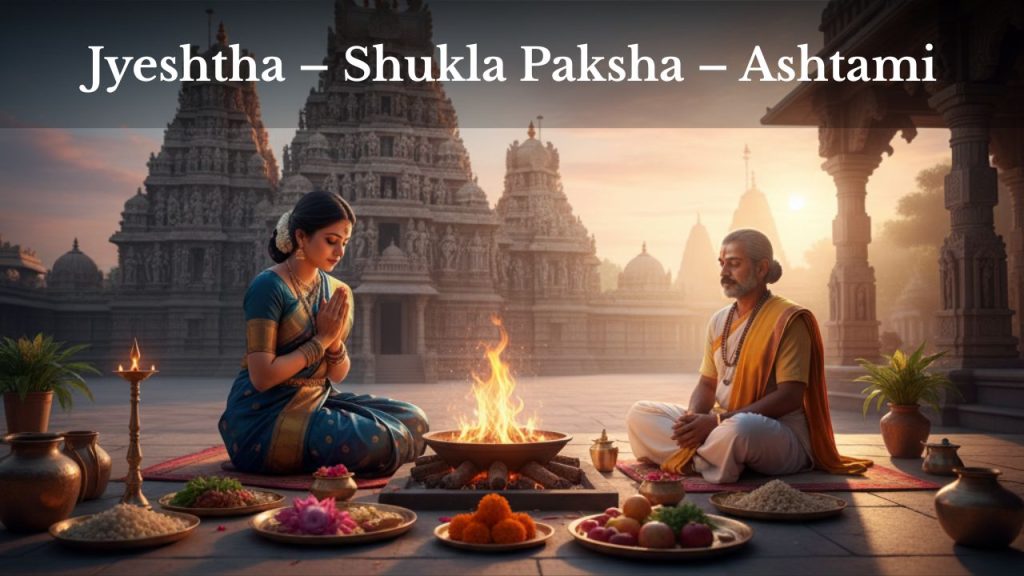
When Ashtami arrives in Jyeshtha Shukla Paksha, many of us observe what is known as Ashtami Vrat. Fasting on this day isn’t just about abstaining from food; it’s about creating space within ourselves to receive divine energy. The mind becomes calm when the body is light, and our focus sharpens. There are several types of fasts people follow:
- Nirjala Vrat: Total abstinence from food and water (very tough and usually observed by the highly disciplined).
- Phalahar Vrat: Consuming only fruits, milk, and light sattvic (pure) foods.
- Partial fast: Skipping heavy meals but having water or light snacks as per one’s capacity.
You’re training your mind to overcome distractions by controlling hunger and desires. This mental discipline is one reason why our ancestors held fasting in such high regard. It teaches patience and surrender, and helps cleanse the body by reducing toxins that accumulate during the hot Jyeshtha month.
Early morning purification rituals
The day typically starts before sunrise. Rising with Brahma Muhurta (around 4-5 AM) is highly auspicious. Why is this early hour so emphasized? Well, during Brahma Muhurta, the atmosphere is calm, pure, and spiritually charged. Being less cluttered, our minds naturally respond to prayer and contemplation.
The first act is san, a purifying bath, often with sacred water mixed with herbs, turmeric, or sandalwood. Taking a dip is highly beneficial if you live near a sacred river or pond. This ritual bath isn’t just about cleanliness; it’s a symbolic washing away of negativity and impurities of both body and mind, preparing you for the day’s spiritual practices.
Offering flowers, fruits, and special naivedya
Once purification is complete, it’s time to prepare the puja offerings. Beautiful fresh flowers, seasonal fruits, and homemade sweets are arranged on a clean altar. Items like coconut, betel leaves, bananas, and pomegranates are everyday, each carrying symbolic meanings of purity, abundance, and devotion. The naivedya (food offered to the deity) often includes simple sattvic dishes:
- Rice pudding (kheer)
- Ghee-laden wheat or rice flour sweets
- Fresh fruits
- Coconut preparations
As you place each item before the deity, you’re not merely offering food; you’re offering your devotion, gratitude, and intention to lead a more balanced, disciplined life.
Visiting temples dedicated to feminine deities
Many devotees make it a point to visit temples, especially those dedicated to feminine forms of divinity, like Durga, Mahagauri, Parvati, or Ganga. If visiting in person isn’t possible, people create small, temple-like setups at home, invoking the goddess with sincere prayers and chanting.
The vibrations within temples on Ashtami are powerful. The collective energy of fellow devotees chanting mantras, singing bhajans, and performing aartis creates a profoundly moving spiritual atmosphere. Being present in such an environment can elevate your mood, reduce stress, and fill your heart with hope.
Charity and feeding the hungry are acts of devotion.
One of the most beautiful aspects of Ashtami is its emphasis on daan (charity). After performing the rituals, many people distribute food, clothing, or money to those in need. Among the highest forms of service are feeding people experiencing poverty, offering water, and providing essentials during the scorching heat of Jyeshtha.
Giving isn’t just about earning blessings and reminding us of our shared humanity; it’s also about fostering a sense of community and unity. When you feed a hungry person or provide water on a hot summer day, you’re directly participating in the compassionate spirit of the goddess herself. In return, it fills you with immense inner satisfaction and peace.
Health and Wellness Traditions
Seasonal health care in peak summer (Jyeshtha month)
Jyeshtha is the peak of the Indian summer. The blazing heat can sap your energy, cause dehydration, and throw your body’s balance out of sync. Ancient sages recognized the importance of aligning one’s health practices with nature’s rhythm. On Ashtami, special care is taken to maintain hydration, cool the body, and prevent heat-related ailments. Simple but powerful practices include:
- Drinking plenty of water infused with herbs like mint or fennel.
- Eating light, easy-to-digest meals.
- Avoiding heavy, oily, or spicy foods.
- Staying indoors during peak afternoon heat.
This is a time to slow down, rest, and allow your body to recharge rather than overexert it.
Traditional Ayurvedic recommendations for cooling and hydration
Ayurveda, the ancient life science, offers many ideal remedies for this season. You might find these helpful:
- Shatavari and amla (Indian gooseberry): These herbs strengthen immunity and keep your body cool.
- Coconut water: Nature’s electrolyte-rich drink replenishes fluids and cools your system.
- Buttermilk (chaas): Helps with digestion and heat reduction.
- Sandalwood paste: Applied to the forehead or chest to lower body temperature and induce calmness.
Following these guidelines maintains physical health and supports mental clarity, which aligns perfectly with Ashtami’s spiritual goals.
Ritual baths in sacred rivers for purification
While daily bathing is a routine practice, bathing in sacred rivers like the Ganga, Yamuna, or Godavari on Ashtami holds special significance. These rivers are believed to carry divine energy that cleanses karma and emotional baggage. Even if one cannot physically visit these rivers, symbolic baths at home with mantras and prayers can be just as powerful. Bathing becomes more than hygiene; it’s a complete spiritual reset, washing away regrets, fears, and anxieties, leaving you renewed and light.
Practices to balance Pitta dosha during the hot season
In Ayurveda, the Pitta dosha, associated with fire and heat, dominates during Jyeshtha. If left unbalanced, Pitta can lead to irritability, anger, skin issues, and digestive problems. Ashtami rituals often incorporate Pitta-balancing elements to maintain inner peace. Some simple Pitta-balancing practices include:
- Meditate in a cool, shaded place.
- Wear light, cotton clothing.
- Drinking rose or fennel-infused water.
- Avoiding arguments or mental agitation.
Balancing Pitta enhances health and supports emotional stability, allowing one to fully benefit from Ashtami’s spiritual opportunities.
Mental health emphasis: meditation and pranayama
Finally, no discussion about wellness during Ashtami would be complete without emphasizing the importance of mental well-being. Meditation and pranayama (breathing exercises) are cornerstones of Ashtami observance.
- Deep breathing helps cool the mind and stabilize emotions.
- Mindful meditation enables you to release past worries and anxieties.
- Chanting mantras such as “Om Dum Durgayei Namaha” brings calmness and spiritual connection.
Even 10-15 minutes of these practices can bring remarkable peace, clarity, and resilience, helping you navigate both the scorching heat of Jyeshtha and the inner storms of life.
Embracing the Gifts of Ashtami in Jyeshtha
Ashtami in the Shukla Paksha of Jyeshtha isn’t just a date on the calendar. It’s an opportunity, a sacred invitation to pause, reflect, realign, and renew. Whether fasting, meditating, offering prayers, or helping others, you’re participating in an ancient rhythm that connects you with countless generations before you. By honoring this powerful day, you’re not just following tradition; you’re nurturing your physical health, calming your emotions, sharpening your mind, and awakening your spirit. Ashtami offers much-needed peace and purpose in our busy, often chaotic modern world. And isn’t that something we all need?
Role of Ashtami in Family and Social Life
Blessings for women, children, and marital harmony
Ashtami, especially during Jyeshtha, is widely observed by families seeking blessings for harmony, health, and prosperity. Traditionally, women play a central role in these rituals. Mothers, grandmothers, and daughters gather to perform pujas and chant mantras, praying for their children’s well-being and their husband’s long life and success.
The divine feminine energy invoked today is believed to protect family members from misfortunes. Women often observe fasts for their spiritual growth, happiness, and stability. This sacred day becomes a time to realign family energies toward peace, understanding, and love. Children are also gently introduced to these traditions. They participate by helping with preparations, learning chants, and witnessing the value of prayer, gratitude, and discipline, which shape their character and spiritual foundation for years to come.
Special prayers for family prosperity
Beyond personal prayers, many households perform Lakshmi Pujas or offer special prayers for wealth and abundance. Offerings of rice, ghee, jaggery, and flowers symbolize the family’s sincere wishes for financial security, stable careers, and a bountiful harvest.
Specific mantras like:
“Om Shreem Mahalakshmiyei Namaha”
“Om Durgayei Namaha”
Are recited, invoking the Goddess’s grace. Families light lamps, offer sweets, and pray together, strengthening their faith and bonds.
Community pujas and collective ceremonies
Group ceremonies are common in Jyeshtha Shukla Ashtami villages and urban communities. Temples hold special Durga Ashtami or Mahagauri pujas, where dozens or hundreds of devotees gather. The collective chanting of mantras, ringing of temple bells, rhythmic drumming, and vibrant aartis create a spiritually charged environment. Participating in these collective observances deepens one’s connection to the divine and the community.
Intergenerational observances of family traditions
What makes Ashtami so special is how beautifully it weaves together generations. Grandparents share stories of mythological victories and the power of devotion. Parents guide children through fasting, rituals, and charity. These shared experiences ensure that traditions aren’t lost but are lovingly handed down. Often, the youngest family members perform small acts like offering flowers or chanting simple mantras, creating priceless memories and lifelong habits rooted in spirituality.
Strengthening social bonds through shared rituals
When families come together on Ashtami, it’s not just about the rituals; it’s about reconnecting. Relatives visit each other, neighbors share sweets, and communities organize charitable events. These acts of togetherness reinforce trust, compassion, and unity, values essential for a healthy society. Isolation and stress are common. Ashtami offers a heartwarming reminder of the strength of family, friendship, and shared faith.
Connection with Feminine Divine Energy (Shakti Sadhana)
Ashtami is a key day for Shakti worship.
At its spiritual core, Ashtami is rooted in the Divine Feminine, Shakti. This energy creates, nurtures, protects, and transforms. On Jyeshtha Shukla Ashtami, this Shakti is the most accessible. Devotees, men and women, turn to the Goddess, seeking worldly blessings and inner strength. Shakti’s grace empowers us to face life’s challenges head-on with courage, wisdom, and faith, navigating the ups and downs of life’s struggles.
Forms of Devi worshipped during Jyeshtha Shukla Ashtami.
Many forms of Devi are worshipped on this powerful day:
- Mahagauri: The radiant form of Durga is associated with purity and calmness.
- Durga: The fierce protector who slays inner and outer demons.
- Lakshmi: The bestower of prosperity and abundance.
- Parvati: The nurturing motherly form ensures family well-being.
- Ganga: The purifier, washing away sins and emotional burdens.
Each Goddess offers unique blessings, representing aspects of the same divine mother energy that sustains life.
Rituals to invoke strength, courage, and prosperity
The rituals performed on Ashtami aim to awaken Shakti within us. These include:
- Multiple oil lamps (dreams) are lit to symbolize inner light.
- Chanting Durga Saptashati verses recounting Devi’s victories.
- Offering red flowers, coconut, kumkum, and chunari as symbols of devotion.
- Performing abhisheka (ritual bathing of the idol) with milk, honey, and holy water.
These acts invite divine blessings and profoundly impact the mind, filling us with peace, determination, and gratitude.
Shakti mantras and their significance on this Tithi
Specific, powerful mantras are recited on Ashtami to invoke Shakti’s blessings:
“Om Dum Durgayei Namaha”, for protection from hostile forces.
“Om Hreem Shreem Kleem Mahalakshmi Namaha”, for wealth and abundance.
“Om Aim Hreem Kleem Chamundayei Vichche”, for courage and victory over obstacles.
The vibrations of these mantras help purify the mind and awaken dormant inner strength.
Spiritual empowerment for female devotees
For women, Ashtami is primarily a day of spiritual renewal and empowerment. The Goddess mirrors their innate strength, beauty, and resilience. Women find comfort and confidence in knowing that Shakti herself honors and sanctifies their challenges, sacrifices, and roles within their families and society. Through fasting, prayer, and rituals, women reconnect with their divine essence, emerging more centered, peaceful, and empowered.
Environmental and Agricultural Associations
Importance of water conservation rituals in peak summer
Jyeshtha is the peak of summer, and water has become one of the most valuable and sacred elements. Many ancient Ashtami rituals emphasize the importance of water conservation and gratitude. People offer water to plants, animals, and sacred trees like Tulsi, Peepal, and Banyan. This practice is symbolic, acknowledging water’s life-sustaining power and reminding us to use it wisely, especially in regions where scarcity poses a threat to life.
Traditional practices for honoring nature’s elements
The Vedic tradition teaches us to live in harmony with the Panchamahabhutas, the five fundamental elements: Earth, Water, Fire, Air, and Space. Ashtami observances often include:
- Offering clarified butter (ghee) to sacred fires.
- Pouring milk or water on sacred trees.
- Feeding animals and birds.
- Chanting mantras to honor the elements.
These practices foster environmental awareness and respect for the natural world. On Ashtami, devotees pray to rivers, especially Mother Ganga, asking for purification and blessings. Bathing in rivers (or symbolically at home) is a familiar ritual. Ganga is seen as both physical water and spiritual energy that washes away the impurities of karma, freeing the devotee for spiritual growth.
Gratitude rituals for good harvests and rain
Farmers and communities perform special gratitude ceremonies, offering prayers for timely rains and fertile lands. Rituals may include:
- Offering seeds and grains to deities.
- Performing yajnas (fire sacrifices) for rain (Varuna yajna).
- Reciting specific mantras to invoke cloud formation and seasonal balance.
These rituals blend spirituality with practical hopes for agricultural prosperity. In some regions, Ashtami is marked by tree-planting drives, water conservation efforts, and community clean-up programs. Such collective actions reflect an ancient understanding that spiritual well-being and environmental care are inseparable. By honoring nature, people ensure that future generations continue to enjoy Earth’s bounty.
Cultural and Regional Variations
Practices in North India (Durga Ashtami, Ganga Ashtami)
In North India, Jyeshtha Shukla Ashtami often overlaps with:
- Durga Ashtami: Dedicated to the fierce goddess Durga’s victory over Mahishasura.
- Ganga Ashtami: Celebrated especially along the banks of the Ganges, where devotees perform special aartis, offer flowers, and pray for ancestral blessings.
Fasting, community feasts, and elaborate kanya puja (worship of young girls) are common in many households.
South Indian observances and special temple festivals
In South India, Ashtami is associated with Amman worship, particularly in the forms of Mariamman or Kamakshi. Grand pujas, homams (fire sacrifices), and abhishekams are conducted at major temples. Women wear red or yellow sarees, perform elaborate kolams (rangolis), and cook special offerings, such as sweet Pongal, to offer to the Goddess.
Eastern India’s strong Devi traditions on Ashtami
In Bengal, Odisha, and Assam, Ashtami carries echoes of the grand Durga Puja, celebrated later in the month of Ashwin. However, in Jyeshtha, more minor household pujas are held, during which the Devi Chandi Path is recited, and family shrines are decorated with hibiscus flowers, a symbol of Shakti.
Western and Himalayan regions’ unique customs
In states like Rajasthan and Gujarat, communities often organize group aartis and Devi bhajans. The Himalayan regions observe Ashtami with special rituals at Shakti Peethas, sacred shrines where the Goddess’s energy is believed to be concentrated.
Regional foods, offerings, and community celebrations
The offerings vary beautifully across India:
- North India: Puri, halwa, kala chana.
- South India: Pongal, coconut sweets.
- East India: Sandesh, rice payasam.
- West India: Shrikhand, saffron-infused sweets.
These sacred yet straightforward offerings reflect the region’s culture and the devotion of its people.
Spiritual Lessons of Jyeshtha Shukla Ashtami
Symbolism of overcoming hardships and inner purification
Ashtami is not just about outer rituals; it symbolizes inner purification. Life throws many challenges, but like Durga conquering demons, you have the strength to rise above fear, anger, and self-doubt. Every fast observed and every mantra chanted on this day is a step toward conquering your inner struggles.
Strengthening discipline and patience
Observing fasts and participating in Ashtami rituals demands discipline. In this process, you train your body to control urges and your mind to cultivate patience, virtues that serve you not just on Ashtami but every day of your life. While seeking prosperity and comfort is natural, Ashtami teaches that balance is key. True contentment comes not from excessive material wealth but from aligning desires with spiritual wisdom, gratitude, and ethical living. Jyeshtha Ashtami reminds us to acknowledge and thank nature for its life-sustaining gifts, water, food, air, and shelter. We nurture our souls and the planet through small acts of gratitude and responsible living.
The path of devotion (bhakti) and selfless service (seva)
At its core, Ashtami promotes bhakti, or devotion to the divine, and seva, or service to others. Whether you feed people in need, support your community, or help a friend, these selfless acts elevate your spiritual journey. Jyeshtha Shukla Ashtami is more than a ritual date; it’s a profound opportunity for personal growth, family unity, spiritual empowerment, and ecological responsibility. In a world of distractions, this sacred day reminds us to pause, reflect, and realign with higher values. Ashtami’s timeless wisdom remains profoundly relevant. Whether you follow all the traditions or adopt just a few, approaching this day with sincerity, gratitude, and awareness will fill your life with peace, strength, and lasting joy.