Importance of Chaturdashi and Krishna Paksha
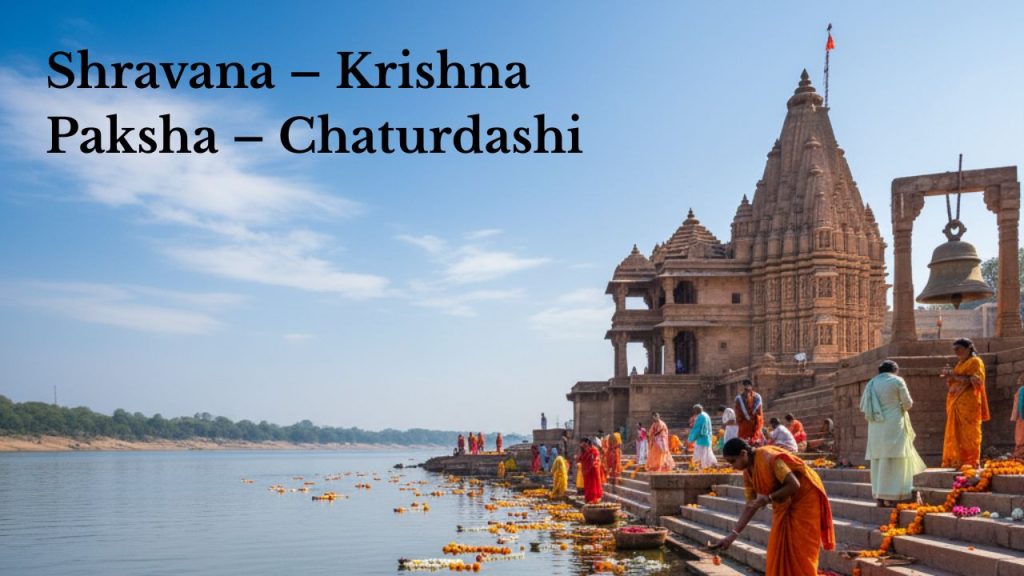
Chaturdashi, the 14th day of the lunar fortnight in the Hindu calendar, holds deep spiritual significance. It’s a day that sits right on the edge of Amavasya, the new moon, making it a moment of transition, anticipation, and profound reflection. In the Krishna Paksha, the waning phase of the moon, Chaturdashi becomes a symbolic journey towards dissolution, a sacred pause before the onset of complete darkness. Krishna Paksha itself is deeply symbolic. As the moon gradually fades, it mirrors the spiritual journey of letting go, retreating from the noise of the material world, and moving inward. This stage of Sanatan Dharma promotes self-reflection, penance, and a return to the foundations of inner clarity.
The month of Shravana is one of the holiest in the Hindu calendar. With its strong ties to Lord Shiva and rich layers of divine vibrations, this month amplifies the energies of every tithi. Chaturdashi in Shravana is mighty, aligning perfectly with the soul’s yearning to purify, surrender, and connect deeply with the divine. This blog explores why Chaturdashi in Krishna Paksha during Shravana is not just another date on the calendar. It is a moment pregnant with spiritual potential, a call to honor ancestors, to purify one’s being, and to deepen one’s devotion. Through Vedic rituals, ancestral offerings, and the observance of fasts, this tithi allows a soul to shed its karmic burdens and awaken its spiritual fire.
Scriptural and Puranic Significance
The importance of Chaturdashi isn’t merely cultural; it is deeply rooted in ancient scriptures and Puranas. Both the Skanda Purana and the Shiva Purana outline the spiritual gravity of this day. In these texts, Chaturdashi emerges as a sacred window when divine energies are especially accessible and transformation is potent. In many stories, Chaturdashi is tied to Lord Shiva. According to the Shiva Purana, it is on a Krishna Paksha Chaturdashi night that Lord Shiva performed the fierce Tandava dance, symbolizing the cosmic cycle of creation and destruction. This association is also why Chaturdashi is linked to Masik Shivratri, which provides devotees a monthly opportunity to align with the cosmic pulse of dissolution and rebirth.
This tithi is also significant in Tantric traditions. Many spiritual seekers who walk the path of Tantra perform advanced sadhanas and rituals on this night. It is believed that Chaturdashi offers a thinning of the veil between the seen and unseen, making it easier to connect with higher spiritual forces and even attain mantra siddhi (perfection in chanting sacred mantras). Mythologically, several events are believed to have occurred on Chaturdashi. Some believe that it was the night when Lord Shiva swallowed the Halahala poison during the churning of the ocean (Samudra Manthan), saving the cosmos. Such narratives underscore this day as one of sacrifice, devotion, and the ultimate victory of divine will over chaos.
Chaturdashi and Lord Shiva Worship
A few days are as auspicious for worshipping Lord Shiva as Chaturdashi, especially during the Krishna Paksha. Devotees recognize this tithi as Masik Shivratri, the monthly occasion dedicated to intense devotion, spiritual penance, and self-transcendence. Shiva, the cosmic yogi, the destroyer of ignorance, and the lord of transformation, is especially receptive to prayers offered on this night.
On this day, fasting and night vigil are observed with deep sincerity. Devotees refrain from eating, speaking unnecessarily, or engaging in worldly distractions. The body is disciplined, the mind is turned inward, and the heart is opened to the divine presence of Shiva. Staying awake throughout the night, known as jagaran, symbolizes spiritual alertness and mindfulness. It is a metaphorical refusal to succumb to spiritual slumber.
One of the most powerful rituals performed on this day is Rudrabhishek, a sacred ablution of the Shiva Linga with elements like milk, honey, curd, ghee, and water, each symbolizing aspects of purification. Chanting of mantras like Om Namah Shivaya or the Maha Mrityunjaya Mantra brings immense peace, mental clarity, and spiritual blessings. These chants create vibrations that cleanse the aura and deepen the connection to the Supreme. Temples dedicated to Lord Shiva, especially those with Jyotirlingas, organize special pujas and community gatherings. The energy on these premises becomes electric, soaked in devotion and spiritual longing. Participating in or even witnessing these pujas on Chaturdashi during Shravana can be life-transforming.
Vrat (Fasting) Observances and Ritual Practices
Fasting on Chaturdashi is not merely a ritual; it’s a spiritual discipline that transforms the body, mind, and soul. Known as Chaturdashi Vrat, the practice involves abstaining from food, practicing silence, and engaging in prayer and meditation to deepen spiritual awareness.
The Vrat Vidhi or procedure begins at sunrise with a bath, followed by the setting of intentions. Many choose to worship a Shiva Linga with water, milk, or bilva leaves, symbols of surrender and reverence. Offerings are made with pure devotion, and mantras are recited in a focused state of mind. There are essential dos and don’ts to observe. For example, consuming onions, garlic, and tamasic foods is avoided. Some observe a strict nirjala vrat, abstaining even from water, while others opt for a fast that includes only fruits or milk. Mental purity is as important as physical discipline. One is encouraged to avoid gossip, anger, and indulgence in worldly desires.
The benefits of fasting go beyond health. Spiritually, it purifies the energy channels (nadis), burns latent karmas, and makes the mind sattvic, calm, clear, and ready for divine communion. It also helps develop discipline, a quality essential for any serious spiritual aspirant. Through fasting, one becomes lighter, more aware, and more attuned to subtle energies. Ultimately, the Chaturdashi fast isn’t about deprivation. It’s a conscious practice of creating space for devotion, healing, and inner transformation, which can only be birthed in stillness and silence.
Role in Pitru Tarpan and Ancestral Rites
One of the lesser-known yet profoundly significant aspects of Chaturdashi is its connection to ancestral worship. In the Vedic tradition, our relationship with ancestors, known as Pitru Devatas, is considered sacred and revered. It is believed that the blessings of the ancestors pave the way for spiritual, emotional, and even material well-being.
During Chaturdashi in the Krishna Paksha, especially in the month of Shravana, many families observe Tarpan and Shraddha rituals. These involve offering water, sesame seeds, and cooked rice to the souls of departed family members. The belief is that these offerings reach the subtle realms where ancestors reside, bringing them peace and releasing them from lingering attachments. Chaturdashi holds special weight for those whose loved ones have passed away recently. Performing Shraddha on this day is said to help the soul find a smooth passage into the next world. For those suffering from Pitru Dosha, a condition in Vedic astrology believed to cause obstacles due to unsatisfied ancestors, Chaturdashi becomes an opportunity to perform corrective rituals.
The timing before Amavasya is also crucial. Amavasya is considered the most potent day for ancestral offerings, and Chaturdashi acts as a preparatory ground. It allows one to realign intentions, cleanse karmic debts, and enter Amavasya with a purified heart and soul. Offering donations to Brahmins, feeding people experiencing poverty, or supporting cows and orphans on this day is also seen as a way to generate merit (punya) for the departed souls. It’s a beautiful reminder of how death isn’t the end, but a continuation, and how our love, when transformed into sacred action, can transcend lifetimes.
Astrological Importance of Chaturdashi
From an astrological perspective, Chaturdashi carries subtle yet powerful energy. It’s not just a date, it’s a moment when celestial alignments enhance spiritual potential. This tithi is believed to be ruled by Lord Shiva and the Chaturdashi Tithi Devata, governing spiritual transformation and karmic clearance. Chaturdashi falls just before Amavasya, making it a sensitive and potent time. During Krishna Paksha, the moon is at its weakest. This weak lunar energy affects the mind, the seat of emotion and perception. Hence, Chaturdashi is an excellent time for practices such as meditation, mantra chanting, and inner purification, especially for those seeking to overcome mental turmoil or emotional baggage.
This tithi is also ideal for addressing astrological afflictions, particularly doshas such as Pitra Dosha or Kala Sarpa Dosha. Special homas or yajnas performed on Chaturdashi can bring relief and realignment. In Vedic astrology, the absence of light represents potential for internal growth, and the alignment of planets during Chaturdashi often supports the perfection of spiritual practices, known as sadhana siddhi. The night of Chaturdashi is considered an ideal time for mantra siddhi, perfecting one’s mantras through disciplined repetition under the right astrological influence. For those walking the path of Tantra or mysticism, this night presents a rare spiritual opportunity to enter deeper states of consciousness.
Chaturdashi in Shravana: Seasonal and Divine Synergy
When Chaturdashi falls in the sacred month of Shravana, its potency multiplies. Shravana is a month steeped in spiritual vibrations, particularly those associated with Lord Shiva. Every tithi during this month carries deeper resonance, but Chaturdashi stands out as a unique convergence of lunar energy and divine blessings.
The seasonal backdrop of monsoon enhances the inward pull. As the rain nourishes the earth, the soul, too, seeks nourishment from divine connection. This creates a synergy of nature and spirit, of outer surrender to rain and inner surrender to silence. The waning moon in Krishna Paksha mirrors the process of spiritual dissolution, of letting go, shedding ego, and preparing for rebirth. This rhythm echoes Shiva’s role in the universe as the destroyer of illusion and ignorance. When this cosmic symbolism aligns with the sanctity of Shravana, the result is a spiritually charged moment of profound awakening.
In many traditions, devotees observe Masik Shivratri Yatras during this time, traveling to sacred places like Amarnath or Kedarnath. These pilgrimages become more than physical journeys; they are journeys into the self. The divine synergy between lunar energy and Shiva’s grace makes Chaturdashi in Shravana a perfect time to engage in silence, self-reflection, prayer, and purification. It’s a golden moment to realign life with spiritual values.
Philosophical Meaning of the Fourteenth Day
On a deeper level, Chaturdashi is not just about rituals; it’s about philosophical insight. The 14th day symbolizes a phase just before total dissolution (Amavasya), representing the last step before the ego dissolves completely. In this way, it stands as a reminder of detachment, renunciation, and spiritual surrender. This tithi is a call to let go, not just of material attachments, but also of inner clutter. As the moon fades, it encourages one to embrace darkness, not as a source of fear, but as a space for healing and inner peace. It teaches that real growth often happens in moments of silence, solitude, and seeming emptiness.
The approaching Amavasya adds depth. If Amavasya is symbolic of death and stillness, Chaturdashi is the quiet before the plunge, a time of preparing the soul to enter a deeper communion with the unseen realms. Chaturdashi invites the seeker to cleanse not just the body but also the psyche, to release desires, and to engage in soul-level reflection. It urges an alignment with the larger rhythm of the cosmos, reminding each one that true spiritual freedom comes not from acquisition, but from surrender.
Community Practices and Regional Variations
Chaturdashi is celebrated in various ways across India, with rich local traditions that bring communities together in devotion and festivity. From Masa Shivratri yatras in Northern India to temple festivals in the South, each region has its way of honoring this sacred tithi. In Maharashtra, for instance, small groups organize bhajan mandalis, musical devotional gatherings, where the name of Shiva is sung late into the night. In Tamil Nadu, elaborate Rudra Homams are performed in Shiva temples with deep reverence and community participation.
Many places also witness processions, where the Shiva Linga is carried through the streets, allowing every devotee to offer prayers. Acharyas, temple priests, and wandering sadhus often play a central role, guiding rituals, offering discourses, and sharing spiritual wisdom with villagers and city-dwellers alike. These gatherings foster a deep sense of spiritual community, reminding everyone that the path of devotion is not walked alone. The shared experience amplifies the energy of prayer, transforming personal rituals into a collective upliftment.
Contemporary Relevance and Spiritual Takeaway
Chaturdashi offers a much-needed pause. It calls for a return to stillness, to deeper values, to inner balance. Despite its ancient roots, this tithi remains profoundly relevant to modern seekers. Whether through fasting, prayer, ancestral offerings, or simple reflection, Chaturdashi creates a sacred space to disconnect from the outer world and reconnect with the soul. It serves as an antidote to consumerism and chaos, inviting each one to rediscover joy in simplicity and meaning in surrender. Modern life often leaves the soul parched. However, Chaturdashi, especially in the month of Shravana, offers the possibility of spiritual nourishment, emotional clarity, and a divine connection. It doesn’t ask for extravagance, only sincerity.