Importance of Bhadrapada Shukla Dashami
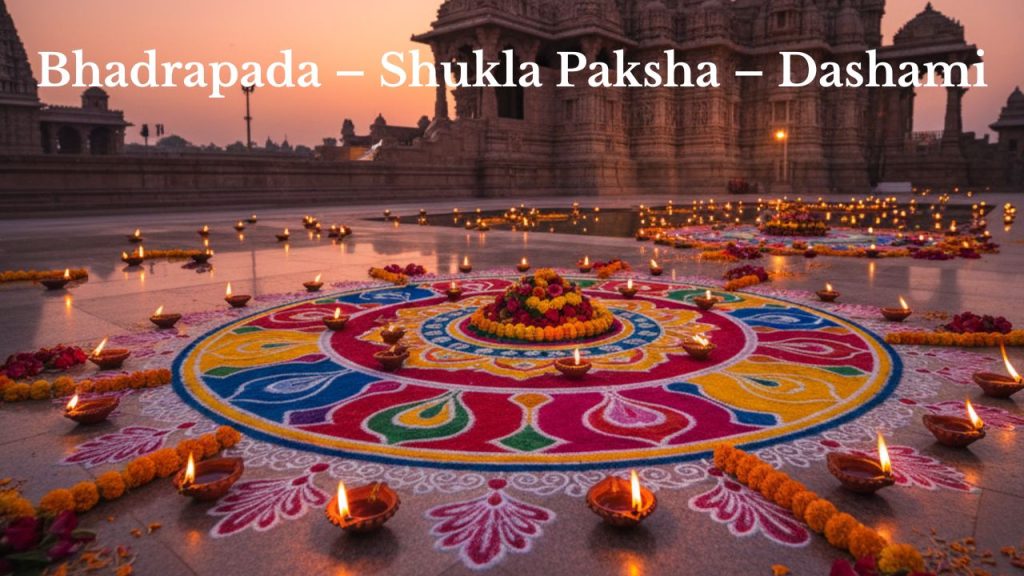
Bhadrapada Shukla Dashami holds a quiet yet compelling place in the Hindu calendar. As the 10th lunar day (tithi) of the waxing phase (Shukla Paksha) in the sacred month of Bhadrapada (typically falling in August or September), it carries a unique spiritual energy that many people overlook. Unlike the more widely known Ekadashi or Purnima, Dashami acts as a quiet bridge, connecting the steady buildup of lunar energy with the spiritually intensive practices of the following days.
In the Hindu lunisolar calendar, Dashami plays a rhythmic role in maintaining the balance between the inner and outer worlds. It is a day when the moon’s light is nearly complete, offering the mind clarity, focus, and spiritual openness. That makes Dashami not just a number on the calendar, but a potent invitation to look inward, connect with divinity, and align with one’s dharma, one’s life purpose.
Spiritually, the tone of Bhadrapada Shukla Dashami is one of devotion and reflection. It prepares the spiritual aspirant for the more rigorous fast and inward journeys of Ekadashi. For many devotees, this day presents an opportunity to reset their intentions, participate in communal prayers, and observe small personal rituals that carry the energy of purification and upliftment.
What makes this tithi even more fascinating is how it harmonizes individual practices with cosmic rhythms. It’s not just a spiritual tradition passed down for generations; it’s also backed by the idea that human consciousness responds profoundly to lunar phases. By aligning thoughts and actions with these phases, one can access higher awareness and clarity. So, whether you’re a long-time practitioner or just starting to understand the significance of the lunar calendar, Bhadrapada Shukla Dashami is a subtle yet profound day, a moment to step back, tune in, and spiritually prepare for what lies ahead.
Astronomical and Lunar Significance
Bhadrapada Shukla Dashami isn’t only important from a religious perspective, but it also has fascinating astronomical and lunar significance. On this day, the moon is advancing toward its most whole form, and this gradual intensification of light affects both the physical world and human consciousness.
Dashami marks the high-energy point in the waxing phase of the lunar cycle.
As the moon waxes from New Moon (Amavasya) to Full Moon (Purnima), each day carries growing energetic intensity. By the time the lunar calendar reaches Dashami, the buildup has reached a powerful momentum. The moon’s brightness now radiates with enough force to influence the Earth’s energies and the human psyche. This day stands as a threshold of spiritual charge, offering a sweet spot for introspection, puja, and meditative focus.
This tithi serves as a moment of equilibrium, a point where energies are high but not yet at their peak, allowing for calm and mindful action. It becomes an ideal day for rituals that require subtle awareness but not the extremes of austerity associated with Ekadashi or Purnima. It’s like standing on the edge of a wave just before it crests, feeling its potential.
Influence of the moon’s increasing luminosity on human consciousness
Ancient seers understood what modern science is beginning to validate: the moon has a profound impact on our minds and emotions. The waxing moon, especially by Dashami, increases mental clarity, emotional strength, and inner balance. The light of the moon symbolizes illumination of the mind, removing the veils of ignorance and confusion.
This makes Dashami the perfect day to practice spiritual disciplines. Meditation becomes easier, chanting becomes more effective, and one’s connection with the divine grows stronger. When this tithi falls in the Bhadrapada month, it enhances these effects due to the sacred nature of the month itself.
Alignment with cosmic vibrations is favorable for dharma and devotion.
Bhadrapada is a time when cosmic energies support dharmic pursuits, and Dashami magnifies this. The planetary configurations often align to help seekers maintain discipline, devotion, and focus on spiritual goals. It’s an auspicious moment to initiate spiritual practices, take vows, or deepen one’s understanding of sacred texts.
This day encourages action rooted in a higher purpose, pushing the mind to transcend daily distractions. The lunar force on Dashami subtly nudges individuals to be aligned with truth, duty, and spiritual values. For those seeking harmony between inner peace and outer responsibility, this presents a significant opportunity.
Preparation stage leading up to Ekadashi, a major fasting day.
Dashami serves as a spiritual warm-up to Ekadashi, the highly revered eleventh lunar day, marked by fasting, prayers, and introspection. Observing Dashami mindfully helps ease the body and mind into the rhythm needed for Ekadashi observance. Some people begin reducing food intake, while others engage in lighter rituals to cultivate a sacred atmosphere. In this way, Bhadrapada Shukla Dashami plays a transitional role; it doesn’t stand alone, but gently prepares the seeker for deeper immersion the next day. It’s a day of balance, setting the inner stage for the transformative experiences to come.
Mythological References and Puranic Narratives
Every sacred day in the Hindu lunar calendar carries the weight of mythology, and Bhadrapada Shukla Dashami is no exception. Its power is echoed in stories that span the Devi Mahatmya, the Skanda Purana, and various tales from the lives of divine avatars.
Connection to stories from the Devi Mahatmya and Skanda Purana
The Devi Mahatmya, a part of the Markandeya Purana, is a foundational text in the Shakta tradition, narrating the fierce and compassionate deeds of the Goddess Durga. In some regional traditions, Dashami during the Shukla Paksha is associated with episodes of the goddess’s victory over demonic forces. It’s believed that she gained significant ground in her battle against Mahishasura around this time, symbolizing a turning point in the triumph of good over evil.
The Skanda Purana also suggests that Dashami is an ideal day for rituals honoring divine energies, particularly when performed with devotion and purity. These stories don’t just entertain; they provide spiritual inspiration and context, urging practitioners to live by the values these tales embody: courage, devotion, and unwavering faith.
Significance of the battle of Goddess Durga against Mahishasura
While the actual slaying of Mahishasura is commemorated on Vijayadashami (in Ashwin month), some sects believe the tenth lunar day in Bhadrapada Shukla Paksha marks an essential milestone in that battle. It’s a day that emphasizes the ongoing struggle between divine and demonic forces, not just in the world, but within each of us.
This story becomes intensely personal. Just as Durga fought the beast outside, every seeker battles inner negativities, such as ego, anger, fear, and ignorance. Dashami offers a day to reflect on those inner battles and draw strength from the goddess’s divine perseverance.
Mentioned in Krishna-related leelas or divine play.
In Krishna’s divine pastimes, several noteworthy events align with the waxing phase of Bhadrapada. Although Dashami isn’t explicitly tied to one dramatic episode, many Vaishnavites treat this day as an opportunity to recall Krishna’s early leelas, his time in Vrindavan, where he displayed his playful yet powerful ways of teaching dharma through love and mischief.
Some also observe Bal Leelas (childhood exploits) around this time, sharing stories in satsangs that blend fun with philosophical depth. These narratives serve not only to entertain but also to anchor spiritual values such as surrender, simplicity, and divine playfulness.
Stories signifying the victory of righteousness and order
Across traditions, Dashami reflects the unfolding of divine order. Whether it’s in the form of Durga’s victories or Krishna’s divine acts, this day carries forward a narrative arc where dharma begins to regain its hold in the cosmic story. Celebrating these stories on Dashami offers more than nostalgia; it revives faith, anchors values, and sets a moral compass in motion.
Religious and Ritual Practices
One of the most beautiful aspects of Bhadrapada Shukla Dashami lies in its rich variety of rituals and devotional practices, observed across temples, homes, and community spaces. These practices are more than mere routines; they’re sacred bridges that connect the material and spiritual realms.
Special pujas are conducted in temples dedicated to Vishnu, Durga, and Lakshmi.
On this auspicious tithi, temples dedicated to Lord Vishnu, Goddess Durga, and Goddess Lakshmi often conduct special pujas. Priests chant mantras that align with lunar vibrations and invoke the divine presence into the temple sanctums. Offerings include seasonal fruits, sacred water, incense, and symbolic items like turmeric, vermilion, and flowers.
For Vishnu devotees, this day becomes a moment to reaffirm bhakti (devotion) and surrender. In Durga temples, the goddess is worshipped as a warrior and a mother, a fierce protector and a loving guide. Meanwhile, devotees of Lakshmi offer prayers for spiritual and material well-being, seeking her blessings for harmony and abundance.
Offerings (naivedya), bhajans, and sankirtans by devotees
In homes and temples alike, devotees prepare naivedya (sacred food offerings), typically consisting of satvik (pure) items such as fruits, sweets, and dairy products. These are offered during puja and later distributed as prasad, symbolizing divine grace.
Groups often come together to sing bhajans (devotional songs) and perform sankirtan (collective chanting). These musical expressions uplift the atmosphere and deepen the devotional mood. Whether in a large temple or a small family room, the air becomes alive with sacred vibrations.
Use of Dashami as a preparatory day before observing Ekadashi vratas
For those observing the Ekadashi fast the next day, Dashami serves as a spiritual and physical preparatory stage. Meals may be lighter, often consumed before sunset, and rich or tamasic foods, such as onions, garlic, or grains, might be avoided. Mentally, it becomes a day to cleanse thoughts, recenter spiritual focus, and set intentions for the deeper discipline of Ekadashi. Many families teach children about this process, slowly introducing them to the rhythm of lunar-based spiritual living.
Fasting or partial fasting in some sects or regions
Some sects observe Dashami as a day of fasting or partial fasting, particularly in Vaishnavism and certain Shaivite traditions. The fast isn’t always strict, but it serves to reduce indulgence and amplify awareness. Others may observe dietary restrictions and dedicate the day to reading scriptures, chanting names of the divine, or engaging in seva (selfless service). These practices don’t just fulfill a religious duty; they align the body and mind with lunar energy, preparing the spiritual seeker for deeper introspection and a more profound connection to the divine.
Regional and Cultural Observances
India’s cultural diversity shines beautifully when exploring how Bhadrapada Shukla Dashami is observed across different regions. What may seem like a simple tithi on the calendar becomes a vibrant mosaic of rituals, music, stories, and sacred intent, each reflecting a region’s unique spiritual flavor.
Celebrated differently across regions in India (e.g., Maharashtra, Gujarat, UP)
In Maharashtra, Dashami often blends into the larger Ganesh Chaturthi festivities. Depending on the calendar alignment for the year, some communities conduct Ganesh visarjan (immersion) around this time or begin preparations for it. Devotees in Gujarat may perform special rituals dedicated to Lakshmi or engage in community katha sessions, where elders narrate stories of the goddess or tales from the Puranas.
In Uttar Pradesh, especially in regions rich in Krishna bhakti, such as Vrindavan and Mathura, temples often organize early celebrations leading up to Radhashtami or commemorate Krishna’s childhood leelas with drama and dance. Rural areas also witness Dashami-related temple fairs, drawing locals for spiritual and social bonding.
Philosophical and Symbolic Interpretations
Beyond rituals and stories, Bhadrapada Shukla Dashami carries profound symbolic meaning in the spiritual journey of self-awareness and inner transformation. When viewed through the lens of philosophy, this tithi reveals dimensions of introspection that extend far beyond mere religious observance.
Dashami is a symbol of spiritual ascent toward inner clarity and enlightenment.
The waxing moon symbolizes growing light and expanding consciousness. As the tenth day in this brightening phase, Dashami serves as a spiritual milestone, encouraging individuals to ascend from confusion to clarity. In many spiritual schools, ten is not just a number; it represents completion of a cycle and readiness to begin anew.
When observed with awareness, Dashami becomes a ladder for inner growth. It urges one to pause, reflect on the self, and shed layers of ego or ignorance. Just as a sculptor chips away at stone to reveal form, this day supports practices that help remove mental blocks and emotional noise. Spiritual seekers often use this time to identify what is holding them back and renew their commitment to personal growth and evolution.
Representation of the soul’s journey through the waxing moon cycle
The moon, in its gradual increase in luminosity, mirrors the soul’s journey from darkness to light. Just as the moon on Dashami approaches fullness, the soul too progresses toward its original divine nature, casting off the shadows of forgetfulness and worldly distraction.
Each day of the Shukla Paksha reflects a phase in spiritual progress. Dashami symbolizes a threshold moment, when the light is enough to see clearly but not yet overwhelming, allowing balanced contemplation. It’s a time to acknowledge how far one has come, while humbly recognizing that the journey continues. Observing Dashami in this light can turn even the simplest act into a sacred gesture, aligning the outer life with inner aspirations.
Transition phase from worldly action (karma) to inner reflection (jnana)
The spiritual path often begins with karma, action, and service, and gradually moves toward jnana, the knowledge of the Self. Dashami, situated immediately before the highly inward-focused Ekadashi, provides a bridge between these two paths. It invites one to reflect on the fruits of actions, detach from outcomes, and look inward for meaning and truth.
In this way, Dashami gently guides practitioners to shift gears, from doing to being, from outer work to inner silence. That’s why this day is particularly valuable for contemplative practices like japa (mantra repetition) or svadhyaya (self-study). It supports letting go of surface distractions to make space for deeper awareness.
Ten is a number symbolizing completeness and order in Vedic numerology.
In Vedic numerology, the number ten (Dashami) carries the energy of wholeness, balance, and universal order. It represents a cycle that has been completed and is now ready for renewal. Whether in the ten directions in space, ten avatars of Vishnu, or ten senses of human experience, the number reflects both totality and transcendence.
This numerical symbolism adds another layer of meaning to Dashami. It reminds seekers that life moves in cycles, and recognizing completion is just as important as striving forward. Observing Dashami with this understanding brings a sense of spiritual harmony, helping one feel connected to the cosmic rhythm of nature and soul.
Importance of Festivals and Vrat Observances
Bhadrapada Shukla Dashami plays a quiet yet pivotal role in many festivals and vrat traditions. It may not always take center stage, but it often acts as a turning point or transitional tithi, making it indispensable in multi-day observances, seasonal rituals, and sacred vows.
Forms a part of longer festivals like the Navratri Paksha when extended
In some years or regions, Navratri observance may begin earlier due to calendar variations or local customs. When extended in this way, Dashami can fall within the sacred nine-night cycle, carrying the collective energy of devi worship, devotion, and victory over negativity.
Even outside Navratri, this tithi echoes the goddess’s energy. Many families observe rituals in honor of Mahalakshmi or Annapurna Devi, praying for abundance, nourishment, inner peace, and fulfillment. Dashami becomes a day when the heart is opened through prayer, songs, and offerings to the divine mother energies.
This day is also significant for spiritual housekeeping, cleansing the altar, recharging sacred spaces, and preparing the environment for the days to come. When viewed as part of a broader festive cycle, Dashami serves as a divine breath between rituals, allowing space to absorb blessings and realign intentions.
Vital in observance of Pitru Paksha (if it coincides) or during Shodasha Upacharas
In rare years, Pitru Paksha, the fortnight of honoring ancestors, may begin or overlap around this time. When this happens, Dashami becomes highly significant. It’s treated with high reverence for ancestral connection, and people perform shraddha (ancestral offerings) or tarpan (libation rituals) on this day.
Even when not directly linked to Pitru Paksha, this tithi is often included in Shodasha Upachara Puja, the 16-step process of offering worship. It holds value as one of the days for deep ritual cleansing and dedication, especially in traditional households.
Dashami marks the end or beginning of many multi-day vratas or anushthans
Several spiritual disciplines and vows (vratas) span multiple days. Dashami often marks either the final day of observance or the start of a new anushthan (spiritual project). It’s a flexible yet spiritually potent time for transition. Seekers may end a japa yagna, a sankalpa vrat, or a reading of scripture, offering final oblations and prayers of gratitude. This tithi is also preferred for initiating personal vows, especially ones related to discipline, charity, or mantra repetition. When begun on Dashami, such commitments are believed to carry blessings of lunar expansion and divine clarity.
Spiritually significant for initiating new observances
Want to start a new sadhana (spiritual practice) or undertake a vow of silence or service? Dashami offers the right atmosphere. The balance of lunar light and divine symbolism makes this day ideal for seeding intentions and actions that are dharmic, selfless, and spiritually aligned.
From a cosmic perspective, this is a day when nature supports transformation. Starting something on Dashami means planting a seed in fertile ground, supported by both tradition and celestial energy. For those seeking new beginnings, Dashami offers a silent yet supportive doorway.
Role in Women’s Rituals and Prosperity Traditions
In many Indian households, especially in traditional settings, Bhadrapada Shukla Dashami holds special relevance for women. It’s not just a tithi on the calendar; it’s a day of blessings, bonding, and sacred intention focused on family, children, and well-being.
Observed for family well-being and children’s growth in some communities
Across communities, women gather on Dashami to offer prayers for their children’s health, growth, and spiritual strength. These rituals are rooted in the belief that mothers hold a unique emotional and energetic connection to their children, and that their sincere prayers ripple out as blessings.
Offerings are made to deities like Parvati, Annapurna, or Lakshmi, symbolizing nourishment, harmony, and abundance. Women often pray for sukh-samriddhi (happiness and prosperity) in the home and chant mantras or sing bhajans as a collective act of devotion. This shared spiritual activity also becomes a powerful act of generational bonding, with mothers teaching daughters the meanings behind the rituals. For many, Dashami is as much about community as it is about prayer.
Women may perform Dashami puja for harmony in the household.
Dashami pujas performed by women often emphasize household peace, gratitude, and emotional harmony. The act may include lighting lamps in the house’s main areas, offering water to Tulsi plants, or preparing a simple satvik meal as prasad. In certain regions, women also engage in storytelling rituals, where tales of divine women, protective goddesses, or ancient queens are narrated and acted out symbolically. These stories inspire, uplift, and teach the values of patience, love, and wisdom in domestic life.
Traditions around offering sindoor, bangles, or rice to deities
Symbols of married life and feminine power, such as sindoor (vermilion), bangles, or rice, are commonly offered during Dashami rituals. Women prepare small offerings and place them at their home altars or temples, often accompanied by heartfelt prayers for their spouse’s health, marital harmony, and the well-being of their family as a whole. These offerings are not mechanical. Each carries deep intention and cultural memory. For instance, rice symbolizes sustenance and abundance, sindoor reflects lifelong partnership, and bangles signify cyclical prosperity and continuity.
Shared blessings and prasad distribution among neighborhood women
After pujas, it’s common for women to share prasad, flowers, turmeric, or kumkum with neighbors and friends. This act reinforces not just the community, but the idea that spiritual wealth grows when shared. In many places, this becomes a mini-festival, filled with smiles, laughter, and heartfelt blessings. This emotional and spiritual sisterhood built on Dashami gives the day a warmth that lingers. It’s a beautiful reminder that devotion doesn’t just happen in isolation; it grows stronger when expressed collectively.
Influence on Spiritual Sadhana and Yogic Practices
For spiritual aspirants and yoga practitioners, Bhadrapada Shukla Dashami is more than just auspicious; it’s energetically potent, making it an ideal day for deeper engagement in spiritual sadhana (disciplines).
Ideal day for meditation, mantra chanting, and self-purification rituals
The combination of growing lunar light and the sacred Bhadrapada month creates a perfect setting for internal practices. Meditation performed on Dashami is said to bring enhanced focus, emotional clarity, and spiritual peace. Practicing early in the morning, just after sunrise or before sunset, deepens these benefits.
Mantra chanting, especially of Vishnu Sahasranama, Durga Saptashati, or Lalita Sahasranama, is highly recommended. The subtle energy of the day allows mantras to penetrate deeper layers of consciousness, anchoring the seeker in a calm, aware state. Purification rituals, such as ablutions, Tulsi water baths, or lighting camphor and frankincense, cleanse both the space and the spirit, making room for a sacred experience.
Energy conducive to Pranayama, Surya Namaskar, and other spiritual practices
One of the most overlooked yet powerful aspects of Bhadrapada Shukla Dashami is its suitability for yogic disciplines, such as Pranayama (breath control) and Surya Namaskar (sun salutations). The waxing moon energy subtly stimulates sattva, the quality of clarity, calm, and balance, which enhances the mind-body connection during practice.
Practicing Pranayama on this day, whether it’s Nadi Shodhana for balance or Bhramari for inner peace, can lead to deeper meditative states and emotional purification. This is because the lunar energy enhances the cooling and calming aspects of breath work, making it easier to quiet the restless mind and listen to the silence within.
Surya Namaskar, although associated with the sun, aligns beautifully with the moon’s expansive energy on Dashami. Each sequence, when performed with awareness and mantra chanting, acts as a moving prayer, uniting the breath, body, and intention. Many ashrams and yoga schools encourage seekers to observe Dashami with early morning yoga sadhana, followed by silent meditation or japa (mantra recitation).
These practices don’t require complex postures or extended hours. Even a simple 30-minute session, done with sincerity and focus, can create a deep spiritual resonance. Over time, observing Dashami through these disciplines trains the body and mind to respond to cosmic rhythms, bringing life into sync with nature’s divine intelligence.
Aligns with the yogic principle of inner expansion during Shukla Paksha
Yogic philosophy emphasizes the importance of cyclical rhythms. Just as the moon waxes, so too does human energy grow during the Shukla Paksha. This period is ideal for inner expansion, making Dashami a perfect checkpoint for spiritual alignment. Many yogic lineages suggest that energy (prana) moves upward more effortlessly during the waxing phase, particularly on Dashami. Whether practicing kriya, meditation, or even silence, the internal currents are easier to control, direct, and refine.
This tithi serves as a spiritual accelerator, enabling practitioners to transition from gross awareness to subtle perception. It’s a moment where one can pause and ask: Is the practice rooted in awareness? Is it leading toward liberation, or still entangled in ego? Dashami offers a mirror, not through judgment, but through gentle insight.
Encouraged by gurus and ashrams for deeper introspection
Many gurus, saints, and spiritual teachers recommend using Dashami as a special day for inward focus. Some ashrams schedule retreats, special satsangs, or guided meditations to help disciples make the most of the day’s energy. The environment is made sacred with candlelight, mantra chanting, and reflective talks on scriptural wisdom.
Disciples may be given specific instructions, such as maintaining silence for a few hours, performing seva (selfless service), or reciting a mantra mala of their Ishta Devata (chosen deity). These seemingly small acts, when performed in alignment with cosmic energy, can create ripples of transformation.
Bhadrapada Shukla Dashami becomes, in this context, not just a date, but a spiritual observatory, where the seeker watches the mind, nurtures the soul, and listens to the sacred silence between thoughts. It’s not about grand rituals, but about the quiet, powerful commitment to walk the path within.
Contemporary Relevance and Cultural Continuity
In the age of notifications, fast food, and digital distractions, ancient observances like Bhadrapada Shukla Dashami might seem out of place. Yet, this sacred day carries timeless wisdom that holds more relevance today than ever. It’s not just about ritual, it’s about reclaiming a conscious, meaningful way of living.
Reviving Dashami observance in urban households for cultural education
Urban families often find themselves caught in a cycle of modern routines that leave little room for spiritual tradition. However, Dashami presents a beautiful opportunity to reconnect with one’s cultural roots, and it doesn’t have to be complex. Even simple acts, such as lighting a diya (lamp), saying a prayer, preparing prasad, or sharing stories from scriptures, can introduce children and young adults to the depth and grace of Indian spiritual culture. It’s less about dogma and more about creating sacred memories at home, ones that nourish identity, values, and emotional connection.
Cultural education doesn’t require a priest or a temple. Dashami can be brought alive with intention: set up a small altar, offer flowers, sing bhajans with the family, or read a small passage from a holy book. These small gestures become powerful seeds, growing into lifelong reverence for inner values.
Involvement of youth in community rituals and katha recitations
Today’s youth are often searching for meaning, even if they don’t express it in traditional terms. Katha recitations, community bhajans, or temple gatherings on Dashami offer a way for them to engage, not with guilt or obligation, but with curiosity and joy.
When community leaders and families involve youth in organizing events, decorating spaces, leading songs, or narrating stories, they tap into the youth’s creativity, enthusiasm, and sense of ownership. These experiences not only strengthen cultural ties but also foster leadership, empathy, and spiritual confidence. The goal isn’t to impose, but to invite. Dashami becomes the backdrop for living culture, not frozen tradition, where elders bless, children learn, and everyone grows together.
Social media and temple live-streams promoting awareness of Dashami
Technology, when used mindfully, can serve as a bridge between ancient traditions and modern lifestyles. Many temples now livestream Dashami pujas, discourses, and spiritual music, making them accessible to people worldwide. Social media pages, WhatsApp groups, and YouTube channels share bite-sized insights about the significance of the day, quotes from scriptures, or short meditations that can be observed from the comfort of home. This digital dharma, when curated with authenticity, becomes a powerful medium to revive interest, especially among the global Hindu diaspora and young families abroad.
People who might have once felt disconnected now find inspiration to celebrate Dashami in their way. Whether through attending a virtual satsang or following a simple video puja tutorial, technology is breathing new life into ancient observances.
Balancing modern life with ancient spiritual traditions
Perhaps the most beautiful message Bhadrapada Shukla Dashami brings is this: It’s possible to be modern and deeply spiritual at the same time. Observing this day doesn’t require giving up comfort or technology; it requires intention, sincerity, and a few sacred minutes of the day.
Even amidst work meetings, errands, and digital schedules, taking time to light a lamp, express gratitude, or reflect in silence is deeply transformative. It’s this balance between the fast and the sacred that brings absolute joy and purpose. Dashami reminds us that culture isn’t about the past; it’s about consciously creating a future rooted in values, beauty, and divine rhythm. And in a world searching for meaning, these traditions are not just relevant, they’re essential.