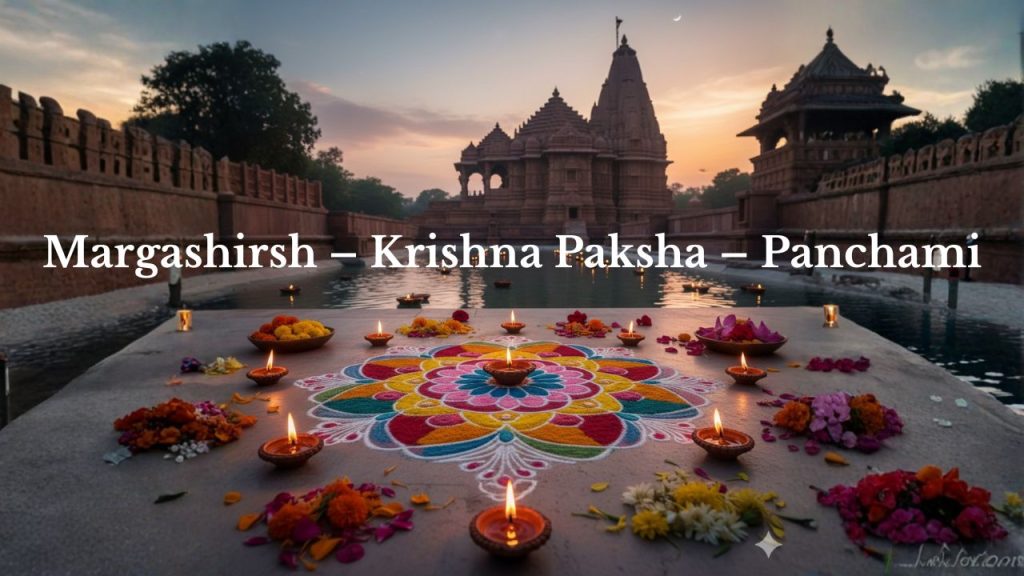
Importance of Panchami in Krishna Paksha in Margashirsh
The Hindu lunar calendar is deeply rooted in tradition, and every day within it carries a distinct significance. Panchami refers to the fifth lunar day, which occurs twice a month, once in the Shukla Paksha (the waxing phase of the moon) and once in the Krishna Paksha (the waning phase of the moon). Each of these phases has its own importance and spiritual interpretation. While Shukla Paksha Panchami is associated with growth, positivity, and new beginnings, Krishna Paksha Panchami holds meaning tied to reflection, inner discipline, and preparation for the darker phase of Amavasya.
In the Margashirsh month (November–December), Panchami gains even greater significance. This month holds great respect in Hindu traditions and is mentioned in sacred scriptures. It is considered a time when devotion, spiritual discipline, and self-purification bring great rewards. Panchami, being a part of this auspicious month, holds a unique position in encouraging balance, mindfulness, and devotion.
Culturally, Panchami is a day when individuals pay respect to traditions, follow rituals, and engage in practices that align the body and mind with spiritual harmony. It isn’t merely a marker on the lunar calendar; it represents a reminder to pause, reflect, and connect with the divine flow of time. In everyday life, Panchami often guides people in choosing days for rituals, ceremonies, or personal spiritual practices. For many, it is a day to honor the cyclical rhythm of the moon and understand how it influences human life. Thus, Panchami in the Krishna Paksha of Margashirsh is not only a calendar event but also a day that offers spiritual depth, cultural value, and opportunities for self-alignment.
Timing and Calculation of Panchami
Accurately identifying Panchami requires an understanding of the lunar calendar (tithi system). A tithi is defined by the angular distance between the Sun and the Moon, and Panchami marks the fifth such division in either waxing or waning phases. Unlike fixed solar dates, tithis shift and depend entirely on celestial movements, making calculation important for rituals.
The role of sunrise and moonrise is vital in determining Panchami. In Hindu tradition, a tithi observed at sunrise often defines the day; however, variations may exist depending on whether the tithi spans from sunrise to sunset. Thus, accurate Panchang (Hindu almanac) consultation is crucial to avoid errors in observance. Panchang calculations are a blend of astronomy and tradition, ensuring that people remain in alignment with cosmic energies while planning rituals.
Interestingly, the timing of Panchami can vary across regions. For example, what is observed as Panchami in one part of India may slightly differ in timing in another, owing to geographic and astronomical differences. Despite these variations, the underlying spiritual importance remains universal.
Astrologically, Panchami is considered a favorable tithi for specific rituals. In some cases, it is considered auspicious for starting new tasks, while in others, especially during Krishna Paksha, it is a time for reflection, restraint, and worship. The movement of planets during this tithi also influences interpretations in Jyotish Shastra (Vedic astrology). Understanding the calculation of Panchami allows devotees to align rituals with cosmic precision, ensuring that worship, fasting, and prayers are offered at the most spiritually beneficial time.
Spiritual Significance of Krishna Paksha Panchami
The Krishna Paksha, or waning moon phase, symbolizes withdrawal, stillness, and preparation for renewal. Panchami within this phase carries the spiritual message of inner reflection and self-discipline. Unlike the celebratory energy of Shukla Paksha, Krishna Paksha calls for simplicity and contemplation.
The waning moon mirrors life’s quieter side, reminding individuals to focus inward and cleanse negativity. Panchami, being a midpoint before Amavasya, helps in balancing energies—encouraging discipline, letting go of unnecessary attachments, and embracing humility. It is often seen as a spiritually fertile ground for practices like meditation, fasting, or silent prayer.
This day is also associated with the removal of obstacles and negativity. Many observe rituals to ward off challenges, both physical and spiritual. It serves as a symbolic reminder that just as the moon wanes, difficulties too can fade with patience and faith. Panchami guides the heart towards simplicity, teaching that actual spiritual progress often comes from detachment and clarity.
Moreover, Krishna Paksha Panchami prepares the mind for Amavasya, a day of profound spiritual importance. Observing this tithi consciously is believed to strengthen inner peace, emotional stability, and alignment with divine energies. For those seeking a mindful path, Panchami in Krishna Paksha offers a gentle yet powerful reminder: growth is not always about addition—it is also about subtraction of unnecessary burdens. Thus, Krishna Paksha Panchami becomes a day of balance, purification, and spiritual preparation.
Importance in Margashirsh Month
Margashirsh, often referred to as Agrahayana, is one of the most revered months in the Hindu calendar. It holds a special place in scriptures, especially in the Bhagavad Gita, where Lord Krishna declares, “Among months, I am Margashirsh.” This establishes its supreme sanctity.
The month is associated with devotion, austerity, and wisdom. Practices carried out during Margashirsh are believed to bring multiplied spiritual merit. Panchami within this month inherits this sacred aura, making it especially significant for devotees who wish to deepen their spiritual practices.
In practical terms, Margashirsh coincides with the seasonal transition into winter. This natural shift encourages people to align with introspection, discipline, and devotion. Panchami presents a perfect opportunity for individuals to strengthen their faith as they prepare for the colder season, both physically and spiritually.
Panchami in Margashirsh also serves as a spiritually charged day for rituals, fasting, and prayers. Devotees believe that performing even simple acts of devotion during this time brings amplified blessings. Charity, meditation, and worship of deities are often undertaken with the belief that they will yield long-term benefits.
By weaving together the sacredness of the month with the symbolism of the tithi, Margashirsh Panchami becomes a bridge between tradition, spirituality, and self-discipline. It reflects how cosmic timings guide human lives, helping align personal practices with universal rhythms.
Mythological Associations of Panchami
Hindu mythology enriches the meaning of Panchami by connecting it with legends, deities, and symbolic stories. Each tithi often carries mythological references, and Panchami is no exception. Several legends are tied to Panchami across texts and folklore. While Nag Panchami is more widely celebrated in the Shukla Paksha of Shravan month, the connection of serpents and Panchami is a recurring theme in mythology. Snakes, often seen as guardians of hidden wisdom and protectors of treasures, symbolize spiritual power. Thus, Panchami becomes a reminder of respect toward nature’s forces and the hidden energies of life.
Some traditions also highlight deities worshipped on Panchami, such as forms of the Goddess and serpentine divinities, depending on regional customs. In certain scriptures, Panchami is mentioned as a favorable day for rituals dedicated to protection, prosperity, and the removal of karmic obstacles.
References to Panchami can be found in Puranas and folklore, where this day is associated with stories of renewal, sacrifice, and divine blessings. These tales often emphasize the importance of faith, patience, and discipline, values that align with the symbolic meaning of Krishna Paksha.
The symbolic interpretation of these mythological stories shows Panchami as more than a date—it becomes a lesson. It teaches about balance, respect for hidden powers, and the importance of humility in the spiritual path. Just as legends carry more profound truths, Panchami serves as a reminder that every small act of devotion carries a larger spiritual impact. Thus, the mythological layer adds richness and depth to the cultural and spiritual value of Panchami, making it not just a day on the lunar calendar but a timeless reminder of divine presence in daily life.
Rituals and Observances on Panchami
Rituals form the heart of Panchami, and every tradition associated with this day is designed to bring harmony to mind, body, and soul. In Krishna Paksha, rituals often focus on simplicity, devotion, and discipline, reflecting the waning moon’s energy.
Standard household pujas and offerings
Many families observe Panchami by performing pujas at home. Simple offerings of flowers, incense, and lighted lamps are placed before deities, symbolizing the removal of darkness and the welcoming of divine light. Reciting sacred mantras and devotional songs adds a sense of purity to the household atmosphere. These small acts strengthen faith and create a spiritual environment within daily life.
Fasting practices and their spiritual meaning
Fasting is a significant part of Panchami observances. Some devotees choose complete fasting, while others opt for light meals made of fruits and milk. The practice is not only a physical cleanse but also a spiritual discipline, teaching self-control, humility, and focus. Fasting is seen as a way to detach from worldly distractions and connect with the divine more closely.
Visiting temples and performing special prayers
For many, visiting temples on Panchami is considered highly auspicious. Temples hold special rituals, and devotees come together to offer prayers and seek blessings. The collective chanting and devotional atmosphere create a shared energy of faith and reverence.
Acts of charity and helping the needy
Charity holds a special place in Panchami observances. Donating food, clothes, or money to people experiencing poverty is seen as a way of honoring the divine. These acts of kindness not only benefit others but also cleanse the giver’s heart, reducing ego and increasing compassion.
Observing discipline and simplicity
Beyond rituals, Panchami is about practicing restraint, calmness, and mindful living. By avoiding unnecessary indulgences and focusing on spiritual growth, individuals align with the true essence of Krishna Paksha Panchami. Through these observances, Panchami transforms into a day of devotion, discipline, and compassion, enriching spiritual life while nurturing inner balance.
Astrological and Vedic Relevance
In the Vedic and astrological context, Panchami is more than just a date—it is a time influenced by cosmic energies. The alignment of the Sun, Moon, and planets during Panchami creates conditions that affect rituals, personal undertakings, and spiritual practices.
Panchami is a favorable day for rituals.
Astrologically, Panchami is often considered auspicious for performing certain rituals and ceremonies. In particular, rituals for prosperity, peace, and the removal of obstacles are commonly performed. It is an ideal time to begin learning new skills or engage in spiritual studies.
Influence of planetary positions on this tithi
The exact impact of Panchami depends on planetary alignments. If planets are favorably placed, the day becomes more powerful for success in personal and professional life. Conversely, specific unfavorable alignments indicate that the day should be used for prayer and introspection rather than worldly activities.
Recommendations in Jyotish Shastra
Jyotish Shastra, the science of Vedic astrology, provides guidance on how Panchami should be observed depending on its placement in the lunar cycle and planetary influences. It may recommend specific pujas, mantras, or remedies to align individuals with beneficial energies.
Connection to remedies and spiritual upayas
Many devotees use Panchami for performing upayas (remedial measures). These can include mantra chanting, offering prayers to deities, or wearing gemstones for planetary balance. Such practices are believed to reduce obstacles and create smoother life paths.
Significance in marriage, housewarming, and ceremonies
In some traditions, Panchami is considered favorable for life events like engagements, housewarming, or starting new ventures, particularly if it falls in the Shukla Paksha. In Krishna Paksha, it is more inclined toward inner preparation and rituals of purification. Thus, the astrological relevance of Panchami blends cosmic science with human life, offering both practical guidance and spiritual alignment.
Panchami in Daily Life and Culture
Panchami is not limited to rituals and astrology; it holds a significant place in the cultural and everyday lives of people, particularly in communities deeply connected to nature and tradition.
Role of Panchami in rural and agrarian traditions
In agrarian societies, lunar days often guide farming activities. Panchami is sometimes associated with specific agricultural practices, offerings to nature, or prayers for a good harvest. Farmers view it as a day to honor the land, water, and elements that sustain life.
Special significance for women in household rituals
Women often take the lead in observing Panchami rituals at home. From preparing offerings to observing fasts, their role highlights the nurturing aspect of the day. In some regions, women pray for the well-being of their families, particularly the health and prosperity of children.
Community-based observances and gatherings
Panchami also fosters community bonds. In villages and towns, people gather for collective prayers, kirtans, or temple events. This shared observance builds a sense of unity, reminding everyone of the importance of living in harmony.
Folk customs associated with Panchami
Local customs enrich Panchami’s cultural value. For instance, in some regions, small rituals for animals or elements of nature are carried out, showing gratitude for their role in daily life. These folk practices reflect deep-rooted connections between human life and the environment.
Influence on art, music, and literature
Panchami has inspired many forms of creative expression. Songs, poems, and local tales often weave in the significance of lunar days, keeping the tradition alive through generations. These artistic interpretations make Panchami a living cultural experience rather than just a ritual date. By blending spirituality with everyday life, Panchami becomes a day of gratitude, togetherness, and cultural continuity.
Regional Variations and Practices
The observance of Panchami varies across India’s diverse cultural landscape, reflecting the richness of traditions and beliefs.
Observance of Panchami across different Indian states
In northern states, Panchami may be linked with fasting and prayers dedicated to deities, while in southern regions, it may include temple visits and local festivities. Each state interprets Panchami through its cultural lens, giving the day unique flavors.
Distinct traditions in North, South, East, and West India
- North India: Panchami is often associated with prayers for prosperity and protection.
- South India: Rituals are more temple-centered, with special offerings and community gatherings.
- East India: Folk rituals, songs, and nature-based offerings are everyday.
- West India: Panchami sometimes overlaps with agricultural customs and local deities’ worship.
Temple festivities specific to certain regions
Certain temples observe Panchami with grandeur. Special abhishekas (ritual bathing of idols), homas (fire rituals), and cultural events are organized to mark the tithi. Devotees throng these temples to participate and seek blessings.
Cultural diversity reflected in Panchami rituals
The variety of observances highlights India’s cultural diversity. While the rituals may differ, the essence remains the same—devotion, simplicity, and alignment with divine rhythms.
Influence of local folklore and beliefs
Regional folklore adds another layer to Panchami. Stories passed down through generations give meaning to the day in ways unique to each community. These beliefs sustain cultural identity and keep the tradition vibrant. Together, these variations show how Panchami unites people through diversity, offering many paths to the same spiritual destination.
Relevance of Panchami in Modern Times
Panchami serves as a reminder of balance, simplicity, and mindfulness. While modern life is filled with distractions and constant activity, observing Panchami helps pause and reconnect with inner values. The lessons of Panchami are timeless. It teaches that spiritual growth is not always about acquiring more; it is about letting go of burdens, just like the waning moon sheds its light. It encourages living with humility, practicing self-discipline, and nurturing compassion through acts of kindness.
For modern seekers, Panchami offers a chance to slow down and reflect. Whether through simple rituals, meditation, or acts of charity, this day aligns individuals with more profound truths. It connects ancient wisdom with contemporary needs, showing that traditions are not relics of the past but living guides for the present.
Culturally, Panchami continues to strengthen family bonds, community ties, and the connection to nature. Spiritually, it provides grounding, clarity, and peace. In a world of constant change, Panchami stands as a day of continuity, reminding us that harmony with the cosmic cycle brings harmony within life itself.