Significance of Bhadrapada Amavasya
Meaning of “Amavasya” in the Hindu Calendar
Amavasya, in the Hindu lunar calendar, marks the night of the new moon when the moon is not visible in the sky. It is the final day of the dark fortnight (Krishna Paksha) in every lunar month. Symbolically, Amavasya represents a time of introspection, spiritual cleansing, and renewal. It’s believed that the absence of moonlight opens up a powerful cosmic portal for meditative practices, ancestral connection, and rituals of purification. While every Amavasya has spiritual value, those falling in specific months hold greater cultural and religious significance.
Timing: Occurrence in the Month of Bhadrapada (Usually August–September)
Bhadrapada Amavasya falls in the lunar month of Bhadrapada, which typically corresponds to August or September in the Gregorian calendar. This period is soaked in deep spiritual energy. It arrives just before the auspicious fortnight of Pitru Paksha, making it a potent time to connect with ancestors. This Amavasya holds added significance due to its timing during the monsoon season, a period marked by nature’s abundance and fertility. It prepares the ground, both literally and spiritually, for the arrival of upcoming festivals, such as Ganesh Chaturthi and Navratri.
Regional Names and Significance – Known as “Pithori Amavasya” in Many Parts of India
Bhadrapada Amavasya is known by different names across various regions, each with its own set of rituals and local significance. In many parts of North and Central India, it is widely observed as Pithori Amavasya. The term “Pithori” is derived from “Pithora” or “Pitra,” referring to ancestors. In other parts, it may be called Polala Amavasya (in Andhra Pradesh and Telangana) or Bhadon Amavasya in Hindi-speaking regions. These regional variations enrich the cultural fabric and reflect how one sacred date is woven into diverse local traditions across India.
Overview of Cultural and Spiritual Relevance
Bhadrapada Amavasya is a blend of devotion, gratitude, and spiritual alignment. Spiritually, it is a day to pay homage to the forefathers and seek forgiveness for any ancestral karmic imbalances. Culturally, it is a day for community bonding, especially among women who come together to observe Pithori Vrat. The rituals involve fasting, storytelling, and making symbolic offerings to divine and ancestral forces. It’s a reminder of our shared lineage and the unbroken chain of life that binds generations. Whether seeking blessings for children or performing rites for ancestors, this Amavasya holds deep emotional and ritualistic significance for millions.
Mythological and Scriptural Importance
References in Puranas such as Bhavishya Purana and Skanda Purana
The importance of Bhadrapada Amavasya is strongly mentioned in ancient scriptures, such as the Bhavishya Purana and the Skanda Purana. These texts describe Amavasya as a sacred time to perform rituals that help liberate the souls of departed ancestors. In the Bhavishya Purana, Lord Krishna elaborates on the karmic significance of Amavasya and urges devotees to perform Pitru Tarpan on this day to eliminate ancestral sins. The Skanda Purana further mentions the potency of this Amavasya in connecting with the divine feminine energy, especially when observing Pithori Vrat and invoking the Goddess Durga and the Yoginis. These scriptures have been a guiding light for generations, helping to understand and preserve the sacredness of the day.
Story of Goddess Durga and the 64 Yoginis
A compelling mythological story behind Bhadrapada Amavasya centers around the Goddess Durga and the 64 Yoginis. According to legend, when demonic forces threatened cosmic balance, the Goddess summoned 64 divine female entities, Yoginis, to assist in restoring harmony. These Yoginis represent various energies of the universe, each possessing a unique spiritual frequency. On Pithori Amavasya, these divine beings are worshipped along with Goddess Durga to protect families, especially children, from hostile forces. The 64 Yoginis are not only guardians of dharma but are also symbolic of empowerment, wisdom, and spiritual protection.
Connection with the Pitru Devtas and Ancestors
Bhadrapada Amavasya is a profoundly spiritual occasion associated with Pitru Devtas, or ancestral spirits. It is believed that on this day, the boundaries between the material world and the ancestral realm become thinner. The energies of departed souls are more accessible, and rituals performed with devotion reach them directly. By offering tarpan and shraddha, devotees not only honor their lineage but also facilitate the peaceful transition or elevation of their ancestral souls. This connection is said to bring prosperity, peace, and the resolution of long-standing family karmas.
Belief in the Removal of Pitru Dosha through Amavasya Rituals
Pitru Dosha, or ancestral karmic debt, is believed to manifest when ancestors have not received proper rituals or have unresolved spiritual issues. Bhadrapada Amavasya is considered one of the most effective days to cleanse such doshas. Devotees perform specific rituals, such as Pind Daan, offering sesame seeds, and lighting deepams (lamps) to dispel darkness, both literally and spiritually. It’s believed that the blessings of ancestors can remove obstacles in life, including problems related to marriage, childbirth, and financial growth. Thus, this Amavasya becomes a powerful opportunity to seek divine and ancestral harmony.
Pithori Vrat and Its Rituals
Observed Primarily by Mothers for the Well-Being of Their Children
One of the most beautiful and heartfelt aspects of Bhadrapada Amavasya is Pithori Vrat, a sacred fast observed by mothers for the safety, health, and prosperity of their children. Rooted in maternal love and sacrifice, this ritual is an emotional journey where mothers express their devotion to divine powers for protecting their children from harm. This vrat is not just an act of spiritual faith but a nurturing tradition passed down through generations. The fast is usually observed from sunrise to moonrise, and during this period, mothers engage in various devotional activities to channel positive energy towards their families.
Fasting and Worship of 64 Yoginis and Goddess Parvati
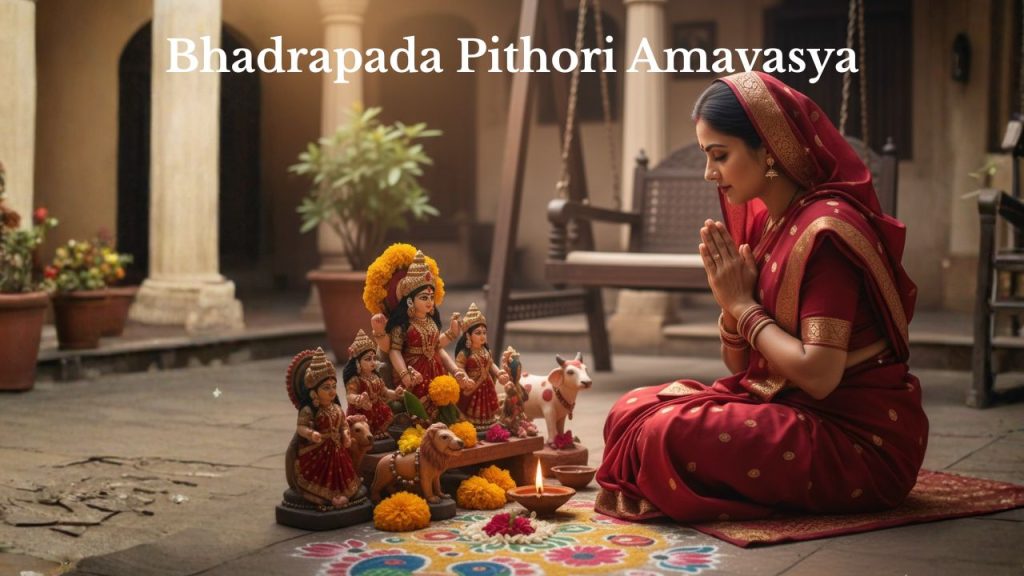
The day begins with a ritual bath, followed by the preparation of the worship area. Devotees create altars dedicated to Goddess Parvati and the 64 Yoginis. Fasting is observed with utmost sincerity, often without even consuming water. The 64 Yoginis, each a manifestation of divine energy, are honored through chants, offerings, and symbolic representations. Goddess Parvati, as the universal mother, is worshipped as the ultimate guardian of children. The puja includes lighting lamps, incense, and making symbolic food offerings, reflecting the pure intent behind the mother’s vow. Fasting not only purifies the body but also enhances spiritual concentration and focus.
Drawing or Sculpting 64 Yogini Idols Using Rice Flour or Cow Dung
A unique and artistic feature of Pithori Vrat is the creation of 64 Yogini idols using eco-friendly materials, such as rice flour, turmeric, and cow dung. These symbolic figures are arranged in a sacred pattern, often around a central idol of Goddess Durga or Parvati. This practice, rooted in folk traditions, brings divine energies into the household space. The act of crafting these idols is not just a ritual; it’s a spiritual meditation and a profound homage to the divine feminine. It emphasizes the creative power of women and the sacredness of domestic spaces.
Narration of Pithori Vrat Katha During the Puja
The heart of Pithori Vrat lies in the narration of the Pithori Vrat Katha, an ancient story that reinforces the significance of the rituals. This tale typically involves a pious woman, often a queen, whose devotion to the Yoginis and Goddess Parvati results in the well-being of her children and family. Through struggles, divine tests, and unwavering faith, she emerges victorious, blessed by the divine. As this story is told, it ignites faith and spiritual strength among those observing the vrat. Listening to or narrating the Katha is believed to complete the vrat and make it spiritually fruitful.
Significance in Ancestor Worship (Pitru Tarpan)
Powerful Day for Pitru Tarpan, Shraddha, and Pind Daan
Bhadrapada Amavasya holds unparalleled importance for Pitru Tarpan, Shraddha, and Pind Daan, rituals aimed at honoring and appeasing one’s ancestors. These are age-old practices where water, sesame seeds, and food offerings are made with specific mantras to elevate the souls of departed loved ones. Performing these on this Amavasya is believed to bring peace to ancestral spirits and ensure their blessings flow toward the living descendants. This spiritual obligation is not just a duty; it’s an act of deep reverence, love, and remembrance.
Honoring the Ancestral Lineage and Seeking Blessings
Ancestral worship is not merely about ritual; it’s about reconnecting with roots. On this day, families come together to remember those who came before them, express gratitude, and seek forgiveness for any unintentional omissions. By performing tarpan and shraddha, devotees recognize the role their ancestors played in shaping their existence. These acts not only heal karmic bonds but also bring the blessings of wisdom, guidance, and protection from the Pitru realm. This sacred connection helps instill a sense of humility, legacy, and purpose in life.
Rituals Performed Near Water Bodies Like Rivers or Ponds
Traditionally, Pitru Tarpan and Pind Daan are performed near holy water bodies, such as rivers, ponds, or temple tanks. Water is seen as a medium through which offerings are transmitted to the ancestral realm. Devotees offer water mixed with sesame seeds, barley, and kush grass while chanting sacred mantras. These offerings are believed to nourish the souls of ancestors. Performing the rituals in natural surroundings not only enhances spiritual connection but also reflects harmony with the five elements (Panchamahabhutas) of nature.
Belief in the Opening of Ancestral Realms (Pitru Lok)
It is widely believed that on Bhadrapada Amavasya, the gates of Pitru Lok, the realm of the ancestors, open. This allows ancestral spirits to visit the earth realm and accept the offerings made with love and sincerity. This brief period of cosmic alignment makes the day incredibly potent for resolving ancestral debts. When rituals are performed with a pure heart and clear intention, it is said that even long-standing doshas or misfortunes can be uplifted. The spiritual doorway enables both realms, earthly and ethereal, to communicate and heal.
Observance by Women and Its Social Role
Traditional Fasts Kept by Married Women for Progeny and Family Welfare
One of the most touching aspects of Bhadrapada Amavasya is its centrality around the unwavering faith of women, especially married women. The fasts observed are done selflessly, solely for the prosperity, health, and happiness of their children and families. These fasts are not superficial rituals but emotional commitments that echo a mother’s prayer for her child’s well-being. In many households, it is a yearly spiritual tradition that reinforces the sacred bond between mother and child, upheld by rituals, devotion, and sacrifice.
Role of Older Women in Passing Down the Ritual Knowledge
In many Indian homes, the observance of Pithori Amavasya is a multi-generational affair. Older women play a pivotal role in ensuring that the traditions, stories, and techniques of rituals are passed down to daughters, daughters-in-law, and granddaughters. This transmission of cultural wisdom isn’t just about preserving rituals; it’s about sustaining spiritual identity. The stories they tell, the rituals they teach, and the emotional strength they demonstrate create a living heritage that endures across generations. Their presence in the ritual process affirms the role of women as spiritual anchors within the family.
Community Celebrations and Gatherings
In rural and semi-urban communities, Pithori Amavasya often becomes a day of collective observance, with groups of women gathering in temple courtyards or at home to perform the vrat together. Sharing stories, singing devotional songs, creating the 64 Yoginis, and participating in pujas together create a sense of sisterhood and spiritual camaraderie. These gatherings are more than just rituals; they foster emotional support, communal bonds, and cultural continuity. The collective energy generated in these community rituals adds to the day’s spiritual power and emotional resonance.
Empowerment of the Maternal Figure as Caretaker and Nurturer
This Amavasya reaffirms the central role of mothers and maternal figures as spiritual protectors of the family. Through rituals like Pithori Vrat, the mother’s devotion is elevated to that of a divine protector, an earthly embodiment of the Goddess herself. In honoring the Yoginis and Goddess Parvati, women symbolically honor their strength, resilience, and nurturing spirit. These observances empower women to take ownership of their spiritual influence within the household, serving not only as caretakers but also as pillars of emotional and spiritual strength. The celebration of motherhood on this day is both personal and sacred.
Environmental and Seasonal Alignment
Coincides with Monsoon and Fertility Cycles
Bhadrapada Amavasya falls during the tail end of the monsoon season in India. This period holds profound significance for both agriculture and ecology. The earth is fertile, the rivers are full, and nature is in full bloom. This synchrony with natural abundance enhances the symbolic meaning of the rituals performed. Water, soil, grains, and plant offerings become more than ritualistic; they’re celebrations of life’s regenerative power. In traditional societies, this timing was intentional: ancestral and divine rituals were aligned with seasonal energy to amplify spiritual impact and earthly prosperity.
Symbolism of Darkness and Light During Monsoon Nights
The dark, cloudy nights of monsoon magnify the symbolism of Amavasya. With the moon completely hidden and clouds covering the stars, the night becomes an ideal metaphor for ignorance, sorrow, and karmic weight. Lighting lamps during rituals becomes an act of bringing consciousness into darkness, of illuminating the unknown. These acts aren’t just symbolic; they help internalize faith and remind us of the light within, even when life feels overcast. Spiritually, it is a time to release burdens and seek clarity.
Use of Eco-Friendly and Natural Materials in Rituals
A key cultural aspect of Bhadrapada Amavasya is its emphasis on sustainable rituals. Clay, cow dung, rice flour, turmeric, and natural flowers are used extensively. These materials align with the Earth’s rhythms and leave no harmful residue. Women make Yogini idols with their hands, drawing strength from earth-based mediums. This return to natural practices supports environmental harmony, fosters gratitude for nature’s gifts, and upholds a heritage of zero-waste rituals. In an age of increasing environmental crises, these traditions offer timeless inspiration.
Season of Cleansing and Renewal
Monsoon is not only a time of fertility but also one of cleansing. Rivers and lakes are replenished, and the air feels washed and pure. Spiritually, this period supports emotional and karmic detoxification. Performing ancestral rites and fasting during this season is like aligning internal purification with nature’s rhythm. The cleansing of one’s karma through rituals mirrors nature’s self-purification. This spiritual alignment fosters a balanced ecosystem, both within and around us.
Educational and Cultural Transmission
Storytelling as a Method of Teaching
Storytelling plays a central role in how the values of Bhadrapada Amavasya are passed down. Elders narrate the stories of Pithori Vrat, Goddess Parvati, and the 64 Yoginis with passion and detail. These stories aren’t just entertaining; they contain moral, spiritual, and emotional guidance. Children and young women listen, learn, and internalize these narratives, gaining an understanding of the ‘why’ behind each ritual. Oral storytelling thus serves as an educational tool that fosters memory, imagination, and spiritual reflection.
Intergenerational Participation in Rituals
Bhadrapada Amavasya becomes a day of togetherness. Grandmothers, mothers, and daughters participate side by side in drawing kolams (sacred floor patterns), making Yogini idols, and offering prayers. These shared moments are invaluable in passing on ritual practices organically. No textbooks are needed; wisdom is shared through hands-on participation. This nurtures a sense of responsibility and reverence in the younger generation, keeping the tradition alive in its true spirit.
Folk Songs and Devotional Hymns
Throughout the day, folk songs, bhajans, and devotional hymns dedicated to Goddess Parvati and the Yoginis fill the air. These songs are not only spiritual but educational, embedded with stories, values, and praise for divine qualities. They’re sung in local dialects, making them accessible and relatable. The musical expression transforms the rituals into heartfelt celebrations, deepening emotional connections, and fostering cultural pride.
Preservation of Oral Traditions
In many rural areas, especially those with low literacy rates, oral traditions serve as living scriptures. The observance of Bhadrapada Amavasya reinforces the importance of listening and learning from elders. As long as stories are told, songs are sung, and rituals are practiced, the culture thrives. It’s this emphasis on oral knowledge that makes the festival both dynamic and enduring.
Psychological and Emotional Healing
Ritual as a Tool for Emotional Release
Bhadrapada Amavasya offers a sacred space for emotional expression. Fasting, praying, and offering rituals for ancestors allow individuals to acknowledge grief, guilt, or longing, feelings that are often suppressed. The act of offering tarpan or narrating the vrat katha can act like emotional therapy. It becomes a way to articulate pain, show gratitude, and reconnect with the soul. Ritual, in this sense, becomes a silent language of healing.
Connection with Inner Self Through Fasting and Silence
Fasting during Amavasya is more than a dietary abstention; it’s a way to still the senses and sharpen inward awareness. Many devotees observe silence (mauna vrat) in conjunction with a food fast. This leads to introspection, mindfulness, and emotional clarity. The internal space created helps individuals reflect on their life’s purpose, connect with their ancestry, and release mental clutter. This inner work, done collectively by communities, creates shared emotional strength.
Supportive Community Bonding Among Women
Pithori Vrat is a shared experience among women, creating an informal support system. As women come together to pray, sing, and perform rituals, they also share stories, worries, and hopes with one another. These bonds provide emotional validation and reduce feelings of isolation. The sense of unity, reinforced through shared devotion, becomes a powerful source of mental well-being. This group emotional care is one of the understated yet profound aspects of the festival.
Blessings and Reassurance from Ancestors
Belief in the presence of ancestors and their blessings creates a sense of protection. For many, this spiritual assurance brings comfort, especially in times of distress. Knowing that one is remembered, watched over, and guided by ancestral spirits brings peace and emotional balance. It reaffirms that no one is alone, that an invisible chain of love and lineage supports life.
Religious and Ritualistic Integrity
Following Prescribed Vedic Guidelines and Timings
The observance of Bhadrapada Amavasya rituals is guided by detailed Vedic rules and tithis (lunar timings). Pandits and family elders emphasize performing tarpan and shraddha at the exact muhurta to ensure ritual efficacy. This adherence to timing shows discipline, respect for tradition, and understanding of cosmic alignment. It preserves the sanctity and spiritual strength of the rituals.
Use of Purified Elements in Offerings
All elements used in offerings, sesame seeds, barley, tulsi leaves, cow’s milk, and holy water, are carefully sourced and purified. These materials are not chosen randomly; they hold energetic properties that align with Vedic cosmology. Their purity reflects the sincerity and mindfulness of the devotee. The emphasis on sanctity in materials enhances the spiritual impact of the rituals.
Correct Recitation of Mantras and Shlokas
Chanting mantras with clarity, devotion, and pronunciation is essential. Vedic hymns for Pitru Tarpan and Yogini worship are recited with guidance or learned from elders. The vibrations created by these mantras are believed to purify the environment and channel spiritual energy. Proper recitation deepens the connection with both divine forces and ancestors.
Continuity and Consistency in Observance
Bhadrapada Amavasya is not a one-time observance. Many families maintain their annual practice, creating spiritual continuity. This consistency across generations ensures that rituals not only survive, but also thrive. Regular observance fosters discipline, nurtures faith, and contributes to a family’s collective spiritual growth. This ritual integrity reinforces the deeper values of responsibility, gratitude, and reverence.
Contemporary Relevance and Revival
Renewed Interest in Ancestral and Cultural Roots
Bhadrapada Amavasya provides a foundation for cultural identity. Many urban families are now returning to ancestral rituals, seeking meaning beyond materialism. Social media, online satsangs, and digital storytelling have made it easier to access traditional knowledge. This resurgence isn’t about nostalgia; it’s about spiritual nourishment and emotional grounding.
Revival of Forgotten Practices by Cultural Organizations
Temples, community centers, and cultural groups are working to revive traditions that have been lost. Workshops on Pithori Vrat, storytelling sessions about Yoginis, and eco-ritual kits are now part of a growing movement to preserve heritage. These efforts bring awareness and encourage younger generations to participate. The revival ensures that ancient wisdom evolves with contemporary tools.
Fusion of Tradition with Modern Living
Modern lifestyles often demand flexibility, and many families now adapt rituals to suit urban schedules without diluting their essence. Digital puja guides, virtual group fasting, and eco-conscious practices are helping bridge the gap between tradition and practicality. This blending of old and new preserves cultural meaning while making it accessible to busy, modern households.
Spiritual Connection in Times of Uncertainty
In an age of emotional burnout, mental stress, and global crises, observances like Bhadrapada Amavasya offer deep spiritual refuge. The rituals, prayers, and ancestral connections become therapeutic. They remind individuals of life’s deeper purpose, the value of relationships, and the strength drawn from lineage and faith. Festivals are more than cultural; they are essential soul nourishment.