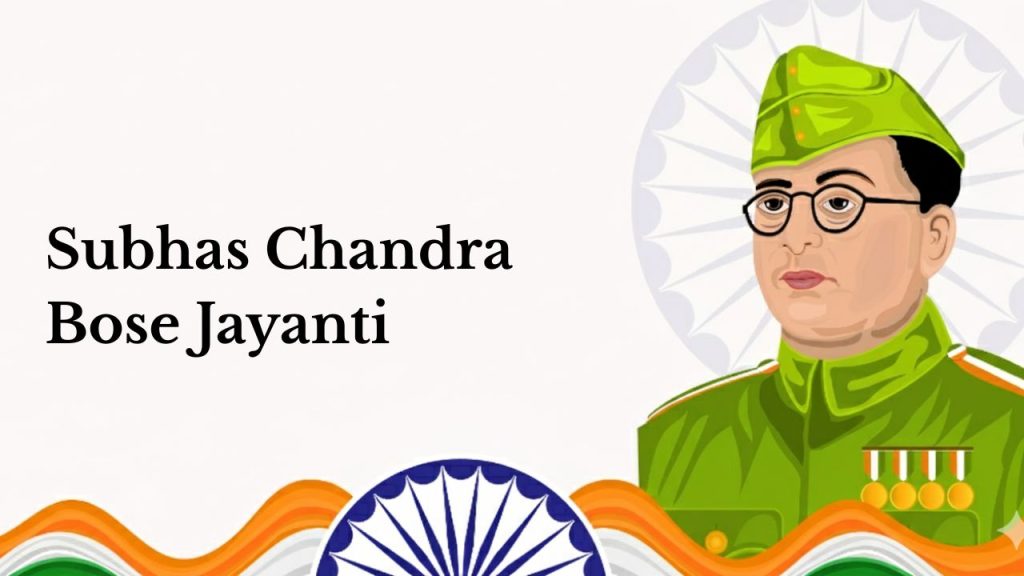
Understanding about Subhas Chandra Bose Jayanti
Subhas Chandra Bose Jayanti is celebrated on January 23 every year, marking the birth anniversary of one of India’s most revered freedom fighters. This day is a significant national remembrance, as it honors the life, vision, and sacrifices of Subhas Chandra Bose, who dedicated his entire life to India’s struggle for independence. Observing this day provides an opportunity to revisit his remarkable journey, reflect on his ideologies, and inspire current and future generations to contribute positively to the nation.
The significance of this celebration goes beyond a mere ceremonial acknowledgment. It serves as a reminder of the values Bose stood for: courage, determination, self-reliance, and patriotism. His relentless fight against colonial rule, despite the challenges posed by political differences and global conflicts, continues to inspire a sense of responsibility among citizens. People from all walks of life, including students, educators, policymakers, and ordinary citizens, participate in activities that honor his legacy, ranging from seminars to cultural programs, exhibitions, and patriotic performances.
Subhas Chandra Bose’s contribution to India’s independence is monumental and multifaceted. Unlike many leaders of his era, he did not confine himself to conventional methods of protest. Instead, he sought revolutionary paths to mobilize people and fight colonial powers effectively. Recognizing this, celebrating his Jayanti also emphasizes the importance of leadership, vision, and unwavering commitment to a cause greater than oneself. In modern India, where challenges require resilience and innovative thinking, Bose’s life offers timeless lessons. This day is not only about remembering history but also about instilling values of courage and selflessness, encouraging individuals to uphold the spirit of nationalism in everyday life.
Early Life and Education of Subhas Chandra Bose
Birth and family background in Cuttack, Odisha
Subhas Chandra Bose was born into a well-educated and respected family on January 23, 1897, in Cuttack, Odisha. His family environment emphasized discipline, moral integrity, and education. The values instilled during his childhood played a pivotal role in shaping his personality, fostering a strong sense of responsibility, and nurturing a deep understanding of love for his country. His father, Janakinath Bose, was a successful lawyer, while his mother, Prabhavati Devi, instilled compassion and resilience. Growing up in such an environment provided Bose with a foundation of ethics, courage, and intellect that guided his later actions in the freedom struggle.
Early schooling and the influence of family values
Bose’s formative years were marked by academic excellence and a natural curiosity about the world. Early schooling exposed him to literature, history, and ideas of social justice, which, combined with his family’s emphasis on honesty and moral courage, shaped a strong nationalist consciousness. His teachers recognized his leadership abilities and intellectual brilliance early on, qualities that would later define his revolutionary strategies. From a young age, Bose demonstrated compassion for society, courage to challenge injustice, and a willingness to think independently, traits that became hallmarks of his public life.
Higher education in India and abroad (Presidency College, Cambridge)
Bose continued his higher education at Presidency College, Calcutta, where his intellect and leadership qualities flourished. Immersed in political discussions and nationalist movements, he developed a deep understanding of India’s colonial challenges. He later traveled to Cambridge University in England to prepare for the Indian Civil Services exam. During this period, Bose was exposed to international political thought and revolutionary ideas, which broadened his perspective on freedom and governance. The education he received abroad enhanced his analytical abilities and deepened his resolve to serve the nation.
Formation of early nationalist ideas
Bose’s time in India and abroad significantly influenced the formation of his nationalist ideology. Witnessing oppression under British rule firsthand, coupled with exposure to global revolutionary movements, strengthened his belief in complete independence rather than partial reforms. He started envisioning a new India where citizens were empowered, self-reliant, and united, laying the groundwork for the radical approaches he would later advocate.
Influences shaping his leadership qualities
A combination of family values, formal education, and exposure to political thought shaped Subhas Chandra Bose’s leadership qualities. He developed a style of leadership that was courageous, principled, and visionary, emphasizing action alongside ideas. These early influences ensured that when he stepped into the national arena, he did so with clarity of purpose, strategic thinking, and the moral authority to inspire millions.
Subhas Chandra Bose’s Role in the Indian Freedom Struggle
Involvement with the Indian National Congress
Bose’s active participation in the Indian National Congress marked the beginning of his significant contribution to India’s freedom struggle. Within the Congress, he worked tirelessly to promote youth involvement, progressive policies, and radical reforms. His dedication and organizational skills quickly set him apart as a capable and determined leader. Bose understood the importance of mobilizing people at the grassroots level, connecting with the masses to ensure the movement had broad-based support across regions and communities.
Differences with contemporary leaders on strategy
While Bose shared the ultimate goal of independence with other leaders, he often differed in strategy and approach. He believed in assertive and proactive measures against colonial rule rather than a purely nonviolent path. These differences, though sometimes contentious, highlighted Bose’s commitment to practical solutions for achieving total independence and his determination to challenge limitations in strategy to safeguard national interests.
Advocacy for complete independence (Purna Swaraj)
Subhas Chandra Bose’s unwavering stance on Purna Swaraj (complete independence) distinguished him from others advocating for incremental reforms. He recognized that India’s sovereignty could not be partial or compromised, and tirelessly campaigned for a movement that demanded total freedom from British rule. His advocacy inspired many to embrace the vision of a liberated India and created a sense of urgency in the freedom movement.
Emphasis on youth participation in the freedom movement
Bose understood that the youth were India’s greatest asset in the struggle for independence. He established platforms, organizations, and programs to channel youthful energy into revolutionary action, emphasizing discipline, courage, and dedication. His engagement with students and young leaders ensured that the spirit of nationalism was not confined to political circles but became a movement driven by passion and widespread participation.
Contribution to the revolutionary approach for India’s liberation
Bose’s contributions extended beyond conventional politics. He embraced innovative and revolutionary strategies, including forming parallel organizations and alliances to strengthen India’s fight against colonial rule. His vision emphasized direct action, strategic partnerships, and international support, making him a unique and influential figure in India’s freedom movement. His approach continues to be studied as an example of dynamic and courageous leadership.
Formation of the Indian National Army (INA)
Motivations for creating the INA
The creation of the Indian National Army was motivated by Bose’s desire to mobilize Indians abroad and create a disciplined armed force to fight colonial rule. Recognizing the limitations of purely political methods, he envisioned an organized military structure that could directly challenge British forces and inspire confidence among Indians. The INA symbolized a new hope, resilience, and assertive resistance against oppression.
Collaboration with Indian expatriates and Japanese allies
Bose’s leadership in forming the INA involved strategic collaboration with Indian expatriates in Southeast Asia and the Japanese military. These alliances were crucial in providing the INA with resources, training, and logistical support. Through effective coordination, Bose ensured that the INA not only had a fighting capability but also represented the determination of Indians living abroad to contribute to the nation’s freedom.
INA’s role in the World War II context
During World War II, the INA played a significant role in challenging British colonial forces in regions like Burma and Northeast India. Although the INA faced challenges in terms of scale and resources, its presence demonstrated Indian resolve and strategic thinking, influencing British perceptions and morale. The INA’s operations highlighted Bose’s belief in leveraging global dynamics to India’s advantage.
Impact on Indian soldiers and national morale
The INA had a profound impact on Indian soldiers and the general population, instilling pride, courage, and a sense of purpose. Its existence inspired countless Indians to support the independence movement, creating a collective sense of national identity and responsibility. The INA’s story continues to evoke admiration and serves as a testament to disciplined, value-driven leadership.
Legacy of the INA in Indian history
The legacy of the INA is preserved as a symbol of sacrifice, valor, and strategic ingenuity. It influenced post-independence military and political thought and remains an enduring example of Bose’s vision for a self-reliant and courageous India. Memorials, educational programs, and public commemorations continue to honor its contributions.
Bose’s Ideology and Vision
Belief in self-reliance and self-determination
Bose strongly advocated for self-reliance and self-determination, insisting that India’s independence must be achieved through internal strength and decisive action. He believed that a nation could only thrive when its citizens were empowered, educated, and capable of making autonomous decisions. This ideology remains relevant today, inspiring initiatives focused on economic self-sufficiency, technological innovation, and social empowerment.
Concept of ‘Netaji’ leadership style
Bose’s leadership style, widely recognized as that of ‘Netaji’, combined vision, courage, and accountability. He led by example, motivating people through personal commitment and strategic thinking. This approach encouraged followers to embrace responsibility, take calculated risks, and act with discipline and dedication, qualities essential for nation-building.
Emphasis on unity beyond religion and region
A core principle of Bose’s vision was unity among diverse communities. He believed that India’s strength lay in overcoming divisions of religion, region, and language, creating a shared sense of purpose. By promoting inclusivity, he laid the groundwork for a national identity that transcended social barriers, fostering collective responsibility for the country’s progress.
Advocating industrial and military strength for India
Bose envisioned a strong industrial and military foundation as critical for India’s sovereignty. He emphasized the importance of developing infrastructure, modern industries, and defense capabilities to ensure national security and self-sufficiency. This forward-thinking approach highlights his strategic understanding of long-term national stability and growth.
Inspirational slogans: e.g., “Give me blood, and I will give you freedom”
Bose’s slogans were more than words; they were calls to action that mobilized millions. Statements like “Give me blood, and I will give you freedom” inspired courage, selflessness, and active participation in the freedom struggle. Such slogans continue to resonate, reminding citizens of the power of determination and collective effort in achieving great objectives.
Celebrating Subhas Chandra Bose Jayanti Across India
State-wise celebrations and public gatherings
Subhas Chandra Bose Jayanti is observed with enthusiasm across the country. States like West Bengal, Odisha, Assam, and Maharashtra organize special programs in schools, colleges, and public spaces. These gatherings honor Bose’s legacy through flag hoisting, commemorative speeches, and patriotic processions, ensuring that his contributions remain vivid in the public consciousness. Communities actively participate in these events, reflecting on his ideals and spreading awareness about his pivotal role in India’s freedom struggle.
Flag hoisting and tribute ceremonies
Flag hoisting and ceremonial tributes are central to the celebrations. Government offices, educational institutions, and public organizations hoist the Indian national flag in remembrance of Bose’s commitment to independence. Wreath-laying ceremonies at statues and memorials further reinforce respect for his sacrifices, creating a shared sense of pride and gratitude among citizens.
School and college events honoring his legacy
Educational institutions play a vital role in keeping Bose’s legacy alive. Schools and colleges conduct debates, elocutions, essay competitions, and skits focused on his life and vision. These activities not only educate students about history but also instill values of leadership, courage, and patriotism. Participation in such programs ensures that young minds remain connected to the ideals that shaped modern India.
Social media campaigns to spread awareness
In the digital age, social media platforms amplify the celebration. Hashtags, educational posts, and online tributes create national and global engagement, allowing people to learn about Bose’s life and achievements. This approach ensures that his message of courage and unity reaches a broader audience, including the younger generation.
Cultural programs like plays and exhibitions
Cultural initiatives like stage plays, exhibitions, and art competitions visually narrate Bose’s story. By dramatizing significant events from his life, these programs engage audiences emotionally, making history accessible and inspiring admiration for his unwavering dedication.
Lessons from Subhas Chandra Bose for Modern India
Importance of courage and resilience
Bose’s life exemplifies fearless courage and resilience, essential traits for overcoming challenges. His bold decisions, from defying colonial authorities to forming the INA, teach modern citizens the value of standing firm against injustice and pursuing goals relentlessly, even under adverse circumstances.
Inspiring youth leadership and patriotism
Bose emphasized the role of youth in shaping the nation. His example encourages young leaders to actively participate in civic duties, social reforms, and national development. By learning from his dedication, today’s youth can cultivate a sense of responsibility, vision, and commitment to society.
Vision for a self-reliant nation
Bose envisioned an India capable of self-sufficiency and strategic independence. Modern India can draw lessons from its advocacy for economic, industrial, and military strength, focusing on innovation, entrepreneurship, and self-reliant growth strategies.
Commitment to justice and equality
Bose’s belief in equality and justice transcended social barriers. By promoting unity across religion, region, and class, he offers a blueprint for inclusive governance and social harmony, inspiring citizens to uphold fairness and empathy in their communities.
Motivation for public service and nation-building
Bose’s life encourages active participation in nation-building. His dedication to collective welfare and strategic thinking serves as a guide for individuals seeking meaningful ways to contribute to society, emphasizing service over self-interest.
Commemorative Monuments and Memorials
Netaji Subhas Chandra Bose statue in Kolkata
The iconic statue in Kolkata serves as a symbol of respect and inspiration. Visitors gather to pay tribute, reflecting on his courage and vision. The monument is a focal point for public ceremonies, keeping his memory alive in the hearts of citizens.
INA memorials across India
Memorials dedicated to the Indian National Army honor the soldiers who fought under Bose’s leadership. These sites preserve historical artifacts and narrate stories of bravery, offering insight into the INA’s role in India’s struggle for independence.
Netaji Bhawan, Museum, and Archives
Netaji Bhawan in Kolkata houses archives, personal belongings, and historical documents, offering a comprehensive understanding of Bose’s life. Museums provide an educational experience for students, researchers, and citizens, ensuring that his legacy is both accessible and engaging.
Annual homage at the Red Fort and the India Gate
Government-organized tributes at Red Fort and India Gate highlight Bose’s national significance, reinforcing his status as a patriotic icon. Ceremonies at these locations foster a sense of collective pride and remembrance.
Role of memorials in preserving history
Memorials serve as educational and inspirational tools, keeping Bose’s contributions alive for future generations. They create tangible connections to history, allowing citizens to reflect on the sacrifices made for India’s freedom.
Educational Initiatives and Awareness Programs
School and college lectures on Bose’s life
Institutions conduct lectures, seminars, and interactive sessions to educate students about Bose’s contributions. These initiatives provide historical context and highlight leadership qualities and moral courage, fostering informed and responsible citizenship.
Scholarships and awards in his name
Scholarships and awards encourage academic excellence and leadership inspired by Bose’s principles. They recognize talent and dedication, motivating students to emulate his vision and values in their pursuits.
Documentaries, books, and research programs
A variety of media and literature showcase Bose’s life and strategies. Documentaries, biographies, and research programs make his story accessible, engaging, and informative, ensuring that his contributions are preserved in collective memory.
Role of government and NGOs in awareness campaigns
Government bodies and NGOs organize awareness campaigns, public events, and educational tours, emphasizing the importance of remembering historical figures like Bose. These programs enhance public understanding of India’s freedom struggle and reinforce national pride.
Encouraging historical research among youth
Promoting research projects and history competitions enables students to explore Bose’s strategies, ideologies, and leadership lessons, deepening engagement and fostering critical thinking about India’s independence movement.
Legacy and Relevance Today
Subhas Chandra Bose Jayanti is not just a day of remembrance but a celebration of courage, leadership, and vision. Bose’s life demonstrates that true patriotism requires commitment, sacrifice, and proactive efforts. His ideals continue to inspire modern India, motivating citizens to contribute meaningfully to the nation.
His legacy encourages us to embrace the values of unity, resilience, and self-reliance. By reflecting on his contributions, individuals are reminded of the importance of participating in nation-building, advocating justice, and fostering social harmony. Celebrating his Jayanti is an opportunity to connect with India’s history, learn from exemplary leadership, and internalize principles that guide ethical and strategic action.
Today, Bose’s vision resonates in governance, education, defense, and civic engagement, providing timeless lessons for leadership and social responsibility. By honoring his legacy through action, remembrance, and education, society ensures that the spirit of Subhas Chandra Bose remains a guiding force for generations to come.