Significance of Narada Jayanti in Hindu Culture
Narada Jayanti is a spiritually enriching festival that celebrates the divine presence and profound wisdom of Devarishi Narada, a celestial sage renowned for his cosmic travels and divine communications. This sacred observance falls on Pratipada, the first day of Shukla Paksha (the waxing moon phase) in the Jyeshtha month of the Hindu lunar calendar. For many devotees, this day isn’t just a date on the calendar; it’s a doorway to higher understanding, devotion, and inner transformation.
Narada Jayanti’s unique blend of wisdom, devotion, and storytelling makes it a special occasion. Narada Muni wasn’t confined to a hermitage or temple, unlike other saints or sages. He moved freely across the three worlds (Triloka), connecting gods, demons, sages, and even ordinary beings. He wasn’t just a bearer of messages but a carrier of truth, often disguised in music, humor, and insightful tales.
Today, devotees across India reflect on Narada’s spiritual teachings and role in nurturing Bhakti Yoga, the path of heartfelt devotion. The day is filled with reverence and celebration, marked by holy discourses, chanting, storytelling, and fasting. For those seeking spiritual clarity and guidance, Narada Jayanti serves as a reminder that divinity often arrives with solemnity, a smile, a question, or a song. It’s more than a festival, it’s a celebration of inner awakening and joyful learning. If you’ve ever felt a spiritual pull during your quest for meaning, this day offers a divine nudge in that very direction.
Who is Devarishi Narada?
Mythological origins and divine birth
Devarishi Narada’s birth isn’t just a myth; it’s a story wrapped in celestial wonder and karmic depth. As per ancient scriptures, Narada was born from the mind of Lord Brahma, the creator of the universe. He is called a Manasaputra, a mental son born of Brahma’s will, making his existence inherently divine. According to the Bhagavata Purana, in a previous life, Narada was a humble Gandharva (celestial musician) who earned the grace of Vishnu through devotion.
Reborn as a sage, he was gifted eternal life and divine knowledge. His birth symbolizes divine intention; he wasn’t born by chance, but was chosen for a cosmic role. His existence bridges the heavens and the earth, carrying messages that awaken, transform, and sometimes provoke necessary change.
His role as the messenger of the gods and a cosmic communicator
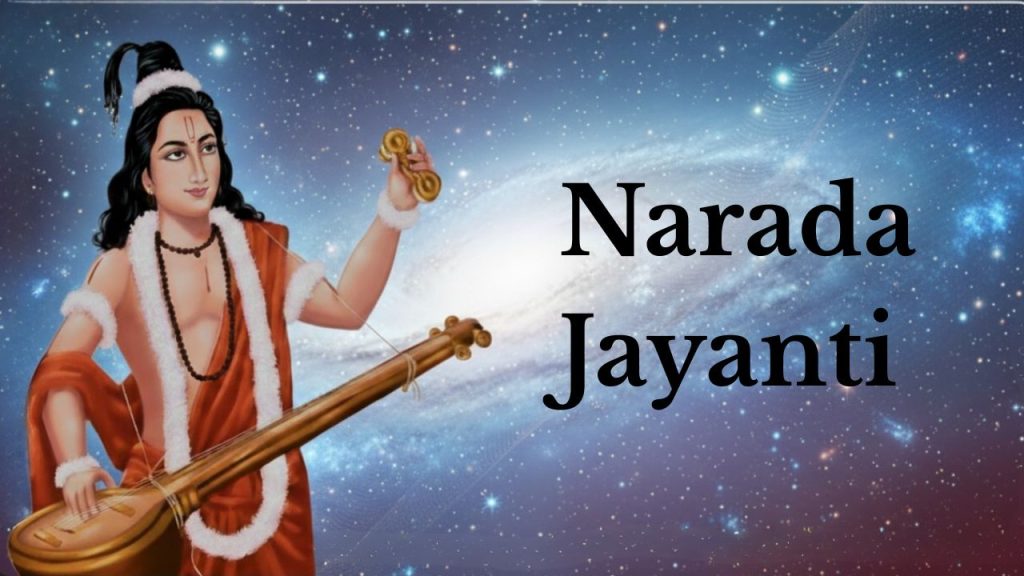
If the cosmos had a divine news anchor, it would be Narada. He is revered as Vishnu’s messenger, traversing from heaven to earth with messages that influence destiny. But he’s not just a messenger in the literal sense; he’s a divine provocateur who triggers events, stirs truths, and compels introspection through his timely presence. You’ll often find Narada appearing exactly when something big is about to happen, be it a war, a spiritual awakening, or a crisis of faith. With his veena in hand and ‘Narayana, Narayana’ on his lips, Narada arrives not just to inform but to awaken.
Narratives in Hindu scriptures (Vedas, Puranas, Mahabharata)
Narada is a constant thread throughout various Hindu scriptures, symbolizing divine wisdom. He appears in:
- Mahabharata: Offering sage advice to the Pandavas, often warning them about impending conflict or offering philosophical insight.
- Ramayana: Guiding Valmiki to write the epic after introducing him to Lord Rama’s virtues.
- Puranas: He is a narrator in the Bhagavata Purana, Vishnu Purana, and other Puranas, always guiding devotees toward bhakti and righteousness.
His presence in these texts isn’t ornamental; it’s catalytic. He sets major spiritual and mythological events into motion, often leading seekers closer to liberation (moksha).
His unique personality, mischievous yet wise
Narada is one of the most human-like divine beings in Hindu lore. He’s playful, sometimes mischievous, and yet deeply wise. He isn’t afraid to stir conflict if it leads to spiritual growth. His style is gentle provocation; he questions, pokes, prods, and plays the fool if it means you’ll see the truth. This duality makes him incredibly relatable. He shows us that wisdom doesn’t always wear a frown; it can come with a smirk, a melody, or a clever tale.
Revered as a pioneer of Bhakti Yoga and spiritual devotion
More than a sage, Narada is the spiritual father of Bhakti Yoga, the path of love and devotion to God. He composed the Narada Bhakti Sutra, a foundational scripture that outlines the path of surrender, love, and unshakeable faith. Narada taught that devotion isn’t confined to rituals or rules; it is pure, personal, and potent. Whether in a palace or a hut, you’re on the right path if your heart beats for the divine. Narada elevated the spiritual journey from intellectual debate to heartfelt connection through this.
Significance of Jyeshtha Month in Hinduism
Spiritual and seasonal importance of the Jyeshtha month
Jyeshtha, the third month in the Hindu lunar calendar, typically falls between May and June, when the sun is at its brightest. This period of intense heat isn’t just about weather; it’s symbolic of inner transformation. Ancient sages saw the harshness of summer as nature’s way of encouraging purification, both physically and spiritually. Spiritually, Jyeshtha is about enduring external discomfort to find inner peace. The sun’s blazing heat reflects the tapasya (austerity) needed to cleanse the soul. Fasting, introspection, and discipline are standard practices during this time, serving as rituals and spiritual tools.
Jyeshtha is a time of intense heat and inner purification.
During Jyeshtha, our bodies feel the heat, but so do our inner negativities. This month is ideal for spiritual practices such as meditation, fasting, and prayer. The heat becomes a metaphor, burning away laziness, ego, and ignorance, making way for clarity and devotion. It’s no coincidence that Narada Jayanti falls in this month. As the sun reveals and purifies, so does Narada, through his words, wisdom, and divine mischief.
Other key festivals in the month and their relevance
Aside from Narada Jayanti, Jyeshtha hosts other important observances:
- Ganga Dussehra: Celebrating the descent of the holy Ganga on Earth, symbolizing purification.
- Vat Savitri Vrat: Honoring Savitri’s devotion and determination.
- Nirjala Ekadashi: One of the most austere Ekadashis, where even water is avoided, promoting extreme self-discipline.
These festivals carry a theme of devotion and inner cleansing, reinforcing the transformative essence of Jyeshtha.
The symbolism of celebrating wisdom (Narada Jayanti) during this time
Celebrating Narada Jayanti during Jyeshtha is deeply symbolic. Narada, a torchbearer of divine wisdom, aligns perfectly with the month’s call for inner clarity and spiritual fire. Just like the summer heat strips away superficial layers, Narada strips away falsehood with truth, however uncomfortable it may be. It’s a perfect time to reflect, let go of illusions, and turn inward. Narada’s presence offers guidance when you’re spiritually thirsty and clarity when you’re emotionally clouded.
Astrological importance in aligning with divine vibrations
Astrologically, Jyeshtha is influenced by powerful planetary forces, especially the Sun and Mercury, which govern clarity, intellect, and transformation. The lunar mansion (nakshatra) of Jyeshtha represents wisdom, seniority, and protection.
Celebrating Narada Jayanti during this astrological alignment enhances your mental clarity, strengthens your spiritual focus, and opens channels to higher consciousness. It’s a time when the cosmos supports your spiritual evolution.
Symbolic Teachings of Narada Muni
The path of devotion (Bhakti Marg) over ritualism
One of the most profound teachings of Devarishi Narada is that love for God is more powerful than any ritual or practice. He championed Bhakti Marg, the path of pure devotion, as the highest spiritual route. While rituals have their place, Narada reminded us that they mean little without heartfelt emotion behind them. According to him, true worship isn’t about lighting the most expensive lamps or offering the rarest flowers; it’s about offering your entire heart.
When Narada speaks of devotion, he’s not referring to blind faith but conscious surrender, a love so deep and pure that it transforms the devotee. In his Narada Bhakti Sutra, he beautifully outlines that bhakti is “supreme love toward God” and that such love doesn’t depend on logic, social norms, or even the approval of others. It’s raw, personal, and transformative. Narada’s emphasis on Bhakti was revolutionary; it made spirituality accessible to everyone, not just the learned or the elite. Anyone, anywhere, from any background, could reach the divine if their love was sincere.
Spreading truth and divine messages selflessly
Narada Muni wasn’t just a cosmic traveler; he was a spiritual journalist of the universe, always carrying news that mattered. But what made him unique was his commitment to truth, even if it stirred discomfort. Whether alerting a king of his arrogance, reminding a deity of their duty, or guiding a seeker toward surrender, Narada spoke what needed to be heard, not what people wanted to hear.
He never withheld wisdom for personal gain. Every word he shared, every story he told, was an offering, a gift for the soul. His aim wasn’t to impress but to awaken. The truths he delivered often set in motion some of the most significant transformations in mythological history. His example teaches us the importance of honest communication, mainly when it serves a greater purpose. Narada shows us the power of a message spoken with clarity and intent in a world full of noise.
The balance of worldly play (Leela) and divine knowledge
One of the most fascinating aspects of Narada’s life is his perfect balance between Leela (divine play) and Jnana (knowledge). He could be seen laughing, joking, and stirring up events, yet behind every act was a layer of divine purpose.
This balance is his more profound lesson to us. Life is not a dry, intellectual pursuit of the divine; it’s a dance, a play. Yes, you seek knowledge, but live, laugh, and engage. Spirituality doesn’t mean detaching from life; it means living it fully, with awareness. Narada’s mischievous demeanor isn’t random; it symbolizes how the Divine often plays through paradoxes. He teaches us to embrace life’s dualities, joy and sorrow, ignorance and wisdom, and to discover the sacred in every shade of human experience.
Humor and storytelling as tools for wisdom
Let’s be honest, nobody likes a lecture. And Narada understood that well. That’s why his most excellent tools were humor and storytelling. He used metaphors, songs, and anecdotes to deliver lessons that struck straight at the heart.
Narada’s messages had layers of meaning, whether through a casual chat with a king or a humorous tale involving gods. His stories were mirrors, reflecting the listener’s ego, ignorance, or potential. And his humor? It wasn’t mockery, it was wisdom wrapped in wit, a reminder that truth doesn’t always have to be solemn. This is a powerful takeaway for us. If you want to inspire or uplift someone, don’t preach; tell a story. Make them laugh, make them think. That’s Narada’s way.
Breaking societal norms to emphasize more profound truths
Conventions never confined Narada. He broke rules, not to rebel, but to reveal higher truths. He interacted with asuras (demons) and devas (gods) alike. He spoke to kings and paupers with equal ease. He defied expectations, knowing that spiritual truth transcends social boundaries.
Narada’s actions were radical in a world often divided by caste, creed, and class. He saw the divine spark in everyone, guiding his interactions with them. He reminds us not to get trapped by outer appearances or traditions that limit spiritual growth. True wisdom, he taught, often lies beyond the boundaries we set for ourselves and others.
Rituals and Observances on Narada Jayanti
Early morning prayers and purification rites
Devotees begin the day with deep reverence and gratitude on the morning of Narada Jayanti. They start early, well before sunrise, with cleansing baths and purificatory rituals. This is not just about physical hygiene; it’s a symbolic act of washing away ignorance, ego, and worldly distractions.
After purification, many devotees set up small altars with an image or idol of Narada Muni adorned with garlands and offerings. Incense and lamps are lit, and the home is filled with spiritual vibrations that mark the beginning of the day’s devotion. It’s a peaceful yet powerful practice that aligns your body, mind, and spirit with the essence of Narada, pure, playful, and purposeful.
Chanting of Narada Stotra or bhajans in his praise
One of the most spiritually uplifting parts of Narada Jayanti is the chanting of bhajans and hymns dedicated to Narada Muni. Devotees gather to sing Narada Stotra, a beautiful hymn that extols his virtues, wisdom, and divine mission.
These sessions often transform homes and temples into spaces of joyful devotion. The veena sound, symbolic of Narada’s eternal presence, resonates through music, connecting hearts to the divine. Group chanting has a collective power; it elevates your mood and purifies the environment. As you sing praises of Narada, it feels like he’s smiling along with you and nodding approvingly.
Fasting and donation practices by devotees
Many followers observe a spiritual fast on Narada Jayanti, not out of compulsion but out of love and discipline. Some opt for a full-day fast, while others consume only fruits and water. The goal is to control the senses and focus inward, drawing closer to the divine through restraint.
Fasting is often accompanied by charity and donations, reflecting Narada’s selfless spirit. Devotees distribute food, clothes, or money to those in need, embodying the message that true devotion is incomplete without compassion. These acts bring spiritual satisfaction and serve as a reminder that devotion should extend beyond prayer into real-world kindness.
Recitation of sacred texts like Narada Bhakti Sutra
One of the most sacred observances on this day is the recitation of the Narada Bhakti Sutra. This timeless text, composed by Narada himself, outlines the purest form of unconditional love for the Divine. Devotees read, reflect, and sometimes discuss the sutras in study circles or spiritual gatherings. Each verse is packed with wisdom and simplicity, making even complex spiritual truths feel accessible and relatable. By immersing yourself in these teachings, you don’t just celebrate Narada, you embody him. His voice becomes your guide, his path your own.
Community discourses and devotional gatherings
Satsangs (spiritual discourses) and kirtans are organized in temples and spiritual centers. Learned saints or scholars share tales from Narada’s life and explain the significance of his teachings. These gatherings are more than just lectures; they’re soulful exchanges, often accompanied by music, laughter, and the warmth of shared faith. People come together as a community to grow in love, knowledge, and unity. Whether you’re a seasoned devotee or someone newly exploring spiritual paths, these events offer a welcoming space to feel, learn, and connect.
Narada in Sacred Texts
Narada Muni’s presence in sacred Hindu scriptures isn’t just profound, it’s transformational. His character is woven into the fabric of Indian spiritual tradition, not as a mere figurehead but as a living, breathing symbol of divine guidance, wisdom, and transcendental devotion. From epic tales to philosophical discourses, his presence signals a turning point in the lives of those he encounters. He doesn’t just appear in the background; he’s the divine spark that often sets spiritual journeys in motion. Whether instructing sages, enlightening monarchs, or triggering introspection in seekers, Narada doesn’t merely deliver messages; he awakens destinies. Let’s dive deeper into how he’s portrayed in some of the most significant sacred texts of Hinduism and the subtle but powerful roles he plays:
Presence in Ramayana as a Guide to Valmiki
Before Valmiki became a revered sage and author of the Ramayana, he was a highway bandit named Ratnakara. This is a story not just of redemption but of awakening, and Narada was the one who lit that flame. When Narada crossed paths with Ratnakara, he didn’t react with fear or disdain. Instead, he calmly asked, “Will your family share in the sin of your deeds?” That one question shook Ratnakara’s foundation. It made him reflect on his choices and changed his path forever. He gave up violence, meditated for years, and was finally transformed into Valmiki, the very person who would compose the epic Ramayana. This encounter tells you something powerful: sometimes, it takes just one honest question to change a life. Narada didn’t preach. He prodded the conscience. And that’s the beauty of his wisdom, he doesn’t impose; he inspires.
Role in the Mahabharata and Stories Involving Lord Krishna
Narada’s influence in the Mahabharata is equally striking. He often appeared at critical junctures, not to sway events but to make people aware of their deeper responsibilities and dharma. One notable moment is when he guides Yudhishthira on the subjects of kingship and dharma after the Rajasuya Yagna. His counsel helped shape the Pandavas’ approach to ruling.
With Krishna, the relationship is even more dynamic. Narada is both a devotee and a messenger, often weaving humor into his profound insights. One popular tale describes how Narada tries to test Krishna’s omniscience and is outwitted, only to laugh and sing Krishna’s praises even louder. These stories show that devotion doesn’t mean blind faith; it’s about deep understanding, surrender, and sometimes even playful testing of the divine, just as one would test a friend only to realize their infinite depth.
Stories from Bhagavata Purana Highlighting His Travels
In the Bhagavata Purana, Narada’s role becomes almost cosmic. He has traveled across the three worlds, spreading the name of Lord Vishnu and igniting devotion in hearts wherever he goes. One moving story is his encounter with Dhruva. A young prince, Dhruva, is hurt after being denied a place on his father’s lap. Narada guides him, telling him that only devotion to Lord Vishnu will bring true fulfillment. Dhruva follows his advice, meditates intensely, and eventually sees Vishnu face-to-face. Here, Narada becomes not just a mentor but a midwife of devotion. His divine interventions aren’t random; they’re deeply transformative, always nudging people toward their highest potential.
Interactions with Other Deities and Sages
Narada’s interactions with deities and sages are legendary. He shares philosophical dialogues with Brahma, receives wisdom from Vishnu, and often counsels Lord Shiva himself. He speaks with sages like Sanat Kumara, Vashistha, and even Ashtavakra, exchanging ideas and amplifying collective understanding. He’s not subservient or arrogant, he’s a conduit. Through these conversations, he helps unite diverse yogic and spiritual philosophies, serving as a bridge between higher knowledge and practical action.
His Influence on Key Spiritual Events and Outcomes
Across texts, Narada isn’t just a character; he’s a catalyst. He initiates the chain of events that lead to the appearance of Lord Rama, the devotion of Prahlada, the enlightenment of sages, and even the building of great temples. Without him, these spiritual milestones might never have unfolded the way they did. His timing is divine, his presence intentional. He shows us that being a messenger isn’t about delivering words, it’s about transmitting purpose.
Narada as a Bhakti Yoga Icon
Narada Muni isn’t just a sage; he embodies Bhakti Yoga, the path of love and devotion. He brings us back to the heart of a world often obsessed with logic and achievement. He reminds us that true spirituality isn’t about knowing more but loving more. He didn’t just teach devotion; he lived it. With his veena in hand and “Narayana” on his lips, he traveled across the cosmos, not to collect praise but to spread love, pure, selfless, divine love. Let’s explore how Narada became a symbol of Bhakti Yoga and how his teachings continue to touch lives today.
Promoter of Love and Devotion to God Above All
Narada championed that love for the Divine supersedes rituals, knowledge, and material success. In the Narada Bhakti Sutra, a foundational text on devotion, he clearly explains that bhakti is the highest path, both accessible and powerful. He taught that devotion is not limited to temples or mantras. It’s how you surrender your ego, see the divine in others, and melt your heart in God’s name.
Narada emphasized nirguna bhakti, which is devotion without conditions or expectations. You don’t need a reason to love God. You love because that’s your true nature. We often chase perfection or look for worthiness in our spiritual practices. But Narada says, “Just love. That’s enough.”
Examples of Saints Inspired by Narada’s Teachings
His teachings didn’t stay in books. They lit fires in hearts. Saints like Tulsidas, Chaitanya Mahaprabhu, Meera Bai, and Namdev were all deeply influenced by the bhakti path that Narada defined and lived. Take Chaitanya Mahaprabhu, for instance. His practice of ecstatic devotion and mass Nama Sankirtana (chanting the Lord’s names) directly echoes Narada’s message. Similarly, Meera Bai’s unwavering love for Krishna, despite societal norms, is what Narada would call “para bhakti,” or supreme love. These saints took Narada’s teachings and made them movements. They sang, danced, cried, and laughed in divine remembrance. And they proved one thing: devotion isn’t passive. It’s dynamic, revolutionary, and liberating.
His Role in Spreading the Message of Nama Sankirtana
Narada’s veena wasn’t just a musical instrument but a transformation tool. He believed in the power of Nama Sankirtana, chanting the divine name, as the simplest yet most effective way to attain spiritual bliss. He’d go from village to village, loka to loka, chanting “Narayana Narayana” and inspiring others to do the same. His melodies weren’t just sweet, they were healing. This tradition inspired generations. Bhakti poets like Tukaram, Purandaradasa, and Tyagaraja all echoed this practice. Even today, whether it’s a temple in India or a kirtan in New York, the spirit of Narada lives on in every chant.
Contrast with Other Yogic Paths Like Jnana and Karma Yoga
Narada didn’t dismiss other paths, such as Jnana Yoga (knowledge) or Karma Yoga (action). But he emphasized that without love, they’re incomplete. You can read all the scriptures, meditate for years, or serve society selflessly, but you’ve missed the essence if your heart isn’t overflowing with divine love. He taught that love spiritualizes knowledge and sanctifies action. It’s a gentle nudge to all of us: Don’t lose your heart while sharpening your mind or busying your hands. Let love be the thread that ties everything together.
Influence on Regional and Pan-Indian Devotional Movements
From the Vaishnava traditions of the North to the Alvars of the South, from the Varkari movement in Maharashtra to the Bauls of Bengal, Narada’s message found home everywhere. Why? Because it spoke to the soul. Whether you were a king or a beggar, man or woman, literate or unlettered, Narada’s bhakti was for you. It democratized spirituality. It erased boundaries. Even today, you can still feel his influence in bhajans and kirtans, and how millions across India and the world relate to God, not as a distant deity, but as their beloved.
Cultural and Artistic Legacy
Narada Muni’s impact goes far beyond sacred texts and spiritual teachings. His figure pulses through the veins of Indian culture, arts, and performance traditions. His stories, songs, and symbolism have inspired generations of artists, dancers, musicians, and storytellers.
Why is that? Narada represents more than a sage; he embodies the divine artist, the cosmic messenger who uses music, story, and drama as spiritual tools. His legacy connects the spiritual with the aesthetic, blending devotion with creativity.
Narada’s Depiction in Classical Dance and Drama
From the majestic stages of Bharatanatyam in Tamil Nadu to the graceful movements of Kathak in North India, Narada is a beloved character in classical dance dramas. In these performances, Narada is often portrayed as a playful, wise, and musically gifted sage carrying his iconic veena. His entrance is usually marked by melodious tunes and lively movements, reflecting his joyful nature.
Dancers bring his stories to life, whether narrating his counsel to Rama, his witty exchanges with Krishna, or his role in inspiring sages. His depiction embodies a blend of devotion, humor, and wisdom, making the performances deeply engaging. If you ever watch a classical dance drama featuring Narada, notice how his presence energizes the narrative. He’s the spiritual heartbeat, inviting the audience to experience divine joy and devotion through movement and music.
Portrayals in Music, Especially Carnatic Traditions
Narada’s influence is equally profound in the world of music. Carnatic music, one of the oldest classical music systems, frequently references Narada as a mythological figure and the “God of Musicians.” Many Carnatic compositions invoke Narada initially, asking for his blessings to attain musical excellence and spiritual bliss. His veena symbolizes musical skill and the spiritual sound that connects all beings.
Composers like Purandaradasa and Tyagaraja, themselves saints and musicians, have echoed Narada’s spirit in their devotional songs. They view music as a form of Bhakti Yoga, where Narada’s example inspires them to transcend the mundane and connect with the divine. This tradition continues today, where concerts often open with a prayer to Narada, highlighting his role as the eternal messenger of divine music.
Characters Based on Narada in Folk Tales and Puppet Shows
In folk traditions and puppetry across India, Narada often emerges as a humorous trickster and divine advisor. These stories portray him lightheartedly, showing that spirituality doesn’t always have to be solemn. In puppet shows, you might see Narada delivering witty remarks, teasing gods, or mediating conflicts with clever words. His character brings laughter and insight simultaneously, making spiritual teachings accessible to people of all ages. These tales underscore an essential truth: spirituality is for everyone, and humor is a divine tool for breaking barriers and opening hearts.
Narada’s Influence on Temple Arts and Storytelling
Many temples celebrate Narada through sculptures, murals, and performances. His carvings are found in South Indian temples, often near shrines dedicated to Vishnu or Krishna. Storytellers and temple performers enact Narada’s adventures during festivals to inspire devotees. His narratives teach moral values, devotion, and the power of divine intervention. These art forms keep Narada’s teachings alive, both as texts and as lived experiences, inviting communities to participate actively in spirituality through collective storytelling.
Modern Adaptations in Television and Cinema
Narada’s reach extends into modern media as well. Indian cinema and television frequently depict him as a key character in mythological series, blending traditional reverence with contemporary storytelling techniques.
Whether in dramas, animated series, or films, Narada’s playful, wise persona connects with audiences, young and old. His famous phrases and musical interludes often become cultural touchstones. This adaptation ensures that even in the digital age, Narada’s teachings and charm remain relevant and accessible.
Spiritual Lessons from Narada Jayanti
Narada Jayanti isn’t just a date on the calendar; it’s a living reminder of the profound spiritual truths that Narada embodied. Celebrating this day invites us to reflect on timeless lessons that can transform our daily lives. By tuning into the spirit of Narada Jayanti, we can embrace devotion with a renewed heart, improve our communication, and live purposefully while maintaining inner freedom. Here are some of the core lessons that Narada Jayanti offers:
Embracing Devotion with Sincerity and Joy
Narada teaches us that devotion is not about obligation but a heartfelt connection. The joy he radiates comes from a deep love for the divine, free from fear or compulsion. On Narada Jayanti, we are reminded to approach spirituality with sincerity, letting go of superficial rituals and instead embracing a joyous relationship with the divine. Think about how your spiritual practice can become more alive if fueled by love instead of duty. Narada’s example encourages us to delight in devotion, singing, chanting, or simply remembering God with a heart full of joy.
Importance of Communication in Spiritual Upliftment
Narada was the ultimate communicator; his role as a messenger highlights the power of dialogue in spiritual growth. He teaches us that sharing wisdom, asking thoughtful questions, and even gentle provocations can awaken deeper understanding in ourselves and others. Narada’s story encourages you to become a spiritual messenger in your circle by openly discussing ideas, encouraging others’ growth, or simply listening with empathy. Good communication opens doors. It bridges gaps between knowledge and realization, theory and experience.
Living a Life of Purpose While Remaining Detached
Narada was deeply engaged in the cosmos yet remained detached. This balance is a key spiritual lesson: you can fully participate in life’s duties without being attached to outcomes. Narada Jayanti invites us to reflect on how we can serve others, pursue our goals, and follow our paths while keeping our hearts free from the bondage of success or failure. It’s a call to live consciously, acting with purpose but with inner freedom.
Encouragement to Be a Spiritual Messenger in One’s Own Way
Each of us has a role to play in spreading light. Narada’s life is a testament to the fact that even one individual’s sincere efforts can inspire countless others. You are invited to be a messenger of love and wisdom through conversation, art, kindness, or example. Narada Jayanti reminds us that spiritual messaging isn’t about preaching, it’s about living authentically and sharing what awakens your heart.
Learning from Divine Playfulness and Surrender
Narada embodies lila, divine playfulness, which teaches us not to take life too seriously. His playful interactions with gods and humans alike demonstrate that spirituality encompasses laughter, joy, and a surrender to the flow of life. Today, we remember to soften, laugh, and surrender our worries to the divine with childlike trust. This balance of devotion and playfulness fosters a more vibrant and balanced spiritual life.
Relevance of Narada Jayanti Today
Narada Jayanti holds surprising and valuable lessons that can ground us in timeless wisdom. Narada’s figure, a blend of messenger, musician, and mystic, symbolizes how divine knowledge can flow freely in any age, including our own.
Narada as a Symbol of Divine Knowledge in the Age of Information
In a time when information overload can cloud clarity, Narada reminds us to seek wisdom rather than just facts. He represents the power of discerning truth, communicating effectively, and connecting to the divine amidst noise. His example encourages us to be mindful curators of knowledge, sharing and receiving with love and purpose.
Lessons for Spiritual Seekers
We all face distractions, busyness, and stress. Narada’s teachings invite us to pause, chant, and reconnect with devotion as a source of anchor. His life demonstrates that spirituality doesn’t require retreat from the world, but rather a conscious engagement with love, communication, and play. For seekers today, this is a refreshing reminder to strike a balance between technology and tradition, action and reflection.
Rediscovering Ancient Wisdom Through Observance
By celebrating Narada Jayanti, you invite ancient teachings into your modern life. The observance is not just ritualistic but a chance to realign with values of love, music, dialogue, and joyful surrender. It’s a moment to breathe in the vastness of Indian spiritual heritage and make it your own.
Connecting Devotion with Dialogue and Inner Clarity
Narada was the master of combining devotion with discourse. Today, this means engaging both heart and mind in spirituality. Whether through study groups, personal reflection, or sharing with friends, Narada Jayanti encourages you to cultivate clarity through conversation and deepen your love through understanding.
Keeping the Spirit of Narada Alive in Daily Life
Narada Jayanti is a daily call to live with devotion, humor, and wisdom. It’s about being a messenger, not necessarily of words, but of love and light, in your unique way. As you move forward, carry Narada’s spirit with you: the joyful musician who sings the divine name, the curious sage who asks the right questions, and the devoted soul who loves without limits. In doing so, you keep alive an ancient tradition that inspires millions.