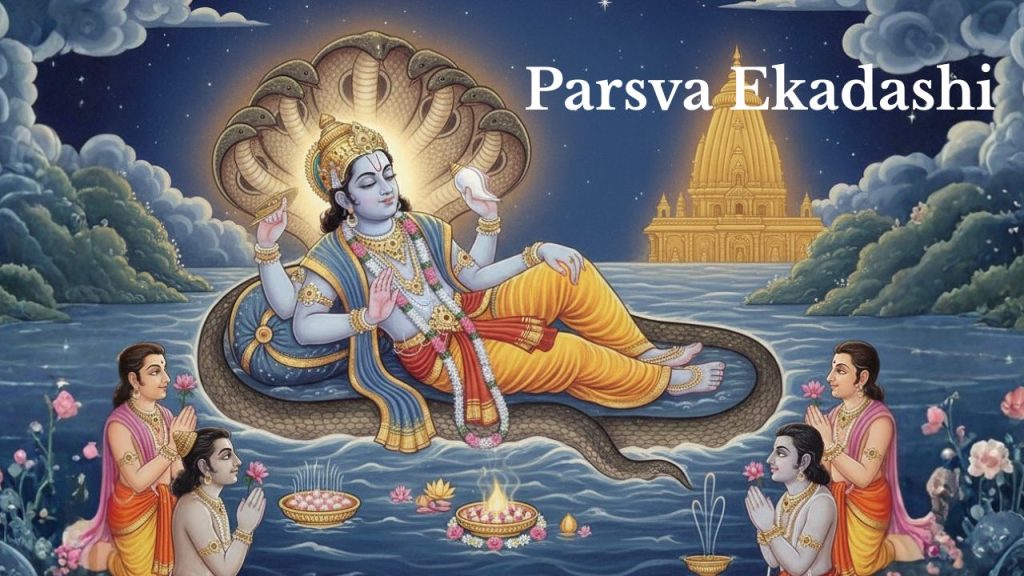
Importance of Parsva Ekadashi
Parsva Ekadashi is a sacred day observed during the Shukla Paksha (bright fortnight) of the Bhadrapada month in the Hindu lunar calendar. The word “Parsva” means “to turn” or “to shift,” signifying a celestial moment when Lord Vishnu changes his resting posture during Yoga Nidra (divine slumber). This symbolic turn is more than a mythological gesture; it marks a profound spiritual transformation in the sacred timeline of Chaturmasya, the four-month period when Lord Vishnu is believed to be in a state of deep meditation.
Chaturmasya is a phase observed by countless devotees who seek inner purity, control over their desires, and a deeper connection with the divine. It begins with Devshayani Ekadashi (Sayana Ekadashi) in Ashadha and ends with Prabodhini Ekadashi (Uttana Ekadashi) in Kartik. Parsva Ekadashi falls precisely in the middle of this holy period, making it incredibly significant for those observing spiritual vows and austerities.
Interestingly, Parsva Ekadashi is also celebrated as Vamana Ekadashi in many parts of India. This is because of its close association with Lord Vishnu’s fifth avatar, Vamana, the divine dwarf. In some regions, the same Ekadashi is affectionately referred to as Jayanti Ekadashi, particularly when it coincides with Vamana Jayanti.
Beyond the names and rituals, this day carries a profound symbolic message; it’s a cosmic turning point. Just as Vishnu shifts his side, it encourages everyone to shift internally, to change for the better, to let go of past baggage, and to adopt a more conscious way of living.
Mythological Significance
Parsva Ekadashi is steeped in rich mythological symbolism. According to ancient texts and oral traditions, this day marks the moment during Lord Vishnu’s Yoga Nidra when he turns onto his other side. Although this act may appear subtle on the surface, it represents a profound shift in divine energy. It’s a celestial cue for the universe to begin preparing for Vishnu’s awakening and the transition toward renewal and order.
This Ekadashi is closely associated with the Vamana Avatar, the fifth incarnation of Lord Vishnu, who took the form of a humble dwarf Brahmin to restore dharma. The famous legend of Vamana and King Bali unfolds around this period, adding mythic depth to Parsva Ekadashi.
King Bali, a mighty Asura (demon king), had conquered all three realms, causing alarm among the gods (Devas). To bring balance back to the cosmos, Vishnu incarnated as Vamana and approached Bali during a grand yajna (sacrificial ritual). He asked for three paces of land, and when Bali agreed, Vamana expanded into a gigantic form and measured the earth and the heavens in two strides. For the third, Bali humbly offered his head, symbolizing ego-surrender and complete devotion.
Parsva Ekadashi reflects this mythic turning point in cosmic history, a shift from adharma (unrighteousness) to dharma, from ego to surrender, from darkness to divine light. The inner message is clear: fundamental transformation begins with humility, awareness, and willingness to serve something greater than oneself. This day is not just about fasting or rituals; it’s a celebration of cosmic balance and the ever-present opportunity for spiritual rebirth.
Importance in the Chaturmasya Vrat Cycle
Parsva Ekadashi holds a unique and revered place within the Chaturmasya vrat (four-month penance) cycle. It is the second major Ekadashi, following Sayana Ekadashi and preceding Uttana Ekadashi. For many spiritual seekers and householders alike, this marks a checkpoint, a moment of introspection, a reaffirmation of vows, and a spiritual recalibration.
Chaturmasya is traditionally a time when Lord Vishnu is believed to be in a deep state of cosmic slumber, and devotees are encouraged to observe vratas (austerities), such as abstaining from certain foods, habits, or comforts. It’s a time for stillness, devotion, and inner cleansing. Parsva Ekadashi serves as a spiritual milestone, reminding everyone that while the divine rests, it’s their opportunity to remain alert, aware, and aligned.
One of the most beautiful aspects of observing Parsva Ekadashi is its call for inner transformation. Just as Lord Vishnu shifts sides, devotees are encouraged to shift their perspective, to release attachments, egoistic thoughts, and distractions. It’s a time to intensify practices like:
- Fasting and dietary restraint
- Chanting Vishnu Sahasranama
- Silent introspection or journaling
- Engaging in acts of kindness and charity
This Ekadashi also signals a spiritual transition, a metaphorical bridge between the inward restfulness of the first half of Chaturmasya and the active rejuvenation that follows. It’s the moment when spiritual efforts begin to blossom, much like the seasonal transition from monsoon to autumn, reflecting change both within and around us. Observing Parsva Ekadashi with sincerity not only brings divine blessings but also fosters discipline, clarity, and peace of mind —qualities that are often challenging to cultivate in the modern, fast-paced world.
Religious Rituals and Observances
The observance of Parsva Ekadashi is deeply rooted in traditional Vedic practices and time-honored rituals that create a sanctified space for divine communion. Across India and in Hindu communities worldwide, this sacred day is marked by intense devotion, fasting, chanting, and collective prayer.
One of the most critical aspects of this Ekadashi is the vrat (fast). Many devotees observe a Nirjala fast, which means abstaining from both food and water throughout the day and night. Others opt for a Phalahar fast, consuming only fruits, milk, and water. The intent is not deprivation, but to purify the body and quiet the mind, making it easier to focus on the divine.
As the day unfolds, families and temples alike prepare for special puja (worship). Altars are decorated with tulsi leaves, incense, and lamps. Offerings typically include seasonal fruits, milk-based sweets, and dry fruits. The sacred Tulsi leaf, considered dear to Lord Vishnu, is an essential part of the ritual. Some even offer 108 Tulsi leaves during the puja, seeking immense spiritual merit.
The night of Parsva Ekadashi is especially vibrant. Devotees stay awake in vigil, participating in bhajans (devotional songs), kirtans, and reading scriptures like the Vishnu Purana, Bhagavad Gita, or Vishnu Sahasranama. The ambiance is deeply spiritual, filled with singing, storytelling, and a sense of surrender.
Temples host special aartis and abhishekams, where Lord Vishnu’s idol is bathed with milk, curd, honey, and ghee. The sounds of conches, bells, and sacred chants resonate through the halls, evoking a divine presence. These rituals are not just outer acts; they’re inner offerings of faith, gratitude, and the desire for transformation. They help build a rhythm of mindfulness and presence, reconnecting individuals with the sacred amid everyday life.
Regional and Cultural Variations
Though Parsva Ekadashi is a pan-Indian festival, its celebrations and interpretations vary widely across regions, adding color, depth, and cultural richness to the observance.
Celebrated as Vamana Jayanti in South India
In states like Tamil Nadu, Andhra Pradesh, and Karnataka, Parsva Ekadashi is joyously celebrated as Vamana Jayanti, commemorating the birth of Vishnu’s fifth avatar, Vamana. Temples organize special processions, dramatizations of the Vamana-Bali narrative, and elaborate rituals involving the symbolic gifting of land and ego-surrender.
Children often dress up as Vamana, and elders narrate the epic tale of how Vamana humbled the mighty King Bali. This storytelling becomes a means of preserving tradition and passing on timeless values, such as humility, devotion, and righteousness, to the younger generation.
Maharashtra and Gujarat: Rituals and Storytelling
In the western states of Maharashtra and Gujarat, the day is marked by vibrant Tulsi-Vishnu rituals, group chanting, and storytelling sessions known as katha. Communities gather in temples or homes, where spiritual leaders narrate tales from the Bhagavata Purana. Community feasts with simple, satvik food follow fasting. Many households also begin preparations for Tulsi Vivah, which will be observed a month later. Tulsi plants are specially worshipped, and gardens are adorned with oil lamps, fresh flowers, and rangoli designs.
Fairs and Bhajan Sandhyas in North India
In Uttar Pradesh, Bihar, and parts of Madhya Pradesh, Parsva Ekadashi is observed with devotional fairs, evening bhajan sandhyas, and collective fasting. Temples host community prayer sessions and offer prasadam made with milk, jaggery, and coconut.
Pilgrims also visit sacred Vishnu shrines, especially those associated with Vamana, such as the Vamana Temple in Khajuraho or the Trivikrama Temple in Kerala. These pilgrimages reflect the spiritual journey from ego to surrender, from chaos to peace.
Global Observance in ISKCON and Hindu Diaspora
Parsva Ekadashi has found a strong following among ISKCON communities worldwide. In countries like the US, UK, Fiji, South Africa, and Mauritius, devotees gather in temples to celebrate the day with Harinaam Sankirtan, discourses, and digital events.
Modern platforms like YouTube and Zoom have become new-age temples where online satsangs and katha sessions allow global devotees to stay connected. These virtual gatherings foster community, tradition, and spiritual education, making Parsva Ekadashi a truly international celebration.
Association with Vamana Avatar and Bali
Commemorates the incarnation of Vamana to subdue King Bali
One of the most captivating stories from Hindu mythology that enriches the significance of Parsva Ekadashi is the tale of Vamana and King Bali. This Ekadashi coincides with Vamana Jayanti in many parts of India, celebrating the divine event when Lord Vishnu incarnated as the dwarf Brahmin, Vamana, to restore balance in the cosmos. King Bali, though a devout and generous ruler, had let power cloud his humility. He had gained control over the three worlds, posing a challenge to the celestial order. The Devas, powerless before his might, turned to Lord Vishnu for help.
Lord Vishnu responded in the most subtle yet powerful way, not through war or destruction but through divine humility. He took the form of a small Brahmin boy and appeared at Bali’s yajna (sacred fire ritual), where Bali was promising to give anything that a Brahmin sought. Vamana asked for three paces of land. Amused by the boy’s modest request, Bali agreed.
But in a divine twist, Vamana grew into a giant form (Trivikrama), covering the earth with one step and the heavens with another. With nowhere left to turn, Bali offered his head for the third step, symbolizing the surrender of ego, humility, and acceptance of divine will. Vishnu, pleased with Bali’s devotion, granted him a place in the netherworld and the promise of being the next Indra in the future.
This powerful episode isn’t just a tale of gods and demons; it’s a mirror reflecting the universal truth: that pride, even when born from good deeds, must eventually bow to humility. On Parsva Ekadashi, when Vishnu symbolically turns, it also represents this shift from arrogance to surrender, reminding every seeker of the eternal balance between power and devotion.
The story of the three strides by Vamana to reclaim the universe
The essence of the three strides taken by Vamana speaks volumes about spiritual transformation. These steps symbolize more than spatial conquest; they represent the three realms of existence, physical, mental, and spiritual.
- The first step, covering the Earth, signifies control over one’s physical desires and attachments.
- The second, encompassing the heavens, refers to mastering emotions, intellect, and ego.
- The third, taken on Bali’s head, marks the final surrender of self, where the soul offers itself entirely to the Divine.
Parsva Ekadashi serves as a gateway for contemplating this inner journey. The fast, prayers, and storytelling observed on this day create the spiritual atmosphere where such transformation is possible.
Represents the humbling of ego and the triumph of dharma
Vamana’s incarnation wasn’t just a clever divine intervention; it was an act of cosmic justice that restored harmony without violence. King Bali wasn’t punished for his power, but he was gently reminded of the limits of materialism and the boundlessness of divine grace.
This story remains timeless in its relevance. Ego, material gain, and dominance often cloud virtues. Parsva Ekadashi gently nudges us to pause, reflect, and realign with dharma (righteousness). The tale of Vamana and Bali serves as a moral compass, guiding us back to values like humility, self-sacrifice, and the surrender of control.
Symbol of divine grace over materialistic pride
The ultimate message of this Ekadashi is the supremacy of divine grace. No matter how mighty or righteous we may be, it’s grace, not power, that uplifts and liberates. King Bali’s tale is not of defeat, but of divine elevation. He surrendered everything, and in return, received eternal remembrance and a divine promise. On Parsva Ekadashi, devotees remember that true richness lies not in possessions, but in the willingness to give up, to trust, and to let go. It’s a spiritual checkpoint where materialism makes way for surrender, and ego dissolves into the infinite.
Spiritual Benefits and Philosophical Teachings
Aids in cleansing of sins and karmic purification
Parsva Ekadashi isn’t just a ritual; it’s a profoundly transformative experience. When observed with faith and sincerity, it becomes a powerful tool for inner purification and spiritual growth. Hindu scriptures say that the benefits of fasting and devotional worship on this day are immense; it can dissolve past karmas, cleanse mental impurities, and remove obstacles on the spiritual path.
Fasting, far from being a physical discipline alone, is symbolic of letting go of cravings, distractions, and habitual indulgences. When the body undergoes restraint, the mind becomes lighter, calmer, and more focused. Chanting Vishnu’s name, reading scriptures, and engaging in prayer amplify these benefits, offering not just external rituals but inner clarity and alignment.
Teaches humility, devotion, and surrender to divine will
The philosophy behind Parsva Ekadashi echoes through the tales of Vamana and Bali. It teaches that no matter how great or powerful one becomes, humility is the crown jewel of the soul. Devotion isn’t merely about temple visits or ceremonial fasting; it’s about trusting the Divine plan, even when life doesn’t follow our desires. This Ekadashi becomes a gentle invitation to surrender control. To recognize that everything we hold, wealth, knowledge, strength, is temporary. What’s eternal is the bond with the divine, and what’s lasting is the surrender that says, “I trust You.”
Encourages discipline, detachment, and inner reflection
The structure of Ekadashi fasting fosters self-discipline. It removes excess, simplifies routines, and encourages focus: the constant demands more and more consumption, more stimulation, more noise. Parsva Ekadashi offers less. And in that, less, we often find the more that genuinely matters. Detachment, or vairagya, is not about renouncing life but about being in the world without being bound by it. This day encourages stepping back from the whirlwind of everyday obligations to reflect on what truly nurtures the soul.
Seen as a gateway to moksha (liberation) when observed sincerely
Many devotees believe that sincere observance of Parsva Ekadashi can help attain moksha, or liberation from the cycle of birth and death. It’s seen as a spiritual gateway, a day when the soul, through fasting, prayer, and contemplation, comes closer to the divine.
Ekadashis in general are considered spiritually potent, but Parsva Ekadashi, occurring in the middle of Chaturmasya, is especially sacred. It’s a moment where even small acts of devotion have magnified results. It reminds us that the path to liberation is paved not just with rituals, but with intentional, heartfelt living.
Environmental and Health Relevance
Fasting during this time aligns with the seasonal transition (monsoon to autumn)
Parsva Ekadashi holds not only spiritual and mythological significance, but also aligns beautifully with nature’s calendar. Falling between the end of the monsoon and the onset of autumn, it marks a seasonal transition that affects both body and mind. According to Ayurveda and ancient Hindu wisdom, seasonal changes are the perfect time for cleansing, resetting, and restoring balance.
During the monsoon, the digestive fire (agni) is weaker due to humidity and fluctuating temperatures. By the time Bhadrapada arrives, there’s a gradual shift toward cooler, drier conditions. Parsva Ekadashi arrives at this precise moment, rendering fasting a timely and effective means for rejuvenation. It gives the digestive system a break, encourages detoxification, and promotes better metabolism as the body prepares for the next phase of seasonal activity.
This link between natural cycles and spiritual observances is no accident. The sages who designed the Hindu calendar understood the intricate connection between health, nature, and the cosmos. When devotees fast on Parsva Ekadashi, they not only honor a divine tradition but also synchronize their physical rhythms with those of the planets.
Promotes detoxification and digestive rest
The fasts observed on Parsva Ekadashi, especially the nirjala (waterless) or phalahar (fruit-based) varieties, play a significant role in bodily detoxification. Fruits, nuts, and milk-based diets are light, nourishing, and easy to digest. They allow the gastrointestinal tract to rest while still providing essential nutrients.
Fasting is also known to trigger cellular repair processes and improve insulin sensitivity. It’s no wonder that many ancient cultures, not just Hinduism, promote fasting as a tool for maintaining vitality and longevity. By aligning with these natural mechanisms, devotees experience greater energy, mental clarity, and emotional stability.
Encourages simplicity in lifestyle, minimalism, and satvik food
Parsva Ekadashi promotes a return to simplicity and a satvik lifestyle. Satvik food, fresh, vegetarian, and spiritually pure, calms the mind, sharpens intuition, and brings emotional balance. Avoiding processed or tamasic (heavy and lethargy-inducing) foods on this day encourages more conscious eating habits and thoughtful choices. Minimalism isn’t just about food. It extends to reducing unnecessary noise, digital distractions, and waste. Observing Parsva Ekadashi with simplicity reminds us to detach from clutter and focus on what truly matters: clarity, peace, and inner stillness.
Supports natural rhythms of body, nature, and cosmos
When rituals are aligned with cosmic movements, they tap into the larger intelligence of nature. Parsva Ekadashi aligns perfectly with this rhythm. The act of fasting, meditating, or spending time in quiet reflection becomes a subtle way to honor the Earth’s cycles. This synchronicity helps regulate circadian rhythms, lowers stress levels, and improves sleep quality. More importantly, it builds a sense of harmony within, the feeling that one’s life is part of something vast, beautiful, and interconnected.
Connection with Tulsi and Vishnu Worship
Parsva Ekadashi marks the preparation period for Tulsi Vivah (Kartik month)
Parsva Ekadashi carries within it the seeds of another sacred celebration, Tulsi Vivah, which occurs a month later in the month of Kartik. The days leading up to Tulsi Vivah are regarded as a time of spiritual preparation, and Parsva Ekadashi serves as an early call to connect more deeply with Tulsi Devi, the holy basil plant revered as an incarnation of Goddess Lakshmi.
Just as Lord Vishnu turns onto his side during this Ekadashi, spiritual energy also begins to turn toward a state of readiness for the symbolic marriage of Tulsi and Vishnu. Families begin to nurture their Tulsi plants with added care, preparing for the ceremonial rituals that will follow in the month of Kartik. This time allows for setting intentions, cleansing the household, and spiritually aligning with what lies ahead.
Tulsi leaves are considered most sacred during this period
During Chaturmasya, and especially on Parsva Ekadashi, Tulsi leaves are said to hold amplified spiritual power. Offering them to Vishnu is seen as highly auspicious. Devotees believe that each leaf offered with love removes karmic blocks and brings spiritual merit.
Tulsi is also revered for its medicinal and purifying qualities. Known in Ayurveda for boosting immunity, purifying the air, and calming the nervous system, Tulsi bridges the gap between the spiritual and the physical. This dual symbolism makes its worship during this time even more meaningful.
Offering 108 Tulsi leaves to Vishnu is said to yield immense punya
On Parsva Ekadashi, one of the most beloved rituals is the offering of 108 Tulsi leaves to Lord Vishnu, accompanied by the recitation of his names. Each leaf becomes a symbol of devotion, each name a call to divine consciousness. This act of offering is more than symbolic; it’s a ritual of surrender. It requires patience, mindfulness, and a sense of presence. And in return, it blesses the devotee with peace, spiritual grace, and deep contentment.
Encourages planting and nurturing Tulsi as a sacred practice
Beyond temple rituals, Parsva Ekadashi inspires a more hands-on approach to devotion by encouraging the planting and care of Tulsi at home. It transforms worship into daily living. Caring for Tulsi becomes a form of meditation, a way to connect with nature and divinity through tenderness and consistency.
This ecological dimension of Parsva Ekadashi makes it particularly relevant. In the face of environmental crises, the simple act of planting and nurturing a Tulsi plant reconnects us to the essence of sacred ecology, where devotion, health, and sustainability coexist in harmony.
Contemporary Relevance and Global Observance
Gains popularity through online satsangs and digital katha sessions
Parsva Ekadashi has transcended geographical boundaries. With platforms like YouTube, Zoom, and social media, spiritual teachers and organizations now live-stream kirtans, discourses, and rituals, allowing devotees worldwide to participate. These online satsangs allow families to tune in from their living rooms, transforming their homes into mini temples. Children learn stories of Vamana and Bali, elders share experiences, and spiritual seekers find guidance, all from a shared digital space. This blending of tradition with technology helps ensure that Parsva Ekadashi remains vibrant and accessible in the modern age.
Celebrated in the Hindu diaspora across the US, UK, Mauritius, and Fiji
From North America to the Pacific Islands, Parsva Ekadashi is celebrated with equal fervor in diaspora communities. ISKCON temples, Bal Vihar, and local mandirs host public events, distribute prasad, and organize katha programs. These events foster a sense of identity, continuity, and cultural pride among younger generations growing up far from their ancestral roots.
Devotees abroad also incorporate local customs, foods, and music into the observance, creating a rich fusion of heritage and home. The global nature of Parsva Ekadashi celebrations underscores the timeless relevance of its message: that wherever one is, the divine is always close.
Encourages intergenerational bonding through shared rituals
One of the most heartwarming aspects of Parsva Ekadashi is its ability to bring families together. Whether it’s making tulsi offerings, attending satsangs, or preparing simple prasad meals, every ritual becomes a shared experience. Children learn values of patience, simplicity, and devotion by participating. Parents pass on stories and wisdom. Grandparents guide the family with chants and traditions. In this way, the Ekadashi becomes more than a ritual; it becomes a bridge across generations, nurturing bonds and preserving culture.
Reinforces sustainable values, inner peace, and mental clarity in modern life
The most potent reason to observe Parsva Ekadashi today is its practical impact. In an age of overstimulation, stress, and material overload, this sacred day invites everyone to return to simplicity, awareness, and inner peace. Fasting disciplines the body, rituals calm the mind, and devotion nurtures the soul. The environmental teachings of Tulsi worship promote sustainability. The philosophical lessons of humility and surrender help navigate life’s uncertainties with grace.