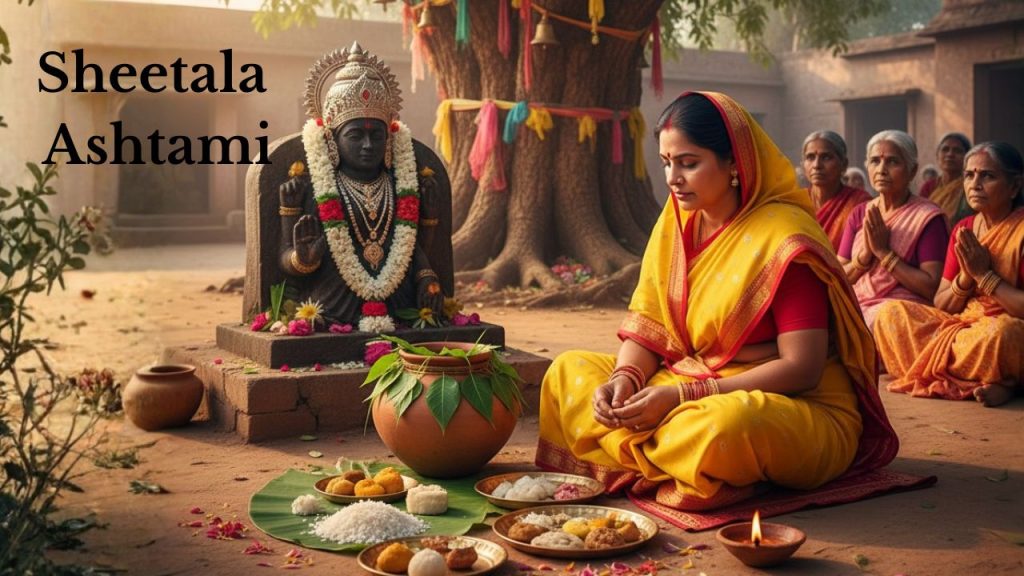
Sheetala Ashtami
Definition and Literal Meaning of Sheetala Ashtami
Sheetala Ashtami is a revered Hindu festival dedicated to Goddess Sheetala. It is observed on the eighth day (Ashtami) of the Krishna Paksha (the waning phase of the moon) in the month of Chaitra. ‘Sheetala’ derives from the Sanskrit word ‘śītalā,’ meaning ‘cool’ or ‘cold.’ This symbolizes the goddess’s association with healing and the prevention of diseases. This festival holds significant cultural and spiritual importance, especially in North Indian states like Rajasthan, Uttar Pradesh, and Haryana.
When is it Observed – Timing in Krishna Paksha of Chaitra
Sheetala Ashtami is celebrated on the Ashtami tithi (eighth day) of the Krishna Paksha in the Chaitra month, typically in March or April. This timing is crucial as it marks the transition from spring to summer when the risk of heat-related diseases increases. Observing the festival during this time is believed to invoke the goddess’s blessings for protection against ailments.
Cultural and Spiritual Significance in Hindu Tradition
The festival underscores the deep-rooted belief in divine intervention for health and well-being. Devotees, particularly women, observe fasts and perform rituals to seek the goddess’s protection for their families. Consuming stale food prepared a day prior symbolizes humility and the acceptance of simplicity, reflecting the spiritual ethos of the tradition.
Communities and Regions Where It’s Widely Celebrated
Sheetala Ashtami is predominantly celebrated in North India, with significant observances in Rajasthan, Uttar Pradesh, Haryana, and parts of Gujarat. Community gatherings, fairs, and special rituals are organized in these regions, highlighting the festival’s communal aspect and role in fostering social cohesion.
Connection to Goddess Worship and Seasonal Transition
The festival is intrinsically linked to the worship of Goddess Sheetala, who embodies the cooling and healing aspects of the divine feminine. Celebrating Sheetala Ashtami during the seasonal shift from spring to summer emphasizes the goddess’s role in safeguarding communities against seasonal diseases, reinforcing the harmony between spiritual practices and natural cycles.
Who is Goddess Sheetala?
Iconography and Depiction of Goddess Sheetala
Goddess Sheetala is often depicted as a serene figure riding a donkey, holding a broom, a winnowing fan, a pot of cooling water, and sometimes neem leaves. These symbols represent her role in cleansing, cooling, and healing. The broom signifies the sweeping away of diseases, the fan denotes the dispelling of heat, and the water pot symbolizes the soothing of fevers.
Mythological Origins and Legends (Skanda Purana References)
According to the Skanda Purana, Sheetala Devi emerged from the divine energies of deities to combat the demon Jvarasura, who personified fever. She cured the afflicted and restored health, earning her the status of a goddess who protects against diseases. Her legends emphasize her compassionate nature and her commitment to alleviating human suffering.
Symbolism: Cooling Force Against Heat, Disease, and Impurity
Sheetala Devi embodies the cooling force that counteracts the heat of diseases and impurities. Her worship is believed to purify the environment, prevent outbreaks, and maintain health. The rituals associated with her emphasize cleanliness, the use of cooling substances, and the importance of hygiene.
Association with Health and Healing – Especially Smallpox
Historically, Sheetala Devi was venerated as the goddess who could prevent or cure smallpox, a devastating disease, before the advent of vaccines. Communities believed that her favor could protect them from such afflictions, and her worship was integral to public health practices in traditional societies.
Relation to Divine Feminine Energy and Motherly Protection
Sheetala Devi represents the nurturing and protective aspects of the divine feminine. She is revered as a mother who cares for her devotees, especially children. Her maternal attributes are central to her worship, with rituals often focusing on the offspring’s well-being and the family unit.
Historical and Scriptural References
Mentions in Scriptures Like Skanda Purana and Padma Purana
Goddess Sheetala’s significance is documented in ancient Hindu scriptures such as the Skanda Purana and the Padma Purana. These texts narrate her origins, her battles against disease demons, and her role in protecting humanity from ailments. They provide theological foundations for her worship and the rituals associated with Sheetala Ashtami.
Significance of Sheetala Worship in Ancient India
In ancient India, where medical knowledge was limited, divine intervention was sought for health issues. Worshipping Sheetala Devi was a means to seek protection from epidemics. Her temples served as centers for communal gatherings, where people prayed for relief from diseases, highlighting the intertwining of spirituality and health in historical contexts.
References to Epidemics and How Rituals Evolved
Historical records indicate that during epidemics, especially smallpox outbreaks, communities intensified their worship of Sheetala Devi. Rituals evolved to include specific offerings, chants, and practices to appease the goddess and seek her mercy. These adaptations demonstrate the dynamic nature of religious practices in response to societal needs.
Community Practices in Medieval Times
During medieval times, Sheetala Devi’s worship became more structured by establishing dedicated temples and formalizing rituals. Festivals like Sheetala Ashtami became significant community events, fostering social bonds and collective participation in seeking divine protection against diseases.
Importance in Ayurveda and Traditional Health Systems
Ayurveda, the traditional Indian system of medicine, emphasizes the balance of bodily elements and the prevention of diseases. The worship of Sheetala Devi complements Ayurvedic principles by promoting cleanliness, dietary regulations, and seasonal adjustments, thereby integrating spiritual practices with holistic health approaches.
Timing and Calendar Placement
Date in Lunar Calendar – Chaitra Krishna Ashtami
Sheetala Ashtami is observed on the Ashtami tithi (eighth day) of the Krishna Paksha in the Chaitra month of the Hindu lunar calendar. This period typically falls in March or April, aligning with the onset of summer, when the risk of heat-induced illnesses increases.
Difference from Basoda Sheetala Ashtami (Phalguna vs Chaitra)
While Sheetala Ashtami is celebrated in Chaitra, Basoda or Basora is observed in the month of Phalguna, which precedes Chaitra. Both festivals honor Goddess Sheetala, but regional practices and timings may vary. Basoda is particularly noted for the tradition of consuming stale food, symbolizing the goddess’s preference for simplicity and the avoidance of fresh cooking during the observance.
How Tithi is Calculated and Local Variations
The tithi, or lunar day, is calculated based on the moon’s position relative to the sun. Variations in local calendars and astronomical calculations can lead to differences in the observed date of Sheetala Ashtami across regions. Devotees often consult local panchangs (Hindu almanacs) to determine the accurate date for observance.
Role of Panchang in Determining Observance
The panchang is crucial in determining the auspicious timing for festivals like Sheetala Ashtami. It provides detailed information on tithis, planetary positions, and other astrological factors, guiding devotees in performing rituals at the most favorable times to receive the goddess’s blessings.
Auspicious Time (Muhurat) for Puja and Fasting
Performing puja and observing fasts during the auspicious muhurat enhances the spiritual efficacy of the rituals. For Sheetala Ashtami, the early morning hours are considered ideal for worship. Devotees prepare offerings and conduct ceremonies during this time to align with traditional beliefs and maximize the benefits of their devotion.
Rituals and Observances
Traditional Puja Steps and Offerings to the Goddess
The puja for Sheetala Devi involves cleaning the worship area, placing the goddess’s idol or image, and offering items like cold food, curd, and neem leaves. Devotees light lamps, recite hymns and seek the goddess’s blessings for health and protection. The rituals emphasize purity, devotion, and the symbolic cooling of the body and environment.
Unique Practice of Eating Stale or Cold Food (Basoda)
A distinctive aspect of Sheetala Ashtami is the consumption of stale or cold food prepared a day prior. This practice, known as Basoda, symbolizes avoiding fire and cooking, aligning with the goddess’s preference for simplicity. It also reflects ancient health practices, where cold food was believed to prevent heat-related illnesses.
Avoidance of Lighting Fire or Cooking
On Sheetala Ashtami, devotees refrain from lighting fires or cooking food. This tradition underscores the importance of rest and the symbolic cooling of the household. It also serves as a reminder of the goddess’s association with healing and the prevention of diseases, encouraging practices that promote health and well-being.
Use of Neem Leaves, Curd, and Cow Dung in Rituals
Neem leaves are integral to the rituals, symbolizing purification and protection against diseases. Curd represents cooling and nourishment, while cow dung is traditionally used for its antiseptic properties. These elements reflect the intertwining of spiritual beliefs with practical health considerations in the observance of Sheetala Ashtami.
Recitation of Sheetala Ashtami Vrat Katha (Fasting Story)
Devotees recite the Sheetala Ashtami Vrat Katha, a narrative highlighting the goddess’s significance and the benefits of observing the fast. The story reinforces the values of devotion, discipline, and the importance of adhering to traditional practices for the well-being of oneself and the community.
Significance of Cold or Stale Food
Mythological and Health-Based Reasons for This Practice
Have you ever wondered why families avoid cooking on Sheetala Ashtami and instead eat food prepared a day prior? It’s not just a quirky tradition—it’s rooted in powerful mythological and health-based logic. According to Hindu scriptures and local legends, Goddess Sheetala prefers food untouched by fire on her day. This belief originates from the idea that heat disturbs her cooling nature and offends her protective energy. So instead of igniting stoves, devotees offer stale or “basoda” food—cooked the day before—to honor her.
Interestingly, this practice is also connected to health. Eating food cooked beforehand and stored safely was a way to give the digestive system a break, especially during seasonal shifts. In ancient times, especially before refrigeration, only those who followed hygiene and food safety could successfully prepare food that lasted without spoiling. This careful attention to cleanliness, like proper storage in earthen pots, also served as an indirect health ritual. So, it’s more than just a tradition—it’s a beautiful blend of mythology and practical wisdom passed down through generations.
Belief in Preservation of Purity by Not Cooking on This Day
On Sheetala Ashtami, cooking is impure not just because of fire but because of the chaos it symbolizes—heat, agitation, and transformation. The entire day is devoted to serenity, healing, and honoring the motherly calm of the goddess. Cooking involves stirring, heating, frying, and changing the raw into cooked, which metaphorically disrupts the stillness the goddess represents.
Instead, homes are kept cool and clean. Fire is viewed as a disturbance to the goddess’s energy. By not cooking, you preserve the space’s sanctity and your body. Even utensils used for serving food on this day are often washed a day in advance and left untouched after preparation. It’s a conscious effort to create a space of balance and minimalism. This discipline also teaches us the power of mindful living. It’s a symbolic way to surrender to nature, slow down, and honor the stillness of the body and surroundings.
Symbolism of Cooling the Body and Avoiding Heat
In most parts of India, Sheetala Ashtami falls just as the weather shifts from spring’s pleasant cool to summer’s early heat. Our ancestors deeply understood how the human body responds to these changes. Heat brings fatigue, lowers immunity, and can disturb digestion. That’s why Sheetala Ashtami rituals emphasize cooling, both physically and spiritually.
Eating cold food, staying indoors, applying neem paste, and using clay pots for water storage are all symbolic acts of cooling the body. The emphasis is on soothing internal systems. This helps our bodies adapt slowly to the summer months. This logic shows how ancient traditions often carried deep scientific reasoning hidden within seemingly simple customs.
Even the goddess’s name—Sheetala—comes from “Sheetal,” which means cool. She isn’t just a deity; she represents the calming, protective, and restorative energies we all need as the seasons change.
Folk Wisdom Regarding Digestion and Immunity
The idea of resting your stomach for a day, by consuming cold, non-oily, and previously cooked food, isn’t far from modern fasting or detoxing trends. Folk wisdom saw this day as an opportunity for gut rest. When you eat cold but safely stored food, your digestive system gets a break from processing heavy, fresh-cooked meals. It’s like hitting pause so your immunity can recalibrate.
The risk of infections and gut-related issues spikes, especially during seasonal transitions. Sheetala Ashtami encouraged simplicity and restraint at the right time of year. The foods consumed—often made from rice, curd, lentils, and vegetables—were light on the system yet rich in nutrients. It was less about indulgence and more about balance.
Isn’t it amazing how traditional practices were preventive health measures? Long before modern nutrition science, people practiced gut-health rituals with divine reverence.
Cold Food as an Offering to Goddess Sheetala
Devotees believe that Goddess Sheetala herself favors cold, untouched food. So, the stale offerings aren’t just eaten—they’re blessed. Families prepare special dishes like puri, sabzi, rice, and sweets a day in advance. These are kept in clean, covered utensils and offered during morning puja on Ashtami.
Once the goddess is offered her share, placed under a neem tree or near her idol, the rest is shared as prasad among family and neighbors. The food becomes sacred, healing not just hunger but the soul. This offering reflects simplicity, gratitude, and respect for divine nourishment.
Health and Hygiene Symbolism
Protection from Smallpox, Measles, Chickenpox, etc.
Goddess Sheetala isn’t just a spiritual figure—she was ancient India’s guardian against epidemics. For centuries, villagers believed Sheetala Devi had the divine power to prevent and cure smallpox, measles, and chickenpox. Her name was invoked every time these contagious illnesses threatened families and children.
When modern medicine had yet to reach every corner of India, invoking her blessings was a form of immunization through faith. Her image is often shown holding a broom (to sweep away disease), a pot of cold water, and riding a donkey—all symbols tied to sanitation and cleansing. Therefore, Sheetala Ashtami became a public health ritual in disguise. It taught communities to clean homes, observe food hygiene, and follow seasonal precautions.
Worship as a Preventive Measure in Pre-modern India
Imagine a time before vaccines and antibiotics. In those days, worship wasn’t just religious—it was survival. Communities would gather to clean their surroundings, burn neem leaves for purification, and pray for protection. Sheetala Ashtami wasn’t just about faith; it was a proactive health measure.
Many villages treated the goddess like a public doctor, offering her food, bathing her idol in cool water, and asking her to keep children safe from outbreaks. While science now explains diseases in microbial terms, the intention behind the rituals remains valid: protect, prevent, and purify.
This preventive approach helped villages maintain basic public hygiene and set a rhythm of seasonal awareness that aligns with today’s wellness trends.
Relevance of Hygiene, Water Cleanliness, and Sanitation
Sheetala’s symbols—a pot of cool water, a broom, and a neem—tell you everything about hygiene. Clean water, disinfectant plants, and cleanliness are pillars of her worship. That’s why people clean their homes thoroughly before the festival. Even the space where cold food is kept is treated with reverence and care.
Washing hands before meals, using separate utensils, and avoiding outside food weren’t random customs. They were health protocols wrapped in faith. Sheetala Ashtami essentially served as a reset button, reminding families to clean their kitchens, water storage, and surroundings.
Doesn’t it sound like the public health campaigns we see today? Our ancestors did it with devotion and neem instead of sanitizers.
Role in Promoting Awareness About Seasonal Illnesses
As the climate changes from spring to summer, illnesses like heat stroke, viral fevers, and stomach bugs become common. Sheetala Ashtami arrives at the perfect time, reminding us to slow down, clean up, and switch to a seasonal diet.
This festival taught entire communities to recognize seasonal health patterns. Mothers and grandmothers became the primary health educators, passing down knowledge through songs, stories, and rituals. These practices helped children internalize health habits early.
This festival made seasonal awareness a collective responsibility—one we need now more than ever in our fast-paced, climate-stressed lives.
Psychological Comfort During Transitions from Winter to Summer
Transitions are challenging—not just for the body but also for the mind. Like how we feel sluggish or irritable during weather changes, our ancestors experienced the same. Sheetala Ashtami brought a psychological cushion during this vulnerable time. The rituals, the stories, and the shared meals created a sense of security and hope.
Worshipping a motherly goddess who promised healing and protection gave emotional comfort to families, especially mothers caring for sick children. Sheetala wasn’t just a healer of bodies but a healer of hearts.
Even today, when life gets overwhelming, a simple tradition like eating basoda food in memory of Sheetala Devi can connect us to our roots and remind us that healing isn’t always in medicine—it’s also in mindful tradition.
Regional Practices Across India
Celebrations in North Indian States (Rajasthan, UP, MP)
If you’ve ever spent time in northern India during the spring, especially in Rajasthan, Uttar Pradesh, or Madhya Pradesh, you might have noticed a certain quiet reverence around Sheetala Ashtami. Markets buzz the day before, with women buying extra groceries, sweets, and clay pots. But on the actual day? There’s peace. No stoves are lit. No firewood burns. The aroma of cold dishes fills the air as families prepare for basoda meals.
In Rajasthan, especially in regions like Marwar and Mewar, the Sheetala Mata temples are beautifully decorated. Devotees line up early in the morning with offerings of stale food, water, and neem leaves. It’s a profoundly emotional event—grandmothers lead rituals, mothers recite prayers, and children observe silently, absorbing the cultural inheritance.
Uttar Pradesh and Madhya Pradesh also see similar patterns. Sheetala Mata fairs are organized, where communities gather, and women sing bhajans (devotional songs) praising the goddess. Homes are cleaned the day before, food is cooked by sundown, and people wake before sunrise to offer meals to the goddess under a neem tree.
Variations in Bengal, Odisha, and Gujarat
Move east to Bengal and Odisha, and you’ll see Sheetala Ashtami celebrated with regional uniqueness. In Bengal, she’s known more as “Sheetala Thakurani. ” Her worship is deeply rooted in rural customs. While the essence remains—offering superb food and prayers for health—the rituals include bathing idols with water infused with neem, turmeric, and sometimes even milk. Women offer rice, lentils, and cold vegetable preparations, often placing them near rivers or village altars.
Odisha follows a blend of tribal and Hindu traditions. Sheetala Devi is sometimes equated with local goddesses representing health and healing. Rituals involve community worship, especially among farming families, where water scarcity and disease outbreaks were once seasonal threats.
In Gujarat, Sheetala Satam is more commonly observed, usually just before Janmashtami in Shravan (July–August), which differs from the Ashtami of North India. Yet the heart of the ritual is the same: cold food, worship of Sheetala Mata, and the practice of not cooking.
Differences in Rituals Among Rural and Urban Populations
As India urbanizes, many rituals transform—but the soul remains. In rural areas, Sheetala Ashtami retains its original glory. Women lead the rituals, neem trees are decorated, and community kitchens offer basoda meals. The village participates, reinforcing bonds and shared responsibility for health and tradition.
Urban households, however, have adapted the ritual. Instead of open-air worship under neem trees, idols are placed on home altars. Food is refrigerated rather than stored in clay pots. Some even modify the cold meal idea by slightly reheating food or preparing salads and curd-based dishes instead of traditional fare. The purpose is still honored despite these differences—pause, purify, and protect. Families continue to teach children Sheetala Devi’s story, whether rural or urban, ensuring her message endures.
Folk Songs, Fairs, and Local Festivities
Sheetala Ashtami isn’t just about prayers—it’s a celebration of culture. Across India, folk songs dedicated to the goddess are passed down through oral traditions. These songs aren’t just devotional—they narrate tales of her power, stories of protection during disease outbreaks, and her blessings on villages and children.
In Rajasthan and parts of UP, fairs (melas) are held near Sheetala temples. Local artisans, food stalls, spiritual healers, and folk performers come together for a festival of the people, where religion meets art, health meets community, and devotion meets joy.
Inclusion of Community Meals and Women’s Participation
One of the most heartwarming aspects of Sheetala Ashtami is the role women play. From cooking the meals a day early to leading the puja, storytelling, and singing, it’s a festival of feminine strength and care. Many community meals are organized, especially for children and older people.
Women gather in groups in temple courtyards or near neem trees to perform aarti and share basoda food. There’s a powerful sense of unity here, in ritual and shared responsibility for family and community health. The goddess may be divine, but her spirit lives in the hands of every woman who nurtures, protects, and heals.
Spiritual and Cultural Lessons
Emphasis on Simplicity and Gratitude
Sometimes, we forget that the most profound spiritual practices aren’t about grand temples or elaborate ceremonies—they’re about simplicity. Sheetala Ashtami teaches us to step back from our fast-paced lives, slow down, and be grateful. There is no cooking, no rushing, just offering what’s already been made. That’s the essence.
You don’t need riches to worship the goddess. A bowl of cold rice, a spoonful of lentils, a heart full of faith—that’s enough. This simplicity reflects a more profound truth: divinity doesn’t demand extravagance. It seeks sincerity. Even the food we eat becomes a meditation in gratitude. We remember the farmers, the cooks, the elements, and the divine source that nourishes us all.
Role of Feminine Energy in Healing and Nurturing
Sheetala Devi is more than a deity—she embodies feminine power. Her calm demeanor, healing aura, and motherly gaze reflect the strength of every woman who protects her family. Worshipping her celebrates feminine energy as the anchor of emotional, physical, and communal well-being.
In homes across India, mothers and grandmothers preserve this tradition. They pass on stories, teach rituals, and protect the sacred space. Like the goddess, they are healers without robes, doctors without degrees, and teachers without chalkboards. By observing Sheetala Ashtami, we honor not just a goddess but every woman who carries the spirit of nurturing.
Interplay of Ritual, Nature, and Health in Daily Life
Sheetala Ashtami sits at a beautiful intersection—where spirituality meets ecology, and ritual meets health science. Every action, from eating cold food to cleaning with neem leaves, bridges the physical and the spiritual.
It shows us that our ancestors didn’t separate life into rigid boxes. To them, health was spiritual, nature was sacred, and food was divine. That’s the lesson: when we respect nature and follow mindful rituals, well-being follows naturally. It’s a reminder to weave mindfulness into daily life—not as a chore, but as a way of honoring both body and spirit.
Reverence for Food and Its Divine Aspect
We live in an era of fast food, food waste, and rushed meals. But Sheetala Ashtami brings us back to the core: food is sacred. Cooking it, offering it, eating it—all are divine acts.
When made with intention, stored with care, and offered with devotion, stale food becomes more than leftovers. It becomes prasad—blessed, pure, and healing. This reverence for food transforms a meal into a spiritual experience.
What if we approached every meal this way? With gratitude, attention, and awareness?
Importance of Belief in Collective Healing and Protection
At its heart, Sheetala Ashtami isn’t a solo ritual—it’s collective. It’s a village praying, women singing, and families eating together. That collective energy is powerful. It creates a field of emotional and spiritual healing that transcends logic.
Even today, when we face collective challenges—a pandemic or a climate crisis—this lesson rings true: healing isn’t a lone journey. We’re stronger, safer, and more peaceful when we believe and act together.
Relevance of Sheetala Ashtami in Modern Times
Scientific Interpretation of Age-Old Practices
We can understand the logic behind our ancient practices with access to science and data. Sheetala Ashtami’s emphasis on cleanliness, cool food, and neem isn’t superstition—it’s sound public health. Neem has antibacterial properties. Cooling the body reduces inflammation. Clean water and early food preparation limit bacterial contamination.
Even avoiding fire (and thus smoke) on this day benefits respiratory health, especially during seasonal allergy peaks. What our ancestors practiced instinctively, we now validate scientifically. That’s Sheetala Ashtami’s beauty—it seamlessly bridges ancient wisdom and modern understanding.
How Sheetala Worship Aligns with Modern Health Awareness
With the world becoming more conscious of immunity, hygiene, and mental wellness, Sheetala Ashtami offers a timeless template. It advocates for detox (cold, light food), mindfulness (rituals and rest), preventive health (use of neem and hygiene), and mental peace (collective prayer and bonding). It’s almost like a natural wellness retreat—woven into the culture. There is no expensive therapy, just a day of slowing down, eating wisely, and connecting with nature and family.
Reviving Traditional Wisdom Post-COVID Era
The COVID-19 pandemic reminded us of the power of immunity, clean environments, and mental well-being. As the world reawakens to holistic living, festivals like Sheetala Ashtami hold immense value. It’s time we returned to our roots—not to live in the past but to find balance in the present. Whether in a city apartment or a rural home, honoring such traditions can ground you, protect you, and bring immense peace. Reviving Sheetala worship means reviving community bonds, environmental care, and ancient health intelligence.
Environmental Sustainability in Rituals
Unlike festivals that involve firecrackers, plastic decorations, or food waste, Sheetala Ashtami is inherently sustainable. There is no fire, no pollution, and only simple food, neem leaves, and clay pots. It’s a low-carbon ritual with high spiritual value. By embracing such eco-friendly practices, we also send a message to the younger generation—that celebrations don’t need extravagance, only heart.
Teaching Younger Generations About Ritualistic Mindfulness
Let’s be honest—many young people find religious rituals outdated or irrelevant. But what if we reframed Sheetala Ashtami as a day of mindful living? This day could serve as a break from screens, a detox for the gut, a tribute to mothers, and a time to reconnect with nature.
We can make children part of this beautiful legacy by involving them in simple tasks—cleaning the kitchen, helping prepare food a day early, or decorating a neem branch. In doing so, we gift them a tradition and a timeless tool for health, balance, and gratitude.