Importance of Sharda Puja in Kartika
Sharda Puja is one of the most meaningful observances of the Kartika month, celebrated with deep devotion and cultural richness. The word Sharda is another name for Goddess Saraswati, revered as the eternal embodiment of wisdom, intellect, knowledge, and learning. This puja highlights the belief that knowledge is divine and must be respected as much as wealth or prosperity. In many ways, Sharda Puja bridges the material and the spiritual by reminding people that intellectual growth is equally essential for a fulfilling life.
The Kartika month, often regarded as one of the holiest months in the Hindu lunar calendar, is a time when multiple rituals and festivities align. Within this sacred span, Sharda Puja holds a special place because it emphasizes learning, books, scriptures, and intellectual pursuits. Unlike festivals that focus purely on material blessings, this puja elevates the role of education and knowledge in everyday life.
Its connection with Diwali celebrations makes it even more significant. While Diwali is often associated with light, prosperity, and new beginnings, Sharda Puja adds another dimension—the celebration of intellectual illumination. In states like Gujarat, this ritual also coincides with Govardhan Puja or marks the start of the New Year, adding to its cultural depth. Traders, students, professionals, and families alike engage in this observance to seek divine blessings.
The importance of Sharda Puja goes beyond religious devotion. It carries intellectual, spiritual, and social value, creating harmony between traditional faith and modern aspirations. In a world where information is abundant but wisdom is rare, this festival serves as a reminder that actual growth happens when knowledge is revered, respected, and used responsibly.
Historical and Cultural Background
The origins of Sharda Puja trace back to ancient India, where education, knowledge, and wisdom were placed at the highest pedestal of life. Temples dedicated to Goddess Saraswati, who is also called Sharda in many regions, were prominent centers of learning. These places were not just about rituals but also hubs for scriptural studies, philosophy, music, arts, and sciences. The tradition of worshipping the goddess during Kartika is deeply connected to the idea of starting afresh after Diwali, both spiritually and intellectually.
Vedic traditions strongly emphasized the reverence for learning. In ancient times, sages believed that worshipping knowledge itself was a way of honoring divinity. Education was not merely about acquiring facts but about understanding truth, morality, and righteousness. Sharda Puja thus evolved as a practice where students, scholars, and spiritual seekers prayed for wisdom and clarity of thought, ensuring their pursuits aligned with higher values.
One of the unique aspects of this observance is the worship of ledgers, books, and tools of knowledge. In Gujarat and Maharashtra, traders keep their account books during the puja, marking a symbolic start to their new financial year. Similarly, students keep their textbooks and study materials before the goddess, seeking blessings for success and concentration. It reflects the deep respect for instruments of learning, whether traditional scriptures or modern tools.
Culturally, Sharda Puja unites families and communities. It brings together elders and youngsters in shared rituals that highlight the continuity of tradition. Its strong presence in Gujarat and Maharashtra showcases regional devotion. Yet, the puja’s message resonates across India—reminding everyone that knowledge, when respected, becomes a guiding light for both personal and professional growth.
Mythological Significance
The mythological roots of Sharda Puja revolve around Goddess Saraswati, worshipped as the divine mother of wisdom, intellect, music, and the arts. Known as Sharda in many traditions, she represents the power of knowledge that sustains and uplifts humanity. Ancient legends suggest that her blessings are not limited to scholars alone but extend to everyone—students, professionals, traders, and families—seeking clarity, success, and harmony in life.
One popular belief is that Goddess Saraswati bestows divine blessings on those who dedicate themselves to learning and righteous living. For students, this puja is seen as a sacred opportunity to overcome obstacles in studies, sharpen memory, and gain a deeper understanding. For businesspeople and traders, the puja symbolizes clarity of thought and prosperity, ensuring that financial decisions are guided by wisdom rather than haste.
Another significant aspect is the association of Sharda Puja with prosperity, intellect, and balanced living. Unlike other rituals that primarily focus on material wealth, this puja emphasizes that wisdom is the foundation of true prosperity. Without knowledge, material success is incomplete and unsustainable. Hence, devotees pray not only for wealth but also for the insight to use it responsibly.
The festival also plays a symbolic role in balancing material and spiritual wealth. While Diwali highlights the illumination of homes and lives, Sharda Puja adds an inner dimension—the light of knowledge that dispels ignorance. It is a gentle reminder that the blessings of the goddess help align ambitions with higher values, ensuring that one’s journey in life remains both meaningful and successful.
Spiritual Importance of Sharda Puja
The spiritual significance of Sharda Puja lies in the devotion to knowledge as a sacred form of divinity. Unlike other forms of worship that focus solely on material abundance, this puja elevates learning as a path to self-discovery and spiritual growth. It teaches that knowledge is not just for worldly gain but also for connecting with the divine truth within.
One of the most profound aspects of the puja is its ability to strengthen the devotion toward wisdom. Worshippers reflect on the role of knowledge in shaping their lives and guiding them toward ethical living. It nurtures qualities such as humility, truthfulness, and compassion, reminding individuals that intellect without values can lead to imbalance.
The puja also promotes wisdom as a guiding principle for righteous living. By seeking the blessings of Goddess Sharda, devotees reaffirm their commitment to truth and justice. This is particularly significant, where distractions often overshadow clarity of thought. Sharda Puja encourages reflection, reminding everyone to pause and assess the deeper purpose of education and intellectual pursuits.
Another spiritual dimension is its connection to moksha, or liberation. Scriptures describe knowledge as the pathway to ultimate freedom from ignorance and worldly attachments. By honoring Goddess Sharda, devotees symbolically embrace the journey of self-awareness, striving for a balance between worldly responsibilities and spiritual goals. Ultimately, Sharda Puja transforms the act of worship into a celebration of enlightenment. It encourages the belief that wisdom is not only a tool for success but also a beacon for living a life filled with clarity, purpose, and spiritual harmony.
Sharda Puja in Connection with Diwali
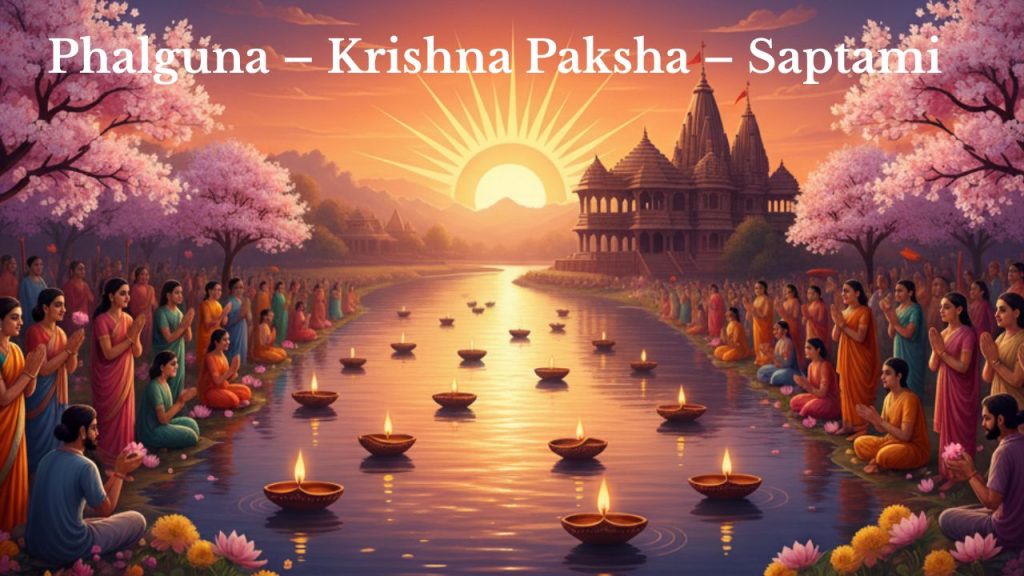
Sharda Puja finds its most prominent place within the cycle of Diwali festivities. While Diwali is known as the festival of lights, symbolizing the victory of good over evil and darkness over ignorance, Sharda Puja adds another dimension—the celebration of intellectual light. During the Kartika month, the timing of this puja is significant, as it coincides with other significant rituals like Govardhan Puja and Chopda Puja.
The placement of Sharda Puja during Diwali highlights the importance of balancing material and intellectual prosperity. While Lakshmi Puja is focused on wealth and abundance, Sharda Puja emphasizes wisdom, knowledge, and clarity of thought. Together, these observances create a holistic celebration of prosperity in all its forms—material, intellectual, and spiritual.
Chopda Puja, the ritual worship of account ledgers and financial records, is closely tied to Sharda Puja. Traders and business communities believe that both wealth and knowledge must be honored to ensure success in the new year. Worshipping ledgers alongside textbooks and scriptures during Diwali showcases the harmony between learning and livelihood.
Families and communities also integrate Sharda Puja into their Diwali traditions. At the same time, lamps and fireworks illuminate homes, books and instruments of learning are decorated, worshipped, and placed at the center of rituals. This practice reflects the belief that education and knowledge are as essential as wealth and joy in building a prosperous future. Through its connection with Diwali, Sharda Puja stands as a reminder that true celebration goes beyond external brightness. It is about igniting the inner flame of wisdom, ensuring that intellect, values, and a higher purpose guide prosperity.
Rituals and Observance Practices
Sharda Puja is celebrated with rituals that are both simple and deeply meaningful. The focus is not on grandeur but on reverence for knowledge and wisdom. What makes the observance unique is the way it blends devotion with the tools of everyday learning and livelihood, reminding everyone that even the smallest objects connected to education or work deserve respect.
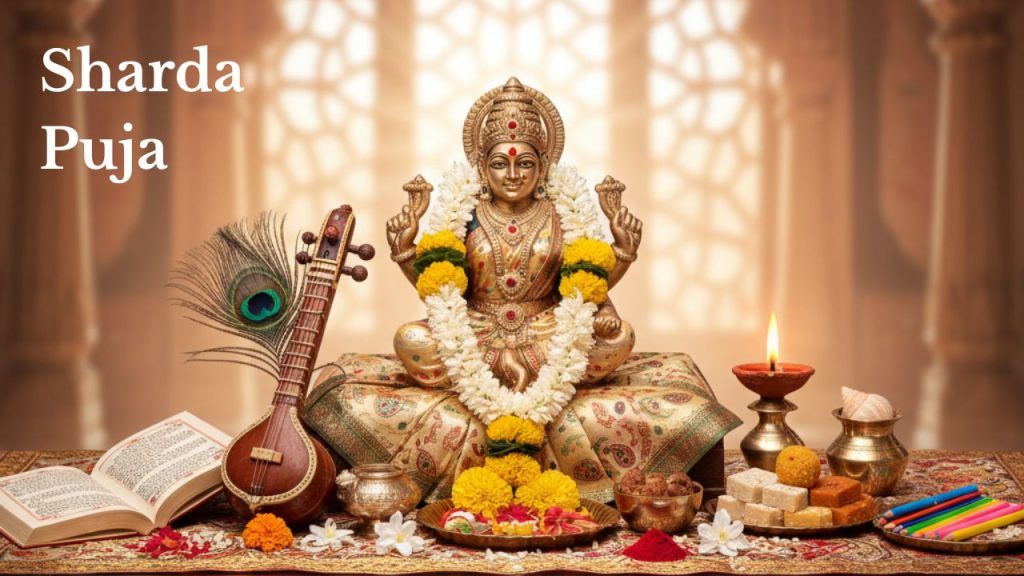
The preparation begins with cleaning and purifying the sacred space. Families, students, and traders decorate their homes and workplaces, setting aside a clean spot to place books, ledgers, and instruments of learning. This could include school textbooks, scriptures, writing tools, or even musical instruments. By keeping these items at the center of the puja, devotees symbolically express gratitude for the tools that guide their intellectual and professional lives.
Offerings are an essential part of the rituals. Flowers, fruits, sweets, and incense sticks are placed before Goddess Saraswati. White flowers, often associated with purity and learning, hold special importance. Families light oil lamps, symbolizing the illumination of the mind and soul. Prayers and devotional chants, especially Saraswati Vandana, are recited with devotion, invoking the goddess’s blessings for wisdom, clarity, and focus.
Students and teachers observe the puja by dedicating their books and study materials to the goddess, seeking divine grace to excel in learning. Traders and business communities include their account books and tools of trade in the rituals, treating them as sacred instruments of prosperity. The emphasis is always on devotion rather than formality.
Ultimately, the rituals of Sharda Puja go beyond religious formality. They are an expression of humility and respect for the knowledge that shapes everyday life. By worshipping not only the divine but also the tools of learning, this puja teaches the value of gratitude and mindfulness in all intellectual and professional endeavors.
Regional Variations of Sharda Puja
While Sharda Puja is celebrated across India, its practices and traditions vary significantly from region to region, reflecting the richness of cultural diversity. Each area has added its own touch, making the puja a living tradition that evolves with the community.
In Gujarat, Sharda Puja is closely tied with Chopda Puja, where businesspeople worship their ledgers and financial records to mark the beginning of the new year. Traders believe that knowledge and wealth go hand in hand, and honoring both ensures success and stability. The puja is performed with devotion in homes, shops, and offices, making it both a personal and professional ritual.
In Maharashtra, Sharda Puja is observed as part of the larger Diwali celebrations. Families set aside books and study materials during the puja, seeking blessings for academic success. Children participate actively, learning from elders about the importance of respecting knowledge. This practice not only strengthens family bonds but also passes down cultural wisdom to the younger generation.
In North India, the puja is often performed in homes and educational institutions, with a stronger emphasis on honoring Goddess Saraswati as the divine mother of learning. Schools, colleges, and cultural organizations may hold special prayers and events to highlight the value of wisdom and intellect.
In South India, although Saraswati Puja is more commonly observed during Navratri, the Kartika observance of Sharda Puja still holds importance in specific communities, blending local customs with the broader significance of Diwali. These regional variations show how Sharda Puja is not limited by geography. Its message—that knowledge is divine and deserves respect—resonates across cultures. The diversity in rituals reflects how communities interpret the festival while holding onto its central essence: honoring wisdom as a guiding light in life.
Relevance for Students and Professionals
Sharda Puja holds special meaning for students and professionals, making it one of the most practical and relevant observances in modern times. The festival reminds everyone that while success may come from hard work, true excellence is only possible when guided by wisdom, focus, and clarity.
For students, Sharda Puja is a day of dedication to learning. By placing textbooks, notebooks, and study materials before the goddess, they symbolically surrender their efforts and seek divine blessings. This act builds a sense of respect for education and motivates learners to approach studies with sincerity. It also encourages discipline, concentration, and humility—qualities that are vital for academic achievement.
Professionals and working individuals also find deep value in Sharda Puja. For those in creative and artistic fields, the blessings of Goddess Saraswati are believed to enhance inspiration, creativity, and innovation. Writers, musicians, and performers often use this occasion to dedicate their work and skills to the divine. In business communities, the puja is equally significant, as it is tied to the start of new financial accounts and ventures. Traders seek prosperity but also the wisdom to make thoughtful and ethical decisions.
The festival’s relevance extends beyond personal gains. It teaches the importance of balancing ambition with values, reminding everyone that knowledge should serve a higher purpose. In a world where distractions are constant, Sharda Puja provides a spiritual anchor, guiding students and professionals alike toward focus, clarity, and meaningful success.
Modern-Day Observance and Adaptations
The way Sharda Puja is celebrated has evolved, but its essence remains intact. Families and communities continue to honor Goddess Saraswati, adapting the rituals to fit contemporary lifestyles and technological advancements.
One of the most noticeable changes is the inclusion of modern tools in the puja. Alongside textbooks and ledgers, people now place laptops, computers, tablets, and digital devices as offerings. This reflects the shift toward a digital world, where these tools are just as essential for learning and work as traditional books once were. By worshipping these instruments, devotees express gratitude for the resources that support education and livelihood in the modern age.
Urban families often adapt the rituals to their fast-paced lives, conducting shorter pujas while ensuring that the spiritual intent is preserved. Even in offices and workplaces, employees gather for a symbolic puja, seeking blessings for professional growth and harmony. This collective observance promotes unity and positivity in the workplace.
In educational institutions, the puja is sometimes celebrated with cultural programs, speeches, and activities that highlight the importance of knowledge. Students are encouraged to reflect on the role of learning in personal and societal growth. This blending of tradition with education ensures that the message of Sharda Puja remains relevant for younger generations.
Despite these modern adaptations, the heart of the festival remains unchanged. It is still about respect for knowledge, devotion to wisdom, and the belief that intellectual and spiritual light must guide everyday life. The ability of Sharda Puja to stay meaningful in the era proves its timelessness and enduring value.
Timeless Wisdom of Sharda Puja
Sharda Puja is more than just a festival—it is a timeless reminder of the importance of knowledge, wisdom, and intellectual growth in human life. By honoring Goddess Saraswati during Kartika month, devotees celebrate not only learning but also the values and principles that give life meaning and direction.
The festival’s place within the Diwali cycle makes it even more significant. While lamps illuminate homes during Diwali, Sharda Puja illuminates the mind and soul, ensuring that wisdom accompanies prosperity. It brings balance by teaching that wealth and success are incomplete without clarity, humility, and insight.
For students, professionals, and families, the observance continues to guide a rapidly evolving world. Whether it is textbooks in schools, ledgers in businesses, or laptops in modern homes, the tools of knowledge remain at the heart of this puja, bridging tradition with contemporary relevance.
Above all, Sharda Puja inspires future generations to honor and respect learning. It conveys the message that wisdom is not only a source of personal success but also a force that uplifts entire communities and societies. In a time when distractions often overshadow accurate understanding, Sharda Puja reminds everyone to pause, reflect, and recognize the power of knowledge as the ultimate light. Its timeless wisdom ensures that the pursuit of learning remains sacred, purposeful, and deeply connected with both material progress and spiritual fulfillment.