Importance of Saphala Ekadashi in Pausha
Meaning of Ekadashi in the Hindu lunar calendar
Ekadashi is the eleventh day of each lunar fortnight, occurring twice in a lunar month, once during the waxing phase (Shukla Paksha) and once during the waning phase (Krishna Paksha). These days are considered sacred for devotion and fasting, with each Ekadashi carrying its own spiritual story and significance. The word “Ekadashi” itself symbolizes a moment of pause and purification, a time when the mind and body are directed away from indulgence and towards prayer and reflection. Across centuries, followers of Lord Vishnu have embraced Ekadashi fasting as a discipline that not only benefits the soul but also nurtures the body. The Hindu scriptures highlight Ekadashi as a day that is especially powerful in removing sins, cleansing negative energies, and drawing one closer to divine grace. Observing Ekadashi becomes a reminder of the importance of aligning human life with dharma and spiritual awareness.
Placement of Saphala Ekadashi in Pausha month (December–January)
Saphala Ekadashi falls in the Krishna Paksha (waning phase of the moon) of the Pausha month, which corresponds to December–January in the Gregorian calendar. Pausha is already a spiritually charged month with several important festivals and rituals, making the observance of Saphala Ekadashi even more profound. During this time, the environment is naturally calmer, with winter encouraging inward reflection and spiritual practices. The very timing of this Ekadashi serves as an invitation to pause from the busy cycle of life and to focus on what truly matters, inner growth and devotion. It is said that observing Saphala Ekadashi in Pausha ensures “success” not only in spiritual pursuits but also in personal well-being, relationships, and life balance.
Why is this Ekadashi considered auspicious for spiritual success?
The term “Saphala” translates to “fruitful” or “successful,” which sets this Ekadashi apart from others. It is believed that observing this vrat brings fulfillment of desires, both material and spiritual, while also cleansing the heart of past sins. Unlike many rituals that focus solely on liberation, Saphala Ekadashi emphasizes worldly harmony as well, guiding devotees to live a righteous life filled with balance, gratitude, and divine blessings. The auspiciousness of this day lies in its power to turn intentions into reality, provided they are rooted in truth and devotion. For those seeking inner peace, spiritual growth, and divine guidance, Saphala Ekadashi stands as a beacon of hope and clarity.
Overview of the connection with Lord Vishnu
Every Ekadashi is dedicated to Lord Vishnu, the preserver of the universe, who represents sustenance, protection, and eternal dharma. Saphala Ekadashi highlights this connection more strongly by teaching devotees that true success comes only through devotion and surrender to the Lord. Worshipping Vishnu on this day, whether through fasting, chanting, or acts of charity, is said to bring abundant blessings. The belief is that Vishnu himself stays close to devotees who observe Saphala Ekadashi with sincerity, guiding them on the path of righteousness. This divine connection reinforces the deeper purpose of the vrat, uniting the human spirit with divine consciousness.
Significance of Ekadashi Observance
Role of Ekadashi in spiritual purification
Ekadashi observance is primarily rooted in the idea of cleansing, of body, mind, and soul. The fasting, coupled with devotional practices, creates a rhythm of self-discipline that helps clear negative tendencies and impurities. Scriptures emphasize that on Ekadashi, the cosmic energy aligns in such a way that spiritual practices yield greater results. Abstaining from grains and indulgence helps in redirecting attention toward prayer, meditation, and introspection. It is not merely about refraining from food but about purifying thoughts, speech, and actions. Spiritual purification on Ekadashi prepares a person to receive divine grace, washing away karmic burdens and opening the door to new beginnings.
Importance of fasting as a discipline for the mind and body
Fasting during Ekadashi is a conscious choice to practice self-control. While the physical body rests through lighter or no intake of food, the mind experiences heightened clarity. The digestive system resets, providing a natural detox, while the mind experiences less distraction from bodily cravings. On a deeper level, fasting symbolizes breaking away from worldly attachments and focusing on spiritual goals. This discipline has been praised not only in religious texts but also by modern wellness experts who recognize its health benefits. Through fasting, one learns patience, endurance, and detachment, all essential virtues for spiritual growth and personal balance.
Symbolism of self-restraint and devotion
Self-restraint is at the core of Ekadashi observance. The fast is not limited to physical food; it extends to controlling negative emotions, desires, and actions. Devotees consciously choose kindness, humility, and devotion over anger, greed, and pride. This day becomes a symbolic training ground where the mind is tested and strengthened. By practicing restraint, a person demonstrates devotion to Vishnu, showing readiness to prioritize spiritual well-being over temporary pleasures. It is this devotion, nurtured through conscious sacrifice, that brings lasting success in life.
Ekadashi as a path to liberation (moksha)
In the broader spiritual journey, Ekadashi is seen as a stepping stone towards moksha, or liberation. The belief is that each observance chips away at karmic debts, making the soul lighter and closer to divine union. By focusing on prayers and chanting Vishnu’s name, devotees transcend material limitations and move toward eternal truth. While Saphala Ekadashi is celebrated for worldly success, it also leads toward the ultimate goal of liberation. Liberation here does not mean escaping life but rather living with clarity, peace, and connection to the eternal self.
Mythological Background of Saphala Ekadashi
Story of King Mahishmati and his transformation
The Puranas narrate a powerful story associated with Saphala Ekadashi. Once there lived a king named Mahishmati, who was known for his indulgence in sinful deeds and immoral practices. His actions not only harmed his kingdom but also distanced him from dharma. Despite his failures, his son remained a devoted follower of Lord Vishnu and regularly observed Ekadashi fasts. It was through his son’s devotion and prayers that the king eventually found redemption. On observing Saphala Ekadashi with sincerity, Mahishmati transformed, leaving behind his sinful ways and embracing the path of righteousness. This story highlights the life-changing impact of devotion and how even those immersed in darkness can find light through the grace of Lord Vishnu.
Lord Vishnu’s blessing upon devotees who observe this vrat
Scriptures explain that Lord Vishnu showers abundant blessings on devotees who sincerely observe Saphala Ekadashi. These blessings are not limited to material success but extend to peace of mind, spiritual progress, and harmony in life. The mythological stories reinforce this belief by showing how Vishnu’s compassion can lift even the most fallen individuals. The Lord is believed to stay especially close to those who fast, pray, and engage in charitable acts on this day. This divine blessing strengthens the faith of devotees and motivates them to observe the vrat with dedication and devotion.
Symbolism of overcoming ignorance and attaining righteousness
The story of King Mahishmati is symbolic of humanity’s struggle with ignorance, indulgence, and moral weakness. Just as the king eventually transformed, Saphala Ekadashi inspires people to overcome their own flaws and rise toward righteousness. The vrat symbolizes moving from darkness to light, from ignorance to knowledge, and from bondage to freedom. Observing the day mindfully becomes an act of personal transformation, where every choice reflects a commitment to truth and virtue.
Lessons derived from the legend
The legend teaches that no one is beyond redemption, and divine grace is always available to those who turn toward it sincerely. It also emphasizes the power of family devotion, how the son’s prayers helped redeem the father. In today’s world, this story encourages families to support each other in spiritual practices and create a culture of faith and compassion. The ultimate lesson is that success in life is not measured solely by wealth or power, but by inner purity and alignment with one’s dharma.
Rituals and Traditions of Saphala Ekadashi
Fasting practices (nirjala, phalahar, or satvik food)
Observing Saphala Ekadashi begins with fasting, which can be practiced in different forms depending on personal capacity. Some devotees follow nirjala fasting, refraining from both food and water for the entire day. Others take a lighter approach, consuming fruits, milk, or satvik meals that avoid grains and pulses. The essence lies not in the severity of the fast but in the intention behind it. Fasting is a way of purifying the body and mind, detaching from cravings, and redirecting energy toward devotion. Each method, whether complete abstinence or partial fasting, becomes a personal offering of discipline and love toward Lord Vishnu.
Puja rituals with tulsi leaves, lamps, and Vishnu mantras
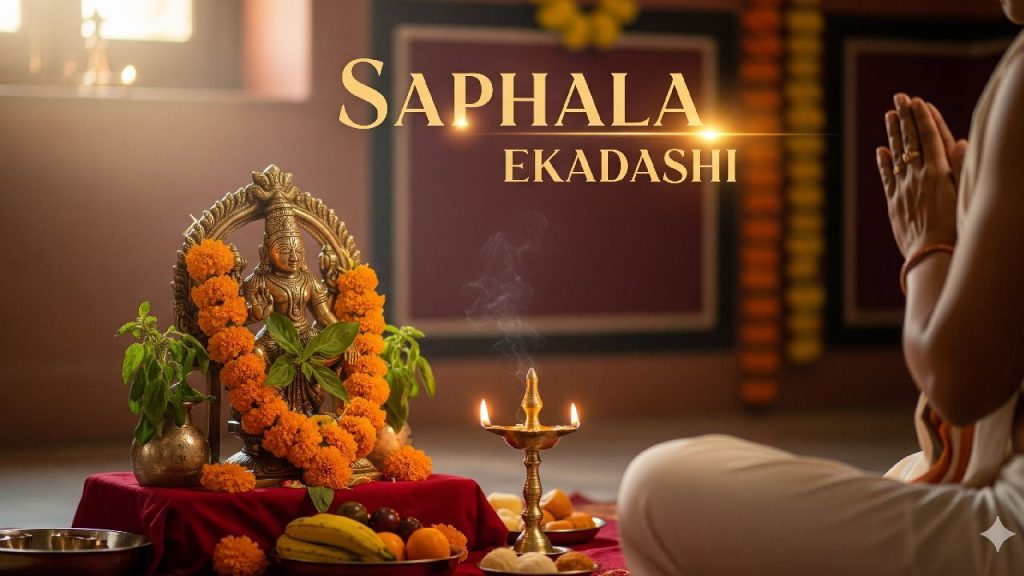
The puja on Saphala Ekadashi is deeply symbolic and filled with devotion. Devotees wake early, bathe, and set up a sacred space for worship. Tulsi leaves, which are considered dear to Lord Vishnu, are offered along with flowers, incense, and lamps. The chanting of Vishnu mantras or the recitation of sacred texts like the Bhagavad Gita form an integral part of the puja. Lighting a lamp signifies the dispelling of ignorance, while offering tulsi represents pure devotion. The rituals serve as an external expression of the inner surrender and faith that devotees carry within their hearts.
Importance of chanting Vishnu Sahasranama or bhajans
Chanting plays a vital role in Saphala Ekadashi observance. Many devotees recite the Vishnu Sahasranama, a thousand names of Lord Vishnu, which carries immense spiritual power. Others prefer singing bhajans and kirtans, filling the atmosphere with divine vibrations. Chanting not only strengthens concentration but also creates a deep connection with the divine. The rhythmic repetition of holy names elevates the mind, calming anxieties and instilling a sense of peace. Through this practice, the heart resonates with devotion, making the day an immersive spiritual experience.
Offering food and charity to Brahmins and the needy
Charity forms an essential aspect of Saphala Ekadashi. After fasting and puja, devotees prepare satvik food and distribute it among Brahmins, saints, or those in need. This act of giving symbolizes compassion, generosity, and detachment from selfish desires. Feeding the hungry and helping the poor is seen as directly serving Lord Vishnu himself. By combining personal discipline with service to others, devotees complete the observance of Saphala Ekadashi in its true spirit. Charity ensures that the blessings of the vrat extend beyond personal well-being to the broader community.
Spiritual Importance of Observing Saphala Ekadashi
Cleansing of sins and past karma
One of the most profound beliefs surrounding Saphala Ekadashi is its ability to cleanse sins and lessen the burden of past karma. Devotees believe that by sincerely fasting, praying, and practicing restraint, they can undo negative patterns and create a fresh start. This cleansing is not merely symbolic but psychological as well, allowing individuals to release guilt, regret, and emotional baggage. With a lighter heart and purified soul, devotees can move forward with clarity and confidence.
Attainment of spiritual strength and clarity
Spiritual strength comes from consistent practice and deep faith. Observing Saphala Ekadashi fosters these qualities by encouraging discipline, patience, and devotion. The clarity gained through fasting and prayer helps in making wise decisions and maintaining composure even during challenging times. This inner strength is invaluable in daily life, where distractions and pressures often cloud judgment. Through this vrat, devotees cultivate resilience, faith, and a steady connection to divine guidance.
Connection to the divine energy of Lord Vishnu
Saphala Ekadashi is ultimately about establishing a close connection with Lord Vishnu. Through fasting, chanting, and puja, devotees align themselves with his divine energy. This connection is believed to offer protection, guidance, and blessings in every aspect of life. Just as Vishnu sustains the universe, his energy sustains the heart of a devotee, filling it with peace and purpose. This connection becomes a source of joy and reassurance, reminding devotees that they are never alone in their journey.
Role in maintaining inner peace and devotion
Stress and distractions are constant, Saphala Ekadashi offers a much-needed pause for peace and devotion. The rituals and practices serve as tools to slow down, reflect, and reconnect with inner values. By dedicating the day to Lord Vishnu, devotees experience a calmness that carries over into everyday life. This piece not only strengthens personal well-being but also improves relationships and outlook toward the world. Devotion cultivated on this day reminds individuals of the greater purpose of life, to live with love, service, and connection to the divine.
Health and Lifestyle Benefits of the Fast
Detoxification and rest for the digestive system
One of the most noticeable benefits of fasting on Saphala Ekadashi is the natural detoxification it brings to the body. By avoiding grains, heavy meals, and processed foods, the digestive system gets a much-needed rest. This pause allows the body to flush out toxins and rejuvenate. In modern life, where overeating and unhealthy food choices are common, this kind of fasting becomes a tool for restoring balance. Devotees often report feeling lighter, more energetic, and mentally sharper after the fast. The concept here is simple: when the body is less burdened, the mind becomes free to focus on spiritual practices. Thus, the physical act of detoxification goes hand in hand with spiritual cleansing, making the fast a holistic ritual for overall well-being.
Promoting discipline and self-control in daily life
Fasting is not just about skipping food; it is about practicing discipline and self-mastery. On Saphala Ekadashi, devotees consciously resist temptations and channel their energy into prayer and meditation. This practice strengthens willpower, which then extends to other areas of life such as managing stress, controlling anger, and breaking unhealthy habits. In today’s fast-paced world, where distractions are everywhere, cultivating discipline is a powerful skill. Saphala Ekadashi provides a structured way to practice it. The more consistently this discipline is practiced, the stronger one becomes in handling life’s challenges gracefully.
Mental clarity and mindfulness through fasting
When the body is not focused on constant digestion, the mind naturally becomes calmer and clearer. This is one of the most profound benefits of Ekadashi fasting. Devotees often experience enhanced focus, more profound meditation, and a heightened sense of mindfulness. This clarity is not only beneficial for spiritual practices but also for making better decisions in everyday life. Fasting acts like a reset button for the mind, quieting the noise of cravings and worries and allowing space for reflection. Mindfulness gained on this day often inspires individuals to live with more awareness and gratitude long after the fast is over.
Balancing material and spiritual aspects of life
Saphala Ekadashi is unique because it bridges the material and spiritual dimensions of life. While the vrat emphasizes devotion and spiritual growth, it also brings balance to material existence. Fasting and rituals cultivate inner peace, which directly influences how one handles responsibilities, relationships, and challenges. The practice teaches that success is not about extremes but about harmony, balancing worldly duties with spiritual values. This holistic approach makes Saphala Ekadashi especially relevant today, as it guides people to pursue prosperity while staying grounded in faith and virtue.
Symbolism of the Name “Saphala”
Meaning: “fruitful” or “successful”
The word “Saphala” translates to “fruitful” or “successful,” which captures the essence of this Ekadashi. Unlike rituals that are solely focused on renunciation, Saphala Ekadashi emphasizes the rewards of devotion and discipline. The idea is that true success comes when spiritual practices bear fruit in both visible and invisible ways. It may manifest as a sense of peace of mind, improved relationships, prosperity, or simply a more profound sense of fulfillment. The very name assures devotees that their efforts will not be in vain, reinforcing faith and determination in observing the vrat with sincerity.
How observing this vrat leads to fulfillment of desires.
Devotees believe that observing Saphala Ekadashi with devotion can fulfill both material and spiritual desires. However, the fulfillment is not about unchecked indulgence; it is about receiving what aligns with dharma and divine will. For instance, a person praying for peace, health, or success in righteous endeavors is likely to experience blessings. The vrat acts as a channel where human intent meets divine grace. The act of fasting, praying, and offering charity creates a ripple effect, transforming desires into realities that are beneficial not only to the devotee but also to the community.
Spiritual success vs. material success
The name “Saphala” also invites reflection on the deeper meaning of success. Material achievements, such as wealth, power, or fame, are temporary, while spiritual success, peace, wisdom, and liberation endure beyond lifetimes. Saphala Ekadashi teaches devotees to value both but prioritize spiritual success as the foundation. The vrat thus becomes a reminder that true fulfillment lies not in possessions but in connection with the divine. By striking a balance, one learns to enjoy worldly success while staying rooted in spiritual values.
Reflection on effort and divine grace
Saphala Ekadashi beautifully illustrates the balance between human effort and divine grace. Devotees put in effort through fasting, chanting, and charity, but the ultimate results come through Lord Vishnu’s blessings. This balance is symbolic of life itself, where effort is essential, but it is grace that ultimately determines the outcome. The vrat teaches humility, reminding devotees that while personal discipline is necessary, divine intervention is what makes success truly “fruitful.” This awareness nurtures gratitude, patience, and trust in life’s journey.
Community and Cultural Practices
Collective observance in temples and homes
Saphala Ekadashi is observed not just individually but also within communities. Families come together to fast, pray, and perform rituals, while temples hold special events such as bhajan sessions, discourses, and pujas. The collective energy of devotion amplifies the spiritual atmosphere, making the observance more powerful. At home, families may set up altars with images of Lord Vishnu, decorate them with flowers and tulsi leaves, and spend the day together in prayer. This shared experience strengthens family bonds and instills values of devotion in children.
Recitation of sacred texts and kirtans
On Saphala Ekadashi, it is common to hear collective recitations of the Bhagavad Gita, Vishnu Sahasranama, and devotional songs. These recitations carry the power of sound vibrations, filling spaces with positivity. Kirtans and bhajans create a joyous atmosphere where devotion becomes a shared celebration rather than a solitary practice. Singing together fosters a sense of unity and uplifts the spirit, reminding devotees that spirituality thrives in community as much as in solitude.
Sharing prasad and spreading goodwill
Food offered to Lord Vishnu is later distributed as prasad among family, friends, and neighbors. Sharing prasad symbolizes the spreading of divine blessings. It becomes more than just food; it carries the energy of devotion and prayer. In addition, devotees often engage in acts of goodwill such as feeding people experiencing poverty, donating clothes, or supporting local causes. These acts extend the blessings of the vrat to society, making it a festival of compassion as well as devotion.
Reinforcing unity and faith within communities
Community observance of Saphala Ekadashi helps strengthen cultural and spiritual unity. In a world where differences often divide, collective rituals serve as a reminder of shared values and traditions. They reinforce the bond of faith, creating a sense of belonging and purpose. Observing the vrat together also ensures that traditions are passed down to younger generations, preserving cultural heritage. Through this unity, the message of Saphala Ekadashi, success through devotion and righteousness, spreads far and wide.
Contemporary Relevance of Saphala Ekadashi
Adapting rituals in modern lifestyles
Modern life is busy, and many find it difficult to follow traditional rituals in their entirety. However, Saphala Ekadashi remains relevant because its essence can be adapted to suit different lifestyles. Even if one cannot perform nirjala fasting, choosing a simple satvik diet or dedicating time to meditation can be a meaningful practice. Technology also helps, with apps offering reminders, mantras, and live-streamed pujas. The adaptability ensures that the vrat continues to be practiced with sincerity while fitting into contemporary life.
Digital participation in puja and katha sessions
With online platforms, devotees from across the globe can now participate in collective prayers, listen to kathas, or join virtual satsangs on Saphala Ekadashi. This digital participation breaks barriers of distance and accessibility, allowing everyone to stay connected to traditions. Even those living far from temples or communities can now experience the spiritual atmosphere of Ekadashi from their homes. The blend of technology and spirituality demonstrates how ancient traditions can thrive in modern times without losing their essence.
Role of fasting and mindfulness in stress management
Fasting, reflection, and mindfulness practices linked to Saphala Ekadashi offer excellent tools for stress management. The act of slowing down, abstaining from indulgence, and focusing on prayer provides the mind with a sense of calm. It is a pause from the daily rush, a chance to reset emotionally and mentally. In modern wellness, mindfulness is highly praised, and Saphala Ekadashi naturally integrates it with spiritual depth. Observing the vrat thus becomes both a religious and a therapeutic practice.
Keeping the essence of tradition alive for future generations
One of the most critical aspects of Saphala Ekadashi in modern times is passing its essence to younger generations. Children and youth may not always connect with complex rituals, but the values of discipline, devotion, and compassion are timeless. By simplifying practices and sharing stories, families ensure that the tradition remains alive. The vrat becomes not just a religious duty but a cultural bridge, connecting past wisdom with future aspirations.
Embracing the Path of Success through Devotion
Key takeaways from Saphala Ekadashi observance
Saphala Ekadashi is not just a fasting ritual but a holistic practice that combines discipline, devotion, and compassion. Its observance cleanses the body and mind, purifies the soul, and creates balance in life. Through rituals, charity, and prayer, devotees find both spiritual and worldly success. The lessons drawn from this day encourage living with purpose, clarity, and connection to the divine.
Blending spirituality with daily responsibilities
The essence of Saphala Ekadashi lies in its balance, teaching devotees to pursue success while staying grounded in spirituality. In everyday life, this means blending devotion with responsibilities, compassion with ambition, and mindfulness with productivity. The vrat acts as a reminder that spirituality does not require renouncing the world but rather living in it with awareness and integrity.
Eternal message of faith, discipline, and surrender
The timeless wisdom of Saphala Ekadashi emphasizes three key virtues: faith in Lord Vishnu, discipline in personal practices, and surrender to divine will. These virtues not only guide spiritual growth but also shape a fulfilling and balanced life. They act as guiding lights in times of uncertainty, reminding devotees that divine support is always near.
Invitation to observe the vrat with sincerity in Pausha
As Pausha arrives each year, Saphala Ekadashi offers a golden opportunity to pause, reflect, and reset. It is an invitation to step away from routine and immerse oneself in devotion, gratitude, and discipline. Observing this vrat with sincerity ensures not only divine blessings but also personal growth and harmony. Embracing Saphala Ekadashi means embracing a path where success is measured not just by external achievements but by the inner peace and fulfillment it brings.