Understanding about Narasimha Dwadashi
Narasimha Dwadashi is one of the most revered days in the Hindu calendar, celebrated with great devotion and spiritual fervor. It falls on the 12th day (Dwadashi) of Shukla Paksha in the month of Phalgun. This day holds special significance because it marks the appearance of Lord Narasimha, the fourth incarnation of Lord Vishnu, who manifests to protect his devotees from evil and restore dharma. Observing Narasimha Dwadashi is believed to cleanse the mind, body, and soul, bringing peace, courage, and divine protection.
The essence of Narasimha Dwadashi lies not just in performing rituals but in understanding its deeper spiritual meaning. Lord Narasimha, with his half-lion and half-human form, symbolizes the balance between ferocity and compassion, power and protection. Devotees believe that sincere worship on this day can remove obstacles, ward off negative energies, and cultivate inner strength.
Traditions observed on Narasimha Dwadashi include fasting, special poojas, chanting of mantras, and reading scriptures related to Lord Narasimha. Temples dedicated to Narasimha witness large congregations where priests perform rituals and recite sacred stories from the Puranas. The day is not only a spiritual observance but also a reminder of the triumph of good over evil and the importance of unwavering faith.
This auspicious day is also an opportunity for families to come together, share stories of devotion, and teach younger generations the significance of protecting righteousness. Narasimha Dwadashi serves as a powerful spiritual anchor, reminding everyone that faith, devotion, and moral courage are essential tools to overcome challenges in life.
Mythological Significance
The mythological foundation of Narasimha Dwadashi is deeply rooted in the story of Hiranyakashipu and his son, Prahlad. Hiranyakashipu was a demon king who sought immortality and believed he was invincible. He demanded that everyone worship him instead of the gods. However, Prahlad, his son, was a devoted follower of Lord Vishnu and refused to bow to his father. This defiance enraged Hiranyakashipu, leading to multiple attempts to harm Prahlad, all of which failed due to divine intervention.
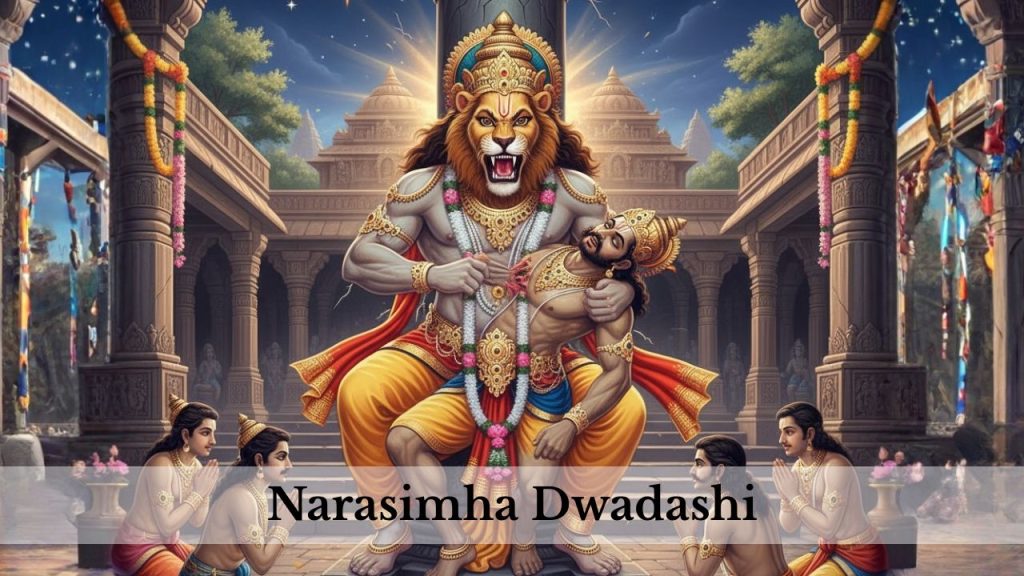
The climax of this legend unfolds when Lord Vishnu manifests as Narasimha, a unique half-lion, half-human form. By appearing in this form, Vishnu circumvented the boon granted to Hiranyakashipu, which stated that he could not be killed by man or beast, inside or outside, day or night, on earth or in the sky, or by any weapon. Narasimha killed the demon at twilight, on the threshold of a palace, using his claws, demonstrating the cleverness and power of divine justice.
The symbolism of Narasimha’s form is profound. The lion’s face represents strength, courage, and protection, while the human body signifies wisdom and compassion. This duality embodies the balance required to overcome evil without compromising righteousness. Devotees see Lord Narasimha as the ultimate protector who destroys negativity while nurturing the faithful.
This story teaches important lessons in devotion, righteousness, and the triumph of good over evil. It reminds devotees that divine forces always support unwavering faith, courage, and moral integrity. Celebrating Narasimha Dwadashi is therefore not just a ritualistic observance but an opportunity to internalize these values and cultivate a life of courage, faith, and resilience.
Astrological and Spiritual Importance
Narasimha Dwadashi is not only significant mythologically but also holds profound astrological and spiritual importance. Astrologically, the day falls on Dwadashi during Shukla Paksha in Phalgun, which is considered highly auspicious for performing protective rituals. The planetary alignments during this period enhance spiritual energies, making prayers, fasts, and devotional acts more potent and effective. Devotees believe that worshiping Lord Narasimha on this day can mitigate malefic planetary influences and strengthen positive forces in life.
Spiritually, Narasimha Dwadashi is a day of immense purification. It is believed that observing the day with devotion can remove deep-seated fears, anxiety, and negative energies. The energy of Lord Narasimha inspires courage, determination, and unwavering faith. By aligning with these energies, individuals can experience mental clarity, emotional balance, and inner strength.
The influence of Narasimha Dwadashi extends to family harmony and personal growth. Families performing collective worship and rituals often experience strengthened bonds, mutual respect, and a shared sense of spiritual purpose. On an individual level, the day encourages self-reflection, ethical decision-making, and the practice of compassion and righteousness in daily life.
Recommended spiritual practices for the day include chanting the Narasimha mantra, meditating on the Lord’s form, reading Narasimha-related scriptures, and engaging in acts of kindness. These practices harness the day’s spiritual energy to foster personal transformation and protection against negativity. Observing Narasimha Dwadashi consistently is said to bring long-term spiritual, emotional, and material benefits, reinforcing the timeless relevance of devotion and moral strength.
Fasting Rituals and Observances
Fasting is one of the central observances of Narasimha Dwadashi and is considered a powerful spiritual practice. Devotees may choose different types of fasts depending on their capacity and tradition. The Nirjala fast involves abstaining from both food and water for the entire day, while partial fasts allow consumption of fruits, milk, and light foods. These fasts are believed to purify the body, sharpen the mind, and enhance spiritual receptivity.
The timing for starting and breaking the fast is crucial. Devotees typically begin fasting at sunrise and continue until the next day, breaking the fast after performing pooja and offering prayers. Observing these rituals at the prescribed times aligns the devotee’s actions with cosmic energies, amplifying the spiritual impact of the fast.
During the fast, it is essential to avoid foods that are heavy, spicy, or non-vegetarian. Light, sattvic foods such as fruits, milk, and simple grains are recommended. The disciplined consumption and avoidance of certain foods symbolize self-control and devotion, reflecting an inner commitment to spiritual growth and development.
Fasting on Narasimha Dwadashi is believed to provide multiple benefits. Spiritually, it cultivates focus, patience, and resilience, while physically, it offers a detoxifying effect. Mentally, it encourages reflection and mindfulness, allowing one to align with divine energies. The practice of fasting also reinforces the principle that discipline and devotion are intertwined, making the day a profound reminder of the importance of self-restraint, faith, and spiritual awareness.
Worship and Pooja Practices
Worship and pooja on Narasimha Dwadashi form the heart of the observance. Devotees start by preparing the idol or image of Lord Narasimha, placing it on a clean altar decorated with flowers, tulsi leaves, and sacred items. The rituals emphasize reverence, devotion, and connection with the divine, transforming the day into a profoundly spiritual experience.
Chanting Narasimha mantras is a central element of the worship. These mantras are believed to invoke the protective energies of the Lord, remove fear, and attract blessings. Repetition of mantras like the Narasimha Kavach provides spiritual armor, offering protection against physical, mental, and emotional challenges.
Other essential elements of pooja include offering tulsi leaves, flowers, fruits, and incense. Each item has symbolic significance, representing purity, devotion, and surrender. Recitation of Narasimha-related prayers and hymns, such as stotras and slokas, deepens the spiritual atmosphere, allowing devotees to focus their mind and heart entirely on divine grace.
Performing pooja at home is highly encouraged, but temple worship adds a communal aspect, amplifying positive energies through collective devotion. Temples conduct special rituals, readings, and homas that enhance the spiritual benefits of the day. Participating in these ceremonies provides a shared sense of devotion, strengthens faith, and reinforces moral and spiritual values within the community.
The act of worship on Narasimha Dwadashi is a blend of devotion, ritual, and spiritual learning. Through these practices, individuals align themselves with divine energies, receive protection, and cultivate virtues like courage, compassion, and righteousness, making the observance a profoundly transformative experience.
Temples and Pilgrimage
Narasimha Dwadashi is closely associated with temple visits and pilgrimages, which hold immense spiritual significance. Many devotees visit prominent Narasimha temples, including Ahobilam in Andhra Pradesh, Simhachalam in Visakhapatnam, and other regional shrines, to seek blessings and immerse themselves in the spiritual atmosphere of the day. Pilgrimage on this day is believed to amplify the effects of prayers, rituals, and devotion, offering both emotional and spiritual enrichment.
Temples conduct elaborate rituals, including abhishekam (sacred bathing of the deity), homas (fire offerings), and special poojas, where priests recite sacred texts and chant mantras that highlight the triumph of Lord Narasimha over evil. These ceremonies foster a deep sense of devotion, community, and connection with the divine. For devotees, visiting these temples is not merely a physical journey but a spiritual experience that reinforces faith, moral values, and courage.
Seasonal significance also plays a role. During Phalgun, the weather is favorable for travel, and the alignment of lunar energies enhances the spiritual potency of temple visits. Families often undertake pilgrimages together, creating an opportunity to teach children the importance of devotion, ethics, and moral courage through storytelling and temple experiences.
Guidelines for devotees planning a pilgrimage include waking early, observing cleanliness, performing morning prayers, and participating in collective worship with respect and devotion. Pilgrimage on Narasimha Dwadashi serves as a reminder that the journey of faith is as important as the destination, fostering inner strength, spiritual clarity, and a lasting connection with the divine.
Benefits of Observing Narasimha Dwadashi
Observing Narasimha Dwadashi offers multifaceted benefits, touching spiritual, mental, and physical dimensions of life. Devotees believe that performing rituals, chanting mantras, and fasting on this day invokes the protective energy of Lord Narasimha, shielding them from negative influences and evil forces. This divine protection is considered a source of courage and resilience in overcoming life’s challenges.
Spiritually, the day fosters devotion, faith, and inner growth. Regular observance strengthens one’s connection with Lord Vishnu, cultivating virtues such as compassion, integrity, and discipline. By dedicating time and energy to spiritual practices, devotees experience emotional stability, mental clarity, and a heightened sense of purpose.
On a personal level, observing Narasimha Dwadashi can lead to improved family harmony and positive relationships. The collective rituals, shared prayers, and festive atmosphere create unity, understanding, and mutual respect among family members. The day also encourages reflection on ethical behavior and righteous living, guiding individuals toward moral and spiritual alignment.
Material and health-related benefits are also associated with observance. Fasting and adherence to a disciplined lifestyle can improve physical well-being, while rituals and prayer contribute to reduced stress and enhanced mental health. Overall, Narasimha Dwadashi reinforces the timeless principle that devotion, ethical living, and spiritual practice are intertwined pathways to protection, prosperity, and personal growth.
Legends and Folk Stories
Narasimha Dwadashi is enriched by a variety of legends and folk stories that deepen its cultural and spiritual significance. Beyond the central story of Prahlad and Hiranyakashipu, numerous regional tales highlight the miraculous interventions of Lord Narasimha in the lives of devotees. These stories emphasize the Lord’s compassion, protection, and ability to restore justice.
Folk songs, ballads, and oral narratives recount instances where devotees were saved from peril, adversity, or moral dilemmas through unwavering faith in Lord Narasimha. These stories serve as a tool for teaching devotion, ethical values, and courage to younger generations, embedding the spiritual lessons of Narasimha Dwadashi into the community’s cultural fabric.
Many regions celebrate the day with dramatizations of Narasimha’s triumph over evil, using dance, music, and storytelling to make the legends accessible and engaging. These practices transform mythological knowledge into lived experience, reinforcing the connection between divine power and human faith.
Lessons from these legends are highly relevant to contemporary life. They illustrate that no matter how formidable challenges appear, moral integrity, devotion, and courage can overcome even the most daunting obstacles. Observing Narasimha Dwadashi with awareness of these stories enhances not only spiritual practice but also personal resilience, ethical behavior, and a sense of interconnectedness with cultural heritage.
Contemporary Relevance
Narasimha Dwadashi retains its relevance by offering guidance for integrating devotion and spiritual practices into modern life. Despite professional and personal demands, the day serves as a reminder to pause, reflect, and realign priorities with moral and spiritual values. Observing fasts, performing pooja, and reciting prayers can be adapted to modern schedules without compromising their spiritual efficacy.
The principles behind Narasimha Dwadashi, faith, courage, righteousness, and devotion, offer practical lessons for contemporary challenges. Workplace conflicts, personal struggles, and societal pressures can be navigated with resilience, ethical decision-making, and inner strength, reflecting the protective and empowering essence of Lord Narasimha.
Families can use the day to educate children on devotion, ethics, and courage through storytelling, rituals, and shared experiences. Communities benefit when collective celebrations encourage unity, respect, and moral consciousness. Beyond the religious context, the day promotes mindfulness, self-discipline, and ethical living, making its observance meaningful for spiritual seekers, professionals, and families alike.
By embracing the teachings of Narasimha Dwadashi, individuals cultivate balance in their personal and professional lives, harnessing inner courage and wisdom to face challenges while fostering compassion, integrity, and devotion. The day thus serves as a timeless guide for personal growth, spiritual alignment, and ethical living.
Parting Thoughts
Narasimha Dwadashi in Phalgun is a celebration of devotion, courage, and the triumph of righteousness. It reminds devotees that unwavering faith, disciplined practice, and moral courage can overcome even the greatest adversities. By observing this day, individuals align themselves with the protective and transformative energies of Lord Narasimha, fostering spiritual growth, mental clarity, and emotional stability.
The rituals, fasting, pooja, chanting, and temple visits are not merely formalities; they are avenues for connecting with the divine and internalizing the timeless values of devotion, integrity, and resilience. Families and communities benefit from shared practices that strengthen bonds and pass spiritual wisdom to future generations.
Key takeaways from Narasimha Dwadashi include the importance of faith in the face of adversity, the need for courage in upholding righteousness, and the value of devotion in transforming the mind, body, and spirit. Beyond religious significance, the day teaches practical life lessons: patience, self-discipline, ethical living, and mindfulness.
Ultimately, Narasimha Dwadashi is a celebration of divine protection and spiritual empowerment. Observing it sincerely provides lasting benefits that extend beyond the day itself, guiding devotees toward a life of strength, peace, and moral clarity. The triumph of good over evil, symbolized by Lord Narasimha, continues to inspire generations to live with courage, devotion, and unwavering faith in the power of righteousness.