Significance of Panchami Tithi
Definition of Panchami in the Lunar Calendar
On a Hindu lunar calendar, a tithi represents a lunar day, each marking a specific phase in the Moon’s journey. The term Panchami means “the fifth.” That tells us exactly where it falls: on the 5th lunar day of a fortnight. It could be the waxing phase (Shukla Paksha) after the new moon or the waning phase (Krishna Paksha) after the full moon. It’s not about what the Moon looks like, but how far it is from its starting point. There’s a precise cosmic count, and Panchami is that fifth step.
Difference between Shukla and Krishna Paksha
The lunar month splits into two halves or pakshas:
- Shukla Paksha is the bright fortnight, where the Moon grows from Amavasya (new moon) toward Purnima (full moon).
- Krishna Paksha, the dark fortnight, follows Purnima and takes us back to Amavasya.
When we talk about Shukla Panchami, that’s the 5th day in the waxing moon period, think “building light.” Conversely, when darkness prevails, Krishna Panchami falls on the 5th day after the full moon. The difference isn’t just astronomical; it also affects how rituals and energies are interpreted.
Significance of Jyeshtha Month in Hindu Tradition
Jyeshtha, usually falling in May–June, is one of the most significant months in the Hindu calendar. It’s the first month of summer in many regions when the sun’s heat peaks. Spiritually, Jyeshtha teaches us the importance of endurance and purification. There are many festivals and observances, including specific Panchami rituals. Thus, a Panchami occurring during Jyeshtha carries an added layer of meaning, connecting cosmic heat cycles with inner and outer human transformation.
Role of Tithis in Spiritual and Religious Practices
Tithis are much more than dates, they’re cosmic timestamps. They tell us when the Sun and Moon’s energies align spiritually. That’s why temples plan pujas, fasting, charity, meditation, and chanting around specific tithis. They help you tap into energetic alignments. Imagine time stamped with spiritual flavor, and tithis are the seasoning, guiding us to a deeper connection when energies are just right.
How Panchami Stands Out Among Other Tithis
So why Panchami? Each tithi brings unique energy. Panchami’s “five-fold” symbolism gives it a distinct place in spiritual geometry, balance, creativity, and partnership. It’s less common in mainstream practice than Ashtami or Ekadashi, but it’s deeply respected when invoked, especially within tantric traditions, serpent worship, or folk rituals. Its energy feels like harmony after chaos, a subtle shift that invites inner dialogue and transformation.
Astronomical and Calendar Significance
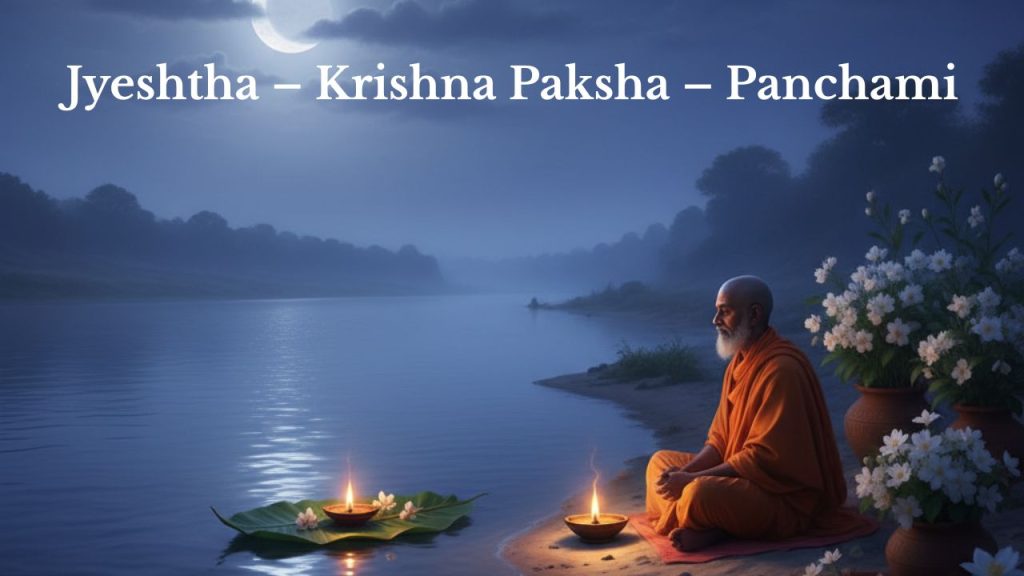
Placement of Panchami in the Krishna Paksha
On the Krishna Panchami, the Moon’s waning phase has passed four days, meaning we’re descending toward darkness. Astronomically, the Moon is around 144°–160° behind the Sun. For example, if you start counting from the moon night (day 1), you soon reach Panchami, about the middle of the dark fortnight. It’s a precise cosmic position, not just folklore.
Lunar Influence and Its Spiritual Interpretations
As the Moon wanes, energy is moving inward; symbolically, you’re releasing, letting go, and going deeper. Krishna Panchami intensifies this quieting, shadowy energy. Many spiritual traditions believe this is the ideal time for introspection, shadow work, purification, and meditation. You’re allowed to dive into subtle emotional currents. It’s also considered auspicious for working with energies related to ancestors, spirits, or subconscious realms.
Panchami is the 5th Lunar Day and Its Cosmic Energy.
Let’s unpack that “five.” In many traditions, including Greek, Chinese, and Indian, the number five represents balance (think of the five senses and the five elements: earth, water, fire, air, and ether). Panchami resonates with structure, integration, and realignment. You’re not starting fresh like Shukla Pratipada on day 1, nor hitting the zenith like Purnima. You’re in a phase of calm maturity, a sweet middle, not fully high energy, but energetically potent enough to act with awareness.
Timing and Calculation as per Panchang
Panchang (lunar almanac) calculates tithis using precise Earth–Moon–Sun geometry. It’s based on longitudinal angle difference: every 12° change marks a new tithi. Panchami begins when the angle hits 48° or 192°, depending on phase. It may start or end mid-calendar day, so observant devotees check the Panchang carefully. It determines puja windows, mantras, whether fasting lines up with sunrise, and more.
Variations Across Regional Calendars
India’s diversity means Panchami can vary by region. Tamil calendars may refer to it as Anusham; in Bengal, it may be associated with specific Nakshatras, and in Maharashtra, it may coincide with serpent-related festivals. Dates may differ based on sunrise or sunset calculations, local longitude, or adherence to solar versus lunar systems (Amanta or Purnimanta). So your friend in Chennai might celebrate Krishna Panchami a day earlier or later than you, and both calendars are valid.
Spiritual and Religious Significance
The symbolism of Number Five (Panchami)
Five isn’t random. It reappears in stars, science, and spirit. In Ayurveda, you have five elements. In yoga, the five Koshas are the layers of the self. Panchami brings equilibrium by harnessing both active and receptive forces. It invites you to refine those five layers: physical, energetic, mental, intuitive, and bliss. That’s why working with Panchami energy can help bring harmony across levels.
The Balancing Energy of Krishna Paksha Panchami
As the dark fortnight progresses, five days in means the light is mostly gone. Krishna Panchami embodies the balance between the visible and the hidden. You’re neither at full dark nor still near light, but between. That place stimulates the growth of intuition. It’s a threshold day, perfect for shadow work, dueling with inner resistance, and releasing old patterns.
Influence on Mind, Body, and Spirit
Spiritual texts suggest that Panchami brings mental clarity and emotional equilibrium, although the body may feel heaviness due to the decreasing lunar pull. Emotionally, it’s a day to take a step back and slow down. Physically, light fasting helps deepen the mind‑body connection. Spiritually, it’s about barriers and veils, layers you peel away in meditation.
Importance in Tantric and Yogic Practices
Tantra and yoga value Panchami for “liminal” potency, when outer senses quiet, inner experiences sharpen. Rituals such as chakra awakenings, mantra sadhana, or specific bindu/energy point work are ideal. Practitioners in the Western Tantra lineage intentionally time sessions on Krishna Panchami to access subtle energetic channels.
Associated Mantras and Meditative Focus
Mantras over Panchami may include:
- “Om Namo Bhagavate Vasudevaya”
- “Om Aim Hreem Kleem Chamundaye Viche”
- These invoke creative, transformative energies. Meditations focus on the chakras, specifically Anahata (the heart) or Vishuddha (the throat), spaces where surrender and intuition intersect. It’s not generic chanting; it’s tuning into the lunar energy flow.
Associations with Deities and Mythological Events
Worship of Naga Devata (Serpent Gods)
Across India, Naga Devata, serpent gods, are associated with snake symbolism, transformation, and underworld energies. Panchami is one such day where devotees perform Nag Panchami puja, offering milk, flowers, and incense to snake idols or real snakes in temples. This reverence honors protection, fertility, and transformation energies, rooted in ancient agrarian, fertility‑based traditions.
Stories Related to Lord Vishnu or Krishna and Panchami
In some mythologies, Krishna and Vishnu are associated with key events during the Panchami days. A lesser-known tale is that Krishna subdued a gigantic serpent in a sacred temple on Panchami, symbolizing his power to overcome obstacles. The pattern of cosmic slaying of cosmic darkness aligns with the waning moon’s descent, both shedding veils.
Connection with Goddess Lakshmi and Prosperity
Although Lakshmi is more associated with full moon days, certain regions invoke her on Panchami in Jyeshtha. That’s especially true for merchant communities, which seek blessings for wealth through transformative actions. So, combining serpent‑Lakshmi symbolism ties transformation with prosperity, inviting “wealth through change.”
Role of Panchami in the Mahabharata and Other Epics
Legends mention that a sage performed great penance on a Krishna Panchami and received Krishna’s guidance against his foes. In the folk retelling, the Mahabharata’s serpent‑chained Vasuki offers refuge on a Panchami night. These stories underline serpents, penance, dark‑moon thresholds, and divine protection, woven through mythic layers.
Regional Deity Observances and Legends
In Tamil Nadu, devotees honor the Goddess Karikkadalamma on Panchami during the summer. In Maharashtra, local shrines to Khandoba (a form of Shiva) see special rituals. Each region shades Panchami with local gods, turning a single tithi into a mosaic of faith, myth, and earthly devotion.
Observances and Rituals on Krishna Paksha Panchami
Recommended Pujas and Offerings
Devotees often perform Nagpuja, offering serpent icons milk, turmeric, and flowers. In temples, priests chant serpent mantras and invite water‑blessed rice or sweets. In-home shrines and lighted mustard oil lamps are used to create subtle heat that aligns with the waning lunar energy. It’s a humble, transformative offering.
Fasting Practices (Vrat) and Their Benefits
Krishna Panchami vrat often includes a nirjal (water‑only) fast or simply avoiding grains. You eat fresh fruits, roots, or kheer made from buckwheat. The subtle discipline aligns with releasing heaviness, body and mind, by embracing the lunar descent. Practitioners report mental clarity and emotional renewal.
Ideal Mantras or Slokas to Chant
- “Om Nag Devata Namah” 108 times for serpent blessings.
- When chanted with devotion, the Nag Panchami sloka in Sanskrit is said to align subtle energies and awaken transformative power.
- Choose a mantra that resonates, like any meditation; regularity matters more than perfection.
Importance of Charity (Daan) on This Day
Giving charity, especially grains, clothes, or mung dal lentils, is considered very auspicious on Panchami. The waning Moon enhances the cosmic energy of service. Giving with intention is believed to magnify spiritual luminosity, turning inner intention outward and transforming hearts, actions, and karma.
Do’s and Don’ts Based on Scriptures
Do’s:
- Wake before dawn.
- Meditate, chant, or offer sweets or milk as an act of devotion.
- Donate food to those in need or to snake temples.
- Don’ts:
- Avoid killing insects or small creatures, and respect life.
- Stay away from loud gossip or anger.
- No overly salty, spicy, or unclean foods.
- These guidelines aren’t rigid; they offer mindful alignment with the lunar and cosmic rhythms.
Impact on Daily Life and Energy Patterns
Auspicious vs. Inauspicious Tasks on This Tithi
On Krishna Panchami, spiritual/self‑reflective tasks are ideal. Writing a personal journal, planning slow‑motion goals, or structuring your week with awareness resonates well. Starting big ventures? Better wait. Engaging in aggressive tasks (such as buying property or launching products) is generally inauspicious, as energy is quietly receding rather than expanding.
Influence on Decision‑Making and Emotional Balance
Think of it like a cosmic pause button. Emotions may be tender, and layers of subconscious thoughts could bubble up. So, it’s wise to avoid emotionally charged discussions or conflict. Instead, reflect and listen. Pause before reacting. Decisions made here tend to be more intuitive than analytical, so if your gut says “wait,” it’s likely wise.
Ideal Activities such as Spiritual Study or Introspection
This is a powerful day to read spiritual texts (like the Bhagavad Gita or yogic sutras) and internalize rather than skim. Journaling works beautifully, allowing us to record our dreams, emotions, and insights. Meditation or breathwork (pranayama) also deepens intuition. Simply, it’s a “go‑inward” day, not “go out and conquer.”
Effects on Personal Relationships and Communication
Communication feels slower, words weigh more. Use this day to speak less and listen more. Communicate from a calm heart. If you share food, music, or silence, the energy deepens your emotional connection. Avoid debates, especially about opinions. Cultivate quiet understanding.
Energetic Shifts During Krishna Paksha
You may feel heavier or quieter in mood. The body may crave more rest. Energy descends but becomes more focused, like compression. The shift helps uncover insights or unresolved issues if you relax, listen, and align. The key is to move in harmony with the planetary rhythm, rather than against it.
Panchami in Ayurveda and Health Practices
Detox Practices Aligned with Lunar Cycles
Ayurveda recommends aligning internal detox with the Moon. During descending moon phases, such as Krishna Panchami, lighter eating helps to detoxify the digestive fire (Agni). As the body releases, you support kidney/liver cleansing. Traditional herbs, such as Punarnava or Triphala, are effective, but only when used under expert guidance.
Ideal Foods and Fasting for the Day
Opt for light, easily digestible foods:
- Warm mung dal soup, kitchari (with ghee, mild spices).
- Buckwheat pancakes or porridge.
- Fresh seasonal fruits or boiled vegetables.
- Avoid consuming heavy dairy products, fried foods, and refined sugars. If fasting fully, drink warm lemon water, herbal teas, or buttermilk.
Emotional Detoxification and Mind Purification
Emotions may surface like waves. Use journaling, meditation, or gentle Yoga Nidra to process them. Some practitioners try breath-focused pranayama, such as Sama Vritti (balanced breathing), to induce calm. Even a 10‑minute practice can help defuse emotional intensity.
Traditional Healing or Massage Routines
An Abhyanga (self‑massage) with warm sesame oil can harmonize with the Moon’s grounding energy. Massage from head to toe and breathe through the tension. Alternatively, a gentle Ayurvedic massage from a trusted therapist can release stored emotions. It’s not for energizing but for releasing, moisturizing, calming, and purifying.
Best Herbs and Medicines to Use During Jyeshtha Panchami
Herbs like Triphala (for a gentle bowel cleanse), Punarnava (a water pump), and Brahmi (for mind‑soothing) fit this day. Avoid stimulants like ginger, black pepper, or turmeric, which stoke Agni. Instead, grape or Amalaki juices are hydrating. Always consult an Ayurvedic expert before taking any new herbs.
Regional Variations and Cultural Observances
Observances in North vs. South India
In North India, Krishna Panchami often centers around Nagpuja and local folklore. Households place serpent idols on banana leaves and offer milk and turmeric as an offering. In South India, particularly in Tamil Nadu and Andhra Pradesh, the day may be associated with snake temple abhisheka, lamps, and ancestral ceremonies. Rituals can involve temple priests and larger gatherings.
Panchami in West Bengal, Maharashtra, Tamil Nadu
- West Bengal: Part of various folk narratives; minor rituals in village shrines.
- Maharashtra: Linked to serpent god Khandoba; cattle blessings.
- Tamil Nadu: In places like Srikalahasti, special pujas at serpent shrines draw devotees from far and wide.
Folk Stories or Festivals Celebrated on This Day
Villages often share home‑grown stories, like a serpent that protected a farmer’s field during famine. That legend leads people to rekindle rituals in gratitude. It’s less showy than bigger festivals but deeply rooted and heartfelt.
Local Temple Traditions and Fairs
Temples dedicated to Nag Devata in Telangana or Karnataka host small fairs on Panchami. People gather to light oil lamps, sing local bhajans, and offer boiled eggs as an offering. These gatherings aren’t about spectacle; they’re intimate, communal offerings to local Divinity.
Special Rituals in Temples like Kalahasti, Srikalahasti
The Sri Kailasanatha Temple at Srikalahasti celebrates Panchami with serpent carvings that are washed and adorned with flowers and turmeric. Devotees from across South India join in the procession. Ritual lamps are lit at night, symbolizing transformation and protection against unseen forces.
Panchami and Astrology (Jyotish Shastra)
Nakshatras Commonly Influencing This Tithi
Certain Nakshatras, such as Magha, Purvashada, and Shravan, may align with a Panchami, amplifying ancestral, karmic, or communicative energy. Astrologers note if Panchami coincides with a specific nakshatra, as it layers cosmic forces with lunar phase energy.
Impact on Individual Horoscopes and Muhurat
If your birth Moon falls near Panchami degrees, this day could echo patterns from your natal chart, potentially stirring subconscious themes or past‑life triggers. A well-chosen muhurat during Panchami can help unlock spiritual breakthroughs, especially in chanting or ancestor-related activities.
Panchami’s Influence on Moon Signs (Rashi)
A Moon‑ruled tithi strengthens the lunar battery in your chart, especially if your Rashi is Cancer, Scorpio, or Pisces. Even if you aren’t a Moon sign native, Panchami can support emotional cleansing or more profound sensitivity.
Planetary Positions and Remedial Measures
Planets like Ketu (shadow planet) or Rahu exert a strong influence during a dark tithi. Remedies may include meditating on their seed syllables (Om Ketave Namaha), offering sesame in charity, or visiting the shrine of a snake deity, which helps to rebalance karmic situations.
Good Times for Performing Specific Remedies (Upayas)
Krishna Panchami is auspicious for ancestor-healing rituals (Shraddha), chakra-cleansing ceremonies, or mantra-sadhana linked to snakes or lunar energies. Astrologers may recommend chanting during Bhadra-kalam or avoiding certain muhurats based on your chart, guiding you on when to slow down or move forward.
Relevance of Panchami in Modern Times
As technology dominates our attention and life runs on tight schedules, the spiritual significance of Panchami holds renewed importance. This ancient observance serves as a gentle reminder to realign with nature’s rhythms and nurture inner balance amid the constant rush of modern living.
Spiritual Renewal in Busy Lives:
Panchami offers a sacred pause, encouraging individuals to step back from their hectic routines for a moment. In a world driven by deadlines, social media, and non-stop activity, observing Panchami becomes a simple yet profound act of self-care. It invites you to slow down, embrace mindfulness, and reconnect with the subtle energies of the universe. Just as nature follows cycles of rest and renewal, Panchami reminds us to honor these same cycles within ourselves, nurturing peace and spiritual clarity.
Integrating Panchami into Daily Routines:
One does not need elaborate ceremonies to experience the essence of Panchami. Even small rituals can create meaningful change. A brief morning meditation, mindful breathing at sunrise, preparing and eating meals with gratitude, or simply sitting in silence during moonrise can offer immense grounding. By incorporating these simple practices into everyday life, Panchami becomes a tool for daily mindfulness, helping reduce stress, increase self-awareness, and bring a calm focus to our actions.
Teaching Traditions to Younger Generations:
In an era where ancient traditions are fading, Panchami plays a crucial role in preserving cultural wisdom. Sharing Panchami rituals with children becomes more than just performing customs; it turns into a storytelling experience, a bonding moment, and the creation of cherished memories. Evening stories under the moon, fun activities related to traditional practices, and involving children in simple rituals can foster a deeper connection with heritage. Panchami becomes a living, breathing tradition that passes values of respect for nature, family bonding, and mindful living to future generations.
Reconnecting with the Lunar Rhythm:
Modern urban life often disconnects people from nature’s cycles. Panchami serves as a bridge, encouraging us to observe the waxing and waning of the moon, the shifting seasons, and our emotional fluctuations. It gently teaches that both light and darkness are natural, each holding unique wisdom. By celebrating Panchami, we learn to appreciate life’s dualities, joy and sorrow, growth and rest, developing a more harmonious relationship with the world around us.
Encouragement for Conscious, Mindful Living:
Ultimately, Panchami is not a rigid ritual but an invitation to embrace life more consciously. It inspires us to listen to our inner selves, to question what nourishes us, and to release what burdens us. Panchami encourages personal growth by offering a structured yet flexible approach to spiritual well-being. By observing it, we cultivate a habit of reflection, healing, and balance, qualities much needed.