What is Ishti in the Vedic Context?
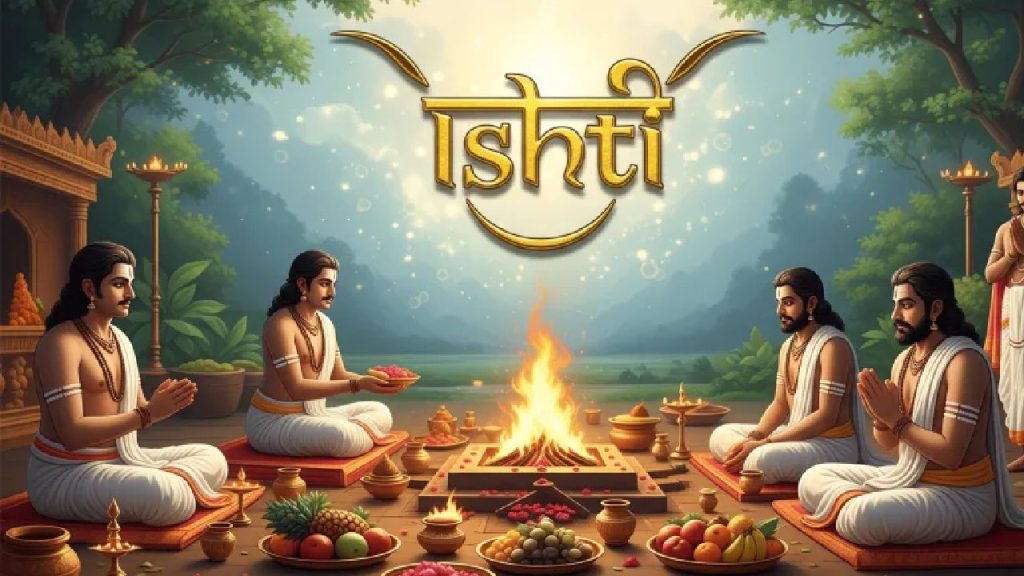
In the Vedic tradition, an Ishti is a specific type of sacrificial ritual performed to appease deities and fulfill particular desires or obligations. Unlike grand Yajnas, Ishtis are more concise ceremonies focusing on specific intentions, such as health, prosperity, or spiritual growth. These rituals involve offerings into a sacred fire accompanied by the chanting of mantras, creating a conduit between the devotee and the divine.
Origin and Etymology of the Word “Ishti”
The term “Ishti” derives from the Sanskrit root “iṣ,” meaning “to wish” or “to desire.” This etymology underscores the ritual’s purpose: to express desires and seek blessings from higher powers. Historically, Ishtis have been integral to Vedic practices, symbolizing the human aspiration to connect with and gain favor from the divine realm.
Connection with Yajnas (Fire Rituals)
Ishtis are a subset of Yajnas, the broader category of Vedic fire rituals. While Yajnas encompass extensive ceremonies like the Ashvamedha (horse sacrifice) or Rajasuya (royal consecration), Ishtis are more focused and accessible. Both involve offerings to Agni, the fire deity, who acts as a messenger carrying the offerings to other gods. This connection highlights the shared foundation of fire as a medium for divine communication.
Purpose of Performing Ishti
The primary purpose of conducting an Ishti is to fulfill specific material or spiritual desires. Individuals perform Ishtis to seek blessings for health, wealth, progeny, or spiritual enlightenment. Additionally, these rituals maintain cosmic order (ṛta) and uphold dharma (righteousness), reinforcing the individual’s role in the universal balance.
Ishti as a Bridge Between Divine and Human
Ishti rituals function as a bridge between the human and the divine. Devotees symbolically surrender their desires and seek divine intervention by making offerings into the sacred fire. This act of devotion and sacrifice fosters a reciprocal relationship wherein the divine responds to human supplications, reinforcing the interconnectedness of all existence.
Types of Ishti and Their Classifications
Nitya Ishti (Daily Offerings)
Nitya Ishtis are daily rituals performed to maintain spiritual discipline and harmony. These obligatory offerings aim to sustain the individual’s connection with the divine. Regular performance of Nitya Ishtis ensures the continuous flow of positive energy and upholds the practitioner’s commitment to dharma.
Naimittika Ishti (Occasional/Specific Purpose)
Naimittika Ishtis are conducted on special occasions or to address specific events, such as eclipses, festivals, or life milestones. These rituals are not daily obligations but are essential for marking significant moments and seeking divine favor during critical times.
Kāmyā Ishti (Desire-Fulfilling)
Kāmyā Ishtis are performed to fulfill particular desires, such as acquiring wealth, progeny, or success in endeavors. These rituals are optional and are undertaken when an individual seeks divine assistance to achieve specific personal goals.
Pākayajna and Haviryajna in Ishti Classification
Ishtis can also be classified based on the nature of offerings:
- Pākayajna: Involves cooked food offerings, typically performed by householders for domestic purposes.
- Haviryajna: Involves offerings of ghee and grains into the fire, often conducted by priests during more formal ceremonies.
These classifications reflect the diversity and adaptability of Ishti rituals to various contexts and needs.
Differences Between Ishti and Other Vedic Rituals
While Ishtis are a form of Yajna, they differ in scale, purpose, and execution. Grand Yajnas like the Ashvamedha are elaborate, state-sponsored rituals with political and cosmic significance. In contrast, Ishtis are more personal, focused ceremonies that fulfill individual desires or obligations. This distinction highlights the accessibility of Ishtis to the general populace, allowing for personal engagement with Vedic practices.
Ritual Components of an Ishti
The Sacred Fire (Agni) and Its Setup
At the heart of every Ishti lies the sacred fire, Agni, revered in Vedic tradition as both a witness and a divine messenger. The preparation of the fire altar, known as Vedi, is done with utmost care. It’s not just a physical space but a sacred zone with spiritual energy. You’ll often see this area meticulously cleaned and purified, symbolizing the cleansing of outer space and inner intent.
Agni isn’t just fire; it’s a deity, a link, a carrier of offerings to the divine. So, when you sit before the flame during an Ishti, you’re not merely performing a ritual. You’re conversing with the universe, lighting up your prayers with spiritual power. Without Agni, the offerings wouldn’t reach the celestial realm, making this component the most crucial channel of the entire ritual.
Offerings (Purodasha, Milk, Ghee, Herbs, etc.)
Offerings in Ishti are more than symbolic; they are expressions of devotion, surrender, and intentionality. Traditional items include Purodasha (a rice cake), ghee (clarified butter), milk, grains, herbs, and sometimes honey or fruits. Each substance has a meaning; ghee symbolizes purity, herbs denote healing, and grains signify sustenance. We give back to the universe that sustains us by offering these natural elements into the fire. Think of it as an act of gratitude, saying, “Thank you for all I’ve received; here’s a part of it in return.” A cycle of give and take keeps us grounded in humility and connection.
Mantras and Recitation Processes
Chanting mantras during Ishti isn’t random; it’s a deeply conscious act of aligning sound with intention. These ancient Vedic verses are composed of vibrations that resonate with universal frequencies. When chanted correctly, they purify the surroundings and activate the spiritual dimensions of the ritual. For instance, the Gayatri mantra, often included in such rites, is not just poetic; it invokes enlightenment and clarity. The recitation process follows a precise rhythm passed down through generations. Each syllable matters, and each pause holds meaning. It’s a meditative experience that invites calm and focus, making the ritual external and deeply internal.
Roles of the Priests (Hotṛ, Adhvaryu, etc.)
Ishti involves specific roles handled by different priests, especially in more elaborate setups. Each priest performs duties that contribute to the flow and sanctity of the ritual.
- Hotṛ: The reciter of Rigvedic hymns.
- Adhvaryu: Responsible for the physical aspects like fire kindling and offerings.
- Udgātṛ: Sings Samavedic melodies, especially in larger Ishtis.
- Brahma: The overseer who ensures that the ritual flows smoothly.
Even if a whole team isn’t present in simpler Ishtis, the spirit of these roles lives on. Whether you chant yourself or are guided by a family priest, these roles symbolize the structured beauty of the ritual, balancing intellect, action, and intention.
Importance of Precision and Purity
Performing an Ishti is not about perfection but demands precision and purity. From the arrangement of offerings to the accuracy of mantra pronunciation, every detail counts. Why? Because rituals are like tuning forks, they need the proper alignment to create harmony. Purity also refers to the state of mind. You’re encouraged to approach the fire with a heart free from greed, anger, or ego. The idea is simple: a pure offering can only come from a pure mind. That transforms the ritual from a mundane act into a sacred one.
Spiritual Significance of Performing Ishti
Purification of Body, Mind, and Soul
When performing an Ishti, you’re not just offering rice or ghee into a fire; you’re offering distractions, negativity, and emotional weight. The flames act like a mirror, helping you see what’s inside and purify it. It’s a deeply cathartic experience. Rising early, preparing with intention, and engaging in sacred recitations cleanse the body and discipline the mind. Even more, they nourish the soul. By consistently participating in this ritual, you create a pattern of spiritual hygiene, a way to release what no longer serves you.
Enhancing Sattvic Qualities
In Vedic philosophy, we often discuss Gunas, three fundamental energies: Sattva (purity), Rajas (activity), and Tamas (inertia). Ishti naturally encourages Sattva. It promotes clarity, calmness, compassion, and a deeper understanding of self and others. Participating in these rituals enhances your spiritual practice and trains your inner world to reflect peace and balance. The offerings, the chanting, and the discipline involved all nurture these higher states of consciousness.
Connection with Cosmic Order (Rta)
One of the Vedas’ most profound teachings is the concept of Rta, the cosmic order that governs all existence. Ishti is one way we align ourselves with this universal rhythm. It’s our contribution to maintaining harmony in the world. Every chant, every offering, every act of sincerity sends out a vibration that contributes to this grand order. In that sense, when you perform an Ishti, you’re not just doing something for yourself; you’re helping keep the universe in balance. That’s powerful.
Spiritual Elevation Through Sacrifice
The sacrifice in an Ishti isn’t about losing something; it’s about transforming. You’re taking something physical and turning it into something sacred. It’s a lesson in letting go, in placing trust in something bigger than you. When you offer with genuine intent, you open yourself to grace, insight, and divine connection. It’s a pathway to self-realization, reminding us that true spirituality is found not in accumulation but in surrender.
Fulfilling Duties (Dharma)
Finally, Ishti helps us fulfill our Dharma, our sacred duty. For householders, that means keeping the home spiritually aligned. For seekers, it’s about deepening their connection with truth. For everyone, it’s a reminder that life isn’t just about doing, about being present, intentional, and aware. By performing Ishti, we honor our ancestors and deities and recommit ourselves to a life of purpose and virtue. It becomes a grounding force that keeps our actions aligned with higher ideals.
Social and Cultural Importance of Ishti
Strengthening Community Bonds
When you think of rituals, you might picture quiet, personal moments. But Vedic rituals like Ishti are often communal, meant to be shared. Gathering around the sacred fire isn’t just about spiritual connection but human connection. Ishti creates a space where families, neighbors, and entire communities come together with a shared purpose.
In a world where individualism often takes center stage, these rituals bring people back to the roots of collective living. Performing Ishti together, during festivals, harvests, or family occasions, builds trust and camaraderie. It allows us to support each other materially, emotionally, and spiritually. Through the shared chants and offerings, we remember that we’re not alone on this path.
Transmitting Vedic Values and Traditions
Every culture must pass on its values and wisdom to the next generation. In Hindu tradition, Ishti becomes a living classroom for transmitting these timeless teachings. When children see elders preparing offerings, chanting mantras, and explaining their meanings, they absorb the actions and essence behind them.
This is how values like reverence, self-discipline, gratitude, and service are passed on, not from books but from lived experiences. You don’t just teach the next generation about Vedic philosophy; you show them. That’s the real beauty of Ishti: it turns rituals into lessons and moments into memories.
Inclusion of All Varnas in Ritual Work
In ancient Vedic society, every individual had a duty to maintain spiritual balance regardless of their role or Varna (social classification). While priests or scholars led certain aspects of rituals, Ishti welcomed the active participation of householders, students, and even community members.
This inclusion cultivated a sense of shared spiritual responsibility. It reminded everyone that the divine isn’t reserved for a select few; it’s accessible to all who approach it with sincerity. And today, that message is more relevant than ever. Ishti gives us a model for inclusivity, where devotion matters more than designation.
Teaching Discipline and Humility
Let’s be honest, rituals can be demanding. They require timing, preparation, concentration, and respect. There’s no space for ego when chanting mantras or making offerings. You’re expected to be present, attentive, and humble. And that’s the point.
Participating in Ishti, especially from a young age, teaches valuable life skills: discipline, patience, respect for process, and humility. In a world that often rewards speed and shortcuts, these rituals teach us to slow down, follow the rhythm, and value sincerity over spectacle. Over time, these traits don’t just stay in the ritual space; they shape how we work, lead, and live. They become part of our character.
Preserving Oral Traditions and Rituals
Before books, there were voices. The Vedic tradition was preserved and transmitted orally for thousands of years. Mantra chanting, pronunciation, and rhythm are all passed down through listening, repeating, and embodying.
Ishti plays a crucial role in keeping that oral heritage alive. When mantras are recited in homes and community spaces, they don’t just fill the air; they echo through generations. Children grow up recognizing the sound of sacred chants before they understand their meaning. Slowly, as they learn the language and the lore, they become carriers of that tradition themselves. By performing and witnessing Ishti, we participate in a powerful act of cultural preservation. We become a living link in a chain that stretches back to the dawn of time.
Ishti and Its Role in Individual and Family Life
Personal Benefits (Mental Peace, Prosperity)
Finding moments of tranquility can be challenging. Engaging in Ishti rituals offers a structured approach to achieving inner peace and prosperity. Making offerings into the sacred fire symbolizes releasing personal desires and attachments, fostering a sense of mental clarity and calmness. This practice not only aids in reducing stress but also aligns one’s intentions with positive energies, paving the way for personal growth and material abundance.
Family Harmony and Unity Through Rituals
Families often seek activities that strengthen bonds and promote unity. Participating in Ishti rituals as a family encourages collaboration, shared responsibilities, and collective spiritual growth. These rituals allow family members to express gratitude, seek blessings, and reinforce mutual respect and understanding. Such shared spiritual experiences can enhance communication and harmony within the household.
Gratitude Toward Ancestors and Deities
Expressing gratitude is a cornerstone of many spiritual practices. Ishti rituals provide a platform to honor and thank both deities and ancestors. By acknowledging the contributions and sacrifices of our forebears, we maintain a connection to our lineage and cultural heritage. This remembrance and reverence foster a sense of belonging and continuity, enriching our spiritual journey.
Ensuring Health and Longevity
Health and longevity are universal aspirations. Certain Ishti rituals are specifically designed to promote physical well-being and extend life. By invoking deities associated with health and vitality and offering specific items into the sacred fire, practitioners seek divine intervention for healing and protection against ailments. Regular participation in these rituals can instill a proactive approach to health and wellness.
Rituals for Conception, Childbirth, and Marriage
Life’s significant milestones, such as conception, childbirth, and marriage, are often accompanied by rituals seeking divine blessings. Ishti ceremonies tailored to these events ensure favorable outcomes and smooth transitions. For instance, couples desiring children might perform specific Ishti rituals to invoke fertility deities, while marriage ceremonies may include offerings to promote harmony and understanding between partners. These rituals underscore the importance of spiritual support during pivotal life moments.
Ishti in the Context of Agriculture and Nature
Appeasing Nature and Seasonal Deities
Agricultural societies have long recognized the influence of natural forces on crop yields. Ishti rituals are crucial in appeasing deities associated with rain, fertility, and seasonal changes. Farmers seek favorable weather conditions and protection against natural calamities by offering prayers and sacrifices, ensuring a bountiful harvest.
Invoking Rains and Fertility of Soil
Timely rainfall and fertile soil are essential for successful farming. Specific Ishti rituals are performed to invoke rain deities and enhance soil fertility. These ceremonies often involve offerings of grains, herbs, and water, symbolizing the community’s reliance on and respect for natural resources. Such practices highlight the interconnectedness between humans and the environment.
Eco-Friendly Practices Rooted in Rituals
Ishti rituals inherently promote eco-friendly practices. Natural materials like wood, ghee, and organic offerings minimize environmental impact. The emphasis on harmony with nature also encourages sustainable living and resource conservation, aligning spiritual practices with ecological responsibility.
Alignment with Lunar and Solar Cycles
Timing is critical to Ishti rituals, which are often aligned with lunar and solar cycles. This synchronization ensures that ceremonies are performed during the most auspicious periods, enhancing their effectiveness. Such alignment also reflects an understanding of cosmic rhythms and their influence on earthly events, reinforcing the importance of living in harmony with natural cycles.
Harvest-Time Ishtis and Their Local Variations
Harvest periods are marked by gratitude and celebration. Harvest-time Ishti rituals vary across regions, reflecting local customs and agricultural practices. These ceremonies thank deities for the bounty received and seek blessings for future planting seasons. By incorporating regional elements, these rituals preserve cultural diversity and agricultural heritage.
Scriptural References and Ancient Texts on Ishti
Mentions in the Rigveda and Yajurveda
Among the oldest sacred texts, the Rigveda and Yajurveda contain numerous references to Ishti rituals. These scriptures detail the procedures, chants, and offerings associated with various Ishti ceremonies, underscoring their significance in Vedic traditions. Such mentions validate the antiquity and sanctity of these rituals in Hinduism.
Taittiriya and Shatapatha Brahmanas
The Taittiriya and Shatapatha Brahmanas comprehensively explain Vedic rituals, including Ishti. These texts elaborate on the ceremonies’ philosophical underpinnings, symbolic meanings, and procedural nuances, offering more profound insights into their purpose and execution.
Smritis and Dharmaśāstra Guidance
Smritis and Dharmaśāstra texts serve as manuals for righteous living, encompassing guidelines for rituals like Ishti. They outline these ceremonies’ ethical and societal contexts, emphasizing their role in maintaining dharma (moral order) and social harmony.
Commentary from Sages Like Yājñavalkya and Manu
Renowned sages such as Yājñavalkya and Manu have provided commentaries on ritual practices, including Ishti. Their interpretations clarify these ceremonies’ intentions and expected outcomes, bridging the gap between ancient practices and contemporary understanding.
Role of Ishti in Ancient Ashvamedha and Rajasuya Rituals
Grand Vedic rituals like Ashvamedha (horse sacrifice) and Rajasuya (royal consecration) incorporated Ishti as integral components. These ceremonies utilized Ishti to invoke specific deities, seek blessings, and sanctify the proceedings, highlighting its versatility and importance in various ritual contexts.
Modern-Day Relevance and Revival of Ishti
Importance in Today’s Spiritual Ecology
In contemporary times, Ishti rituals offer a means to reconnect with spiritual roots. They provide structured practices that foster mindfulness, gratitude, and a sense of purpose, addressing modern life’s spiritual void.
Urban Participation and Simplified Versions
Urban lifestyles may limit access to traditional ritual settings. However, simplified versions of Ishti, adapted for home environments, enable city dwellers to engage in these practices. Such adaptations ensure the continuity of traditions amidst changing living conditions.
Preservation Through Gurukuls and Online Platforms
Educational institutions like Gurukuls and digital platforms are pivotal in preserving and disseminating knowledge about Ishti rituals. Online tutorials, virtual ceremonies, and digital literature make these practices accessible globally, fostering cultural preservation.
Scientific Perspectives on Fire Rituals (Agnihotra)
Scientific studies have explored the benefits of fire rituals like Agnihotra, often associated with Ishti. Research indicates that these rituals can purify the environment, reduce microbial load, and promote mental well-being, bridging the gap between tradition and science.
Youth Engagement and Global Awareness
Engaging the youth in Ishti rituals ensures the transmission of cultural heritage. Educational programs, workshops, and community events can inspire younger generations to appreciate and participate in these practices, fostering a sense of identity and continuity.
Importance of Ishti Across Hindu Calendar Months
The Hindu calendar is deeply interwoven with nature’s rhythms, agricultural cycles, and spiritual practices. Ishti rituals, being an integral part of this system, shift in focus and form throughout the year. Each lunar month brings a unique spiritual flavor and seasonal relevance, guiding the types of Ishtis performed. Here’s a month-wise overview:
Chaitra (March–April)
New Year blessings, fertility, and Navratri rituals
Chaitra marks the beginning of the Hindu lunar year in many regions.
- This month, Ishti is focused on invoking blessings for the year ahead and seeking fertility, growth, and good health.
- Navratri is celebrated this month with special Ishtis dedicated to the Divine Mother (Devi) to awaken spiritual strength.
- Farmers and families alike perform Ishtis for renewal and auspicious beginnings.
Vaishakha (April–May)
Dharma Ishtis, sacred bathing, honoring ancestors
Known for its sanctity, Vaishakha is associated with dharmic living and sacred waters.
- Ishtis focuses on righteous conduct (Dharma) and acts of charity and purification.
- Sacred bathing rituals in holy rivers like the Ganga are accompanied by Ishtis seeking forgiveness and spiritual merit.
- Pitrus (ancestors) are honored through specific offerings, blending devotion with remembrance.
Jyeshtha (May–June)
Heat control, inner fire purification, water offerings
Jyeshtha is the peak of summer, and rituals adapt to its intense energy.
- Ishtis, in this period, seek to balance internal fire (Agni) and manage external heat.
- Cool elements, especially water, and milk, are offered to soothe the environment and the self.
- These rituals are a spiritual cooling mechanism, promoting internal calm and health.
Ashadha (June–July)
Rain prayers, gratitude to Varuna, Chaturmasya initiation
With monsoon clouds approaching, Ashadha Ishtis focuses on invoking Varuna (god of waters).
- Farmers perform rituals seeking rain and fertile lands.
- The Chaturmasya period, a four-month spiritual retreat for sages and householders, begins now.
- Ishtis, during this month, lay the groundwork for introspection, restraint, and divine connection.
Shravana (July–August)
Sacred month, fasting, Ishtis, devotion to Vishnu and Shiva
Shravana is one of the holiest months in the Hindu calendar.
- Ishtis focus on devotional offerings to Lord Shiva and Vishnu, which are often accompanied by fasting and mantras.
- Rituals for spiritual growth, purification, and penance are emphasized.
- Many households perform weekly Ishtis on Mondays (for Shiva) and Thursdays (for Vishnu).
Bhadrapada (August–September)
Ganesh Chaturthi, harvest beginnings, cleansing rituals
Bhadrapada celebrates the arrival of Lord Ganesha, the remover of obstacles.
- Ishtis, during this month, seeks success, wisdom, and prosperity.
- Early harvests begin, prompting offerings of new grains and vegetables.
- Internal and environmental cleansing rituals help prepare for the upcoming spiritual festivals.
Ashwin (September–October)
Durga Puja, Pitru Paksha Ishti for ancestors
This is a spiritually dense month, blending devotion and ancestral reverence.
- The Pitru Paksha period involves Ishtis dedicated to ancestral souls (Pitrus), ensuring their peace and blessings.
- Later in the month, Navaratri and Durga Puja are celebrated, with fire rituals to honor feminine divinity and destroy negative tendencies.
- This month fosters a balance between remembrance and celebration.
Kartik (October–November)
Tulsi Vivah, Diwali Ishti, spiritual renewal
Kartik is considered the most spiritually potent month of the year.
- Diwali Ishtis are performed to invite Goddess Lakshmi and ensure light, wealth, and happiness.
- Tulsi Vivah, the ceremonial wedding of the Tulsi plant with Lord Vishnu, symbolizes spiritual union and harmony.
- The month is filled with lamp lighting, sacred chants, and purification Ishtis, all of which symbolize a return to inner light.
Margashirsha (November–December)
Worship of Shri Krishna, charity-driven Ishtis
This month is revered for the worship of Shri Krishna, mainly as described in the Bhagavad Gita.
- Ishtis focus on selfless action, devotion, and charity.
- Devotees are encouraged to perform acts of giving, both material and spiritual.
- Fire rituals and chants aim to purify karma and deepen devotion.
Pausha (December–January)
Fire Ishtis for warmth and spiritual purification
As winter deepens, fire becomes central to spiritual and physical sustenance.
- Agni-centered Ishtis are performed for warmth, strength, and health.
- These rituals symbolically burn away negativity and stagnation, encouraging transformation.
- Emphasis is on cleansing the home, body, and spirit through disciplined offerings.
Magha (January–February)
Community bathing, learning-focused Ishti
Magha is known for community rituals and the pursuit of knowledge.
- Ishtis are performed during Magha Mela, especially on the banks of sacred rivers.
- Learning and teaching are revered this month, and Ishtis often honor Saraswati, the goddess of wisdom.
- Rituals emphasize mental clarity, truth-seeking, and scholarly devotion.
Phalguna (February–March)
Holika Ishti, end of cycle, preparation for renewal
Phalguna signals the end of the spiritual year with Holika Dahan, a fire ritual symbolizing the destruction of evil.
- Ishtis focuses on letting go of past burdens, ego, and ignorance.
- These rituals clear the path for spiritual renewal and joy, marked by Holi, the festival of colors.
- It’s a time to celebrate rebirth, harmony, and divine playfulness (Leela).
This month-wise mapping of Ishti rituals shows how Vedic tradition weaves seasonal relevance, cosmic alignment, and spiritual discipline into a unified, living practice. Whether you’re a practitioner, scholar, or curious observer, understanding this cyclical rhythm enhances your appreciation of Ishti’s timeless relevance in Hindu life.