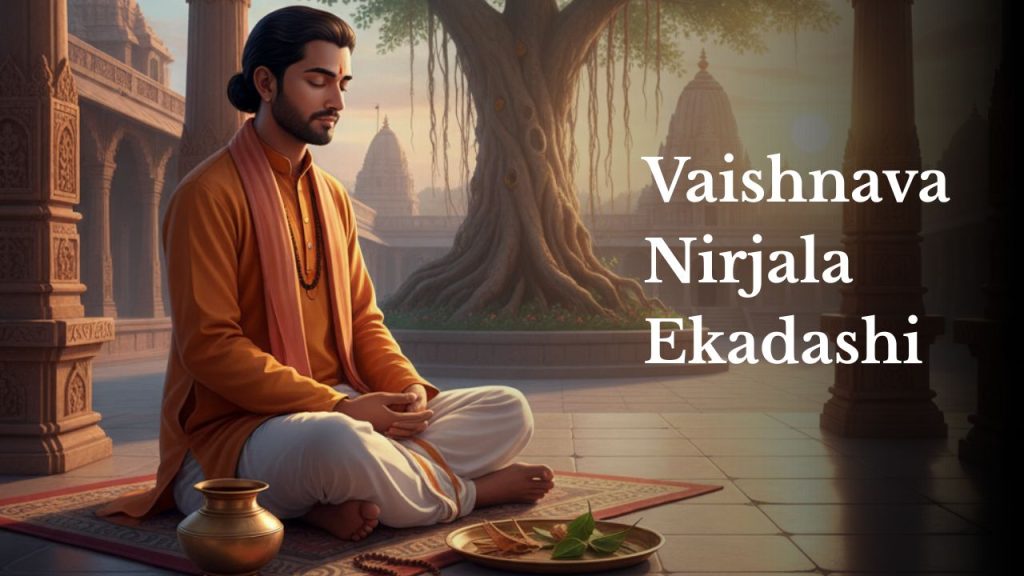
Importance of Vaishnava Nirjala Ekadashi in Shukla Paksha in Jyeshtha
When discussing sacred days that inspire inner transformation, Nirjala Ekadashi stands tall among them. Falling in the Shukla Paksha (waxing phase) of the Jyeshtha month, this day is revered across India and by Vaishnavas globally for its intense spiritual significance and unmatched austerity. It’s not just another fasting day. It’s a heartfelt offering of your time, willpower, and devotion to Lord Vishnu.
What sets this Ekadashi apart is the unique and extreme form of fasting it demands. “Nirjala” literally means without water. On this day, devotees refrain not only from food but also from drinking water for 24 hours. That might sound daunting — and it is — but there’s a divine reason behind it, and we’ll dive deep into that throughout this article. This Ekadashi is also known as Bhimseni Ekadashi or Pandava Nirjala Ekadashi, owing to its origins linked with Bhima, the powerful Pandava brother. Its spiritual benefits are believed to outweigh the other twenty-three Ekadashis combined.
As we go along, you’ll see that this day is not self-denial but self-liberation. Whether you’re a long-time devotee or someone exploring your spiritual side, understanding the value of Nirjala Ekadashi will help you connect more deeply with your inner self and the divine energy surrounding you. Let’s explore what makes this day so powerful, not just in ritual but also in meaning, and how you can bring its essence into your life.
Historical and Scriptural Significance
Behind every sacred observance in Sanatana Dharma lies a treasure trove of stories, lessons, and divine truths — and Nirjala Ekadashi is no exception. Its roots run deep into the pages of ancient scriptures, particularly the Padma Purana and Skanda Purana, which praise its significance and narrate its powerful origin.
The Story of Bhima: The Reluctant Faster
Bhima was known for his unmatched strength and mighty appetite among the five Pandava brothers. While the rest of his brothers observed all Ekadashis as instructed by their spiritual guide, Sage Vyasa, Bhima found it nearly impossible to fast twice a month. Concerned about missing the spiritual merit, he approached the sage with a dilemma — he wanted the blessings of Ekadashi but couldn’t manage to fast regularly.
Understanding Bhima’s struggle, Sage Vyasa advised him to observe just one Ekadashi in the whole year — the Nirjala Ekadashi—during which he completely abstained from food and water. Doing so, he said, would earn him the merit of all 24 Ekadashis combined. And thus, Nirjala Ekadashi became known as Bhimseni Ekadashi.
Divine blessings from Lord Vishnu
In these scriptures, Lord Vishnu promises that those undertaking this fast with sincerity will be blessed with spiritual growth, forgiveness of sins, and eventual liberation (moksha). It’s not just about the act of not eating or drinking — it’s about the intention behind the action, the offering of your willpower, and self-control as a form of devotion.
Vaishnava tradition’s reverence
For Vaishnavas, devotees of Lord Vishnu, this day holds particular significance. It’s considered a golden opportunity to deepen one’s connection with the Lord and make spiritual strides that usually require months, if not years, of practice. So, when we fast on Nirjala Ekadashi, we’re not just following tradition. We’re stepping into the footsteps of Bhima, guided by Sage Vyasa and embraced by the compassion of Lord Vishnu Himself.
Significance in the Vaishnava Tradition
If you’ve ever visited a Vaishnava temple during Nirjala Ekadashi, you’ve probably felt something unique — a sense of focus, calm, and unwavering devotion that permeates every corner. That’s because, for Vaishnavas, this day is not just about following a ritual. It’s about surrender.
Fasting as surrender and purification
In the Vaishnava path, fasting isn’t seen as punishment or hardship. It’s a way to offer your comfort to the Lord. When we abstain from food, we say, “Nothing matters more than my devotion to You.” On Nirjala Ekadashi, this offering goes even further — no food, water, or pure devotion. This kind of surrender is believed to burn away lifetimes of negative karma.
Guidance of Vaishnava Acharyas
Great saints and teachers, such as Ramanujacharya, Madhvacharya, and Chaitanya Mahaprabhu, emphasized the importance of Ekadashi fasting. They taught that fasting on Nirjala Ekadashi cleanses the body, disciplines the mind, and sharpens spiritual focus. In Gaudiya Vaishnavism, this day is celebrated with extended hours of kirtan (devotional singing), scriptural readings, and worship of the deity.
Temple observance and spiritual community
Vaishnava temples worldwide—whether ISKCON, Sri Vaishnava temples, or others—organize special pujas, bhajans, and food donations on this day. Even though the devotees fast, they still prepare meals to be served the next day (Dwadashi) or offer them to others. It’s a beautiful balance of personal austerity and public service.
Core principles of Bhakti Yoga
At its heart, Nirjala Ekadashi is an invitation to dive into Bhakti Yoga — the path of devotion. It challenges us to rise above physical cravings and focus on divine love. When you sit quietly on this day, chant the Hare Krishna mantra, and reflect on your relationship with God, you begin to taste the true nectar of devotion — free from distraction, ego, and desire.
Spiritual Benefits of Observing Nirjala Ekadashi
There are days in the year when time feels like a sacred treasure. Nirjala Ekadashi is one of them. More than just a fast, it’s a spiritual accelerator — a moment where your soul can detox from lifetimes of material accumulation. And the best part? This one day is believed to hold the power of all 24 Ekadashis combined. Let’s understand how deeply it transforms us.
Purification of the soul and destruction of sins
Every action we take, good or bad, leaves an imprint on our soul. Over time, these impressions weigh heavily on our spiritual journey. Nirjala Ekadashi acts like a powerful spiritual cleanser. When you fast with a sincere heart, the burden of known and unknown sins starts to dissolve. According to the Padma Purana, this Ekadashi can purify even the gravest of wrongdoings. You’re not just skipping meals; you’re shedding layers of spiritual baggage. It’s a reset button for your consciousness.
Accumulation of merit equal to all 24 Ekadashis
Think about this: by observing Nirjala Ekadashi with complete dedication, you benefit from observing every single Ekadashi in the year. That’s a lot of spiritual credit for one intense day. This is why even those who may not be able to observe monthly Ekadashis—due to health, work, or life circumstances—take this one day as an opportunity to realign with the divine. Lord Vishnu says, “I see your effort, and I multiply your reward.”
Liberation from the cycle of birth and death (Moksha)
In the broader context, the ultimate goal of all spiritual practices is liberation — moksha. The scriptures repeatedly mention that Nirjala Ekadashi opens the path to this liberation. You draw closer to leaving behind the repetitive cycle of birth, death, and rebirth, inching toward your eternal home with the Supreme. The effort, the discomfort, the discipline — it’s all worth it for the eternal peace that follows.
Enhanced devotion and inner peace
Something shifts when you fast mindfully, chant mantras, and spend the day reflecting on your life and the values that matter most to you. The noise dims. The hunger turns inward. And in that stillness, you meet your higher self. In this space, true devotion blooms, where your connection with Lord Vishnu becomes real and deeply felt.
Opportunity for soul-upliftment through austerity
Austerity (tapasya) isn’t about punishing yourself. It’s about strength — choosing higher values over momentary comforts. Nirjala Ekadashi allows you to say, “I’m more than my cravings.” And with that one declaration, you start rising — spiritually, emotionally, and mentally.
Rituals and Observance Practices
Observing Nirjala Ekadashi is about what you don’t do and how you fill that sacred space with meaning, prayer, and purity. Each ritual is designed to help you tune out the noise of the material world and tune into the divine frequency of Lord Vishnu. Let’s walk through what the day looks like from start to finish.
Full-day fasting without water (from sunrise to the next sunrise)
The most defining feature of Nirjala Ekadashi is its strict fast, which involves abstaining from food and water. The fast begins at sunrise on Ekadashi and ends after sunrise on Dwadashi (the next day). It’s a complete 24-hour period where your willpower is tested. It’s not easy — especially during the hot month of Jyeshtha — but that’s the point.
It’s a demonstration of your love and dedication. You’re saying, “I want to connect with the Lord more than I want to satisfy my body.” That doesn’t mean you should harm your health. If you’re unwell or elderly, you can observe it as per your capacity. The key is sincerity.
Pre-fasting rituals: Bathing, Sankalpa, and Prayers
Your day begins with a purifying bath, ideally before sunrise, to cleanse the body and mind. Then you make a Sankalpa — a heartfelt resolve — before the Lord. You mentally offer the day to Him, praying for strength, clarity, and devotion. Lighting a lamp, delivering flowers, chanting the Gayatri Mantra or Om Namo Bhagavate Vasudevaya, and placing a tulsi leaf at Vishnu’s feet can help you enter a spiritual mindset for the day ahead.
Engaging in Vishnu-seva, chanting of the Hare Krishna Mantra
Once you’re in the flow, you spend the day in Vishnu-seva — devotional service. This includes chanting mantras, reading scriptures, doing japa, or volunteering at a temple.
One of the most recommended practices is chanting the Hare Krishna Maha-Mantra:
Hare Krishna Hare Krishna Krishna Krishna Hare Hare,
Hare Rama Hare Rama Rama Rama Hare Hare
This chant aligns your consciousness with the divine. As you chant, you slowly quiet the mind’s restlessness.
Night vigil (Jagran) and scriptural reading
Many devotees stay awake at night in a vigil of prayers, hymns, and bhajans. Reading from the Srimad Bhagavatam, Bhagavad Gita, or Vishnu Sahasranama is a common practice. There’s a belief that you may lose the spiritual merit if you sleep on Nirjala Ekadashi. So, staying awake, even partially, keeps the inner flame of devotion alive.
Breaking the fast (Parana) on Dwadashi morning
The fast is broken the next morning during a specific Parana time. It should be done with humility and gratitude. Devotees usually break the fast with tulsi water or light fruits, followed by prasad (sanctified food). Importantly, one should also donate food or water to others before breaking one’s fast—an act of compassion and balance.
Health and Scientific Perspective
While the spiritual rewards of Nirjala Ekadashi are immense, let’s not overlook the practical health benefits of this fast. Modern science and ancient wisdom often meet, and the alignment is striking in the case of Ekadashi fasting.
Benefits of intermittent water fasting on metabolism
Health experts talk a lot about intermittent fasting — a method where you restrict food and sometimes water intake for a window of time. It’s said to improve metabolism, insulin sensitivity, and cellular repair. Nirjala Ekadashi, though stricter, works on similar principles. When we fast without food or water, our body enters a repair mode, burning fat stores and repairing damaged cells. This process is known as autophagy, and it’s linked with longevity and reduced inflammation.
Detoxification of the body and cleansing of the digestive organs
Fasting gives your digestive system a break, which is essential. Think about it: we constantly eat, digest, process, and rarely pause. On Nirjala Ekadashi, your digestive tract finally gets to rest and rejuvenate. Without food and water, your kidneys and liver begin to flush out toxins more effectively. Once the fast ends, this helps improve clarity, skin health, and overall energy.
Mental clarity and enhanced willpower through controlled abstinence
One surprising benefit of Nirjala Ekadashi is mental clarity. While the initial hours might be tough, by midday, your mind begins to slow down — and not in a bad way. It becomes calmer and more focused. This clarity arises from reduced blood sugar fluctuations and fewer distractions. Your willpower muscle strengthens, and that discipline spills over into other parts of life—productivity, focus, and relationships.
Role of discipline in physical and psychological health
Discipline isn’t just about spirituality — it’s a core element of mental health. By choosing to abstain, you build inner resilience. You learn to observe cravings without giving in to them. That’s a powerful practice, instant gratification. So, even if you’re not fasting for religious reasons, Nirjala Ekadashi offers an incredible reset for your body, mind, and emotional world.
Ancient practices align with modern wellness trends
Ayurveda, the ancient science of life, has long advocated fasting to balance the doshas (bodily energies). Modern science confirms what our sages practiced centuries ago, demonstrating that spiritual wisdom often prevails ahead of scientific knowledge.
Vaishnava Tradition and Its Unique Observance of Nirjala Ekadashi
For devotees in the Vaishnava tradition, Nirjala Ekadashi is more than a ritual—it is a spiritual celebration, a deep act of love and surrender to Lord Vishnu. It carries extra emotional and devotional weight because it reflects the essence of bhakti (devotion)—giving up everything, even water, for one day of total divine remembrance. Let’s explore how the Vaishnavas observe this day passionately and precisely.
Special significance among Vaishnavas and ISKCON followers
For followers of the Vaishnava Sampradaya, especially those affiliated with ISKCON and other Krishna-conscious movements, Nirjala Ekadashi is a significant highlight of their devotional calendar. Why? Because it aligns perfectly with their life purpose — serving Krishna with every breath, even at the cost of physical discomfort.
Many devotees observe a total Nirjala (without water) fast, regardless of the weather or personal convenience, purely out of love and surrender. It’s not about proving endurance — it’s about saying “yes” to Krishna with your whole being. ISKCON temples worldwide often organize kirtan sessions, Harinam Sankirtan (street chanting), and mass scriptural readings on this day, creating a powerful collective energy.
Emphasis on bhakti (devotion) over ritualism
While the fast is strict, Vaishnavas focus more on the heart behind the act than just the act itself. You’ll often hear: “Fasting is good, but without remembering Krishna, it’s just starvation.” That’s the core principle here. So, the emphasis is on constantly remembering Krishna through japa (chanting), seva (service), and shravanam (listening to divine pastimes). The idea is simple: the fast becomes effortless if your heart is absorbed in God. This approach makes Nirjala Ekadashi feel less like a burden and more like a divine opportunity to increase one’s rasa (relationship) with the Lord.
Celebration of the day in Vaishnava temples and ashrams
Visit a Vaishnava temple on this day, and you’ll feel the vibration in the air — bhajans ringing, incense rising, and hearts dancing. Temples often decorate the deities elaborately, and devotees come dressed in their spiritual best. No feasting happens, but the feast of devotion is immense. Some temples host all-night kirtan marathons, where devotees sing the holy names for hours, soaking the atmosphere in love and joy. For many, these hours feel like eternity — but in the best way possible.
Chanting, kirtan, and collective spiritual upliftment
There’s something profoundly moving about singing together when your stomach is empty but your heart is whole. That’s the magic of kirtan on Nirjala Ekadashi. The collective energy is magnetic. You forget your thirst, hunger, and sleep. You’re just in the moment with Krishna. Genuine spiritual upliftment occurs in this surrender. We break the habits of the body and ego and enter a sacred space where the soul breathes freely.
Fasting as a tool for humility and surrender to Lord Vishnu
In essence, the fast becomes a mirror for your ego. When your body screams for comfort, and you still choose Krishna — that’s surrender. That’s humility. Vaishnavas believe that Nirjala Ekadashi is a chance to say, “I’m not the doer. I depend on you.” And that, right there, is the soul’s most honest prayer.
Acts of Charity and Social Service on Nirjala Ekadashi
While the fast is intensely personal, the spirit of Nirjala Ekadashi extends outward — toward kindness, giving, and compassion. It’s not just about denying yourself; it’s also about giving to others, especially those in need. This day reminds us that genuine devotion isn’t confined to rituals alone—it manifests in how we treat others.
Offering water, food, and shelter to the needy
Nirjala Ekadashi is observed during the scorching summer in most parts of India. The very act of not drinking water yourself makes you hyper-aware of others’ thirst and suffering. No wonder many devotees take this day to distribute drinking water, fruits, and cool shelter to the underprivileged. You’ll often see people on the roadsides setting up water stalls (you) or handing out buttermilk and lemon water. This isn’t just charity — it’s seva (selfless service).
Feeding cows, Brahmins, and devotees as part of Parana
Breaking the fast the next morning isn’t done casually. Traditionally, before you bite or sip water, you feed a Brahmin, a cow, or another Vaishnava. Why? Because it’s a way of honoring divinity in others first. Many temples arrange Annakut (a variety of food offerings) for cows or distribute prasad to devotees. This small act turns your austerity into collective nourishment.
Donations of clothing, water pots, fans, and umbrellas
Some people take the opportunity to donate cooling items — like hand fans, clay water pots, or even umbrellas — especially to laborers working under the sun. These small, thoughtful donations are rooted in genuine empathy, not show. It’s a beautiful reminder that devotion is not just vertical (toward God) but also horizontal (toward fellow beings).
Linking fasting with empathy and compassion in society
The fast forces you to feel the ache of thirst, the pangs of hunger, and the weight of physical limitation. But that’s not a punishment — it’s a lesson in empathy. When we truly understand discomfort, we become more sensitive to the pain of others. This shift, even temporary, can transform society — one heart at a time.
Expanding the spiritual merit by serving others
There’s a divine bonus here: all the spiritual merit you earn from fasting gets multiplied when you combine it with acts of kindness. Many scriptures state that giving water to Nirjala Ekadashi is equivalent to donating the entire Earth. That’s how sacred it is. And that’s the true spirit — sacrifice for God, service for all.
Symbolism and Inner Meaning
What makes Nirjala Ekadashi so powerful isn’t just the discipline’s deep inner symbolism wrapped in each action. Everything about this day — from the thirst to the chant — is metaphorical. It’s not just a ritual; it’s a reflection. Let’s go deeper into its beautiful meaning.
Waterless fast as a symbol of complete surrender
Water is the most basic human need. When you give it up, you say, “God, I choose You over everything — even my survival instincts.” This act of giving up water becomes a metaphor for total surrender, offering even your lifeline at the feet of Lord Vishnu. It’s the ultimate renunciation, yet it fills you with spiritual fullness.
Taming desires through self-control
Fasting isn’t just about food. It’s about training your mind to pause, observe, and redirect. When you resist the impulse to eat or drink, you also begin resisting the urge to gossip, judge, and rush. This self-control spills into other areas of life. You learn to think before reacting, to listen before speaking, and to choose what’s right over what’s easy.
Reconnecting with one’s divine nature
We see who we are beneath the surface when stripped of the comforts we usually lean on. The ego gets quieter. The soul speaks louder. In that silence, you start reconnecting with your eternal self—the divine, timeless, and whole part of you. Nirjala Ekadashi becomes a day when you remember who you are.
Understanding the balance of body and spirit
We’re not here to reject the body but to balance body and spirit. Nirjala Ekadashi teaches that the body matters, but the soul must lead. Fasting isn’t anti-body; it’s pro-spirit. And when the spirit takes the lead, even the body begins to align with higher vibrations of energy and peace.
Living with less to discover more within
Finally, Nirjala Ekadashi is a loud message in a whisper: less is more. When we give up even basic comforts for a day, we discover a richness within that was always waiting, unnoticed beneath the noise.
Relevance in Modern Times
Reviving spiritual discipline in a materialistic world
We live in a world that constantly tells us to “add more.” More food, more screens, more stuff. Nirjala Ekadashi offers a radical pause. It teaches us that real happiness doesn’t come from consuming but from disconnecting and reflecting. This one day gives us space to ask: “Am I living on autopilot? Or am I living on purpose?”
Mental resilience and inner strength in the face of stress
In a high-pressure world, we often feel mentally scattered. But something amazing happens when you fast — you slow down. You feel discomfort, but you also feel clarity. Your mind becomes your ally, not your enemy. This discipline builds resilience — a trait more precious than gold in our stress-filled lives.
Embracing minimalism and mindful living
Nirjala Ekadashi quietly teaches minimalism. You survive—even thrive—with less, and that realization inspires change. You might eat less junk, use fewer distractions, or even declutter your home and habits. This ripple effect starts with a simple fast and leads to mindful living.
Fasting as a spiritual wellness trend in global cultures
Fasting is not just a religious act — it’s part of global wellness movements. People are discovering what our ancient texts have known, from intermittent fasting to juice cleanses. Nirjala Ekadashi isn’t just a religious day—it’s a complete wellness ritual for mind, body, and spirit.
Integrating tradition with daily life for holistic well-being
Ultimately, Nirjala Ekadashi is a bridge between the ancient and the modern. It reminds us that tradition isn’t a burden — it’s a resource; something we can tap into for peace, purpose, and progress. Whether you observe it strictly or gently, this day has the power to center your life around something meaningful. And in a world that pulls us in every direction, that centering is everything.