Understanding about Hariyali Teej
Hariyali Teej is one of the most vibrant and spiritually enriching festivals celebrated predominantly in North India. The term “Hariyali” means “greenery,” symbolizing the lush environment that accompanies the monsoon, while “Teej” refers to the third day of the lunar fortnight. Together, Hariyali Teej marks the onset of a joyful season and celebrates nature’s abundance.
Falling on the Tritiya tithi (third day) of the Shukla Paksha in the month of Shravana (July–August), this festival aligns perfectly with the monsoon season. During this time, fields turn green, trees regain their vibrant hues, and the earth breathes with new life. Hariyali Teej serves as a metaphor for emotional and spiritual renewal, particularly for women, as they gather to celebrate love, devotion, and the power of feminine energy.
At its heart, this festival honors the divine love and union of Lord Shiva and Goddess Parvati. It holds deep spiritual, emotional, and cultural value. Regions like Rajasthan, Uttar Pradesh, Madhya Pradesh, and Bihar continue to bring their unique customs and colors to this day. Still, the essence remains the same: celebrating devotion, nature, and womanhood.
Mythological Significance
The story of Hariyali Teej finds its roots in one of the most powerful narratives in Hindu mythology. Goddess Parvati is believed to have undertaken intense penance over 108 lifetimes to reunite with Lord Shiva. Her unwavering devotion, patience, and self-sacrifice finally moved Shiva to accept her as his consort. This divine union is not just a tale of love; it’s a spiritual journey that highlights the power of persistence and faith.
This festival beautifully symbolizes the eternal bond of Shiva and Shakti, the masculine and feminine cosmic energies. Their union represents balance, harmony, and the creation of something new. The Skanda Purana and Shiva Purana echo these themes, describing how Parvati’s dedication became an embodiment of sacred love.
The tale of Parvati’s 108 rebirths teaches profound lessons. It reflects the strength found in patience, the sacredness of love without conditions, and the reward that comes with undeterred faith. Observing Hariyali Teej is not merely a ritual but a conscious effort to draw inspiration from her life and apply those values in everyday relationships.
Religious Observances and Rituals
Hariyali Teej is deeply rooted in religious observances that blend spirituality with cultural vibrance. The day begins with early morning rituals, including bathing, wearing clean traditional attire, and purifying the home altar. Devotees listen to the Teej Vrat Katha, which narrates the story of Parvati’s penance and divine reunion with Shiva. Listening to this story is considered highly auspicious and spiritually uplifting.
Fasting is central to this celebration. Married women observe it to seek the long life and prosperity of their husbands, while unmarried girls do so in the hope of finding a partner as divine as Lord Shiva. The fast is strict and usually nirjala, observed without food or water. It reflects immense self-discipline and mental strength, a practice believed to purify the soul.
Worship rituals include offering neem leaves, flowers like lotus and jasmine, and adorning swings with marigolds. Swings are not mere playthings here; they symbolize joy, renewal, and connection with nature. Mehendi (henna) holds sacred significance too. Applying intricate henna patterns and dressing in green, considered the color of life and prosperity, completes the spiritual ambiance of the day.
Cultural Celebrations and Social Customs
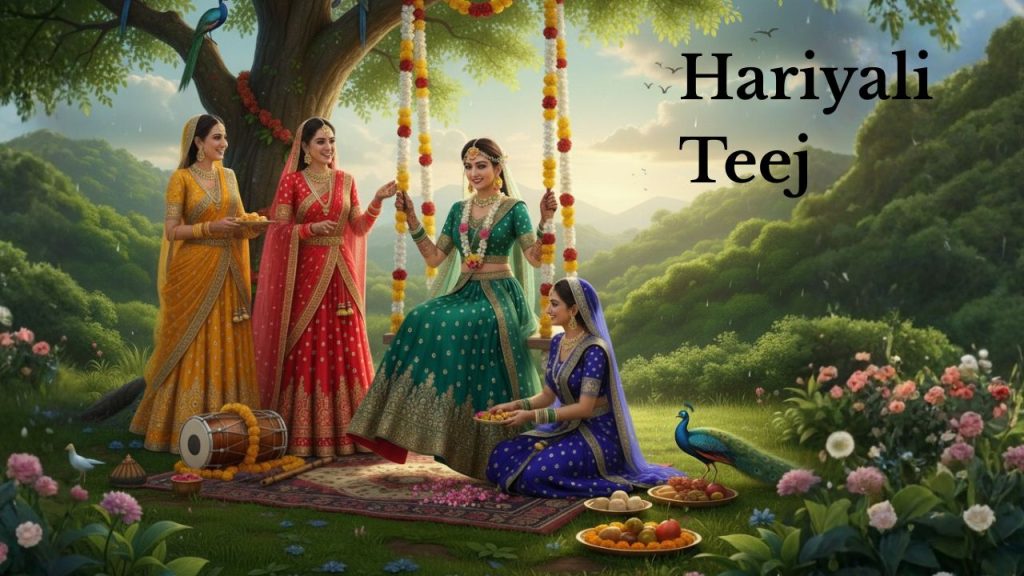
Hariyali Teej isn’t just a spiritual observance; it’s a vibrant social event that brings life to communities. Women, adorned in green sarees and lehengas, gather in open spaces and temple courtyards to sing folk songs, dance, and celebrate togetherness. These traditional Teej geet carry forward cultural wisdom, often expressing devotion to Parvati and narrating tales of love and sacrifice in marital contexts.
The swing or jhoola tradition adds a playful, symbolic dimension. Hung from banyan or mango trees, these swings are decorated with flowers and ribbons. As women take turns on them, they feel an emotional upliftment, a childlike joy that connects them back to simpler times and nature’s rhythm.
One of the most touching customs is Sindhara, a lovingly prepared gift hamper from a woman’s maternal home. It includes sweets such as ghewar, malpua, and kheer, along with bangles, clothing, and cosmetics. These gifts are not just material; they are emotional tokens of love, support, and tradition that have been passed down through generations. The sense of bonding that Teej fosters within families and communities is truly remarkable.
Role in Promoting Marital Harmony
Hariyali Teej holds deep emotional value in the lives of married women. It’s a day set aside to pray for the well-being, long life, and prosperity of their husbands. But more than that, it’s a celebration of the marital bond itself, its challenges, its beauty, and its sacredness.
By fasting and worshipping Parvati and Shiva, women emulate the virtues of loyalty, strength, and patience that Parvati displayed. This sacred mimicry serves as a reminder of the spiritual foundations of marriage. Rather than being merely a social arrangement, marriage is here honored as a spiritual union guided by mutual respect and devotion.
Teej encourages couples to reflect on their relationship, renew their commitment, and deepen their bond. The atmosphere of prayer, cultural celebration, and mutual respect reinforces the values that keep a marriage strong. It’s a beautiful blend of spiritual duty and emotional celebration, one that nurtures harmony and joy within the household.
Environmental and Seasonal Relevance
Hariyali Teej aligns perfectly with nature’s rhythm, arriving at the height of the monsoon season. The earth, freshly bathed in rain, transforms into a lush green paradise. Teej celebrates this abundance and honors nature’s life-giving forces. It’s no coincidence that the word “Hariyali” means greenery; the festival is a tribute to nature’s grace.
Worship during Teej often includes offerings made from neem, tulsi (holy basil), and seasonal flowers. These are not just spiritual symbols; they’re reminders of nature’s medicinal and ecological gifts. Celebrating with such elements fosters eco-consciousness and an appreciation for sustainable living.
In rural communities, Hariyali Teej marks a time of agricultural optimism and social cohesion. Farmers look to the skies with hope, as rain is essential for crops. Songs and dances are performed to express joy for the rain and gratitude for the earth. The festival teaches us that when we live in harmony with nature, both the spirit and the soil thrive.
Regional Variations Across India
Hariyali Teej takes on many hues across India, adding richness to its celebration. In Rajasthan, women decorate swings with flowers, wear traditional leheriya sarees, and participate in grand processions. The royal heritage of Jaipur comes alive with folk performances and temple rituals.
In Uttar Pradesh and Madhya Pradesh, the festival is centered around local temples and family gatherings. Women fast, sing devotional songs, and share Teej prasada (offerings). Meanwhile, in Bihar and Jharkhand, Teej is accompanied by specific folk customs, with a stronger emphasis on fasting and ritual purity.
It’s also essential to distinguish Hariyali Teej from Akha Teej and Hartalika Teej. While Akha Teej marks a day for new beginnings, such as marriages, Hartalika Teej, celebrated in the Bhadrapada month, is known for the self-imposed fast by women for marital bliss. Nepal also observes Teej with unique customs, including community dances and temple visits, where the spirit of Shakti worship is deeply rooted.
Spiritual and Psychological Significance
Beyond its cultural beauty, Hariyali Teej offers a profound spiritual journey. The fast isn’t just physical; it’s emotional and mental. It strengthens inner discipline, patience, and the ability to focus on spiritual growth over material needs. Bhakti (devotion) is at the heart of Teej, turning it into a practice of surrender and connection with the divine.
Through prayers, chants, and storytelling, the day becomes an opportunity for women to reconnect with their higher selves. There’s a cleansing effect, not just of the body, but of the mind. Emotional purification occurs as women release stress, ego, and negativity and immerse themselves in joy, gratitude, and devotion.
Teej also promotes inner strength by encouraging resilience. The act of fasting, often without water, is a testament to willpower. In the quiet of prayer and the joy of shared experience, feminine energy rises, not in protest, but in power. It’s a psychological elevation wrapped in cultural celebration.
Symbolism in Attire, Colors, and Ornamentation
Green is the crown color of Hariyali Teej. It represents fertility, hope, and harmony with nature. Women often wear green sarees or lehengas, sometimes paired with yellow or red colors that symbolize life, purity, and strength. This visual tradition isn’t about vanity. It’s a form of sacred self-expression and a prayer to nature itself.
Red bangles, sindoor (vermilion), and mehendi are adorned with devotion. These are seen as powerful symbols of marriage and femininity. Mehendi, in particular, carries spiritual significance. The darker its stain, the deeper the bond of love is believed to be. Ornamentation becomes an act of devotion, an external mirror to internal beauty.
Jewelry and traditional outfits worn during Teej aren’t just for aesthetic purposes; they preserve our culture. They link generations of women, weaving stories through fabric and gold. The elegance of Teej attire carries grace, pride, and timeless tradition, all wrapped into a spiritual offering.
Contemporary Relevance and Revival
Hariyali Teej continues to thrive in modern India, though the way it’s celebrated has evolved. In urban areas, women’s clubs, residential communities, and online groups organize Teej events that combine tradition with convenience. Digital platforms stream Teej katha, and social media spreads awareness, encouraging the younger generation to participate.
This modern revival hasn’t diluted its essence. It has empowered women to embrace their cultural roots with pride. Teej has become a platform for female bonding and expression. Celebrations now include dance competitions, mehendi contests, and even eco-friendly initiatives that preserve tradition while promoting sustainability.
Among the Indian diaspora, particularly in the United States, the United Kingdom, and the United Arab Emirates, Teej is celebrated with great enthusiasm. Cultural organizations recreate the ambiance of Indian festivals, ensuring the spirit of Hariyali Teej is passed on to future generations. More than a festival, Hariyali Teej today stands as a powerful reminder of spiritual femininity, environmental consciousness, and emotional harmony, values needed now more than ever.