Understanding about Ganesh Visarjan
Ganesh Visarjan marks the heartfelt conclusion of the vibrant Ganesh Chaturthi festival. This beloved Hindu celebration begins with the installation of Lord Ganesha idols in homes and public pandals, welcoming the elephant-headed deity with devotion, enthusiasm, and joy. However, the festival’s actual emotional and spiritual depth is experienced during the Visarjan – the immersion and symbolic farewell of the deity.
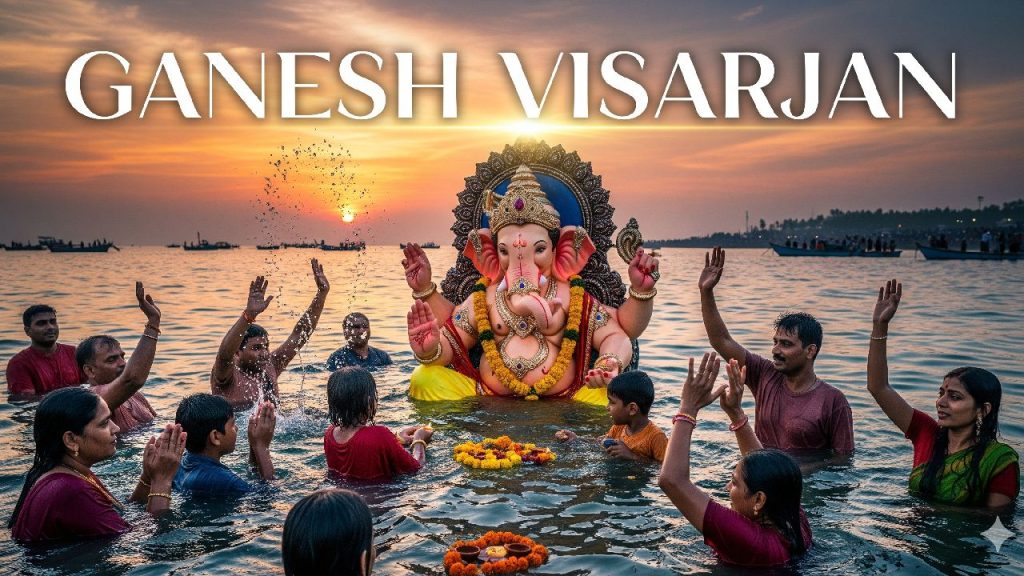
Visarjan, which means “immersion,” refers to the act of respectfully returning the idol of Lord Ganesha to water. This powerful ritual reflects a sacred closure to the deity’s temporary earthly stay. It’s a moment filled with gratitude, joy, and a tinge of sadness as devotees say goodbye, chanting, “Ganpati Bappa Morya, Pudhchya Varshi Lavkar Ya”, a prayerful wish for His return next year.
The festival usually spans 1.5, 5, 7, or 10 days, depending on family customs or community traditions. While some households opt for a shorter celebration, most people observe the complete ten-day period, culminating in a grand farewell procession on Anant Chaturdashi. This progression represents the deepening bond between devotees and Lord Ganesha, enriching each passing day with spiritual resonance.
Beyond its festive energy, Ganesh Visarjan embodies the cycle of life itself: birth, joy, devotion, and ultimately, detachment. It serves as a reminder that all things, even the most divine, are subject to the laws of time and transition. This practice offers a beautiful blend of devotion and detachment, allowing families and communities to reflect, rejoice, and renew their faith.
By the time the immersion begins, emotions are already running high. Children, elders, and youth gather in unity, and drumming beats echo through the streets; every chant carries deep spiritual energy. It is more than a farewell; it’s a reaffirmation of faith, tradition, and the human spirit’s capacity for love and surrender.
Mythological Significance
Ganesh Visarjan isn’t just a ritual; it’s rooted in powerful mythology and profound symbolism. The story of Lord Ganesha’s origin and His return to Mount Kailash unfolds layers of spiritual meaning that continue to inspire generations.
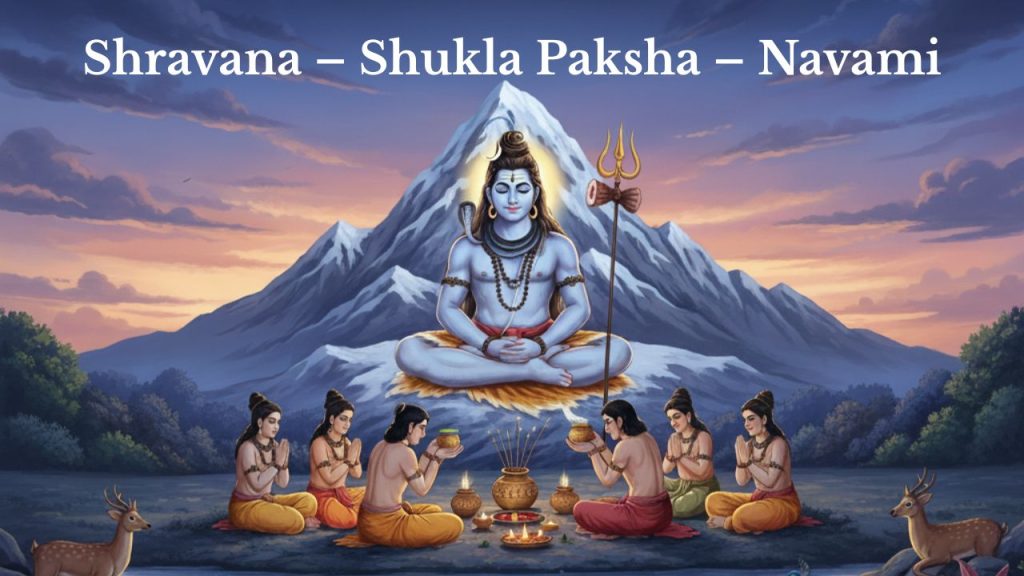
According to Hindu scriptures, Lord Ganesha was created by Goddess Parvati using sandalwood paste. She brought Him to life and assigned Him the duty of guarding her privacy. When Lord Shiva, her consort, attempted to enter, young Ganesha denied entry. A conflict followed, and in his rage, Shiva severed Ganesha’s head. Witnessing Parvati’s grief, Shiva promised to restore Ganesha to life. The head of a baby elephant was chosen, making Ganesha the beloved elephant-headed deity known for His wisdom and innocence.
After His creation, Ganesha was invited to reside on Mount Kailash, but His presence on Earth is believed to be temporary, an annual visit during the festival of Ganesh Chaturthi. This return to Kailash during Visarjan is symbolic of the soul’s journey back to its divine origin. His immersion represents this cosmic homecoming.
Ganesha’s temporary stay on Earth teaches us about the impermanence of life (Anitya), a core concept in Hindu philosophy. Nothing is eternal in the physical world. What arrives must leave. This lesson encourages a mindset of non-attachment and spiritual acceptance of change.
His arrival and departure also reflect the cyclical nature of time, birth, growth, dissolution, and rebirth. Just as Lord Ganesha comes each year, blesses us, and returns, our own lives follow a similar pattern governed by divine law. Recognizing this cycle fosters humility and inspires devotion that transcends physical presence. The Visarjan, therefore, is not an end; it’s a part of a larger divine rhythm, reminding us to live with love, serve with devotion, and surrender to the greater flow of the universe.
Cultural and Ritualistic Importance
Ganesh Visarjan isn’t only a religious observance; it’s a rich cultural event that brings together thousands of people in a spirit of unity, celebration, and shared devotion. The rituals performed during this time are deeply symbolic and emotionally charged, offering a unique blend of traditional customs and modern participation.
From the moment the immersion day begins, devotees prepare for the farewell with rituals like aarti, where songs of praise are sung in front of Lord Ganesha, lamps are lit, and conches are blown. The atmosphere becomes electric with the energy of devotion. These aartis are not just religious routines; they are heartfelt expressions of love, gratitude, and reverence.
The processions leading up to the Visarjan are grand spectacles. Families carry their idols through the streets, accompanied by drummers, dancers, and vibrant chants. Larger community celebrations, or Sarvajanik Ganeshotsav, involve huge groups with elaborate floats and musical troupes, showcasing the grandeur of Indian devotional culture.
Before immersion, devotees offer modaks (sweet dumplings), Ganesha’s favorite treat, along with flowers, coconuts, and sacred durva grass. Each of these offerings carries meaning. Modaks symbolize joy, flowers represent purity, and durva signifies devotion.
This entire ritual, from installation to immersion, promotes community-wide involvement. Neighbors join hands, children learn traditions, and elders share stories. It’s a festival that cuts across generations and social boundaries, promoting shared values, mutual respect, and collective celebration.
The farewell moment, when the idol is taken to a river, lake, or sea for immersion, is deeply sanctified. Families fold hands, eyes moist with emotion, and whisper final prayers. As the idol merges with water, it signifies not loss, but a beautiful culmination of spiritual connection, devotion, and faith.
Spiritual Symbolism of Immersion
Ganesh Visarjan is far more than a physical act of immersing an idol; it’s a deeply spiritual journey that reflects the essence of Hindu philosophy and the human soul’s longing for liberation and connection. At its core, the immersion represents the idea of detachment from the material world.
When a family lovingly crafts or installs a Ganesha idol, they develop a bond with it. They decorate it, worship it, and treat it as a divine guest. Yet, when the time for Visarjan arrives, they willingly let go, immersing it in water with complete acceptance. This act is a powerful spiritual lesson in letting go with love and faith.
In Hindu dharma, the belief in rebirth and spiritual renewal is deeply embedded. The immersion of the idol into water symbolizes the cycle of dissolution and regeneration. Just like the idol dissolves and becomes one with the natural elements, the soul, too, after leaving the body, continues its journey toward the divine. This reminds us to embrace transitions, knowing they are part of a larger divine plan.
The dissolution of the idol into water also holds symbolic meaning about our physical existence. We are all formed from the five elements, earth, water, fire, air, and space, and will eventually return to them. Just as the idol returns to its source, so too does the soul. This realization can bring immense peace, humility, and spiritual grounding.
Importantly, the act of immersion teaches gratitude and humility. It teaches us to appreciate the presence of divine grace in our lives and to release our attachments when the time is right. It’s a reminder that joy and sorrow, welcome and farewell, are both parts of life’s rhythm. Ganesh Visarjan, therefore, becomes a spiritual mirror, guiding us to live with deeper awareness, love, and surrender. It’s a call not just to worship, but to evolve.
Environmental Considerations
One of the most profound shifts in the Ganesh Visarjan tradition has been the growing emphasis on environmental awareness. As people have become more conscious of their ecological footprint, a collective movement has emerged to celebrate this beautiful festival in harmony with nature.
Traditionally, idols were crafted from natural clay, which dissolved easily into water without causing harm. However, over time, the use of Plaster of Paris (PoP) and chemical-based paints became widespread due to their affordability and finish. Unfortunately, these materials don’t dissolve easily and release toxic substances, leading to severe water pollution and harming aquatic life.
Recognizing this impact, communities, NGOs, and even governments have taken steps to promote eco-friendly celebrations. Today, there’s a significant shift back to clay idols, natural colors, and biodegradable decorations. Many artisans are now trained to create environmentally safe idols that preserve both beauty and tradition.
Cities have introduced artificial immersion tanks, allowing idols to be immersed in controlled environments. These tanks prevent contamination of lakes, rivers, and seas. They’re often accompanied by proper disposal systems and volunteers who educate people on responsible practices.
Several community drives and awareness campaigns encourage people to opt for smaller idols, digital pujas, and even symbolic visarjans using water buckets at home. Children and youth have become ambassadors of this green movement, participating in eco-awareness workshops and street plays during the festival.
Preserving the sanctity of the ritual and the health of the planet go hand in hand. By choosing eco-conscious options, we show not only devotion to Ganesha but also respect for the very Earth that sustains us. This evolving practice is a powerful example of how tradition and sustainability can co-exist, protecting what we love while honoring how we love it.
Social and Communal Harmony
Ganesh Visarjan is more than just a religious or spiritual tradition; it’s a powerful celebration of social and communal harmony. The festival, especially during the immersion processions, becomes a platform for people from all walks of life to come together, transcending religious, cultural, economic, and generational boundaries. This shared celebration fosters a unique sense of unity that few events can match.
From the smallest of neighborhoods to the most significant cities, Ganesh Visarjan brings people together in joyful collaboration. It’s not just about devotion, it’s about participation, teamwork, and inclusivity. Children, elders, youth, women, and men all take part in the preparations and the farewell procession. This joint involvement fosters strong neighborhood ties and deepens the spirit of mutual respect.
What’s even more beautiful is how people from other communities and faiths often join the celebrations, highlighting the secular and inclusive nature of Indian festivals. The spirit of Ganeshotsav, especially during visarjan, is inherently communal. It welcomes everyone, creating a space where music, dance, devotion, and joy are shared openly, without discrimination.
These celebrations also serve as a form of civic participation. Local administrations, volunteers, police personnel, and NGOs all collaborate to manage the large crowds, ensure safety, and maintain environmental protocols. This collaboration strengthens the relationship between citizens and institutions, showing what can be achieved when society works together with a purpose.
The processions themselves are cultural exhibitions, with traditional music bands, dhol-tasha troupes, and local artists performing for enthusiastic crowds. This lively expression of joy and farewell becomes a shared memory for entire communities, creating lasting bonds among neighbors and friends. Ganesh Visarjan, through its celebration of togetherness, becomes a festival of unity, a living example of how faith, culture, and humanity can harmoniously co-exist and thrive in shared spaces.
Artistic and Cultural Grandeur
One of the most mesmerizing aspects of Ganesh Visarjan is the sheer artistic and cultural splendor that surrounds the event. From intricately designed idols to the elaborate decorations, music, and traditional performances, every element adds a layer of creative richness and cultural expression that is both dazzling and deeply meaningful.
The artistry begins long before the festival starts. Idol makers, many of whom are traditional artisans with generations of craftsmanship behind them, spend months sculpting Ganesha idols with great care and precision. These idols range from modest clay figures for home worship to towering installations for public pandals. Every curve, expression, and ornamentation reflects the artisan’s devotion and skill, turning clay into a divine presence.
What truly stands out during the visarjan is the use of regional crafts, symbolism, and artistic traditions. In Maharashtra, for instance, the Dhol-Tasha groups dominate the scene with their booming rhythms and synchronized performances. In South India, classical music and dance often accompany the immersion ceremonies. Local attire, cultural motifs, and traditional instruments bring out the diversity of Indian heritage in the most vivid way possible.
Decorations also play a significant role. Whether it’s handcrafted flowers, rangolis, eco-friendly themes, or contemporary designs, each visarjan procession becomes a moving work of art. Communities often organize competitions for the best-decorated idols or most creative processions, encouraging healthy competition and innovation.
Beyond visual appeal, folk dances and street performances add a theatrical vibrance to the farewell. Performers engage with the crowd, telling stories through movement and music, reminding everyone of the tradition’s roots.
This explosion of art and creativity not only honors Lord Ganesha but also serves to preserve local cultural identities, support artisans, and showcase India’s vast artistic wealth. Ganesh Visarjan, therefore, is not just a religious event; it is a canvas of cultural celebration, painting stories of devotion in color, rhythm, and craft.
Emotional and Personal Connection
If there’s one element of Ganesh Visarjan that touches the deepest chords of the human heart, it’s the emotional connection between the devotees and Lord Ganesha. Throughout the festival, a very real and personal bond is nurtured, one that’s both sacred and deeply affectionate.
From the moment Ganesha is brought home or into a pandal, He is welcomed like an honored guest, often like a beloved family member. People talk to Him, confide in Him, sing to Him, and spend time in His presence. This personal relationship grows stronger with each passing day, transforming the farewell into a moment filled with a mix of emotions, gratitude, joy, and sorrow.
On the day of immersion, tears can be seen in the eyes of many, particularly among children and older people. They offer their final prayers with folded hands, whisper wishes into His ears, and promise to welcome Him back next year with even greater love. The chants grow louder and more passionate as the immersion nears, a collective voice echoing both farewell and hope: “Ganpati Bappa Morya!”
In many homes, traditions are passed down through this ritual. Grandparents teach grandchildren the meaning of the visarjan, the stories of Ganesha’s greatness, and the songs that have been sung for decades. These moments strengthen family bonds and cultural continuity.
It’s also a time for introspection and spiritual closure. Devotees often take a quiet moment before immersion to express gratitude for the blessings they have received, ask for protection, or share their burdens in prayer. In this sacred pause, a sense of peace and emotional clarity often emerges.
Ganesh Visarjan becomes a personal pilgrimage, a journey from devotion to detachment, from presence to memory. It’s a reminder that love is not bound by form, and faith remains even when form dissolves. It’s in this emotional depth that the festival becomes truly unforgettable.
Economic and Livelihood Impact
While Ganesh Visarjan is profoundly spiritual and cultural, its economic impact is equally significant. This festival provides livelihoods to countless individuals across the social and financial spectrum, especially those involved in traditional craftsmanship, local markets, and event services.
At the heart of this economic ecosystem are the idol makers, skilled artisans who often come from generations of sculptors. The demand for idols during the festival provides them with vital income that sustains their families throughout the year. By supporting clay idols and handcrafted decorations, people indirectly help preserve these age-old traditional livelihoods.
The economic ripple extends far beyond the idol market. Vendors selling flowers, garlands, incense sticks, modaks, puja items, and decorations see a significant boost in sales during the festival period. Small shops and local businesses flourish as families prepare to host and celebrate Ganesha in their homes.
The festival also generates employment opportunities in event management, stage setup, lighting and sound rentals, transportation, security services, and catering. From organizing pandals to arranging processions, thousands of temporary workers find employment during the festival season. Many young people and daily wage workers rely on this period for a steady income.
Local tourism experiences a surge as people travel to witness grand visarjans, especially in cities like Mumbai, Pune, and Hyderabad. Hotels, transport services, and street food vendors all benefit from the influx of visitors. Even artisans who design eco-friendly idols or sustainable decorations gain visibility and revenue during this time.
Importantly, Ganesh Visarjan sustains a micro-economy that is rooted in tradition yet responsive to modern trends. Eco-conscious products, digital aartis, and mobile visarjan services are growing rapidly. This adaptability ensures that while traditions are preserved, livelihoods are also uplifted.
Through this economic lens, Ganesh Visarjan emerges not just as a spiritual farewell but also as a festival of prosperity and sustenance, providing hope and stability to countless hardworking individuals and communities.
Continuing Legacy
As Ganesh Visarjan concludes the joyful chapter of Ganesh Chaturthi each year, it leaves behind a legacy that continues to evolve, a legacy of devotion, discipline, environmental consciousness, and community strength. It’s a reminder that faith is not static; it grows with us, adapts with time, and carries forward the lessons we choose to embrace.
The immersion of Lord Ganesha is not an end; it’s a continuing cycle, a rhythm of arrival and departure, just like the ups and downs of life. With each farewell, devotees look forward to the next year with greater love and anticipation. This cyclical nature of devotion keeps the spirit of Ganesha alive, not just during the festival, but in daily life.
The evolving nature of the festival, particularly the rise in eco-friendly practices, inclusive celebrations, and digital engagement, demonstrates how tradition can coexist beautifully with innovation. Communities are learning to balance devotion with responsibility, ensuring that spiritual celebrations also reflect care for the planet and society.
Ganesh Visarjan continues to play a decisive role in promoting values of unity, humility, creativity, and gratitude. It’s a ritual that teaches us to embrace joy without clinging, to honor presence and accept absence, and to trust that every goodbye is the beginning of another welcome.
As the chants fade and the idol disappears into the water, what remains is not just memory, but a renewed commitment to live with purpose, serve with love, and return to the divine with each passing season. In its grandeur and simplicity, Ganesh Visarjan is more than a farewell. It is a timeless celebration of the human spirit’s journey through devotion, transformation, and the eternal hope of reunion.