Importance of Dwitiya Shradh in Ashwin
Dwitiya Shradh, observed on the second day of Pitru Paksha, holds a vital place in the spiritual calendar of Hindu traditions. This particular tithi is dedicated to honoring the departed ancestors, acknowledging their contributions to the family lineage, and seeking their blessings for continued peace and prosperity. Dwitiya Shradh is part of the fortnightly ritual known as Pitru Paksha, which falls in the lunar month of Ashwin, a period specially designated for paying homage to forefathers.
The significance of Dwitiya Shradh is intricately connected to the lunar calendar. According to Hindu astrology, each tithi carries a unique energy, and the second day is considered auspicious for performing rituals that strengthen the bond between the living and the departed souls. Observing this day ensures alignment with cosmic rhythms, enabling the family to maintain spiritual harmony.
In the sequence of Shradh rituals, Dwitiya Shradh represents the early observances of Pitru Paksha, setting a precedent for devotion and discipline throughout the fortnight. Performing rituals on this day not only demonstrates respect for ancestors but also helps individuals connect with their spiritual heritage.
During the month of Ashwin, Dwitiya Shradh gains special importance due to its proximity to Navratri festivities. While Navratri celebrates divine energy, Dwitiya Shradh complements it by honoring familial roots and the continuum of life and death. This duality emphasizes a balance between spiritual devotion and ancestral respect, reinforcing the holistic nature of Hindu rituals.
Meaning of Dwitiya Shradh (2nd day of Pitru Paksha)
Dwitiya Shradh is observed on the second lunar day of the Krishna Paksha (waning moon) during Ashwin. The word “Dwitiya” signifies the number two, marking its position as the second day in the sequence of Pitru Paksha rituals. This day is dedicated to honoring ancestors who may have passed away on this particular tithi. By performing rites on Dwitiya Shradh, families demonstrate gratitude and ensure the spiritual well-being of forefathers.
The ritual is deeply symbolic. Each offering, chant, and act of devotion is intended to bridge the gap between the material world and the spiritual realm. It emphasizes that ancestors continue to play a significant role in the lives of their descendants, guiding them through challenges and supporting prosperity. Dwitiya Shradh, therefore, is not merely a ceremonial act but a meaningful act of continuity and remembrance, reinforcing familial bonds that transcend life and death.
Connection with Lunar Calendar and Tithi System
The Hindu lunar calendar plays a central role in determining the observance of Shradh. Dwitiya Shradh falls on the second tithi of the Krishna Paksha in the month of Ashwin. The tithi system divides each lunar month into 30 tithis, each having specific spiritual and ritual significance. This precise timing ensures that the rituals align with cosmic energies, enhancing the efficacy of the offerings.
By observing Dwitiya Shradh according to the lunar calendar, families synchronize their spiritual practices with the moon’s cycles, which are believed to influence the subtle energies of life. This alignment not only brings ancestral blessings but also contributes to personal and familial harmony.
Significance in the Sequence of Shradh Rituals
Dwitiya Shradh sets the tone for the entire Pitru Paksha. As the second observance, it establishes a rhythm of devotion and reverence that continues throughout the fortnight. Each Shradh day has a designated purpose, and the early days, including Dwitiya, are considered essential for initiating the chain of ancestral worship. Neglecting these initial rituals can disrupt the continuity of spiritual benefits intended for both the family and their ancestors.
Relevance during the Month of Ashwin
Ashwin is a month rich with religious significance, hosting festivals like Navratri alongside Pitru Paksha. Dwitiya Shradh during Ashwin is particularly meaningful because it combines ancestral respect with the broader spiritual energy of the season. Performing Dwitiya Shradh in Ashwin ensures that families maintain both cosmic alignment and familial devotion, fostering a balanced spiritual practice that resonates with the rhythms of life and tradition.
Spiritual Importance of Dwitiya Shradh
Dwitiya Shradh is more than a ritual; it represents a spiritual commitment to honoring the departed and ensuring their well-being in the afterlife. Engaging in these rituals strengthens the bond between the living and the ancestors, creating a flow of energy that brings peace, blessings, and prosperity to the family. This day emphasizes that the departed continue to influence the material and spiritual aspects of life.
Honoring Ancestors Who Passed Away on Dwitiya Tithi
Observing Dwitiya Shradh specifically acknowledges ancestors who passed away on this lunar day. Offering prayers, food, and water oblations on this day ensures that these souls receive peace and solace. Honoring ancestors through Dwitiya Shradh reflects the deep cultural belief that the living have a responsibility to remember and care for the deceased. This act reinforces the continuity of family traditions and values, reminding us that respect and gratitude transcend generations.
Belief in Relieving Ancestral Souls from Suffering
One of the spiritual purposes of Dwitiya Shradh is to alleviate the ancestors’ lingering sufferings in the spiritual realm. According to Hindu beliefs, ancestors with unresolved karma may encounter obstacles in their journey after death. By performing the rituals of Dwitiya Shradh, which include offering pinda and tarpan, the family provides nourishment and support to these departed souls. This act not only aids the ancestors but also brings peace to the practitioners, creating a harmonious cycle of spiritual well-being.
Role in Ensuring Family’s Peace and Prosperity
Dwitiya Shradh is intrinsically linked to the welfare of the living. By conducting these rituals with sincerity, families invite ancestral blessings that manifest as peace, prosperity, and protection. The spiritual energy invoked during Dwitiya Shradh helps mitigate misfortunes, enhances family harmony, and fosters growth in personal and professional life. This spiritual reciprocity deepens the family’s connection to its roots, underscoring the belief that honoring ancestors has a positive influence on the present and future.
Spiritual Merit (Punya) Gained Through Ritual Performance
Every ritual in Dwitiya Shradh generates punya (spiritual merit). The act of offering food, performing tarpan, and reciting mantras accumulates positive karma, which benefits both ancestors and living participants. This merit is believed to purify the soul, increase spiritual awareness, and create an atmosphere of divine energy in the household. Regular observance ensures continuous spiritual growth and reinforces the moral and ethical foundations of the family.
Historical and Scriptural References
Dwitiya Shradh is deeply rooted in Hindu scripture and tradition. Ancient texts, such as the Garuda Purana, emphasize the significance of Pitru Paksha, highlighting the importance of performing Shradha for the well-being of ancestors. These references provide a structured approach, outlining the correct methods and timing for rituals.
Mentions in the Garuda Purana and Other Scriptures
The Garuda Purana explicitly emphasizes the necessity of honoring ancestors to ensure their peace and gain blessings. Dwitiya Shradh is mentioned as one of the key observances where offerings and rituals are to be performed for ancestors who passed away on this specific tithi. The Purana also guides the preparation of rituals, including the type of food, water oblations, and mantras that are considered most effective. Other texts, such as the Vishnu Purana and Matsya Purana, also support these practices, reinforcing the spiritual significance of Dwitiya Shradh in the Hindu tradition.
Association with Pitru Yajna (Ancestral Worship)
Dwitiya Shradh is a vital component of Pitru Yajna, a sacred ritual that honors ancestors. The Yajna involves offering food, water, and prayers to the departed souls, invoking their blessings, and ensuring their spiritual well-being. Performing Dwitiya Shradh within this framework not only fulfills religious duties but also strengthens the moral and cultural fabric of the family.
Stories Highlighting the Importance of Dwitiya Shradh
Many legends illustrate the significance of Dwitiya Shradh. Stories passed down through generations emphasize how performing these rituals brought peace to ancestors, resolved familial issues, and ensured prosperity. Such narratives underscore the belief that sincere offerings and devotion can have a profoundly positive influence on the spiritual journey of both the deceased and their descendants.
Connection with Dharma and Karmic Balance
Dwitiya Shradh reinforces dharma, the principle of righteousness, by fulfilling one’s duty towards ancestors. It ensures karmic balance, as performing these rituals mitigates past karmas and creates a positive spiritual environment. Families following these practices believe that the ritual not only honors ancestors but also strengthens moral responsibility, ethical living, and spiritual harmony.
Rituals Performed on Dwitiya Shradh
The observance of Dwitiya Shradh involves a sequence of rituals, each performed with reverence and precision. These rituals are designed to honor ancestors, provide them nourishment, and seek their blessings for the family’s well-being.
Morning Purification and Sankalp (Vow)
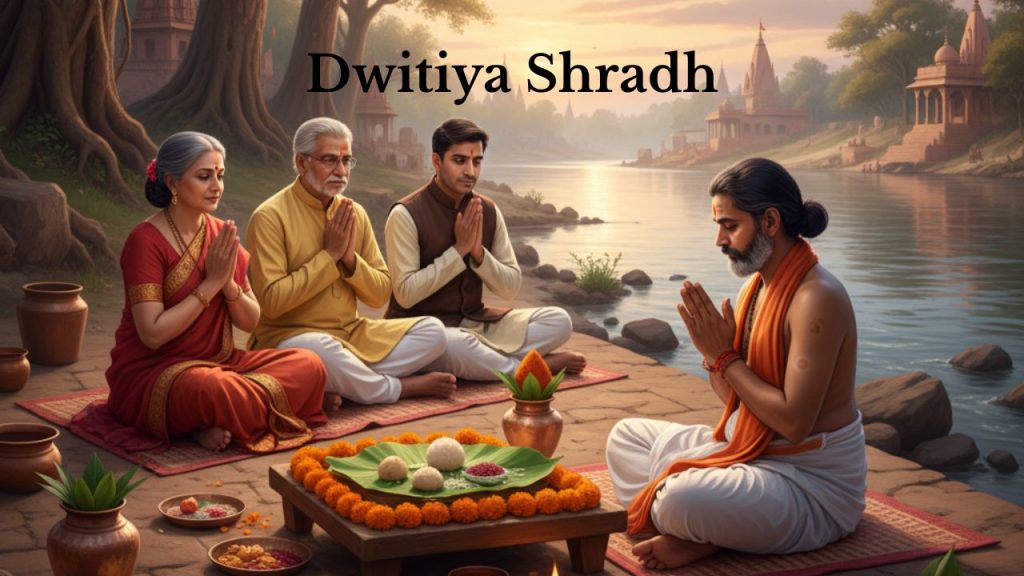
The day begins with thorough purification, including bathing and cleaning the ritual space. A Sankalp, or vow, is then taken, expressing intentions to perform Shradh with sincerity. This preparation ensures a pure and focused mindset, aligning the participant with the spiritual energies of the day. The Sankalp is recited aloud, invoking blessings for the ancestors and setting a spiritual tone for the entire ritual.
Offering of Pindas and Tarpanam (Water Oblations)
The central aspect of Dwitiya Shradh is the offering of pindas (rice balls) and tarpanam (water oblations). Pindas symbolize nourishment for the ancestors, while water oblations are believed to quench their spiritual thirst. Each offering is performed with precision, following prescribed mantras and gestures. These acts create a spiritual connection between the living and departed souls, ensuring the ancestors receive sustenance and peace.
Feeding of Brahmins, Cows, and Needy People
An essential part of Dwitiya Shradh is Anna Daan, or the donation of food. Feeding Brahmins, cows, and the needy is considered a direct offering to the ancestors, as it generates spiritual merit and fulfills dharmic duties. This act embodies compassion, generosity, and the practical application of ancestral respect in daily life, reinforcing social and spiritual values simultaneously.
Prayer Chants and Mantras Recited During the Ritual
Throughout Dwitiya Shradh, specific mantras are recited to honor the ancestors. These prayers invoke blessings, protect the family, and facilitate a peaceful journey for the departed souls. Chanting creates a sacred vibration, enhancing the efficacy of the offerings and ensuring a spiritually charged environment. The combination of rituals, offerings, and prayers establishes a holistic approach to honoring forefathers with devotion and reverence.
Role of Food and Offerings
Food and offerings hold profound significance in Dwitiya Shradh, symbolizing nourishment for the ancestors and acting as a medium to express respect and gratitude. The preparation and presentation of these offerings reflect cultural values, purity, and devotion.
Preparation of Sattvik Bhojan (Pure Vegetarian Food)
Sattvik bhojan, or pure vegetarian food, is central to Dwitiya Shradh. This food excludes onion, garlic, and other tamasic ingredients, reflecting purity and sanctity. Preparing sattvik meals involves devotion, attention to detail, and hygiene, ensuring that the offerings are worthy of ancestral blessings. Traditional dishes often include rice, lentils, sweets, and seasonal vegetables, combining nourishment with spiritual symbolism.
Symbolism of Pinda (Rice-Ball Offering)
Pindas are symbolic representations of ancestors, made using rice, sesame seeds, and water. Each pinda embodies the essence of the departed, providing spiritual nourishment and connecting the living with the ancestral realm. Offering pindas is a profound act of remembrance, emphasizing that the ancestors’ well-being continues to influence the family’s prosperity and harmony.
Importance of Anna Daan (Donation of Food)
Anna Daan, the act of donating food, complements the ritual offerings. By feeding Brahmins, cows, and the needy, families ensure that the blessings of the ancestors manifest in tangible acts of kindness. Anna Daan transforms ritual practice into practical dharma, promoting social welfare while honoring spiritual obligations. It embodies generosity, compassion, and gratitude, reinforcing the interconnectedness of spiritual and social responsibilities.
Restrictions in Food Preparation and Consumption
Strict rules govern the preparation and consumption of food during Dwitiya Shradh. Foods must be freshly prepared, pure, and free from contamination. The person preparing the offerings must maintain spiritual focus, cleanliness, and devotion. These restrictions ensure that the ritual remains sacred, emphasizing mindfulness, discipline, and respect for the spiritual significance of the act.
Regional Traditions in Observing Dwitiya Shradh
Dwitiya Shradh, while adhering to the core principles of Pitru Paksha, exhibits subtle regional variations throughout India. These differences highlight the rich diversity of cultural practices while maintaining the essence of ancestor worship. Understanding these variations helps families adapt rituals according to local traditions while still honoring their ancestors with sincerity.
North Indian Customs and Rituals
In North India, Dwitiya Shradh typically involves elaborate rituals performed by priests or family elders. Offerings are made to ancestors through pindas and water oblations, followed by feeding Brahmins and distributing food to the needy. Special prayers are recited to invoke blessings for the departed souls, and households often organize community gatherings where multiple families perform Shradh together. The emphasis is on detailed rituals, adherence to mantras, and maintaining spiritual purity throughout the day.
South Indian Traditions (Pind Daan, Homa)
In South India, Dwitiya Shradh often includes homa (fire ritual) along with pind daan. The fire acts as a medium to convey offerings to ancestors, while pindas continue to provide symbolic nourishment. Families may also perform specific rituals, such as tarpan near water bodies, believing that water helps cleanse ancestral souls. Regional cuisine prepared as offerings may include traditional dishes such as tamarind rice, coconut-based sweets, and lentil preparations, reflecting local culture while maintaining spiritual intent.
Practices in Bihar, Bengal, and Odisha
In Eastern India, Dwitiya Shradh takes on unique local flavors. In Bihar, rituals may involve visiting ancestral homes and performing Shradh at specific sacred spots. In Bengal and Odisha, the emphasis is on offering fishless vegetarian meals, accompanied by recitations from scriptures such as the Garuda Purana. Families often combine charity with ritual observances, donating to the poor and participating in community prayers, reinforcing both spiritual and social dimensions of Dwitiya Shradh.
Variations in Offerings and Ancestral Worship
Across regions, offerings vary from rice balls, sweets, fruits, and water to local delicacies significant to the culture. While the core purpose remains the same—honoring ancestors—families adapt rituals based on availability, climate, and local customs. These variations highlight the flexibility of Hindu practices while retaining the spiritual essence of Dwitiya Shradh, demonstrating that devotion transcends regional boundaries.
Importance of Dwitiya Shradh in Family Lineage
Dwitiya Shradh serves as a crucial link connecting generations. Observing this ritual ensures that the lineage of the family remains spiritually protected and harmonious. By honoring their ancestors, families recognize the sacrifices and guidance of their forefathers, thereby strengthening the moral and cultural framework for future generations.
Strengthening Bonds with Forefathers
Performing Dwitiya Shradh reinforces the emotional and spiritual connection with forefathers. It serves as a reminder of their guidance, wisdom, and sacrifices. This ritual helps families stay grounded in traditions while instilling values of respect, gratitude, and continuity. By remembering ancestors through offerings and prayers, families nurture a sense of identity and belonging.
Ensuring Blessings for Future Generations
The spiritual energy invoked during Dwitiya Shradh is believed to flow to both ancestors and descendants. By honoring forefathers, families invite blessings that manifest as health, prosperity, and protection for younger generations. This practice emphasizes that ancestral guidance continues to play a pivotal role in shaping the destiny and well-being of the family.
Removal of Pitru Dosha (Ancestral Curse)
Certain astrological beliefs suggest that neglecting ancestral rituals may result in Pitru Dosha, or ancestral curses, which can cause challenges in family life. Dwitiya Shradh acts as a remedy to such doshas, neutralizing negative influences and restoring spiritual balance. Performing these rituals with devotion ensures that the family remains free from karmic obstacles and enjoys harmony in personal and professional life.
Role in Continuity of Cultural Values
Beyond spiritual significance, Dwitiya Shradh strengthens cultural continuity. By performing these rituals annually, families preserve age-old traditions, teach younger generations the importance of respecting their ancestors, and uphold ethical and spiritual values. This continuity fosters a strong family identity, rooted in reverence for both past and future.
Symbolism of Dwitiya Shradh
Dwitiya Shradh is rich in symbolism, reflecting deep philosophical and spiritual meanings. Each element of the ritual conveys lessons about life, death, gratitude, and balance, reinforcing the interconnectedness of the human and spiritual worlds.
Second Day as Symbol of Balance and Duality
Being the second day of Pitru Paksha, Dwitiya Shradh represents duality—the balance between life and death, giving and receiving, and the material and spiritual worlds. Observing this day reminds us that existence is a continuum and that respect for ancestors ensures harmony between the two realms.
Connection with Cosmic Order and Dharma
Dwitiya Shradh aligns with cosmic rhythms, emphasizing the principle of dharma or righteous duty. Performing rituals on this day helps families maintain ethical conduct, spiritual discipline, and social responsibility, reinforcing the balance between earthly obligations and spiritual commitments.
Representation of Gratitude and Remembrance
The offerings, prayers, and rituals performed during Dwitiya Shradh symbolize gratitude and remembrance of the departed. Families acknowledge the sacrifices of their ancestors and express thankfulness for their guidance, protection, and blessings. This act of remembrance strengthens spiritual awareness and encourages mindfulness in daily life.
Role in Maintaining Harmony Between Seen and Unseen Worlds
Dwitiya Shradh bridges the tangible world of the living with the intangible realm of ancestors. Through rituals and offerings, families create a channel for blessings, protection, and guidance, maintaining a harmonious relationship between the material and spiritual spheres. This connection enhances spiritual growth and reinforces familial unity.
Common Misconceptions and Clarifications
Despite its significance, Dwitiya Shradh is often misunderstood. Clarifying these misconceptions ensures that families approach the rituals with proper intent and devotion, enhancing their spiritual efficacy.
Shradh is Not About Mourning but Gratitude
One common misconception is that Shradh rituals are solely for mourning the dead. In reality, Dwitiya Shradh is an expression of gratitude, reverence, and spiritual connection. The focus is on honoring ancestors and seeking their blessings rather than dwelling on loss.
Clarification on Who Should Perform the Rituals
While some believe only the eldest son should perform Shradh, Hindu texts encourage participation by all family members. Devotion, intention, and adherence to ritual protocols matter more than age or gender. Inclusive observance strengthens familial bonds and ensures spiritual benefits for everyone involved.
Misbeliefs About the Inauspiciousness of Pitru Paksha
Another misconception is that Pitru Paksha is inherently inauspicious. In truth, this period is considered highly auspicious for performing acts of devotion toward ancestors. Observing rituals during Dwitiya Shradh brings positive energy, blessings, and spiritual merit.
Importance of Purity, Faith, and Intention
The effectiveness of Dwitiya Shradh lies not in elaborate arrangements but in purity of mind, faith, and intention. Sincere participation, mindfulness, and heartfelt offerings ensure that ancestors receive peace and blessings, transcending external appearances or material displays.
Relevance of Dwitiya Shradh Today
Dwitiya Shradh remains a timeless practice, connecting families to their roots while fostering spiritual growth and ethical living. Its relevance continues in modern life, offering a framework for reflection, gratitude, and cultural continuity.
Timeless Spiritual Significance
Even in contemporary settings, Dwitiya Shradh provides an opportunity to pause, honor ancestors, and reflect on life’s impermanence. The rituals encourage mindfulness, gratitude, and ethical living, promoting inner peace and spiritual alignment.
Relevance in Modern Lifestyles and Families
Amid busy schedules, observing Dwitiya Shradh helps families strengthen bonds and cultivate shared values. Simplified rituals, coupled with sincere devotion, allow participation without compromising daily responsibilities, making the tradition accessible and meaningful today.
Encouragement to Continue Ancestral Traditions
Maintaining Dwitiya Shradh observances preserves ancestral wisdom and spiritual guidance. Engaging younger generations in rituals fosters continuity, ensuring that cultural heritage remains alive, vibrant, and relevant.
Final Reflection on Gratitude, Duty, and Blessings
Ultimately, Dwitiya Shradh is a profound act of gratitude and spiritual responsibility. By honoring ancestors with devotion, performing rituals with sincerity, and embracing cultural values, families invite blessings, harmony, and prosperity into their lives. This practice serves as a timeless reminder that respect for the past nurtures a more potent, spiritually enriched present and a more promising future.