Understanding Saptami in the Hindu Calendar
Explanation of Saptami Day and Its Significance
In the vast expanse of Hindu timekeeping, Saptami holds a special place. Saptami is the seventh day in the lunar calendar, and it is celebrated during both Shukla Paksha (the waxing phase of the moon) and Krishna Paksha (the waning phase). However, the day is most revered during Shukla Paksha, marking a period of growing light and energy. This is particularly significant as it transitions from darkness to light, both physically in the sky and symbolically in our lives.
Saptami’s significance extends far beyond a mere date on the calendar. It is a day for spiritual rejuvenation, deep devotion, and nurturing positive energies. Whether you’re a spiritual seeker or looking to deepen your connection with nature, Saptami provides a chance to renew your relationship with the divine, most notably through worshipping Lord Surya, the Sun God. Performing rituals on this day is believed to enhance physical and spiritual health.
The Hindu Lunar Calendar and the Role of Shukla Paksha
The Hindu lunar calendar is divided into two Pakshas: the Shukla Paksha (the waxing phase of the moon) and the Krishna Paksha (the waning phase of the moon). These phases mark different energy cycles. Shukla Paksha represents the moon’s growing energy, symbolizing positivity, growth, and prosperity. On the other hand, Krishna Paksha signifies a phase of reduction, introspection, and sometimes letting go.
Saptami falls on the seventh day of Shukla Paksha in many months, such as Chaitra, Vaishakha, and Ashwin. The importance of Saptami in the Shukla Paksha lies in its association with increasing light, where all activities and rituals carried out are believed to be magnified and blessed by the growing energy of the moon and the Sun.
Overview of the Chaitra Month and Its Importance in Hindu Tradition
The first month of the Hindu calendar, Chaitra, typically falls between March and April. This month is a time for new beginnings, growth, and renewal. During Chaitra, numerous festivals and auspicious events take place, including the commencement of the Hindu New Year.
The Chaitra month holds significant spiritual meaning, especially for devotees who observe rituals for Lord Rama, as it coincides with his birth on the 9th day of Chaitra (Navami). Saptami, occurring a few days before Ram Navami, creates the perfect spiritual atmosphere for initiating preparations for the grand festival, connecting worshippers with divine energies and blessings.
Connection Between the Chaitra Month and Spiritual Practices
Chaitra is also a month steeped in spiritual practices, where fasting, prayers, and meditation are prevalent. The entire month encourages devotees to focus on purifying their mind and body through practices such as yoga, fasting, and meditation, thus aligning themselves with the natural rhythms of the universe. The moon’s waxing during Shukla Paksha, specifically on Saptami, supports the idea of spiritual elevation and renewal, making it an ideal time to engage in sacred practices for personal growth and divine connection.
Understanding Shukla Paksha and Its Role
What is Shukla Paksha, and how does it differ from Krishna Paksha
Shukla Paksha, the waxing phase of the moon, spans from the new moon to the full moon. This period is regarded as increasing positivity, brightness, and spiritual growth. During this phase, the moon’s luminosity gradually increases, symbolizing the rise of new opportunities, prosperity, and good fortune.
In contrast, the waning phase of Krishna Paksha represents a time for letting go, reflection, and renewal. The moon’s light diminishes during this time, signaling an opportunity for cleansing, introspection, and a focus on inner growth. Therefore, while Shukla Paksha is an auspicious period for starting new ventures, Krishna Paksha is more suited for concluding tasks, contemplating, or embarking on inward journeys.
The Importance of the Waxing Phase of the Moon
The waxing phase of the moon is when the universe seems to be filled with growing energy. It is a time of accumulation, progress, and illumination. As the moon grows from a thin crescent to a full moon, its influence is believed to enhance personal and spiritual power. The moon’s brightness during Shukla Paksha represents knowledge, growth, and prosperity.
Shukla Paksha is an ideal time in Hindu rituals to initiate any auspicious task—spiritual practices, starting new projects, or celebrating festivals like Ram Navami. This is when prayers, offerings, and rituals are believed to bear greater fruit.
Spiritual and Astrological Significance of Shukla Paksha
Astrologically, Shukla Paksha is a time when the moon’s energy is positive and helpful. Actions or decisions taken during this phase are more likely to yield success. Spiritual practices during the Shukla Paksha are known to have a more substantial impact on both the body and mind.
Astrologers recommend beginning new endeavors during Shukla Paksha, such as housewarming ceremonies, business ventures, or sacred celebrations. It is a time of harmony, growth, and heightened spiritual receptivity, and many believe that by aligning themselves with the lunar cycle, they can maximize their potential.
How Shukla Paksha Influences Daily Activities and Rituals
In Hindu tradition, the waxing phase of the moon is associated with an outward focus. It’s a time when rituals and activities are performed to align oneself with the flow of increasing energy. Rituals during this time involve offerings, prayers, and meditation focused on creation, growth, and prosperity.
Additionally, Shukla Paksha is associated with auspicious events. Every Shukla Paksha day holds significance, and activities performed on these days are believed to benefit from the moon’s positive energy. Whether it’s personal growth, professional success, or spiritual development, the energy of Shukla Paksha amplifies efforts, making it a preferred period for important ceremonies and celebrations.
The Rituals and Traditions of Saptami
Specific Prayers and Mantras for Saptami
On Saptami, many devotees recite specific prayers and mantras to invoke divine blessings, especially from Lord Surya, the Sun God. One of the most common mantras recited on Saptami is the Surya Ashtakshara Mantra:
“ॐ सूर्याय नमः” (Om Suryaya Namah)
This mantra is dedicated to the Sun and is believed to bring strength, vitality, and clarity. Many also recite the Aditya Hridayam, a powerful hymn that praises Lord Surya, offering protection, success, and spiritual enlightenment.
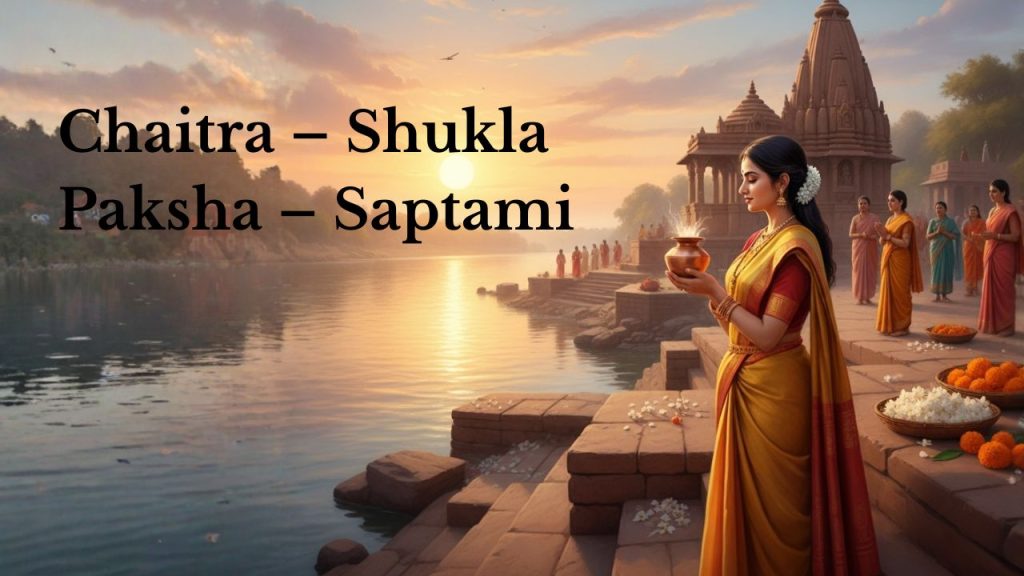
These prayers are often performed at sunrise, with devotees offering water and flowers to the Sun God, invoking his divine light to dispel darkness from their lives. The practice is not just about ritual; it’s an effort to absorb the spiritual energy of the Sun, which plays a vital role in one’s physical and mental well-being.
Offerings Made on This Day (e.g., Fruits, Flowers, etc.)
Offerings on Saptami are an essential part of the day’s rituals. The most common offerings are fresh fruits, flowers (particularly marigolds or sunflowers, symbolizing the Sun God), and water. These offerings honor the divine energies and receive blessings for health, prosperity, and spiritual growth.
A popular offering involves pouring water mixed with turmeric or saffron into a vessel and offering it to the Sun as a symbol of purity and devotion. This act serves a spiritual purpose and is believed to cleanse one’s surroundings and oneself, making way for positive energies.
Saptami Fasting and Its Health Benefits
Fasting on Saptami is another key tradition. Devotees either observe a complete fast or restrict their diet to fruits and water, focusing on mental clarity and spiritual growth. Fasting is believed to purify the body and mind, creating space for divine energies to enter.
Moreover, fasting has numerous health benefits, including detoxification and mental clarity. By aligning the body with the lunar cycles, fasting on Saptami boosts vitality and promotes long-term well-being.
The Significance of Charity and Giving on Saptami
Another essential aspect of Saptami is the emphasis on charity and selfless giving. Today, many people offer food, clothes, or money to those in need. The act of giving is said to enhance the spiritual energy of the giver and provide divine blessings in return. It is believed that acts of charity performed on Saptami bring good karma and help remove obstacles from one’s life.
Charity on Saptami can take many forms, whether it involves donating to a temple, feeding those experiencing poverty, or supporting a specific cause. Balancing personal desires with the broader community’s needs is essential, fostering harmony and spiritual well-being.
Saptami and Its Connection to Lord Surya
The Worship of Lord Surya (Sun God) on Saptami
On Saptami, Lord Surya is worshipped with great devotion, as he is the source of all life and energy. Surya’s energy is believed to infuse strength, vitality, and clarity into the lives of his devotees. During this day, special prayers and rituals are conducted to honor him, and the rising Sun is often greeted with offerings of water, flowers, and incense.
Lord Surya is not just a celestial body but also a deity who provides physical and spiritual nourishment to all living beings. Worshipping Surya on Saptami is a way to honor his divine energy and invite his blessings into one’s life. Many devotees believe that by seeking Surya’s grace on Saptami, they can overcome obstacles and achieve success in both material and spiritual endeavors.
The Importance of Surya in Vedic Rituals
Surya plays a central role in Vedic rituals, where his divine energy is believed to dispel darkness and ignorance. In ancient texts, Surya is often described as the giver of life, vitality, and knowledge. The Sun is often regarded as a symbol of truth, wisdom, and enlightenment, making it a crucial element in many spiritual practices.
In Vedic rituals, Surya is invoked for his blessings of good health, wealth, and prosperity. Offerings made to him are believed to purify the devotee’s body and mind, elevating them to a higher spiritual state.
The Significance of Surya’s Rays in Spiritual Healing
Surya’s rays are known for their healing properties, both physically and spiritually. Sunlight improves mood, boosts energy, and supports overall health. Spiritually, Surya’s rays are believed to cleanse the aura and bring clarity to the mind.
On Saptami, devotees often stand before the rising Sun and absorb its rays, symbolizing the infusion of divine energy. This practice is not just for physical health but is believed to enhance spiritual awakening, remove doubts, and bring peace.
Surya and His Influence on Physical and Mental Well-being
Surya’s impact on the human body is profound. Exposure to sunlight is believed to help balance the body’s energy, boost immunity, and increase vitality. Sunlight also enhances serotonin levels, improving mood and mental health.
Devotees who worship Surya on Saptami do so with the belief that his blessings will bring physical healing and mental clarity. The Sun’s influence today is said to promote a sense of well-being and vitality in all aspects of life.
Astrological Influence of Saptami in Shukla Paksha
Saptami’s Impact on Planetary Movements and Their Effects
Astrologically, the day of Saptami is significant due to its connection with the lunar and solar cycles. The energy of the Sun and the Moon during Shukla Paksha is considered highly favorable for starting new ventures and making decisions. The planetary alignment during this time is believed to enhance one’s ability to make sound judgments and attract success.
The position of the moon and the Sun during Saptami is considered auspicious for aligning with the universe’s natural rhythms. Astrologers recommend using this period to initiate activities that require growth, focus, and clarity.
How Saptami Is Linked to Auspicious Astrological Alignments
Saptami’s influence on astrological events is seen as a time when the energies are most balanced, offering favorable conditions for spiritual growth, business ventures, and relationship building. The favorable alignments on this day offer a great opportunity to work with the natural forces of the universe, ensuring success and prosperity.
This day is considered ideal for performing rituals to attract positive planetary influences. People often consult astrologers during this time for guidance on making key life decisions or embarking on new beginnings.
The Role of Saptami in Enhancing Positive Energy and Removing Obstacles
Saptami is considered a powerful day to remove negative energies and obstacles. The growing moon, combined with the energy of the Sun, is believed to create an environment where positive forces thrive. Many people take this opportunity to cleanse their spaces, perform rituals, or take actions aligned with their highest potential.
This day is ideal for addressing persistent problems in life. Whether they stem from personal struggles or external challenges, Saptami offers an opportunity to rid oneself of negativity and create a fresh path forward.
Significance of Performing Auspicious Activities on This Day
Performing auspicious activities on Saptami is a common tradition. Many people schedule significant events, such as starting a new business, moving into a new home, or embarking on a journey during this time. The belief is that Saptami’s energy can magnify the impact of these activities, ensuring their success.
The day is also suitable for spiritual practices, like beginning a new course of study, starting a new job, or making long-term plans. The day’s energy is considered a key time for setting intentions and making decisions that will have a lasting, positive impact.
Saptami’s Importance in Regional Festivals
Role of Saptami in Regional Festivals like Ram Navami
Saptami plays a crucial role in many regional festivals, especially Ram Navami. Ram Navami, which marks the birth of Lord Rama, is celebrated with great enthusiasm across India. The Hindu calendar often falls on the 7th day of the Chaitra month, which coincides with the Shukla Paksha Saptami. On this day, devotees observe various rituals, including fasting and offering prayers to Lord Rama, seeking his blessings for health, prosperity, and spiritual well-being. This connection to Saptami amplifies the spiritual significance of the day, particularly for those who dedicate it to worshiping Lord Rama and participating in temple processions.
Cultural Significance Across Different Parts of India
The significance of Saptami is not confined to just one region; it is celebrated differently across various states. For instance, in some parts of northern India, Saptami is part of the grand celebrations during Durga Puja, which marks the beginning of the festive season. Saptami is associated with the harvest season in other regions, where special prayers are offered for bountiful crops. It highlights how a day in the Hindu calendar can hold diverse cultural meanings depending on the local traditions and customs.
The Rituals and Celebrations Observed During Saptami in Various States
In Maharashtra, for example, Saptami is celebrated as part of Gudi Padwa, the New Year festival that marks the onset of spring. People clean and decorate their homes, pray for prosperity and hoist the ‘gudi’ (a decorated flag) outside their homes. In Tamil Nadu, Saptami falls during the Navaratri festival, during which rituals such as the ‘kolu’ (a display of dolls) are performed. Across various states, Saptami remains a day for spiritual cleansing and initiating new beginnings.
How Saptami Marks the Beginning of Various Seasonal Celebrations
Saptami is not just significant on its own; it often serves as a harbinger for several seasonal celebrations. New crops arrive, new ventures begin, and new seasons, like spring, are ushered in, all coinciding with this day. These seasonal transitions are considered opportunities for people to renew themselves spiritually and physically, making Saptami a time for spiritual and physical rejuvenation.
The Role of Saptami in Spiritual Growth and Meditation
How Saptami is Considered a Day for Spiritual Purification
In Hindu tradition, Saptami is considered an auspicious day for spiritual purification. The moon’s alignment during Shukla Paksha is believed to create an atmosphere conducive to self-reflection and inner peace. Devotees use this day to cleanse their minds and spirits through fasting, prayer, and meditation. The act of purification on Saptami helps remove negative energies and prepare oneself for new beginnings.
Ideal Time for Meditation, Prayer, and Introspection
Saptami provides an ideal opportunity for introspection and meditation. The quiet, peaceful nature of the day encourages personal growth, and it is considered a time when the moon’s energy helps individuals align with their spiritual purpose. For those practicing meditation, it is said that observing the day can amplify one’s ability to focus and connect deeper with one’s inner self. Early morning is considered the most beneficial time for prayer, and devotees often wake up before dawn to perform their rituals.
The Benefits of Observing Saptami for Mental Clarity and Peace
Many people find a significant sense of mental clarity by observing Saptami through fasting or focused rituals. Disconnecting from worldly distractions allows individuals to center themselves and foster inner peace. These practices help achieve balance, reduce anxiety, and promote a positive mental outlook. In a world filled with constant distractions, the ritual observance of Saptami provides an opportunity for individuals to reconnect with their spiritual core.
Connection Between Spiritual Practices and the Moon’s Influence on Saptami
The moon’s influence on Saptami, particularly during the waxing phase (Shukla Paksha), is pivotal to its spiritual significance. It is believed that the moon, as it grows in light, symbolizes the growth of spiritual knowledge and clarity. During Saptami, many practitioners engage in activities such as meditation or prayers at the exact times the moon is transitioning, believing that this synchronicity enhances the benefits of their spiritual practices. The moon’s calming energy encourages individuals to focus their energies inward.
Symbolism of Saptami in Hindu Mythology
The Mythological Stories Associated with Saptami
Saptami is often associated with various mythological stories that highlight the significance of the seventh day. One prominent myth revolves around Lord Surya, the Sun God, who is worshipped to this day. According to one story, Lord Surya rides a chariot pulled by seven horses, representing the seven days of the week. The significance of Saptami lies in its association with the seventh horse, a symbol of immense power and vitality.
Saptami’s Connection to Various Deities and Divine Energies
Saptami is special because it is associated with deities such as Lord Surya, Lord Vishnu, and Goddess Durga. The day’s energy is thought to align with the forces of creation, preservation, and destruction. Worshipping these deities on Saptami is believed to invoke divine protection and blessings. It is said that by seeking the blessings of these powerful deities, individuals can overcome obstacles and gain strength in their lives.
How Ancient Texts Highlight the Importance of Saptami
Ancient texts such as the Puranas and Vedic scriptures mention the importance of Saptami in numerous instances. It is a day of auspiciousness on which rituals are believed to yield immense benefits. Saptami is often regarded as a day on which prayers for material and spiritual growth are answered, underscoring its significance in human well-being.
Symbolic Meaning of Saptami in the Context of Creation and Destruction
The seventh day is viewed as the midpoint between creation and destruction. In Hindu mythology, Saptami symbolizes the balance between the forces of life and death, as well as creation and dissolution. This duality underscores the importance of this day in fostering harmony throughout the universe. Worshipping Lord Surya on this day represents honoring both creation and preservation while understanding that destruction is an integral part of life’s cycle.
Scientific Perspective on Observing Saptami
The Science Behind Fasting on Saptami and Its Health Benefits
Fasting, especially during auspicious days like Saptami, has been shown to have multiple health benefits. Scientifically, fasting detoxifies the body, reduces inflammation, and improves metabolic health. It helps in resetting the digestive system, providing it with much-needed rest. On Saptami, fasting is a spiritual practice that helps cleanse the body, enhancing overall health and vitality.
Solar Energy and Its Effects on Human Health and Vitality
The energy of the sun, particularly during Saptami, is believed to have an impact on human health. Sunlight is a natural source of vitamin D, which is crucial for maintaining bone health and supporting the immune system. On Saptami, people often pray to the Sun God (Lord Surya) for vitality and strength, acknowledging the sun’s critical role in sustaining life on Earth. The sunlight, meditation, and prayer on this day can promote physical well-being.
The Role of Nature and Its Cycles in Spiritual Practices
The alignment of the moon and sun during Saptami reflects the intricate cycles of nature. These natural cycles are believed to influence human behavior, spiritual practices, and overall health. By aligning oneself with these cycles through fasting, prayer, and meditation, individuals can harmonize their internal rhythms with the natural world, fostering better mental clarity and emotional balance.
Why Observing Saptami Can Lead to Personal Growth and Wellness
By participating in Saptami rituals, individuals cultivate mindfulness, improve their physical health through fasting, and enhance their emotional and spiritual well-being. The balance between physical purification (fasting) and spiritual elevation (prayer and meditation) enables individuals to lead more balanced and fulfilled lives. Observing Saptami is a holistic approach to personal growth, fostering wellness in mind, body, and spirit.
Embracing the Power of Saptami
The Spiritual, Astrological, and Health-Related Significance of Saptami
Saptami is a significant day in spiritual and astrological contexts. This day brings multiple advantages, from its connection with Lord Surya and the moon’s influence to its health benefits through fasting. It is a day to reflect on the cycles of life and align ourselves with cosmic energies, bringing about a sense of harmony and well-being.
Encouraging Readers to Observe Saptami for Personal and Collective Well-being
Embrace the practices of Saptami, whether through fasting, prayer, or meditation. By observing this day, you can enhance your spiritual and physical well-being. It’s not just about personal growth but also about collective healing and fostering positive energy within your community.
The Importance of Aligning Oneself with Cosmic Cycles
Aligning with the cosmic cycles through the observance of days like Saptami reminds us of our connection to the universe. It invites us to live in harmony with nature’s rhythms, leading to a balanced and fulfilling life. By aligning ourselves with these cycles, we tap into a deep source of energy and wisdom.
Closing Message on the Harmony Between Tradition, Spirituality, and Modern Life
Saptami offers an opportunity to pause, reflect, and reconnect with our roots. It is a beautiful reminder of the importance of tradition and spirituality, helping us navigate life with purpose and clarity. Embrace the power of Saptami, and let it guide you toward a harmonious and enriched life.