Importance of Bhai Dooj
Bhai Dooj, a festival that embodies the profound bond between brothers and sisters, is celebrated with immense joy and devotion across India. Literally translated, “Bhai” means brother, and “Dooj” signifies the second day after Diwali, marking a special day dedicated entirely to sibling relationships. This festival is an expression of love, protection, and mutual respect, making it a deeply cherished occasion in Hindu culture. On Bhai Dooj, sisters pray for their brothers’ long life, prosperity, and happiness, while brothers reaffirm their commitment to safeguard and support their sisters throughout life.
The festival falls in the Kartika month of the Hindu lunar calendar, specifically on the second day of the Shukla Paksha (waxing phase of the moon) following Diwali. This timing places it perfectly within the festive season when homes are illuminated with lamps, sweets are exchanged, and spiritual activities abound. Bhai Dooj forms a seamless continuation of Diwali celebrations, adding a familial and emotional layer to the spiritual significance of the period.
Its cultural and emotional significance cannot be overstated. While Diwali celebrates the victory of light over darkness and good over evil, Bhai Dooj emphasizes the personal relationships that sustain families. It is a moment to pause, cherish, and reinforce the bonds that hold family units together. Across India, communities in Uttar Pradesh, Maharashtra, Gujarat, Bengal, and Nepal partake in this festival, each bringing their own regional customs and traditional flavors to the celebration. Beyond rituals, Bhai Dooj offers a platform for families to come together, mend strained relations, and create memories that resonate for a lifetime.
The festival, though centered around brothers and sisters, reflects the universal themes of care, protection, and familial duty. Its celebration serves as a reminder of the importance of nurturing relationships and the joy of giving and receiving love within a family. Bhai Dooj remains an integral part of the collective consciousness, solidifying its position as one of the most endearing and enduring festivals in the Hindu calendar.
Historical and Mythological Background
The origins of Bhai Dooj are steeped in mythology and ancient traditions, each reflecting the enduring respect and affection between siblings. One of the most popular legends traces the festival to Yama, the god of death, and his sister Yamuna. According to the story, Yama visited his sister on this day after many years. Yamuna welcomed him with a warm ceremony, performed the tilak ritual on his forehead, and prayed for his well-being. Touched by her gesture, Yama promised that brothers who receive such blessings from their sisters on this day would be granted a long life. This story forms the spiritual foundation of Bhai Dooj, highlighting the protective and nurturing role of sisters in a brother’s life.
Another significant narrative involves Lord Krishna and his sister Subhadra. After Krishna defeated his enemies, Subhadra welcomed him with sweets, rituals, and blessings. This act of celebration and care by sisters towards their victorious brothers became a symbolic gesture that has been carried forward into the modern observance of Bhai Dooj. These mythological accounts underline the essence of devotion, gratitude, and familial love, emphasizing the sacred duty of siblings to care for one another.
Bhai Dooj also holds symbolic significance in Hindu scriptures. Ancient texts and regional folklore describe similar celebrations where sisters perform ceremonies to ensure the protection and prosperity of their brothers. Over centuries, these rituals have evolved, incorporating regional variations, festive foods, and community celebrations. Yet, the core principle remains unchanged: the festival is a heartfelt expression of the sibling bond.
The evolution of Bhai Dooj rituals mirrors the broader development of Hindu cultural practices. From intimate home ceremonies to public celebrations across neighborhoods, the festival has grown in scale while retaining its essence. Today, while urban celebrations may include contemporary gifts and modern conveniences, the festival still honors its mythological roots, blending tradition with present-day expressions of love and familial devotion.
Religious Significance
Bhai Dooj is deeply rooted in Hindu religious traditions, intertwining devotion, spiritual protection, and family values. At its core, the festival honors Yama, the god of death, symbolizing life, mortality, and the enduring protection that siblings offer each other. The legend of Yama and Yamuna reinforces the spiritual belief that performing the Bhai Dooj rituals brings safety, prosperity, and longevity to brothers. This religious significance transforms the festival from a social celebration into a spiritually charged occasion.
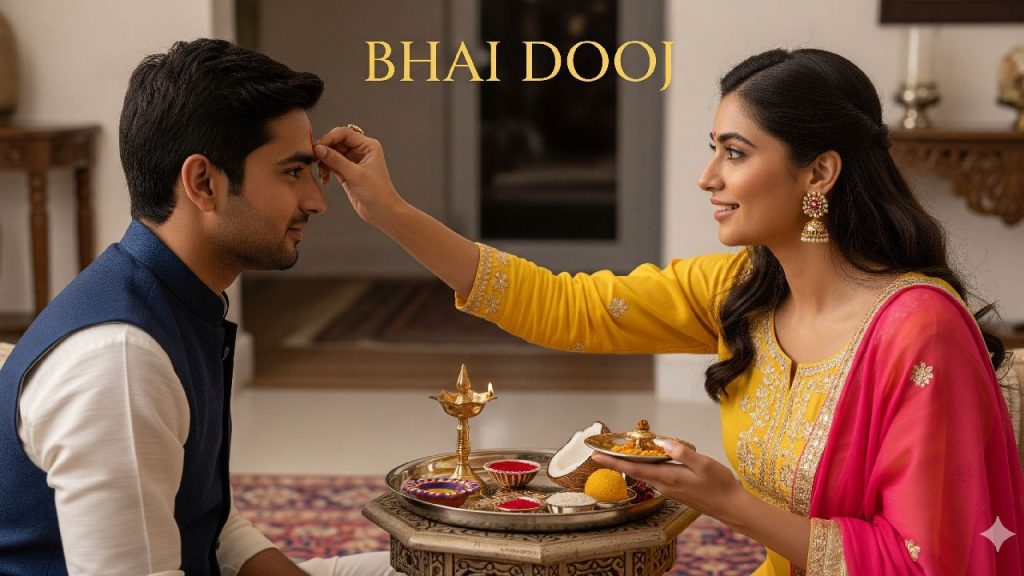
A central belief is that sisters’ prayers and rituals safeguard their brothers from misfortune. The tilak ceremony, accompanied by an aarti and offerings of sweets, is not just symbolic but is seen as an invocation of divine blessings. These rituals act as conduits of spiritual energy, emphasizing the importance of familial bonds as sacred and protective forces. Through these practices, Bhai Dooj strengthens not only the emotional but also the spiritual connection between siblings.
The festival’s timing in Kartika Shukla Paksha Dwitiya, an auspicious period in the Hindu lunar calendar, adds layers of significance. Choosing the right muhrat (auspicious time) for the ceremony is considered essential for maximizing spiritual benefits. The alignment of Bhai Dooj with Diwali’s festive energy further magnifies its religious importance, linking personal family devotion to broader cosmic and seasonal cycles.
Bhai Dooj’s religious relevance extends beyond individual families. It reflects broader Hindu values of duty, protection, and mutual respect. By observing these rituals, families participate in a living tradition that honors divine principles through everyday actions, ensuring that moral, spiritual, and cultural teachings are passed down through generations. The festival is a testament to how personal relationships and religious observance are harmoniously intertwined in Hindu culture.
Rituals and Customs
The rituals and customs of Bhai Dooj are vibrant, meaningful, and full of symbolism. Central to the celebration is the tilak ceremony, where sisters apply a ceremonial mark on their brothers’ foreheads while performing an aarti. This act signifies blessings, protection, and a sacred wish for their brothers’ well-being. Sweets and delicacies are offered during the ritual, symbolizing the sweetness of relationships and shared joy.
Exchanging gifts is an essential part of Bhai Dooj. Brothers often present gifts to their sisters, expressing love and appreciation, while sisters reciprocate with tokens of care. This mutual exchange strengthens bonds and reinforces the value of gratitude in relationships. The gifts may range from traditional items like clothes, jewelry, or religious artifacts to contemporary presents that resonate with modern lifestyles.
Preparation of sweets and festive meals adds a culinary dimension to the festival. Families come together to cook, share, and enjoy delicacies unique to their regions, further enhancing the sense of togetherness. Special dishes not only celebrate the occasion but also symbolize prosperity, health, and joy.
Regional variations contribute to Bhai Dooj’s rich cultural tapestry. In Maharashtra, it is celebrated as Bhau Beej, while in Gujarat, it is part of Diwali festivities, often accompanied by elaborate family gatherings. North India emphasizes tilak and aarti, with local rituals varying from city to city. Even within the same region, slight differences in the sequence of rituals, offerings, and ceremonial prayers reflect the diversity of Indian traditions.
Modern adaptations have emerged, particularly in urban settings. While some families maintain traditional rituals, others incorporate contemporary elements such as online greetings, digital gift exchanges, and simplified ceremonies. Despite these changes, the essence of Bhai Dooj remains intact: celebrating sibling love, reinforcing protective bonds, and creating lasting memories.
Cultural Importance
Bhai Dooj holds immense cultural significance, transcending religious boundaries and connecting families on an emotional and social level. At its heart, the festival is about celebrating sibling love and family bonding. Sisters’ prayers for their brothers’ well-being and the mutual exchange of gifts foster appreciation, gratitude, and affection, reinforcing the social fabric of families.
The festival promotes respect and gratitude within families. It is a time when younger siblings express admiration for their elder siblings, and elder siblings reaffirm their duty to care and protect. These gestures are not merely symbolic; they create a framework for familial harmony, teaching children and adults alike the value of mutual support and ethical responsibility.
Community gatherings and neighborhood celebrations amplify Bhai Dooj’s cultural importance. Families often come together to organize group prayers, festive meals, and cultural programs. This communal aspect helps strengthen social bonds, preserve regional customs, and pass down traditions to younger generations, ensuring continuity and shared cultural identity.
Bhai Dooj’s integration with other Kartika festivals, such as Diwali and Govardhan Puja, situates it within a broader cultural narrative. By connecting personal family rituals with seasonal and religious celebrations, it reinforces the cyclical rhythm of community life, harmonizing personal joy with collective festivity.
The festival’s influence extends into art, music, and literature. Folk songs, regional performances, and literary references often celebrate sibling bonds, drawing inspiration from Bhai Dooj. These expressions immortalize familial devotion, highlight cultural values, and make the festival a living part of India’s artistic and cultural heritage.
In essence, Bhai Dooj is much more than a ritual; it is a celebration of human relationships, a cultural anchor, and a vehicle for transmitting values, love, and tradition across generations. Its enduring popularity speaks to its relevance in nurturing both personal and collective identities.
Significance in Family Dynamics
Bhai Dooj plays a critical role in shaping and reinforcing family dynamics, acting as a bridge that strengthens emotional connections between siblings. The festival provides a dedicated time for families to come together, allowing siblings to express care, respect, and affection in a structured, meaningful way. The rituals performed during Bhai Dooj symbolize the protection and support that brothers and sisters offer each other, translating these abstract feelings into tangible, memorable actions.
Through the exchange of blessings and gifts, siblings communicate a sense of responsibility and mutual trust. Brothers acknowledge their duty to protect and care for their sisters, while sisters convey their affection and hope for their brothers’ prosperity. These actions are not just ceremonial—they instill lifelong values of empathy, loyalty, and responsibility. Children learn early on the significance of nurturing family bonds, while adults are reminded of the importance of maintaining close relationships despite the pressures of modern life.
Bhai Dooj also promotes the inclusion of extended family members. Grandparents, cousins, and even neighbors often participate, which broadens the scope of familial connection and reinforces collective traditions. The shared experience helps to pass down cultural knowledge and family values to younger generations, ensuring that the rituals and lessons endure over time.
By highlighting the sibling relationship, Bhai Dooj indirectly strengthens the entire family structure. It encourages dialogue, respect for elders, and mutual support among family members. In contemporary society, where the pace of life can lead to weakened connections, this festival serves as a reminder of the power of familial love, teaching families the importance of nurturing relationships that provide emotional security, guidance, and lifelong companionship. Ultimately, Bhai Dooj is more than a ritualistic celebration; it is a cornerstone of family cohesion, creating moments that bind members together and leaving a lasting impact on personal and collective growth within the family unit.
Bhai Dooj Across India
Bhai Dooj is celebrated with remarkable regional diversity across India, reflecting local customs, languages, and cultural practices while maintaining the festival’s essence of sibling love. In Maharashtra, it is known as Bhau Beej, and sisters perform elaborate ceremonies with tilak and aarti, often accompanied by family feasts. In Gujarat, the festival coincides with Diwali celebrations, and families combine rituals with the New Year festivities, integrating Bhai Dooj into a larger seasonal celebration.
North India emphasizes the ritualistic aspect of tilak and aarti, with variations in the types of sweets prepared and the manner in which rituals are performed. In Bengal and Nepal, the festival is celebrated as Bhai Tika, where sisters apply a seven-color tika on their brothers’ foreheads and perform prayers for their long life and prosperity. These regional differences enrich the festival, highlighting the adaptability and enduring nature of Bhai Dooj in diverse cultural settings.
Local customs often include unique culinary traditions. Certain regions prepare sweets and dishes that are exclusive to the festival, showcasing the fusion of religious, cultural, and gastronomical heritage. Community-level celebrations, including fairs, cultural programs, and temple events, further enhance the social aspect of Bhai Dooj, turning it into an occasion for collective joy and togetherness.
Despite the regional differences, the underlying sentiment remains universal: the festival celebrates the bond between siblings. Whether through rituals, food, gifts, or communal gatherings, Bhai Dooj connects families and communities, creating a shared experience that transcends geographical boundaries. This rich tapestry of traditions underscores the festival’s versatility and its enduring relevance in the modern Indian cultural landscape.
In essence, Bhai Dooj across India demonstrates the country’s cultural richness, offering a glimpse into how regional practices can preserve traditional values while adapting to contemporary life, keeping the festival alive, meaningful, and vibrant.
Modern-Day Observance
Bhai Dooj has evolved to reflect contemporary lifestyles without losing its traditional essence. Urban celebrations often blend ritualistic practices with modern conveniences, making the festival accessible and meaningful even in busy city life. Families may simplify ceremonies, rely on pre-prepared sweets, or use digital platforms to connect with siblings living far away, yet the emotional core of Bhai Dooj remains intact.
Social media and technology have introduced a new dimension to the festival. Brothers and sisters exchange digital greetings, videos, and online gifts when distance separates them, keeping the bond strong despite physical separation. Contemporary gift trends, including personalized items, gadgets, and luxury products, complement traditional presents, reflecting evolving family dynamics while honoring the spirit of love and care.
Urban adaptations also include flexible timings and smaller gatherings. In many households, the festival may be celebrated over a weekend or during a convenient time for working family members, highlighting the balance between modern schedules and age-old traditions. Even in these modern settings, rituals such as tilak, aarti, and exchange of blessings are faithfully observed, demonstrating the festival’s adaptability.
Modern Bhai Dooj also emphasizes inclusivity and equality. Sisters and brothers are increasingly encouraged to exchange heartfelt expressions of gratitude, emphasizing emotional connections over material gifts. Cultural awareness programs and community events promote participation beyond immediate families, reinforcing the social and ethical values embedded in the festival.
Ultimately, Bhai Dooj today reflects the seamless integration of tradition and modernity. It proves that festivals are living practices, capable of evolving without losing their cultural and emotional significance. By blending contemporary lifestyles with traditional observances, Bhai Dooj continues to serve as a meaningful celebration of sibling love and family unity.
Symbolism and Life Lessons
Bhai Dooj is rich in symbolism, offering profound life lessons beyond its ceremonial practices. At its heart, the festival highlights love, protection, and care in sibling relationships, which can serve as a model for human connections in all spheres of life. The tilak ritual, aarti, and exchange of sweets symbolize blessings, prosperity, and mutual respect, reinforcing the principle that relationships are nurtured through care, attention, and thoughtfulness.
The festival teaches values of loyalty and trust. By celebrating the bond between brothers and sisters, Bhai Dooj encourages individuals to honor commitments, protect loved ones, and maintain integrity in relationships. These lessons extend beyond family dynamics, influencing friendships, workplace relationships, and community interactions, creating a ripple effect of ethical and compassionate behavior.
The spiritual symbolism of Bhai Dooj is also significant. Ritual offerings, prayers, and blessings reflect gratitude, mindfulness, and reverence for life. Sisters’ prayers for their brothers’ longevity serve as a reminder of the impermanence of life and the importance of nurturing meaningful connections while one can. This reflection fosters empathy, mindfulness, and emotional intelligence.
Bhai Dooj also reinforces social cohesion and harmony. By engaging extended family, neighbors, and communities in celebration, the festival strengthens collective identity, promotes cultural understanding, and instills a sense of shared responsibility. It encourages generosity, kindness, and inclusivity, making the festival a vehicle for both personal and social growth.
In essence, Bhai Dooj transcends its rituals to impart enduring life lessons. It emphasizes that love, care, and respect are foundational to human relationships and that nurturing bonds requires deliberate action, mindfulness, and gratitude. The festival’s symbolism reminds us of the power of human connection and the importance of fostering relationships with intention and sincerity.
Parting Thoughts
Bhai Dooj is more than a ritualistic festival; it is a celebration of familial love, cultural heritage, and emotional bonds. Occurring in the Kartika month, it brings families together, reinforcing connections between brothers and sisters while reflecting broader values of protection, care, and mutual respect. The festival seamlessly integrates religious significance, mythological stories, and contemporary practices, making it a timeless observance that resonates across generations.
Through rituals like tilak, aarti, and the exchange of gifts, Bhai Dooj transforms ordinary interactions into meaningful experiences that strengthen trust, loyalty, and emotional intimacy within families. Regional variations and community celebrations enrich the festival, highlighting India’s cultural diversity while preserving the central ethos of sibling devotion. The festival’s modern-day observance demonstrates its adaptability, showing that tradition can coexist with contemporary life without losing its essence.
Culturally, Bhai Dooj encourages gratitude, respect, and ethical conduct, teaching valuable life lessons about relationships, responsibilities, and mindfulness. Its symbolism underscores the importance of nurturing emotional bonds, celebrating love, and maintaining harmony within families and communities. By participating in these rituals, families reaffirm shared values, create lasting memories, and preserve cultural heritage for future generations.
Ultimately, Bhai Dooj serves as a reminder that human relationships are the cornerstone of social and emotional well-being. Its celebration in Kartika is not only a testament to the enduring bond between siblings but also a reflection of the timeless human need for love, care, and connection. Observing Bhai Dooj allows families to pause, honor these bonds, and embrace the joy, protection, and unity that lie at the heart of this cherished festival.