Swami Vivekananda Jayanti: Celebrating the Legacy of a Visionary Leader
Significance of Swami Vivekananda Jayanti
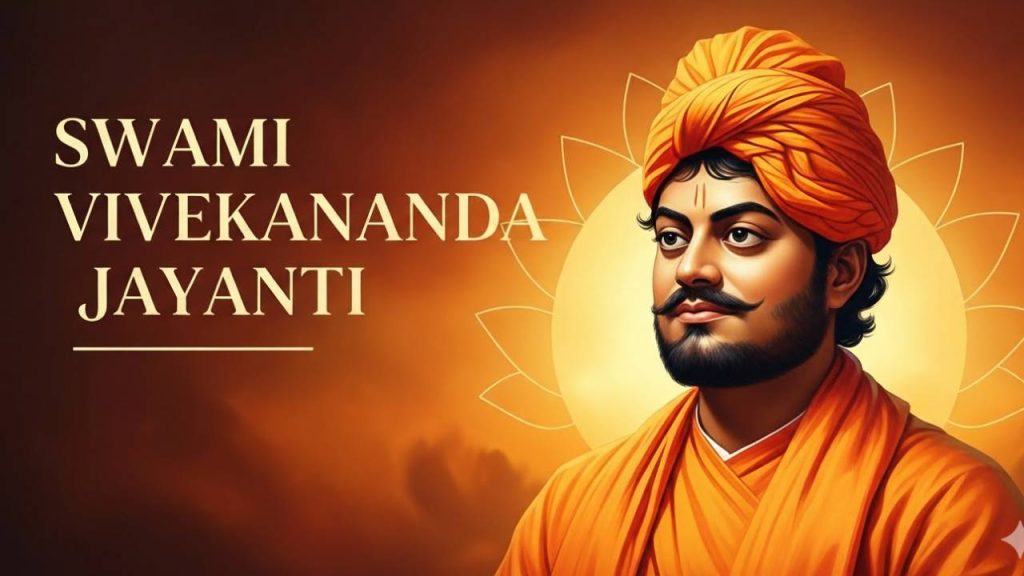
Swami Vivekananda Jayanti is not just a date on the calendar; it is a celebration of a life dedicated to awakening human potential, spiritual wisdom, and national pride. Observed annually in the Hindu month of Magh, this day marks the birth anniversary of one of India’s greatest thinkers, philosophers, and spiritual leaders. The celebration of this day serves as a reminder of his extraordinary contributions, both in philosophy and social reform. It encourages us to reflect on the values he espoused throughout his life. Swami Vivekananda’s teachings were not limited to religious boundaries; they transcended geography and time, inspiring generations to pursue self-realization, service to humanity, and a life of purpose.
The significance of celebrating Swami Vivekananda Jayanti lies in its ability to unite people across different backgrounds under the umbrella of shared ideals. In modern times, when the world faces moral, spiritual, and social challenges, revisiting his life and teachings provides clarity and motivation. By remembering Swami Vivekananda, one not only honors a historical figure but also imbibes the qualities of courage, wisdom, and compassion that are essential for personal and societal growth. His life encourages us to rise above mediocrity, embrace education and self-discipline, and contribute meaningfully to society.
Culturally and nationally, Swami Vivekananda Jayanti strengthens India’s identity as a nation with a rich philosophical heritage and spiritual depth. Schools, colleges, and institutions organize events, lectures, and discussions to spread awareness about his life and thoughts. It becomes a day to reflect on how his ideas continue to shape Indian society, inspiring youth to pursue education, character building, and service. In essence, Swami Vivekananda Jayanti is a celebration of human potential, national pride, and timeless wisdom that continues to resonate with people across generations.
Early Life of Swami Vivekananda
Birth and Family Background
Swami Vivekananda was born as Narendranath Datta on January 12, 1863, in the bustling city of Kolkata. His family played a significant role in shaping his early worldview. His father, Vishwanath Datta, was a successful lawyer known for his integrity, logical thinking, and progressive mindset. His mother, Bhuvaneswari Devi, was deeply spiritual, compassionate, and devoted to moral values. This unique combination of rational thinking and spiritual awareness created an environment that encouraged inquiry, reflection, and moral consciousness from a very young age. The household placed great importance on education, moral discipline, and devotion, laying a strong foundation for the future monk and philosopher.
Narendranath’s early exposure to diverse religious texts, philosophical discussions, and cultural practices fostered his innate curiosity and spiritual inclination. Observing his father’s logical reasoning alongside his mother’s devotional practices instilled a sense of balance between intellect and spirituality. The family environment was nurturing yet disciplined, providing him with the confidence to question societal norms, explore philosophical ideas, and aspire for excellence. This combination of love, guidance, and encouragement nurtured the seeds of leadership, critical thinking, and spiritual exploration that would later define his extraordinary life.
Childhood Influences and Spiritual Inclination
From a young age, Narendranath displayed a keen interest in spirituality, human values, and the more profound questions of life. His mind was restless, constantly seeking truth and understanding the essence of existence. He was profoundly influenced by stories from the epics, interactions with learned scholars, and exposure to various religious traditions. His early fascination with meditation, moral integrity, and self-discipline reflected a maturity beyond his years. Friends and teachers observed a unique blend of curiosity, empathy, and leadership in him, traits that would become the hallmarks of his life.
Even as a child, Narendranath demonstrated an innate awareness of societal inequalities and human suffering. These early impressions ignited his desire to contribute to society, not merely through intellectual pursuits but through actions guided by compassion and service. The childhood environment of Kolkata, with its mix of cultural richness and social challenges, provided a fertile ground for his spiritual and social awakening. This formative period was crucial in shaping a personality that seamlessly blended spirituality, intellect, and empathy for humanity.
Education and Intellectual Growth
Narendranath’s formal education played a pivotal role in shaping his analytical thinking, communication skills, and understanding of global philosophies. He studied at the Metropolitan Institution, where he excelled in subjects like philosophy, logic, history, and literature. His exposure to Western thought, scientific reasoning, and classical literature complemented his deep-rooted Indian spiritual values. He developed an appreciation for critical inquiry, rational thinking, and universal human ideals, preparing him to address complex philosophical and social questions in the future.
Vivekananda’s intellectual growth was marked by his ability to synthesize diverse streams of knowledge. He was equally comfortable discussing the Upanishads, European philosophy, and modern science. This rare combination of depth in Eastern wisdom and understanding of Western thought enabled him to communicate profound spiritual truths in a manner accessible to people across cultures. His education also instilled confidence, eloquence, and the ability to engage audiences with clarity and conviction, qualities that would later captivate global platforms.
Encounters with Spiritual Leaders and Gurus
A significant turning point in Narendranath’s life was his encounters with revered spiritual leaders. His interactions with Sri Ramakrishna Paramahamsa, in particular, had a transformative impact. Ramakrishna recognized Narendranath’s potential for spiritual realization and guided him to experience the unity of all religions and the essence of divine consciousness. These early spiritual interactions nurtured a profound understanding of selflessness, devotion, and universal brotherhood. Narendranath learned that true spirituality transcends rituals and dogmas, emphasizing inner purity, compassion, and service to humanity.
These experiences were not merely theoretical but deeply experiential, shaping his character, resolve, and vision for society. He realized that knowledge without compassion was incomplete, and action without spiritual grounding could lack purpose. This balanced approach to life and spirituality became central to his teachings, influencing countless followers and thinkers across the world.
Early Signs of Leadership and Social Awareness
Even in his youth, Narendranath exhibited remarkable leadership qualities. He was articulate, confident, and deeply aware of societal issues, demonstrating the ability to inspire and guide others. He often led discussions on philosophical and social topics, encouraging peers to think critically and act morally. His sense of responsibility towards society, combined with an understanding of ethical leadership, was evident in his efforts to address social injustices, poverty, and moral degradation even before formally entering the monastic life.
These early experiences of leadership and social awareness laid the groundwork for a life dedicated to reform, empowerment, and spiritual upliftment. Narendranath’s journey from a curious, inquisitive child to a visionary leader highlights the importance of nurturing intellectual curiosity, moral values, and compassion from an early age.
Philosophical and Spiritual Teachings
Core Principles of Vedanta and Universal Spirituality
Swami Vivekananda’s teachings are deeply rooted in Vedanta, a philosophy emphasizing the unity of all existence and the divinity inherent in every individual. Vedanta encouraged people to recognize their inner potential, embrace moral responsibility, and pursue self-realization. Vivekananda’s interpretation of Vedanta went beyond academic discussion; it became a practical guide for living a balanced, purposeful, and ethical life. He emphasized that spirituality is not confined to temples or rituals—it is a universal principle that can guide daily actions, relationships, and societal conduct.
By promoting universal spirituality, he bridged gaps between religions, cultures, and nations. Vivekananda urged people to look beyond superficial differences, understand the essence of humanity, and cultivate compassion, tolerance, and mutual respect. His vision was a world where individuals, guided by ethical values and spiritual wisdom, could coexist peacefully and make meaningful contributions to society’s progress. This principle remains highly relevant today, as societies navigate challenges of polarization, inequality, and moral dilemmas.
Emphasis on Self-Realization and Personal Growth
Central to Vivekananda’s philosophy is the concept of self-realization. He believed that each individual possesses infinite potential and that discovering this inner strength is essential for a fulfilling life. According to his teachings, personal growth is achieved through self-discipline, education, meditation, and service. Vivekananda encouraged people to develop mental clarity, physical endurance, and moral courage, emphasizing that true success comes from inner mastery rather than external accolades.
Self-realization was not limited to personal achievement but extended to one’s ability to serve society. By realizing their own potential, individuals could contribute positively to the world, uplift the marginalized, and inspire collective progress. This teaching motivates people to pursue continuous learning, introspection, and character building, ensuring that personal growth aligns with ethical and spiritual values.
Concept of Service to Humanity (Seva)
Service to humanity, or Seva, is a cornerstone of Vivekananda’s philosophy. He believed that serving others is equivalent to serving God, and acts of kindness, compassion, and social service elevate both the giver and the receiver. Vivekananda inspired countless individuals to engage in philanthropic work, educational initiatives, and healthcare programs, emphasizing that true spirituality manifests in action.
Seva also fosters empathy, humility, and social awareness. Vivekananda’s teachings on service remain profoundly relevant today, encouraging people to actively address societal challenges, support disadvantaged communities, and promote sustainable development. Through selfless service, individuals experience personal fulfillment while creating lasting societal impact.
Promotion of Harmony Between Science and Spirituality
Vivekananda advocated for a harmonious relationship between science and spirituality. He rejected blind superstition and encouraged rational inquiry, scientific reasoning, and evidence-based understanding alongside spiritual exploration. According to him, science explains the external world, while spirituality offers insight into the inner self. By integrating both perspectives, individuals achieve a holistic understanding and balanced growth.
This approach inspires modern thinkers to explore ethical applications of technology, environmental responsibility, and human well-being without compromising spiritual values. Vivekananda’s vision underscores that intellectual progress and spiritual wisdom are complementary, guiding humanity toward sustainable and meaningful advancement.
Relevance of His Teachings in Contemporary Life
The relevance of Swami Vivekananda’s teachings in today’s fast-paced world is profound. In times of stress, moral ambiguity, and societal upheaval, his guidance offers clarity and resilience. Principles of self-realization, universal brotherhood, and service to humanity provide practical tools for personal and social development. By applying his teachings, individuals can navigate challenges with courage, empathy, and ethical discernment, fostering a world that values education, integrity, and collective well-being.
Role in the Indian Freedom Movement
Inspiring Nationalism and Pride in Indian Culture
Swami Vivekananda played a pivotal role in awakening national pride and cultural consciousness during the British colonial era. Through his speeches, writings, and interactions, he instilled a sense of self-respect, courage, and love for Indian heritage among citizens. Vivekananda emphasized that true nationalism is rooted in moral strength, education, and spiritual awareness rather than mere political agitation. His teachings motivated countless individuals to embrace their cultural identity, recognize India’s rich philosophical and artistic legacy, and strive for self-reliance.
Influence on Leaders and Freedom Fighters
The impact of Vivekananda’s thoughts extended deeply into the Indian freedom struggle. Leaders such as Bal Gangadhar Tilak, Subhas Chandra Bose, and many others drew inspiration from his emphasis on character, education, and social responsibility. Vivekananda’s advocacy for strength, courage, and moral integrity shaped the mindset of freedom fighters, preparing them for the arduous task of liberating the nation while maintaining ethical principles and social unity.
Emphasis on Character Building for Societal Reform
Vivekananda believed that societal reform begins with individual character development. He encouraged citizens to cultivate virtues such as honesty, self-discipline, courage, and empathy. By empowering individuals morally and spiritually, he envisioned a society capable of addressing injustice, poverty, and social inequality. This focus on character building served as a guiding philosophy for social movements, education reforms, and community development during India’s struggle for independence.
Connection Between Spiritual Awakening and Social Progress
For Vivekananda, spiritual awakening and social progress were intertwined. A spiritually enlightened individual is naturally inclined toward compassion, service, and ethical leadership. By fostering spiritual consciousness among citizens, he sought to create a society where progress is measured not only by economic and political achievements but also by the well-being, dignity, and empowerment of every member. This principle resonates with contemporary efforts in nation-building and social responsibility.
Legacy in Modern India’s Socio-Political Context
Swami Vivekananda’s ideas continue to influence modern India. His emphasis on education, moral leadership, and community service has shaped policies, institutions, and civic initiatives. Today, his teachings inspire youth, social workers, and policymakers to uphold ethical governance, cultural pride, and inclusive development. Vivekananda’s legacy serves as a compass, reminding society that actual progress is holistic, blending spiritual, intellectual, and social dimensions.
Global Recognition and Influence
Speech at the Parliament of Religions, Chicago (1893)
Swami Vivekananda’s address at the World Parliament of Religions in Chicago in 1893 remains one of the most iconic moments in global spiritual history. His opening words, delivered with confidence, humility, and universal appeal, emphasized the acceptance of all religions and the unity of humanity. Vivekananda captivated an international audience by highlighting India’s spiritual heritage and conveying a message of tolerance, peace, and mutual respect. This speech not only elevated India’s global stature but also demonstrated the relevance of spiritual wisdom in addressing universal human concerns.
Spreading Vedantic Philosophy Worldwide
Following his success at the Parliament of Religions, Vivekananda traveled extensively across the United States, Europe, and other parts of the world, spreading Vedantic philosophy. His lectures, writings, and interactions introduced Western audiences to concepts of self-realization, meditation, and ethical living. By presenting Eastern wisdom in a contemporary and relatable manner, Vivekananda bridged cultural gaps, fostering global understanding and spiritual exploration.
Influence on Global Thinkers and Spiritual Leaders
Vivekananda’s ideas have influenced renowned thinkers, philosophers, and spiritual leaders worldwide. Figures in psychology, philosophy, and theology recognized the depth, universality, and practicality of his teachings. His emphasis on inner strength, ethical living, and service inspired movements for social reform, education, and personal development beyond India’s borders. Vivekananda’s vision of global harmony and universal spirituality resonated with people seeking meaning, balance, and purpose in modern life.
Establishment of Ramakrishna Mission for Social Service
Understanding the importance of organized service, Vivekananda founded the Ramakrishna Mission in 1897. The mission combined spiritual teachings with social service, focusing on education, healthcare, disaster relief, and empowerment of marginalized communities. Through this initiative, he demonstrated that spirituality and practical action are inseparable, creating a model of compassionate leadership and community engagement. The mission continues to serve millions globally, upholding Vivekananda’s ideals of service and spiritual awakening.
Lasting Impact on International Perceptions of India
Vivekananda’s global work significantly reshaped the world’s perception of India. From a colonized nation often misunderstood or stereotyped, India was recognized as a land of profound philosophical insight, spiritual depth, and intellectual richness. His life and teachings continue to inspire international audiences, encouraging intercultural dialogue, spiritual growth, and a deeper appreciation of India’s contributions to global knowledge and wisdom. The lasting impact of Vivekananda is seen in both spiritual and academic spheres, bridging cultures while promoting universal human values.
Role in Education and Youth Empowerment
Vision for Education as a Tool for Nation Building
Swami Vivekananda placed immense emphasis on education as the foundation for personal development and national progress. He believed that education should not be confined to acquiring degrees or rote knowledge but should focus on the holistic development of mind, body, and spirit. Education, according to him, must cultivate critical thinking, moral values, self-confidence, and social responsibility. He saw educated individuals as the pillars of a strong and self-reliant nation capable of addressing challenges with innovation and ethical reasoning.
His philosophy inspires a shift from conventional teaching to experiential and character-based learning. Schools and institutions that integrate Vivekananda’s principles emphasize practical skills, creativity, and leadership alongside academic excellence. By following his vision, education becomes a transformative process that nurtures self-awareness, societal contribution, and resilience, equipping students to tackle both personal and societal challenges effectively.
Empowering Youth for Social and Spiritual Growth
Vivekananda recognized that the youth are the most powerful force for societal transformation. He consistently encouraged young people to embrace their potential, develop discipline, and engage in meaningful action. His message to the youth emphasized courage, self-belief, and service to humanity. By inspiring young minds to combine intellectual growth with moral integrity, Vivekananda laid the groundwork for a generation capable of leadership, innovation, and social reform.
In contemporary times, his teachings serve as a motivational framework for youth empowerment initiatives, leadership programs, and skill development workshops. Vivekananda’s belief that the energy, creativity, and enthusiasm of young people can reshape society resonates strongly with modern efforts to build socially conscious, spiritually aware, and globally competent citizens.
Advocacy for Interfaith Harmony
Promoting Religious Tolerance and Understanding
Swami Vivekananda championed the idea that all religions are valid paths to the same ultimate truth. His teachings advocate mutual respect, understanding, and dialogue between diverse faiths. At a time when the world was experiencing religious and cultural divides, Vivekananda emphasized that spiritual unity can foster peace, cooperation, and collective growth. He encouraged people to move beyond superficial differences and recognize the shared ethical and moral principles underlying all religions.
His perspective is particularly relevant today, as societies worldwide navigate challenges of intolerance, extremism, and social polarization. By promoting interfaith harmony, Vivekananda’s teachings serve as a guiding principle for peaceful coexistence, fostering a culture of empathy, respect, and inclusive collaboration.
Impact on Global Interfaith Movements
Vivekananda’s message of universal spirituality influenced global interfaith dialogues and movements. His address at the Parliament of Religions in Chicago not only brought attention to India’s rich spiritual heritage but also highlighted the importance of bridging religious and cultural gaps worldwide. Today, international peace initiatives, humanitarian projects, and interfaith forums continue to draw inspiration from his principles, emphasizing dialogue, mutual respect, and collaborative action for the greater good of humanity.
Contributions to Social Reform
Addressing Poverty and Social Inequality
Swami Vivekananda believed that true spiritual awakening requires practical action in society. He actively addressed issues of poverty, caste discrimination, and social inequality, advocating for upliftment through education, moral empowerment, and service. By integrating social reform with spiritual teachings, he encouraged individuals to recognize their responsibility toward marginalized communities. Vivekananda’s vision of service ensured that spirituality is not limited to meditation or rituals but manifests in compassion, justice, and tangible support for those in need.
Empowering Marginalized Communities
Through his teachings and the establishment of the Ramakrishna Mission, Vivekananda focused on empowering women, the underprivileged, and rural populations. He emphasized education, vocational training, and self-reliance as means to break cycles of oppression and poverty. His work highlights that social progress and spiritual growth are interconnected—uplifting others enriches the individual while strengthening society as a whole. By championing inclusivity, equality, and practical service, Vivekananda set the stage for modern social initiatives and movements aimed at creating a fairer, more compassionate society.
Literary and Intellectual Contributions
Prolific Writings and Lectures
Swami Vivekananda was a prolific writer and orator, leaving behind an extensive collection of speeches, letters, and books that continue to inspire millions. His writings cover philosophy, religion, education, youth empowerment, and social issues, blending intellectual rigor with practical wisdom. Through his lectures, he made complex spiritual concepts accessible to people from all walks of life, demonstrating an exceptional ability to communicate ideas in a simple, relatable, and motivating manner.
Influence on Modern Indian Thought
Vivekananda’s intellectual contributions reshaped modern Indian philosophy, education, and spirituality. By integrating rational inquiry with spiritual wisdom, he created a framework that encourages individuals to pursue personal excellence while contributing to societal welfare. His writings continue to guide thought leaders, educators, and social reformers, fostering a culture of introspection, ethical living, and intellectual engagement. The timeless relevance of his work ensures that his ideas continue to influence contemporary discussions on morality, human potential, and nation-building, making him not only a spiritual guide but also a thought leader for modern India.
Commemoration and Celebrations
Observing Swami Vivekananda Jayanti Across India
Swami Vivekananda Jayanti is celebrated nationwide with great reverence, especially in schools, colleges, spiritual institutions, and cultural forums. Events include lectures, discussions, essay competitions, and artistic performances highlighting his life and teachings. These celebrations provide a platform to reflect on his message, inspire personal growth, and foster a sense of national pride. By commemorating his life annually, society ensures that his ideals remain alive, guiding future generations toward ethical living, service, and spiritual understanding.
Global Recognition and Observances
Beyond India, Vivekananda Jayanti is recognized by spiritual organizations, educational institutions, and global forums that celebrate his contributions to philosophy, interfaith dialogue, and human development. International communities organize seminars, meditation sessions, and cultural programs to honor his universal message. These observances underscore the global significance of his life and teachings, underscoring the idea that his vision transcends borders, cultures, and generations.