Understanding about Rishi Panchami
Rishi Panchami is one of the lesser-known yet deeply significant festivals in the Hindu calendar. Falling on the fifth day (Panchami) of the Shukla Paksha (waxing phase of the moon) in the month of Bhadrapada, this occasion is dedicated to honoring the Saptarishis, the seven revered sages of ancient Indian spiritual tradition. It’s not just a day on the calendar, but a spiritual practice that embodies gratitude, repentance, and reverence toward timeless wisdom.
At its core, Rishi Panchami is a purification festival, observed especially by women. It acknowledges and addresses a very delicate subject in Hindu dharma, ritual impurity associated with menstruation and unintentional transgressions related to it. The day serves as a platform for women to seek forgiveness for any unknown or inadvertent violations of dharma that may occur during their menstrual cycle, particularly in areas such as food preparation, religious participation, or domestic responsibilities, as prescribed in ancient texts.
Yet, the festival is not confined to repentance alone. It reflects a broader call to connect with the divine wisdom passed down by the Saptarishis, to purify one’s body and mind, and to tread the path of spiritual clarity. The observance of fasts, holy dips, and sage worship brings an air of solemnity and devotion, turning homes and temples into sanctuaries of introspection and renewal.
For many, Rishi Panchami becomes a personal journey of humility, introspection, and spiritual growth. In an era where ancient customs are often dismissed as outdated, this observance offers a poignant connection between tradition and mindfulness. It invites every soul, especially women, to revisit their relationship with purity, penance, and personal evolution through the lens of love, reverence, and ritual.
Historical and Scriptural References
The significance of Rishi Panchami isn’t a modern invention. Its roots are deeply embedded in the foundational texts of Hinduism. Scriptures such as the Skanda Purana, Dharmashastras, and even sections of the Bhavishya Purana refer to this sacred observance, providing both narrative and doctrinal foundations for the rituals and sentiments associated with it.
One of the most compelling stories that brings the essence of Rishi Panchami to life is the tale of King Vidarbha’s daughter. She was married and lived a seemingly devout and dharmic life, but after her death, her soul was seen suffering in an inferior birth. Disturbed, her grieving family sought answers, and through divine insight, they discovered that during her menstruation, she had unknowingly cooked food and performed religious chores, acts considered impure according to ancient standards. To atone for these inadvertent transgressions, the observance of Rishi Panchami fast was prescribed. When the ritual was observed on her behalf, her soul attained peace and liberation.
This legend became a cornerstone of the vrata’s (fast’s) importance. It emphasized that even unintended actions could create karmic residue and that heartfelt repentance, when offered with sincerity, could purify the soul and reset one’s spiritual alignment.
Sage Kashyapa, Sage Atri, and other revered seers mentioned in these texts are not merely mythical figures; they are icons of spiritual resilience, custodians of the Vedas, and architects of dharmic thought. By dedicating a day to these seers, the festival ensures that their wisdom is neither forgotten nor disconnected from everyday life. It allows devotees to experience a living bond with the rishis, not just in memory, but through reverence, ritual, and emulation.
Spiritual Significance of Rishi Panchami
Rishi Panchami isn’t just about fasting or ritual worship; it is a profound exercise in spiritual accountability. It offers a moment in the year dedicated purely to inner cleansing and introspection. The rituals and stories associated with the day carry a message that transcends time: that purity is as much a matter of the mind and intention as it is of the body and action.
One of the main spiritual messages of Rishi Panchami is the atonement for ajñāta-pāpa, unknown or unintentional sins. Many actions are performed without full awareness; this observance reminds individuals that even subconscious actions leave spiritual imprints. By acknowledging this, a devotee not only cleanses their karmic past but also learns the virtue of mindful living.
The focus on menstrual impurity isn’t about shame; it’s about cultural attempts to balance the sacred with the everyday. When viewed through a compassionate lens, Rishi Panchami emerges as a day that uplifts rather than restricts. It helps individuals, especially women, reflect on their place within dharma without guilt but with awareness.
More broadly, this day encourages devotion to the great sages who preserved Sanatan Dharma through their lives, austerities, and teachings. Their wisdom forms the very foundation of ethical and spiritual living. Honoring them becomes a way of anchoring oneself to timeless principles and committing to personal growth.
Ultimately, the day is a call to cultivate humility. In acknowledging the possibility of wrongdoing and actively seeking forgiveness, one moves closer to a state of inner balance. It’s this sincere yearning for self-correction that makes Rishi Panchami a festival of the soul.
Role of Women and Feminine Purity in Rishi Panchami
Rishi Panchami holds a particularly significant place in the spiritual lives of women. Unlike other festivals that celebrate motherhood, marriage, or fertility, this day focuses on a woman’s spiritual responsibility and her intrinsic connection with cosmic order and purity.
Culturally, menstruation has been treated with both reverence and restrictions. While many ancient traditions acknowledged it as a robust natural process, they also associated it with ritual impurity. This concept may seem outdated today, but it had its roots in the sacredness of rhythm and rest. Women during their cycle were relieved from household duties and temple rituals, not as an exclusion, but often as a form of rest and rejuvenation.
However, over the centuries, the nuance may have been lost. Rishi Panchami reopens the conversation with empathy. It allows women to conduct a spiritual audit, not in shame, but in strength. The observance is less about guilt and more about conscious reflection. It becomes a sacred moment to recalibrate personal energy, seek inner balance, and rise beyond dogma.
This festival becomes a symbol of empowerment. It redefines purity, not as a constraint, but as clarity of mind, intention, and action. Women take charge of their spiritual journey, choosing to participate in a ritual that honors both their physical and spiritual aspects. Through the fast, the rituals, and the stories, they reconnect with their inner sanctum, free from societal judgment, and full of divine resonance.
Rishi Panchami honors not only the sages. It uplifts the feminine spirit, restores dignity to bodily functions, and transforms repentance into a form of spiritual growth. It provides women with the space and structure to grow inwardly, without the burden of perfection, yet with the grace of awareness.
The Seven Sages (Saptarishis) and Their Contribution
At the heart of Rishi Panchami are the revered Saptarishis, seven luminous sages whose presence shines across Hindu cosmology. They are not just mythical figures; they are architects of spiritual evolution, scribes of divine knowledge, and protectors of cosmic balance.
The names of the Saptarishis most commonly honored are Kashyapa, Atri, Bharadvaja, Vishwamitra, Gautama, Jamadagni, and Vashistha. Each of these sages made a unique contribution to the preservation and transmission of the Vedas, the shaping of dharmic values, and the spiritual guidance of ancient India.
- Kashyapa is often regarded as the progenitor of various life forms and is closely associated with creation.
- Atri, known for his profound meditations, fathered Dattatreya, a form that represents a fusion of the three primary aspects of the Trinity.
- Bharadvaja imparted immense knowledge in Ayurveda and statecraft to humanity.
- Vishwamitra, once a king, attained the status of Brahmarishi through sheer willpower and introduced the Gayatri Mantra.
- Gautama played a pivotal role in the shaping of ethical behavior and personal conduct.
- Jamadagni upheld dharma through intense penance and taught lessons on detachment.
- Vashistha, a divine seer, served as the royal priest to kings and was the custodian of the Rajadharma.
Honoring these sages is not merely a ritual; it’s a reminder of the values that sustain life itself: truth, penance, discipline, compassion, and the pursuit of the divine, by invoking their names and offering respect through rituals, one tunes into the collective wisdom of ages.
On Rishi Panchami, these sages are worshipped through symbolic images or representations made of betel leaves or clay, and their names are chanted with reverence. This simple act connects the worshipper with an ancient continuum of wisdom, reminding all that while life may change, the path of righteousness remains eternal.
Rituals and Vrat Vidhi (Observance Methods)
The rituals of Rishi Panchami are rich in symbolism and serve as spiritual tools for purification, self-discipline, and reverence. The observances are deeply personal yet rooted in collective traditions that span generations. Each ritual action carries layers of meaning, transforming a simple day into a spiritual journey.
Pre-dawn Bathing in Holy Water or River
The day begins early, before sunrise, with a ritual bath, preferably in a holy river, lake, or at home with water mixed with sacred herbs like neem, turmeric, or tulsi. This act is not merely about physical cleansing but represents an energetic and spiritual detox. The pre-dawn hour (Brahma Muhurta) is considered the most auspicious time for spiritual activities, and taking a dip during this time enhances inner awareness and aligns the mind with higher vibrations.
Worship of Saptarishis with Tulsi Leaves, Flowers, and Mantra Chanting
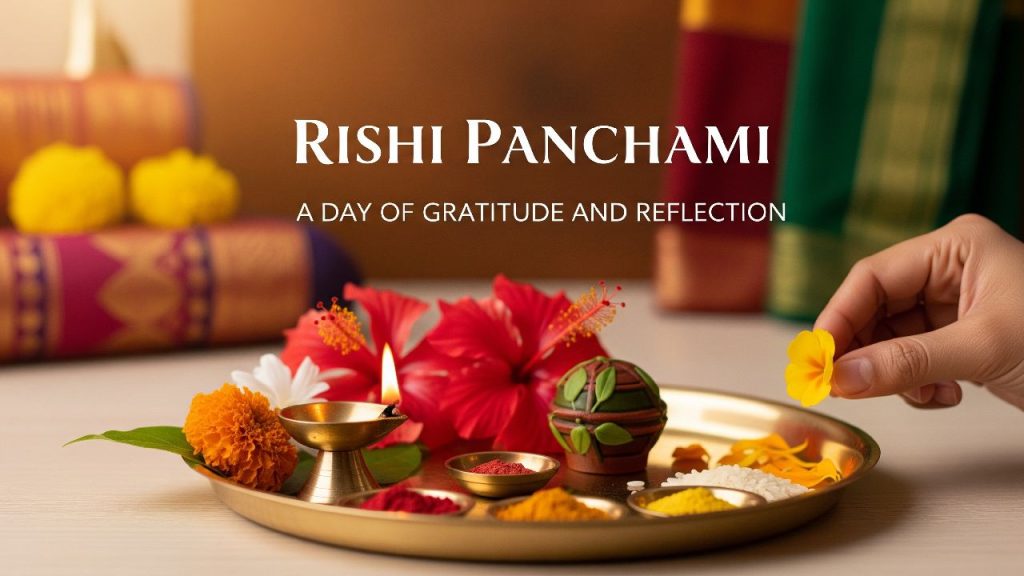
After the bath, devotees prepare for the central puja dedicated to the Saptarishis. Idols or symbolic images, often made of betel leaves or drawn on a wooden platform, are placed respectfully. Offerings include sacred tulsi leaves, fresh flowers, fruits, incense, lamps (deep), and special food items (without salt or grains). Vedic mantras invoking the sages are chanted with heartfelt devotion. Each sage is remembered by name, and their virtues are mentally reflected upon.
Fasting Practices (Strict or Phalahar-Based Fasts)
The fast observed on Rishi Panchami varies in intensity. Some devotees observe a nirjala vrat, a fast that involves abstaining from food and water until the evening puja. Others opt for phalahar, consuming only fruits, milk, or water. The fast symbolizes restraint, inner reflection, and spiritual dedication. It’s a means of stepping away from material indulgence and focusing inward. The discipline involved acts as a spiritual cleanser, calming the body and sharpening the soul’s focus.
Story Recitation (Katha) and Donation to Brahmins or Needy
After the puja, the Rishi Panchami Vrat Katha is recited, a sacred narrative detailing the story of King Vidarbha’s daughter and the significance of this fast. This story helps in understanding the emotional and spiritual essence of the day. Following this, devotees often offer daan (donation) to Brahmins or those in need, clothes, food, money, or utensils. This act completes the ritual, ensuring that the blessings of sages flow into everyday life through acts of charity and kindness.
Eco-Spiritual Aspects and Nature Connection
Rishi Panchami offers more than a spiritual retreat; it reconnects humanity with nature in ways that are both subtle and profound. Distancing oneself from natural rhythms, this observance encourages returning to an eco-conscious lifestyle that values purity, sustainability, and coexistence.
Use of Eco-Friendly, Herbal Materials During Worship
The festival is characterized by the use of naturally derived items, such as tulsi, banana leaves, clay lamps, cow dung, and betel leaves, eschewing plastic and non-biodegradable materials. This promotes not just eco-friendliness but a deeply grounded spirituality. The herbs used during bathing and rituals have natural antiseptic and purifying properties, promoting wellness and honoring the healing power of nature.
Observance Emphasizes Harmony with the Cycles of Nature
Rishi Panchami occurs during Bhadrapada, a month renowned for its cleansing and ritualistic transitions between the monsoon and harvest seasons. This timing isn’t coincidental. It reflects the ancient understanding of bodily and environmental cycles, aligning spiritual practices with seasonal changes. Just as the Earth rejuvenates after the monsoon, devotees are invited to refresh their inner world through repentance and resolution.
Connection with the Earth and Purification of Body and Mind
There is a beautiful symbolism in placing betel leaves and turmeric during rituals; they come directly from the Earth and carry sacred energy. Worshipping with these elements signifies grounding oneself, demonstrating humility, and being in harmony with the elements. This celebration becomes a metaphor for detoxifying not just spiritually, but also mentally and emotionally. It encourages one to let go of accumulated emotional toxins like guilt, resentment, and anxiety.
Encourages Sustainable Practices and Mindful Living
Beyond the day itself, Rishi Panchami promotes a sustainable way of living. By emphasizing simplicity, moderation, and respect for nature, it sows seeds of mindfulness. This can manifest in everyday choices, whether it’s reducing waste, being grateful for food, or treating water as sacred. The eco-spiritual blend of this festival makes it relevant not just religiously, but also environmentally and ethically.
Social and Ethical Lessons
Rishi Panchami is not merely a day of fasting and worship; it’s a teacher of timeless values. Embedded within its observances are powerful social and ethical lessons that convey the importance of human responsibility, the significance of actions, and the value of self-awareness.
Promotes Moral Responsibility and Self-Purification
The heart of this festival lies in accepting responsibility for one’s actions, even the ones committed unknowingly. It fosters a mindset of humility and introspection, helping individuals realize that mistakes are part of being human, but seeking forgiveness is a divine act. It teaches that cleansing the soul requires courage, to admit, to repent, and to evolve.
Acknowledgment of Past Wrongs and Conscious Ethical Living
Rishi Panchami gently nudges individuals toward ethical living, not out of fear, but out of alignment with dharma. Whether it’s handling food with care, treating others with respect, or being aware of how actions impact others, this day becomes a symbolic checkpoint. It’s an opportunity to assess whether one’s daily life aligns with values such as compassion, truth, and responsibility.
Importance of Respecting Women’s Health and Dignity
One of the most transformative aspects of Rishi Panchami is its potential to foster a respectful understanding of women’s health. While the traditional view saw menstruation as ritually impure, today’s lens can reinterpret the practice with empathy. It offers an opportunity to raise awareness, break taboos, and ensure women’s dignity is upheld with care, not control. The festival can serve as a platform for open and supportive dialogue about menstrual health, hygiene, and respect.
Reinforces Family Values Through Collective Participation
The observance of Rishi Panchami often involves family members, either in joint prayers, listening to stories, or sharing a fast. Children witness the elders’ devotion and learn about dharma, respect for sages, and the importance of responsibility. This collective experience strengthens intergenerational bonds, nurturing a culture of shared spiritual heritage. When families come together for reflection and gratitude, values get passed on not just through words but through example.
Regional Variations and Celebrations Across India
Rishi Panchami is observed across India, with regional variations in the mode of celebration. These local adaptations bring a beautiful diversity to the festival, adding richness while staying rooted in the central theme of gratitude and purification.
Prominence in Maharashtra, Gujarat, Odisha, Uttar Pradesh, and Bihar
In Maharashtra and Gujarat, the festival is observed with strict fasting and elaborate rituals. Women visit temples or perform puja at home, offering turmeric, flowers, and coconuts as part of their offerings. In Odisha, the observance often includes community participation and temple ceremonies. In Uttar Pradesh and Bihar, it’s not uncommon to see entire households observing the fast together, with women leading the rituals.
Slight Differences in Rituals and Emphasis Based on Local Traditions
The essence remains the same, worship of sages and atonement, but the rituals differ slightly. Some regions emphasize offerings of cooked rice and sesame seeds, while others focus more on tulsi and coconut. In some traditions, the puja includes worshipping a symbolic cow or plough to reflect gratitude for agricultural abundance.
Community Kirtans, Group Fasting, and Temple Observances
Group kirtans and bhajans (devotional singing) are common in rural areas and temple gatherings. These events foster communal harmony and raise awareness about the spiritual significance behind the vrat. Group fasting circles, where women gather to observe the ritual, are viewed as a source of spiritual and emotional support.
Rural Traditions Linking Rishi Panchami with Agricultural Gratitude
In agrarian societies, Rishi Panchami marks a pause after the busy monsoon sowing season. Farmers pay homage to Earth and sages who symbolize wisdom and nature’s bounty. There are symbolic rituals involving grains, soil, and farming tools, Thanksgiving gestures that reflect a holistic respect for life.
Relevance of Rishi Panchami in Contemporary Times
Ancient rituals often face the risk of becoming irrelevant or misunderstood. Yet, Rishi Panchami stands as a testament to timeless wisdom, offering lessons and practices that are more needed now than ever.
Need for Revisiting Traditional Practices with Awareness and Compassion
Rather than discarding ancient traditions, Rishi Panchami invites reinterpretation with empathy and respect. Instead of enforcing rituals out of fear, the festival can serve as a gentle reminder to revisit old customs with fresh eyes, striking a balance between respect for tradition and the evolving understanding of science, health, and social norms.
Alignment of Ancient Wisdom with Modern Hygiene and Menstrual Health
While older doctrines emphasized isolation during menstruation, modern science advocates for dignity, hygiene, and informed care. Rishi Panchami becomes a valuable platform for promoting menstrual awareness, encouraging women to honor their bodies without stigma. It allows tradition and wellness to walk hand in hand when interpreted through the lens of compassion.
Spiritual Detox and Mindfulness in a Fast-Paced Life
As life becomes increasingly stressful and disconnected, spiritual detox days like Rishi Panchami are a breath of fresh air. The rituals of bathing, fasting, and introspection serve as tools for resetting the mind and body. Just as digital detox has become popular, spiritual detox is equally vital, and this festival offers a perfect framework for that.
Platform for Women’s Spiritual Empowerment and Gender-Sensitive Dialogue
Above all, Rishi Panchami is a space for women to step into their spiritual power, not out of guilt, but from awareness and intention. It fosters a gender-sensitive dialogue within families and communities about the importance of dignity, equality, and conscious rituals. When empowered, such traditions can become beautiful avenues of self-expression, healing, and growth.