Phulera Dooj in Phalgun: A Celebration of Flowers, Faith, and Devotion
Phulera Dooj, often referred to as the “Flower Day,” is one of the most enchanting celebrations in the Hindu calendar. Falling in the month of Phalgun, this festival is observed on Shukla Paksha Dwitiya, which is the second day of the waxing moon. The timing of Phulera Dooj is significant, as it heralds the transition from the cold winter months to the freshness of early spring, symbolizing renewal, growth, and positivity. Across India, devotees prepare for this day with a sense of joy, anticipation, and spiritual dedication.
The festival’s name, Phulera, originates from the word “phool,” which means flower. Flowers hold immense cultural and spiritual significance in Hindu traditions, representing purity, devotion, and divine beauty. On this day, homes, temples, and sacred spaces are adorned with a variety of blossoms, creating a vibrant and uplifting environment. The celebration is not limited to worship alone; it extends to cultural practices, social gatherings, and family rituals that foster unity and joy.
Regional variations bring a unique charm to Phulera Dooj. In northern India, communities perform elaborate floral decorations and engage in devotional music, while western regions emphasize offerings to Radha and Krishna with specially prepared floral arrangements. The festival also acts as a reminder to embrace nature’s beauty, highlighting the importance of flowers in spiritual and cultural practices. Phulera Dooj stands as a testament to the harmonious blend of devotion, tradition, and nature, offering an opportunity for reflection, gratitude, and celebration of life’s simple joys.
Historical and Mythological Background
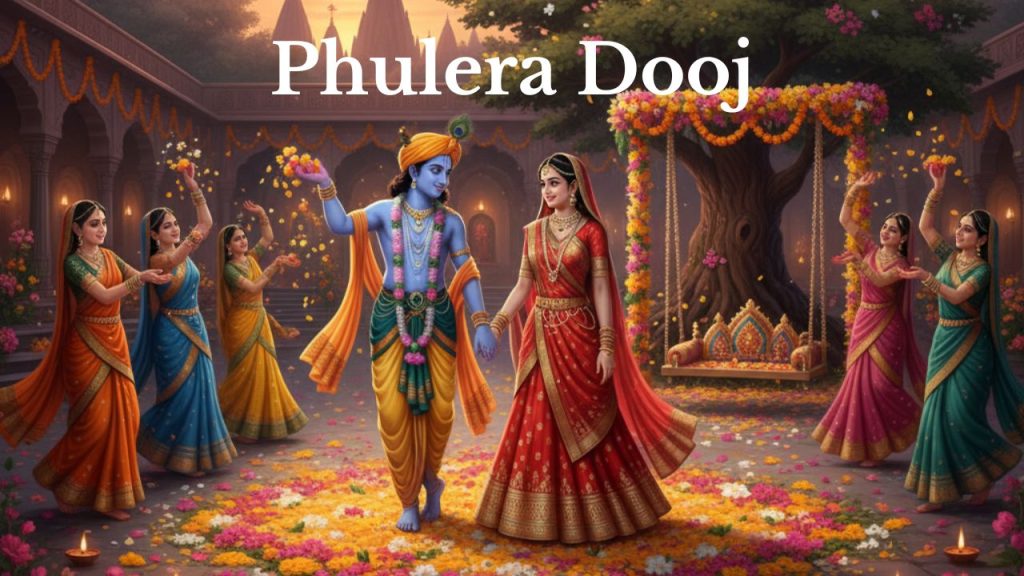
Phulera Dooj is steeped in legends and mythology, connecting devotees with divine stories that have transcended generations. One of the central myths revolves around Lord Krishna and Radha. According to folklore, Krishna would celebrate this day by decorating his beloved Radha and his village with an abundance of flowers. The festival is seen as a symbol of divine love, devotion, and the celebration of beauty in all forms. It emphasizes the importance of cherishing relationships, expressing gratitude, and finding joy in simple gestures.
Flowers themselves carry deep symbolism in Hindu mythology. They represent purity, peace, and devotion, acting as a medium to convey emotions to the divine. Ancient scriptures frequently mention the use of flowers in rituals, highlighting their spiritual potency and aesthetic value. During Phulera Dooj, offerings of flowers to deities are not merely decorative; they signify devotion, surrender, and the pursuit of spiritual growth.
The seasonal aspect of Phulera Dooj is equally significant. Falling in Phalgun, the festival aligns with nature’s renewal cycle. The bloom of fresh flowers at this time symbolizes hope, positivity, and the promise of prosperity. Communities historically used this festival as an opportunity to strengthen social bonds, exchange blessings, and celebrate the beauty of life. Through centuries, Phulera Dooj has remained a festival that beautifully blends mythology, nature, and devotion, reminding us of the timeless connection between the divine, humans, and the natural world.
Astrological Significance
Astrology plays a crucial role in Hindu festivals, and Phulera Dooj is no exception. Observed on the Shukla Paksha Dwitiya of Phalgun, this day is considered highly auspicious for spiritual, personal, and social growth. The moon’s position during this period influences emotional well-being, relationships, and prosperity. Devotees believe that performing rituals and offering flowers during Phulera Dooj aligns energies favorably, attracting positivity and removing obstacles.
In astrology, Dwitiya, or the second day of the lunar fortnight, is associated with new beginnings and growth. Phulera Dooj explicitly encourages the expression of devotion, nurturing of relationships, and strengthening of bonds with loved ones. Compared to other Dooj celebrations, Phulera Dooj emphasizes beauty, aesthetics, and the symbolism of flowers as carriers of positive vibrations.
Astrologers recommend engaging in devotional activities, offering flowers to deities, and participating in community rituals on this day. These practices are believed to enhance spiritual energy, promote harmony in personal and professional life, and create an overall sense of well-being. In addition, couples often observe special prayers, seeking blessings for love, understanding, and marital bliss. By integrating astrology with devotion, Phulera Dooj becomes a holistic celebration, balancing cosmic influences with personal spiritual efforts, guiding devotees toward a more harmonious and fulfilling life.
Traditional Rituals and Practices
The charm of Phulera Dooj lies in its rituals, which are vibrant, meaningful, and deeply spiritual. Central to the celebration is offering flowers to deities, particularly Lord Krishna and Radha. This practice represents devotion, surrender, and gratitude. Temples and homes come alive with fresh blooms, creating an atmosphere of divine beauty and joy. Devotees often choose flowers based on color, fragrance, and symbolic significance, making every offering a thoughtful expression of faith.
Performing puja is another essential aspect of the festival. Families gather to chant mantras, sing devotional songs, and perform rituals that invite spiritual energy into their homes. These practices foster a sense of togetherness, devotion, and mindfulness. Chanting sacred hymns not only enhances concentration but also elevates the spiritual ambiance of the celebration, allowing individuals to feel connected with the divine.
Decorating homes and temples with flowers is both a spiritual and aesthetic activity. Fresh marigolds, roses, and lotuses are commonly used to create intricate patterns, garlands, and altar decorations. This practice symbolizes purity, prosperity, and the beauty of life, making the environment spiritually uplifting. Fasting or observing special prayers is also common among devotees. Even if one does not fast fully, dedicating time to spiritual reflection, prayer, and acts of kindness aligns with the festival’s deeper purpose.
Through these rituals, Phulera Dooj becomes more than a festival; it transforms into a holistic experience that nurtures faith, encourages mindfulness, and celebrates life’s inherent beauty. By participating wholeheartedly, devotees experience joy, spiritual growth, and a profound connection with tradition.
Significance of Flowers in Phulera Dooj
Flowers are the heart of Phulera Dooj, carrying symbolic meaning far beyond their aesthetic appeal. They represent love, purity, devotion, and the beauty of creation. Using flowers during rituals creates an atmosphere of positivity, enhancing spiritual energy and invoking divine blessings. Each blossom, carefully chosen for its color and fragrance, conveys a unique spiritual message, bridging the human and heavenly realms.
Popular flowers used during Phulera Dooj include marigolds, lotuses, and roses. Marigolds are associated with auspiciousness, prosperity, and protection, while lotuses symbolize purity and spiritual awakening. Roses, with their vibrant colors and soothing fragrance, embody love and devotion. Devotees select flowers thoughtfully, ensuring that each offering aligns with the festival’s spiritual objectives and aesthetic charm.
Rituals involving floral decorations in homes and temples are central to the festival. Fresh flower garlands adorn deities, altar spaces, and even doorways, creating a visually uplifting and spiritually charged environment. Flowers are also used in creative arrangements and rangoli patterns, reflecting devotion and artistic expression. Offering flowers during puja is a way of expressing gratitude, seeking blessings, and inviting positivity into one’s life.
In addition, flowers are believed to harmonize energies according to Vastu and Shastra principles. Their presence purifies spaces, promotes positivity, and encourages mental clarity. The act of handling, arranging, and offering flowers instills mindfulness, patience, and a sense of connection with nature. Through the symbolism, beauty, and spiritual essence of flowers, Phulera Dooj transcends a simple ritual, becoming a deeply immersive celebration that nurtures the soul, strengthens relationships, and brings divine energy into everyday life.
Social and Cultural Importance
Phulera Dooj is not just a spiritual festival; it is a celebration that strengthens social and cultural bonds. Beyond devotion, it brings families, neighbors, and communities together. People gather to decorate homes and temples, exchange flowers and sweets, and participate in collective prayers. These activities create a shared sense of joy, reinforcing connections that are vital in maintaining community harmony.
Community gatherings often feature cultural performances such as devotional singing, folk dances, and storytelling sessions that recount the legends of Radha and Krishna. Such activities preserve traditional art forms and provide opportunities for younger generations to learn about their heritage in an engaging way. The festival also encourages mutual respect and cooperation, as neighbors collaborate on decorations, food preparations, and temple events.
Local economies benefit as well. Flower vendors, artisans, and small businesses see increased activity, highlighting how cultural festivals can support livelihoods. By purchasing fresh flowers, garlands, and decorative items, communities maintain the tradition while contributing to local commerce.
Phulera Dooj also fosters inclusivity. Whether celebrated in urban or rural areas, the festival invites participation from all age groups and social backgrounds. This inclusive spirit ensures that devotion and cultural richness are shared widely, making Phulera Dooj a symbol of unity, joy, and collective celebration.
Spiritual Benefits of Observing Phulera Dooj
Participating in Phulera Dooj rituals brings numerous spiritual benefits. The festival encourages mindfulness, devotion, and introspection. Offering flowers to deities, performing pujas, and chanting mantras create an environment where the mind can focus on positive energies, allowing for inner calm and spiritual growth.
One of the primary spiritual benefits is the deepening of devotion towards Lord Krishna and Radha. Flowers offered with sincerity are believed to attract divine blessings, purifying the mind and promoting peace. Regular observance of rituals during Phulera Dooj helps individuals cultivate discipline and consistency in spiritual practice.
The festival also serves as a medium to remove negativity and invite positivity into daily life. Engaging in devotional singing, community prayers, and acts of kindness amplifies this effect. These practices strengthen personal faith, inspire gratitude, and encourage a deeper understanding of life’s spiritual dimensions.
For couples and families, Phulera Dooj rituals can improve relationships by fostering patience, empathy, and mutual respect. Devotees often experience a heightened sense of connectedness with loved ones and a renewed appreciation for the beauty of creation. Through spiritual engagement, Phulera Dooj becomes not only a celebration of flowers but a holistic opportunity to nurture the soul, improve mental well-being, and align with divine energies.
Phulera Dooj and Modern Lifestyle
Phulera Dooj provides a chance to reconnect with tradition while adapting to modern lifestyles. Many urban households celebrate the festival with shorter, focused rituals that fit within daily routines, ensuring that spiritual practice remains consistent without causing disruption.
Sustainable practices are becoming increasingly popular. Devotees now use eco-friendly decorations, biodegradable flower materials, and locally sourced blooms to reduce environmental impact. Such practices respect the spiritual significance of the festival while promoting environmental consciousness.
Technology also plays a role in modern celebrations. Virtual gatherings, online pujas, and social media sharing allow devotees to participate in community activities even when physically distant. This ensures that cultural traditions remain relevant and accessible, connecting people across cities and countries.
Phulera Dooj also encourages mindful living. Incorporating flowers, meditation, and spiritual reflection into modern routines reminds individuals to slow down, appreciate the beauty of life, and find joy in simple acts. The festival thus acts as a bridge, blending ancient rituals with contemporary sensibilities while maintaining the essence of devotion and celebration.
Popular Myths and Misconceptions
Like many festivals, Phulera Dooj has several myths and misconceptions that can confuse devotees. A common misunderstanding is that only married couples or specific individuals can perform rituals. In reality, the festival is open to all, and participation is encouraged regardless of marital status, gender, or age.
Another myth revolves around the timing of pujas. Some believe that offerings must be made at specific hours to be effective. While auspicious timing enhances the experience, sincere devotion at any time holds spiritual value. Similarly, some think that flowers must be rare or expensive; in truth, the purity of intention matters more than material value.
Superstitions about specific flowers or rituals often create unnecessary fear or hesitation. Educating oneself through trusted sources and understanding the symbolism behind practices ensures that the festival is celebrated with clarity, devotion, and joy. Dispelling these myths allows participants to focus on the more profound spiritual and cultural significance of Phulera Dooj, rather than being guided by misconceptions. By promoting awareness, the festival remains inclusive, meaningful, and authentic, enabling communities to enjoy it fully while preserving its historical and devotional essence.
Divine Insights
Phulera Dooj in Phalgun is a vibrant celebration that beautifully combines devotion, culture, and the natural world. It is a festival where flowers become symbols of love, purity, and divine connection, offering a unique way to express gratitude, joy, and spirituality. Observing this festival strengthens family and community bonds, preserves cultural traditions, and brings a sense of renewal and positivity.
The festival encourages mindfulness, spiritual growth, and harmonious living. Through rituals, offerings, and devotion, participants align themselves with divine energies and experience personal and social benefits. Modern adaptations allow the festival to remain relevant, while sustainable practices highlight a commitment to environmental responsibility.
Phulera Dooj also serves as a reminder of the timeless power of simple, meaningful actions. Whether it’s offering a flower, performing a prayer, or participating in community events, every act reflects love, devotion, and respect for tradition. By embracing the spiritual, cultural, and social essence of Phulera Dooj, devotees continue a legacy that celebrates life, passion, and the beauty of nature, making this festival a cherished and enriching experience for all.