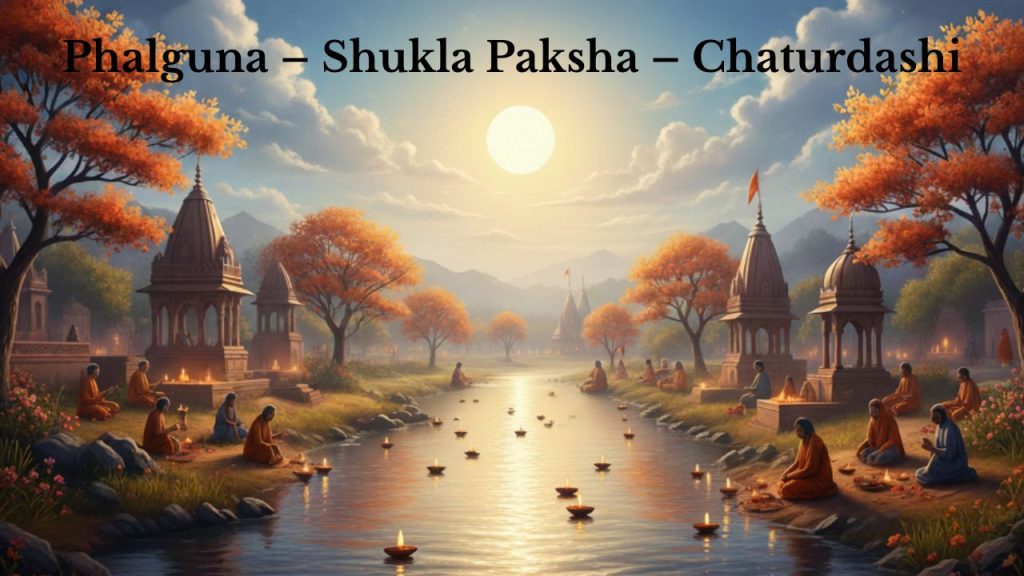
Importance of Chaturdashi in Shukla Paksha in Phalgun
Chaturdashi, the fourteenth day of the lunar calendar, holds a distinct place in the cycle of tithis. It stands as a moment just before the full moon, symbolising the nearing completeness of the lunar cycle. In the context of the Hindu calendar, each tithi is considered to carry a unique vibration, and Chaturdashi is one of the most spiritually potent among them. When this day falls in the Shukla Paksha, which refers to the waxing phase of the moon, it signifies growth, prosperity, and the rising power of light over darkness.
The month of Phalgun (February–March) further enhances the significance of this tithi. As the final month of the Hindu calendar, Phalgun is deeply linked with renewal, transformation, and preparation for new beginnings. Chaturdashi in this month embodies the culmination of spiritual practices that purify the mind and soul before stepping into the fresh cycle of Chaitra. It is not merely a date on the calendar but a turning point where spiritual energies align with the natural cycles of the cosmos.
This tithi carries profound cultural and spiritual importance. Families and devotees observe fasting, prayers, and rituals with deep devotion. Communities come together to celebrate, pray, and reflect on the lessons of harmony and discipline that this day conveys. For many, it becomes a chance to balance the material and spiritual aspects of life, a theme firmly embedded in Hindu philosophy.
The purpose of exploring this tithi lies in its rituals, mythological background, and astrological relevance. Each of these aspects sheds light on why Chaturdashi continues to hold timeless value across generations. The study of this day provides insights into how cosmic rhythms shape human life and how observing them with faith strengthens the bond between self, society, and the divine.
Mythological Significance of Chaturdashi in Phalgun
Stories from the Puranas and epics related to this tithi
The Puranas and epics narrate several stories highlighting the sacred power of Chaturdashi. One story speaks of Lord Shiva performing his cosmic dance, the Tandava, symbolising creation and destruction, on Chaturdashi. Another tale links this day with the victory of righteousness over arrogance, where divine forces triumphed to restore balance in the world. Such stories underline the strength of devotion and discipline when aligned with cosmic timing. These legends are not just symbolic but offer timeless lessons about the eternal cycle of growth and decline, encouraging individuals to embrace humility and spiritual awareness.
Association with Lord Shiva and Lord Vishnu
Chaturdashi is strongly associated with both Lord Shiva and Lord Vishnu. For devotees of Shiva, this day holds immense importance, as many believe that worshipping him on Chaturdashi brings liberation from sins and paves the way for moksha. Similarly, followers of Vishnu connect this tithi with his protection of dharma. In the Vaishnava tradition, fasting and offering prayers to Vishnu during Chaturdashi are seen as a way to gain divine grace, ensuring peace and prosperity. This dual association reflects the balance of preservation and transformation within the cosmic order.
Role of divine energies on this day
On this day, divine energies are believed to be at their peak. The waxing moon enhances spiritual vibrations, making prayers and meditation more powerful. Many devotees report experiencing inner calm, heightened focus, and a sense of connection with higher energies when engaging in worship on Chaturdashi. This makes the tithi ideal for self-reflection, cleansing rituals, and seeking divine blessings for both worldly and spiritual pursuits.
Symbolism of balance and harmony
Chaturdashi carries the symbolic meaning of balance before completeness. As the fourteenth day precedes the full moon, it represents the threshold between growth and fulfilment. It teaches the importance of balance in daily life, between duties and desires, between discipline and enjoyment, and between worldly goals and spiritual aspirations. Observing this balance ensures harmony within oneself and in the surrounding environment.
Importance of sustaining dharma
The tithi is also linked with the sustenance of dharma (righteousness). Myths and rituals associated with Chaturdashi remind devotees of their role in preserving moral values and truth in life. It inspires people to act with integrity, resist negative influences, and uphold justice. By observing the day with sincerity, individuals contribute to the larger balance of dharma in society.
Religious Importance of Chaturdashi in Hindu Traditions
Why Chaturdashi holds sacred value in Hinduism
In Hindu traditions, Chaturdashi is not seen as an ordinary tithi but as a sacred milestone. Its position before the full moon makes it spiritually potent, and in the month of Phalgun, it is considered especially auspicious. Scriptures highlight its role in helping devotees wash away past wrongdoings and prepare for renewal. Families observe the day by gathering for rituals, fasting, and prayers, ensuring that spirituality becomes an integral part of their daily lives.
Practices of fasting, prayers, and puja
One of the most common religious practices is fasting. Devotees observe either a complete fast or consume only sattvic (pure) foods. The fast is not just about abstaining from food but about controlling desires and dedicating the mind to spiritual growth. Along with fasting, puja rituals are performed, which include lighting lamps, offering flowers, chanting mantras, and reciting prayers. This conscious observance deepens the connection with divine forces.
Association with spiritual purification
Chaturdashi is deeply connected with the idea of purification. Devotees believe that observing fasts and rituals helps purify the body, mind, and soul. Ritual baths in sacred rivers or at home with sanctified water are considered especially powerful. By letting go of impurities, both physical and mental, the day becomes an opportunity to start afresh with clarity and focus.
Offerings and charity as acts of merit
Charity plays a significant role on this day. Many devotees offer food, clothes, or money to people in need. In Hindu thought, daan (charity) is considered an essential duty that generates good karma. By sharing blessings with others, devotees practice compassion and humility, which align perfectly with the spiritual spirit of Chaturdashi.
Impact on personal growth and spiritual balance
Observing the religious practices of Chaturdashi nurtures personal growth. The discipline of fasting fosters self-control, while rituals and prayers strengthen devotion. Together, they create a sense of spiritual balance, allowing individuals to manage worldly responsibilities without losing touch with their spiritual path. The impact of this day thus goes beyond rituals, shaping personal values and spiritual maturity.
Rituals and Observances on Chaturdashi
Puja rituals are performed at home and temples.
On Chaturdashi, puja rituals are carried out with devotion both in homes and temples. Families clean their spaces, decorate altars, and prepare sacred offerings. In temples, priests perform elaborate rituals involving sacred chants, lamps, and offerings to deities. Devotees believe that witnessing or participating in these ceremonies magnifies the blessings received.
Use of mantras, lamps, and sacred offerings
The use of mantras holds a central place in Chaturdashi rituals. Chanting Shiva or Vishnu mantras with faith is believed to cleanse the environment and the mind. Lighting lamps (diyas) symbolises the triumph of light over darkness, spreading positivity and peace. Offerings such as flowers, fruits, and incense further reflect devotion and gratitude towards the divine.
Importance of fasting and food restrictions
Fasting is one of the core observances of Chaturdashi. Many devotees choose a complete fast, consuming only water, while others follow a partial fast by eating simple vegetarian meals. Food restrictions are observed not just for physical health but to encourage detachment from material desires. This practice turns the focus inward, encouraging self-reflection and devotion.
Early morning and evening prayers
Devotees begin the day with early morning prayers after ritual baths, often facing the rising sun. Evening prayers hold equal importance, performed with lamps, chants, and offerings to deities. These moments of devotion create a spiritual rhythm for the day, balancing energy and ensuring inner peace.
Community participation in special events
Chaturdashi often brings communities together. Temples organise special rituals, satsangs (spiritual gatherings), and processions. Such events foster unity, collective devotion, and shared joy. The sense of belonging and togetherness enhances the spiritual experience, reminding devotees of the strength of faith when practiced collectively.
Astrological Importance of Chaturdashi
Chaturdashi as per Vedic astrology
In Vedic astrology, each tithi is considered to carry specific influences, and Chaturdashi is seen as highly energetic. Falling just before the full moon, it marks a point of heightened lunar energy. When this day aligns with Phalgun, the cosmic vibrations support new beginnings, spiritual practices, and personal transformation. Astrologers suggest that rituals performed on this day are amplified in their effects due to the cosmic balance present in the universe.
Influence of planetary alignments during Phalgun
The planetary alignments in Phalgun further enhance the impact of Chaturdashi. Depending on the positioning of planets like Jupiter, Saturn, or Mars, the energy of the day can be especially favourable for spiritual practices, charity, or personal growth. These alignments influence how rituals are observed and what benefits devotees may expect.
Auspicious and inauspicious activities of the day
Astrologers classify certain activities as auspicious during Chaturdashi, such as performing pujas, chanting mantras, and beginning spiritual journeys. At the same time, it is advised to avoid conflict, negative speech, or harmful actions, as these can attract inauspicious results. The focus remains on purity, harmony, and discipline.
Benefits of observing rituals aligned with astrology
When rituals are performed according to astrological guidance, their impact is believed to multiply. Aligning fasts, prayers, and offerings with planetary influences allows devotees to maximise spiritual benefits. This creates harmony between human actions and cosmic forces, strengthening the flow of positive energy in life.
Role of the waxing moon in amplifying energy
The waxing moon of Shukla Paksha plays a vital role on Chaturdashi. Its growing light represents progress, positivity, and expansion. Observing rituals during this phase helps devotees harness lunar energy for spiritual growth and mental clarity. The waxing moon acts as a natural amplifier, making the prayers and intentions more powerful and effective.
Spiritual Benefits of Observing Chaturdashi
Cleansing of negative energies
One of the most profound spiritual benefits of Chaturdashi is the cleansing of negative energies. The rituals, fasting, and prayers observed on this day are designed to purify not only the body but also the environment around. Just as a lamp dispels darkness, devotion and discipline on Chaturdashi are believed to ward off negativity, fear, and confusion. Many devotees report a lighter mind and heart after observing the day with sincerity. The removal of such energies creates space for peace, clarity, and divine blessings to flow in abundance.
Enhancement of self-discipline and focus
Chaturdashi naturally encourages self-discipline. Fasting requires controlling physical urges, while puja rituals demand dedication and time. Together, they cultivate inner focus and discipline. This discipline doesn’t remain limited to rituals but extends into everyday life, making it easier to manage responsibilities, relationships, and challenges. Observing the day regularly builds mental strength and teaches the importance of directing energy towards purposeful actions.
Inner peace and harmony with nature
The alignment of Chaturdashi with lunar cycles highlights its connection to nature. When devotees observe the day, they tune themselves with cosmic rhythms, leading to a deep sense of harmony. Meditation, mantra chanting, and reflection bring calmness and inner peace, helping the mind detach from stress and distractions. By aligning with natural cycles, individuals experience a balance between body, mind, and spirit, fostering long-lasting serenity.
Growth in devotion and surrender to the divine
Chaturdashi is a reminder of the importance of surrender. Fasting, offering prayers, and chanting divine names deepen the sense of devotion. It is an opportunity to place trust in divine will, letting go of ego and pride. Such surrender strengthens the bond with the divine, filling the heart with faith and love. Over time, this practice nurtures a life of humility, compassion, and devotion.
Pathway to moksha (liberation)
The ultimate spiritual promise of Chaturdashi is moksha, or liberation from the cycle of birth and death. Scriptures mention that sincere worship on this day can absolve past karmas and lead one closer to salvation. For seekers on a spiritual path, Chaturdashi becomes a stepping stone toward freedom from worldly attachments. Cleansing the soul offers a glimpse of eternal peace and divine union.
Festivals and Celebrations Associated with Chaturdashi in Phalgun
Connection with Holika Dahan and Holi festivities
Phalgun is the month of joy and renewal, and Chaturdashi connects directly with the celebration of Holika Dahan and Holi. The rituals of Holika Dahan, which involve lighting bonfires, represent the burning of negativity and the triumph of good over evil. Chaturdashi acts as a spiritual prelude to these festivities, reminding devotees to cleanse themselves internally before participating in the joyous festival of colors. This link makes the tithi both sacred and celebratory.
Regional customs and variations across India
Different regions of India celebrate Chaturdashi with unique customs. In some places, temples hold special evening aartis dedicated to Lord Shiva, while in others, fasting is observed strictly with only fruits and water. Northern states often link Chaturdashi with Holika rituals, while southern traditions may focus more on Vishnu worship. These variations reflect India’s rich cultural diversity, but the essence remains the same: devotion, purification, and community harmony.
Temple celebrations and special rituals
On Chaturdashi, temples come alive with special rituals and decorations. Priests chant Vedic hymns, devotees offer flowers, milk, and bilva leaves to Lord Shiva, and Vishnu temples see crowds offering tulsi leaves and sweets, collective prayers and chanting magnify the spiritual vibrations, making temples centres of energy and devotion. Visiting a temple on this day is believed to grant immense blessings and peace of mind.
Folk traditions and songs
Folk culture also adds charm to Chaturdashi. In villages and towns, groups gather to sing traditional songs dedicated to deities, celebrating the spiritual and festive spirit of Phalgun. These songs are filled with devotion, joy, and moral lessons. Such traditions ensure that spirituality becomes accessible and enjoyable for all generations, from elders to children.
Integration of seasonal change with festivities
Chaturdashi falls at the cusp of seasonal change, the transition from winter to spring. This natural shift is celebrated through rituals and festivities, symbolising renewal, fertility, and new life. The seasonal connection makes Chaturdashi not only a spiritual day but also a marker of agricultural and cultural cycles. It reminds people to live in harmony with nature’s rhythms.
Symbolism of Chaturdashi in Daily Life
Representation of balance before completion (leading to Purnima)
Chaturdashi symbolises a moment of balance, standing just before the fullness of Purnima. This teaches the lesson that life is about preparation, patience, and balance before reaching fulfillment. Just as the moon shines almost entirely, yet not fully, humans are reminded to embrace the process of growth before perfection.
Lessons on patience and discipline
Life often demands patience, and Chaturdashi is a spiritual representation of this virtue. Observing fasts, engaging in rituals, and awaiting Purnima teach discipline. These practices mirror real-life situations, where patience and control lead to meaningful achievements. The tithi encourages individuals to embrace discipline as a path to success and inner peace.
Reminder of spiritual practices in everyday life
Chaturdashi serves as a reminder that spirituality is not confined to temples or festivals, but is an integral part of daily life. By observing this day, devotees are encouraged to extend the values of purity, charity, and devotion into their routine. It makes one more mindful, compassionate, and grounded, ensuring that spirituality flows into every action and interaction.
Teaching of gratitude and humility
Offering prayers, fasting, and charity on Chaturdashi cultivates gratitude and humility. The day emphasises thankfulness for blessings received and the humility to serve others. These qualities help build stronger relationships, reduce ego, and promote inner contentment. Gratitude and humility are seen not as duties but as guiding values for a fulfilling life.
Inspiration for righteous living
Chaturdashi’s essence lies in the inspiration it provides for righteous living. Observing its rituals and reflecting on its meaning motivates individuals to follow dharma, uphold truth, and stay committed to moral values. It serves as a spiritual compass, guiding life choices toward positivity, peace, and purpose.
Stories and Folklore of Phalgun Chaturdashi
Local legends and regional narratives
Across India, local legends highlight the sacredness of Chaturdashi. In some regions, stories revolve around farmers seeking blessings for prosperity, while others share tales of sages who attained wisdom through fasting on this day. These narratives are deeply rooted in community culture, strengthening the relevance of Chaturdashi in everyday lives.
Tales of gods and sages linked to the tithi
Several tales from scriptures link gods and sages to Chaturdashi. Stories of Lord Shiva accepting the devotion of humble worshippers or Lord Vishnu protecting devotees from harm are widely shared. Sages are said to have meditated on this day to achieve spiritual breakthroughs. These tales highlight the compassion of deities and the power of sincere devotion.
Folk tales symbolising moral lessons
Folk tales associated with Chaturdashi often carry strong moral lessons. They depict the victory of truth over lies, humility over pride, and good over evil. By passing these tales across generations, communities keep the ethical and spiritual values alive, making the tithi not only religious but also educational.
Stories connecting cosmic cycles and human life
Many stories connect cosmic cycles with human experiences. Chaturdashi is portrayed as a time when cosmic energies align to help humans cleanse karmic debts. These stories make the lunar calendar relatable, showing how celestial rhythms impact earthly life. They inspire individuals to respect natural cycles and live in harmony with the universe.
Oral traditions passed through generations
Chaturdashi stories have been preserved through oral traditions, grandparents narrating tales to children, folk songs sung in villages, and local plays performed during festivals. These oral traditions keep the essence of Chaturdashi alive, ensuring that even in modern times, its significance continues to inspire future generations.
Timeless Relevance of Chaturdashi in Shukla Paksha
Chaturdashi in the Shukla Paksha of Phalgun stands as a tithi that carries timeless spiritual, cultural, and astrological relevance. From its mythological roots in the Puranas to its association with Lord Shiva and Lord Vishnu, the day highlights divine energies and the importance of devotion. Its religious practices, fasting, prayers, and charity, nurture purity, discipline, and compassion, while its astrological significance aligns human actions with cosmic rhythms.
The symbolism of balance before completion, the spiritual benefits of cleansing, and the moral lessons from folklore make Chaturdashi an integral part of Hindu tradition. Its connection to festivals like Holika Dahan ensures that the day is not just about solemnity but also about collective joy and renewal.
Even in modern times, Chaturdashi reminds people of the value of patience, gratitude, and righteous living. It encourages alignment with natural cycles, devotion to higher powers, and commitment to dharma. As generations continue to observe its rituals and pass down its stories, Chaturdashi remains a guiding light, bridging the gap between human life and cosmic order. In essence, Chaturdashi in the Shukla Paksha of Phalgun is not just a date but a spiritual opportunity to cleanse, balance, and grow, making it relevant for every seeker of peace, prosperity, and liberation.