Understanding about Dwitiya in Krishna Paksha
Definition of Dwitiya in the Hindu lunar calendar
Dwitiya, literally meaning “the second day,” holds a unique place in the Hindu lunar calendar. It is the second tithi or lunar day, following Pratipada. Each tithi carries specific spiritual and cultural significance, and Dwitiya is no exception. This day is observed with a sense of devotion, self-reflection, and connection to the divine. The lunar calendar serves as a guide for religious observances, agricultural activities, and cultural rituals, and Dwitiya is an integral part of this rhythm. Unlike ordinary days, Dwitiya carries the energy of new beginnings and opportunities for spiritual purification. Observing rituals on this day is believed to bring positive energy, foster inner peace, and strengthen bonds with family and community. The essence of Dwitiya extends beyond rituals; it is about aligning oneself with cosmic patterns and nurturing personal growth.
Explanation of Krishna Paksha (waning phase of the moon)
Dwitiya occurs during Krishna Paksha, which represents the waning phase of the moon, starting just after the full moon (Purnima) and ending on the new moon (Amavasya). This phase is symbolic of introspection, letting go of negative emotions, and cleansing oneself of past burdens. During Krishna Paksha, spiritual energy turns inward, encouraging meditation, reflection, and detachment from material distractions. Dwitiya, within this phase, is especially potent for performing rituals that enhance mental clarity, bring emotional stability, and encourage spiritual advancement. Many devotees consider Krishna Paksha a favorable time to seek guidance from the divine and reconnect with higher consciousness.
Timing: Occurrence in the month of Phalgun (February–March)
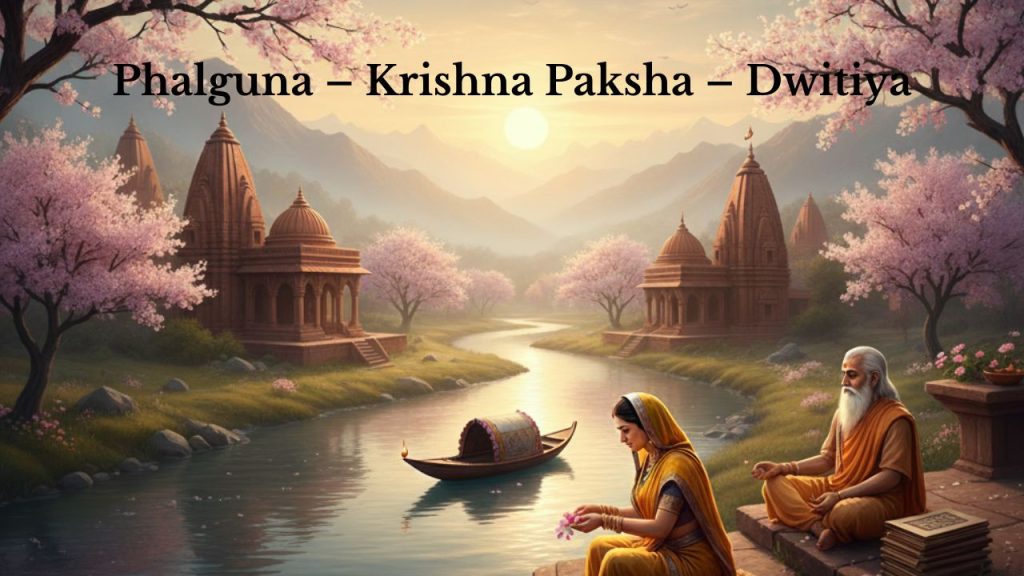
Dwitiya in the month of Phalgun usually falls in February–March, depending on the lunar calendar. Phalgun is a transitional month marking the end of winter and the arrival of spring, symbolizing renewal and hope. This seasonal change adds significance to Dwitiya, making it a day to embrace transformation, growth, and positivity. Observing Dwitiya during Phalgun is thought to enhance the effects of rituals and prayers, as the cosmic energy of this month is conducive to spiritual cleansing and rejuvenation.
Significance in daily life and spiritual practice
In daily life, Dwitiya serves as a gentle reminder to pause, reflect, and align actions with higher principles. Spiritual practices on this day, such as fasting, meditation, and chanting, help reduce stress and foster mental clarity. Dwitiya encourages mindfulness, patience, and gratitude. By incorporating rituals and conscious actions into this day, individuals can cultivate discipline, strengthen moral values, and invite prosperity into personal and professional spheres.
Transition to its religious and cultural importance
Dwitiya is more than a calendar date; it represents the rhythm of life in harmony with cosmic forces. Its religious and cultural importance extends to rituals, temple activities, and community gatherings. The day inspires devotion, enhances familial bonds, and reinforces social customs. Dwitiya acts as a bridge connecting daily life with spiritual consciousness, making it a day of meaningful observance, reflection, and celebration.
Astrological Significance of Dwitiya
Impact of Dwitiya on zodiac signs and planetary positions
Astrologically, Dwitiya plays a crucial role in influencing human energy and planetary interactions. Each tithi affects zodiac signs differently, and Dwitiya is considered auspicious for most signs, promoting harmony, focus, and growth. The planetary positions during Dwitiya can enhance spiritual sensitivity, improve decision-making, and increase overall well-being. For instance, those in Aries or Leo may experience heightened energy levels and motivation, while Capricorn or Pisces may find clarity in relationships and professional matters. Understanding the astrological influence of Dwitiya allows one to optimize activities, align personal goals with cosmic patterns, and make informed choices in daily life.
Favorable and unfavorable timings on this day
Dwitiya has specific periods known as muhurta that are considered highly auspicious for performing rituals, starting new ventures, or engaging in spiritual practices. These timings, calculated based on the lunar and planetary positions, maximize the benefits of prayers and meditations. Conversely, certain hours may be less favorable for significant decisions, as they are associated with mental restlessness or low energy. Observing rituals and activities during the favorable window ensures alignment with cosmic forces and attracts positive outcomes in both personal and professional life.
Influence on personal and professional life
The energy of Dwitiya can directly impact personal development and career growth. Engaging in focused work, spiritual practices, or learning on this day may lead to better productivity, enhanced creativity, and stronger intuition. Dwitiya is ideal for initiating small but meaningful tasks, improving relationships, and resolving conflicts. By understanding the astrological vibrations of this day, one can harness its energy to foster personal growth, maintain mental clarity, and achieve long-term objectives.
Connection with lunar energy and mental well-being
The moon’s energy during Dwitiya is gentle yet transformative. Krishna Paksha enhances introspection, mindfulness, and emotional stability. Aligning with lunar rhythms through meditation, journaling, or mindful rituals can improve mental well-being, reduce anxiety, and strengthen emotional resilience. Dwitiya offers a natural opportunity to reset mentally, harmonize with the universe, and cultivate inner calm, which positively influences daily life and spiritual pursuits.
Mythological Importance
Legends and stories associated with Dwitiya
Dwitiya is enriched with fascinating mythological tales that highlight its spiritual significance. One legend emphasizes the victory of virtue over vice, encouraging devotees to engage in self-purification and moral discipline. Other stories narrate the blessings received by devotees who observe Dwitiya with devotion, showcasing the day as a spiritual amplifier. These legends serve as timeless reminders of the importance of faith, devotion, and ethical living. They also illustrate the alignment between human actions and divine cosmic laws, which Dwitiya embodies.
Link with the deities worshipped on this day.
Dwitiya is associated with several deities depending on regional and sectarian beliefs. Devotees often worship Lord Krishna, Lord Vishnu, or Goddess Lakshmi, seeking blessings for prosperity, health, and spiritual growth. Special offerings, prayers, and rituals are dedicated to these deities, reinforcing the divine connection. Observing Dwitiya with devotion to these gods ensures that spiritual efforts are amplified, bringing peace, fulfillment, and positive energy into personal and communal life.
Reference in Puranas or Vedic texts
Ancient texts such as the Puranas and Vedas guide observing Dwitiya. These scriptures describe the significance of lunar tithis and emphasize the benefits of fasting, prayers, and charitable acts. Dwitiya is often highlighted as a day favorable for spiritual practices, ethical reflection, and social harmony. Referring to these texts underlines the historical continuity of Dwitiya observances, establishing its credibility as a day of spiritual and moral importance.
Symbolism behind observing rituals on Dwitiya
The rituals observed on Dwitiya carry symbolic meaning. Fasting represents self-discipline and purification of body and mind. Offering prayers symbolizes devotion and surrender to divine forces. Temple visits and community participation emphasize unity, compassion, and collective spiritual growth. Each act performed on Dwitiya is a conscious alignment with universal principles, reinforcing the idea that small, mindful actions can lead to profound spiritual transformation.
Religious Practices and Rituals
Standard pujas and offerings performed.
On Dwitiya, devotees perform various pujas to honor the divine. These may include lighting lamps, offering flowers, fruits, and sweets, and reciting specific prayers. The pujas are conducted with a focus on devotion, purity, and mindfulness. In many households, the rituals involve family participation, fostering a sense of togetherness and spiritual harmony. Temples may also hold special ceremonies, allowing devotees to experience collective energy and heightened spiritual connection.
Fasting practices are observed on Dwitiya.
Fasting is a central practice on Dwitiya, varying in intensity according to personal capacity and tradition. Some observe a complete fast, consuming only water, while others adopt partial fasting, taking light, sattvic meals. Fasting is believed to purify the body, improve concentration, and enhance spiritual receptivity. It is also a symbolic act of self-control and detachment, reinforcing the principle that discipline leads to inner strength and clarity.
Mantras and prayers recited.
Devotees chant mantras specific to the deities worshipped on Dwitiya. These mantras are often derived from Vedic texts or devotional hymns, aiming to invoke divine blessings and create positive vibrations. Regular recitation during Dwitiya is believed to strengthen the mind, calm emotions, and foster spiritual awareness. The sound energy of mantras harmonizes mental and emotional states, creating an environment conducive to meditation and reflection.
Temple visits and their significance
Visiting temples on Dwitiya allows devotees to immerse themselves in a sacred atmosphere and participate in communal worship. Temple rituals often include arati, bhajans, and special offerings, amplifying the spiritual energy of the day. Engaging with the community in such sacred spaces enhances collective devotion and reinforces cultural traditions. Temple visits also serve as a reminder of the divine presence in daily life, inspiring gratitude, mindfulness, and ethical living.
Cultural Traditions
Folk practices and regional variations in celebrating Dwitiya
Dwitiya is celebrated differently across regions, reflecting India’s diverse cultural landscape. In some areas, specific rituals are performed to honor local deities or ancestors. Traditional songs, dances, and storytelling accompany these celebrations, preserving cultural heritage. The diversity of practices highlights how Dwitiya adapts to regional contexts while maintaining its spiritual essence. These folk customs foster community spirit, collective identity, and intergenerational bonding.
Community gatherings or festivals coinciding with the day
Many communities organize gatherings, fairs, and religious functions on Dwitiya. These events provide opportunities to share knowledge, participate in rituals collectively, and strengthen social bonds. Festivals often include cultural performances, devotional music, and charitable activities. Engaging in communal celebrations enhances a sense of belonging, reinforces shared values, and promotes social harmony.
Significance of Dwitiya in art, music, and storytelling
Artistic expressions are integral to Dwitiya celebrations. Folk art, devotional music, and traditional storytelling convey moral lessons, mythological tales, and spiritual wisdom. These cultural elements preserve ancient knowledge and make spiritual concepts accessible to all ages. Through music and narrative, Dwitiya becomes not only a day of ritual observance but also a celebration of cultural creativity and intellectual engagement.
Social customs linked with auspiciousness
Dwitiya is also associated with social customs that promote harmony, respect, and ethical conduct. Practices like visiting elders, giving alms, and helping those in need embody the values of compassion and community care. Such customs reinforce societal bonds, create positive karma, and ensure that the spiritual energy of the day extends beyond individual observance to collective well-being.
Spiritual Benefits of Observing Dwitiya
Enhancing mental peace and clarity
Dwitiya offers a unique opportunity to cultivate mental clarity and inner peace. By engaging in meditation, prayer, and mindful reflection, individuals can reduce stress and eliminate distractions from their daily lives. The combination of fasting, chanting, and devotion allows for a calm and focused mind, promoting better decision-making and emotional balance. Regular observance of Dwitiya encourages self-awareness, helping individuals to address inner conflicts, release negative thought patterns, and achieve a tranquil state of consciousness.
Strengthening spiritual discipline and devotion
Observing Dwitiya reinforces spiritual discipline. Performing rituals, following fasting guidelines, and reciting mantras require focus, patience, and commitment. These practices enhance devotion and help cultivate a consistent spiritual routine. Over time, this discipline strengthens the mind, builds resilience against challenges, and nurtures a deeper connection with the divine. Dwitiya encourages prioritizing spiritual growth alongside worldly responsibilities, thereby creating harmony between the material and spiritual aspects of life.
Purification of mind and body through fasting and rituals
Fasting on Dwitiya is not just a physical exercise but a spiritual purification process. Abstaining from regular meals, consuming light and sattvic food, and engaging in rituals cleanses the body, mind, and soul. It stimulates detoxification, improves concentration, and enhances receptivity to spiritual energies. Rituals performed during Dwitiya, such as pujas and offerings, further reinforce inner purity and the sense of alignment with cosmic rhythms.
Building positive karma and attracting blessings
Dwitiya is an auspicious day for performing charitable acts and helping others. Offering food, clothes, or assistance to those in need creates positive karma, amplifying spiritual benefits. Devotion and righteous actions on this day are believed to attract blessings from deities, foster prosperity, and strengthen personal and familial well-being. Observing Dwitiya mindfully ensures that spiritual energy is not only internalized but also radiated outward, positively impacting the community and environment.
Significance in Family and Relationships
Rituals promoting harmony and prosperity in the household
Dwitiya rituals often focus on household prosperity and family unity. Conducting pujas together strengthens familial bonds, nurtures mutual respect, and fosters emotional well-being. Devotees believe that these rituals attract divine blessings, ensuring a harmonious environment at home. Engaging in these practices collectively allows the entire family to experience spiritual growth and shared joy.
Blessings sought for children, elders, and newlyweds.
Specific prayers on Dwitiya are directed toward family members, particularly children, elders, and newlyweds. Parents often pray for the health, education, and moral development of children. Blessings for elders emphasize long life and well-being, while rituals for newlyweds focus on marital harmony and prosperity. These observances reflect the interconnectedness of family life and spiritual practice, reinforcing the importance of care and devotion in relationships.
Special ceremonies are performed in family settings.
Many households organize small ceremonies, including havans, special prayers, or the distribution of prasadam. These gatherings create a sacred space for reflection, gratitude, and cultural learning. Participating in these ceremonies instills a sense of responsibility and respect for tradition among younger family members. Such observances also provide opportunities to teach values, ethics, and devotion, ensuring the continuity of spiritual practices across generations.
Dwitiya is a day to strengthen familial bonds.
Beyond rituals, Dwitiya encourages spending quality time with loved ones, resolving misunderstandings, and fostering forgiveness. Observing the day collectively enhances empathy, communication, and emotional connection within the family. This spiritual engagement strengthens both immediate and extended familial ties, creating a nurturing environment that supports both personal and collective well-being.
Connection with Nature and Seasons
Role of lunar phases in agricultural practices
Dwitiya, falling in Krishna Paksha, aligns with traditional agricultural cycles. Farmers often consult the lunar calendar to plan sowing, harvesting, and other agricultural activities. Observing Dwitiya with rituals of gratitude toward nature ensures harmony between human life and environmental cycles. This connection emphasizes respect for natural rhythms and encourages sustainable practices, reflecting an intrinsic understanding of cosmic influence on earthly life.
Link between Krishna Paksha Dwitiya and seasonal changes
Phalgun marks the transition from winter to spring, a time of renewal and rejuvenation. Dwitiya, during this period, symbolizes the shedding of old energies and embracing new beginnings. The waning moon of Krishna Paksha complements this seasonal shift by promoting introspection, encouraging the release of negativity, and fostering personal growth. Observing Dwitiya in alignment with seasonal changes enhances spiritual benefits and reinforces the interconnectedness of life and nature.
Observances promoting ecological balance
Some regional traditions include environmental rituals on Dwitiya, such as planting trees, watering plants, or performing symbolic acts of respect toward rivers and forests. These practices highlight the cultural recognition of ecological balance and reinforce the concept of stewardship over nature. Engaging with the environment on this day fosters mindfulness and reinforces the understanding that spiritual well-being is linked to ecological harmony.
Celebrating nature through festivals and rituals
Dwitiya celebrations often incorporate elements of nature, from flower offerings to sacred fire rituals. Festivals and community observances may include processions or symbolic representations of natural cycles. These activities strengthen cultural identity while celebrating the abundance and beauty of the natural world. Nature-inspired rituals remind devotees of the importance of gratitude, respect, and coexistence with the environment.
Dos and Don’ts on Dwitiya
Recommended activities and spiritual practices
Dwitiya is ideal for meditation, prayer, fasting, chanting, and performing pujas. Engaging in selfless service, studying spiritual texts, or spending time in temples are considered highly beneficial. Small acts of kindness, charity, and maintaining cleanliness at home enhance positive energy. These activities align the mind, body, and spirit with the cosmic rhythm of the day, fostering harmony and spiritual growth.
Activities to avoid for negative energy prevention
Avoid indulgence in arguments, overconsumption, and neglect of spiritual obligations. Refraining from harmful actions, such as gossiping or creating conflict, preserves the sanctity of the day. Limiting material distractions, maintaining calmness, and abstaining from non-essential labor ensure alignment with the day’s spiritual energy. These precautions help prevent negative influences and maintain mental clarity.
Significance of food choices and fasting rules
Consumption of sattvic food, light meals, or complete fasting supports purification and mental focus. Heavy, processed, or tamasic foods are discouraged. Drinking water, herbal teas, and consuming fruits can sustain energy while maintaining spiritual discipline. Following these dietary guidelines amplifies the benefits of rituals, enhances concentration, and strengthens the body’s receptivity to positive energy.
Behavioral guidelines to maximize auspiciousness
Positive thoughts, gratitude, mindfulness, and respectful conduct are encouraged on Dwitiya. Treating family members, neighbors, and community members with kindness and patience strengthens social and spiritual harmony. Being conscious of speech, actions, and emotions ensures that the energy of Dwitiya is channeled constructively, creating a day of meaningful observance and lasting benefit.
Divine Insights and Reflections
Recap of the spiritual, cultural, and social significance
Dwitiya in Krishna Paksha of Phalgun is a day that intertwines spirituality, culture, and daily life. Its observance fosters mental clarity, emotional stability, and ethical conduct. From religious rituals to family gatherings and environmental consciousness, Dwitiya represents holistic living aligned with cosmic cycles.
Importance of integrating rituals in modern life
Observing Dwitiya provides an opportunity to pause, reflect, and reconnect with higher values. Simple practices like meditation, mindful meals, or family prayers help maintain spiritual balance, improve well-being, and instill a sense of purpose.
Encouragement to observe Dwitiya mindfully
Mindful observance ensures that the day’s energy is harnessed effectively. Engaging with rituals and practices consciously enhances personal growth, strengthens relationships, and amplifies positive influence within the community. Dwitiya serves as a reminder to cultivate discipline, devotion, and ethical living.
Reflection on the holistic benefits of aligning with lunar cycles
Dwitiya exemplifies the benefits of living in harmony with nature and cosmic rhythms. Aligning actions with lunar energy supports mental, emotional, and spiritual health. Observing this day encourages gratitude, mindfulness, and balance, enriching life with meaning, purpose, and spiritual fulfillment.