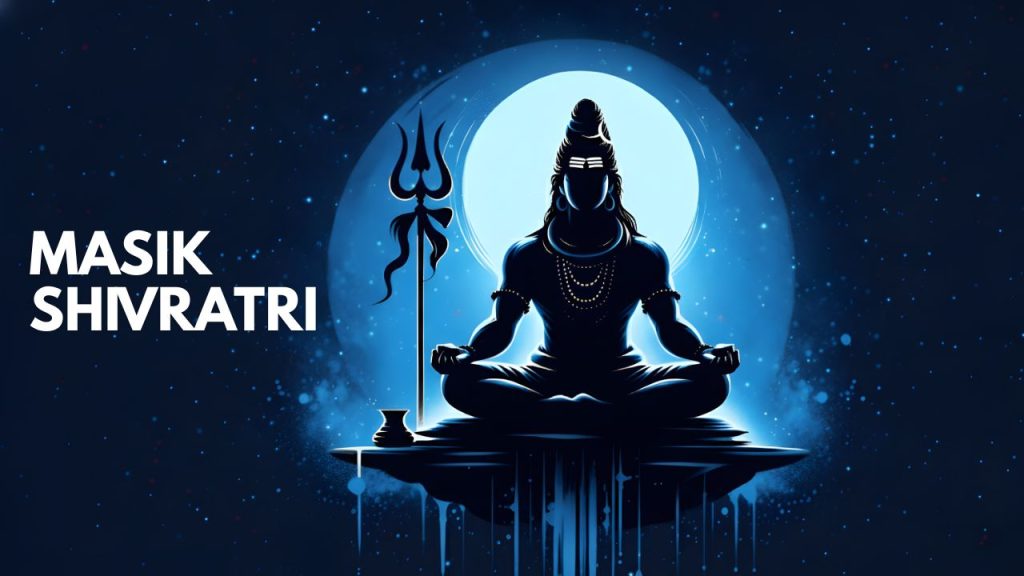
Masik Shivratri, also known as Monthly Shivratri, is a sacred Hindu observance dedicated to Lord Shiva, celebrated every month on the Chaturdashi Tithi (14th day) of the Krishna Paksha (waning phase of the moon). Devotees observe this vrat (fast) to seek the divine blessings of Lord Shiva, who is known as the destroyer of evil and the harbinger of transformation. While Maha Shivratri, which falls once a year, is the most significant, Masik Shivratri offers an opportunity for devotees to worship Shiva regularly and strengthen their spiritual connection.
What is Masik Shivratri?
Definition and Meaning of “Masik”
The word “Masik” is derived from the Sanskrit word “Masa,” meaning “month.” Therefore, Masik Shivratri refers to the “monthly night of Shiva.” Unlike Maha Shivratri, which is celebrated annually with grand festivities, Masik Shivratri is a monthly devotional observance by those who wish to honor Lord Shiva regularly and deepen their connection with the divine.
“Shivratri” Explained
The term “Shivratri” is a combination of two Sanskrit words: “Shiva” (the destroyer of evil) and “Ratri” (night). Thus, Shivratri is the “night of Lord Shiva,” during which devotees stay awake and engage in prayer, fasting, and rituals in honor of Shiva. This night symbolizes overcoming darkness (ignorance) and the arrival of divine light (knowledge).
Difference Between Masik Shivratri and Maha Shivratri
While Masik Shivratri and Maha Shivratri are dedicated to Lord Shiva, they differ in frequency and significance. Masik Shivratri occurs monthly, whereas Maha Shivratri is an annual event, usually falling in February or March. Maha Shivratri is considered the most auspicious night of the year for devotees, while Masik Shivratri offers an opportunity for continuous devotion and self-purification throughout the year.
Significance of Monthly Observance
The monthly observance of Masik Shivratri is believed to have immense spiritual benefits. By observing it every month, devotees can purify their souls, detach from worldly distractions, and maintain a continuous connection with Lord Shiva’s divine energies. Regular observance is also believed to accumulate spiritual merit, paving the way for liberation or moksha in the afterlife.
Historical and Mythological Background
Legends Associated with Shivratri
The origin of Shivratri is steeped in various myths and legends. One of the most popular legends is that of Lord Shiva saving the world by consuming the poison during the churning of the ocean (Samudra Manthan). It is said that when the poison threatened to destroy the world, Lord Shiva drank it to protect creation. The poison turned his throat blue, earning him the name “Neelkanth” (the blue-throated one). This act of self-sacrifice is commemorated during Shivratri. Another legend describes the day Lord Shiva and Goddess Parvati married. On this auspicious day, Lord Shiva was pleased with Parvati’s devotion, and they were united in divine matrimony, making Shivratri a day to honor their sacred bond.
Significance in Hindu Scriptures (e.g., Puranas)
Shivratri is mentioned in various Hindu scriptures, particularly in the Puranas, which recount this night’s divine and cosmic importance. The Linga Purana and Skanda Purana emphasize that anyone who observes Shivratri with sincerity and devotion will have their sins washed away and attain divine grace. According to the Shiva Purana, worshipping Lord Shiva on this night brings peace, prosperity, and freedom from the cycle of birth and rebirth. Meditating upon Lord Shiva, seeking blessings, and aligning one’s consciousness with higher spiritual realms is considered an auspicious occasion.
Lord Shiva’s Marriage to Goddess Parvati
The union between Lord Shiva and Goddess Parvati is central to the significance of Shivratri. This divine marriage represents the harmony between two cosmic energies—Shiva (the masculine, formless, transcendental principle) and Parvati (the feminine, creative, material energy). Their union is a powerful symbol of balance, cosmic order, and the creation of life. Observing Shivratri is believed to invoke these energies in one’s life, fostering spiritual growth and the harmonizing of opposites within.
The Role of Shivratri in Cosmic Events
Shivratri is also seen as a time when significant cosmic events unfold. According to specific spiritual texts, this night represents the convergence of the universe’s energies, allowing for cosmic alignment and the opportunity to channel divine forces. It is considered an ideal time for introspection, meditation, and spiritual practices to align oneself with these powerful cosmic energies.
Significance of Masik Shivratri in the Hindu Calendar
Occurrence Every Month
Masik Shivratri occurs once every month, making it a unique and regular observance. Masik Shivratri typically falls on the 13th or 14th day of the waning moon (Krishna Paksha) during each lunar month. Because the Hindu calendar is based on lunar cycles, the exact dates may vary each month but are permanently fixed to the lunar calendar’s phases.
Alignment with the Lunar Cycle
The connection between Masik Shivratri and the lunar cycle plays a crucial role in its observance. The night of Shivratri falls on the 14th day of the lunar month when the moon begins its waning phase. The waning moon symbolizes the removal of darkness, just as Lord Shiva’s blessings help remove ignorance and enlighten his devotees. In Hindu cosmology, the moon’s phases are believed to influence the mind and emotions. By aligning the observance of Masik Shivratri with these phases, one can synchronize one’s spiritual practices with cosmic rhythms, creating a powerful alignment for personal transformation.
Role of Tithis (Dates) in Determining the Day
In Hindu astrology, the tithi (lunar day) is essential in determining the auspiciousness of any ritual or religious observance. Masik Shivratri falls on the 13th or 14th day of the lunar month, during the dark fortnight (Krishna Paksha). This specific tithi is considered ideal for spiritual practices, as it is believed to be when Shiva’s influence is at its peak.
Astrological Importance
Astrologically, Masik Shivratri is thought to hold different significance depending on the position of planets and stars during the observance. Certain months may see more potent planetary alignments that enhance the spiritual potency of the rituals performed. Devotees often consult astrologers to understand how these celestial configurations may impact their lives and use Shivratri to meditate on their astrological charts.
Fasting and Spiritual Benefits
Types of Fasting Observed on Masik Shivratri
Fasting is one of the most critical aspects of observing Masik Shivratri. Devotees generally observe a full or partial fast, depending on their ability and spiritual preferences. A Nirjala fast, where no food or water is consumed, is considered the most rigorous and spiritually purifying, but it is not obligatory for all. Some prefer a fruit-based fast, where only fruits, milk, or water are consumed, while others may opt for a vegetarian fast that allows light foods such as vegetables and grains.
The ultimate aim of fasting is to abstain from food and strengthen self-discipline, focus, and spiritual intent. Fasting symbolizes renunciation and self-control, key virtues that aid in spiritual advancement. During Masik Shivratri, fasting is believed to purify the body and mind, preparing the devotee for more profound spiritual practices such as prayer, meditation, and chanting.
Health and Spiritual Benefits of Fasting
Beyond its spiritual significance, fasting during Masik Shivratri can also have physical health benefits. Studies suggest that fasting helps cleanse the digestive system and can reduce inflammation. By abstaining from food, the body redirects its energy from digestion to self-healing processes, which helps detoxify and rejuvenate internal organs. Spiritually, fasting offers an opportunity for mental and emotional cleansing. It encourages detachment from material needs and desires, allowing the mind to focus solely on the divine. Purifying the body and mind through fasting removes the layers of ego and illusion, facilitating a deeper connection with Lord Shiva.
Mental and Emotional Cleansing
The fast on Masik Shivratri also cleanses the mind and spirit. One can experience a sense of emotional peace and clarity in the stillness of the fast. This inner calm fosters receptiveness, where prayers and mantras can have a more profound effect. Fasting helps detach from the clutter of everyday life, allowing one to enter a meditative state conducive to introspection and spiritual awakening. The emotional cleansing during Shivratri fasting helps devotees release feelings of anger, jealousy, fear, and attachment, which are seen as obstacles to spiritual growth. By overcoming these negative emotions, devotees allow positive feelings like compassion, love, and humility to flourish in their hearts.
Detachment from Material Pleasures
Detachment is a core teaching in Hinduism, and Masik Shivratri presents an opportunity to practice this ideal. Fasting and prayer on this day encourage devotees to detach from worldly pleasures, such as food, entertainment, and distractions. This self-imposed restraint helps cultivate a stronger sense of spiritual discipline and prepares the mind to focus solely on the divine presence of Lord Shiva. By temporarily giving up material desires, devotees develop a greater appreciation for the non-material aspects of life: inner peace, knowledge, and enlightenment. The practice of detachment also cultivates humility and teaches the devotee that happiness does not lie in external possessions but in inner peace and divine connection.
Rituals and Prayers During Masik Shivratri
Morning and Evening Prayers
On Masik Shivratri, the day is marked by specific prayers, beginning at dawn and continuing throughout the night. In the morning, devotees pray to Lord Shiva to invoke his blessings for peace, prosperity, and wisdom. Mantras such as “Om Namah Shivaya” (I bow to Lord Shiva) are recited, accompanied by flowers, fruits, and incense offerings. This initial prayer session sets the tone for the day’s observance, purifying the surroundings and the devotee’s mind. In the evening, the focus shifts to preparing for the night vigil.
The evening prayer typically involves offering milk, water, and honey to the Shivling (a sacred symbol of Lord Shiva) as a mark of respect and reverence. Many devotees also visit Shiva temples during the evening, as temples often hold special pujas or ceremonies to mark the occasion.
Chanting of Mantras (“Om Namah Shivaya”)
Chanting the mantra “Om Namah Shivaya” is central to the rituals of Masik Shivratri. This mantra is believed to contain the universe’s vibrations and invoke Lord Shiva’s presence. Chanting it repeatedly during the day and night is considered highly auspicious, helping devotees connect with Shiva’s divine energy and experience spiritual awakening. Many devotees use malas (prayer beads) to count the repetitions of the mantra, aiming to complete 108 or 1008 recitations. This practice is seen as a way to purify the mind, calm the thoughts, and invoke Shiva’s blessings for peace, strength, and protection.
Offering Milk, Water, and Bel Leaves to the Shivling
One of the most common rituals during Masik Shivratri involves offering milk, water, and bel leaves (leaves of the Bael tree) to the Shivling. The milk symbolizes purity and devotion, while water represents the flow of divine energy. The bel leaves are sacred to Lord Shiva and are said to be his favorite offering. Each leaf represents a different aspect of Lord Shiva’s divine nature. Offering these substances is a symbolic gesture of surrender and devotion. By presenting these gifts, devotees express their reverence and seek Shiva’s blessings for strength, wisdom, and protection from negativity.
Importance of Night Vigil (Jaagran)
The night vigil, Jaagran, is the most significant part of the Masik Shivratri observance. Devotees stay awake throughout the night, praying, chanting, singing devotional songs (bhajans), and meditating. The vigil symbolizes the conquest of darkness (ignorance) over light (knowledge) and is considered an essential element of the night’s observance. Jaagran is a time for deep reflection and connection with Lord Shiva. By staying awake and offering their full attention to worship, devotees demonstrate their commitment and devotion to the divine. This vigil is believed to purify the soul, strengthen faith, and foster a sense of inner peace and spiritual clarity.
Significance of the Shivling
The Meaning and Symbolism of the Shivling
The Shivling is a powerful and sacred symbol of Lord Shiva, representing his formless and personal aspects. It is often depicted as a cylindrical stone, usually in the shape of a pillar, symbolizing the endless and omnipresent nature of the divine. The lingam (Shivling) represents the cosmic energy of creation and destruction and is considered the most potent form of worship for Lord Shiva. The Shivling is not merely a physical object but a symbol of Shiva’s presence in the universe. It embodies both masculine and feminine energies. It represents the cycle of life, death, rebirth, and infinite potential for transformation and renewal.
Role of the Shivling in Rituals and Prayers
During Masik Shivratri, the Shivling plays a central role in all rituals and prayers. Devotees perform Abhishekam (ritual bathing) of the Shivling using water, milk, honey, and other offerings. That is believed to purify the mind, body, and soul, aligning the devotee’s energies with Lord Shiva’s divine power. By offering prayers to the Shivling, devotees seek protection from misfortune and negative influences. The Shivling is seen as a conduit through which Lord Shiva’s blessings are received. It serves as a reminder of Shiva’s omnipresence and the importance of spiritual purity.
How the Shivling Represents Lord Shiva
The Shivling visualizes Lord Shiva’s divine essence, encapsulating his limitless power and transcendence. It symbolizes the balance between the masculine and feminine energies—Shiva and Shakti—and reflects the constant creation, preservation, and dissolution cycle. The Shivling is also associated with the Kundalini energy, which lies dormant in the base of the spine and rises through the chakras during spiritual awakening. Therefore, worshipping the Shivling is a prayer for divine blessings and a journey toward spiritual enlightenment.
Connection to the Cosmic Energy
The Shivling is thought to resonate with the energy of the cosmos, linking the devotee to universal consciousness. When people worship the Shivling, they align their energy with the divine cosmic force and experience a union with eternal truth. The Shivling is a focal point for realizing the ultimate reality and connecting with Lord Shiva’s divine energies.
The Role of Devotees on Masik Shivratri
Participation in Temples and Communities
Masik Shivratri is not just an individual observance but a collective spiritual experience. While many devotees observe the rituals at home, temples and community centers are essential in facilitating worship and creating a sense of spiritual unity. Temples are often filled with devotees throughout the day, offering prayers, performing rituals, and participating in special ceremonies. During Masik Shivratri, temples often organize special pujas (prayer rituals), processions, and aarti (devotional singing of hymns). Temples may also offer opportunities for devotees to participate in group chanting and reciting Shiva’s sacred texts, which are believed to amplify the power of devotion.
Community members unite to create an environment of reverence, joy, and mutual support, enhancing the overall spiritual experience. For those unable to visit a temple, community gatherings offer an opportunity to connect with others, share in the devotion, and strengthen bonds. This sense of togetherness, whether in a temple or community setting, deepens the impact of Masik Shivratri and helps each participant feel spiritually nurtured.
Observing Silence and Meditation
Meditation and silence are among the most potent ways to engage with Masik Shivratri. Many devotees observe maun vrat (vow of silence) during the night vigil to quiet the mind and enhance focus on the divine. The silence allows the devotee to create an inner space for contemplation and connection with Lord Shiva. Meditation is critical during this time because it is believed that Shivratri provides a unique cosmic energy, and Shiva’s formless aspect facilitates deeper introspection. Many devotees meditate on the formless aspect of Shiva, seeking to transcend the physical world and connect with the eternal truth. Meditation during Shivratri can bring clarity, peace, and a heightened spiritual awareness.
Chanting and Reciting Shiva-Related Texts
Another essential practice during Masik Shivratri is chanting sacred texts related to Lord Shiva, such as the Shiva Ashtakshari Mantra, Shiva Stotra, and Lingashtakam. Devotees may also recite stories from the Shiva Purana and other scriptures, telling of Shiva’s divine acts, cosmic role, and mercy. Chanting these verses helps devotees focus on Lord Shiva and is a powerful form of bhakti (devotion). The rhythmic repetition of these prayers and hymns is believed to purify the soul, heal the mind, and remove obstacles on the devotee’s path. Whether done individually or as part of a group, chanting creates a collective energy of devotion that is thought to amplify Lord Shiva’s blessings.
Offering Prayers for Personal and Spiritual Growth
Devotees also see Masik Shivratri as an opportunity to offer personal prayers to Lord Shiva. These prayers are often related to personal growth, removing obstacles, fulfilling life’s desires, or seeking blessings for health, wealth, and prosperity. It is common for people to pray for inner peace and a deeper spiritual connection, asking Lord Shiva to help them overcome inner turmoil, emotional struggles, and material desires. On a higher spiritual plane, Masik Shivratri is considered a time for seeking moksha (liberation) and spiritual evolution. Devotees pray for wisdom to understand their true nature and break free from the cycle of birth and rebirth. They seek to align their lives with the divine purpose by surrendering their egos and desires to Lord Shiva.
Masik Shivratri and Lord Shiva’s Blessings
Importance of Devotion in Receiving Blessings
Masik Shivratri emphasizes devotion as the primary means of receiving Lord Shiva’s blessings. The rituals, fasting, chanting, and meditation performed during this sacred night are all meant to express the devotee’s love, reverence, and commitment to Shiva. It is said that Lord Shiva, known for his compassion, bestows blessings on all those who sincerely seek his grace, irrespective of their status, background, or past actions. Devotees often believe that observing the fast and rituals with pure intention and an open heart will fulfill their desires and resolve life’s challenges.
Lord Shiva’s blessings are considered incredibly potent on this night, as it is believed that Shiva is more accessible to his devotees during Masik Shivratri.
Shiva’s Role as the Destroyer and the Transformer
Lord Shiva is revered not just as the destroyer but also as the transformer. While he is often associated with destruction, the destruction he causes is not one of annihilation but instead of removing ignorance, illusion, and negativity. Shiva’s role is to break down life’s old, outdated aspects, clearing the path for new growth and transformation. On Masik Shivratri, devotees seek Shiva’s blessings for transformation. That may involve breaking free from bad habits, overcoming fears, or letting go of toxic relationships. By seeking Shiva’s blessings, devotees trust that he will guide them toward inner growth and spiritual awakening.
Prayers for Health, Wealth, and Spiritual Growth
While the spiritual benefits of Masik Shivratri are paramount, devotees also turn to Lord Shiva for material blessings. It is believed that by observing this sacred night, one can seek blessings for good health, prosperity, success in endeavors, and overall well-being. Shiva, as the deity of transformation, is believed to have the power to remove obstacles (Vighna Nasha) and provide the devotee with the strength to overcome challenges in life. However, Masik Shivratri is not just about worldly possessions. It also reminds us that true wealth lies in spiritual progress. Devotees pray for mental clarity, emotional balance, and spiritual growth—gifts that help them lead peaceful, fulfilling, and harmonious lives.
Stories of Devotees Who Received Divine Blessings
Throughout history, numerous devotees have shared stories of how observing Shivratri, especially Masik Shivratri, led to miraculous transformations. From personal healings to overcoming insurmountable challenges, these stories are passed down through generations, inspiring new devotees to engage with the festival. One such story is of King Chitrabhanu, who observed Shivratri with great devotion and was blessed with the wisdom of past and future lives. These stories of divine blessings continue to inspire people worldwide. They remind us that no prayer goes unheard and that Lord Shiva, in his infinite grace, is always ready to respond to the call of his devotees.
The Connection Between Masik Shivratri and Astrological Events
Alignment with Planetary Positions
Masik Shivratri is significant astrologically, as it is believed that the positioning of planets and stars during this night enhances the potential of spiritual practices. Astrologers often point out that certain celestial events, such as retrogrades or conjunctions, can intensify the spiritual energy on Shivratri, making it an ideal time for meditation and prayer. In Hindu astrology, the moon, sun, and Mars positions are critical during Shivratri.
They are believed to influence energy flow and individuals’ emotional states. The night of Masik Shivratri is considered a period of cosmic alignment, making it an auspicious time to cleanse one’s karmic debts and receive Lord Shiva’s divine blessings.
Impact of Shivratri on Zodiac Signs
Different zodiac signs may experience varying influences during Masik Shivratri based on the positioning of celestial bodies. For instance, sure zodiac signs might feel a heightened sense of spiritual awakening, while others might experience a surge in creative energy or emotional healing. Astrologers often recommend specific prayers or rituals based on one’s zodiac sign to align with the astrological energies at play during Shivratri.
Astrological Remedies Associated with Shivratri
Many devotees consult astrologers during Masik Shivratri to gain insight into their astrological charts. Depending on the positioning of the planets, remedies such as wearing gemstones, chanting specific mantras, or performing certain rituals may be recommended. These remedies are intended to help mitigate negative planetary influences and enhance the spiritual benefits of the observance.
How Each Masik Shivratri May Have Unique Significance
Given the ever-changing planetary alignments and the lunar cycles, each Masik Shivratri holds a unique astrological significance. Some months may be more auspicious than others, depending on cosmic configurations. Astrologers often guide the best times for prayer, meditation, or ritual observance based on the specific energies of that particular month’s Masik Shivratri.
Common Rituals Followed by Devotees
Observing Fast (Nirjala or Fruit-Based)
The most significant ritual on Masik Shivratri is fasting, which is considered a physical and spiritual purification. Devotees either observe a Nirjala fast, completely refraining from food and water, or a fruit-based fast, consuming only fruits, milk, or water. The Nirjala fast is considered a higher form of devotion and is believed to purify the mind, body, and soul. Fasting is believed to help control the senses and develop a deeper connection with the divine. When a devotee fasts with complete faith and devotion, Lord Shiva blesses them, removes obstacles, and provides guidance. Fasting on Shivratri is also an opportunity for self-discipline, as devotees refrain from indulging in food, which can otherwise create distractions and disturb mental focus.
Night-Long Vigil and Chanting
A central feature of Masik Shivratri is the night-long vigil known as Jaagran. Devotees stay awake throughout the night, offering prayers, chanting mantras, singing bhajans, and engaging in devotional activities. Staying awake symbolizes overcoming the forces of darkness (ignorance) and a commitment to stay aligned with the divine light of Lord Shiva. The powerful mantra “Om Namah Shivaya” is central to the vigil. Some devotees use a mala (prayer beads) to count the repetitions of the mantra, aiming for 108 or 1008 recitations.
These chants are said to purify the devotee’s mind and soul, and the sound vibrations of the mantra help align the devotee’s energies with Lord Shiva’s divine presence. Devotees often gather in temples or community spaces, participating in group chanting and aarti (devotional songs) and listening to discourses about Shiva’s stories, virtues, and significance. This collective worship enhances the power of prayer, making the spiritual experience even more potent.
Prayers and Offerings of Food, Flowers, and Incense
The rituals on Masik Shivratri also include offerings to the Shivling. Devotees present milk, water, honey, fruits, flowers, and incense as acts of reverence. These offerings symbolize purity, love, and devotion toward Lord Shiva. Offering these substances to the Shivling is a way to seek blessings and cleanse oneself from impurities. The bel leaves are especially significant in this ritual, as they are considered sacred to Lord Shiva. These leaves are traditionally offered to the Shivling with devotion, as they are believed to please Shiva.
The fragrance of incense is believed to create an auspicious environment, inviting divine energies and invoking Lord Shiva’s blessings. In many homes and temples, devotees also offer prasad (sacred food offerings) at the end of the puja. This food is believed to carry the divine energy of Lord Shiva and is distributed to the devotees after the worship is completed.
Pilgrimage to Prominent Shiva Temples
For many, visiting a Shiva temple on Masik Shivratri is essential to the celebration. Pilgrimages to renowned temples such as the Kashi Vishwanath temple in Varanasi, Somnath temple in Gujarat, Mahakaleshwar temple in Ujjain, and Tungnath temple in Uttarakhand are considered auspicious. These temples are believed to hold immense spiritual energy and are places where devotees can pray for the divine blessings of Lord Shiva. For some, the pilgrimage is a way to purify themselves and gain spiritual merit. The journey to these sacred places is seen as an act of devotion and surrender, bringing the devotee closer to the divine.
Benefits of Observing Masik Shivratri
Spiritual Benefits (Moksha, Liberation)
Observing Masik Shivratri is believed to have profound spiritual benefits, the most coveted of which is moksha (liberation from the cycle of birth and death). The festival is when devotees can transcend spiritually and break free from the karmic cycle. By worshiping Lord Shiva with devotion, fasting, and performing rituals, devotees seek to purify their consciousness and soul, ultimately leading them toward liberation. Shiva, known as the ultimate yogi, embodies spiritual enlightenment. By meditating on Shiva’s formless aspect and worshiping him, devotees hope to remove the ignorance that binds them to the material world and open themselves to the higher truth of existence. The ultimate goal is to experience oneness with the divine and achieve liberation.
Mental Clarity and Focus
On a psychological level, observing Masik Shivratri helps devotees achieve mental clarity and focus. Fasting, chanting mantras, and meditating during the night vigil give the mind a break from daily noise. This mental stillness allows the devotee to gain clarity about their goals, desires, and life’s purpose. The night-long vigil, combined with the silence and focus on Lord Shiva, helps clear the mind of negative thoughts and distractions. It cultivates a sense of inner calm and mental peace, providing clarity and the ability to make more conscious, positive decisions in life.
Removal of Obstacles (Vighna Nasha)
Masik Shivratri is also known for its ability to remove obstacles (known as Vighna Nasha) from the devotee’s path. The intense devotion and sincerity during the night invoke Lord Shiva’s blessings, which are said to eliminate any hindrances in the devotee’s personal, professional, or spiritual life. Many devotees report experiencing improvements in their circumstances after observing the rituals of Shivratri. That can manifest in the form of physical healing, emotional stability, or the resolution of ongoing challenges.
Rejuvenation of Body and Mind
Fasting, meditation, and prayer on Masik Shivratri allow physical and mental rejuvenation. The detoxification process through fasting helps the body clear toxins and improve overall health. Mentally, the quietude of fasting and prayer allows the mind to reset, while the focus on spirituality provides a much-needed break from the stress and distractions of everyday life.
Masik Shivratri and Family Traditions
Importance of Family Participation
For many Hindus, Masik Shivratri is not just an individual practice but a family tradition. Family participation in the rituals cannot be overstated, as it fosters a sense of unity, love, and spiritual growth. Parents often involve their children in the prayers, teachings, and rituals surrounding Shivratri, instilling values of faith, discipline, and devotion from an early age. Children, too, enjoy participating in the rituals, often offering flowers, lighting diyas (oil lamps), or chanting simple mantras. This early exposure to religious practices strengthens their connection to their cultural roots and builds a foundation for future spiritual growth.
Children and Elders’ Roles During the Ritual
While children may be involved in more straightforward tasks such as offering flowers or singing bhajans, elders often lead the family through the more complex rituals. The head of the household, typically a senior family member, ensures that the proper rites are followed and often shares stories about Lord Shiva and the significance of Masik Shivratri. Elders’ participation also helps maintain the continuity of family traditions and teachings. They impart wisdom regarding the deeper meanings behind the rituals and guide younger generations in approaching spiritual practices with devotion and sincerity.
Family Gatherings and Community Involvement
Many families gather to observe the rituals, share meals, and bond over their faith. These family gatherings can be a time of joy, reflection, and mutual support. The collective energy of the family united in devotion, enhances the impact of the rituals and provides a nurturing environment for spiritual growth. Family traditions during Masik Shivratri may include inviting extended family members, friends, and neighbors to join the celebrations. That fosters community and collective devotion, making the festival more meaningful.
Creating a Peaceful Spiritual Environment at Home
Creating a peaceful and spiritual environment is essential for those observing Shivratri at home. Many families clean their homes, decorate their altars, and light lamps or incense to invite positive energy into their surroundings. Setting up a puja room or altar dedicated to Lord Shiva enhances the sacred atmosphere, helping everyone in the household remain focused on the divine during the observance.
Masik Shivratri in Different Regions of India
Regional Variations in Customs and Practices
Masik Shivratri is celebrated throughout India, but customs and practices vary significantly from region to region. Each region has developed its unique way of honoring Lord Shiva, blending local traditions with the broader religious framework. These variations reflect India’s rich cultural diversity and people’s reverence and devotion toward Shiva. In North India, for instance, the observance of Shivratri often includes elaborate night vigils with kirtans (devotional songs), bhajans, and aarti in temples. Devotees may also recite the Shiva Mahimna Stotra or Lingashtakam during the night.
Pilgrimages to prominent temples such as Kashi Vishwanath in Varanasi and Mahakaleshwar in Ujjain are common during this time. In South India, particularly in states like Tamil Nadu and Andhra Pradesh, the festival is marked by processions, and Shiva temples become the center of spiritual activity.
Devotees offer milk, honey, and ghee to the Shivling, and the Om Namah Shivaya chant echoes through the temples throughout the night. South Indians also emphasize the importance of observing silence (Maun Vrat) and meditation as a part of the rituals. In Eastern India, especially in West Bengal, Masik Shivratri is a time for devotion with a deep focus on storytelling. Local mythological stories about Lord Shiva’s marriage to Parvati or his cosmic dance are shared, and community gatherings become central to the celebration.
In Western India, states like Maharashtra and Gujarat witness large-scale celebrations. After observing the night-long fast, special Shiva processions occur, and devotees engage in prayer rituals and feasts (Prasad). Shiva temples are decorated with lights, and local fairs may accompany the religious observances.
Unique Celebrations in North, South, East, and West India
Despite the regional differences, a common thread of devotion unites the celebrations of Masik Shivratri across India. However, some distinct regional practices stand out:
- North India: In cities like Varanasi, Ujjain, and Haridwar, large gatherings of devotees take part in grand processions with music, dance, and night-long chanting of Shiva mantras. The famous Kumbh Mela in places like Prayagraj also coincides with Shivratri, intensifying the spiritual fervor.
- South India: South Indian devotees celebrate the night with ritualistic chanting, lighting traditional oil lamps (Deepam), and offering special prayers to the Nandi Bull (Shiva’s mount), reflecting the profound connection with nature and cosmic forces.
- East India: In states like Odisha and Bengal, Shivratri is associated with local festivals, temple visits, and public gatherings. The connection to the local culture is evident in the intricate rituals and performances, such as dance dramas that narrate Lord Shiva’s life.
- West India: In Gujarat and Maharashtra, Shivratri often coincides with community fairs (melas), during which pilgrims converge. This time is also linked to traditional folk performances and large-scale feasts, marking the end of the fast.
Regional Deities Associated with Lord Shiva
Though Lord Shiva is universally worshipped, many regions have local deities associated with him, such as Kartikeya (Shiva’s son), Nandi, or Ganesha (Shiva’s son and remover of obstacles). In Maharashtra, Lord Bhairav is closely linked with Shiva and is honored during Shivratri. Similarly, in Tamil Nadu, the Kartikeya temple plays a significant role in the festival’s observance.
Local Festivals and Fairs
Masik Shivratri coincides with local fairs and community gatherings in several parts of India, which have cultural significance beyond the religious. These fairs feature a variety of food stalls, handicrafts, performances, and music, all woven together with religious rituals. These local festivals not only celebrate Shiva but also reflect the social and cultural fabric of the region.
Cultural Significance Beyond Religion
Masik Shivratri as a Cultural Celebration
While Masik Shivratri is primarily a religious observance, its cultural significance cannot be overstated. Across India, Shivratri is more than just a religious day—it is a celebration of spirituality, community, and family values. People unite across social and cultural divides, unified by their devotion to Lord Shiva and the festival’s shared spiritual purpose. In many communities, the observance of Shivratri is also seen as a means of enhancing social harmony. The night-long vigil, where people participate in chanting, prayer, and song, creates an atmosphere of collective devotion that transcends individual differences. It is a time when families unite, old and young bond over spiritual activities, and communities unite for a common cause—the worship of Lord Shiva.
Influence on Art, Dance, and Music
Shivratri profoundly influences various forms of art, dance, and music. Across India, artists use this day to showcase classical music performances, including renditions of bhajans and aartis dedicated to Lord Shiva. In states like Kerala and Tamil Nadu, classical dance performances, such as Bharatanatyam and Kathakali, depict the myths and stories surrounding Shiva. These art forms are an integral part of religious observance and are believed to invoke divine blessings. Devotional music plays a pivotal role in observing Shivratri in rural and urban settings.
The evening is often marked by kirtans (spiritual singing), bhajan mandalas, and even public performances of Shiva-related dramas that narrate the mythological stories surrounding Lord Shiva’s marriage, his cosmic dance (Nataraja) and his role in the creation and destruction of the universe.
Social Harmony Through Collective Observance
The communal aspect of Masik Shivratri also promotes social harmony. During the festival, people from various walks of life come together to participate in the celebrations, setting aside caste, class, or religious differences. The shared experience of devotion and spirituality fosters a sense of unity, compassion, and collective purpose. Masik Shivratri reminds us of the collective strength of working together in devotion and worship. This unity is experienced in the physical and spiritual realms, where the community’s collective energies are believed to amplify Lord Shiva’s blessings.
Shivratri is a Symbol of Inner Strength and Resilience
Masik Shivratri is also a celebration of inner strength and resilience. Lord Shiva, often depicted as the Lord of Yogis and the God of Transformation, represents the ultimate balance between creation, preservation, and destruction. Devotees see in him a model of spiritual endurance and self-mastery. By observing Masik Shivratri with discipline, devotion, and focus, devotees draw inspiration from Lord Shiva’s example of unwavering strength in the face of challenges. The festival reminds us that life is a continuous process of transformation. Just as Shiva transforms the world through destruction and renewal, we can transform our lives through spiritual practice, self-control, and devotion.
Role of Temples During Masik Shivratri
Temple Rituals and Activities
Temples are the heart of Shivratri celebrations, and their role during Masik Shivratri is crucial. Temples conduct elaborate rituals, including the abhishek (ritual bathing) of the Shivling, the chanting of sacred mantras, and the performance of aarti and bhajans. Priests and temple staff prepare for the festival in advance, ensuring that the rituals are carried out with precision and devotion. Special pujas are organized in prominent temples to accommodate the large number of devotees who visit for the occasion. These rituals are believed to help purify the devotees’ minds and bodies and invoke Lord Shiva’s blessings. Many temples also provide Prasad after the ritual, which is believed to carry the divine energy of Lord Shiva.
Special Pujas and Processions
In many temples, Masik Shivratri is marked by special processions that involve the ceremonial carrying of the Shivling. Drums, flute music, and the chanting of the sacred name of Lord Shiva accompany these processions, which often wind their way through the temple grounds. Devotees participate in these processions and engage in collective worship.
The Involvement of Priests and Temple Staff
Priests and temple staff are essential in facilitating the smooth conduct of rituals during Masik Shivratri. They ensure that the proper procedures are followed, maintain the sacred atmosphere of the temple, and guide devotees in performing the rituals correctly. Their role is pivotal in helping devotees feel the divine presence of Lord Shiva during the festival.
Importance of Temple Visits for Devotees
For many, visiting a Shiva temple on Masik Shivratri is essential for receiving the full spiritual benefits of the festival. Worshipping in a temple is believed to enhance the purity of devotion and ensure the proper alignment of energy between the devotee and Lord Shiva.
Masik Shivratri and Meditation
Benefits of Meditation on This Day
One key aspect of observing Masik Shivratri is meditation. The festival offers an ideal environment for deep spiritual introspection and mental stillness, helping devotees cultivate heightened awareness. Meditation on Shivratri is believed to help devotees connect more intimately with the divine energies of Lord Shiva. As the night progresses, the peaceful atmosphere and the silence associated with fasting and worship offer an ideal setting for meditation. The primary benefits of meditation on Shivratri include mental clarity, emotional balance, and the cultivation of inner peace. Focused meditation can align one’s mind with the positive vibrations of the universe and Lord Shiva’s divine essence. When practiced sincerely, meditation during Shivratri allows the devotee to experience profound spiritual awakening and transformation.
Connection Between Shiva and Meditation
Lord Shiva is often called the Lord of Yogis and the Supreme Meditator. He is known for his austere meditation in the Himalayas. In Hindu mythology, it is said that Shiva’s state of deep meditation holds the key to the universe’s balance. His calm, detached demeanor and mastery over meditation and yoga make him an ideal figure to meditate upon. When you meditate on Lord Shiva, you connect with his eternal, unchanging nature and seek to bring the same stillness and presence into your life. Thus, practicing meditation on Shivratri becomes a spiritual activity and a way to cultivate qualities like patience, detachment, and self-control—at the heart of Lord Shiva’s teachings.
The Role of Meditation in Spiritual Growth
Meditation during Masik Shivratri provides a gateway to profound spiritual growth. By focusing on Lord Shiva’s form or symbolic representations like the Shivling, you can transcend worldly distractions and immerse yourself in higher states of consciousness. This process is often called self-realization—an experience of knowing your true nature as pure consciousness. Meditation during Shivratri also helps you connect with the cosmic energy that Shiva represents. The energy during Shivratri is said to be particularly potent for spiritual transformation. As you meditate, you become more attuned to the universe’s vibrations, allowing you to manifest higher consciousness and move closer to spiritual enlightenment.
Techniques for Effective Meditation During Shivratri
If you wish to meditate during Masik Shivratri, several techniques can enhance the experience:
- Mantra Meditation: One of the most common and powerful practices is chanting “Om Namah Shivaya” during meditation. This mantra is believed to carry the divine sound vibration that aligns you with Shiva’s cosmic energy. Recite it either aloud or mentally, focusing on each syllable.
- Silent Meditation (Maun Vrat): Observing silence during Shivratri is believed to help deepen one’s connection with the divine. Practice sitting in stillness, allowing one’s thoughts to rest, and focusing solely on one’s breath or the divine presence of Lord Shiva.
- Visualization Meditation: Visualizing Lord Shiva in his various forms, particularly the Shivling, can help you connect with his energy. Imagine his form in your mind’s eye, radiating peace and light, and allow this visualization to fill your heart with devotion and serenity.
- Breath Awareness Meditation: Focus on your breath, letting each inhale and exhale center your mind and body. Deep, mindful breathing helps clear distractions and bring the mind into peaceful awareness.
Global Celebration of Masik Shivratri
Popularity in Countries with Large Hindu Populations
Though Masik Shivratri has its roots in India, the festival is celebrated worldwide, particularly in countries with large Hindu populations. In places like Nepal, Mauritius, Fiji, Trinidad and Tobago, and Guyana, Masik Shivratri is observed with great devotion and enthusiasm. These communities carry forward the rich traditions associated with the festival and ensure Hindu customs celebrate its significance. In Nepal, where Lord Shiva is especially revered, Shivratri is one of the major festivals.
Thousands of devotees travel to temples such as Pashupatinath in Kathmandu to offer their prayers. Similarly, in Mauritius, a predominantly Hindu country, temples hold mass prayers and processions, with devotees often walking barefoot for miles to honor Shiva. In countries like Fiji and Trinidad, where Hindu communities have deep roots, Shivratri is marked by public gatherings, devotional singing, and fasting, with entire neighborhoods joining the celebrations.
Observance in Nepal, Mauritius, and the Caribbean
In Nepal, the celebration of Masik Shivratri is a significant spiritual and cultural event. Major temples dedicated to Lord Shiva, such as Pashupatinath and Muktinath, have become the center of intense devotion, where thousands of pilgrims gather for prayers, meditation, and offerings. The famous Kailash Mansarovar Yatra during Shivratri is another event that attracts pilgrims seeking spiritual merits. In Mauritius, a country with a sizeable Hindu population, Masik Shivratri is marked by public celebrations and temple visits.
The island hosts one of the largest Shiva processions in the world, with devotees carrying holy water from the sacred Ganga Talao lake and offering it to the Shivling in temples. The island’s Shiva devotees take this opportunity to perform fasts, chant mantras, and celebrate their culture. In the Caribbean, particularly in countries like Trinidad and Tobago, where indentured laborers introduced Hinduism, Masik Shivratri is fervently celebrated. The festival often features Hindu dramas, public prayers, and community feasts, bringing together people from various cultural backgrounds.
How the Celebration Has Transcended Borders
Masik Shivratri is not only confined to countries with large Hindu populations. The festival has transcended borders, with observances in North America, Europe, and Australia, where Hindus form diaspora communities. Many temples hold special pujas, devotional gatherings, and online streams to accommodate global participation. Social media has played a pivotal role in creating awareness and participation. Online communities and platforms have allowed people to share their experiences, connect with others, and learn more about the festival’s significance. These global celebrations create a sense of unity among Hindus, irrespective of geographical location.
Common Misconceptions About Masik Shivratri
Clarification of Myths and Misunderstandings
While Masik Shivratri is a widely observed festival, several myths and misconceptions surround it. Some people mistakenly believe fasting on Shivratri is arduous and near impossible. While fasting for an entire day is challenging, it is essential to remember that fasting on Shivratri is not meant to be a punishment. It is a voluntary spiritual practice that helps devotees purify themselves and grow closer to the divine. Another common misconception is that Shivratri can only be observed by ascetics or those with high spiritual status. In truth, Masik Shivratri is meant for all individuals—young and old, men and women, spiritual seekers and householders alike. The festival is about devotion, introspection, and self-discipline, not achieving perfection in practice.
Addressing the Confusion with Maha Shivratri
Many people confuse Masik Shivratri with Maha Shivratri, the grand, annual celebration of Lord Shiva, typically occurring in February or March. While both festivals honor Shiva, Maha Shivratri is considered the most significant and is observed with more elaborate rituals and ceremonies. Masik Shivratri, on the other hand, is a monthly event that allows devotees to connect with Shiva on a deeper level regularly. It is essential to understand the distinction, as each has its spiritual significance. Masik Shivratri provides the opportunity for continuous devotion, while Maha Shivratri offers a grand occasion for collective worship and intense meditation.
Importance of Observing the Fast Properly
One key aspect of Masik Shivratri is fasting, but there are common misconceptions about how strict fasting must be. Some believe they must completely abstain from food and water for the entire day, which can be dangerous for some individuals. It’s important to remember that there are variations of fasting, including fruit-based or water fasting, and that devotion and sincerity are more important than rigid adherence to extreme practices.
Misconceptions About the Severity of Rituals
Some individuals may feel overwhelmed by the rituals associated with Masik Shivratri, believing they must perform every single ritual ideally to receive Shiva’s blessings. However, Shiva is known to be compassionate and forgiving. The intent behind the ritual is far more important than its execution, and Shiva blesses those who approach the observance with sincerity and devotion, regardless of their ability to follow every detail perfectly.
Masik Shivratri’s Importance
Masik Shivratri is not just a religious festival—it’s an opportunity for profound spiritual growth and a powerful way to strengthen one’s connection with Lord Shiva. Observing the fast, meditation, and performing rituals invites Shiva’s divine presence into one’s life, cultivating peace, wisdom, and transformation.
Personal and Spiritual Growth Through the Observance
As you observe Masik Shivratri each month, you create space for continuous spiritual renewal. Each Shivratri provides a unique opportunity to reflect on your life, cleanse your mind and soul, and deepen your connection with the divine. The rituals and practices associated with Shivratri are more than just tradition—they are pathways to personal transformation, inner peace, and spiritual enlightenment.
How Regular Observance Brings Peace and Blessings
By observing Masik Shivratri regularly, you align yourself with the spiritual forces of the universe. The more consistently you engage in the rituals and practices, the more you will experience the inner peace and blessings of Lord Shiva. The calmness, strength, and wisdom you cultivate through this practice will resonate in every aspect of your life.
Encouragement to Experience the Divine Connection with Lord Shiva
Whether you are new to the practice or a long-time devotee, we encourage you to embrace Masik Shivratri as a spiritual journey. Allow this special day to inspire growth, transformation, and connection. As you open your heart to Lord Shiva’s divine blessings, you will live a more peaceful, purpose-driven, and fulfilling life.