Understanding About Mahavira Swami
Brief overview of Lord Mahavira’s life and teachings
Let’s travel back more than 2,500 years to ancient India. At a time when spiritual seekers roamed the land in search of truth, a towering figure emerged, Lord Mahavira, the 24th and last Tirthankara of Jainism. Born into royalty in the 6th century BCE in Kundagrama (now in Bihar), Mahavira left behind his princely life at the age of 30 to pursue spiritual truth. He practiced intense penance, silence, and self-discipline for twelve long years before attaining Kevalagyan, the state of absolute knowledge or omniscience.
Mahavira’s teachings were simple yet profound. He preached Ahimsa (non-violence), Satya (truth), Asteya (non-stealing), Brahmacharya (celibacy), and Aparigraha (non-possessiveness), values that hold timeless relevance. He encouraged people to look inward, question their desires, and seek liberation (moksha) through self-realization and proper conduct.
Significance of the Vaishakha month in the Jain calendar
In the Jain calendar, Vaishakha, typically falling in April–May, is not just another month. It’s spiritually charged, historically significant, and emotionally enriching for followers of Jainism. The highlight? It’s the month when Lord Mahavira attained Kevalagyan. This one divine moment gave Vaishakha its sacred reputation in the Jain tradition. For Jains, Vaishakha is a month to pause and reflect, cleanse the soul, and embrace Mahavira’s teachings with renewed sincerity. It’s a time marked by meditation, fasting, and spiritual gatherings.
Why is Vaishakha considered sacred in Jainism?
What makes a month sacred? It’s not just dates on a calendar, it’s the emotion, the memory, the transformation. Vaishakha Shukla Panchami, the fifth day of the waxing moon, is celebrated as the day Mahavira attained omniscience. That divine moment elevated Vaishakha into a spiritual milestone in Jainism.
Beyond the historical event, Vaishakha invites devotees to engage more deeply with Mahavira’s ideals. It’s about shedding old habits and nurturing inner purity. The air feels different during Vaishakha, lighter, calmer, full of hope and introspection.
The connection between Mahavira Swami and Vaishakha
Mahavira’s bond with Vaishakha isn’t incidental; it’s cosmic. After twelve years of penance, he attained Kevalagyan under a Sāl tree at the banks of the Rijubalika River on Vaishakha Shukla Panchami. That moment of enlightenment didn’t just transform Mahavira; it transformed history. To this day, Jains worldwide mark this moment with reverence, fasting, and deep contemplation. Temples glow with lamps and chants, and stories of Mahavira’s journey inspire both young and old.
Purpose and scope of the blog post
In this blog, we’ll explore the essence of Kevalagyan, the spiritual gravity of Vaishakha, and the timeless wisdom of Lord Mahavira. Whether you’re curious about Jainism or deeply rooted in its traditions, this journey through enlightenment, celebration, and inner peace is for you. So, please take a deep breath and walk me through time and spirit.
The Concept of Kevalagyan (Omniscience) in Jain Philosophy
Definition of Kevalagyan in Jainism
Imagine knowing everything, every cause, every consequence, every detail of the past, present, and future. That’s Kevalagyan. In Jain philosophy, it’s not just about intellectual knowing. It’s an inner awakening, the ultimate spiritual state where the soul is entirely free from karmic bondage.
Kevalagyan is often translated as omniscience, but it’s more personal in Jainism. The soul’s natural state is untainted, radiant, and infinitely aware. Every soul has the potential to reach this state. It’s not a gift reserved for gods or mystics. It’s a journey of shedding layers of karma, ego, and illusion.
How Kevalagyan differs from ordinary knowledge
Ordinary knowledge is like looking at the world through a foggy window; you see shapes, colors, and hints, but never the whole picture. Kevalagyan, on the other hand, is like stepping outside and seeing everything under the sun all at once.
Jainism categorizes knowledge into five types:
- Mati Jnana (sensory knowledge),
- Shruta Jnana (scriptural knowledge),
- Avadhi Jnana (clairvoyance),
- Manahparyaya Jnana (telepathy),
- Kevalagyan (perfect knowledge).
The first four are limited and influenced by karma. Only Kevalagyan is pure, unlimited, and direct; it perceives everything without the help of senses or language.
The spiritual importance of attaining Kevalagyan
To attain Kevalagyan is to become a Jina, a conqueror of one’s inner enemies. This isn’t about prestige or power; it’s about liberation. In Jainism, it’s the final stage before moksha, the ultimate release from the cycle of birth and death.
Kevalagyan isn’t just a spiritual badge; it’s a deep inner silence, a freedom from all attachments and aversions. When you reach this state, you no longer act out of ego, fear, or desire. You live in truth, peace, and total awareness.
Mahavira Swami is the epitome of Kevalagyan.
Mahavira Swami personified the journey to Kevalagyan. After years of severe austerity, silence, and forgiveness, he reached this divine state. He saw all beings as souls in different stages of evolution. His every word was precise, compassionate, and free of selfish motives. He didn’t just teach Kevalagyan, he embodied it. His presence was transformative, his insights timeless. He became a living light, guiding millions toward self-realization.
Role of Kevalagyan in Liberation (Moksha)
Liberation isn’t just freedom from suffering. Jainism means returning to our true nature, pure, eternal, and conscious. And Kevalagyan is the last step before that final liberation.
Once Kevalagyan is attained, no more karmic bonds are created. The soul remains unaffected by the material world. At death, it ascends to Siddha Loka, the realm of liberated souls, forever free, forever blissful.
Historical Context of Mahavira’s Kevalagyan in Vaishakha
The day Mahavira attained Kevalagyan (Vaishakha Shukla Panchami)
A cosmic moment unfolded on the bright fifth day of the waxing moon in the month of Vaishakha. Mahavira sat in deep meditation under a Sāl tree near the Rijubalika River, and after 12 years of rigorous spiritual discipline, he attained Kevalagyan. This wasn’t just another event; it marked a turning point in Jainism’s spiritual history. From that moment onward, Mahavira began teaching the world the path to liberation.
Significance of the event in Jain scriptures
Jain scriptures call this event Kevalgyan Kalyanak, one of the five sacred events in a Tirthankara’s life. It’s revered in texts like the Kalpa Sutra and the Uttaradhyayana Sutra. The precision, detail, and divine alignment of circumstances described in the texts show the spiritual grandeur of this day. This day is considered more sacred than Mahavira’s birth because it marks when his soul breaks free from all karmic bondage.
Impact on Jain religious practices and calendar
From this one divine event, annual observances and rituals were born. Vaishakha Shukla Panchami became a sacred day of fasting, reflection, and pilgrimage.
Temples organize prabhat pheris (morning processions), special discourses, and scriptural readings. The Jain calendar marks this day prominently, reminding followers of Mahavira’s ultimate victory over karma.
Celebrations and rituals observed on this day
On this sacred day, Jains across the world participate in:
- Fasting (Upvas) for inner purification,
- Puja and Abhisheka in temples,
- Meditation and self-reflection,
- Listening to discourses on Mahavira’s life,
- Engaging in charitable acts.
The atmosphere is festive yet deeply spiritual. It’s not about external celebration, it’s about internal transformation.
Symbolism behind the timing of Kevalagyan
Why Vaishakha? Why this day? Nature mirrors our inner world. Vaishakha brings spring’s peak, symbolizing growth, clarity, and renewal. Just as flowers bloom in full color, Mahavira’s soul bloomed into full awareness. The alignment of outer nature and inner awakening adds profound meaning to this sacred day.
Spiritual Significance of Mahavira’s Kevalagyan
Path to enlightenment and liberation through Kevalagyan
If there’s one thing that makes Jain philosophy beautifully unique, it’s the belief that you already have everything you need to be free. You’re not broken. Your soul isn’t flawed. It’s just covered in layers of karma, and once those are shed, Kevalagyan, or infinite knowledge, shines through.
The path to enlightenment in Jainism isn’t dependent on divine mercy or rituals alone. It’s about the right vision (Samyak Darshan), the right knowledge (Samyak Jnana), and proper conduct (Samyak Charitra). These three jewels lead us step by step toward omniscience.
Kevalagyan isn’t the goal, it’s the gateway. Once you attain it, you’re just one step away from moksha, the final liberation. And the best part? Mahavira’s journey proves it’s possible. He walked that path as a human being, just like you and me.
How Mahavira’s omniscience inspires Jain followers
There’s something profoundly human about Mahavira’s story. He didn’t achieve Kevalagyan in a day. Twelve years of hardship, rejection, solitude, and inner battles took him twelve years. Yet, he never gave up. That unwavering discipline, patience, and compassion make him relatable and incredibly inspiring.
As followers of Jainism, we don’t just admire Mahavira from afar; we learn from him. His life becomes a mirror, showing us what’s possible when we choose awareness over ignorance, peace over violence, and simplicity over indulgence. His omniscience also reminds us that knowledge isn’t limited to books. True wisdom comes from living consciously and letting go of ego and attachments.
Lessons from Mahavira’s life for spiritual aspirants
Every moment of Mahavira’s journey is a lesson:
- Silence teaches communication beyond words.
- Austerity reveals strength in simplicity.
- Forgiveness becomes a tool for inner freedom.
He taught that nonviolence isn’t weakness, it’s strength refined by empathy. He didn’t preach from a throne; he walked barefoot, unarmed, and at peace. For spiritual aspirants, his life is a playbook for transcending suffering without escaping the world. So, if you ever feel lost or burdened by life, take a moment to reflect on Mahavira. His journey reminds you that even the heaviest darkness can be pierced by your inner light.
Influence on Jain ethical and moral codes
Jain ethics didn’t evolve in a vacuum. They’re a direct reflection of Mahavira’s state of omniscience. Every principle, Ahimsa (non-violence), Satya (truth), Aparigraha (non-possessiveness), Asteya (non-stealing), and Brahmacharya (celibacy), was not just taught by Mahavira; he lived it.
These codes aren’t rigid rules. They’re a lifestyle designed to minimize karmic accumulation and encourage mindful living. Mahavira’s Kevalagyan gave structure to these values, making them universal and timeless. Even today, these ethical principles guide Jain education, business ethics, and personal conduct. They’re a moral compass inspired by a fully awakened soul.
Role of Kevalagyan in spreading non-violence (Ahimsa)
Ahimsa isn’t just a Jain value; it’s the heartbeat of Jainism. And its roots lie deeply entwined with Mahavira’s Kevalagyan.
Through his omniscient vision, Mahavira perceived the interconnectedness of all life forms. He didn’t see animals, humans, or plants as separate entities; he saw souls on different journeys. That’s why even a blade of grass deserves compassion.
This understanding became the foundation for Ahimsa as a way of life, not just an idea. Through Ahimsa, Mahavira didn’t just preach peace; he transformed it into a spiritual tool for liberation. His influence can even be seen in the global philosophy of non-violence, later echoed by leaders like Mahatma Gandhi.
Vaishakha: A Month of Renewal and Spiritual Awakening
Why Vaishakha is considered auspicious beyond Jainism
Vaishakha isn’t just sacred for Jains; it holds deep significance across multiple Indian traditions. For many, this month marks spring’s peak, symbolizing clarity, growth, and spiritual light. In Hinduism, it’s the time of Akshaya Tritiya, a day when good deeds are believed to multiply manifold.
Buddha Purnima, the birth, enlightenment, and death of Lord Buddha, also falls in this month. Vaishakha carries a universal energy of awakening. The days are warmer, the skies clearer, and the natural world seems to whisper, “Start anew.” This is a powerful invitation for spiritual seekers to renew their inner world.
Connection to other spiritual traditions (Buddhism, Hinduism)
Isn’t it amazing how Vaishakha unites different paths under one spiritual canopy?
- In Buddhism, Vesak or Buddha Purnima is the month of Vesak. Lord Buddha, born a few years after Mahavira, also attained enlightenment in Vaishakha. The parallels between the two are striking; both renounced royalty, sought truth, and attained liberation in this sacred month.
- In Hinduism, the river Ganges is worshipped during Vaishakha, symbolizing inner and outer cleansing. Charity, fasting, and holy dips emphasize purification and renewal.
This shared reverence shows that Vaishakha transcends religion; it speaks to the soul of every seeker.
Vaishakha is a time for introspection and growth.
When nature renews itself, it invites us to do the same. Vaishakha is like a spiritual spring cleaning. This month isn’t just for celebration, it’s for reflection. Ask yourself:
- Where am I holding onto emotional clutter?
- What karmic patterns am I repeating?
- What am I ready to let go of?
Jain teachings encourage self-study (Swadhyaya), meditation (Dhyana), and vows (Vratas) during this time. It’s the perfect season to realign with your spiritual goals.
Importance of fasting and meditation during Vaishakha
In Jainism, fasting isn’t punishment; it’s purification. It helps burn accumulated karma and brings mental clarity. During Vaishakha, many Jains observe Upvas (full-day fasts) and Ekasana (one meal a day) as acts of devotion.
Meditation, too, takes center stage. By sitting in silence, you tune into the deeper currents of your soul. Vaishakha provides the ideal environment to detach from the noise and connect with your true self. The month isn’t about extreme renunciation; it’s about intentional living. Every fast, every prayer, every pause becomes a step toward freedom.
Mahavira’s teachings were emphasized during this month.
Vaishakha is the Mahavira Month in every sense. His sermons, called pravachans, are read and reflected upon. Temples host scripture study sessions, and devotees engage in charitable acts to embody his teachings. This is the time to revisit the Five Great Vows, examine your daily habits, and reconnect with Mahavira’s core message: Live mindfully, harm no one, and liberate yourself.
Rituals and Celebrations of Kevalagyan Day in Jainism
Traditional ceremonies performed on Vaishakha Shukla Panchami
Vaishakha Shukla Panchami, the day Lord Mahavira attained Kevalagyan (omniscience), is one of the most sacred dates in the Jain calendar. On this day, Jains worldwide unite in celebration, not just to commemorate a historical event but to elevate themselves spiritually through rituals and reflection. Traditionally, this auspicious day begins with the Prabhat Pheri, a peaceful morning procession where devotees walk together, singing bhajans (devotional songs) and praising Mahavira’s wisdom.
Temples are beautifully decorated with flowers and rangoli, and a special flag, known as the Kevalagyan Dhwaja, is hoisted to mark the event’s significance. The day’s highlight is the Mahavira Janma Kalyanak Puja, which includes rice, flowers, fruits, and sweets. The chanting of the Navkar Mantra creates a spiritual environment, and deep focus is given to cleansing the soul and fostering inner peace.
Role of temples and community gatherings
Temples become the central hub for spiritual energy and community bonding during Kevalagyan Day. These sacred spaces echo recitations from the Agamas, the canonical Jain scriptures, as monks and nuns deliver discourses that help unpack the deeper meanings of Mahavira’s enlightenment. Local communities organize satsangs (spiritual gatherings) and samaik (meditative reflections), where everyone, from elders to children, participates in soul-searching discussions and group chanting.
One of the most beautiful aspects is how temples foster unity. Entire communities gather to clean temples, prepare offerings, and even organize Anna Daan, mass food distribution, to ensure no one goes hungry. These shared efforts reinforce the Jain values of compassion, humility, and service.
Special prayers, recitations, and meditation practices
The spiritual tone of Kevalagyan Day is set through various sacred practices. Devotees engage in deep meditation or dhyana, attempting to connect with the stillness and clarity that Mahavira achieved. Many undertake Ekasana (one meal a day) or even full-day fasting to practice self-restraint, one of Mahavira’s key teachings.
During temple ceremonies, monks often lead the congregation in reciting Uvasaggaharam Stotra and Bhaktamar Stotra, which glorify the path of liberation. These aren’t just hymns, they’re soul-touching mantras meant to purify the mind and awaken spiritual consciousness. The focus is always on detachment, awareness, and compassion, precisely the qualities Mahavira exemplified through Kevalagyan.
Offering and charitable acts inspired by Mahavira’s teachings
Kevalagyan Day is also a day of giving. Faithful to Mahavira’s teachings, which emphasize aparigraha (non-possession) and daan (charity), Jains use this day to give back to society. Many people make donations to orphanages, support medical camps, distribute clothes, or even sponsor educational scholarships for underprivileged children.
Some even organize free animal feeding programs inspired by Mahavira’s core principle of Ahimsa (non-violence). These acts of generosity are not performed for recognition; they reflect spiritual maturity and reduce karmic bondage.
Modern-day adaptations of Kevalagyan celebrations
Kevalagyan Day celebrations have gracefully adapted to our modern lifestyles without losing their spiritual depth. Many temples now livestream sermons and pujas for global audiences. Families who may not be able to visit temples in person gather virtually to engage in spiritual discussions and collective prayers.
Digital platforms host webinars and lectures from learned Jain scholars, making Mahavira’s teachings accessible to the younger generation. Children often participate in essay competitions, skits, and quizzes that highlight the significance of Kevalagyan. Through these modern means, Mahavira’s age-old message continues to inspire people from all walks of life.
Mahavira’s Teachings and Their Relevance Today
Core teachings are reflected in Kevalagyan’s attainment.
When Mahavira attained Kevalagyan, it wasn’t just a personal triumph; it was the embodiment of Jainism’s core teachings. Kevalagyan represents absolute knowledge free from bias, attachment, and illusion. To achieve this, Mahavira followed the five great vows: Ahimsa (non-violence), Satya (truth), Asteya (non-stealing), Brahmacharya (celibacy), and Aparigraha (non-possession).
These principles weren’t meant to be theoretical; they were Mahavira’s way of life. His omniscience was a natural outcome of unwavering dedication to these values. Reflecting on Kevalagyan, we see a clear message: enlightenment is attainable when we master our inner world. That’s the spiritual blueprint Mahavira left us, a roadmap grounded in ethics, discipline, and compassion.
How Kevalagyan symbolizes perfect knowledge and truth
Kevalagyan is not just about knowing everything; it’s about perceiving truth in its most unfiltered form. Misinformation and noise cloud our understanding. Mahavira’s Kevalagyan symbolizes clarity, discernment, and spiritual wisdom.
Imagine a mind so clear that it sees reality without distortion. That’s what Mahavira achieved. His knowledge was not limited to the physical world; it extended to karmic particles, past lives, future events, and the deepest workings of the soul. It’s this level of truth that Jain philosophy upholds as the highest form of wisdom. For us, it’s an invitation to rise above confusion and cultivate inner clarity. We may not attain omniscience, but we can strive for honesty, mindfulness, and awareness daily.
Application of Mahavira’s teachings in contemporary life
You don’t have to live in a forest or renounce everything to apply Mahavira’s teachings. They’re more relevant today than ever. In a world that’s constantly rushing, Mahavira invites us to pause and reflect. His path encourages mindful living, where every action is guided by compassion and awareness.
Take Ahimsa, for example. It goes beyond not harming others. It’s about choosing kindness in conversations, patience in traffic, and empathy in disagreements. Aparigraha, or non-possessiveness, teaches us to avoid materialism and live with purpose rather than accumulation. Whether you’re a student, a working professional, or a homemaker, Mahavira’s wisdom can guide you to live a life that’s more balanced, meaningful, and true to your soul.
Influence on Jain educational and spiritual institutions
Jain schools, universities, and spiritual centers worldwide draw deep inspiration from Mahavira’s teachings. His life is integrated into the curriculum, the ethos, and even the daily routines of students and practitioners. Ethics-based education, compassion-driven leadership, and value-oriented decision-making are rooted in the lessons of Kevalagyan.
Institutions like Parshwanath Vidyapeeth, Shrut Panchami celebrations, and numerous Jain pathshalas actively preserve Mahavira’s legacy. They aren’t just teaching about Jainism, they’re shaping individuals who live it. Through lectures, workshops, meditation retreats, and Jain literature studies, the torch of wisdom Mahavira lit continues to burn bright.
Global spread of Jain values inspired by Mahavira’s enlightenment
Mahavira’s enlightenment has transcended borders. From Gujarat’s streets to New York’s avenues, his message of non-violence, truth, and self-realization continues to inspire. Jain communities across the globe, whether in the USA, UK, Africa, or Australia, celebrate Kevalagyan Day with the same devotion and enthusiasm.
International Jain conferences, digital outreach, and interfaith dialogues are making Mahavira’s teachings a global conversation. Principles like vegetarianism, environmental responsibility, and mindfulness, now embraced widely, have their roots in Jain philosophy. By living Mahavira’s message, you’re not just walking a spiritual path but contributing to a more peaceful, compassionate, and enlightened world.
Symbolism of Kevalagyan for Jain Practitioners
Kevalagyan is the ultimate goal for Jain monks and laypeople.
For every sincere follower of Jainism, whether a monk, nun, or layperson, Kevalagyan is more than a concept. It’s the summit of spiritual evolution, the highest state of self-awareness and liberation. Monks and nuns structure their entire lifestyle to minimize karma, sharpen self-discipline, and follow in the footsteps of Mahavira, who attained this state through unwavering austerity and inner clarity.
While the intensity of practice might differ for laypeople like you and me, the goal is still the same: liberation through awareness. Practicing small but meaningful steps such as truthfulness, kindness, contentment, and moderation brings us closer to that ideal. Kevalagyan reminds us that purity of thought, speech, and action can lead to spiritual freedom, even amidst the chaos of daily life. It’s a profoundly empowering belief: no matter where we are in our journey, we can reach the same level of realization as Mahavira did.
Significance in Jain meditation and self-discipline
Kevalagyan is also a guiding light for Jain meditation practices. In Jain dhyana (meditation), the aim isn’t just relaxation, it’s awareness. Practitioners seek to still their minds, observe their thoughts, and rise above emotional disturbances. This mirrors Mahavira’s path: intense concentration, detachment from physical suffering, and a complete break from the distractions of the material world.
Self-discipline, or samyama, is central here. Through rituals like fasting, vow-taking (vrata), silence (maun), and introspection (pratikraman), we train our minds to detach from worldly desires, just as Mahavira did before he attained omniscience. Kevalagyan is the ultimate reminder that through inner clarity, restraint, and deep focus, we can awaken a hidden truth within us all.
Representations of Kevalagyan in Jain art and iconography
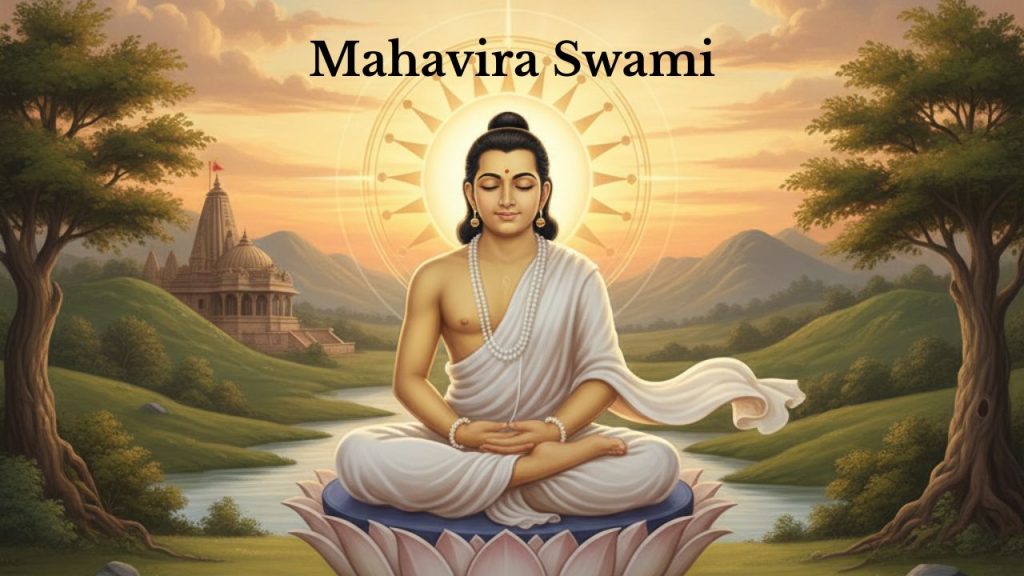
Art has always played a significant role in Jainism, not as decoration but as a spiritual tool. The moment of Kevalagyan is often symbolized through radiant halos behind Mahavira’s head, pristine white clothing, and the peaceful smile of someone who’s seen the absolute truth. In many Jain temples, you’ll notice sculptures or paintings of Mahavira seated in Padmasana (lotus posture), with divine light beams emerging from his heart, symbolizing the infinite knowledge he attained.
Symbols like the Siddha Shila, Om, and the Swastika are all interconnected with the journey toward Kevalagyan. They serve as religious motifs and powerful daily reminders of the soul’s potential to break free from karma and reach a pure consciousness.
Inspirational stories related to Kevalagyan from the Jain texts
Jain texts, especially the Kalpa Sutra and Uttaradhyayana Sutra, are full of narratives illustrating Mahavira’s journey to Kevalagyan. One powerful story recounts how Mahavira meditated under a Sāl tree for over twelve and a half years, enduring harsh weather, animal bites, and verbal abuse. Yet, he remained silent, composed, and focused.
Another moving tale tells of the precise moment he attained omniscience: the sky cleared, flowers rained from above, and celestial beings came to witness the radiance of his soul. These stories are more than just history; they’re metaphors for perseverance and the soul’s triumph over suffering. Reading them reminds us that every challenge we face, emotional, social, or spiritual, is part of a larger journey toward inner light.
Personal transformation through faith in Kevalagyan
What happens when we genuinely believe in the power of Kevalagyan? Our outlook changes. We stop blaming the outside world for our suffering and turn inward. We realize that our thoughts shape our reality, and our actions create our future. Faith in Mahavira’s Kevalagyan gives us the courage to live ethically, forgive, let go of anger, and seek peace.
Many Jains, inspired by this faith, transform their lives, from business owners who prioritize ethics over profits to families who practice non-violence in diet and behavior. This transformation is deeply personal yet collectively powerful. It makes the world kinder and more conscious, one person at a time.
Vaishakha and Mahavira in Jain Literature and Scriptures
Description of the Kevalagyan event in the Agamas and other texts
The Agamas, canonical scriptures passed down by Mahavira’s disciples, paint a vivid and sacred picture of the day Mahavira attained Kevalagyan. On Vaishakha Shukla Panchami, as narrated in texts like the Acharanga Sutra, Mahavira was meditating near the River Rijupalika under a Sāl tree when he achieved Kevalagyan. The moment was marked by cosmic balance: the wind slowed, the earth stood still, and silence embraced the forest.
These scriptures describe the event and capture its spiritual frequency. They tell us how the vibrations of truth, compassion, and awareness peaked that day, making it sacred in Jainism and the cosmic order of existence.
Literary works celebrating Mahavira’s enlightenment
Over centuries, Jain poets and scholars have composed bhakti poetry, scriptural commentaries, and didactic tales centered around Mahavira’s enlightenment. Works like Bhaktamar Stotra, Kalpa Sutra, and Mahavira Charitra are dedicated to narrating his life and celebrating the moment of Kevalagyan as a turning point in spiritual history.
These literary gems are recited during festivals, chanted in temples, and taught in Jain educational institutions. They do more than preserve history; they awaken devotion and reinforce the timeless relevance of Mahavira’s realization.
Commentaries by Jain scholars on Vaishakha’s significance
Jain scholars over the ages, from Acharya Hemachandra to Vidyasagar Ji Maharaj, have deeply emphasized the spiritual richness of Vaishakha. Their commentaries explain why this month, especially Vaishakha Shukla Panchami, offers powerful opportunities for spiritual growth. According to them, nature becomes more receptive this month, making it easier for seekers to deepen meditation, purify karma, and connect with Mahavira’s energy.
Many modern interpretations suggest that the energies aligned on this day can help us renew our spiritual goals, much like New Year’s resolutions, but with a deeper, soul-based purpose.
Role of storytelling in preserving Mahavira’s legacy
In Jainism, katha-vachan (spiritual storytelling) is a time-honored tradition. Grandparents, monks, teachers, and youth leaders use stories to keep Mahavira’s teachings alive. Whether through temple discourses, puppet shows, or digital YouTube series, the essence of Mahavira’s journey is passed from one generation to the next, not through fear or ritual, but through love and inspiration.
These stories shape character, deepen faith, and provide a moral compass in a world often confused about right and wrong. Through storytelling, we don’t just remember Mahavira, we walk beside him.
Influence on Jain philosophy and theology
The Kevalagyan event is a pillar upon which the entire edifice of Jain philosophy rests. It validates the belief that knowledge is innate, karma is temporary, and liberation is achievable. Mahavira’s enlightenment confirmed what the Tirthankaras before him had taught and set a living example for all future generations.
From the intricate Jain cosmology to the ethical codes of daily conduct, every aspect of Jain theology is connected to this event. Kevalagyan reminds us that Jainism is not a religion of dogma; it’s a science of the soul, rooted in experience, awareness, and eternal truth.
The Enduring Legacy of Mahavira’s Kevalagyan in Modern Spirituality
Continuity of Kevalagyan’s influence in contemporary Jain practice
Even today, thousands of years after Mahavira attained Kevalagyan under the sacred Sāl tree, the ripple effects of that divine moment are still shaping lives across the globe. In contemporary Jain practice, Kevalagyan is not just a historical milestone; it’s a living force. When you visit a Jain temple or attend a Pravachan (spiritual discourse), you can feel its presence in every mantra chanted, every vow taken, and every act of kindness inspired by Mahavira’s path.
Today’s monks and nuns lead lives centered around the same principles Mahavira embodied: nonviolence, nonattachment, and truthfulness. Their efforts to reduce karma and attain higher states of consciousness are rooted in the faith that Kevalagyan is not just possible, it’s a destiny for the soul. Even lay practitioners aim for Samyak Darshan (right faith), Samyak Gyan (proper knowledge), and Samyak Charitra (proper conduct), all of which trace back to the wisdom revealed through Kevalagyan.
Lessons for seekers beyond Jainism: a universal message
One of the most beautiful things about Mahavira’s Kevalagyan is that its lessons don’t stop at religious boundaries. You don’t need to be a Jain to appreciate the power of inner awakening. Kevalagyan teaches us that knowledge doesn’t come from books or lectures alone; it comes from turning inward, stillness, overcoming ego, and seeing life as it truly is.
Filled with noise, distractions, and emotional turbulence, Mahavira’s journey reminds us to return to silence, simplicity, and self-awareness. Whether you’re a spiritual seeker from another faith, a mindfulness practitioner, or someone searching for deeper meaning in life, the story of Kevalagyan offers a universal roadmap. It’s about finding clarity, shedding illusions, and realizing that the ultimate truth lies within you. This is why so many interfaith spiritual leaders study Mahavira’s life, not to convert, but to connect. Kevalagyan speaks a language we all understand: the desire to know ourselves and live authentically.
Mahavira’s relevance in the globalized age
We live in a hyper-connected world where knowledge is everywhere, but wisdom? That’s rarer. We scroll endlessly but rarely stop to reflect. This is where Mahavira’s legacy shines brighter than ever. In an age of external validation and virtual identities, Kevalagyan tells us to look inward. Don’t chase opinions, seek truth. Don’t fear silence, embrace it.
Even in tech-driven societies, Mahavira’s teachings offer a timeless anchor. His emphasis on Ahimsa (non-violence) aligns with today’s focus on sustainability and ethical living. His practice of minimalism resonates with those turning away from consumerism. And his call to introspection is echoed in the rising global interest in meditation, mindfulness, and conscious living. Think about it: how many of us yearn for peace amidst digital overwhelm? Mahavira offers a path for monks and everyone holding a smartphone in one hand and a restless mind in the other.
Carrying Mahavira’s light forward: your role, our responsibility
The story of Kevalagyan didn’t end on Vaishakha Shukla Panchami; it began. As we remember that sacred moment each year, we’re invited to carry its light forward. As individuals, we can embrace truth in our thoughts, practice kindness in our words, and live ethically in our actions. As communities, we can foster compassion, promote spiritual education, and preserve the sacred wisdom passed down through Jain scriptures.
We are the torchbearers now. Mahavira walked the path, showed the way, and lit the lamp. It’s up to us to keep it burning, not just in temples and festivals but in our daily lives, in how we treat each other and ourselves. Because ultimately, Kevalagyan is not about worshiping knowledge, it’s about becoming it.