Significance of Lalita Saptami
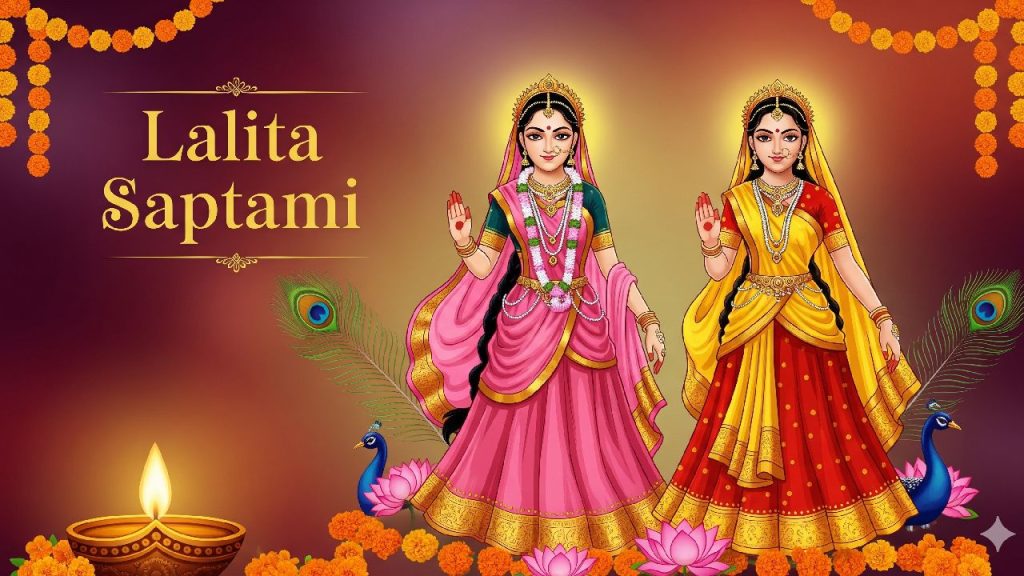
Lalita Saptami is a profoundly spiritual and culturally significant observance in the Hindu lunar calendar. The name itself carries immense symbolism and sacred power. The word “Lalita” means “playful,” “graceful,” or “divinely beautiful” and is one of the most beloved forms of the Divine Mother. “Saptami” refers to the seventh day in the waxing phase (Shukla Paksha) of the lunar month. When these two sacred terms come together, they signify a day dedicated to honoring the sublime feminine force that governs creation, sustenance, and inner awakening.
Falling in the Bhadrapada month (usually August–September), Lalita Saptami marks an auspicious time for devotees of Shakti, especially those who follow the Sri Vidya tradition and worship the ten Mahavidyas. It is a celebration of Goddess Lalita Tripura Sundari, one of the most revered forms of Shakti, known for her power, elegance, and spiritual supremacy. Observed primarily in parts of South India, Odisha, Maharashtra, and Bengal, the day is a beacon of divine love, wisdom, and the triumph of inner purity over external chaos.
Its importance in the Hindu calendar is multifaceted. It serves as both a spiritual gateway and a preparatory phase for the upcoming grand festivals, such as Navaratri. For seekers walking the path of tantra, devotion, or yoga, Lalita Saptami is not just a ritualistic day; it is a sacred reminder to align with the higher self, awaken dormant energies, and restore balance in life through the blessings of the Divine Mother.
Mythological Background
The origins of Lalita Saptami are rooted in ancient Hindu scriptures and powerful mythological tales. Central to this observance is Goddess Lalita Tripura Sundari, an embodiment of supreme beauty, wisdom, and strength. Her name translates to “The Beautiful One of the Three Cities,” symbolizing her dominion over the three planes of existence, physical, astral, and causal. She is both the cosmic mother and the eternal warrior.
In the sacred Brahmanda Purana, an epic story unfolds about her divine manifestation. When the powerful demon Bhandasura, born from the ashes of Kama (the god of desire), terrorized the cosmos, it was Goddess Lalita who rose to restore harmony. Armed with celestial weapons, a thousand eyes like lotus petals, and a heart filled with compassion, she led a divine army, defeated Bhandasura, and reinstated dharma. This epic battle and victory are not just cosmic events; they symbolize the victory of love, light, and wisdom over ignorance and ego.
The Lalita Sahasranama, a powerful hymn listing her thousand names, glorifies her attributes, qualities, and deeds. Every name reveals a divine secret, a key to inner transformation. These scriptures emphasize her role in the Sri Vidya tradition, a deeply esoteric path of worship that includes rituals, mantra japa (chanting), and meditation centered on the Sri Yantra, her sacred geometric representation.
Devotees see Lalita Saptami as the divine moment when the Goddess revealed her full glory. Her mythology is not just a tale of triumph but a metaphor for each soul’s journey, from bondage to liberation, from darkness to divine light.
Spiritual Significance of Lalita Saptami
Beyond mythology and ritual, Lalita Saptami is a profoundly spiritual observance. At its core, this sacred day is about honoring the divine feminine energy, often referred to as Shakti. Shakti is the primordial force behind all creation, and Goddess Lalita is one of its most radiant and refined expressions. She doesn’t just represent physical beauty but the beauty of truth, love, inner power, and conscious living.
This day acts as a spiritual mirror. It reflects the grace, strength, and divine potential that resides within every soul. By invoking Goddess Lalita, devotees align with the energies of compassion, clarity, and consciousness. It is believed that her blessings help awaken the kundalini shakti, the latent energy within, making the day immensely significant for yogis and spiritual practitioners.
Devotees often observe the day with inner purification. Fasting is not just a dietary discipline; it’s a way to cleanse the mind and senses. Mantra chanting, especially the Lalita Sahasranama, acts like spiritual medicine, dissolving mental clutter and elevating the soul. The very recitation of her names invokes qualities like fearlessness, devotion, creativity, and inner joy.
This celebration is not confined to temples or rituals. It’s also a deeply personal experience. It inspires one to embody the Goddess’s traits, grace in adversity, clarity in confusion, courage in fear, and love in separation. Disconnection from oneself and one’s spirit is typical; Lalita Saptami invites everyone to slow down, reflect, and reawaken their sacred essence.
Rituals and Observances
The spiritual essence of Lalita Saptami is brought to life through a series of sacred rituals and devotional practices that invite transformation at every level, physical, emotional, and spiritual. These observances are not just acts of tradition; they are gateways to connect with the Divine Mother in her most radiant form.
Fasting (Upavasa) and spiritual discipline on this day
Fasting is one of the most observed practices on Lalita Saptami. Devotees refrain from consuming grains, non-vegetarian food, and sometimes even water until sunset. However, the focus of the fast isn’t on deprivation; it’s on purification. Fasting helps redirect energy from bodily cravings toward inner contemplation. Many also adopt mauna vrata (vow of silence) to quiet the mind and focus on the divine.
Recitation of Lalita Sahasranama and Devi Mahatmyam
The chanting of powerful hymns marks this sacred day. The Lalita Sahasranama, a compilation of 1,000 names of the Goddess, is the centerpiece of the worship. Each name is a mantra in itself, revealing hidden wisdom and awakening dormant energies. In many households and temples, the Devi Mahatmyam (also known as Durga Saptashati) is read, narrating the stories of various forms of the Goddess vanquishing demons and restoring cosmic balance.
Offering special puja to Goddess Lalita with kumkum, flowers, and sweets
A detailed puja (ritual worship) is performed where the idol or image of Goddess Lalita is adorned with kumkum (vermilion), fresh flowers, turmeric, and sandal paste. Offerings include coconuts, fruits, betel leaves, and sweets such as kheer or laddoo. The ambiance is charged with fragrance, lighted lamps, and heartfelt prayers that invoke the compassionate and powerful presence of the Divine Mother.
Community gatherings and homas (fire rituals)
In temples and spiritual centers, homas or havans (sacred fire rituals) are conducted by priests, often accompanied by collective recitation of mantras. These rituals purify the environment, remove negative energies, and invoke divine blessings. Devotees gather for collective bhajans, spiritual discourses, and the distribution of prasad, fostering a sense of unity and devotion.
Astrological and Cosmic Relevance
The observance of Lalita Saptami is not only spiritually significant but also aligned with cosmic events. The Saptami Tithi, the seventh lunar day of the waxing phase, is considered highly auspicious in Vedic astrology. It holds deep significance for those seeking to harmonize with the energies of the moon and the sun, which influence the mind, body, and spiritual growth.
Importance of Saptami Tithi in the lunar calendar
Saptami is associated with the Sun (Surya), the source of vitality, clarity, and enlightenment. The seventh day is symbolic of balance, an equilibrium between inner and outer realities. Observing spiritual practices on this day amplifies intentions and results. It is believed that prayers offered on Saptami reach the divine realms more directly due to the alignment of cosmic vibrations.
Alignment with solar and lunar energies promotes balance and clarity.
On Lalita Saptami, the lunar and solar energies converge in a unique way. The waxing moon is on its rise, symbolizing growth and receptivity. When combined with the influential solar association of Saptami, this day becomes a vortex of transformation. It is ideal for inner work, spiritual breakthroughs, and rituals that promote mental clarity, healing, and self-awareness.
An ideal day for invoking divine feminine energy and tantric practices
Practitioners of Sri Vidya and Tantra consider Lalita Saptami as one of the most potent days for sadhana. Meditating on the Sri Yantra, chanting seed mantras (bija mantras), and invoking the Goddess through visualization and breathwork can lead to profound experiences. This day is especially favorable for those walking the path of Kundalini awakening and chakra healing.
Associated with Sun (Surya) and symbolic of spiritual radiance
Just as the sun radiates light and nourishes life, Goddess Lalita radiates divine wisdom and nurtures the soul. Her energy, activated on this day, is believed to illuminate the seeker’s path, dissolve karmic blocks, and burn away ignorance. It’s a time to step out of the shadows and shine with inner radiance.
Role in Worship of Sri Chakra
Among the most sacred and esoteric aspects of Lalita Saptami is its connection with the Sri Chakra, also known as the Sri Yantra. This mystical diagram is the geometric form of Goddess Lalita herself. It represents the cosmos and the human body, serving as a powerful tool for meditation, devotion, and spiritual ascent.
Sri Yantra/Sri Chakra is the mystical diagram representing Goddess Lalita
The Sri Yantra is not just a symbol; it’s a living energy field. Composed of nine interlocking triangles surrounding a central bindu (dot), it represents the dynamic union of Shiva (consciousness) and Shakti (energy). Worshipping it is akin to worshiping Goddess Lalita in her most powerful, non-physical form.
Devotees install and worship the Sri Yantra on the occasion of Lalita Saptami.
On this day, many devotees install the Sri Chakra in their homes or altars. Special pujas are performed, including the chanting of Sri Suktam, Lalita Trishati, and Lalita Sahasranama. The yantra is bathed, decorated with flowers and kumkum, and meditated upon. Visualizing the deity in the center of the yantra helps devotees move inward, transcending the material world.
Activation of chakras and divine geometry in spiritual progress
Regular worship of the Sri Yantra on Lalita Saptami is said to activate the chakras, especially the Ajna (third eye) and Sahasrara (crown) chakras. This enhances intuition, inner vision, and spiritual intelligence. The sacred geometry acts as a map for the soul, guiding it from outer multiplicity to inner unity.
Aided by chanting of Lalita Trishati or Lalita Sahasranama
These chants are keys to unlocking the energy of the yantra. While Lalita Trishati (300 names) highlights specific divine qualities, Lalita Sahasranama encompasses the entire spectrum of her divine nature. Together, they turn the yantra into a living temple, a sacred space for inner communion with the Goddess.
Cultural and Regional Practices
Lalita Saptami, though universally significant in the Hindu spiritual tradition, unfolds with rich diversity across India. The cultural and regional expressions of devotion to Goddess Lalita showcase how this festival has been embraced, localized, and ritualized in different communities. While the essence of reverence and inner awakening remains constant, the modes of celebration vary in color, scale, and expression.
Observances in South India (Tamil Nadu, Andhra Pradesh, Karnataka)
In Southern India, particularly in Tamil Nadu and Andhra Pradesh, the worship of Lalita Tripura Sundari is deeply rooted in the Shakta and Sri Vidya traditions. Temples dedicated to Devi conduct elaborate rituals, including homas, Devi pujas, and the recitation of the Lalita Sahasranama. Devotees observe strict fasts and spend the day in meditation and recitation of mantras. In households, women decorate sacred spaces with kolams (rice flour designs), place the idol or image of the Goddess on an altar, and perform traditional rituals with turmeric, kumkum, and flowers. In some places, local spiritual teachers conduct sessions explaining the deeper meaning of Sri Vidya practices.
Celebrated with grandeur in Shakta and Devi temples
Major Devi temples, such as the Kamakshi Temple in Kanchipuram and the Lalita Devi Temple in Andhra Pradesh, mark the day with festive grandeur. Priests chant Vedic hymns, conduct abhishekams (ritual bathing of the deity), and offer elaborate naivedyam (food offerings) to the deity. Devotees participate in large-scale bhajans, spiritual talks, and the lighting of ghee lamps. The ambiance resonates with sacred vibrations, bringing communities together in devotion.
Traditions in Bengal, Odisha, and parts of Maharashtra
In Bengal and Odisha, where Goddess worship is deeply embedded in the cultural fabric, Lalita Saptami serves as a spiritual gateway to Durga Puja. Although it may not be celebrated with the same public fervor, families observe the day with heartfelt yet straightforward puja rituals, the recitation of the Devi Mahatmyam, and the offering of sweets and fruits to the Goddess. In Maharashtra, especially among followers of Kundalini yoga and tantric lineages, the day is considered ideal for chakra meditations and invoking feminine energy.
Distinctive pujas and local customs honoring the Divine Mother
Each region adds its unique flavor, whether in the form of folk songs, dance performances, traditional sweets, or community gatherings. In some villages, women form groups to collectively chant mantras, sharing not just devotion but also emotional and spiritual support. Such customs reflect how the festival fosters both personal and social transformation.
Benefits of Observing Lalita Saptami
Observing Lalita Saptami is not merely a ritualistic act; it is a spiritual practice that brings profound benefits across every dimension of life. When celebrated with sincere devotion and awareness, this sacred day becomes a source of transformation, healing, and divine grace.
Spiritual benefits: removal of obstacles, inner peace, divine grace
The blessings of Goddess Lalita are believed to clear spiritual and material obstacles. Devotees who observe fasts, chant her sacred names, and perform pujas with a clean heart often report experiencing more profound peace, clarity of thought, and unexpected resolutions to challenges. It is said that her grace removes karmic baggage, opening pathways to spiritual progress and higher states of consciousness.
Mental and emotional healing through mantra japa and meditation
Chanting Lalita Sahasranama and meditating on her form works like emotional detox. These practices calm anxiety, release suppressed emotions, and promote mental stability. By focusing on the divine qualities of the Goddess, devotees reprogram their inner dialogue, replacing fear with faith, confusion with clarity, and turmoil with tranquility.
Family harmony, prosperity, and blessings from the Goddess
Many households observe Lalita Saptami to seek blessings for the well-being of their families. Couples pray for marital harmony, children for guidance and protection, and elders for health and peace. The Goddess, as the universal mother, is known to protect families from negative influences and grant abundance, joy, and unity when worshipped with devotion and reverence.
Promotes feminine empowerment and protection from negative energies
Lalita Saptami is a powerful reminder of feminine divinity, not just in deities, but within every woman. It’s a day to honor the sacred feminine in all forms. Women observing this festival often report increased confidence, inner strength, and spiritual awareness. The rituals are also believed to offer protection from harmful energies, guiding devotees toward a righteous and conscious way of living.
Connection with Navaratri and Shakti Worship
Lalita Saptami holds a unique place in the sequence of Hindu festivals as a precursor to the vibrant celebration of Navaratri. This timing offers a sacred opportunity for seekers to begin preparing their minds, bodies, and homes for the upcoming intense worship of Shakti in her nine forms.
Precursor to the upcoming Sharadiya Navaratri
Falling just before Navaratri, Lalita Saptami acts as a spiritual warm-up. It tunes the devotee’s mind to the divine frequencies of the Goddess. The fasting, chanting, and rituals serve as a cleansing ritual, allowing the practitioner to enter Navaratri with renewed energy, purified intentions, and heightened receptivity.
Early initiation into Devi worship for seekers
For those new to the path of Devi worship, Lalita Saptami is an ideal starting point. It introduces the seeker to the divine mother’s loving yet powerful presence. It opens the heart to spiritual truths, encouraging daily sadhana, mantra chanting, and a more devotional lifestyle that continues into the Navaratri days.
Reinforces the Navaratri spirit of inner transformation and devotion
Both Lalita Saptami and Navaratri emphasize transformation, from ignorance to wisdom, from fear to love, from bondage to liberation. Observing Lalita Saptami helps set a spiritual intention, energizing the Navaratri journey. Together, they form a sacred continuum that guides the seeker through progressively higher levels of awareness and spiritual evolution.
Establishes the rhythm of worship leading up to Mahalaya and Durga Puja
Mahalaya marks the beginning of Devi Paksha and the descent of the Goddess to earth. By observing Lalita Saptami, one harmonizes with this rhythm of worship, gradually immersing into the vibrant energy of the Devi. It is both a beginning and a preparation, aligning the inner self with the cosmic cycle of divine descent and devotion.
Contemporary Relevance and Universal Message
Material pursuits often overshadow spiritual values. Lalita Saptami serves as a poignant reminder of the sacred feminine that resides within each of us. Its relevance transcends religious boundaries, offering universal lessons of grace, strength, balance, and inner beauty.
Celebrating feminine divinity in modern times
Empowerment and equality are central themes; the worship of Goddess Lalita is more than tradition, it is affirmation. She represents the ideal blend of strength and softness, leadership and love. Observing Lalita Saptami helps revive respect for feminine principles in families, communities, and societies at large.
Encouraging gender respect, balance, and spiritual equality
The divine feminine, when truly honored, brings harmony to the world. Festivals like Lalita Saptami encourage equal spiritual opportunities for all genders. Women find empowerment in identifying with the Goddess, and men reconnect with their nurturing and intuitive aspects. This creates a balanced worldview and respectful relationships.
Lalita Saptami serves as a reminder of the grace, strength, and sacredness that exist within all of us.
Each name in the Lalita Sahasranama is not just a tribute to the Goddess; it is a mirror reflecting the divine qualities within every soul. This sacred day reminds us that beauty lies in consciousness, that power is born from compassion, and that sacredness is not separate but inherent in all things. It redefines strength not as domination but as inner clarity and love.
Bridging tradition with contemporary spiritual aspirations
While rooted in ancient rituals, Lalita Saptami beautifully adapts to modern spiritual seekers. Whether through digital satsangs, online pujas, or personal meditation, the essence remains the same. It bridges the wisdom of the past with the needs of the present, inviting everyone to pause, reflect, and reconnect with the eternal mother within.