Importance of Karka Sankranti
Karka Sankranti is more than just a celestial transition; it’s a sacred pause, a spiritual turning point, and a deeply symbolic moment in the Hindu calendar. Rooted in rich traditions and astronomical significance, this Sankranti marks the Sun’s movement into the zodiac sign of Cancer, or Karka Rashi. The word “Karka” means “cancer,” and “Sankranti” means “transition”, specifically, the transition of the Sun from one zodiac sign to another. While there are twelve Sankrantis in a year, Karka Sankranti holds a unique place because it initiates Dakshinayana, the Sun’s southward journey.
This sacred transition signifies much more than a change in planetary positions. It signals a shift in energy, a change in seasons, and a new focus on the inner world of spirituality. In the Hindu calendar, Sankranti is deeply intertwined with Vedic beliefs, often aligning with significant seasonal and agricultural shifts. In the case of Karka Sankranti, it ushers in the monsoon season in many parts of India, a season that is both nurturing and contemplative.
The change from the outward energy of Uttarayana (northern journey) to the inward pull of Dakshinayana symbolizes a spiritual shift. It’s a time to slow down, to reflect, and to deepen personal practices. In Indian culture, Sankranti is considered an auspicious day for bathing, charity, rituals, and meditation, but Karka Sankranti stands out for its subtle and introspective spiritual significance.
Through this lens, Karka Sankranti becomes a bridge between the physical and the spiritual, the external and the internal. It invites everyone to align more deeply with nature’s rhythms, embrace spiritual disciplines, and prepare for the sacred months ahead.
Astrological Significance of Karka Sankranti
Astrology in Hinduism is not merely predictive; it serves as a guide to living harmoniously with the universe’s rhythms. Karka Sankranti plays a pivotal role in that cosmic harmony. This day marks the Sun’s movement into the watery sign of Cancer (Karka Rashi), ruled by the Moon. This planetary interaction has a profound impact on emotions, relationships, and the mind.
Solar movement and its effect on zodiac signs
The Sun’s entry into Cancer brings a dramatic shift in cosmic energies. While the Sun rules vitality, authority, and power, Cancer brings sensitivity, nourishment, and emotional depth. This blending creates a phase where people may feel more reflective, emotional, and family-focused. It’s not uncommon for major decisions related to home, family, and personal well-being to surface during this time.
This astrological realignment also activates different houses for each zodiac sign. For Aries, it influences home life. For Leo, it’s about introspection. For Capricorn, it may bring emotional cleansing. Each sign feels the change differently, urging individuals to adapt spiritually and emotionally.
Start of Dakshinayana (southern journey of the Sun)
Karka Sankranti also marks the official start of Dakshinayana, the six-month phase where the Sun moves southward. In Vedic texts, Dakshinayana is considered a night for the gods, contrasting with the divine day of Uttarayana. While Uttarayana is ideal for outward actions, such as celebrations, marriages, and new ventures, Dakshinayana is more suited for penance, meditation, and inner growth.
Influence on planetary energies and human behavior
The Sun’s journey through Cancer softens its fiery energy. This reduces aggression and heightens compassion. Planetary alignments during this phase often bring opportunities to heal emotional wounds, strengthen bonds, and resolve past conflicts. It’s a time when inner emotional intelligence outweighs outer dominance.
Astrological remedies and rituals during this time
Astrologers recommend offering Arghya (water) to the Sun, reciting mantras such as Om Suryaya Namah, and engaging in acts of charity to better align with the solar transition. Wearing gemstones associated with the Moon or engaging in Chandra Shanti Puja (for calming the mind) is also considered beneficial. Practicing compassion, patience, and forgiveness is the simplest and most effective remedy during this time.
Guidance from scriptures like Surya Siddhanta and Jyotish texts
Ancient texts, such as the Surya Siddhanta and various Jyotish (Vedic astrology) scriptures, outline the significance of Sankranti. These texts highlight the significance of the Sun’s movement in shaping agricultural patterns, human psychology, and spiritual development. They guide seekers to honor this time with awareness, rituals, and deep spiritual intent.
Spiritual Transition: From Uttarayana to Dakshinayana
There’s a profound spiritual undercurrent running through the transition from Uttarayana to Dakshinayana. This shift isn’t just celestial; it reflects the eternal play of light and darkness, activity and rest, expansion and withdrawal. In Hindu cosmology, Uttarayana is the period of spiritual ascent, whereas Dakshinayana signals descent into inner work.
Explanation of Uttarayana and Dakshinayana
Uttarayana and Dakshinayana divide the solar year into two halves. Uttarayana begins with Makar Sankranti in January and represents the Sun’s northward movement. This is a time of celebration, progress, and outward growth. Dakshinayana, starting with Karka Sankranti, brings the southward journey, which is deeply symbolic of introspection, humility, and tapasya.
Importance of the Southern Solstice in Hinduism
Dakshinayana is spiritually rich. It is during this phase that many significant festivals and Pitr Paksha (ancestral worship) observances take place. The Southern Solstice is linked with the concept of facing one’s inner shadow. While Uttarayana is about climbing mountains, Dakshinayana is about exploring the caves within. Many yogis, sages, and spiritual seekers consider this phase ideal for inner transformation.
Symbolism of the Sun turning inward (spiritual focus)
As the Sun turns toward the southern hemisphere, it symbolizes the withdrawal of external light and a call to cultivate inner luminosity. This cosmic pattern mirrors the natural ebb and flow of human energy. Just like the Earth rests before a fresh cycle, so too must the spirit pause, reflect, and rejuvenate.
Dakshinayana is a time for introspection and tapasya
The second half of the year is perfect for meditation, silence, study, and fasting. It’s a time to reduce worldly distractions, turn off the noise, and dive deeper into self-awareness. Saints and scriptures often recommend vratas (vows), chanting, and rituals during this phase to facilitate personal growth and evolution.
Connection with ancestral realms and Pitru Tarpan
Dakshinayana is also deeply linked with the ancestral dimension (Pitru Loka). It’s believed that during this phase, the spiritual veil is thinner, and one can offer Tarpan and Shraddha with heightened effect. Performing rituals in honor of ancestors brings peace to their souls and blessings to the living. This connection forms the very heart of Indian ancestral reverence.
Karka Sankranti in Shravana: A Sacred Alignment
When Karka Sankranti coincides with the Shravana month, a rare and sacred convergence unfolds. Shravana is considered one of the most auspicious lunar months in the Hindu calendar, associated with Lord Shiva, deep devotion, and sacred observances. This alignment amplifies the energy of spiritual practices, making it a transformative time.
Shravana is a highly auspicious lunar month
Shravana is filled with sacred days like Shravan Somvar, Nag Panchami, and Krishna Janmashtami. Devotees across India observe fasts, chant mantras, and undertake pilgrimages during this month. It is said that spiritual efforts made in Shravana yield multifold results due to the high vibration of the month.
When Karka Sankranti aligns with Shravana month
This alignment creates an intensified spiritual portal. The emotional energy of Cancer, combined with the devotional purity of Shravana, opens a path to deeper surrender and higher awareness. Many sages view this time as ideal for initiating spiritual journeys, as both solar and lunar energies support inner exploration.
Amplified spiritual benefits during this time
Charity, prayer, fasting, mantra chanting, and pilgrimages undertaken during this alignment are believed to burn karma, purify the mind, and attract divine grace. It becomes a sacred opportunity to realign life with dharma (righteousness) and deepen spiritual discipline.
Enhanced effects of fasting, meditation, and charity
Fasting during this time is not just about food; it’s about purifying one’s thoughts, actions, and intentions. Meditation becomes more focused, and charity becomes more impactful. Sacred texts mention that even small acts of devotion done with sincerity during this period attract immense blessings.
Traditional practices followed by saints and sages
From ancient times, sages would retreat into forests or ashrams during the month of Shravana for deep spiritual practice. They observed silence, read scriptures, and guided disciples in Vedic wisdom. Even today, spiritual leaders emphasize this period as a time for awakening inner light, and temples witness a surge in religious activity.
Rituals and Puja Vidhi on Karka Sankranti
Karka Sankranti is not only a celestial event but also a devotional one. The rituals performed on this day are steeped in spiritual symbolism and Vedic tradition, designed to harmonize personal energy with cosmic flow.
Early morning bath in sacred rivers or at home
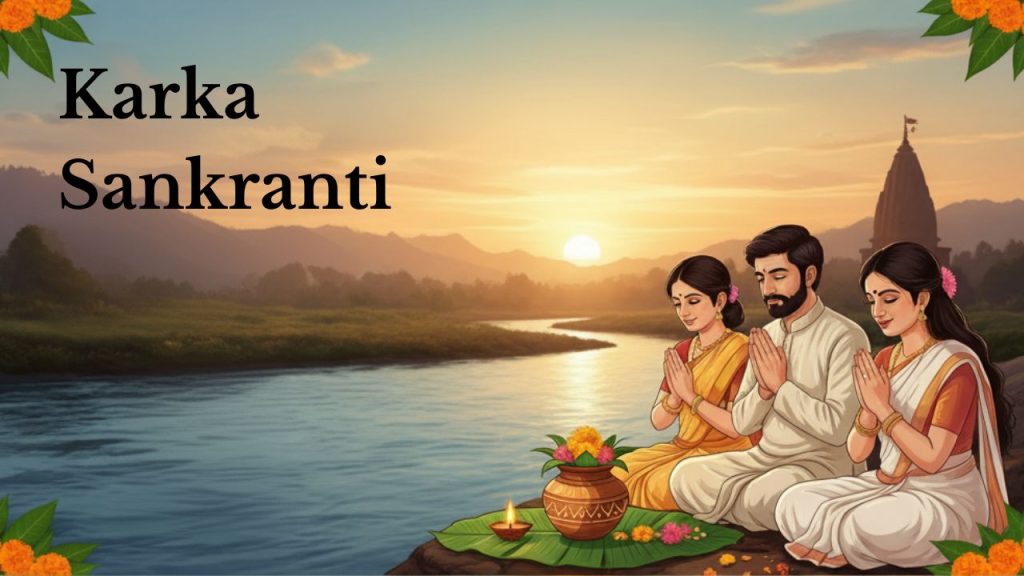
Ritual purity begins with snan (holy bath). Bathing in sacred rivers, such as the Ganga, or at home with mantras and devotion, washes away negativity and purifies both the body and mind. This act is symbolic of starting anew with clarity and openness.
Offering water to Surya Dev (Arghya)
Offering Arghya, water held in the palms facing the Sun, is one of the most sacred acts of gratitude. It acknowledges the Sun’s life-giving energy and seeks blessings for vitality, health, and insight. This simple yet powerful ritual is a direct conversation with the divine force of nature.
Chanting Surya mantras and Aditya Hridayam
Chanting mantras like Om Suryaya Namah, Gayatri Mantra, or the revered Aditya Hridayam Stotra infuses the day with positive energy. These chants invoke clarity, courage, and strength, aligning the soul with cosmic intelligence.
Donating clothes, grains, and oil to Brahmins
Charity is an essential part of Sankranti observances. Offering food grains, clothes, sesame oil, and Dakshina to Brahmins or those in need is considered a sacred duty. These acts foster humility, compassion, and detachment, values that strengthen spiritual growth.
Performing Vishnu Puja and Pitru Tarpan
Alongside Surya worship, many also perform Vishnu Puja to seek divine protection and grace. In some households, Pitru Tarpan (offerings to ancestors) is also conducted to honor the departed souls. These rituals create a spiritual bridge across generations, blessing the present through reverence for the past.
Regional Variations and Celebrations Across India
Observances in Maharashtra, Gujarat, and Rajasthan
In the western states of India, Karka Sankranti is observed with traditional simplicity and regional warmth. In Maharashtra, people take ritual baths early in the morning, often in rivers like Godavari or Krishna, and perform Arghya to Surya Dev. Temples hold special aartis, and families offer sesame seeds and jaggery to symbolize inner purification. In Gujarat, devotees visit holy lakes and rivers to offer prayers and seek blessings. Community halls conduct bhajan gatherings and free food distribution (Annadan). Rajasthan observes similar traditions, accompanied by local folk customs such as fairs, kite-flying in certain areas, and temple visits to worship Surya Narayan.
South Indian traditions: Tamil Nadu, Kerala, Andhra
In Tamil Nadu, this transition is quietly marked with prayers at Surya temples and homes. Offerings of curd rice and jaggery to the Sun God are standard. In Kerala, where the monsoon is at its peak, this time is linked with nature’s abundance. Prayers for agricultural success and protection from excessive rains are performed. Andhra Pradesh observes it with early morning baths, donation of food and clothing, and special offerings to cows and temples. The deeply devotional character of Southern traditions ensures that every act performed on this day is soaked in reverence and gratitude.
Eastern practices: Bengal, Odisha, and Assam
Bengal observes Karka Sankranti with river baths in the Ganga and rituals dedicated to Surya Dev and local deities. Households prepare traditional offerings, such as khichdi, fruits, and sweets, to distribute among people experiencing poverty. Odisha follows similar practices, incorporating local cultural elements such as tribal dances and riverbank rituals. In Assam, river worship takes prominence. People also participate in community service and organize cultural performances that reflect local spirituality and a connection to the natural world.
Northern regions: Uttar Pradesh, Bihar, and Punjab
In Uttar Pradesh and Bihar, Karka Sankranti is observed through fasting, charity, and offerings to the Sun and ancestors. Devotees bathe in rivers like the Ganga, Yamuna, or Saryu and perform Surya Arghya. Pitru Tarpan is widely observed, particularly among those seeking blessings for departed ancestors. Punjab observes fewer formal rituals but retains cultural elements, such as community service and temple visits, particularly among rural populations.
Local fairs, pilgrimages, and temple events
Throughout India, local fairs, yatras, and spiritual gatherings are held near sacred rivers and temple towns. Pilgrims gather at key locations, such as Nashik, Ujjain, and Varanasi, to participate in group rituals. Many temples hold special darshans, distribute prasadam, and organize discourses on scriptures and solar deities. These vibrant events become moments of collective devotion, drawing together diverse communities in shared reverence.
Health, Ayurveda, and Seasonal Shifts
Seasonal transition from Grishma (summer) to Varsha (monsoon)
Karka Sankranti marks the crucial juncture between Grishma (summer) and Varsha (monsoon). This seasonal shift has a significant impact on both physical and mental health. As the environment turns humid and cooler, the body’s metabolism slows down. The risk of water-borne diseases increases, and digestion becomes sluggish. Understanding and adapting to these changes is crucial for maintaining balance and immune function.
Ayurvedic cleansing and dietary suggestions
Ayurveda recommends gentle detoxification during this period. Foods should be light, warm, and easily digestible. Moong dal khichdi, steamed vegetables, and herbal teas are ideal. Spices like turmeric, ginger, cumin, and coriander support digestion and help the body cleanse itself of toxins. Avoiding oily, fermented, and heavy foods helps prevent imbalances. It’s also the time to begin internal cleansing therapies such as Panchakarma under professional guidance.
Emphasis on immunity, digestion, and mental peace
Immunity is often compromised during monsoon, making digestive strength (agni) even more critical. Incorporating triphala, tulsi, and amla helps enhance resilience. Mental calmness is equally crucial; regular meditation, silence, and deep breathing techniques can reduce stress and support overall well-being. The connection between mind and gut is emphasized in both ancient and modern wellness science.
The ideal time for detox, yoga, and pranayama
This phase is ideal for both physical and mental detoxification. Yoga postures such as twists, forward bends, and gentle backbends help stimulate the internal organs. Pranayama techniques like anulom vilom (alternate nostril breathing) and bhramari (bee breath) calm the nervous system and clear mental fog. Short retreats or regular practice at home can significantly improve health and clarity.
Connection of Surya energy with body heat and metabolism
The Sun is not only the external source of light but also the inner spark of vitality (Tejas). As the Sun moves into Cancer, its influence on metabolism and body heat undergoes subtle shifts. Ayurveda sees Surya as a governing force behind digestion and cellular processes. Strengthening the solar plexus through a balanced diet, deep breathing, and Surya Namaskar helps keep this inner Sun burning bright.
Charity, Dana, and Social Responsibility
Significance of Annadan (food donation)
Food donation is considered the highest form of charity in Indian traditions. On Karka Sankranti, Annadan holds amplified value. Offering food to saints, the poor, animals, or even a hungry stranger is believed to wash away lifetimes of karmic burden and earn divine grace. It also symbolizes gratitude for nature’s abundance.
Giving essentials like clothes, umbrellas, and footwear
The rainy season poses challenges for the underprivileged. Donating essentials like umbrellas, raincoats, footwear, and warm clothes during Karka Sankranti supports immediate relief and protection. Such practical charity addresses real needs and reflects empathy in action.
Helping people experiencing poverty and feeding cows or animals
Selfless service extends to all beings. Many people observe Karka Sankranti by feeding cows, dogs, birds, and stray animals. These acts, though simple, nurture the spirit of compassion and interconnectedness with all life forms.
Karmic rewards and virtue from selfless service
Dana done on Sankranti is believed to carry exponential spiritual benefit. Vedic texts assert that charity performed on this day erases past sins, brings mental peace, and aligns one with dharma. The key is to give with sincerity and without expectation.
Role of community welfare and temple trusts
Many temples and dharmic organizations conduct mass feeding programs, health camps, and donation drives to support their communities. These collective efforts foster unity and elevate consciousness. They also remind us that service is not just a personal act but a social dharma.
Mythological and Scriptural References
Mentions in Puranas like Vishnu Purana and Skanda Purana
The Puranas are rich with references to Sankranti as a sacred transition. The Vishnu Purana mentions the power of solar passages to transform spiritual destiny. The Skanda Purana highlights how Devas and Rishis observe Sankranti as a divine reset point.
Stories involving Surya Dev and Dakshinayana
Legends tell of Surya Dev blessing Rishis during Dakshinayana. In some stories, Surya retreats to meditate and rejuvenate his energy, mirroring the spiritual work humans are advised to undertake during this phase. These tales reinforce the importance of inner work.
Importance in the Mahabharata and Bhagavad Gita contexts
Bhishma Pitamah, the great warrior of the Mahabharata, chose to leave his body during Uttarayana, citing its spiritual potency. This validates the scriptural belief in timing one’s exit and life milestones with cosmic rhythms. The Bhagavad Gita also distinguishes between paths of light and darkness, closely related to these solar phases.
Role of sages like Parashara and Bhrigu in ritual codification
Rishis like Parashara and Bhrigu authored critical Jyotish and Dharma texts that include the codification of Sankranti rituals. Their work forms the foundation for Vedic calendars and muhurta (timing) systems that guide festivals and life events.
Sankranti is a goddess in some traditions.
In parts of India, Sankranti is revered as a goddess. She symbolizes transition, fertility, and renewal. Offerings are made to her to ensure smooth transitions in life, whether it be through seasons, careers, relationships, or spiritual paths. Lamps, flowers, and songs are dedicated in her honor.
Relevance in Modern Times
Reconnecting with nature and Vedic time cycles
Modern lifestyles often cut off connections to natural time. Karka Sankranti serves as a reminder to align with the seasonal and cosmic changes that occur throughout the year. Observing rituals, spending time in nature, and tuning into the solar and lunar rhythms can help restore inner balance and ecological awareness.
Harmonizing solar and lunar rhythms in daily life
Integrating both solar (Sankranti) and lunar (Amavasya, Purnima) observances creates harmony. Scheduling activities around these points brings structure, clarity, and a sense of rhythm to daily life. It helps manage stress and enhances productivity with awareness.
Opportunity for digital detox and spiritual reset
Karka Sankranti is the ideal time to unplug. Stepping away from screens, practicing silence, reading scriptures, or simply reflecting helps declutter the mind. Even a day of spiritual retreat can rejuvenate creativity and clarity.
Reviving ancient practices with modern awareness
Simple rituals, such as offering water to the Sun, practicing Surya Namaskar, or journaling one’s emotions, can bring Vedic wisdom into contemporary life. The goal isn’t perfection, it’s presence. Small, mindful acts can have a profound spiritual impact.
Encouraging youth to engage in cultural heritage
Sharing stories, involving children in rituals, and organizing youth-led charity drives build cultural confidence. When traditions are explained with meaning and openness, they become bridges to identity rather than burdens. Karka Sankranti presents a beautiful opportunity to initiate this dialogue.