Understanding about Kamika Ekadashi
What is Kamika Ekadashi?
Kamika Ekadashi is one of the most spiritually significant fasts observed in the Hindu tradition, falling during the Krishna Paksha (waning phase) of the Shravana month. It is more than just a ritualistic observance; it’s a powerful opportunity for deep spiritual cleansing and renewal. The word “Ekadashi” translates to the eleventh day of the lunar fortnight, and it holds special value in Vaishnava traditions as a day dedicated to Lord Vishnu. Observing Kamika Ekadashi is believed to cleanse past sins, grant peace of mind, and invoke divine blessings.
Meaning and etymology of “Kamika” and “Ekadashi”
The term “Kamika” holds a profound spiritual significance. Derived from Sanskrit, “Kamika” relates to desire or that which is desirable. Coupled with “Ekadashi,” the name symbolically points to a path where desires are transcended through fasting and devotion. This sacred day encourages inward reflection, detachment from worldly cravings, and surrender to the divine will of Vishnu.
In the Hindu lunar calendar, Kamika Ekadashi appears in the dark fortnight (Krishna Paksha) of Shravana, a month already rich in festivals and devotion. Shravana is considered highly auspicious, especially for those seeking spiritual growth and elevation. Devotees believe that observing fasts and engaging in acts of piety during this month brings multiplied spiritual benefits.
Its placement in the Hindu lunar calendar (Shravana Krishna Paksha)
In Vaishnava and broader Sanatana Dharma traditions, Ekadashi holds a revered place. It’s not merely a day of abstaining from food; it’s a conscious step toward spiritual evolution. Kamika Ekadashi particularly embodies the spirit of surrender, bhakti (devotion), and purification, inviting all to pause, reflect, and connect with the Supreme Lord.
Significance of Ekadashi in Vaishnava and Sanatana Dharma traditions
Shravana month deepens the significance of Kamika Ekadashi. With its monsoon rains, the environment becomes conducive to introspection and spiritual practices. The entire month is dedicated to divine worship, with Mondays observed as Shravan Somvars for Lord Shiva, while Ekadashis are devoted to Lord Vishnu. In such a divine atmosphere, Kamika Ekadashi becomes a potent gateway to spiritual progress.
Mythological Origins and Scriptural References
Story from the Brahmavaivarta Purana and Bhavishya Purana
Kamika Ekadashi is mentioned with profound significance in ancient scriptures such as the Brahmavaivarta Purana and Bhavishya Purana, revered texts that document conversations between divine personalities and sages. These scriptures elevate the status of Kamika Ekadashi above other rituals, stating that even visiting pilgrimages or bathing in holy rivers doesn’t match the merit earned by sincerely observing this fast.
Role of Lord Vishnu in the narrative
One prominent narrative involves a sinful man burdened with the weight of his karmic misdeeds. Guided by spiritual counsel, he observed Kamika Ekadashi with sincerity and devotion. The fast not only released him from his sins but also granted him inner peace and eventual liberation. This legend highlights the transformative power of this sacred day and its ability to heal and purify even the most grievous of sinners.
The legend of a sinful man and redemption through Kamika Ekadashi
Lord Vishnu plays a central role in these narratives. He assures devotees that anyone who observes Kamika Ekadashi with devotion and purity of intent will be absolved of all past sins. Worshipping Lord Vishnu with tulsi leaves, lighting lamps, and chanting his holy names multiplies the blessings manifold on this day. In these stories, the deity is portrayed not only as a divine ruler but also as a compassionate guide leading souls to liberation.
Spiritual conversation between Lord Krishna and Yudhishthira
Another insightful scriptural reference is the conversation between Lord Krishna and Yudhishthira in the Bhavishya Purana. When Yudhishthira asks about the most beneficial fast, Krishna extols the greatness of Kamika Ekadashi. He emphasizes that the mere act of observing this fast brings peace to departed souls, pleases the ancestors, and earns immense punya (spiritual merit).
How scriptures emphasize the power of this fast
These sacred texts collectively assert that Kamika Ekadashi is a divine tool for realigning with dharma, cleansing the soul, and drawing closer to Vishnu. The power of this fast lies not in mere abstention but in the consciousness with which one engages in worship, charity, and reflection on this blessed day.
Spiritual Significance and Symbolism
Destroying accumulated sins and karmic burden
Kamika Ekadashi is more than an act of fasting; it’s a journey into the soul. Spiritually, this day serves as a mirror reflecting inner impurities and offers a divine opportunity to cleanse them. According to Hindu philosophy, sins and karmic burdens accumulate through one’s thoughts, words, and deeds. Kamika Ekadashi acts as a divine eraser, helping dissolve these layers and restore spiritual clarity.
Gateway to moksha (liberation) and spiritual cleansing
Observing this fast is believed to open the gateway to moksha, the ultimate liberation from the cycle of birth and death. Unlike mechanical rituals, this observance is deeply transformative when performed with sincerity. Kamika Ekadashi acts as a purifier, not only of the body through abstinence but also of the mind and heart through devotion and detachment.
Awakening devotion (bhakti) toward Lord Vishnu
A unique aspect of this Ekadashi is its emphasis on devotion, or bhakti, towards Lord Vishnu. Bhakti is not merely an emotion; it’s a surrender of the ego and worldly desires in exchange for a divine connection. Fasting on Kamika Ekadashi helps reduce tamasic (lethargic) energies, elevating the spirit to a sattvic (pure) state that naturally fosters devotion. Chanting Vishnu’s name, meditating on his form, and serving others are beautiful expressions of devotion to him.
Importance of surrender and purity of intention
Purity of intention is paramount. The scriptures constantly remind us that fasting without devotion is hollow. The fast becomes meaningful when driven by the heart’s longing to connect with the divine. It’s about letting go, not just of food but of anger, jealousy, greed, and pride.
Symbolism of fasting: detachment and self-discipline
Symbolically, fasting represents self-discipline and detachment. It is a pause from the sensory pleasures that bind us to material life. Kamika Ekadashi invites the observer to become still, inward, and connected, like a lotus blooming in still waters. In this silence, divine grace flows.
Rituals and Vrat Vidhi (Fasting Procedure)
Preparations on Dashami (the day before Ekadashi)
The rituals of Kamika Ekadashi begin on Dashami, the tenth day of the lunar fortnight. This is the day of preparation, both physically and spiritually. On Dashami evening, one is encouraged to eat a satvik (pure vegetarian) meal before sunset, cleanse the house, and enter a state of calm anticipation for the vrat (fast).
Types of fasting: Nirjala (without water), Phalahar (fruits only), or Satvik food
The fast on Ekadashi can be observed in several ways. Some choose the Nirjala fast, abstaining from both food and water. Others may observe a Phalahar fast, consuming only fruits and milk. For those who cannot manage strict fasting, eating only satvik food without grains, pulses, onions, and garlic is also accepted. The choice depends on health, capacity, and spiritual inclination.
Temple visits and offering tulsi, flowers, and lamps to Vishnu
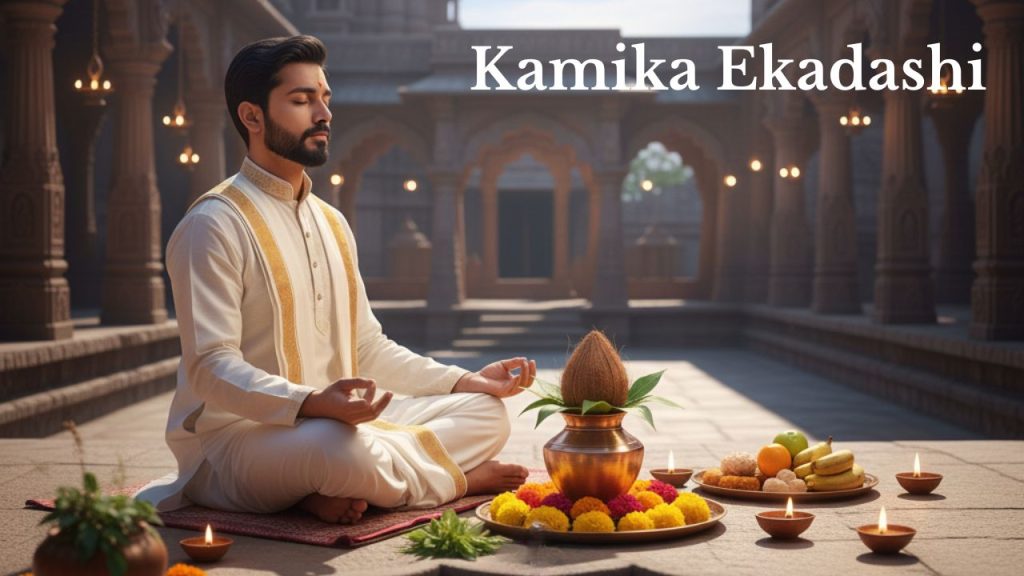
Devotees begin the day early with a purifying bath, often adding tulsi leaves or a pinch of Ganga jal to the water for added sanctity. The puja rituals include offering tulsi leaves, flowers, ghee lamps, and incense to Lord Vishnu’s image or idol. Chanting the Vishnu Sahasranama, reading the Bhagavad Gita, or meditating on the Lord’s pastimes form a core part of the spiritual routine.
Reading Vishnu Sahasranama and Bhagavad Gita
Throughout the day, maintaining silence, engaging in bhajans (devotional songs), and avoiding gossip or negative thoughts help deepen the spiritual experience. Temples hold special satsangs, and home altars are decorated with lamps and flowers.
Breaking the fast on Dwadashi with charity and simple food
On Dwadashi, the twelfth day, the fast is broken after sunrise with humility. The breaking of the fast (Parana) should include feeding people experiencing poverty, offering donations, and partaking in simple satvik meals. The fast is not just about personal gain; it’s a collective act of goodwill, selflessness, and charity.
Importance of Kamika Ekadashi in Shravana Month
Shravana’s association with purity and divine blessings
The Shravana month is known as the crown of the Hindu lunar calendar for its sheer spiritual energy and divine presence. With Lord Shiva worship on Mondays and other auspicious days filling the calendar, Kamika Ekadashi in this month gains immense importance. It’s as if nature, rituals, and the divine all align to support more profound devotion.
Additional merit (punya) of observing Ekadashi in this holy month
Shravana is considered a month of purity and blessings. The rains wash away dust from the earth, symbolizing the inner cleansing that comes from sincere devotion. In such an atmosphere, Kamika Ekadashi serves as a spiritual reset button, helping seekers shed their emotional baggage and step into the light.
Link between Kamika Ekadashi and pleasing Lord Shiva & Vishnu
The Punya or spiritual merit of observing this fast during Shravana is said to be multiplied many times over. Scriptures affirm that worshipping Lord Vishnu on this day grants boons, peace, and spiritual progress. It’s believed that pleasing Vishnu during Shravana also pleases Lord Shiva due to their deeply interconnected energies. Tulsi leaves offered to Vishnu on Kamika Ekadashi carry double the blessings during this sacred month.
Why devotees observe it with heightened devotion during Shravana
Devotees observe Kamika Ekadashi with heightened devotion during the month of Shravana. From early morning baths to all-night kirtans, the air is filled with bhakti. Fasting becomes easier and more meaningful when enveloped in such a divine atmosphere. Families come together, communities organize temple programs, and even simple homes glow with diyas and devotion.
Festivals surrounding it, such as Shravan Somvar and Mangala Gauri
Surrounding this Ekadashi are other major observances such as Shravan Somvar, dedicated to Shiva, and Mangala Gauri Vrat, observed by women for marital bliss. Kamika Ekadashi thus becomes a central pillar of spiritual energy during Shravana, a day not to be missed for those yearning for inner peace, divine grace, and liberation.
Benefits of Observing Kamika Ekadashi
Spiritual benefits: inner peace, bhakti, and divine grace
Kamika Ekadashi isn’t just a date on the calendar; it’s a spiritual window that opens up profound experiences for the soul. Those who observe it sincerely feel an internal shift. The silence of fasting, the calmness of prayer, and the sweetness of bhakti (devotion) become powerful tools to draw closer to the divine. Observing Kamika Ekadashi fosters inner peace, melts away guilt, and nurtures a heart full of devotion. It’s believed that this Ekadashi grants Lord Vishnu’s special grace, washing away sins accumulated over lifetimes. For anyone seeking spiritual depth or yearning to reconnect with the divine, this fast becomes a stepping stone toward higher consciousness and liberation.
Emotional and psychological purification
Beyond the spiritual realm, Kamika Ekadashi has the power to cleanse the emotional clutter that weighs people down. It gives a day to pause, reflect, and reset. Through fasting and introspection, the mind becomes quieter, and the heart feels lighter. Anger, resentment, and anxiety begin to dissolve as one immerses in prayer and peaceful living. Mental discipline sharpens, and emotions realign with values like compassion, forgiveness, and gratitude. That sense of emotional relief, calm, and centeredness is one of the most valued takeaways from this sacred observance.
Physical benefits: improved discipline and dietary detox
Fasting on Kamika Ekadashi, especially when done with sattvic (pure) foods or phalahar (fruits), offers the body a welcome break from heavy and tamasic foods. This short but focused dietary detox helps the digestive system rest and rejuvenate. Many report better sleep, improved focus, and increased energy levels after the fast. It also promotes self-discipline, as resisting temptations strengthens willpower and mindful living. Over time, regular observance of Ekadashi can contribute to better health and balanced habits.
Helping ancestors (Pitru) attain peace through good deeds (Punya).
One unique and heartfelt benefit of Kamika Ekadashi is its effect on ancestral peace. Scriptures say that the merits (punya) earned on this day ripple across time, reaching departed ancestors and helping them attain higher realms or even moksha. Acts like charity, chanting, or offering food in memory of forefathers on this day bring their souls peace and divine support. This aspect makes the fast not just a personal sadhana (practice) but a sacred act of love for the family lineage.
Accumulating blessings for family, career, and future life
Every act of devotion on Kamika Ekadashi plants the seeds of positive karma. The blessings earned extend far beyond the day itself. Many believe that consistent observance leads to the removal of obstacles, career growth, harmonious relationships, and protection from negativity. It’s seen as a divine investment toward a better present and a brighter future, not just in this life but beyond.
Role of Tulsi in Kamika Ekadashi Observance
Sacredness of Tulsi in Vaishnavism and Ekadashi rituals
Tulsi (Holy Basil) isn’t just a herb; it’s revered as a goddess in Vaishnavism. Tulsi Devi is considered the eternal consort of Lord Vishnu, making her presence indispensable in every Ekadashi ritual. No offering to Vishnu is complete without her leaves. On Kamika Ekadashi, devotees use Tulsi not just symbolically but as a spiritual bridge between themselves and the Lord. Her purity, aroma, and sacred vibration elevate every prayer, making each offering more potent.
Story of Lord Vishnu and Tulsi Devi
There’s a divine tale behind Tulsi’s exalted place. According to the scriptures, Tulsi was once a devoted princess who was reborn as a sacred plant through her penance and unwavering devotion. Pleased with her love and surrender, Lord Vishnu blessed her with eternal presence in his worship. It is said that offering even a single Tulsi leaf with devotion is dearer to Vishnu than all material riches in the world. On Kamika Ekadashi, this bond is celebrated with heartfelt reverence.
Offering Tulsi leaves to the Vishnu idol or Saligram.
On this day, devotees wake up early, take a ritual bath, and prepare offerings with fresh Tulsi leaves. These leaves are offered to Vishnu idols, Shaligram shilas (sacred stones), or even pictures of the Lord at home. Each leaf is placed with a mantra or silent prayer. It’s a beautiful act of surrender that purifies not just the altar but also the mind and intention of the worshipper.
The belief that each Tulsi leaf removes past sins
It’s widely believed that offering Tulsi on Kamika Ekadashi helps erase sins, both known and forgotten. Scriptures suggest that even a leaf offered with faith can uplift the soul and cleanse karmic debts. This is not about fear or guilt but about spiritual release. Every leaf becomes a messenger of devotion and a purifier of lifetimes of suffering.
Spiritual and medicinal importance of Tulsi during fasting
Tulsi serves not only spiritual purposes, but it also supports the body. Consuming Tulsi water or adding its leaves to fasting food aids digestion, strengthens the immune system, and calms the nerves. Its sattvic (pure) nature complements the energy of the Ekadashi fast, helping devotees stay balanced physically and energetically throughout the day.
Kamika Ekadashi in Temples and Community Worship
Celebrations at major Vishnu temples (Tirupati, Badrinath, Dwarka)
Kamika Ekadashi comes alive in grand temples across India. From the towering gopurams of Tirupati to the serene sanctity of Badrinath and the coastal magnificence of Dwarka, Lord Vishnu’s temples turn into hubs of divine celebration. Special pujas, deep aratis (lamp rituals), and flower decorations transform these temples into realms of bliss. Thousands gather to glimpse the Lord, chant his name, and feel the energy of collective devotion.
Bhajan and kirtan events in local temples and satsangs
Even at the community level, Kamika Ekadashi becomes a devotional festival. Local temples host soulful bhajan and kirtan sessions, filling the air with chants of “Govinda,” “Narayana,” and “Hari Om.” These sacred songs aren’t just melodies; they’re tools to open hearts and raise consciousness. The joy, rhythm, and unity in these gatherings make the fast feel festive and fulfilling.
Community fasting and collective recitation of scriptures
In many regions, devotees come together to observe the fast in groups. Community kitchens serve sattvic prasadam after Dwadashi, and people sit together to read the Vishnu Sahasranama, Bhagavad Gita, or Ekadashi Mahatmya. These collective rituals deepen individual practice and remind everyone that spiritual life thrives in togetherness.
Discourses on the significance of Ekadashi and Dharmic living
Temples and spiritual centers often organize talks and discourses on the deeper meaning of Kamika Ekadashi. Spiritual teachers share stories, practical advice, and timeless wisdom about leading a dharmic (righteous) life. These talks help listeners apply age-old truths in modern living and find relevance in tradition.
Charity and donation drives are conducted on this auspicious day.
Kamika Ekadashi is not only about self-purification; it’s also about giving back. Many temples and communities organize food drives, clothing collections, or medical camps to support those in need. Donating on this day is believed to yield multiplied blessings. It turns fasting from a personal act into a ripple of compassion and service.
Do’s and Don’ts on Kamika Ekadashi
Foods to avoid: grains, beans, onions, garlic, and tamasic items
One of the core observances of Kamika Ekadashi is avoiding tamasic (impure) food. That includes grains, rice, wheat, beans, onions, garlic, and fermented or heavy items. Instead, devotees opt for light sattvic meals, such as fruits, milk, and nuts, or observe Nirjala (waterless) or Phalahar (fruit-only) fasting. This detoxes both body and mind, helping maintain purity in worship.
Avoiding anger, lies, violence, and harsh speech
Observing Kamika Ekadashi is not only about what’s on the plate; it’s about the state of the heart and mind. That’s why devotees consciously stay away from anger, arguments, lying, gossiping, or causing harm. Choosing love over irritation, truth over convenience, and kindness over criticism becomes part of the day’s discipline. It’s an internal fast from negativity.
Maintaining celibacy and pure thoughts
Celibacy and mental purity are emphasized on this day. The goal is to conserve and channel energy toward spiritual awakening. Avoiding distractions, practicing restraint, and focusing on higher thoughts are ways to stay centered. Whether married or single, everyone is encouraged to keep their thoughts aligned with purity and peace.
Engaging in devotional and meditative activities
Reading scriptures, chanting Vishnu’s names, meditating on divine forms, or simply sitting in silence, all these actions fill the day with spiritual light. Instead of mundane distractions, time is spent diving into the soul’s truth. Many find this focused engagement more rejuvenating than a vacation.
Encouraged acts: cow feeding, helping people in need, and chanting
Kamika Ekadashi also invites acts of compassion. Feeding cows, offering food to people experiencing poverty, or sharing resources with the less fortunate multiply the fast’s spiritual merit. Chanting mantras like “Om Namo Bhagavate Vasudevaya” helps elevate vibrations and brings mental clarity.
Contemporary Relevance and Devotee Experiences
How modern devotees experience inner transformation
Despite hectic schedules, many modern-day devotees have embraced Kamika Ekadashi as a tool for self-healing and spiritual grounding. Whether in urban homes or digital spaces, people report a deep sense of peace, emotional clarity, and renewed focus after observing this sacred day. It’s not just tradition; it becomes a personal journey of transformation.
Digital satsangs, online kirtans, and virtual observances
Thanks to technology, distance is no longer a barrier. Virtual kirtans, online satsangs, YouTube discourses, and digital pujas have become lifelines for urban seekers. Devotees join from different time zones to sing, pray, and learn together. Kamika Ekadashi has evolved to become more accessible than ever.
Balancing traditional fasting with a modern lifestyle
With modern routines, strict Nirjala fasting may be challenging. Many adapt by choosing phalahar or skipping heavy meals, focusing instead on the essence, devotion, purity, and service. It’s less about rigidity and more about intention. Flexibility helps keep the tradition alive in modern life without burnout or guilt.
Kamika Ekadashi is a detox from material distractions
More than ever, people feel overwhelmed by screens, noise, and the pace of life. Kamika Ekadashi becomes a sacred pause, an opportunity to disconnect from outer chaos and reconnect within: no notifications, no distractions, just quiet prayers, heartfelt chants, and meaningful reflection.
Testimonials of peace, healing, and divine presence after observance
Many devotees share experiences of sudden clarity, answered prayers, emotional healing, or a deep sense of being held by something greater. Whether it’s a job breakthrough, restored relationships, or simply waking up lighter, these testimonials reveal that Kamika Ekadashi truly touches lives in unseen but profound ways.