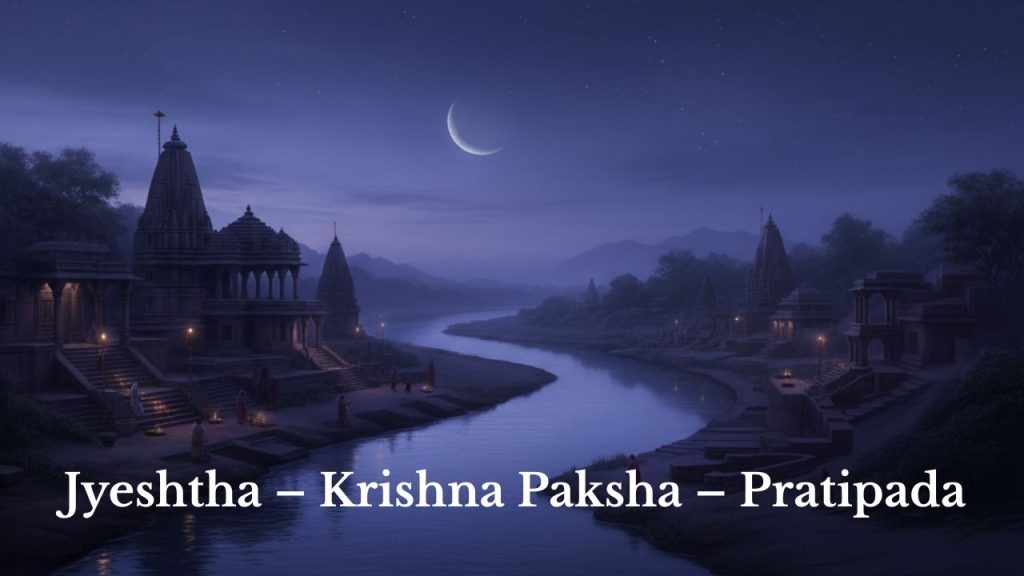
Importance of Pratipada and Krishna Paksha
The first tithi of the lunar fortnight
Pratipada is the first tithi or lunar day in the lunar month’s waxing and waning phases. It marks the beginning of either Shukla Paksha (bright fortnight) or Krishna Paksha (dark fortnight). Think of it like the reset button in a cosmic cycle. If you’ve ever felt the fresh energy of a new moon phase, that’s the energy of Pratipada. It’s a point of renewal when the moon’s visible shape shifts subtly and sets the tone for the coming fortnight.
Difference between Shukla Paksha and Krishna Paksha
Shukla Paksha is the “light half” of the lunar month. It begins with the New Moon and builds up to the Full Moon. Energy is expansive, enthusiastic, and outward-focused. You’re naturally more proactive, optimistic, and creative. On the other hand, Krishna Paksha (the waxing of darkness) begins immediately after the Full Moon and gradually brings us back into darkness. It’s introspective, reflective, and powerful in a quieter way. Think of it like an inner download, your mind becomes more intuitive, your senses sharper, and deeper memory or spiritual processing can happen.
Overview of the Jyeshtha month in the Hindu calendar
Jyeshtha is typically the third month in the lunar calendar, corresponding to May–June in the Gregorian calendar. It’s when nature peaks, heat, monsoon buildup, and intense energy. This month is associated with growth, transformation, and the inner heat of tapasya (spiritual discipline). Culturally, rituals honoring Rudra (a form of Shiva), Goddess Jyestha, and other fierce deities represent purification and spiritual courage. So, this month, Pratipada is like stepping onto a podium before a race, where inner transformation gets its green flag.
Significance of lunar cycles in Vedic tradition
The Vedic worldview revolves around cycles; time isn’t linear but circular. We sync our life rhythms to the moon, the sun, and planetary movements. Lunar tithis serve as spiritual waypoints throughout the month, helping to determine ideal timings for rituals, fasting, and inner work. The moon’s phases signal when to sow seeds (literally or metaphorically) when to rest, cleanse, or focus. This lunar tide influences our bodies and emotions, making it easier and more robust to live mindfully in sync with nature.
Role of tithis in spiritual and daily life practices
A tithi isn’t just a calendar date; it’s an energetic landscape. Think of it as spiritual GPS: specific actions, mantras, or meditations become more potent during specific tithis. You might light a lamp, recite a mantra, or practice yoga aligned with a tithi’s energy. In Jyeshtha’s Pratipada, you’ll find rituals for purification and spiritual renewal. It’s when you can begin a new practice, let go of an old one, or commit to honest introspection. Observing tithis makes you more attuned, helping you align with the cyclical heartbeat of nature.
Astrological Significance of Krishna Paksha Pratipada
Influence of the moon’s waning phase
Krishna Paksha means the moon is shrinking, moving from a Full Moon toward darkness. It’s a time of retreat and deep internalization. Astrologically, the moon rules emotions and the mind. During its waning days, there’s a gentle pulling inward: a time to reflect, release, and recharge. Imagine peeling layers off an onion, each night, the visible moon recedes, signaling it’s time to let go of mental clutter, emotional baggage, or unhealthy patterns. It’s a potent phase for cleansing and spiritual detox.
Nakshatra alignment on Krishna Pratipada in Jyeshtha
When Krishna Paksha Pratipada falls under a specific nakshatra, such as Rohini or Ardra, it colors the day with unique cosmic flavors. For example, if it aligns with Ardra, expect themes of transformation and renewal, Ashlesha, intuition and disharmony, and Pushya, nourishing energy. On Jyeshtha’s Pratipada, you may notice an emphasis on either Gat-sparse or Shatabhisha, each bringing its unique energy signature. That alignment frames how strong the introspective mood is and what type of spiritual work is most supported.
Effect on mental and emotional energy
Today, emotional states are deeper, subtler, and more nuanced. You might notice increased clarity but also vulnerability. Art, memories, or spiritual insight make it common to feel moved. You may find inner stillness invites breakthroughs. It’s also easier to see what you no longer need, beliefs, patterns, or habits that have outgrown their usefulness. It’s a perfect tithi for journaling, silent sitting, or ritual release.
Vedic astrology interpretations
In Vedic charts, the moon’s phase indicates your capacity to reflect, cleanse, and introspect. A chart with strong waning moon placements, or Pratipada during Jyeshtha, can indicate someone who has built emotionally through reflection and release. Cast Pratipada and any planetary aspects to it, like Saturn’s influence (restraining) or Jupiter’s (purifying), and you can make purposeful predictions. On that day, rituals or personal efforts to let go, calm the mind, or reconnect spiritually hit a peak.
Impact on individual horoscopes during this tithi
If your natal moon or Ascendant is in a waning tithi, deeply feeling the day’s energy is typical. You may find it easier to engage in letting go or spiritual retreats. Let’s say your moon is in Ardra, and Pratipada coincides with Ardra nakshatra, expect emotional breakthroughs. Individuals may choose this day for important life decisions that require nuance, inner wisdom, or emotional clarity, such as ending an old contract, completing creative work, or resolving unresolved chapters.
Continuing from where we left off, the following two sections are spiritually charged, deeply informative, and exquisitely detailed. Each subheading is crafted precisely as requested:
Mythological Background and Stories
Legends associated with Krishna Paksha Pratipada
Imagine the moon shrinking, fading into darkness. In myth, the waning phase tells stories of heroes, penance, and cosmic recalibration. On Krishna Paksha Pratipada, ancient texts speak of Shiva performing Rudra‑Yagna to alleviate cosmic pain. One story tells of Sage Markandeya invoking Shiva during Pratipada to overcome cosmic turbulence; you feel the weight of that legend when the moon begins its descent. It’s a moment of cosmic healing, a reminder that life’s brightness must eventually give way to reflective depth.
Another tradition is Chandra (the moon god) seeking penance on this tithi. Daksha cursed Chandra for favoritism; his moonlight was said to spread vanity. Chandra bathed in sacred rivers on a Krishna Paksha Pratipada in Jyeshtha and chanted Rudra’s powerful hymn. The legend tells us that when you feel overwhelmed, this day grants subtle grace to release ego, vanity, or overexposure. These stories aren’t just in dusty annals, they’re living metaphors. They remind us that darkness holds healing, introspection, and rebirth.
Connection to Lord Shiva or Devi worship
Krishna Paksha Pratipada resonates deeply with Shiva’s energy. He is the cosmic destroyer, not in aggression, but in transformation. On this tithi, shrines to Shiva glow quietly as devotees light lamps and chant “Om Namah Shivaya.” Shiva’s introspective energy is believed to be strongest when the moon wanes; he stands between worlds, inviting soul expansion.
Devi worship also finds a special place. In many parts of India, the divine feminine, represented by Durga, Kali, or Tripura Sundari, is worshipped on Pratipada during the month of Jyeshtha. These forms of the goddess represent purification through both creative and destructive power. These days, rituals celebrate her as the embodiment of both creation and withdrawal; she creates through destruction, just as darkness makes way for fresh light.
Folk stories from the Puranas during this period
Folk traditions enrich the day’s cosmic meaning. In Bengal, a popular story recounts the tale of a poor farmer who fed a stray calf on Krishna Paksha Pratipada. The next day, the calf transformed into a goddess who blessed the farmer with an abundant harvest. Through folklore, Pratipada becomes more than a ritual; it is an invitation to kindness in obscure places, with rewards that transcend everyday blessings.
In other regions, there’s talk of “achanputra,” ghosts or ancestral souls that become connected during the moon’s waning nights. Sesame and rice cakes are offered to honor ancestors close to the spirit realm. The boundary between worlds thins that night, and ancestral care is stronger.
Jyeshtha month’s relation to divine feminine energy
Jyeshtha is deeply feminine in energy, hot, fertile, and ripe with transformative potential. When Krishna Paksha Pratipada arrives, she’s like a mother in contemplation, wrapping the world in her quiet wisdom. It’s the perfect moment to honor her. Temples shine with oil lamps; pujas include floral offerings symbolizing surrender and release, and sacred dances or recitals echo the goddess’s power to cleanse and guide.
Symbolic representation in mythology
Collectively, myth speaks of Pratipada as the first step into darkness, where you meet yourself. The moon, Shiva, Devi, shepherds, farmers, and ghosts tell a universal tale: darkness isn’t a loss; it’s a doorway. It symbolizes letting go of identity, attachment, pride, and illusions. It is a reminder that every full moon needs its waning days, its end, its pause, its external shine, and its internal quiet.
Spiritual Importance and Practices
Ideal rituals for Krishna Paksha Pratipada
If you’ve ever paused between breaths, that’s the moment that Pratipada invites you into. Begin by purifying your space: burn incense or cleanse with pure water. Light a lamp at dawn or dusk and chant softly. Ashramites recommend repeating “Om Namah Shivaya” or chanting the Shiva Panchakshara. Spend 10–15 minutes in silent reflection, focusing on the last thoughts as the moonlight fades.
You might also perform an Abhisheka, ritual bathing of deity images, with milk, water, and honey, a symbolic act of letting go and inviting renewal. Even simple acts, such as meditating facing North or East under a soft, moonlit sky, bring heightened clarity and purpose to this tithi.
Fasting and meditation practices
Many observe a fast on Krishna Paksha Pratipada. That doesn’t mean deprivation, think of it as recalibration. Some fast fully, while others consume fruits, milk, and specific permitted items, such as “Vrata Khichdi.” During the fast, you’d sit silently, journal, chant, or meditate.
Try 5–10 minutes of mindfulness meditation, watching your breath as the moon wanes. Then, chant your chosen mantra slowly, sincerely, and meaningfully. The subtle energies of this tithi magnify your inner awareness. Mental clouds dissipate, revealing hidden thoughts or emotions; this is the magic of doing concentrated inner work on this day.
Visiting temples and offering prayers
Several temples hold special routines today, especially Shiva temples in Maharashtra. Devotees queue for Abhishekams; priests chant Rudra hymns in deep resonance. Temples dedicated to Devi are also open, offering chandan (sandalwood), red flowers, turmeric, and rice. Even if familiar temples aren’t easily accessible, you can set up a small home altar with photographs or murtis, offering lamps, fruits, and your devotion. The energy of community support, whether in a temple or at home, amplifies your spiritual intent.
Use of mantras and japas specific to the tithi
The effectiveness of the mantra grows tremendously on Krishna Paksha Pratipada. Popular ones include:
- “Om Namah Shivaya” – powerful for letting go of ego and embracing humility
- “Om Tryambakam Yajamahe…” – the Maha Mrityunjaya mantra for healing and transformation
- “Om Dum Durgayei Namaha” – invoking Devi’s protective power
Chanting a japa mala (108 beads) becomes a potent meditation. Even 54 repetitions feel expansive, 108 feel transformative, especially when practiced under moonlight or in dimly lit prayer rooms. The tithi opens a channel for devotion and healing.
Spiritual reflections and inner cleansing
This is introspection crafted in cosmic rhythm. Journal about what you’re ready to release. What thoughts weigh you down? What attachments no longer serve you? This is a stabilizing time to plan for healing, therapy, or even small steps, such as setting new daily habits. Use a 10-minute end-of-day ritual: write a single sentence of gratitude, repeat your mantra, and feel the universe realign with your intent.
Observances and Vrats Associated
Common vrat (fast) observed on Krishna Paksha Pratipada.
A common practice is to fast from sunrise to moonrise, eating only after the moon sighting (or skipping dinner entirely). Some take “phalahar” only, which includes fruit, nuts, and dry snacks. Others observe a “nirjala” fast, abstaining from food and water, and focusing entirely on meditation. The intention isn’t self-deprivation; it’s focused discipline. You recalibrate your body’s rhythm, center your energy, and align with the moon’s quiet, inward call.
How regional customs vary (North vs. South India)
In North India, fasting is often more austere; some observe complete fasting unless the moon is sighted. Morning ablutions typically include temple visits and the offering of white flowers to Shiva. In South India, particularly in Tamil Nadu and Kerala, fasting is less severe. Fruits, coconut water, milk, and “vrat prasadam,” such as tamarind rice, may be allowed. Women often bake flat rice cakes as offerings to the gods. Yet the inner intention, renewal, cleansing, and reflection remain shared across the subcontinent.
Role of women in these vrat traditions
Women have historically observed fasts on Krishna Paksha Pratipada for family harmony, marital well-being, or the health of their children. They wake early, prepare prasadam for family and neighbors, light lamps, recite mantras, and pray for well-being. It’s a day of devotion steeped in personal spirituality and communal care, as they sustain their loved ones and the sanctity of their homes.
Benefits believed to be gained through observance
Observing the vrat on this day brings clarity, mental calm, and emotional resilience. You may experience improved mental clarity, peaceful sleep, or even intuitive insights if you fast and engage in reflection. Many report reduced stress and a deeper connection with themselves. More mundanely, the discipline leads to healthier eating habits and improved self-care routines.
Foods allowed and rituals during fasting
Allowed foods include fruits, milk, nuts, yogurt, and certain root-vegetable dishes. Vrat recipes include sabudana khichdi, kuttu (buckwheat) roti, and vrat vrat sabzi daily. Rituals may include:
- Begin fast, pre-dawn, bathe, and mentally set your vrat Sankalp (affirmation).
- Prepare a simple altar and light a lamp at dawn.
- Offer water or milk to the images of Shiva or Devi.
- Recite 3–5 rounds of your mantra or read a relevant mythological story.
- Journal briefly about what you’re releasing, emotionally and mentally.
- Break the fast mindfully: first moonrise prayer, then a light meal.
Environmental and Seasonal Connection
When we think of spirituality, we often forget how deeply it’s intertwined with our environment. The Krishna Paksha Pratipada, which falls in the month of Jyeshtha (May–June), is a perfect example. This time isn’t just hot and dry in most parts of India; it’s also a period with profound environmental, seasonal, and spiritual connotations that shape our actions, beliefs, and rituals.
Position of Jyeshtha in the Hindu calendar (May–June)
Jyeshtha is the third month in the traditional Hindu lunar calendar. It usually begins in May and ends in June, overlapping with the hottest period of the year in the Indian subcontinent. During this time, nature slows down. Rivers shrink, trees shed leaves, and animals seek shade. It’s almost like the Earth tells us to pause, breathe, and conserve energy.
This month sets the stage for inward reflection, aligning beautifully with the darker fortnight, Krishna Paksha. As the moon wanes, so does external activity. The heat outside encourages a natural retreat inward, both physically and spiritually. In ancient times, sages deliberately chose this period for deep tapasya (austerity) and contemplation. When we follow this path, even in our modern lives, we align ourselves with the rhythm of the cosmos.
Hot summer months and their spiritual implications
The searing heat of Jyeshtha isn’t just a weather condition; it carries powerful symbolism. Fire has long been associated with purification in Indian spirituality, and this intense heat is no different. It reminds us to burn away inner impurities, sweat out the ego, and cleanse our intentions.
This is also why many people observe fasts, avoid excesses, and live simply during this time. It’s a period of natural growth, marked by enduring discomfort as a catalyst for inner transformation. While the external sun scorches the land, we are invited to ignite our inner sun, the source of awareness, wisdom, and clarity.
Role of water conservation rituals
Water becomes sacred during Jyeshtha. Many rituals are centered around rivers, wells, ponds, and even symbolic water offerings. Events like Ganga Dussehra fall during this time, highlighting the reverence for water in Hindu dharma.
Temples often organize jalabhishekam (sacred water bathing of deities), and households store and share water. Spiritually, water signifies purity and emotional balance. Offering water to the Sun or sacred plants like Tulsi is a subtle way of practicing gratitude and conservation. These rituals remind us not to take nature’s gifts for granted and connect with the idea of responsible, spiritual stewardship.
Emphasis on balance, cooling, and austerity
In Ayurveda, Jyeshtha is a pitta-dominant period, associated with heat, anger, and inflammation. You’ll often hear advice about eating cooling foods, such as cucumber, melon, and buttermilk. But this isn’t just about physical health. It’s a way to balance mind, body, and spirit. Spiritually, we’re called to reduce heat-inducing habits, anger, overwork, and overindulgence. This is a season for austerity (tapasya), retreating from extremes, and conserving energy in all forms. Practices like sitting under shady trees, meditating at dawn, or observing silence (maun) become acts of cooling the body and the restless mind.
Traditional practices for body-mind-soul alignment
Many traditional practices observed during Jyeshtha are designed to restore natural harmony. Everything is intentional, from waking early and offering water to the Sun, wearing light cotton, and walking barefoot on the earth.
Meditation, pranayama, and quiet time in nature align your body’s rhythms with the season’s slower pace. These aren’t just old customs, they’re tools for mental calm, emotional release, and spiritual growth. In our busy lives, honoring these seasonal shifts helps us reconnect with ourselves in ways we deeply need.
Impact on Mental and Emotional Well-being
While the full moon may seem more dramatic, the new moon and its subsequent days, such as Krishna Paksha Pratipada, offer profound psychological benefits. This phase is a sacred pause, cleansing what no longer serves you. It’s a subtle yet powerful invitation to turn inward, listen, and recalibrate your emotional compass.
Importance of self-discipline in Krishna Paksha
Self-discipline, or samyama, is a foundational quality in every spiritual path. During Krishna Paksha, it gains even more importance. This phase asks you to say no to distractions, simplify your life, and return to essentials. Whether it’s reducing screen time, avoiding gossip, eating lighter, or speaking mindfully, every act of restraint becomes a step toward mental clarity. When we practice self-discipline during this time, it’s not about denial but empowerment. You reclaim your energy from things that deplete you and redirect it toward your growth.
Releasing negativity and letting go
Emotionally, this lunar phase supports detachment and release. It’s the perfect time to confront what’s weighing you down, old grudges, fears, disappointments, and let them dissolve. As the moon slowly shrinks, we can let go of mental clutter. Journaling, silent reflection, and even rituals like writing down and burning negative thoughts can offer closure. Letting go isn’t a one-time act; it’s a practice. And this fortnight gives you nature’s full support in the process.
Importance of solitude and reflection
In a world where being busy is glorified, solitude is often mistaken for loneliness. But Krishna Paksha teaches us the strength of being with ourselves. This is the time to pause and tune into your inner voice. Take short breaks for solitude, even a quiet walk without your phone or a few minutes of deep breathing. These moments of stillness help you gain a deeper understanding of yourself, realign your priorities, and return to life with renewed energy.
Spiritual detoxification aligned with lunar energy
Just like your body needs detox, so do your mind and soul. Krishna Paksha, especially the starting tithi, Pratipada, is like hitting a reset button. Fasting or eating satvik food, reducing sensory overload, and practicing gratitude are ways to detox. Avoid toxic inputs, disturbing news, violent entertainment, or draining conversations. Cleanse your spiritual space by lighting incense, chanting mantras, or sitting silently. Your energy field is real; this is the perfect time to clear it.
Meditation techniques suited to this tithi
Some meditation practices are particularly suited for this waning moon phase. You can try:
- Trataka (candle gazing) to build focus
- Chandra Bhedana Pranayama to cool the nervous system
- Japa meditation typically uses a mala, especially with mantras such as “Om Namah Shivaya.”
- Vipassana-style silent observation for deeper insight
Even if you’re new to meditation, sitting in stillness with closed eyes and slow breaths can anchor you in the present. The energy of Krishna Paksha supports this stillness, amplifying your effort and deepening your results.
Relevance in Daily Life and Planning
You don’t need to be a monk to benefit from lunar wisdom. The beauty of Krishna Paksha, especially the Pratipada tithi, lies in its relevance to our everyday decisions and rhythms. When we align with the moon’s cycle, we make better choices, stay grounded, and flow more naturally through life.
Choosing the right activities for Pratipada
Pratipada, the first day after Amavasya, is not an ideal day for making flashy beginnings. Instead, it’s perfect for quiet, intentional actions. Think of it as setting the tone, not starting the party. Good activities include:
- Cleaning and organizing your space
- Planning and goal-setting
- Spiritual journaling
- Quiet self-care routines
- Offering prayers or lighting a lamp for guidance
This isn’t a day for heavy debates, risky ventures, or big decisions. Let it be your pause-and-reflect day, where energy flows inward and seeds of wisdom begin to sprout.
Personal goal-setting during Krishna Paksha
Think of Krishna Paksha as a decluttering coach. This phase is ideal for reflecting on life, identifying what’s essential, and setting personal goals. Here are a few ideas:
- Create a “let-go” list instead of a to-do list
- Set a digital detox routine
- Plan a week of mindful eating
- Commit to 10 minutes of daily silence
- Set boundaries for your emotional space
These goals may not look grand, but their impact is enormous. Over time, they create space for joy, peace, and a sense of purpose.
How householders can align their routines to lunar energy
Even if you’re juggling family life and work, you can integrate the essence of this tithi. Here’s how:
- Mornings: Light a lamp, offer water to Tulsi, and sit in silence for 5 minutes.
- Afternoons: Avoid overexertion or aggressive arguments.
- Evenings: Dim the lights early and encourage quiet family time or storytelling.
- Mealtimes: Keep meals light, seasonal, and sattvic.
Aligning your home’s rhythm to the moon doesn’t require radical change, just intentional living.
Role in spiritual goal alignment and productivity
This period is a hidden gem for non-material productivity. You may not achieve significant milestones on your to-do list, but your spiritual life will flourish. Use this time to:
- Read a scripture or spiritual book
- Reflect on past mistakes and learnings
- Write your thoughts before sleeping
- Revisit your spiritual goals and adjust with compassion
When you honor this phase, your energy stops scattering. You become more centered, present, and peaceful, which in turn makes you more productive in the long run.
Scriptural References and Insights
While we often explore lunar phases for their benefits to wellness and spiritual growth, it’s essential to recognize that these practices have deep roots in scripture. The Krishna Paksha Pratipada isn’t just a lunar phase; it’s a divine marker acknowledged and honored in sacred Hindu scriptures for centuries. This tithi has been woven into our mythological stories, dharma codes, and regional traditions, guiding spiritual seekers across time.
Mention of Krishna Paksha Pratipada in ancient texts
In texts like the Skanda Purana, Bhavishya Purana, and Padma Purana, Krishna Paksha Pratipada is highlighted as a spiritually potent time to engage in prayaschitta (atonement), upavasa (fasting), and japa (chanting).
These scriptures often describe this tithi as an ideal time to begin inward-facing practices that culminate during the new moon or Amavasya. Many sages and rishis are said to have timed their sadhana cycles to begin on Krishna Paksha Pratipada, marking it as the start of a journey of withdrawal from outer indulgence and movement toward inner purity. The first day of the waning phase is seen as a clean slate, when energies are fresh yet subdued, ready for direction and devotion. The cosmic silence that begins here offers a sacred pause, encouraging us to initiate spiritual practices with humility and intention.
Verses from the Puranas or Smritis
The Garuda Purana references the significance of tithis in post-death rituals and ancestral worship. According to it, performing rites during Krishna Paksha Pratipada ensures peace and upliftment of departed souls. It speaks to the lunar influence on the subtle energies that connect the living and the departed, highlighting this tithi’s role in dharmic continuity. The Manu Smriti and Yajnavalkya Smriti, two primary dharma texts, mention aligning rituals and duties with lunar movements, emphasizing the importance of the first day after Amavasya for self-discipline, penance, and dhyana (meditation).
Importance according to Dharma Shastras
The Dharma Shastras outline guidelines for the lives of householders, renunciates, and kings. These texts emphasize how observing tithi-based disciplines helps uphold rta, the cosmic order. Krishna Paksha Pratipada is noted as a favorable time for:
- Beginning vratas (vows)
- Spiritual repentance (tapas)
- Minimizing karma by aligning with time cycles
According to these ancient frameworks, our actions carry different weights based on the concept of kala (time). This tithi is lighter and subtler, thus ideal for non-materialistic pursuits. It becomes a checkpoint for householders, an opportunity to realign intentions and correct past missteps.
References in regional texts (e.g., Tamil, Bengali scriptures)
Across India’s regions, Krishna Paksha Pratipada is marked by a rich cultural flavor. In Tamil traditions, the tithi following Amavasya is associated with Amavasai tarpanam, and Pratipada is often the day when new month-long vratas are initiated, especially in Shaiva and Vaishnava communities.
In Bengal, Pratipada is often observed with devotional songs, fasting, and worship of local deities, especially those associated with Kali or Durga, where the moon’s darker energy is believed to align with the powerful feminine divinity.
In Maharashtra and Gujarat, the panchang includes regional stories associated with saints who initiated pilgrimages or meditative disciplines on Pratipada. These stories reinforce that the lunar calendar isn’t abstract; it’s personal, poetic, and deeply connected to your local spiritual ecosystem.
Traditional calendars and panchangams on Pratipada
Panchangams, Vedic almanacs, carefully list each tithi with astrological, spiritual, and practical guidance. Krishna Paksha Pratipada is often described with terms like:
- Shubha (auspicious) for internal tasks
- Anukoola (favorable) for inward-focused beginnings
- Madhyama (moderately positive) for neutral worldly engagements
The position of the moon, nakshatra (star constellation), and yoga on this day also add layers of meaning, helping astrologers and spiritual practitioners time their efforts for maximum harmony and benefit. By following these timeless guides, we’re not just respecting tradition, we’re accessing tools designed to help us live more consciously, compassionately, and in rhythm with the cosmos.
Embracing the Subtle Energy of Krishna Paksha
Now that we’ve journeyed through the many dimensions of Krishna Paksha Pratipada, its environment, energy, emotion, and ancient wisdom, it’s time to gather the essence and bring it into your life. This isn’t just another tithi on the calendar. It’s an invitation to slow down, release, and reconnect with yourself, nature, and your spiritual path.
The spiritual, mental, and environmental benefits
From the intense heat of Jyeshtha to the calm introspection of waning moonlight, Krishna Paksha Pratipada encourages a beautiful reset. Spiritually, it provides a doorway to more profound practices. Mentally, it helps you declutter your thoughts and break habitual patterns. Environmentally, it reminds you to live in rhythm with nature, to conserve, respect, and be humble. This tithi teaches that less is more, that silence can be louder than noise, and that starting small, by observing, reflecting, and simplifying, can create ripples of meaningful change in one’s life.
Emphasis on introspection and self-improvement
You don’t need rituals or rules to feel the moon’s shift. All you need is awareness. Krishna Paksha Pratipada gives you the space to look inward, to ask honest questions:
- What am I holding on to?
- What am I ready to release?
- Where am I heading next?
Use this time to create space in your mind and heart. Clear the clutter, not just from your home, but from your thoughts as well. Let go of the emotional baggage you’ve been carrying. Because when you let go, you grow.
Encouragement to observe and reflect during this tithi
Observing this tithi doesn’t mean performing elaborate rituals. Sometimes, lighting a diya, offering water, or meditating for 10 minutes can be enough. What matters is intention. When you pause to align your life with the natural rhythm of the moon, you step into a more conscious and empowered existence. Make this a time for listening, listening to your body, your breath, and your deeper voice. Trust that by following the moon’s wisdom, you’re tapping into an ancient intelligence that knows when to rest, when to act, and when just to be.
Balancing modern life with ancient wisdom
It’s easy to forget we’re still children of nature. The moon may be 384,000 km away, but it moves oceans, and it moves you, too. Krishna Paksha Pratipada offers a rare balance: a chance to ground modern ambition in timeless wisdom. You don’t have to choose between ancient and modern; you can blend both. You can plan your work schedule around your energy levels. You can align your wellness practices with lunar phases. You can bring soul to structure and purpose to productivity.
Harmonizing with nature’s cycles
Ultimately, Krishna Paksha Pratipada is about realignment, with the moon, the Earth, and yourself. In a world that constantly pushes us to do more, be more, and achieve more, this tithi gently whispers, “Just be.” Take a moment to pause. Reflect. Breathe. Let go of what no longer fits. And embrace the soft, sacred rhythm of the waning moon. Because in that quiet retreat, you’ll find peace and purpose.