Gajanana Sankashti Chaturthi
Meaning and etymology of ‘Sankashti’ and ‘Gajanana’
The term Sankashti originates from Sanskrit, where “Sankat” means trouble or obstacle, and “Haran” signifies remover. Together, Sankashti translates to “the one who removes troubles.” The word Chaturthi refers to the fourth day of the lunar fortnight. Gajanana, one of Lord Ganesha’s most beloved names, means “Elephant-Faced One”, a divine embodiment of wisdom, strength, and benevolence.
This auspicious occasion is a monthly opportunity to seek divine guidance from Lord Ganesha in removing life’s burdens. It isn’t just a religious practice; it’s a spiritual experience that aligns the heart, body, and soul with positivity and devotion. The word Gajanana itself evokes a vision of compassion and grandeur, reminding everyone that even the mightiest obstacles are surmountable with divine faith.
Monthly occurrence and lunar calendar significance
Gajanana Sankashti Chaturthi falls on the fourth day after the full moon (Krishna Paksha Chaturthi) every month, according to the Hindu lunar calendar. Each occurrence is associated with a different form of Ganesha and a unique vrat katha (fasting story), enriching its spiritual depth.
The Chaturthi that falls on Tuesday is known as Angaraki Sankashti, considered the most auspicious of all. The observance not only marks the moon’s cycle but also synchronizes the mind with cosmic vibrations. Aligning with lunar energy on this day helps enhance concentration, calm the emotional body, and invite divine insights.
Uniqueness of the Shravana month in the Hindu calendar
Shravana, considered one of the holiest months in the Hindu calendar, amplifies the energy of every spiritual practice. This month is closely associated with devotion, purity, and discipline. When Gajanana Sankashti Chaturthi falls during Shravana, its power is intensified manifold.
It is believed that Lord Shiva, the father of Ganesha, is most active during the month of Shravana. With heightened cosmic energy and increased celestial alignment, prayers during this time are said to reach the divine realms faster. Observing Gajanana Sankashti in Shravana can help unlock doors to inner peace, spiritual awakening, and karmic cleansing.
Overview of Ganesh worship across India
From the streets of Maharashtra to the temples of Tamil Nadu, Ganesha worship unites people across languages and regions. Every corner of India offers a unique way of showing devotion to Lord Ganesha. In Maharashtra, grand celebrations like Ganesh Chaturthi dominate the spiritual landscape. In Tamil Nadu and Karnataka, Lord Ganesha is worshipped as Pillayar and Vinayaka with heartfelt yet straightforward rituals.
Ganesha is not only the god of beginnings but also the remover of obstacles in personal, professional, and spiritual life. Whether it’s during a housewarming, exam, or business launch, invoking Ganesha is a cultural reflex across the subcontinent. On Sankashti Chaturthi, the collective chanting of his mantras creates a wave of spiritual resonance that unites devotees across India.
Why Gajanana Sankashti in Shravana is especially powerful
When Gajanana Sankashti Chaturthi aligns with the Shravana month, the spiritual impact becomes exponential. This unique overlap magnifies the blessings one receives. Lord Shiva rules Shravana, and with Ganesha being his son, the synergy between the divine energies reaches its peak.
Fasting and praying during this time not only clears emotional and material blockages but also infuses life with renewed vigor. Heartfelt devotion on this day can shift destinies. The power of intention, when coupled with planetary alignment, creates a perfect moment for transformation and grace.
Mythological Origins and Vedic Significance
Story of Lord Ganesha removing obstacles (Vighnaharta)
The name Vighnaharta, meaning “the remover of obstacles,” isn’t just symbolic. Mythology is filled with stories where Ganesha aids gods and mortals alike. One of the most beloved stories recounts how Ganesha assisted Lord Shiva and the Devas in defeating demons by placing mental, physical, and spiritual obstacles in their paths, only to clear them when their hearts aligned with the truth.
These stories are more than legends; they’re mirrors of daily life. Every problem is a message, and every obstacle is a lesson. By invoking Vighnaharta, devotees symbolically request clarity, wisdom, and resilience to face life’s challenges with courage and confidence.
Association with the moon (Chandra darshan) and fasting
One unique feature of Sankashti Chaturthi is the practice of Chandra Darshan, which involves sighting the moon. It is believed that the moon once mocked Lord Ganesha, leading to a curse where looking at the moon on Chaturthi would bring false accusations. Later, Ganesha modified this curse, allowing blessings to be bestowed if the moon is viewed respectfully after fasting.
Fasting on this day is observed with utmost discipline. Most devotees opt for Phalahar, a fruit-based fast, while some undertake the rigorous Nirjal fast without even water. The fast symbolizes letting go of ego, desire, and distraction, making space for divine wisdom.
Legends from the Puranas about Sankashti Chaturthi
The Skanda Purana and Mudgala Purana narrate stories linking Sankashti Chaturthi with divine intervention. One legend speaks of a king whose kingdom was plagued by misfortune. Upon observing Sankashti Chaturthi with complete faith, his land flourished, and his people prospered.
Each Sankashti comes with its vrat katha, often involving miraculous outcomes through Ganesha’s grace. These tales serve not only to entertain but also to inspire, reminding us that faith and perseverance can transform even the most dire circumstances.
Symbolism of the Gajanana form in scriptures
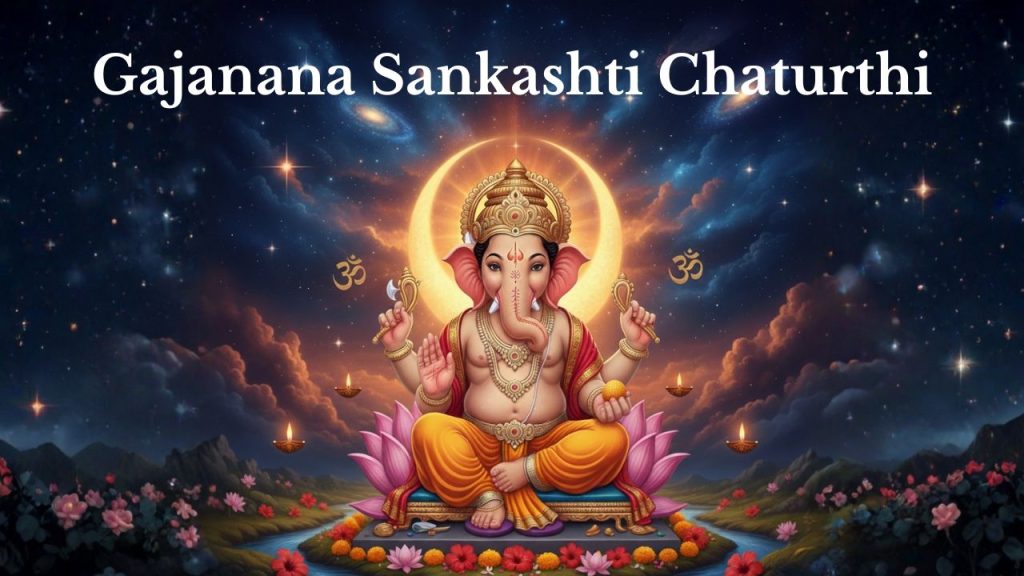
The form of Gajanana is filled with layers of meaning. The elephant head signifies strength, intelligence, and memory. The large ears symbolize attentive listening, while the trunk represents adaptability and flexibility. The broken tusk is a lesson in sacrifice and purpose, used by Ganesha to pen the Mahabharata.
In the scriptures, Gajanana is the master of all gunas (qualities) and the gatekeeper of spiritual progress. His presence at the start of every mantra or prayer ensures a smooth spiritual journey. He is not just a deity but a way of living wisely and humbly.
Spiritual alignment during Shravana and its benefits
During Shravana, the universe pulses with divine vibrations. It’s a time when the veil between the physical and spiritual realms thins, making it easier to connect with higher consciousness. Fasting, chanting, and meditation during this month carry amplified results.
Aligning one’s energy with this cosmic rhythm brings clarity, emotional release, and increased intuition. Observing Gajanana Sankashti during this period serves as a potent cleanse for the body, mind, and karmic residue, making space for abundance and inner harmony.
Importance of Shravana Month in Hinduism
Shravana is the holiest month for worship and rituals
Shravana is synonymous with devotion. Every day of this month is earmarked for worship, whether it’s Shravan Somvar for Shiva, Mangala Gauri for Goddess Parvati, or Ganesha through Gajanana Sankashti. The environment is charged with rituals, mantras, and spiritual observances.
This month offers a structured spiritual framework that helps deepen personal discipline and devotion. Homes become temples. Streets echo with bhajans. Every action, from lighting a lamp to reciting a mantra, becomes a sacred act. It’s a period that reconnects the soul with its divine purpose.
Planetary positions and astrological significance
Astrologically, Shravana is marked by strong lunar and solar influences, mainly due to the presence of the Shravana Nakshatra. This asterism is associated with the Moon and is linked to listening, learning, and spiritual guidance. The energies are supportive of healing, manifestation, and prayer.
Rituals performed under these planetary alignments receive higher cosmic support. Observing Gajanana Sankashti during this period aligns one with auspicious vibrations, aiding in overcoming planetary doshas (faults) and attracting prosperity and peace.
Increased spiritual energy and divine blessings
There’s a palpable shift in spiritual energy during Shravana. The rains cleanse the earth, just as rituals cleanse the spirit. Every offering made, every chant uttered, echoes further into the divine ether. The blessings received during this time often last far beyond the month itself.
This spiritual momentum helps break stagnation, dissolve negativity, and plant seeds of new beginnings. It’s a rare moment when faith becomes a transformative experience.
Rituals dedicated to Lord Shiva and Lord Vishnu
Both Lord Shiva and Lord Vishnu are worshipped extensively during the month of Shravana. Mondays are reserved for Shiva, while Thursdays are often dedicated to Vishnu. Devotees observe fasts, perform abhishekam (sacred bathing), and recite specific chants like the Rudram or Vishnu Sahasranama.
This shared reverence enriches the Shravana experience, as Ganesha is closely tied to both deities, being the son of Shiva and Parvati and blessed by Vishnu in various legends.
Connection between Lord Shiva and Ganesha in Shravana
The father-son dynamic of Shiva and Ganesha carries deep spiritual symbolism. Shiva represents the unmanifest consciousness, while Ganesha is the manifested intelligence. Shravana, ruled by Shiva, provides the ideal setting to honor Ganesha as the guiding force for all endeavors.
The unity of Shiva’s calm and Ganesha’s energy brings balance, offering wisdom with willpower and vision with action. Observing Gajanana Sankashti in this context brings the blessings of both forces, harmonizing the inner and outer aspects of life.
Spiritual Benefits of Observing Sankashti Chaturthi
Removal of physical, mental, and spiritual obstacles
Gajanana Sankashti Chaturthi is not just a day of worship; it’s a spiritual mechanism for purification. Observing this day with complete devotion helps in clearing obstacles that block personal growth. Physical ailments, emotional instability, and mental fog are said to ease when prayers are offered with full-hearted sincerity.
The elephant-headed Lord is known as Vighnaharta, the remover of obstacles. Devotees trust in his divine intervention to dissolve delays, confusions, and misfortunes. Energetically, this day serves as a reset point, a time to reevaluate intentions, release burdens, and move forward with confidence and clarity.
Attaining wisdom (Buddhi) and clarity
One of the most profound blessings of Ganesha is the gift of Buddhi, pure intellect. Observing Gajanana Sankashti Chaturthi sharpens perception, strengthens memory, and aligns thinking with higher truths. Wisdom doesn’t just mean intelligence; it includes discernment, emotional maturity, and insight.
The symbolism of Ganesha’s large head represents expansive thinking and intellect. By meditating on his form and reciting his mantras, the mind becomes more focused and decisions more precise. This is especially beneficial for students, professionals, and seekers of spiritual knowledge.
Deepening devotion through vrat (fasting)
Fasting is a profound spiritual tool that purifies the body and disciplines the mind. The vrat observed on Sankashti Chaturthi isn’t merely about abstaining from food; it’s about creating space for the divine. Through restraint, one redirects energy inward, developing focus, calmness, and devotion. This deepened connection with Lord Ganesha nurtures faith, stability, and inner strength. The act of fasting becomes a sacred offering, a personal commitment that strengthens spiritual resolve and fosters gratitude.
Gaining strength to overcome karmic debts
Karma, both good and bad, shapes the journey of life. Specific karmic patterns create recurring challenges. Sankashti Chaturthi offers a golden chance to break those cycles. By consciously participating in rituals and chanting sacred mantras, devotees strive to dissolve karmic residues. Through prayers and acts of devotion, positive karma is accrued, which then manifests as opportunities, peace, and healing. The day becomes a turning point, an opening to rewrite the story of one’s life with the blessings of Ganesha.
Encouraging detachment and inner peace
Gajanana Sankashti Chaturthi subtly teaches detachment, not through isolation but by anchoring in inner peace. As one steps away from worldly cravings through fasting and prayer, there arises a calm that’s untouched by outer chaos. Lord Ganesha’s peaceful form inspires tranquility. His composed demeanor teaches that true strength lies in stillness. Observing this day brings balance between action and surrender, helping to develop contentment that lasts beyond the ritual.
Traditional Rituals and Observances
Fasting rules (Nirjal or Phalahar types)
Sankashti Chaturthi fasting comes in two primary forms: Nirjal (observed without water) and Phalahar (observed by consuming fruits, milk, and nuts). Devotees choose based on their capacity and health. Both types are respected as acts of devotion that cleanse the body and uplift the spirit.
The fast begins at sunrise and is broken only after sighting the moon in the evening. The aim is to maintain purity of thought, speech, and action throughout the day. The discipline teaches patience, willpower, and humility, qualities essential for spiritual growth.
Puja Vidhi (ritual process) on Sankashti day
The puja begins with a clean, serene setup, an altar adorned with Ganesha idols or images. Devotees offer Durva grass, Modaks (sweet dumplings), red hibiscus flowers, and light lamps made of ghee. Incense and camphor are lit to purify the space.
The central part of the puja involves chanting the Sankata Nashana Ganapati Stotram and the Ganesh Atharvashirsha. Offerings are made with heartfelt intention, requesting Lord Ganesha to remove difficulties and bless with prosperity, health, and wisdom.
Chandra Darshan and moon worship at night
One of the key rituals of Sankashti Chaturthi is Chandra Darshan, which involves viewing the moon after moonrise. The story behind this custom is rooted in mythology, where the moon mocked Ganesha, and later, the curse was reversed into a blessing.
After the moon is sighted, devotees offer water, rice grains, and flowers to the moon. This act signifies humility, gratitude, and cleansing. Only after this ritual is the fast break. The entire process becomes a symbolic journey, from restraint to release, from darkness to light.
Chanting of Sankata Nashana Ganapati Stotram
The Sankata Nashana Ganapati Stotram is a powerful Sanskrit hymn that praises the many forms and glories of Ganesha. Each verse is believed to hold transformative power, dissolving sorrows and drawing in divine grace. Chanting it with faith not only calms the mind but also strengthens the spiritual aura. The resonance of the syllables creates a field of protection and positivity, making the entire atmosphere feel sanctified and secure.
Offering Durva, Modak, and red flowers to Ganesha
Each offering made to Lord Ganesha on Sankashti Chaturthi holds deep symbolism. Durva grass represents resilience and simplicity. Modak symbolizes bliss and the sweetness of spiritual reward. Red flowers, especially hibiscus, signify purity and divine energy.
These offerings, while simple, are charged with emotional and devotional intent. When made with love and gratitude, they turn into bridges connecting the devotee to the divine. In these small rituals lie big blessings, ones that protect, guide, and uplift every sincere heart.
Cultural Significance in Different Regions of India
India’s diversity shines brilliantly in the celebration of Gajanana Sankashti Chaturthi. Across regions, the rituals, stories, and sentiments may differ, but the essence remains the same: devotion to Lord Ganesha. This beautiful mosaic of cultural practices adds depth to the observance, making it a powerful national tradition.
Maharashtra’s Rich Celebration and Temples like Siddhivinayak
In Maharashtra, Gajanana Sankashti Chaturthi is a grand affair. The entire state resonates with devotion, and some of the most iconic temples, such as Mumbai’s Siddhivinayak Temple, have become centers of spiritual energy. Devotees line up from the early hours, offering modaks, durva grass, and red flowers to the beloved Gajanana.
Special aartis and bhajans echo through the air, creating an atmosphere filled with hope and reverence. Homes light up with diyas and the aroma of homemade sweets. Children learn age-old stories, while elders lead the rituals with grace and wisdom. It’s more than a tradition; it’s a deeply emotional experience that connects generations.
Karnataka’s and Andhra’s Special Sankashti Practices
In Karnataka and Andhra Pradesh, devotion to Lord Ganesha assumes a more disciplined and spiritual tone. Observing Sankashti Vrat is common, with strict fasting observed from sunrise to moonrise. The moon sighting, known as Chandra Darshan, holds immense importance.
Temples like Dodda Ganapathi in Bengaluru or Kanipakam Vinayaka Temple experience a surge of devotees, especially during the Sankashti that falls in the month of Shravana. The atmosphere is serene, devotional, and deeply meditative. Rituals are often accompanied by recitation of the Sankashtanashana Stotra, believed to remove all obstacles. Families come together in quiet reverence, seeking strength and clarity.
Tamil Nadu’s Observances in Pillaiyar Temples
Down South in Tamil Nadu, Lord Ganesha is affectionately known as Pillaiyar. On Sankashti Chaturthi, especially during the sacred month of Shravana, temples are adorned with vibrant kolams and sandalwood paste. Temples such as the Ucchi Pillaiyar Temple in Tiruchirapalli and Karpaka Vinayakar Temple in Pillayarpatti have become spiritual sanctuaries.
Women draw intricate kolams early in the morning, and children participate in storytelling about Ganesha’s wisdom and power. Offerings of kozhukattai (sweet rice dumplings) are made, and special evening prayers are conducted. The devotion here is quiet yet intense, rooted in age-old Tamil customs that have been passed down through generations.
North India’s Ganesha Worship in Homes and Shrines
While Gajanana Sankashti is more prominent in the South and West, Northern India also embraces this divine celebration. Here, Lord Ganesha is honored mostly at home altars and local shrines. Families observe fasting, read sacred texts such as the Ganesha Atharvashirsha, and offer laddus and fruits as offerings.
Temples light up in the evening with art and devotional music. Though the scale may be modest compared to the South, the sincerity and warmth of the worship remain deeply moving. The observance also overlaps with other vital vrats, making it a time of heightened spiritual activity.
Role of Families and Communities in Rituals
Across regions, one common thread is the communal and familial spirit of the occasion. Elders pass down rituals and stories. Children are taught values like discipline, humility, and devotion. Neighborhoods come together to conduct group aartis, distribute prasad, and organize spiritual discourses.
Even in the busiest cities, there’s a quiet pause, a collective turning inward, a sacred space carved out in the chaos of everyday life. The celebration of Gajanana Sankashti Chaturthi brings not just individuals but entire communities closer to the values of gratitude, resilience, and harmony.
Stories and Symbolism of Gajanana Form
Lord Ganesha’s form is one of the most recognizable and revered in Hindu tradition. Every aspect of his divine image carries profound meaning, offering wisdom that transcends generations.
Meaning of “Gajanana” – The Elephant-Faced God
“Gajanana” literally means the one who has the face of an elephant (gaja means elephant, anana means face). The elephant face of Ganesha symbolizes intelligence, power, and wisdom. In Indian culture, elephants are seen as royal and wise beings, qualities that Ganesha embodies fully. His elephant head also symbolizes the ability to think big, remove barriers with strength and calmness, and listen deeply. Gajanana is not just a name; it is a symbol of divine strength paired with humility and grace.
Why Ganesha’s Form is Revered During Sankashti
Sankashti Chaturthi, observed during the waning phase of the moon, is a time believed to hold cosmic vibrations ideal for removing challenges. Ganesha, known as Vighnaharta (remover of obstacles), is especially invoked on this day. His Gajanana form, representing sharp intellect and divine insight, becomes a powerful guide for those navigating uncertainty.
Worshipping this form during Sankashti is believed to accelerate spiritual growth, destroy negative karma, and open the doors to new beginnings. The energy of Gajanana aligns perfectly with the purpose of the vrat, freedom from inner and outer hindrances.
Symbolic Elements: Large Ears, Trunk, Single Tusk
Gajanana’s divine image is full of symbolism:
- Large Ears: A reminder to listen more and absorb wisdom.
- Curved Trunk: The power of adaptability, Ganesha uses it for gentle gestures or mighty tasks alike.
- Single Tusk: Symbol of sacrifice and clarity, he broke one tusk to write the Mahabharata, showing the power of commitment over comfort.
- Big Belly: Acceptance and digestion of life’s ups and downs.
- Every detail tells a story. Every curve teaches a value.
Representation of Omkar in Gajanana
Lord Ganesha is often seen as the physical embodiment of Om, the primal sound of creation. His form closely mirrors the shape of the Om symbol; his head, trunk, and arms all align in visual representation. Om symbolizes cosmic consciousness, the unification of the physical and the spiritual. Gajanana’s form thus becomes a visual meditation on the most profound spiritual truth, the oneness of all creation.
Connection Between Gajanana and Compassion
At the heart of Gajanana’s energy lies compassion. The gentle eyes, the calm smile, the protective hand, every gesture conveys kindness. Ganesha listens without judgment, removes obstacles with understanding, and brings joy with his presence. During Sankashti Chaturthi, devotees seek not just miracles but also the strength to be more forgiving, more patient, and more loving. Gajanana is not just worshipped; he is emulated. His compassion inspires transformation from within.
Connection with Lunar Cycles and Chandra Darshan
Sankashti Chaturthi is intricately woven into the lunar calendar. Its spiritual depth is enriched by its alignment with the moon’s phases, especially the waning moon, and the significance of Chandra Darshan, the moonrise viewing that completes the observance. These celestial patterns elevate the ritual from tradition to a powerful cosmic alignment.
Sankashti Chaturthi’s Link with Krishna Paksha
Sankashti Chaturthi always falls on the fourth day (Chaturthi) of the Krishna Paksha, the waning phase of the moon. This phase symbolizes inward movement, letting go, and shedding negativity. Just as the moon recedes into darkness, this period invites us to introspect and release what no longer serves us.
The vrat aligns beautifully with this energy as devotees fast, reflect, and seek blessings from Gajanana to clear life’s path of obstacles. In the month of Shravana, when spiritual energies are considered most active, this alignment becomes even more powerful. It’s not just a ritual, it’s a journey toward inner cleansing.
Importance of Moonrise on This Day
The moonrise, or Chandra Darshan, is a critical part of the Sankashti Chaturthi observance. Fasting is broken only after the moon is sighted, believed to be imbued with divine vibrations on this night. The moon’s rays are said to carry cooling, calming energies that heal emotional disturbances and promote clarity.
This practice is not just symbolic; it connects the devotee with the natural rhythm of life. The first sight of the moon after a day of fasting brings immense joy, renewal, and a feeling of completion. It marks the moment of divine connection and transformation.
Scientific and Spiritual Reasons Behind Moon Worship
From a spiritual lens, the moon represents the mind in Vedic tradition. Worshipping the moon helps calm mental agitation, improve focus, and attain emotional stability. Scientifically, fasting during the waning moon is also said to enhance metabolism and detoxify the body.
The gravitational pull during this phase helps in inner balance. When combined with prayer, silence, and chanting, the mind becomes sharper, more disciplined, and more receptive to positive change. So, the moon becomes both a cosmic entity and a mirror of the self.
Timing and Rituals of Chandra Darshan
Chandra Darshan involves stepping out after sunset to look for the moon in the eastern sky. Devotees often prepare a special thali with water, rice, sandal paste, flowers, and a diya to offer to the moon. They chant the Ganesha Ashtothram or Sankata Nashana Stotra and seek divine protection. The rituals are heartfelt but straightforward. Sometimes, even just folding hands and gazing at the moon with gratitude is enough. The experience, after a full day of spiritual effort, brings a calmness that words can hardly describe.
Myths Involving Chandra and Ganesha (Curse of Laughter)
There’s a fascinating myth that connects Ganesha and the moon. Once, the moon laughed at Ganesha’s pot belly and his mouse vehicle. Angered by the mockery, Ganesha cursed the moon, making it disappear from the sky and declaring that anyone who looked at it on Ganesh Chaturthi would be falsely accused.
The moon, realizing his mistake, sought forgiveness. Ganesha relented, allowing the moon to wax and wane, and reduced the curse to just one day. This story teaches the importance of humility, the impact of words, and the power of forgiveness. During Sankashti Chaturthi, remembering this tale adds a layer of mythic wisdom to the moon-gazing ritual.
Modern Relevance and Inner Transformation
While rooted in ancient scriptures, Gajanana Sankashti Chaturthi remains profoundly relevant. This sacred observance is not just about rituals; it’s a doorway to pause, reflect, and transform internally.
Practicing Sankashti Vrat in Modern Lifestyles
Modern life is filled with constant stimulation, emails, deadlines, and endless scrolling. Amid this noise, Sankashti vrat offers a precious chance to unplug and reconnect with something more profound. One doesn’t need to be a scholar or a sage to observe it.
Simply taking the day to fast, meditate, and offer prayers to Ganesha can bring clarity and insight. Even if working professionals or students can’t visit temples, they can listen to mantras, read a small verse, or light a diya in the evening. In this way, ancient wisdom fits seamlessly into modern rhythms.
Inner Discipline Through Fasting and Silence
Fasting is not merely a dietary choice; it’s a mental and emotional exercise. It teaches patience, self-control, and resilience. When combined with silence or reduced speech, it allows the mind to slow down and become more focused. Many people report feeling more centered, lighter, and mentally clear after observing this vrat. It’s not about how long the fast is but about the intention behind it. Letting go of external indulgences for a day helps to tune into the inner self, where true strength resides.
Managing Stress and Emotional Blockages
The world often leaves people overwhelmed and emotionally depleted. Sankashti Chaturthi provides a space to process those unspoken feelings. The prayers, chants, and rituals are designed to release emotional weight. Offering one’s worries to Gajanana is a deeply therapeutic act. It’s like telling the universe, “Here’s my burden, please help me carry it.” This emotional release helps lower stress levels, improve focus, and nurture inner peace.
Finding Purpose and Clarity Through Devotion
Devotion creates a bridge between the heart and a higher purpose. During Gajanana Sankashti, reflecting on life’s direction, expressing gratitude, and seeking inner guidance opens doors to greater clarity. What often feels like confusion or restlessness begins to dissolve when attention is turned inward. This inner clarity doesn’t arrive through force; it arises gently, like the moon emerging from behind the clouds. Devotion to Gajanana becomes a source of inspiration that fuels the soul long after the fast ends.
Incorporating Ganesha Values in Daily Life
The values that Gajanana represents, wisdom, patience, humility, and joy, are not confined to temples. They belong in everyday choices: listening without judgment, responding with calm, solving problems creatively, and leading with compassion. Observing Sankashti is not just a one-day affair; it’s a reminder to carry Ganesha’s light with you every day. By bringing his values into morning routines, meetings, family time, and even conflicts, life becomes more balanced and purposeful.
Embracing the Essence of Shravana’s Sankashti
The Sankashti Chaturthi that falls in Shravana, the month of heightened spiritual vibration, is a sacred opportunity to align with divine energy, renew inner commitment, and rediscover joy in devotion. Embracing its essence can transform not just the day but the path ahead.
Summary of Spiritual and Practical Benefits
Sankashti in Shravana amplifies all the benefits associated with this observance. Spiritually, it clears karmic blocks, increases intuitive strength, and deepens one’s connection with divine wisdom. Practically, it fosters discipline, focus, and a sense of peace of mind. Fasting improves health, chanting calms the nerves, and the moon-gazing ritual creates a moment of stillness in a chaotic world. Together, these effects bring a sense of balance that feels both grounding and uplifting.
Rediscovering Ancient Wisdom Through Gajanana Worship
Shravana is a month steeped in ancient stories, traditions, and cosmic significance. Worshipping Gajanana during this time is a return to roots, a remembering of who we are beyond the surface noise. Through rituals passed down through generations, there’s a rediscovery of the sacred in the everyday. The stories of Ganesha slaying demons or humbly writing scriptures become more than mythology; they become mirrors, showing us how to face life’s challenges with grace and wisdom.
Integrating Devotion with Mindfulness and Self-Growth
Mindfulness is not a new concept; it’s embedded in every aspect of Gajanana worship. Lighting a diya, preparing an offering, sitting in silence, or listening to chants, all require presence. When devotion is practiced mindfully, it shifts from a task to a transformation. This sacred pause provides an opportunity to realign priorities, refresh mental clarity, and reconnect with purpose. It’s not about doing more, it’s about doing it with awareness and love.
Encouragement for Families to Observe Together
Sankashti Chaturthi becomes even more powerful when shared as a family. Preparing prasad together, telling stories of Ganesha to children, or simply sitting for the evening aarti fosters deeper bonds. In a time when screens often separate family members, shared rituals create moments of genuine connection. Children grow up with values rooted in devotion, and elders find joy in guiding younger hearts. It’s not just tradition, it’s togetherness with meaning.
Invoking Gajanana for Strength, Grace, and Peace
As life continues to throw uncertainties and challenges, turning to Gajanana provides not only comfort but also the courage to face them. His presence is a reminder that strength doesn’t always roar; it sometimes arrives with grace, with wisdom, with a quiet inner knowing. By embracing the essence of Shravana’s Sankashti, the soul begins to walk lighter, the heart opens wider, and life flows with a little more peace.