Understanding Ashtami and Shukla Paksha
Definition of Ashtami
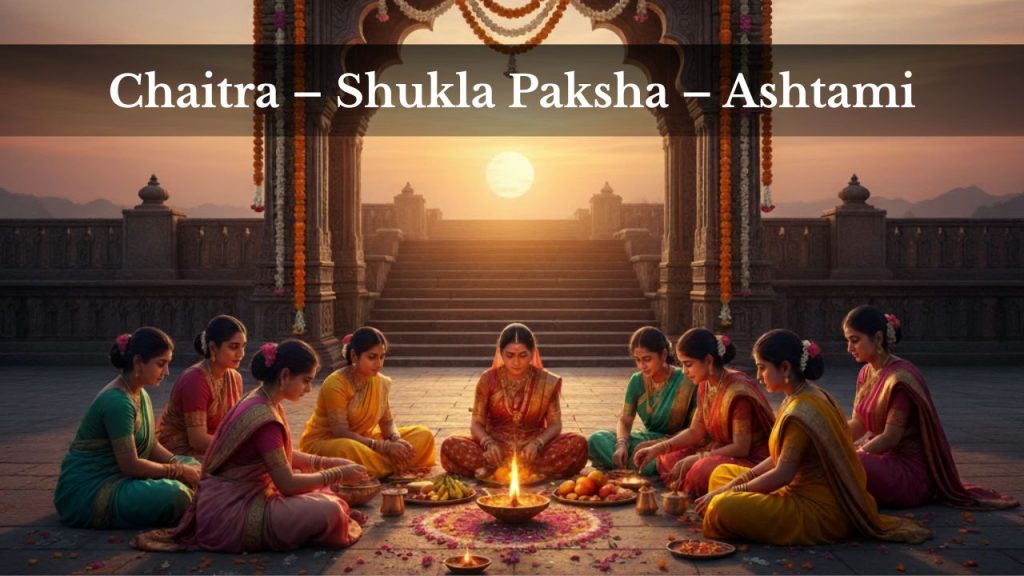
Ashtami is the eighth day of the lunar month and holds significant spiritual meaning in Hinduism. It’s a time for reflection, devotion, and rituals that connect us with the divine. On this day, worshippers often fast, perform prayers and engage in rituals to seek blessings and spiritual enlightenment. Ashtami can occur during different months in the Hindu calendar, but its importance is magnified when it falls in Shukla Paksha (the waxing phase of the moon).
Shukla Paksha Overview
Shukla Paksha, the brighter half of the lunar cycle, is considered the most auspicious period for religious and spiritual activities. This is when the moon increases in size from the new moon to the full moon. The days of Shukla Paksha are believed to bring positive energy and are considered ideal for starting new ventures, performing prayers, and pursuing spiritual growth.
Link Between Ashtami and Shukla Paksha
The occasion becomes even more auspicious when Ashtami falls on the Shukla Paksha of Chaitra. This period is ideal for performing rituals dedicated to various deities, including Goddess Durga. The energy of the waxing moon is believed to enhance the effectiveness of the prayers and spiritual practices performed on this day. Combining Ashtami and Shukla Paksha in the Chaitra month is believed to strengthen the connection with the divine and bring blessings of prosperity and spiritual growth.
Significance of the Chaitra Month in the Hindu Calendar
Chaitra is the First Month of the Year
In the Hindu calendar, Chaitra marks the beginning of the new year, making it a time for renewal and new beginnings. In the Gregorian calendar, it typically falls around March-April. The beginning of the year is a time of setting new intentions, making resolutions, and starting fresh, which is why the spiritual practices during Chaitra hold deep significance.
Festivals During Chaitra
Chaitra is also home to several major festivals, with Chaitra Navratri and Ram Navami being the most significant. These festivals celebrate the divine feminine energy and Lord Rama’s birth. These festivals are closely linked to Ashtami, especially Durga Ashtami, which occurs on the eighth day of the Chaitra Navratri celebrations. The devotion shown on Ashtami during Chaitra sets the tone for the rest of the year, and it is considered an ideal time for new spiritual practices.
Spiritual Meaning of Chaitra
Chaitra, the first month of the lunar year, symbolizes new beginnings. It represents purity, divine blessings, and the pursuit of righteousness. The atmosphere of Chaitra encourages individuals to initiate new spiritual practices, thereby purifying their minds and souls. The day of Ashtami in Shukla Paksha thus carries the energy of new beginnings and is considered a time to realign one’s life with spiritual goals.
Spiritual and Religious Significance of Ashtami
Worship of Goddess Durga
Ashtami is traditionally a day dedicated to Goddess Durga, especially during the festival of Navratri. The eighth day, Durga Ashtami, marks the goddess’s victory over the demon Mahishasura. This event symbolizes the triumph of good over evil, light over darkness. Devotees gather to offer prayers, perform rituals, and celebrate the goddess’s power and grace. On Ashtami, worshippers invoke Durga’s divine protection and seek blessings for prosperity and peace.
Penance and Fasting
On Ashtami, fasting is commonly observed as a means to purify the mind and body. This act of penance is believed to help cleanse the soul of negative energies and prepare the devotee to receive spiritual blessings. Fasting on this day is a physical sacrifice and a spiritual practice that encourages self-discipline and mindfulness. The focus is on developing inner strength and devotion.
Rituals of Ashtami
The rituals performed on Ashtami vary by region, but they all share a common theme of devotion and reverence. Many devotees observe a fast, offer special prayers, and recite mantras dedicated to Goddess Durga. Durga Saptashati is a popular scripture recited on this day, and the chanting of specific hymns is believed to invoke divine blessings. In some places, Kanya Puja (worship of young girls) is also performed, symbolizing the goddess’s presence in every woman.
Celebrations of Ashtami Across India
Regional Variations
In different parts of India, Ashtami is celebrated with unique regional customs. In Bengal, the day is marked by Durga Ashtami celebrations that involve grand processions, rituals, and the immersion of idols in water. In Northern India, devotees often perform Kanya Puja (worshipping young girls as manifestations of Goddess Durga) and Havan ceremonies. The celebrations may differ in form, but the essence of the worship remains the same—devotion to the divine feminine energy.
Durga Ashtami and Its Rituals
Durga Ashtami is one of the most important days of the Chaitra Navratri. Devotees perform elaborate rituals to honor Goddess Durga’s victory. On this day, large-scale prayers and offerings are made, particularly in temples dedicated to the goddess. Devotees organize Yajnas and Homas in some regions to invoke divine protection and blessings. The culmination of these rituals is a sense of spiritual fulfillment and a deeper connection with the divine.
Community Participation
The Ashtami celebrations are not just limited to the home but are also a community affair. Temples become hubs of activity, with devotees coming together to perform collective prayers. In some places, Ram Navami celebrations coincide with Ashtami, bringing even more devotees to the temples. A sense of unity and collective energy enhances the spiritual experience. People sing hymns, dance, and share offerings, fostering community and devotion.
The Role of Ashtami in Navratri Celebrations
Significance of Day 8 in Navratri
Ashtami falls on the eighth day of Chaitra Navratri, nine days dedicated to the worship of the Goddess Durga. This day is considered one of the most powerful in the Navratri festival. It marks when the goddess’s divine energy is believed to be at its peak. Ashtami is a day for devotees to seek divine intervention, overcome challenges, and gain blessings for the year ahead.
Durga’s Manifestation
On Durga Ashtami, Durga is believed to have manifested in her full glory, symbolizing the triumph of good over evil. On this day, the victory over the demon Mahishasura reminds devotees of the power of righteousness and the importance of overcoming obstacles. On this day, worshippers seek the goddess’s protection and blessings for strength and courage in facing life’s challenges.
Fasting and Prayers
Ashtami is a day of fasting and prayer on which devotees seek spiritual purity and divine blessings. The rituals performed on this day are about physical offerings and cultivating an inner sense of devotion. Fasting helps to clear the mind, and the prayers invoke divine support. The goddess is believed to bestow her divine grace upon those who observe these rituals with sincerity and dedication.
Importance of Ashtami for Personal and Spiritual Growth
Strengthening Devotion
Observing Ashtami in Shukla Paksha strengthens devotion and commitment to the divine. The rituals performed on this day help deepen spiritual connection and reinforce the path of righteousness. It is an opportunity to renew your faith and align yourself with the cosmic energies that govern the universe.
Self-reflection and Mindfulness
Ashtami is a day for self-reflection and mindfulness. Fasting, prayer, and meditation allow you to pause and reflect on your life, actions, and goals. It is a time to assess your progress on your spiritual journey and recalibrate your intentions. Engaging in these practices can cultivate greater awareness, mindfulness, and clarity.
Purification of Mind and Soul
The rituals of Ashtami are meant to purify both the mind and the soul. By engaging in these spiritual practices, you rid yourself of negative energies, worries, and distractions. This purification process allows you to connect with your higher self and tap into the divine energy within you. Purification is believed to enhance spiritual growth and help individuals lead more harmonious lives.
The Astronomical Significance of Ashtami in Shukla Paksha
Influence of Moon Phases
The moon’s phases play a significant role in Hindu rituals, and the Shukla Paksha (the waxing phase) is considered a more auspicious time for spiritual activities. The waxing moon is a time for growth, positivity, and development. Ashtami, falling during this phase, is an ideal time for spiritual and material progress, as the energies are believed to be more favorable.
Astrological Benefits
Astrologically, Ashtami in Shukla Paksha brings a surge of positive energy. It is believed that the positioning of the moon and the stars on this day enhances one’s chances of success, prosperity, and spiritual enlightenment. The moon’s energy on Ashtami is conducive to clarity of thought, making it an ideal day to start new ventures, seek guidance, and perform sacred rituals.
Connection to the Stars and Planets
The cosmic alignment of stars and planets also influences the energy of Ashtami. During the Shukla Paksha, it is said that the alignment supports harmony, peace, and positive changes in one’s life. The moon’s influence enhances intuition, wisdom, and spiritual awareness. Performing rituals on Ashtami allows you to tap into this celestial energy for personal and spiritual growth.
The symbolism of Number 8 and Ashtami
Numerology of 8
In Hindu philosophy, the number 8 holds great significance. It represents power, strength, and abundance. The number is often associated with the Ashtakshari Mantra and the eight manifestations of Goddess Durga, symbolizing the protection and blessings of the divine. The number 8 is also believed to have a connection with the infinite, as its shape resembles the infinite symbol (∞).
Ashtami as a Day of Completion and Power
Ashtami, being the eighth day, is considered a culmination point. It is a day that brings the energy of finality, completion, and culmination. The rituals performed on this day are believed to be particularly powerful because they mark the end of a cycle and the beginning of something new. This day, therefore, holds transformative energy, allowing devotees to complete their spiritual journey and move toward enlightenment.
The Cycle of Time
Ashtami is also a reminder of the cyclical nature of time. It symbolizes life’s continuous ebb and flow, as well as the constant movement between the past, present, and future. By observing Ashtami, you connect with the cyclical nature of existence, understanding that each phase has its purpose and significance in the grand cosmic order.
Rituals and Offerings Made on Ashtami
Puja Practices
The rituals performed on Ashtami are rich in tradition and symbolism. Devotees typically perform pujas to seek blessings from Goddess Durga and other deities. These rituals include chanting mantras, offering flowers, lighting lamps, and reciting prayers for divine protection and blessings. The prayers are performed with deep faith and devotion, believing they will invoke the goddess’s blessings.
Food and Prasad
Ashtami is also marked by food and prasad offerings. Devotees offer the goddess special foods, such as sweets, fruits, and kheer, in many places. These offerings are distributed among family members, friends, and neighbors to symbolize prosperity and harmony. Sharing prasad strengthens the community bond and encourages a sense of unity and collective well-being.
Charity and Donations
Charity is an integral part of Ashtami celebrations. Donating food, clothing, and money to those in need is a way to earn spiritual merit. This act of kindness and generosity is believed to purify the soul and earn divine blessings. Many people also visit temples or participate in community service as part of their Ashtami observance, further spreading the energy of goodwill and compassion.
Reflecting on the Importance of Ashtami
Reinforcing the Significance
Ashtami in Shukla Paksha during Chaitra holds profound spiritual and cultural significance. It is a time for worship, reflection, and self-purification. Whether you observe it through fasting, during Ashtami, prayer, or simple acts of devotion, it offers a unique opportunity to connect with the divine and align yourself with the positive energies of the cosmos.
Encouragement for Observance
If you haven’t yet observed Ashtami, take a moment to appreciate its significance and incorporate it into your spiritual journey. Participating in its rituals, fasting, and offering prayers can lead to divine blessings and spiritual growth.
The Day’s Impact
Ashtami is about deepening your connection with the divine and fostering personal transformation, not just rituals. By honoring this day, you embark on a journey of spiritual enlightenment and inner peace. Let Ashtami in Shukla Paksha during Chaitra be a reminder to purify your thoughts, renew your intentions, and seek divine blessings for the year ahead