Understanding about Bhairavi Jayanti
Bhairavi Jayanti is a highly revered festival in the Hindu calendar, celebrated with great devotion and spiritual fervor. It marks the birth of Goddess Bhairavi, one of the ten Mahavidyas, who embodies the fierce, protective, and transformative aspects of the divine feminine energy. Unlike other festivals, Bhairavi Jayanti emphasizes not only devotion but also introspection, courage, and spiritual empowerment. Observing this festival allows devotees to connect deeply with the higher energies of the universe and seek guidance for overcoming life’s challenges.
Definition of Bhairavi Jayanti in the Hindu calendar
Bhairavi Jayanti is observed on a specific day in the Margashirsh month, usually falling in November or December, according to the lunar calendar. It is celebrated on the day when the moon aligns with significant astrological positions that favor spiritual practices and divine blessings. The festival is rooted in Shakti traditions, emphasizing the worship of the feminine divine, often seen as the ultimate protector and guide for devotees. Bhairavi Jayanti stands out for its combination of devotion, spiritual rituals, and the empowerment of inner strength through divine intervention.
Timing: Observed in Margashirsh month (November–December)
The Margashirsh month holds a special place in the Hindu calendar, regarded as highly auspicious for spiritual observances. Bhairavi Jayanti is celebrated during this period to harness the cosmic energies that facilitate spiritual growth, meditation, and purification. Devotees consider this timing crucial for performing rituals, as it enhances the potency of prayers and offerings. Observing Bhairavi Jayanti in this month allows individuals to align with universal rhythms and experience heightened spiritual consciousness.
Connection to Goddess Bhairavi, one of the Mahavidyas
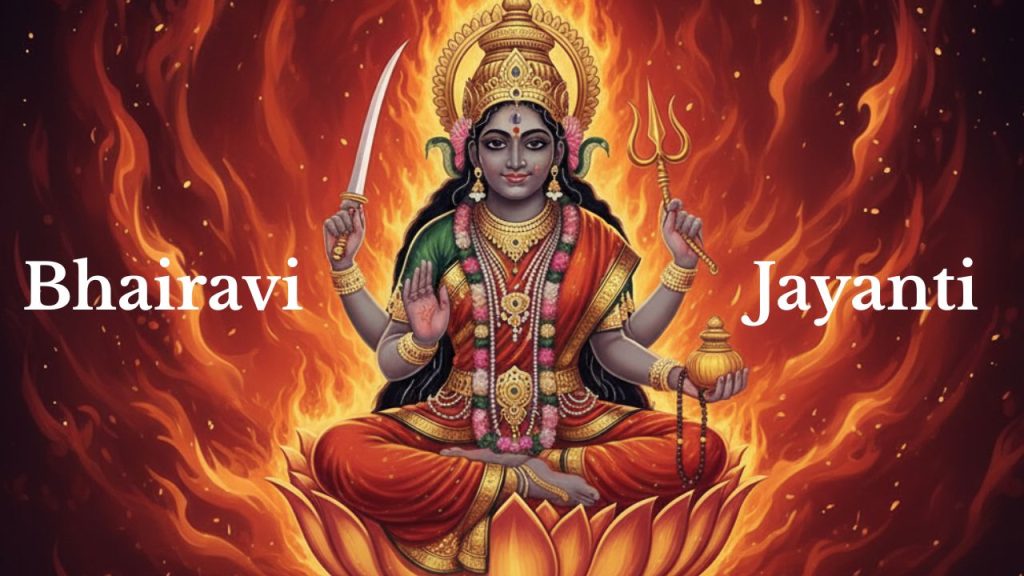
Goddess Bhairavi is a manifestation of Shakti, the divine feminine power, and represents courage, wisdom, and protection. As one of the Mahavidyas, she holds a vital role in the spiritual and mystical traditions of Hinduism. Worshipping Bhairavi on her Jayanti invokes her blessings for overcoming obstacles, defeating negative energies, and attaining spiritual growth. Her form symbolizes fearlessness and ultimate devotion, guiding devotees toward self-realization and transformation.
Overview of spiritual and cultural significance
Bhairavi Jayanti is not just a festival of rituals but also a celebration of inner strength and empowerment. Spiritually, it encourages self-reflection, meditation, and devotion. Culturally, the day is marked by temple visits, community gatherings, and the recitation of sacred hymns. Through these observances, devotees foster a sense of unity, respect for divine feminine power, and a deeper understanding of the universe’s spiritual fabric.
Importance of devotion and rituals for spiritual upliftment
Devotion on Bhairavi Jayanti is expressed through prayers, fasting, and ritual offerings, all designed to elevate the spirit and purify the mind. Engaging in these practices helps strengthen mental resilience, spiritual awareness, and emotional balance. Through rituals such as pujas, chanting mantras, and lighting lamps, devotees invite the divine presence of Bhairavi into their lives, ensuring protection, guidance, and blessings for the well-being of themselves and their families.
Mythological and Historical Background
Bhairavi Jayanti has a profound mythological and historical foundation that adds depth to its observance. Rooted in the Shakti tradition, the festival reflects the power of the feminine divine, highlighting the balance of creation, preservation, and destruction in the universe.
Origin stories related to Goddess Bhairavi
Goddess Bhairavi is believed to have manifested from the supreme energy of Goddess Parvati to vanquish evil forces and protect the cosmos. Ancient texts describe her as the embodiment of courage and the ultimate destroyer of negativity. The tales recount her fierce battles against demons, illustrating her role as a protector and guide. Her birth, celebrated as Bhairavi Jayanti, serves as a reminder of divine intervention in overcoming life’s obstacles and the necessity of courage and devotion on one’s spiritual journey.
Connection to Shakti worship and Tantric traditions
Bhairavi is closely associated with Shakti worship and tantric practices. She is regarded as a guardian of spiritual wisdom, and her worship involves meditation, mantras, and ritualistic ceremonies designed to awaken the inner consciousness. Tantric traditions emphasize the invocation of her energy to attain higher knowledge, spiritual growth, and liberation from fear and ignorance. Bhairavi Jayanti thus serves as an ideal occasion for both traditional devotees and practitioners of esoteric spiritual paths.
Role of Bhairavi in protecting devotees from negative energies
One of the most celebrated aspects of Goddess Bhairavi is her protective nature. Devotees believe that worshipping her on Bhairavi Jayanti wards off negative energies, evil spirits, and misfortune. Her fierce form symbolizes the power to overcome obstacles, dispel fear, and instill courage. This protective aspect makes her worship vital not only for spiritual upliftment but also for emotional and mental stability in daily life.
Historical references in the Puranas and scriptures
Bhairavi is mentioned in several Puranas and sacred scriptures, highlighting her importance across generations. The texts describe her as a divine force that maintains cosmic balance, illustrating her role in protecting dharma (righteousness). Historical accounts show that her worship has been integral to various Hindu traditions, emphasizing her connection to wisdom, spiritual discipline, and the empowerment of devotees through ritualistic observances.
Legends associated with her appearance and blessings
Legends portray Bhairavi appearing at moments of crisis, providing guidance and support to those devoted to her. She is believed to bless her devotees with courage, spiritual knowledge, and liberation from fears. Celebrating Bhairavi Jayanti honors these legends, encouraging devotees to seek her grace, embody her teachings, and integrate her divine qualities into their daily lives.
Significance in Margashirsh Month
Margashirsh, also called Agrahayana, is considered one of the most spiritually potent months in the Hindu calendar. Observing Bhairavi Jayanti during this time amplifies the power of devotion and rituals, offering spiritual, mental, and emotional benefits.
Why Margashirsh is considered auspicious for worshipping Bhairavi
Margashirsh is renowned for its calm and spiritual energy. The alignment of lunar phases and Nakshatras in this month creates an ideal environment for meditation, prayer, and ritualistic worship. Worshipping Goddess Bhairavi during Margashirsh enhances the potency of mantras and pujas, ensuring that devotees experience a stronger connection to divine energies. The month is also associated with introspection, encouraging individuals to focus on spiritual growth and self-discipline.
Spiritual benefits of observances during this month
Observing Bhairavi Jayanti in Margashirsh offers several spiritual benefits. Devotees experience heightened awareness, mental clarity, and emotional stability. Rituals performed during this time are believed to purify the mind, remove obstacles, and strengthen one’s spiritual resilience. By aligning with the month’s energies, worshippers can also attract prosperity, protection, and divine guidance, ensuring balance in both spiritual and worldly pursuits.
Alignment with the lunar calendar and Nakshatras
The lunar calendar plays a crucial role in determining Bhairavi Jayanti. Specific Nakshatras (stars) and the phase of the moon influence the spiritual efficacy of rituals. Aligning the celebration with these celestial factors maximizes the blessings received from Goddess Bhairavi. Devotees often consult the Panchang (Hindu almanac) to ensure the timing of pujas, fasting, and meditation is perfectly synchronized with cosmic rhythms.
Connection with other vital festivals in Margashirsh
Margashirsh hosts several other significant festivals, including Mokshada Ekadashi, Matsya Dwasashi, and Gita Jayanti. Bhairavi Jayanti complements these observances by emphasizing feminine divine energy, courage, and spiritual empowerment. Participating in multiple observances during this month creates a holistic spiritual experience, strengthening devotion and enhancing overall well-being.
Importance of timing for rituals and prayers
The timing of Bhairavi Jayanti rituals is crucial for spiritual success. Devotees often begin early morning prayers, perform specific offerings, and chant mantras during the most auspicious hours. Proper timing ensures that the divine energy invoked is at its peak, creating an environment for maximum spiritual upliftment and personal transformation.
Rituals and Practices
Rituals form the core of Bhairavi Jayanti, providing a structured way to connect with the divine, seek blessings, and cultivate inner strength. Devotees follow traditional practices that combine devotion, meditation, and spiritual discipline.
Traditional puja procedures and offerings
The puja begins with the purification of the space and preparation of sacred items like flowers, fruits, incense, and lamps. Devotees place a representation of Goddess Bhairavi—either an idol or a picture—on a clean altar. They offer flowers, fruits, and sweets while chanting her mantras to invoke her presence. The rituals are designed to create a sacred atmosphere, inviting divine energies and fostering a sense of calm, devotion, and spiritual focus.
Fasting practices observed on Bhairavi Jayanti.
Fasting is an essential aspect of Bhairavi Jayanti. Devotees may observe a complete fast or consume only fruits, milk, and light vegetarian meals. The fast serves as a spiritual discipline, helping individuals detach from worldly distractions and focus entirely on worship. Fasting also symbolizes purification of the body and mind, creating a conducive environment for receiving divine blessings and strengthening inner resolve.
Chanting of mantras and devotional hymns
Chanting Bhairavi’s mantras is a central part of the celebration. Devotees recite sacred hymns that describe her attributes, powers, and protective qualities. Continuous chanting not only invokes her presence but also promotes mental clarity, focus, and spiritual upliftment. Devotional hymns sung in groups enhance the collective energy, fostering a strong sense of community and shared spiritual experience.
Lighting of lamps and incense for spiritual purification
Lighting lamps and incense is symbolic of dispelling darkness and negativity. The glow of lamps represents divine illumination, while the fragrance of incense purifies the environment. These acts create a serene atmosphere conducive to meditation and prayer, allowing devotees to connect deeply with Goddess Bhairavi’s energy. Such rituals reinforce the sense of sacredness and focus needed for spiritual practices.
Meditation and tantric practices for advanced devotees
Advanced devotees often engage in meditation and tantric practices to invoke Goddess Bhairavi’s transformative energy. Meditation helps in calming the mind, while tantric rituals focus on awakening inner spiritual power. These practices are highly effective in channeling divine energy for personal transformation, enhancing courage, wisdom, and protection from negative influences.
Worship and Devotional Practices
Bhairavi Jayanti emphasizes devotion and spiritual discipline. Engaging in worship practices strengthens faith, fosters divine connection, and ensures blessings for personal and familial well-being.
Visiting temples dedicated to Goddess Bhairavi
Temples dedicated to Goddess Bhairavi serve as focal points for celebration. Devotees visit these temples to offer prayers, perform rituals, and seek guidance. The sacred ambiance, chants, and presence of fellow devotees amplify spiritual energy, making temple visits an integral part of Bhairavi Jayanti observances.
Performing home rituals for family well-being
Home pujas provide a personal and intimate way to honor Goddess Bhairavi. Families set up altars, perform rituals, and chant mantras together. These practices promote harmony, protection, and prosperity within the household while ensuring that divine blessings permeate daily life.
Special prayers for protection, prosperity, and courage
Special prayers focus on seeking Bhairavi’s blessings for overcoming obstacles, achieving prosperity, and cultivating courage. Reciting specific mantras and performing targeted rituals enhances the likelihood of receiving divine intervention in challenging situations. These prayers also instill inner strength, resilience, and clarity in decision-making.
Group bhajans and community celebrations
Community gatherings and bhajans create a collective spiritual experience. Devotees come together to sing devotional songs, share offerings, and perform rituals, reinforcing a sense of unity and shared faith. Group celebrations enhance the vibrational energy of prayers, magnifying their spiritual impact.
Significance of sacred symbols like yantras and flowers
Sacred symbols, including yantras, flowers, and holy items, play a vital role in Bhairavi worship. Yantras act as focal points for meditation, while flowers symbolize purity and devotion. Incorporating these symbols into rituals enhances spiritual focus, aligns energies, and deepens the connection with Goddess Bhairavi.
Spiritual Importance
Bhairavi Jayanti is more than a festival—it is a profoundly spiritual occasion that allows devotees to connect with higher consciousness, awaken inner wisdom, and strengthen personal resilience. Worshipping Goddess Bhairavi opens the path to self-realization and guides in navigating life’s challenges with courage and clarity.
Role in enhancing inner strength and mental clarity
Observing Bhairavi Jayanti encourages self-discipline, reflection, and mental focus. Devotees engage in meditation, chanting, and prayer, which collectively sharpen mental clarity and enhance their decision-making abilities. The goddess represents the power to confront fears, overcome doubts, and channel energy constructively. By devoting time and attention during this day, individuals build resilience and develop the inner fortitude required to face obstacles in daily life.
Removing negative energies and obstacles
Goddess Bhairavi is believed to eliminate negative influences, both internal and external. Her blessings protect ill-wishes, spiritual blockages, and harmful energies. Rituals such as chanting mantras, performing pujas, and lighting lamps help cleanse the environment and create a positive, harmonious space. Devotees feel a renewed sense of energy and confidence after engaging in these practices.
Awakening spiritual wisdom and divine knowledge
Bhairavi Jayanti is a time for cultivating knowledge beyond the material world. Devotees focus on self-study, reflection, and understanding the principles of dharma (righteous living). Goddess Bhairavi inspires clarity of thought, spiritual discernment, and intuitive insight, empowering individuals to act wisely and in alignment with higher truths.
Deepening devotion and connection with Shakti
This observance strengthens the devotee’s bond with the divine feminine energy. Through consistent prayers, rituals, and meditation, one can experience a sense of closeness to Shakti, the universal energy that nurtures, protects, and transforms. Bhairavi’s presence fosters devotion, surrender, and spiritual alignment, leading to inner peace and contentment.
Benefits for personal transformation and growth
Bhairavi Jayanti facilitates profound personal change. By integrating her teachings and energies into daily life, devotees can overcome fears, build courage, and enhance emotional intelligence. The spiritual discipline observed during this festival also encourages ethical living, mindfulness, and a deeper understanding of the interconnectedness of life.
Regional and Cultural Observances
Bhairavi Jayanti is celebrated with distinct flavors across different regions of India. While the core spiritual significance remains the same, local customs, rituals, and community practices add a rich cultural dimension to the festival.
Differences in Bhairavi Jayanti celebrations across India
In regions like West Bengal, Odisha, and Karnataka, the emphasis is on elaborate temple rituals, community worship, and cultural performances. In North India, home rituals, fasting, and devotional gatherings dominate. These variations showcase the adaptability of the festival while preserving its spiritual essence.
Folk traditions and local temple fairs
Many local temples host fairs and special programs during Bhairavi Jayanti. Folk performances, storytelling, and traditional music honor the goddess, providing devotees with a sense of communal participation. These activities not only celebrate cultural heritage but also deepen the devotional experience.
Community feasts and charitable acts
Offering food to devotees, the poor, or pilgrims is a common practice among many. Community feasts symbolize sharing blessings and spreading positivity. Charitable acts during Bhairavi Jayanti are considered highly auspicious, reflecting the goddess’s compassion and reinforcing the principle of dharma.
Cultural performances and devotional music
Devotional songs, dances, and recitations of sacred texts are integral to regional observances. These performances allow participants to engage both spiritually and culturally, creating a lively yet sacred environment that celebrates the goddess’s power and grace.
Integration with local customs and rituals
Local communities often blend Bhairavi Jayanti with other regional festivals, incorporating unique practices like offering specific flowers, performing specialized rituals, or using symbolic colors. This cultural integration ensures that the festival resonates with the community’s identity while maintaining spiritual integrity.
Fasting and Dietary Customs
Fasting on Bhairavi Jayanti is considered an essential spiritual practice that purifies the body, sharpens the mind, and strengthens devotion. The dietary rules are both symbolic and practical, aiding in meditation, focus, and discipline.
Types of fasting observed on Bhairavi Jayanti
Devotees may observe a complete fast, abstaining from all food and sometimes water, or a partial fast, consuming only fruits, milk, or light vegetarian meals. The type of fast often depends on individual capacity, health, and spiritual commitment. Regardless of the method, fasting symbolizes discipline, restraint, and surrender to divine will.
Foods recommended during the day
During Bhairavi Jayanti, a simple vegetarian diet is recommended, consisting of fruits, milk, coconut, and light grain-based dishes. These foods are easy to digest, allowing the devotee to maintain energy while engaging in prayer, meditation, and rituals. Special items, such as sweets, may also be offered to the goddess during the puja.
Spiritual reasons for abstaining from certain foods
Abstaining from non-vegetarian foods, alcohol, and processed items is a form of bodily purification. It helps reduce restlessness and fosters clarity of mind, allowing devotees to focus entirely on spiritual practices. The fast also symbolizes detachment from worldly desires and a commitment to higher consciousness.
Timing of meals and prayers during fast
Devotees usually break their fast after completing all pujas and rituals, often during the evening or after sunset. Meals are consumed mindfully, with gratitude and reflection on the blessings received. This practice ensures that spiritual energy remains uninterrupted throughout the day.
Significance of fasting in purifying the body and mind
Fasting cultivates self-control, mindfulness, and devotion. It is believed that abstaining from indulgent foods strengthens mental resilience, improves focus during meditation, and heightens receptivity to divine energies. The spiritual benefits of fasting are seen as enduring, positively influencing behavior, discipline, and consciousness beyond Bhairavi Jayanti.
Modern-Day Relevance
Bhairavi Jayanti continues to hold importance, blending traditional practices with contemporary lifestyles. Observing this festival in modern contexts allows spiritual connection, personal growth, and cultural continuity.
How devotees observe Bhairavi Jayanti today
Many devotees participate in temple rituals, home pujas, and community gatherings. Modern observances often include online streaming of temple ceremonies, guided meditation sessions, and virtual devotional programs, making the festival accessible to people worldwide.
Role of online pujas and virtual participation
Digital technology allows devotees to participate from afar, especially those living in cities or abroad. Online pujas provide real-time guidance for chanting mantras, performing rituals, and understanding Bhairavi’s significance, ensuring spiritual engagement remains consistent.
Incorporating rituals into busy lifestyles
Even with tight schedules, devotees can perform simplified home rituals, chant mantras, or meditate briefly, ensuring daily connection with divine energy. This flexibility allows modern practitioners to uphold tradition without compromising professional and personal responsibilities.
Promoting spiritual awareness among younger generations
Bhairavi Jayanti serves as a teaching opportunity for children and youth. Parents and elders share stories, demonstrate rituals, and encourage participation, ensuring that cultural knowledge, devotion, and spiritual practices are passed down effectively.
Continuing the tradition in contemporary society
Despite changing lifestyles, Bhairavi Jayanti retains its spiritual essence. By adapting rituals, incorporating digital tools, and fostering communal participation, devotees ensure that the festival remains relevant, enriching, and spiritually meaningful in society.
Insights and Takeaways from the Divine
Bhairavi Jayanti is a celebration of divine feminine power, courage, and spiritual growth. Observing this festival provides an opportunity to connect with Goddess Bhairavi, cultivate inner strength, and embrace transformative energies in daily life.
The spiritual and cultural importance
Bhairavi Jayanti is a reminder of the goddess’s protective and empowering qualities. Through rituals, fasting, prayers, and devotion, the festival reinforces spiritual discipline, mental clarity, and emotional resilience. Culturally, it strengthens community bonds, preserves traditions, and celebrates collective faith.
Encouragement for devotees to participate in rituals
Engaging actively in pujas, meditation, chanting, and charitable acts helps deepen devotion. Even simple observances at home allow devotees to experience spiritual upliftment and invite divine blessings.
The benefits of observing Bhairavi Jayanti
Devotees gain protection from negative energies, clarity of mind, courage to face challenges, and spiritual wisdom. The festival nurtures personal growth, fosters ethical living, and strengthens the connection with the divine feminine energy.
Importance of devotion, discipline, and mindfulness
Bhairavi Jayanti emphasizes the importance of consistent devotion, disciplined practice, and mindful living. By integrating these principles into everyday life, devotees can navigate challenges more effectively while maintaining spiritual balance and inner peace.
Connecting with Goddess Bhairavi for personal growth
The essence of Bhairavi Jayanti lies in transformation. Worship, rituals, and meditation during this festival empower individuals to overcome fears, cultivate wisdom, and embrace life with confidence. Connecting with Goddess Bhairavi ensures guidance, protection, and spiritual growth, making this celebration both timeless and transformative.