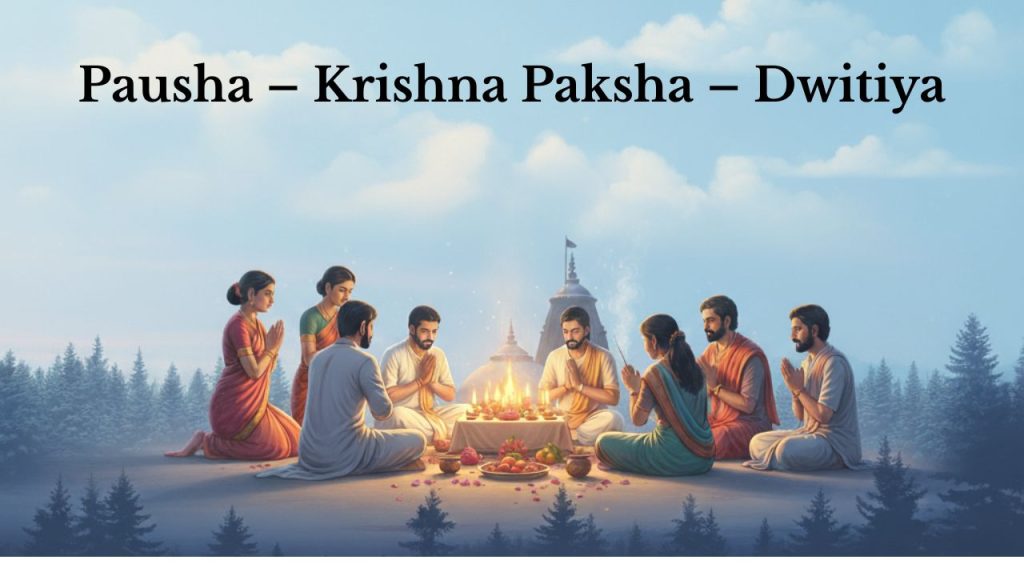
Understanding about Bhadrapada Krishna Paksha Dwadashi
The sacred Hindu lunar calendar brings with it a rhythm that aligns the soul with cosmic order, and one such spiritually charged day is Dwadashi—the twelfth lunar day after Purnima (Full Moon). Specifically, Bhadrapada Krishna Paksha Dwadashi falls in the waning phase of the moon during the Bhadrapada month (August–September), a time when the cosmos’ energy gently turns inward, encouraging self-reflection, devotion, and reverence for one’s ancestors.
Dwadashi is not just another date on the calendar—it is a continuation and culmination of the powerful observance of Ekadashi, the eleventh day marked by fasting and spiritual practice. While Ekadashi prepares the mind and body through restraint and contemplation, Dwadashi offers balance, renewal, and divine nourishment.
This day is deeply revered for its spiritual and ritual significance. It’s considered the time when the Parana (breaking of the Ekadashi fast) must be performed to receive the whole fruits of devotion. Skipping or misobserving Dwadashi can nullify the benefits of Ekadashi, which is why it holds a deeply respected place in religious practice. Observers believe that Dwadashi magnifies the rewards of discipline and devotion practiced the day before.
More than a day of rituals, Dwadashi serves as a spiritual checkpoint. It reminds individuals to live with discipline, devotion, and reverence, and to carry forward the energy of spiritual effort with humility and grace. Whether through acts of charity, offering food to the divine, or connecting with ancestors, this day presents an opportunity to deepen one’s awareness of the cycle of karma and dharma.
Scriptural and Puranic References
Hindu scriptures have long emphasized the significance of lunar days, such as Dwadashi, imbuing them with layers of myth, legend, and cosmic wisdom. The Skanda Purana, Padma Purana, and Vishnu Purana richly detail the significance of Dwadashi and its powerful connection to Lord Vishnu, the divine sustainer of the universe.
One of the central ideas in these texts is the inseparable pairing of Ekadashi and Dwadashi. Ekadashi is regarded as a day of profound spiritual preparation, while Dwadashi marks the gateway for the soul to return to worldly life with divine clarity. The Padma Purana recounts stories of sages and householders alike who followed this two-day vrat (vow), reaping spiritual liberation (moksha) and divine grace.
In the Skanda Purana, the glory of Dwadashi is elevated by the story of King Ambarisha. His steadfast devotion to Lord Vishnu, through the continuous observance of the Ekadashi-Dwadashi vrat, became legendary. When Sage Durvasa tested his patience and devotion, it was Lord Vishnu Himself who intervened to protect the king, showing the immense spiritual protection that Dwadashi offers to sincere devotees.
The Vishnu Purana also narrates tales of householders and ascetics who attained liberation by correctly observing Dwadashi rituals after Ekadashi. These texts emphasize that the divine cycle is incomplete without Dwadashi, and its correct observance ensures the full spiritual benefit.
Moreover, the importance of Dwadashi as the rightful completion of Ekadashi fasting is deeply rooted in these texts. Failing to break the fast on Dwadashi or doing so at the wrong time is seen as spiritually ineffective or even counterproductive. That’s why so much scriptural emphasis is placed on timing, awareness, and ritual purity on this day. These references are not just mythological—they carry timeless spiritual truths. They remind devotees to complete their spiritual efforts, not leave things half-finished, and always honor the divine with mindfulness and gratitude.
Theological and Spiritual Significance
Spiritually speaking, Dwadashi represents divine balance and completion. After the internalized, ascetic energy of Ekadashi, Dwadashi is the day when the soul re-engages with the world, but with renewed awareness and sanctity. It is considered a time when divine energies are more accessible to sincere seekers.
In many theological traditions, Dwadashi is seen as the day when Vishnu’s aspect of Ananta (the infinite) becomes most tangible. This aspect of Vishnu symbolizes eternity, continuity, and boundless sustenance—a cosmic rhythm that reassures the soul of its place in the universe. Observing Dwadashi aligns a person with this infinite aspect, enhancing both spiritual grounding and emotional resilience.
Symbolically, the duality of Ekadashi and Dwadashi mirrors the rhythm of detachment and re-engagement. Ekadashi detaches the soul from worldly involvement through fasting and meditation. Dwadashi, on the other hand, brings sustenance—not just of the body, but of the spirit. It is a moment to receive divine blessings, to re-enter life with purity, intention, and a sense of surrender.
This day also purifies the subtle body (sukshma sharira)—the energetic field surrounding our physical form. When a devotee observes Ekadashi with austerity and follows through with Dwadashi rituals, it leads to a cleansing of karma imprints. As a result, clarity of thought, calmness of emotion, and spiritual insight become more natural.
Ultimately, Dwadashi stands as a symbol of completion and continuity. It teaches that devotion must not only be intense but also consistent. The discipline shown on Ekadashi must be matched by reverence on Dwadashi for the whole spiritual circle to be realized.
Ekadashi-Dwadashi Pairing: Completion of the Vrat
One of the most crucial elements of Dwadashi is its role in completing the Ekadashi vrat (fast). While Ekadashi is observed with fasting, meditation, and devotion, it is Dwadashi that sanctifies this effort through the act of Parana, or breaking the fast. According to ancient scriptures, Parana must be performed during the Dwadashi tithi, and timing is critical. If one continues fasting beyond the Dwadashi tithi or breaks it too early, the spiritual benefits of Ekadashi are considered nullified. That’s why religious texts provide meticulous guidelines for calculating the correct muhurta (auspicious time) to break the fast.
This practice is not just symbolic—it’s a ritualized embodiment of divine rhythm and spiritual discipline. The Ekadashi-Dwadashi combination is a sacred cycle, where one day is inward and the next is outward, completing the spiritual arc. One who follows this cycle fully is believed to progress toward moksha, the ultimate liberation.
The mythological narratives also caution against neglecting Dwadashi. Several stories recount the experiences of well-intentioned devotees who observed Ekadashi but either forgot or disregarded the rituals of Dwadashi, ultimately losing all the accrued spiritual merit they had gained. These cautionary tales emphasize the importance of wholeness in spiritual practice. Half-measures don’t bring full results, and Dwadashi is that missing half for many.
The more profound lesson here is one of mindfulness, consistency, and completeness. Observing Ekadashi alone is like lighting a lamp but not using its light. It’s Dwadashi that allows that light to illuminate life. Together, these days form a powerful tool for inner transformation, provided they’re observed with care, devotion, and spiritual awareness.
Ritual Practices and Observances on Dwadashi
Rituals on Dwadashi are meant to restore, nourish, and sanctify the practitioner after the austerity of Ekadashi. These practices are not merely formal—they are deeply symbolic acts of gratitude, humility, and realignment with the divine order. Every gesture, chant, and offering made on this day is a step toward spiritual harmony.
One of the most significant rituals is offering Naivedya (sacred food) to Lord Vishnu, followed by the distribution of prasadam (blessed food) to others. It is believed that preparing simple sattvic meals and offering them to the deity attracts divine blessings. Sharing this food with others, especially with those in need, is considered an act of seva (selfless service) that magnifies spiritual merit.
Charity plays a prominent role in Dwadashi observances. Donating food, clothes, or money to Brahmins, monks, or people in need is a way of expressing detachment from material accumulation and honoring the spirit of abundance. Many also perform anna dana (food donation) on this day, feeding people as an offering to the divine.
Another vital aspect is temple visitation and chanting of sacred texts, particularly the Vishnu Sahasranama—the thousand names of Vishnu. Reciting or listening to these divine names is believed to cleanse the aura, awaken the heart, and invite divine grace into one’s life.
To maintain the purity of the day, tamasic foods (like onion, garlic, meat, and stale food) are strictly avoided. Equally important is maintaining purity of speech and thought—avoiding gossip, criticism, or negative conversations. The idea is to nourish not just the body, but also the mind and soul. These practices bring a gentle, harmonious energy into everyday life. Dwadashi, when observed with sincerity and devotion, becomes a day of spiritual reset—one that helps carry the divine connection cultivated on Ekadashi into the days that follow.
Dwadashi in the Context of Pitru Paksha
As the Krishna Paksha (waning phase) of the Bhadrapada month progresses, a deeply revered period begins: Pitru Paksha, the fortnight dedicated to honoring one’s ancestors. Dwadashi often falls just before this period or coincides with its early days, giving it a unique role as a spiritual bridge between divine worship and ancestral remembrance.
In the Hindu tradition, Pitru Paksha is considered a sacred window when the souls of departed ancestors (Pitrs) are believed to visit the earthly realm. During this time, devotees offer tarpan (ritual offerings of water and sesame seeds) and perform shraddha rituals to express gratitude and seek blessings from their lineage. Dwadashi, preceding or accompanying these rituals, becomes a preparatory and purificatory day to cleanse the self and the household in anticipation of these sacred acts.
Performing tarpan on Dwadashi, particularly if it aligns with the onset of Pitru Paksha, is considered highly auspicious. It’s a way of signaling respect and readiness for the deeper rituals to follow. In many households, the day is marked by special prayers for ancestors, the lighting of lamps in their memory, and the invocation of peace for departed souls.
Another vital aspect is Dwadashi’s energetic significance. The energy during this tithi is said to support ancestral healing and spiritual continuity. It’s believed that when one aligns with divine frequencies on Dwadashi through Vishnu worship, the path opens to connect with ancestral wisdom and receive their blessings. This spiritual alignment fosters harmony across generations—both living and passed.
Moreover, many scriptures recommend that any spiritual or charitable acts performed on Dwadashi in honor of one’s ancestors are multiplied in merit, particularly if done with sincerity and devotion. Feeding people experiencing poverty, donating food items, or supporting elders on this day is not only an offering to the divine but also to one’s ancestral lineage.
When viewed through this lens, Dwadashi transforms from a mere ritual day to a sacred connection between the past and the present, between heaven and earth. It invites individuals to walk the middle path—with devotion toward divinity and reverence toward lineage—reminding us that spiritual growth is as much about connecting with the divine as it is about honoring our roots.
Health and Ayurvedic Connection
While Dwadashi holds a prominent spiritual place in the Hindu calendar, its physical and health-related benefits—mainly when observed after Ekadashi fasting—are deeply recognized in Ayurveda, India’s ancient holistic healing system. Ayurveda teaches that fasting and dietary rhythms aligned with lunar cycles can rejuvenate not just the digestive system, but also mental and emotional well-being.
Ekadashi fasting typically involves a complete or partial fast, observed with water, fruits, or light, sattvic foods. After this day of digestive restraint, Dwadashi comes as a day of gentle re-nourishment. Instead of diving straight into heavy meals, Dwadashi encourages the consumption of simple, easily digestible sattvic food—think moong dal khichdi, boiled vegetables, fresh fruit, and herbal teas. This slow return to eating serves as a digestive reset, allowing the agni (digestive fire) to rekindle without strain.
From an Ayurvedic perspective, Dwadashi plays a role in balancing the tridoshas—Vata, Pitta, and Kapha, which are the three bio-energies that govern physical and mental processes. The light sattvic meals taken on Dwadashi calm Pitta (heat), soothe Vata (movement), and reduce Kapha (mucus or heaviness), leading to overall bodily equilibrium.
What makes this balance even more effective is the timing in the lunar calendar. During the waning phase of the moon (Krishna Paksha), the body naturally shifts toward detoxification and internal cleansing. Dwadashi complements this shift, allowing the system to realign with cosmic rhythms through dietary discipline and mindfulness.
Another Ayurvedic insight is that emotions are stored in the gut, and fasting helps release both emotional and physical toxins. That’s why people often report mental clarity, emotional lightness, and peacefulness on Dwadashi when they follow the complete Ekadashi-Dwadashi routine. The spiritual and the physiological work in harmony, making the observance not just a ritual but a healing journey.
Dwadashi encourages a holistic view of health—one that includes what is eaten, how it’s offered (with devotion), how it’s shared (with community), and how it nourishes not just the body but the soul. Ancient practices act as gentle reminders to slow down, eat with awareness, and align with the moon’s natural rhythm.
Astrological and Cosmic Alignment
In the cosmic dance of lunar phases and planetary movements, Dwadashi holds a subtle yet powerful vibration. Especially during the Krishna Paksha (waning moon), this twelfth tithi resonates with the themes of release, restoration, and realignment—both within the self and in connection with the cosmos.
In Vedic astrology, each tithi (lunar day) carries a specific energy that influences not only human behavior but also spiritual potency. Dwadashi is considered auspicious, particularly for spiritual rituals, mantra chanting, temple visits, and charitable acts. The influence of planetary energies, especially the Moon and Jupiter (Guru), amplifies the effects of devotional practices performed on this day.
As the Moon wanes, emotions tend to settle. There is a natural pull inward, inviting reflection, self-discipline, and contemplation. On Dwadashi, this emotional calmness supports higher states of meditation and prayer, making it a favorable muhurta (auspicious time) for rituals such as yagnas (fire offerings), sankalpas (spiritual resolutions), and pitra tarpana (ancestral offerings).
Astrologically, this tithi is seen as a gateway to cosmic harmony. When one aligns their actions—fasting, worship, and charity—with the natural cycles of the moon, it creates a resonance with universal energies. This alignment can manifest in subtle yet tangible ways, including mental peace, enhanced intuition, reduced conflicts, and a more profound sense of purpose.
Another cosmic link is Dwadashi’s association with Lord Vishnu, who represents cosmic balance, preservation, and divine order. Worshipping Vishnu on this day is seen as a way to invoke his harmonizing energy, which helps restore balance in personal life and community dynamics. The spiritual vibrations on this day are thought to dissolve negative planetary influences and support karmic purification.
For those attuned to astrological energies, Dwadashi is also an excellent day to perform remedies for planetary doshas (afflictions). Acts such as donating grains, reciting the Vishnu Sahasranama, or offering water to Tulsi plants are considered remedies that bring both spiritual and astrological harmony.
In essence, Dwadashi offers a rare opportunity to pause, attune, and elevate one’s consciousness, utilizing not only spiritual insight but also astrological wisdom. When approached with reverence and awareness, it becomes more than a religious observance—it becomes a day of universal alignment and divine receptivity.
Regional and Cultural Variations
Though Dwadashi is a pan-Indian observance rooted in scriptural tradition, its expression and celebration vary richly across regions and communities. From ornate temple rituals in South India to community feasts in the East, Dwadashi reflects the vibrant cultural diversity of the Hindu spiritual fabric.
In Vaishnava traditions, particularly those associated with Sri Vaishnavism and the Madhva Sampradaya, Dwadashi is deeply revered as the day of Parana—the culmination of the Ekadashi fast. Devotees in Mathas (monastic centers) rise early, perform Vishnu puja, recite scriptures, and then break their fast with light sattvic foods prepared with sacred intent. In some temples, grand Naivedya offerings are made to Lord Vishnu, followed by the distribution of prasadam to hundreds or thousands of devotees.
In Karnataka, Dwadashi is celebrated with particular zeal in Udupi and Sringeri, where Mathas organize discourses, group chants, and Dwadashi bhiksha—feeding visiting monks and devotees. In Andhra Pradesh and Telangana, Dwadashi often includes special Vishnu Abhishekams, tulsi archanas, and readings of the Vishnu Sahasranama in temples and homes.
Odisha, with its strong Jagannath tradition, observes Dwadashi with devotion at Puri and other Vaishnava shrines. It is customary for devotees to walk to temples barefoot, offer coconuts, flowers, and tulsi, and participate in communal feasts (Mahaprasad) as a form of spiritual purification.
In Maharashtra and Gujarat, Dwadashi may be associated with temple fairs, satsangs, and bhajans, particularly in communities deeply devoted to Vishnu, Krishna, or Vithoba. Households prepare light and sacred meals, offer them to the deity, and share them with guests, neighbors, or people in need.
These regional flavors enrich the spiritual essence of Dwadashi while preserving its core message: devotion, gratitude, and completion. Regardless of location, the rituals reflect a universal longing for divine connection, community harmony, and soul elevation. By embracing local customs while staying true to scriptural intent, Dwadashi becomes not only a religious observance but a living cultural heritage—passed down through generations, shaped by regional hues, yet grounded in timeless wisdom.
Contemporary Relevance and Takeaways
Stress, disconnection, and constant mental chatter have become the norm; ancient observances like Dwadashi offer a powerful and much-needed anchor to inner stillness and spiritual continuity. Dwadashi isn’t just for monks, priests, or the deeply religious. Its core practices—mindfulness, discipline, fasting, charity, and gratitude—are universally relevant, regardless of one’s background or belief system. Whether one observes Ekadashi fasting or not, Dwadashi provides an opportunity to slow down, reflect, and reconnect with something greater than the self.
This day encourages a return to simplicity—simple food, simple thoughts, and simple yet profound actions, such as feeding someone, chanting a mantra, or offering water to a Tulsi plant. These small acts, when performed with awareness, carry transformative power. They become moments of personal clarity, emotional healing, and spiritual recharge.
In modern households, where time is limited and distractions are many, Dwadashi can be adapted meaningfully. Even dedicating a few minutes to chanting, lighting a lamp, avoiding negative speech, or sharing a meal with someone in need aligns beautifully with the spirit of the day.
Importantly, Dwadashi teaches the value of completion and follow-through. In a culture of instant gratification, this ancient observance reminds us that true transformation lies not in a moment of effort but in sustained, mindful practice. It invites everyone not only to start strong (as on Ekadashi), but also to end consciously (as on Dwadashi).
In essence, Dwadashi is more than a tradition—it’s a timeless spiritual tool, ready to help anyone seeking peace, discipline, and a deeper connection to the divine. Whether practiced fully or partially, with rituals or with intention, Dwadashi offers a pathway to live with greater grace, greater awareness, and greater gratitude—qualities desperately needed.