Significance of Panchami in Shukla Paksha
Panchami is the fifth day of the lunar fortnight, and its observance holds profound cultural, spiritual, and astrological importance in the Hindu tradition. Falling under Shukla Paksha—the waxing phase of the moon—Panchami symbolizes growth, progress, and prosperity. In Ashwina, a month marked by the transition from monsoon to autumn, Panchami carries unique significance as it aligns with both seasonal changes and spiritual practices, making it an ideal time for devotion, learning, and self-reflection.
Definition and literal meaning of Panchami
The term “Panchami” comes from the Sanskrit word “Panch,” meaning five. It represents the fifth tithi (lunar day) of either the Shukla Paksha (waxing moon phase) or the Krishna Paksha (waning moon phase). Panchami is more than a number; it symbolizes balance, order, and harmony. Observing this day enables individuals to seek wisdom, spiritual growth, and clarity in their lives. Many communities consider Panchami an auspicious day for initiating educational endeavors or spiritual learning.
Position in the Hindu lunar calendar
In the Hindu lunar calendar, each month is divided into Shukla Paksha and Krishna Paksha, representing the waxing and waning phases of the moon. Panchami appears twice a month—once in Shukla Paksha and once in Krishna Paksha. However, Panchami in Shukla Paksha of Ashwina is particularly celebrated due to its association with Goddess Saraswati, the goddess of knowledge and wisdom, and its timing during the post-monsoon season.
Distinction between Shukla Paksha and Krishna Paksha Panchami
Shukla Paksha Panchami is a day of growth, positivity, and new beginnings, while Krishna Paksha Panchami, occurring during the waning phase, is often observed for introspection and ancestral rites. While both hold significance, Shukla Paksha Panchami is generally more festive, ritualistic, and community-oriented.
Cultural and spiritual relevance
Panchami is deeply embedded in cultural practices. Across India, communities observe this day through rituals, prayers, and pujas, emphasizing knowledge, learning, and personal growth. It serves as a reminder to honor wisdom, intellect, and spiritual values.
Purpose of observing Panchami in Ashwina
Observing Panchami in Ashwina allows devotees to align with cosmic energies, seek divine blessings, and engage in educational or spiritual activities. The day promotes self-improvement, mindfulness, and cultural preservation, creating a bridge between tradition and contemporary life.
Astrological Significance of Panchami
Astrology plays a significant role in understanding the deeper meaning of Panchami. The alignment of celestial bodies influences the energy of the day, making it favorable for specific rituals and personal growth. Panchami is associated with balance, harmony, and auspicious beginnings, making it ideal for spiritual and educational pursuits.
Planetary influences on Panchami
Panchami is influenced by various planetary positions, particularly the Moon, which governs the mind, emotions, and intellect. During Shukla Paksha Panchami, the waxing moon amplifies positive energies, enhancing clarity, focus, and emotional stability. Other planetary alignments can impact health, prosperity, and relationships, underscoring the importance of timely rituals and spiritual observances.
Role of Panchami in balancing energies
Shukla Paksha Panchami helps balance personal and cosmic energies. Observing the day through prayer, meditation, or learning activities strengthens mental resilience, emotional balance, and spiritual connection. The rituals performed on Panchami align human intentions with universal forces, promoting harmony in both personal and communal life.
Favorable zodiac signs for rituals
Sure, zodiac signs experience heightened benefits on Panchami, particularly Taurus, Virgo, and Capricorn, which are associated with discipline, learning, and intellect. Performing rituals, meditation, or educational activities on this day can enhance success, knowledge acquisition, and long-term prosperity.
Impact on daily life and spiritual practices
Panchami influences daily life by encouraging reflection, mindfulness, and conscious action. It inspires individuals to pursue knowledge, maintain ethical behavior, and strengthen community bonds. Spiritually, Panchami is ideal for reciting mantras, performing pujas, or studying sacred texts, ensuring alignment with positive cosmic energies.
Panchami and auspicious timings (Muhurat)
Observing rituals during the designated muhurat enhances their effectiveness. Panchami’s auspicious timings vary depending on local calendars and planetary positions, but performing pujas during Shukla Paksha ensures maximum benefit, attracting wisdom, prosperity, and spiritual growth.
Mythological Significance of Panchami
Panchami carries profound mythological importance, with stories and legends highlighting its spiritual and cultural significance. Many tales associate the day with divine wisdom, protection, and learning, underscoring its relevance in both historical and contemporary contexts.
Stories of Goddess Saraswati associated with Panchami
Goddess Saraswati, the deity of knowledge, learning, and the arts, is closely associated with Panchami, especially in the Shukla Paksha of Ashwin. Legends narrate that worshipping Saraswati on Panchami brings clarity, creativity, and intellectual growth. Students, scholars, and artists observe the day with prayers, offerings, and educational rituals, seeking divine blessings for wisdom and guidance.
Role of Panchami in the Mahabharata and Ramayana
In the Mahabharata and Ramayana, Panchami is mentioned as an auspicious day for rituals, learning, and victory. Warriors and scholars often observed Panchami before embarking on significant endeavors, highlighting the day’s association with foresight, intellect, and spiritual preparation.
Panchami in the context of Navaratri
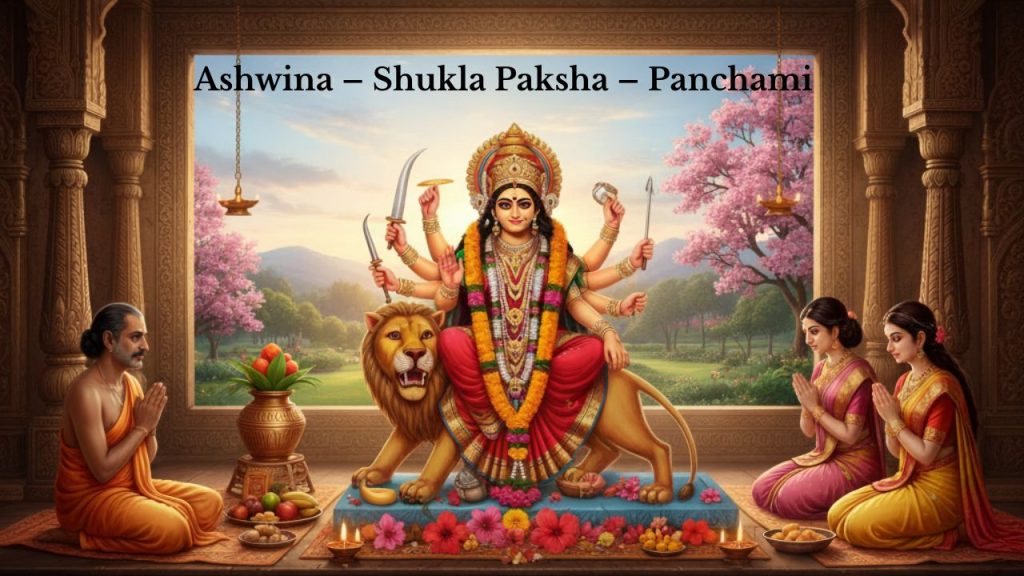
During Navaratri, Panchami marks the fifth day of festivities dedicated to Goddess Durga and her manifestations. Each day signifies different virtues and spiritual lessons, and Panchami is particularly linked with knowledge, wisdom, and divine guidance, reinforcing its importance in both learning and devotion.
Legends explaining the origin of rituals
Numerous legends describe how Panchami rituals originated, emphasizing purification, devotion, and intellectual growth. These stories convey moral lessons, encouraging mindfulness, discipline, and reverence for the divine.
Symbolic meanings in Hindu mythology
Panchami symbolizes balance, order, and intellectual enlightenment. The fifth day signifies harmony between spiritual and material life, offering an opportunity to seek wisdom, cultivate self-discipline, and honor divine knowledge.
Panchami and Goddess Worship
Goddess worship is central to Panchami observances, particularly for Saraswati, who embodies wisdom, creativity, and learning. The day encourages devotion through structured rituals, prayers, and offerings, fostering personal growth and spiritual alignment.
Importance of Saraswati Puja on Vasant Panchami
Saraswati Puja is a hallmark of Panchami celebrations, honoring the goddess of knowledge. Devotees arrange books, musical instruments, and educational tools near their idol or image, seeking blessings for intellectual development, artistic abilities, and spiritual growth. The ritual emphasizes reverence for wisdom and respect for educators and mentors.
Rituals and offerings for the Goddess
Offerings typically include white flowers, fruits, sweets, and symbolic items representing knowledge and purity. These offerings honor Saraswati’s attributes and serve as a tangible expression of devotion, reinforcing the connection between the devotee and the divine.
Prayers and mantras specific to Panchami
Reciting Saraswati mantras, such as “Om Aim Saraswatyai Namah,” amplifies spiritual focus and mental clarity. These prayers are believed to invoke divine wisdom, enhance memory, and support creative endeavors. Regular chanting fosters inner peace, concentration, and a sense of purpose.
Role of Panchami in educational and creative pursuits
Observing Panchami encourages engagement in learning and artistic activities. Schools, homes, and communities organize special sessions for reading, music, and art, instilling a culture of knowledge appreciation. The day serves as a reminder of the importance of continuous learning and self-improvement.
Significance of purity and learning during this day
Panchami emphasizes purity of thought, word, and deed. Devotees cleanse their surroundings, dress in clean attire, and maintain a focused mindset to honor Saraswati. This practice cultivates discipline, reverence for knowledge, and mindfulness, aligning personal efforts with spiritual objectives.
Rituals and Traditions
Rituals and traditions define Panchami observances, blending devotion, learning, and community engagement. They provide structure, meaning, and a tangible connection to cultural and spiritual heritage.
Daily puja and fasting practices
Panchami often involves a dedicated puja, including prayers, incense, and offerings. Many devotees observe partial or complete fasts, reflecting self-discipline and reverence. Fasting is seen as a means to purify the body and mind, enhancing receptivity to divine blessings.
Importance of holy baths and cleanliness
Purification through morning bathing is a central practice, symbolizing the removal of both physical and spiritual impurities. Maintaining cleanliness in homes, worship spaces, and surroundings reinforces respect for tradition and creates an environment conducive to meditation, learning, and spiritual reflection.
Community celebrations and temple visits
Communal engagement is integral to Panchami. Devotees visit temples, participate in group prayers, and attend cultural programs, strengthening social bonds and sharing spiritual experiences. Temples often organize educational and artistic activities, reinforcing the connection between knowledge, devotion, and community.
Traditional food offerings and recipes
Special food items, often simple, pure, and symbolic, are prepared and offered to deities. These include fruits, sweets, and dishes made from seasonal ingredients. Sharing these offerings with family and community members fosters unity, gratitude, and a sense of celebration.
Special mantras and chants for spiritual benefits
The recitation of mantras and chants, whether individually or collectively, is a key ritual. These spiritual practices enhance mental clarity, focus, and emotional balance. Chanting during Panchami aligns personal energy with cosmic forces, amplifying the effectiveness of prayers, learning, and meditative practices.
Panchami in Ashwina Month
Panchami holds a special place in the month of Ashwina, which marks the transition from the rainy season to autumn. This period is considered highly auspicious as nature itself is in a state of renewal, reflecting growth, fertility, and abundance. Observing Panchami during Ashwina aligns human activity with natural rhythms, enhancing spiritual, cultural, and social significance.
Relevance of Panchami during Ashwina
Ashwina Panchami is believed to bring balance and prosperity, both spiritually and materially. Devotees seek divine blessings for wisdom, creativity, and success in educational or professional pursuits. It is a time to begin new ventures, strengthen spiritual practices, and honor knowledge. The seasonal shift also symbolizes the cultivation of discipline, focus, and awareness in daily life.
Connection with seasonal changes and harvest
Ashwina coincides with the post-monsoon harvest, making Panchami an ideal day for offering gratitude to the Earth and natural elements. Traditional rituals often include thanksgiving for crops, water, and sustenance. Communities celebrate with food, music, and gatherings, reflecting harmony between human life and nature’s cycles.
Specific regional observances in India
Across India, Ashwina Panchami is observed with regional variations. In North India, schools and homes perform Saraswati Puja; in South India, cultural and religious events highlight devotion and learning. Each region brings unique customs, but the underlying emphasis remains on wisdom, purity, and communal harmony.
Cultural festivals aligned with Ashwina Panchami
Many festivals, including certain Navaratri rituals and local harvest celebrations, coincide with Panchami. The day strengthens social bonds, fosters cultural preservation, and encourages spiritual reflection. It becomes a platform for combining devotion with community participation.
Spiritual benefits during this lunar phase
The waxing moon of Shukla Paksha amplifies positive energy, making Ashwini Panchami an ideal time for prayer, meditation, and learning. Devotees report increased focus, mental clarity, and emotional balance, underscoring the alignment of lunar cycles with personal growth.
Significance in Daily Life
Panchami is not just a ritualistic observance; it carries practical applications for daily living. The spiritual, intellectual, and emotional benefits of observing Panchami can have a profoundly positive influence on work, education, and personal relationships.
How Panchami influences mental and emotional well-being
Observing Panchami encourages mindfulness and introspection. The rituals and meditative practices calm the mind, reduce stress, and promote emotional stability. By dedicating time to prayer, reflection, or study, individuals can foster a sense of purpose, patience, and inner peace.
Educational and learning benefits
Panchami emphasizes the pursuit of knowledge. Students, teachers, and lifelong learners benefit from dedicating time to reading, learning arts, or participating in intellectual discussions. This focus nurtures curiosity, discipline, and critical thinking, creating an environment that values education and wisdom.
Encouraging creativity and wisdom
Through rituals, arts, and devotion to Saraswati, Panchami inspires creativity in music, writing, and painting. Observing this day promotes innovation, imagination, and problem-solving skills, translating spiritual energy into practical life achievements.
Strengthening familial and social bonds
Panchami often involves family participation, from performing puja to preparing offerings. Engaging in these activities together strengthens relationships, builds mutual respect, and fosters a sense of community. Sharing knowledge and cultural practices also passes values to younger generations.
Integrating Panchami principles in modern life
Even in contemporary life, Panchami encourages reflection, learning, and mindfulness. Applying its principles can help cultivate discipline, prioritize education, and maintain ethical and spiritual alignment, ensuring that ancient wisdom continues to guide daily living.
Panchami Fasting and Dietary Practices
Fasting on Panchami is a traditional practice that offers a combination of spiritual, mental, and physical benefits. By observing dietary discipline, devotees reinforce self-control and align their energies with the divine.
Guidelines for fasting on Panchami
Fasting practices vary from partial fasting, such as avoiding grains or certain foods, to complete abstinence. It is recommended to wake early, cleanse the body, and maintain a calm, focused mindset throughout the day. Fasting encourages discipline, mental clarity, and spiritual receptivity.
Recommended foods and prohibited items
During Panchami, devotees often consume fruits, milk, and light vegetarian meals. Foods like rice, lentils, or non-vegetarian items are generally avoided. Simple, clean foods support digestion, energy balance, and overall health, while emphasizing purity and mindfulness.
Importance of moderation and self-discipline
Fasting is not just about food restriction; it is a practice in self-control, restraint, and focus. By moderating desires and observing simplicity, individuals cultivate patience, humility, and mindfulness—qualities essential for spiritual and personal growth.
Health benefits of traditional fasting practices
Traditional fasting on Panchami can improve digestion, detoxify the body, and enhance mental alertness. Light meals, hydration, and spiritual focus contribute to both physical and mental well-being, making the observance beneficial beyond the spiritual realm.
Timing and rituals associated with breaking the fast
Breaking the fast is often done after sunset or after completing rituals. Offering food to deities or elders before consumption symbolizes gratitude and reinforces the ethical and spiritual dimensions of fasting. Proper timing ensures balance, respect for tradition, and alignment with natural rhythms.
Regional Variations and Customs
Panchami is celebrated differently across India, reflecting the diversity of cultural, spiritual, and regional traditions. While the underlying principles of devotion, learning, and wisdom remain constant, local customs add richness to the observance.
Saraswati Puja in North India
In North India, Saraswati Puja is a central part of Panchami celebrations. Students arrange books and musical instruments near the goddess’s idol, offering prayers and performing rituals to seek intellectual and creative blessings. Community events often include cultural programs, debates, and educational activities.
Vasant Panchami in Bengal
In Bengal, Vasant Panchami is marked with vibrant celebrations, focusing on learning, arts, and the arrival of spring. People wear yellow, symbolizing knowledge and prosperity, and participate in music, dance, and educational events. Temples and schools become hubs for devotional and cultural activities.
South Indian observances during Ashwina Panchami
In South India, Panchami is often associated with temple rituals, community gatherings, and cultural performances. Devotees perform special pujas for Saraswati, emphasizing education, spiritual learning, and artistic development. Local legends and folklore are shared, reinforcing cultural continuity.
Folk traditions and local legends
Across villages and towns, local legends and folklore add unique significance to Panchami. These stories emphasize moral lessons, ethical behavior, and the importance of education and devotion, making the day relevant and relatable across generations.
Differences in rituals across communities
While the core principles of Saraswati worship, fasting, and puja are common, the specifics—such as timing, offerings, and cultural expressions—vary widely. These variations highlight India’s rich diversity while maintaining the spiritual essence of Panchami.
Contemporary Relevance of Panchami
Even today, Panchami remains relevant in modern life by bridging spiritual, educational, and social dimensions. Observing this day encourages reflection, knowledge-seeking, and cultural continuity.
Panchami in modern Hindu society
Modern society celebrates Panchami in schools, offices, and communities, blending ancient rituals with contemporary practices. Observances emphasize education, creativity, and social cohesion, ensuring that traditional wisdom is applied in current contexts.
Promoting education and wisdom through rituals
By engaging in Saraswati Puja and learning activities, Panchami reinforces the importance of education and lifelong learning. Schools and institutions often organize special programs to encourage curiosity, discipline, and intellectual growth among students.
Integrating Panchami festivals in schools and workplaces
Organizations increasingly observe Panchami through cultural events, workshops, and educational activities. These celebrations cultivate awareness of heritage, creativity, and collaboration, bridging spiritual values with professional life.
Community engagement and cultural preservation
Panchami fosters community participation, encouraging intergenerational learning, cultural storytelling, and artistic expression. Festivals, fairs, and communal prayers ensure the preservation of traditions while promoting social harmony.
Spiritual lessons for contemporary life
Panchami teaches mindfulness, self-discipline, and the pursuit of knowledge. By integrating these lessons into daily routines, individuals can achieve personal growth, emotional balance, and a deeper connection with their cultural and spiritual roots, making Panchami profoundly relevant even today.