Understanding about Ashtami Shradh
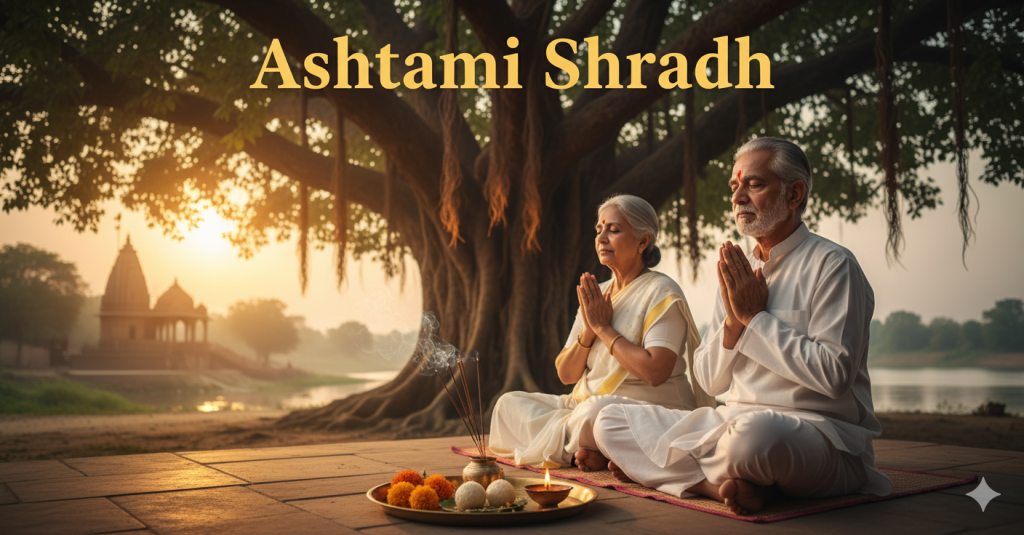
Ashtami Shradh is an essential ritual observed on the eighth day of Pitru Paksha, a significant period dedicated to honoring ancestors. Falling in the lunar month of Ashwin, Ashtami Shradh serves as a sacred reminder of our responsibilities towards forefathers and forebearers. This day holds a special significance in the Hindu calendar, as it emphasizes reverence, gratitude, and spiritual connection with ancestors who have passed away. Observing Ashtami Shradh is not just a ceremonial act; it is a profoundly spiritual practice designed to nurture positive energy within the family and preserve the sanctity of the ancestral lineage.
The placement of Ashtami Shradh in the lunar calendar during Ashwin is significant because this period is believed to be highly conducive for performing rituals that aid the departed souls in attaining peace. The lunar tithi aligns perfectly with cosmic energies, making offerings more spiritually potent. Families observe fasting, offer prayers, and perform specific rituals to express gratitude and seek blessings.
The connection of Ashtami Shradh with Pitru Paksha lies in the collective aim to honor departed souls. Pitru Paksha is a fortnight dedicated entirely to ancestral rituals, and each day has specific customs and significance. The eighth day, Ashtami, focuses on ensuring that the spiritual needs of ancestors are met through thoughtful offerings and dedicated prayers. The general purpose of observing this day is to acknowledge the sacrifices and guidance of forefathers, seek their blessings for prosperity, and ensure peace for both the departed souls and the family members.
Timing and auspicious hours play a crucial role in observing Ashtami Shradh. Rituals performed during the prescribed tithi and muhurat enhance spiritual benefits and ensure that the prayers and offerings reach the ancestors in the most potent form. Observing this day with devotion and precision strengthens family bonds and reinforces a sense of continuity with ancestral traditions, ensuring that the spiritual essence of Pitru Paksha remains intact.
Definition of Ashtami Shradh (8th day of Pitru Paksha)
Ashtami Shradh represents the eighth day in the sacred sequence of Pitru Paksha rituals. It is a day devoted entirely to the remembrance of forefathers, and its primary focus is to perform offerings known as Pinda Daan and Tarpan. The term “Ashtami” literally refers to the eighth lunar day, and “Shradh” signifies paying homage and fulfilling duties towards ancestors.
This day is deeply spiritual, emphasizing gratitude, respect, and reverence. The rituals performed are designed to ensure that the departed souls receive nourishment and blessings, which in turn bring peace and prosperity to the living family members. Ashtami Shradh is considered a time when ancestors are most receptive to prayers, and the offerings made with devotion help strengthen the spiritual connection between the past and present generations.
Observing Ashtami Shradh is more than a ceremonial obligation; it represents a continuation of family traditions and acknowledgment of the legacy inherited from forefathers. Performing rituals with sincerity on this day is believed to purify the mind, bring mental peace, and create a positive environment for spiritual growth.
Its placement in the lunar calendar during Ashwin
The lunar month of Ashwin holds significant importance in the Hindu calendar as it aligns with the period of Pitru Paksha. Ashtami Shradh falls on the eighth day of this fortnight, a time when the lunar energies are particularly favorable for performing ancestral rites. The tithi system, based on the moon’s phases, ensures that offerings and prayers are made when cosmic energies are at their peak, maximizing the spiritual impact of rituals.
Families across India carefully monitor the lunar calendar to observe Ashtami Shradh on the precise day and time. Failing to align with the lunar tithi is believed to reduce the efficacy of the offerings. The Ashwin month, being a period of reflection and remembrance, is also linked to harvest and seasonal changes, symbolizing the cyclical nature of life and death. This makes the day an ideal occasion to honor ancestors while maintaining harmony with natural and cosmic rhythms.
Connection with Pitru Paksha and ancestral rituals
Pitru Paksha, also known as Shraddha Paksha, is a fortnight dedicated to performing rituals that honor ancestors. Ashtami Shradh occupies a critical position in this period as the eighth day signifies continuity and completion within the sequence of offerings. It serves as a bridge, connecting the early days of remembrance with the latter days of spiritual fulfillment for our ancestors.
The connection with ancestral rituals is profound. Offering Pinda Daan, performing Tarpan, and reciting mantras during Ashtami are all aimed at nourishing the departed souls and expressing gratitude for their guidance and support. This practice reinforces the bond between the living and the departed, ensuring that the family lineage remains spiritually and emotionally intact. Observing Ashtami Shradh reflects an understanding that ancestors play an ongoing role in the well-being of the present generation, providing guidance and blessings even from the spiritual realm.
General purpose of observing Shradh on Ashtami
The primary purpose of Ashtami Shradh is to fulfill one’s filial duty, known as Pitru Tarpan. This includes offering food, prayers, and rituals that honor ancestors and ensure their souls attain peace. It is a reminder to maintain respect for the past while providing spiritual and moral growth in the present.
Observing Shradh on Ashtami strengthens family ties, cultivates gratitude, and encourages mindfulness about ancestral contributions. By dedicating time, energy, and devotion to these rituals, families create a positive spiritual environment that benefits both the living and the departed. It is believed that sincere observance of Ashtami can bring prosperity, remove obstacles, and enhance overall well-being.
Historical and Mythological Background
The history and mythology surrounding Ashtami Shradh are rooted deeply in Vedic traditions and sacred Hindu texts. This day is mentioned in the Garuda Purana, the Mahabharata, and other ancient scriptures, highlighting its importance in ensuring spiritual fulfillment for ancestors. The Puranas emphasize that performing Shradh on a specific tithi, like Ashtami, ensures that the departed souls are nourished and spiritually content.
Legends associated with Ashtami Shradh reinforce the belief that ancestors continue to influence the lives of their descendants. Stories from the Mahabharata, for example, narrate how offerings made with devotion could alleviate suffering for the departed and bring blessings for the family. These accounts serve as a spiritual guide, inspiring generations to honor their lineage and maintain the sanctity of ancestral worship.
In Vedic traditions, Pitru Paksha rituals, including Ashtami Shradh, were considered essential for both spiritual growth and social cohesion. These rituals were not merely symbolic; they were believed to have a direct impact on the family’s mental, emotional, and material well-being. Families across regions would gather, perform rituals, and ensure that the offerings reached their ancestors through prescribed methods, thereby strengthening community bonds and fostering spiritual discipline.
Ashtami Shradh also plays a role in the larger context of Pitru Paksha. Each day of the fortnight has specific significance, and the eighth day emphasizes continuity and completeness. By following these age-old customs, families maintain a harmonious balance between honoring ancestors and seeking blessings for the present and future. This ritual serves as a bridge connecting mythological teachings, historical traditions, and modern spiritual practice.
References in ancient scriptures (Garuda Purana, Mahabharata)
Ancient scriptures, such as the Garuda Purana, provide detailed guidelines for performing Shradh, highlighting Ashtami as a crucial day. The Garuda Purana explains the procedure for Pinda Daan, Tarpan, and other rituals, emphasizing that these offerings help ancestors attain peace. It mentions that neglecting Shradh could lead to spiritual imbalance and missed opportunities for ancestral blessings.
The Mahabharata also references the importance of performing rituals during Pitru Paksha. Legends of heroes and sages performing Shradh demonstrate how these rituals have been integral to Hindu spiritual life for centuries. These texts provide a philosophical framework, showing that honoring ancestors ensures continuity of dharma and spiritual harmony.
Legends associated with ancestors and their blessings
Numerous legends highlight the positive impact of observing Ashtami Shradh. One popular story narrates how a devoted son, through sincere Shradh offerings, relieved the suffering of his departed father in the afterlife. Such tales underscore the belief that ancestors remain aware of the living and actively respond to offerings made with devotion and sincerity. These legends inspire families to continue the tradition, emphasizing that blessings and protection from ancestors are closely tied to the observance of rituals.
Importance in Vedic traditions and rituals
In Vedic traditions, ancestral rituals are considered crucial for spiritual purification and moral development. Ashtami Shradh, like other Shradh days, is an opportunity to reinforce dharma by performing prescribed rituals accurately. The Vedas teach that such observances ensure spiritual balance, remove obstacles, and create favorable conditions for prosperity and familial harmony.
Role of Ashtami Shradh in the larger context of Pitru Paksha
Ashtami Shradh marks the midpoint of the Pitru Paksha period, acting as a spiritual anchor for the sequence of rituals. It is a day to consolidate the offerings, prayers, and devotion performed in the preceding days. By observing Ashtami Shradh, families ensure that the spiritual benefits of Pitru Paksha are maximized, bringing peace to ancestors and blessings to the living.
Spiritual Significance of Ashtami Shradh
Ashtami Shradh holds profound spiritual significance, serving as a bridge between the living and the departed. Performing rituals on this day strengthens the spiritual bond with ancestors and nurtures a sense of gratitude, responsibility, and devotion. Beyond tradition, the spiritual aspect of Ashtami Shradh emphasizes personal growth, moral integrity, and emotional fulfillment.
Honoring ancestors through Shradh fosters awareness of familial roots and the wisdom passed down through generations. The rituals remind families of the sacrifices made by forefathers and their guidance in shaping values, ethics, and life choices. By performing offerings and prayers with sincerity, the living ensure that ancestors are spiritually nourished and at peace, which, in turn, brings positive energy and blessings into their own lives.
Fulfilling filial duties through Pitru Tarpan is a spiritual responsibility. This act of devotion demonstrates respect and acknowledgment of the unseen forces that continue to support the family. Performing these rites creates a sense of purpose, connecting present actions to a larger cosmic and familial order. The spiritual liberation of souls is central to Ashtami Shradh, ensuring that ancestors attain peace and the cycle of life and death remains harmonious.
Observing Ashtami Shradh also enhances familial harmony and positive karma. The act of collective prayer, shared rituals, and charitable offerings fosters unity, empathy, and compassion within the family. Positive energy generated through sincere observance brings mental peace, emotional stability, and overall spiritual well-being, highlighting the deep interconnection between devotion, ethical living, and cosmic balance.
Honoring ancestors and expressing gratitude
The essence of Ashtami Shradh lies in honoring ancestors and expressing gratitude for their sacrifices and guidance. Offering prayers, food, and symbolic items like Pindas signifies respect and acknowledgment of the roles ancestors played in shaping the family. Gratitude expressed through rituals reinforces moral responsibility and spiritual consciousness.
By honoring ancestors, families maintain continuity in traditions and cultivate a sense of belonging. Each offering and prayer serves as a tangible expression of respect, demonstrating that the wisdom and values of our forefathers are deeply cherished. The practice fosters emotional balance and strengthens spiritual connection, creating an atmosphere of reverence and devotion that benefits both ancestors and the living.
Fulfilling filial duties (Pitru Tarpan)
Pitru Tarpan, or the act of fulfilling filial duties, is central to Ashtami Shradh. It involves offering water, food, and prayers to ensure that ancestors are nourished in the spiritual realm. Performing Tarpan with devotion demonstrates acknowledgment of ancestral guidance and supports the principle that honoring predecessors is a sacred duty.
This ritual strengthens moral and spiritual responsibility, reminding families of the interconnectedness of life and the importance of maintaining ethical values. The act of Pitru Tarpan on Ashtami helps remove negative energies, enhance prosperity, and foster spiritual growth, ensuring both the ancestors and the living benefit from the observance.
Connection between Shradh and the spiritual liberation of souls
Shradh rituals, especially on Ashtami, are believed to aid in the spiritual liberation (moksha) of ancestors. The offerings, mantras, and prayers help departed souls achieve peace and progress in the spiritual realm. By performing these rites with sincerity, families contribute to the spiritual journey of ancestors while generating positive energy for themselves.
The concept of spiritual liberation underscores the dual benefit of Shradh: providing solace to ancestors and promoting ethical, mindful, and spiritually enriched living among descendants. This connection highlights the deeply philosophical aspect of Ashtami Shradh beyond ceremonial observances.
Enhancing familial harmony and positive karma
Performing Ashtami Shradh strengthens family bonds and encourages collective participation in ancestral rituals. This shared devotion fosters harmony, empathy, and understanding among family members. Positive karma generated through these rituals benefits both ancestors and the living, ensuring that spiritual, emotional, and material well-being is maintained across generations.
Rituals and Procedures
The rituals of Ashtami Shradh are meticulously designed to honor ancestors and ensure their spiritual contentment. Each procedure has symbolic and spiritual significance, from preparing Pinda Daan to performing Tarpan and chanting sacred mantras. Observing rituals with devotion maximizes spiritual benefits and strengthens the ancestral connection.
Pinda Daan (offering of rice balls) and its symbolism
Pinda Daan is the central ritual of Ashtami Shradh. It involves offering rice balls mixed with sesame seeds, barley, and water, symbolizing nourishment for ancestors. This act represents the material and spiritual sustenance provided to departed souls. Pinda Daan signifies gratitude, acknowledgment, and the continuation of family lineage.
The ritual is performed with precision, invoking the names of ancestors and reciting mantras to ensure the offerings reach the spiritual realm. The symbolism of Pinda Daan extends beyond nourishment; it represents continuity, connection, and respect for the sacrifices made by forefathers. Each grain used embodies devotion, reverence, and a commitment to preserving family heritage.
Tarpan (offering water and prayers) procedure
Tarpan involves offering water mixed with black sesame seeds while reciting specific mantras. This ritual is essential for ensuring that ancestral souls receive blessings and spiritual purification. Performed with devotion, Tarpan is believed to relieve the ancestors from any lingering sufferings and guide them toward peace.
The procedure requires selecting the correct tithi, muhurat, and holy site, often near rivers or sacred water bodies. The act of offering water symbolizes the fluid connection between the living and the departed, conveying respect and spiritual sustenance. Accurate performance of Tarpan ensures that the ritual’s energy and intent are fully realized.
Performing Shradh at home vs. holy rivers
Shradh can be performed at home or near holy rivers, depending on family traditions and accessibility. Performing rituals at home allows for convenience and personal devotion, while conducting Shradh near rivers enhances spiritual efficacy due to the purifying nature of flowing water.
Holy rivers like the Ganga hold special significance, as performing Ashtami Shradh along their banks is believed to amplify blessings and ensure the liberation of ancestors. Regardless of location, sincerity, and adherence to rituals determine the spiritual outcome of the observance.
Importance of mantras and chanting during rituals
Mantras are integral to Ashtami Shradh, guiding offerings to ancestors and invoking divine blessings. Specific chants, such as the “Pitru Stotra” or “Gayatri Mantra,” help create a spiritual atmosphere and ensure that ancestors receive the intended benefits.
Chanting requires focus, pronunciation, and devotion. The vibrations generated through recitation are believed to purify the mind, enhance spiritual energy, and establish a profound connection with ancestral spirits. Proper chanting amplifies the effectiveness of all rituals performed on Ashtami.
Food and Offerings in Ashtami Shradh
Food and offerings form an essential part of Ashtami Shradh. They symbolize respect, nourishment, and spiritual devotion toward ancestors. Every item, preparation method, and presentation is guided by principles of purity, tradition, and intention, ensuring the rituals’ authenticity and spiritual potency.
Types of food traditionally prepared (satvik bhojan)
Satvik food, prepared without onion, garlic, or heavy spices, is the preferred choice for Ashtami Shradh. Typical dishes include rice, lentils, kheer, and sweets made from jaggery or sugar. These foods are considered pure, easy to digest, and spiritually uplifting.
The preparation process emphasizes cleanliness, mindfulness, and devotion. Each dish represents an offering to ancestors, conveying respect, nourishment, and care. Satvik bhojan ensures that the ritual remains spiritually focused, avoiding distractions from heavy or impure foods.
Feeding Brahmins and the needy
A critical aspect of Ashtami Shradh is Anna Daan—feeding Brahmins and the needy. This practice embodies the principle of charity, ensuring that honoring ancestors extends to the welfare of society. Feeding others purifies the mind, generates positive karma, and reinforces the spiritual intent behind Shradh.
Symbolism of Annaprashan and Anna Daan
Annaprashan, or offering food to ancestors, symbolizes nourishment and sustenance. Anna Daan, providing food to the needy, complements this by representing generosity, compassion, and dharma. Both practices highlight that devotion extends beyond rituals, fostering ethical behavior and spiritual consciousness.
Purity and cleanliness in food preparation
Maintaining purity in preparation is crucial. Utensils, ingredients, and cooking processes must follow cleanliness protocols. This ensures that offerings are spiritually potent and free from negative energies. Pure preparation reflects devotion and respect toward ancestors, amplifying the rituals’ spiritual efficacy.
Regional variations in food offerings
Food offerings vary across regions. In North India, kheer and sweet rice are common, while in South India, curd rice, payasam, and coconut-based dishes are emphasized. Western regions may include puris, dal, and seasonal fruits. Despite differences, the underlying intent remains uniform: honoring ancestors with devotion, purity, and respect.
Importance of Tithi and Muhurat
Tithi and muhurat hold immense significance in observing Ashtami Shradh. These aspects of the lunar calendar determine the precise timing when ancestral offerings and prayers are most effective. Aligning rituals with the correct tithi ensures that the spiritual energy generated during the observance reaches ancestors, maximizing both their peace and the blessings for the living family members.
Adhering to the correct timing is not merely a formality; it is a principle grounded in Vedic astrology and cosmic harmony. Performing rituals at the designated muhurat enhances the spiritual potency of Pinda Daan, Tarpan, and other ceremonies. Families who observe Ashtami Shradh with attention to timing report a more profound sense of fulfillment, inner peace, and connection with their ancestors.
The focus on tithi and muhurat also highlights the intersection between human action and cosmic order. Rituals performed with proper timing are believed to generate positive energy, remove obstacles, and reinforce dharma within the household. Observing these timings with devotion emphasizes the importance of mindfulness and discipline in spiritual practice, ensuring that the rituals transcend mere ritualistic activity to become a meaningful spiritual experience.
Significance of Ashtami tithi in Pitru Paksha
Ashtami tithi is the eighth day of the Pitru Paksha fortnight and holds particular significance in honoring ancestors. Each tithi during Pitru Paksha has unique spiritual properties, and Ashtami is regarded as a day that consolidates the offerings and prayers from previous days.
Observing rituals on this tithi ensures that ancestors receive nourishment and blessings collectively. The spiritual energy on Ashtami is believed to be particularly conducive for alleviating ancestral suffering and enhancing familial prosperity. By following this timing, families reinforce the principle of dharma, fulfilling their sacred duty toward forefathers.
Best time of the day to perform Shradh
The ideal time for performing Ashtami Shradh is during the morning hours, known as the “Brahma Muhurat,” when spiritual energy is considered to be at its highest. Some families also perform rituals during the Pradosh period or late afternoon, based on local traditions and astrologers’ recommendations.
Timing is crucial because rituals performed during these hours are believed to amplify the effects of mantras, offerings, and Tarpan. Observing Shradh at the right time ensures that ancestral blessings flow abundantly, bringing peace, prosperity, and protection to the living family members.
Role of Nakshatra and planetary positions
Nakshatra (constellation) and planetary positions also influence the effectiveness of Ashtami Shradh. Specific constellations are deemed auspicious for performing Tarpan and Pinda Daan, while planetary alignments like the position of the Moon, Jupiter, or Saturn can impact ritual outcomes.
Aligning rituals with favorable astrological positions helps harmonize cosmic energies, enhancing the spiritual connection between the living and the departed. Families often consult priests or a Panchang (Hindu almanac) to ensure that the rituals coincide with favorable celestial arrangements.
Avoiding inauspicious hours (Rahukalam, Yamaganda)
Performing Shradh during inauspicious hours like Rahukalam or Yamaganda is discouraged, as it is believed to reduce the ritual’s spiritual efficacy. These periods are associated with negative energy and obstacles, which can hinder the blessings meant for ancestors and the living family. Avoiding inauspicious timings ensures that rituals remain spiritually pure and effective. Observing Ashtami Shradh with precision and devotion, while respecting cosmic rhythms, amplifies the positive energy generated during the observance.
Regional Practices and Traditions
Ashtami Shradh is observed across India with regional variations that reflect local culture, cuisine, and customs. These practices, while differing in form, share the same underlying intent: honoring ancestors, performing rituals with devotion, and maintaining the continuity of family traditions.
Regional differences are apparent in the preparation of offerings, specific rituals, and mantras used. North Indian families often perform elaborate ceremonies involving priests and community participation, while South Indian traditions emphasize home-based rituals with detailed recitations of mantras and offerings of traditional dishes.
Despite regional differences, the core values of gratitude, respect, and filial duty remain universal. Observing these traditions allows families to preserve cultural identity, strengthen community bonds, and pass on spiritual wisdom to younger generations, ensuring that the significance of Ashtami Shradh is understood and honored across time and geography.
North India: Bihar, Uttar Pradesh, and Madhya Pradesh rituals
In North India, Ashtami Shradh involves elaborate ceremonies performed with the guidance of priests. Families prepare Pinda Daan, Tarpan, and a variety of satvik dishes. Temples and riversides are often chosen as ritual sites, enhancing the spiritual atmosphere. Community involvement and family gatherings are common, reinforcing social and familial harmony.
South India: Andhra Pradesh, Tamil Nadu, and Karnataka customs
South Indian traditions emphasize home-based observances. Special mantras are recited, and offerings such as curd rice, payasam, and coconut-based dishes are prepared. Ancestors’ names are invoked during rituals, and families focus on maintaining spiritual purity in all steps of the ceremony. Devotion, cleanliness, and adherence to local customs are considered crucial.
Western India: Maharashtra and Gujarat traditions
In Western India, families observe Ashtami Shradh with a blend of home and community rituals. Offerings often include puris, lentils, and seasonal fruits. Water bodies, such as rivers or lakes, are chosen for Tarpan, and mantras specific to regional traditions are recited. The emphasis is on devotion, simplicity, and inclusivity, ensuring that rituals benefit both ancestors and the community.
Differences in ritualistic procedures across regions
While the essence of Ashtami Shradh remains the same, the variations in food, mantras, and rituals reflect cultural diversity. North India emphasizes temple involvement, South India focuses on home-based observances, and Western India combines both. These differences highlight India’s rich cultural tapestry while maintaining the spiritual continuity of honoring ancestors.
Benefits of Performing Ashtami Shradh
Performing Ashtami Shradh offers numerous spiritual, emotional, and social benefits. The ritual strengthens the connection with ancestors, ensures their spiritual well-being, and generates blessings that enhance family prosperity and harmony. One of the primary benefits is spiritual fulfillment. Offering prayers, Pinda Daan, and Tarpan ensures that ancestors’ souls are nourished, peaceful, and liberated. This spiritual reciprocity creates positive energy within the family, fostering growth, protection, and prosperity.
Emotionally, Ashtami Shradh nurtures gratitude and mindfulness. Remembering forefathers and performing rituals instills respect, empathy, and moral responsibility. It reinforces the understanding that family roots, traditions, and values must be cherished and preserved. Physically, the rituals encourage collective family participation, bringing members together and strengthening bonds. Sharing meals, performing ceremonies, and discussing family history create a sense of unity and belonging.
Observing Ashtami Shradh also generates positive karma. Charitable acts, such as feeding Brahmins and the needy, and adhering to ritualistic purity, create an ethical balance and spiritual merit. Over time, these practices contribute to both ancestral peace and the well-being of the living, highlighting the dual benefits of devotion and dharma.
Spiritual blessings for ancestors and descendants
Performing Ashtami Shradh ensures that ancestors receive peace and spiritual nourishment. In return, the living family members receive blessings for health, prosperity, and protection. This reciprocal relationship strengthens familial ties across generations and reinforces the spiritual bond between past and present.
Removal of obstacles and negative karma
Rituals performed with devotion on Ashtami help remove obstacles, negative energy, and karmic debts. The act of honoring ancestors purifies the mind, creates positive vibrations, and fosters a balanced spiritual environment for both the living and departed souls.
Emotional satisfaction and peace of mind
Observing Ashtami Shradh provides emotional fulfillment. The act of remembrance, gratitude, and devotion instills inner peace, reduces stress, and nurtures a sense of belonging. Families experience unity and emotional well-being through collective participation.
Promoting family unity and ancestral remembrance
The rituals encourage families to gather, share memories, and pass on stories and traditions to younger generations. This fosters continuity of values, strengthens emotional bonds, and ensures that the importance of honoring ancestors remains alive.
Long-term significance for progeny and lineage
Regular observance of Ashtami Shradh creates a culture of respect and devotion, positively influencing the character and values of future generations. Children learn the importance of gratitude, ethical living, and familial responsibility, thereby ensuring the spiritual and cultural continuity of the lineage.
Common Mistakes to Avoid
Even small mistakes during Ashtami Shradh can reduce the spiritual efficacy of the rituals. Awareness of these errors ensures that offerings and prayers reach ancestors effectively, maintaining the sanctity of the observance. Common mistakes include performing rituals on the incorrect tithi, neglecting proper food preparation, or using impure utensils. Mispronunciation of mantras or incomplete Tarpan can also compromise the spiritual intent of the ceremony.
Another frequent error is ignoring the timing (muhurat) or performing rituals during inauspicious hours, such as Rahukalam. Overlooking the participation of family members or failing to maintain cleanliness in food preparation reduces the ritual’s spiritual potency.
Avoiding these mistakes involves careful planning, adherence to prescribed steps, and devotion throughout the observance. Consulting experienced priests or Panchang ensures that all procedures align with traditional guidelines, guaranteeing that the rituals achieve their intended spiritual outcomes.
Ignoring proper tithi or timing
Performing Ashtami Shradh on the incorrect day or outside the auspicious hours diminishes its spiritual impact. Ensuring accuracy through the lunar calendar and Panchang is essential to maximizing blessings.
Improper food offerings or impurity in preparation
Impure or incorrectly prepared food offerings undermine the sanctity of Shradh. Observing cleanliness, purity, and devotion in preparing satvik dishes ensures that offerings are spiritually potent and accepted by ancestors.
Not performing Tarpan correctly
Incorrect execution of Tarpan, such as mispronounced mantras or improper water offerings, can affect the efficacy of the ritual. Guidance from priests and careful adherence to instructions prevent errors.
Overlooking family and community involvement
Shradh is a collective practice. Excluding family members or neglecting community participation reduces the emotional and spiritual benefits. Encouraging everyone to participate strengthens unity and devotion.
Misinterpretation of mantras or rituals
Using incorrect mantras or misunderstanding ritual procedures can compromise the purpose of Ashtami Shradh. Accurate recitation and adherence to tradition are crucial for successful observance.
Key Reflections and Divine Learnings
Ashtami Shradh in Ashwin is a sacred observance that combines devotion, tradition, and spiritual responsibility. This day emphasizes honoring ancestors, performing rituals with sincerity, and ensuring the continuity of family values and cultural heritage.
The rituals—from Pinda Daan and Tarpan to preparing satvik offerings and reciting mantras—serve as a bridge connecting the living and the departed. Observing Ashtami Shradh brings emotional fulfillment, spiritual growth, and positive energy into the family environment.
Paying attention to tithi, muhurat, and ritual procedures ensures that ancestors receive the intended blessings, while families gain protection, prosperity, and inner peace. Regional variations enrich the observance, highlighting India’s cultural diversity while maintaining the core principles of devotion and respect.
Ultimately, Ashtami Shradh reinforces the importance of gratitude, ethical living, and spiritual awareness. By honoring ancestors, families cultivate positive karma, strengthen bonds, and preserve traditions that benefit present and future generations. Observing this sacred day with dedication ensures that the essence of Pitru Paksha continues to guide, protect, and bless families for generations to come.