Importance of Ashadha Shukla Tritiya
Ashadha Shukla Tritiya is the third lunar day (tithi) in the waxing phase of the moon during the sacred Vedic month of Ashadha. This period is uniquely positioned within the Hindu calendar as a bridge between the heat of summer and the onset of the monsoon season. Nature itself begins to shift, clouds gather, the air thickens with moisture, and the earth prepares for nourishment. This transition reflects a more profound spiritual significance embedded in Tritiya, symbolizing readiness to receive divine energy and wisdom.
In the lunar calendar, Tritiya holds a quiet yet powerful space. It’s neither too close to the new moon nor nearing the full moon, creating a balanced stage where both solar and lunar forces begin to harmonize. Ashadha, being a month dedicated to spiritual practice, contemplation, and cultivating inner virtues, heightens this effect. The sun’s strength is still present, while the moon’s light begins to increase with steady grace. This specific combination lends Tritiya its unique energy of alignment, making it a fertile time for setting intentions, performing rituals, and engaging in devotional activities.
Culturally, Ashadha Shukla Tritiya has long been associated with spiritual balance, emotional purification, and new beginnings. Whether observed through fasting, puja, or quiet reflection, this day invites the soul to rise above distractions and reconnect with clarity and calm. The divine presence is felt in temples or through mantras, and the internal atmosphere is one of peace and readiness. It’s when even the smallest spiritual effort can yield abundant inner growth, and the cosmic energy supports realignment with one’s true path.
Astronomical and Lunar Dynamics
Tritiya, in the Shukla Paksha (waxing moon) phase, represents a point of steady expansion following the initial impulse of Pratipada and the affirmation of Dwitiya. Astronomically, this day marks a crucial stage where the moon’s visible illumination grows, enhancing lunar influence on emotional and mental faculties. This gradual increase in light symbolizes clarity and receptivity, qualities that align beautifully with the energies of intention-setting and inner work.
In Vedic cosmology, the moon is believed to govern the mind. Its progression through the lunar cycle is not just a celestial event but an emotional and psychological map. On Tritiya, this waxing phase activates “soma”, the divine lunar nectar that nourishes prana (life force). As this soma builds, it enhances focus, calmness, and spiritual openness. This makes Tritiya a particularly potent day for meditative practices, inner reflection, and mental cleansing.
The moon’s alignment with specific nakshatras (lunar constellations) during Ashadha Shukla Tritiya adds another layer of energetic influence. Nakshatras like Punarvasu or Pushya, commonly aligned with early Ashadha, bring nurturing, regenerative, and expansive vibrations. These constellations stimulate emotional healing and intellectual clarity, serving as celestial doorways that support transformative spiritual work.
This day also marks a harmonious interplay between solar vitality and lunar coolness. While the solar rays still dominate the environment, the increasing moonlight introduces a soothing counterpart, perfectly mirroring the balance of action and introspection. Such cosmic balance fosters a stable inner environment, allowing growth to be sustained and spiritual work to be deepened without extremes.
Tritiya, therefore, is not merely the third tithi; it’s a sacred pause in the cosmic rhythm that allows alignment, reflection, and expansion.
Mythological and Puranic References
The spiritual weight of Ashadha Shukla Tritiya is deeply rooted in the mythological and puranic traditions of Sanatan Dharma. Numerous legends highlight the significance of this day, often associating it with the divine feminine power, penance, and sacred unions. Among the most revered stories is that of Devi Parvati’s intense tapas (spiritual penance) to reunite with Lord Shiva. It is believed that on a Shukla Tritiya, her devotion was acknowledged, and her union with Shiva was set into divine motion, symbolizing the fulfillment of spiritual aspiration through discipline and grace.
Skanda Purana and other Shakta texts frequently mention this tithi in the context of goddess worship. The Divine Mother, in her various forms, including Durga, Gauri, and Tripura Sundari, is honored for nurturing inner transformation and restoring dharmic order. Tritiya, especially during Ashadha, bears the imprint of a day of grace, blessings, and renewed strength.
Another compelling reference links Tritiya to the sage traditions, where great rishis, such as Vyasa and Vashishta, observed this tithi as part of their spiritual calendar. Their practices during this period often involved sankalpa (intention setting), mantra japa, and offering sacred fire rituals to realign with cosmic truths. The day thus holds a sacred memory of spiritual perseverance and divine acknowledgment.
Puranic stories also speak of divine boons granted on this day, health, wisdom, or liberation. The energy of Tritiya is considered “wish-fulfilling,” particularly when spiritual goals are prioritized over material desires. Its feminine associations make it a decisive moment for honoring inner strength, receptivity, and the silent wisdom that comes from devotion and patience.
In essence, Ashadha Shukla Tritiya becomes a portal, a mythic time-space where the mortal world meets the divine, and every act of sincerity has the potential to reshape one’s destiny.
Tritiya as a Day of Initiation and Growth
Tritiya, especially in Ashadha, is widely regarded as a favorable time to initiate any significant spiritual or personal endeavor. The energy on this day supports the subtle yet powerful act of initiation, not just in rituals but in mindset. Whether starting a daily meditation routine, writing a spiritual journal, observing a new vow (vrata), or setting clear intentions (sankalpa), this tithi offers fertile ground for lasting transformation.
This third lunar day fosters mental resolve, helping one move from thought to action with a sense of inner support. The lunar growth subtly encourages persistence, making it easier to overcome inertia or confusion. As the mind aligns with the waxing moon’s clarity, it becomes a powerful tool for envisioning and pursuing one’s spiritual goals.
Long-term endeavors that require discipline and commitment are particularly blessed when started on Tritiya. Ancient yogic traditions recognize this day as favorable for initiating sadhanas (spiritual practices), whether through mantra chanting, yoga, or the study of sacred texts. The idea is to harness the moon’s rising energy in the early stages, allowing the practice to mature in tandem with the lunar cycle.
The act of Sankalpa on this day carries a profound impact. When one declares a vow or sets a heartfelt intention aligned with dharma (righteous path), the universe mirrors that alignment. Tritiya becomes a mirror, a day where intentions set with clarity and sincerity ripple outward and take form.
The growth here isn’t merely symbolic; it’s intensely energetic. The vibrations of this day align with slow, steady, and soul-anchored beginnings. They allow space for evolution, not just in actions but also in thoughts and beliefs. When used with awareness, Tritiya helps plant seeds of purpose that bloom in harmony with both inner will and cosmic flow.
Rituals and Religious Practices
The spiritual tone of Ashadha Shukla Tritiya is most tangibly expressed through its sacred rituals and observances. These practices are not simply mechanical traditions; they are deeply symbolic acts that embody spiritual principles, realign inner energies, and invite divine grace into everyday life. Each ritual observed on this day echoes the larger themes of purity, devotion, and intentional growth.
Bathing rituals are often the first act of the day, symbolizing purification and cleansing. Sacred rivers like the Ganga or Yamuna are ideal, but bathing at home with intention, mantras, and herbs like tulsi or neem is equally powerful when they are unavailable. This cleansing of the physical body is the first step toward internal purification.
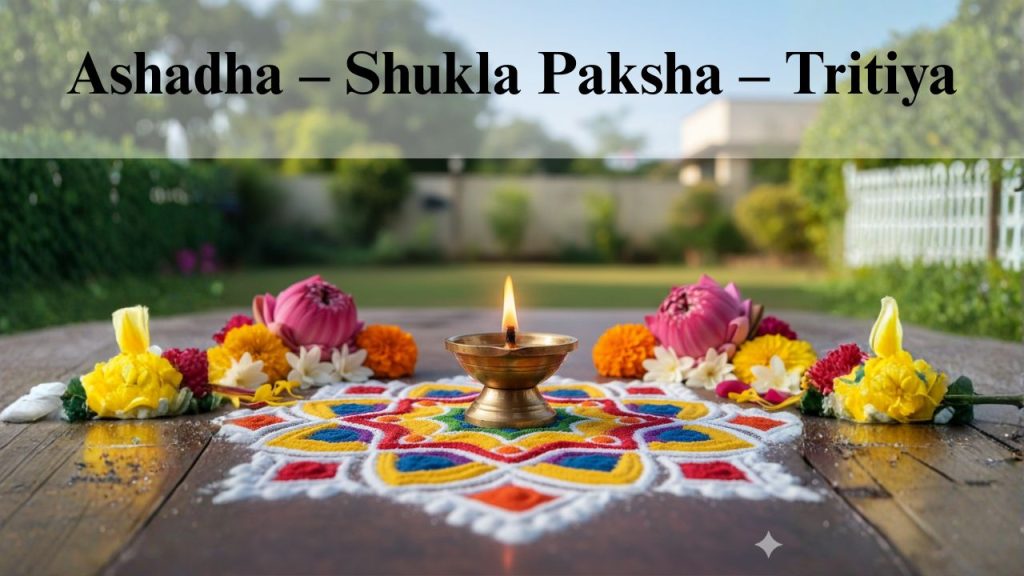
Pujas (worship ceremonies) offered to Devi forms such as Durga, Gauri, or Tripura Sundari form the core of spiritual observances. The rituals often involve using white or yellow flowers, colors that reflect purity, serenity, and divinity. Sandalwood paste is applied to deities and one’s third eye to awaken higher perception. Lighting ghee lamps invites divine light into the space, symbolizing clarity and the presence of Devi’s energy.
Chanting of Shakti mantras or Devi stotras (hymns) is deeply encouraged. Mantras like “Om Dum Durgayei Namaha” or recitations from the Devi Mahatmyam are powerful today. These chants honor the Divine Mother and awaken inner strength and protection.
Fasting is another significant practice. Observing a partial or complete fast on Tritiya supports mental clarity and bodily discipline. It’s a conscious decision to detach from indulgence and create space for spiritual nourishment. The fast may be broken with sattvic food, which is offered first to the deity with gratitude and humility.
When done with awareness and devotion, each ritual transforms the day into a moving meditation. It becomes less about routine and sacred participation in life’s spiritual unfolding. Ashadha Shukla Tritiya becomes more than a date on a calendar; it becomes a lived experience of light, balance, and new beginnings.
Tritiya and Feminine Divine Worship
The third lunar day of the Shukla Paksha in Ashadha, Tritiya, is deeply connected with the nurturing, graceful, and powerful energies of the feminine divine. Across many spiritual traditions in India, this sacred day is associated with the worship of Gauri or Parvati, especially in her gentle and benevolent forms. While Parvati is often known for her fierce expressions as Kali or Durga, her softer manifestations, such as Annapurna, Uma, and Lalita, are also honored today. These forms represent abundance, beauty, and harmony, qualities that align beautifully with the rising lunar light during Shukla Paksha.
The early days of Shukla Paksha hold an exceptional vibrational quality, during which Shakti, the divine feminine energy, naturally ascends. In one of these early days, Tritiya becomes a spiritual portal for invoking sacred femininity. Divine blessings are believed to be more accessible to those seeking peace, unity in relationships, and spiritual refinement during this phase. The lunar light, representing calm wisdom and maternal nourishment, amplifies feminine devotional practices, making it a cherished time for rituals dedicated to the inner goddess.
Women often take this day to pray for the well-being of their families, inner peace, and emotional strength. Rituals may include offering flowers, lighting lamps, and chanting mantras like “Om Gauryai Namah” or “Om Parvatyai Namah.” The emotional undertone of Tritiya emphasizes inner beauty, devotion, and sacred femininity. Rituals help reconnect with the nurturing, intuitive self often overlooked in busy routines.
Tritiya stands as a spiritually empowering day for women. It encourages embracing inner wisdom, nurturing strength, and connecting to one’s source of creation and sustenance. Even for those who do not identify with feminine energy, this day invites reflection on the qualities of grace, patience, creativity, and unconditional love. Celebrating Tritiya is, in essence, a celebration of the life-giving force that dwells within every heart and home.
Ayurveda and Wellness Significance
Tritiya in Ashadha has a profound connection to health and wellness, especially when viewed through the ancient Indian system of healing, Ayurveda. Immediately following Amavasya (the new moon), this day presents a natural opportunity for physical detoxification and emotional rejuvenation. The shift in lunar energy begins to support subtle transformations in body and mind, making it an ideal time to focus on wellness and rebalancing.
Light detox and digestive reset are highly recommended on Tritiya. After the digestive lull often experienced around Amavasya, Tritiya’s rising moonlight energizes the agni (digestive fire). Gentle fasting, sipping warm water, or having simple meals like kitchari (a nourishing blend of rice, lentils, and spices) helps reset the gut. Herbs such as Triphala, cumin, and ginger work wonderfully in supporting this reset, flushing out ama (toxins), and restoring vitality.
Equally important is nourishment, not just of the body, but of the senses and emotions. Tritiya is a day to slow down and opt for sattvic (pure) foods, herbal teas, and warm, ghee-infused meals. Ayurvedic wisdom suggests using this day to honor the body with rituals such as abhyanga, a traditional oil massage. Warm sesame or coconut oil applied with gentle strokes calms the nervous system, improves lymphatic circulation, and aligns the body’s subtle energies. Paired with a hot bath or herbal steam, this creates a sanctuary of self-care.
The rising lunar phase enhances emotional healing and mental clarity. Lunar energy deeply cools, stabilizes, and relieves restlessness, anxiety, and overthinking. Simple practices like deep breathing, gentle stretching, or reflective journaling help in sync with this calm energy.
Tritiya is also a wonderful day to initiate long-term lifestyle or dietary improvements. Whether switching to healthier food choices, incorporating daily movement, or reducing stress-inducing habits, the planetary and lunar alignments offer a supportive backdrop. Even small steps can bring lasting impact when the energies around them support transformation.
Spiritual and Yogic Observances
Tritiya’s lunar energy is especially conducive to spiritual disciplines. In yogic traditions, lunar days like Tritiya are viewed as opportunities for inner alignment, self-inquiry, and a profound connection to the divine self. The gentle rise of the moon supports calming the mind, heightening awareness, and tuning into spiritual rhythms that modern life often drowns out.
It is a powerful day to resume yoga practices or start new sadhanas (disciplines). The subtle nature of Tritiya makes it perfect for inward-looking practices rather than vigorous asanas or outer achievements. Instead of pushing the body, the focus should be on balancing postures, slow movements, and being fully present in every breath. Asanas such as vajrasana, padmasana, balasana, and gentle twists bring harmony to body and mind.
Pranayama, the yogic art of breath control, is especially potent during Tritiya. Practices such as nadi shodhana (alternate nostril breathing) or Chandra bhedana (breathing through the left nostril) help activate the ida nadi, associated with lunar, feminine, and cooling energies. These practices calm emotional turbulence, enhance mental clarity, and prepare the mind for a state of stillness.
In this naturally sattvic (pure and harmonious) environment, mantra japa, contemplation, and silent meditation become transformative. Chanting “soham,” “aum,” or personal mantras in a quiet space elevates one’s vibrational field. The moon’s gentle pull fosters third-eye awareness and kundalini awakening; although subtle, this energy can deepen when supported by consistency and intention.
Tritiya also invites one to anchor into gratitude, devotion, and compassion as daily spiritual values. These are lofty ideals that manifest in simple actions: offering kindness, forgiving past grievances, lighting a lamp with devotion, or feeding a stray animal. Every small act becomes an offering.
This day is a beautiful reminder to turn inward, recalibrate, and walk gently with grace. The energies present make it easier to hear the whisper of the soul, encouraging growth not just vertically towards the divine but horizontally in how one connects with others.
Social and Community Celebrations
While Tritiya’s essence is primarily inner and personal, it establishes a strong social and communal bond. In many parts of India, local or regional festivals are celebrated on this auspicious day, particularly in rural and semi-urban areas where lunar calendars play a significant role in daily life. Though not as widely publicized as Akshaya Tritiya, Ashadha Shukla Tritiya holds rich cultural value.
One of the hallmarks of Tritiya is the spirit of collective worship and prayer. Communities may organize satsangs (spiritual gatherings) where bhajans (devotional songs), discourse, and group chanting uplift the collective consciousness. Temples may conduct special rituals, invoking Goddess Gauri or Parvati, and welcome devotees to participate in offerings and aarti ceremonies. These events are spiritually enriching and strengthen unity and shared dharma.
Women’s gatherings hold a special place on this day. Women’s Circles recite vrat kathas (stories of vows and devotion), sing bhajans to the Divine Mother, and share traditional sweets or prasadam. In many homes, women observe simple fasts, apply haldi-kumkum to each other, and exchange sacred threads or bangles to symbolize protection and prosperity. These rituals are often passed down through generations, fostering interpersonal bonding and cultural continuity.
A deeply rooted practice associated with Tritiya is charity, also known as annadaan, which involves offering food to those in need. Donating grains, fruits, or cooked meals is viewed as a way to purify the heart and align with the law of abundance. Feeding others on this day is believed to multiply blessings and invoke divine grace.
Ultimately, community participation in Tritiya goes beyond external celebration. It reaffirms that spiritual growth is not solitary; it thrives in shared values, compassionate action, and cultural connection. When people gather with intention and love, the energy created uplifts everyone involved.
Modern Relevance and Personal Integration
Tritiya offers a unique opportunity to slow down and reconnect. At its heart, it isn’t just a traditional observance; it’s a reminder to realign with inner wisdom and nature’s cycles. As modern life drifts further from lunar rhythms, days like Tritiya help restore balance.
One of the simplest ways to honor this day is by reclaiming it as a time for self-awareness and mindful living. As the moon grows brighter each night during Shukla Paksha, Tritiya can become a day to check in with emotional health, relationships, spiritual practices, and personal goals. It serves as a lunar mirror, reflecting where realignment is needed.
Blending ancient practices with modern wellness is not only possible but deeply enriching. For example, small yet powerful shifts include replacing morning scroll time with a brief meditation or nature walk, choosing nourishing meals over quick snacks, and spending the evening in reflective journaling instead of binge-watching. Adding rituals like lighting a diya, journaling gratitude, or reading a spiritual passage can bring presence into daily life.
Aligning with lunar cycles isn’t about being overly ritualistic; it’s about flowing in harmony with universal energies. As farmers sow according to the phases of the moon, our inner growth can also be synchronized. Tritiya encourages stepping into clarity, discipline, and heart-centered intention.
The spiritual revolution may be slowing down, turning inward, and embracing a soulful way of living. Honoring Tritiya becomes a sacred act of remembering: remembering the self, the seasons, the silence, and the sacred thread that binds everything together.